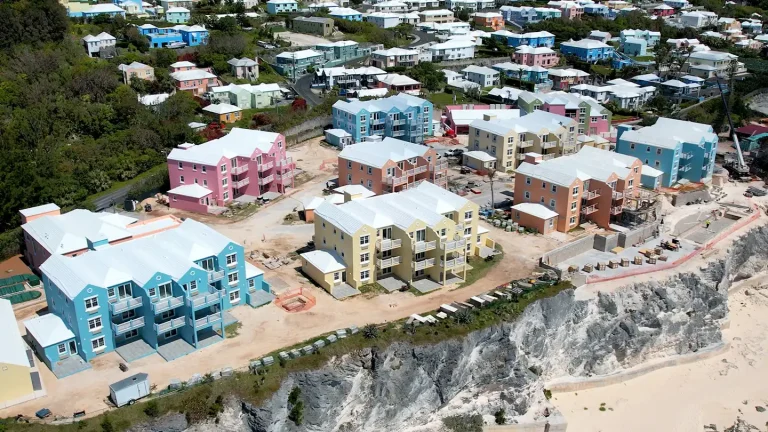
OBA calls for Bermudiana Beach and other empty Gov’t buildings to be used for critical BHC clients; Ministry says Bermudiana rental levels and insurance differs too much
The Opposition asks why we aren’t using Bermudiana Beach to house those in need…
…the Government says – it’s not suitable for such a task.
The OBA’s Michael Fahy, Shadow Minister of Housing & Municipalities, has once again raised the question why empty units Bermudiana Beach resort are not being made available to critical waitlist clients of the Bermuda Housing Corporation.
This followed comments by BHC chair Chris Famous, who says they are exploring alternative construction methods that could provide homes faster and cheaper.
However, a Ministry of Housing spokesperson said the Bermudiana Beach Resort rental levels, insurance requirements, and tenancy arrangements differ from the model used by the BHC to provide for critical clients.
Therefore, “the units are not currently suited to meeting the urgent needs of individuals and families seeking emergency or long-term affordable accommodation.”
His Excellency Andrew Murdoch has served as Governor of Bermuda since January 22nd 2025
Nine specialist officers from the UK have been deployed to Bermuda to assist the BPS with tactical, analytics and agency support with cold cases plus other security measures.
We sat down with the Governor to discuss the developments under his first year in office.
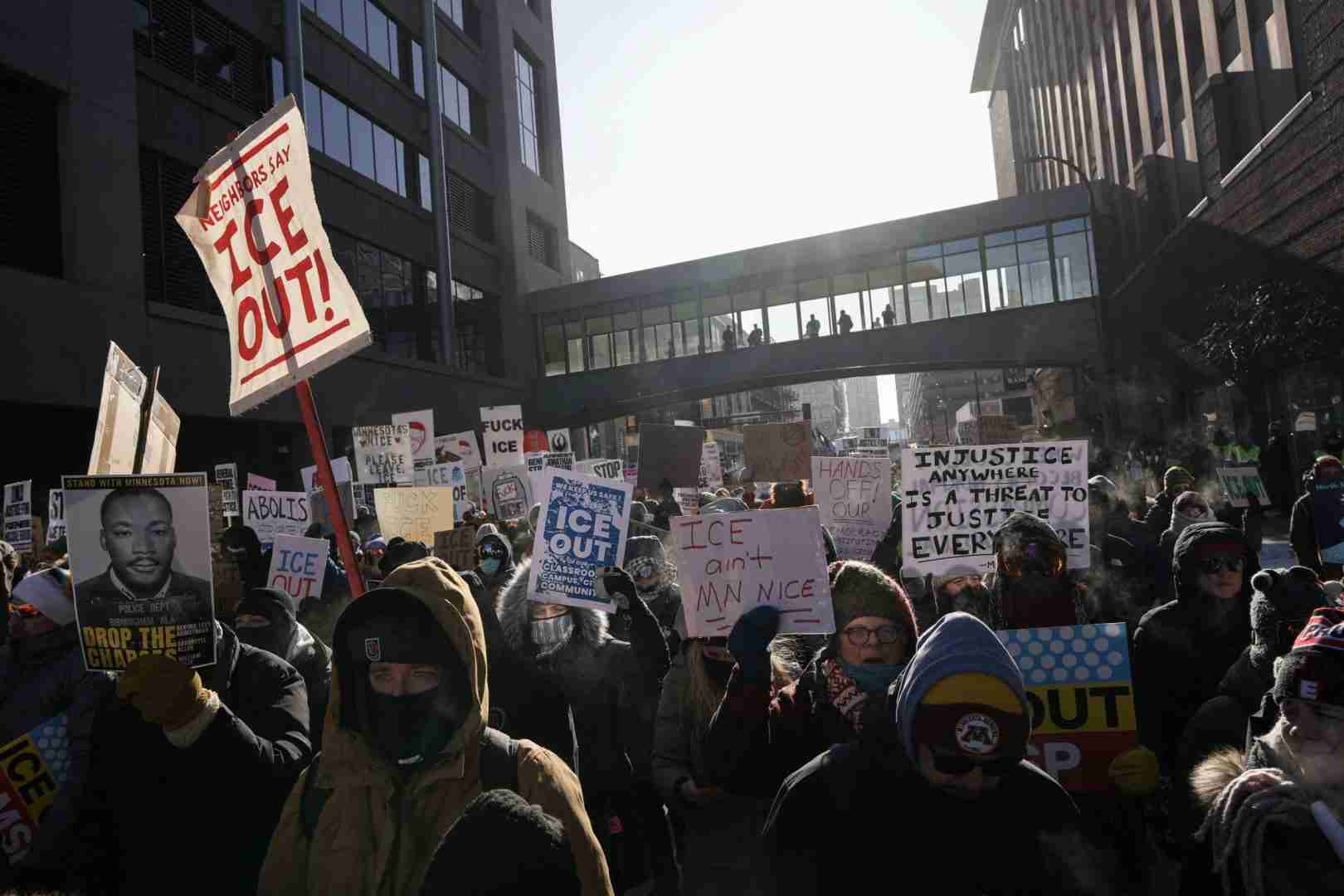
The protest was part of an “ICE OUT!” day of action, with organizers and participants saying scores of businesses across Minnesota closed for the day
International News via Reuters:
Local police arrested dozens of clergy members who sang hymns and prayed as they knelt on a road at Minneapolis-Saint Paul International Airport as part of a day of protests and walkouts on Friday against U.S. President Donald Trump’s deployment of thousands of immigration enforcement officers in the Twin Cities.
The protest was part of an “ICE OUT!” day of action, with organizers and participants saying scores of businesses across Minnesota closed for the day and workers headed to street protests and marches in what they described as a general strike.
The protest came after senior Trump administration officials called for cooperation with local Democratic leaders to calm tension after weeks of sometimes violent confrontations between U.S. Immigration and Customs Enforcement agents and protesters opposed to Trump’s crackdown on immigrants.
Ahead of an afternoon rally downtown in frigid weather, hundreds of people headed to the state’s main airport. Organizers said their demands included legal accountability for the ICE agent who fatally shot Renee Good, a U.S. citizen, in her car this month as she monitored ICE activities.
PROTEST ORGANIZERS SAY 100 CLERGY ARRESTED
They ignored commands to clear the road by officers from local police departments, who arrested and zip-tied dozens of the protesters, who did not resist, before putting them onto buses. Reuters observed dozens of arrests, and organizers said about 100 clergy members were arrested.
Faith in Minnesota, a nonprofit advocacy group that helped organize the protest, said the clergy were also calling attention to airport and airline workers who they said had been detained by ICE at work. The group asked that airline companies “stand with Minnesotans in calling for ICE to immediately end its surge in the state.”
Across the state, bars, restaurants and shops were shuttering for the day, according to organizers and participants. Many Minneapolis workers were heading downtown for a march and rally, intended by organizers to be the largest display of opposition yet to the federal government’s surge, which Mayor Jacob Frey and other Democrats have likened to an invasion.
Miguel Hernandez, a community organizer who closed his business, Lito’s Bakery in Minneapolis for the day, put on four layers, wool socks and a parka before heading out to protest.
“If this were any other time, no one would’ve gone out,” he said, bracing for the weather. “For us, it’s a message of solidarity with our community, that we see the pain and misery that’s going on in the streets, and it’s a message to our politicians that they have to do more than grandstand on the news.”
TRUMP TIES CRACKDOWN PARTLY TO FRAUD ALLEGATIONS
Trump, a Republican, launched the Minnesota crackdown in part in response to fraud allegations against some members of the state’s large community of people of Somali origin. He has called Somali immigrants “garbage” and said they are to be removed from the country as part of his effort to expel more immigrants, including some admitted into the country to seek asylum and other lawful residents, than any of his predecessors.
Minnesota residents have responded with anger, making noise in the streets day and night with whistles and musical instruments. Some agents and protesters have yelled obscenities at each other, and agents have deployed tear gas and flash-bang grenades to scatter crowds. The Trump administration says some protesters have harassed agents and obstructed their work.
Senior Trump administration officials have gone to Minneapolis to defend ICE, with Vice President JD Vance telling reporters during his Thursday visit the administration is “doing everything we can to lower the temperature.”
Patty O’Keefe, a 36-year-old nonprofit worker, said she would be among those willing to join Friday’s march and “expose ourselves to the elements to demonstrate the level of anger and frustration that we have.”
“We continue to be under siege from the federal government, and it feels like we need to do more because our normal forms of protest and resistance have shown to not be enough yet to really send a strong enough message to Trump,” she said.
The numerous Fortune 500 companies that call Minnesota home – mostly based in the Minneapolis area – have refrained from public statements about the immigration raids. Minneapolis-based Target, which has come under fire in the last year for retreating from its public commitment to diversity policies, has faced more criticism for not speaking out about activity at its stores. State lawmakers have pressed the company for details of its guidance to employees if and when ICE officers show up at stores.
The company declined a request for comment. Reuters also contacted Minnesota-based UnitedHealth, Medtronic, Abbott Laboratories, Best Buy, Hormel, General Mills, 3M and Fastenal. None immediately responded to requests for comment.
Reporting by Heather Schlitz in Minneapolis and Jonathan Allen in New York; Additional reporting Tim Evans in Minneapolis, Anshuman Tripathy, Marian E Sunny, Angela M Christy and Sanskriti Shekhar; Writing by Jonathan Allen; Editing by Donna Bryson and Rod Nickel
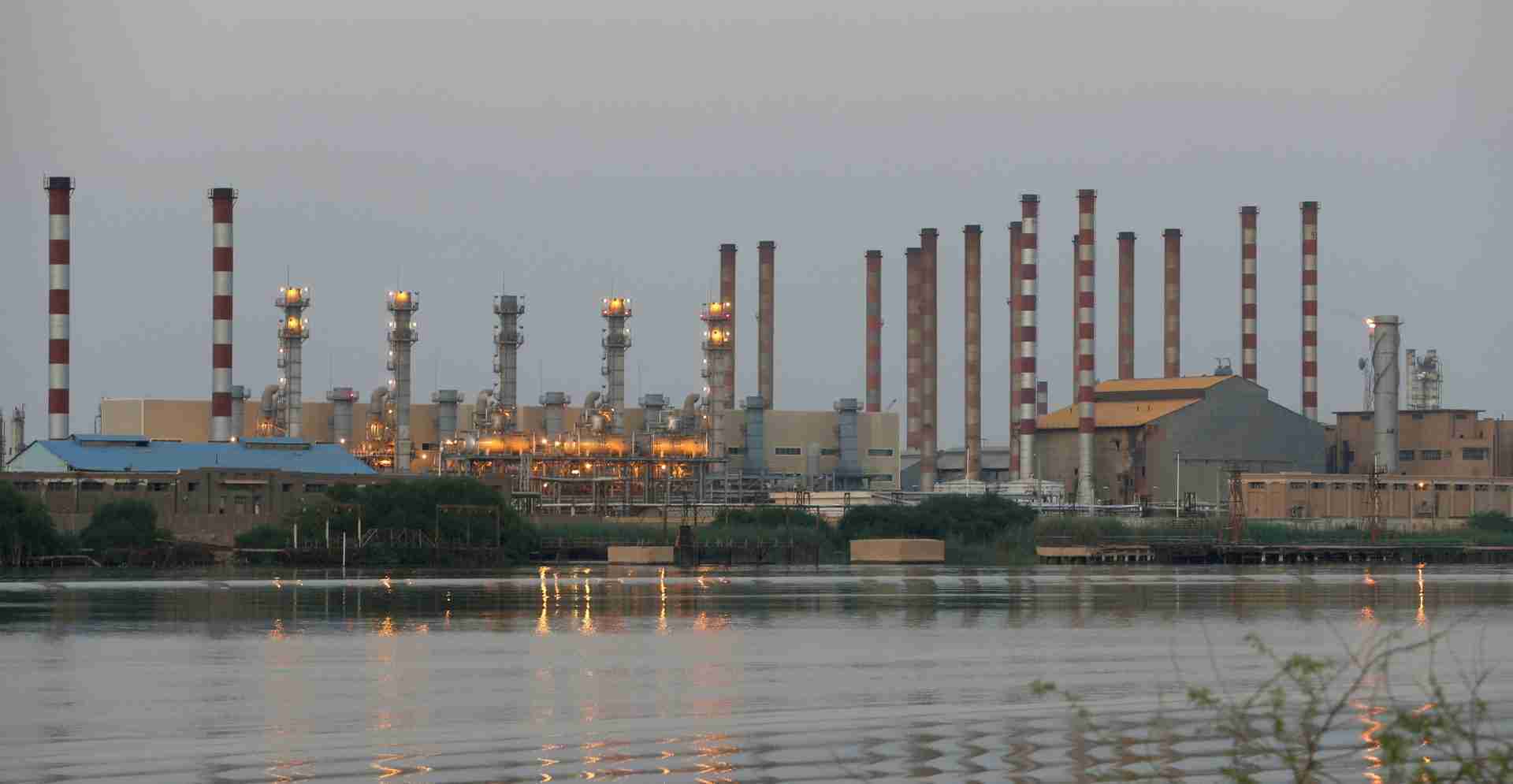
Brent crude futures rose $1.82, or 2.8%, to settle at $65.88 a barrel, the highest since January 14
International News via Reuters:
Oil prices settled at their highest in over a week on Friday after U.S. President Donald Trump ratcheted up pressure against Iran through more sanctions on vessels that transport its oil, and announced an armada was heading towards the Middle Eastern nation.
Brent crude futures rose $1.82, or 2.8%, to settle at $65.88 a barrel, the highest since January 14. U.S. West Texas Intermediate crude gained $1.71, or 2.9%, at $61.07, also a more than one-week high.
Both benchmarks notched weekly gains of over 2.5%.
Trump’s statements renewed warnings to Tehran against killing protesters or restarting its nuclear program. The escalating pressure has caused concerns of oil supply disruptions in the Middle East. Kazakhstan has been struggling to resume output from one of the world’s largest oilfields.
Warships, including an aircraft carrier and guided-missile destroyers, will arrive in the Middle East in the coming days, a U.S. official said. The United States conducted strikes on Iran last June.
U.S. HITS VESSELS, FIRMS WITH SANCTIONS
The U.S. on Friday also imposed sanctions on nine vessels and eight related firms involved in transporting Iranian oil and petroleum products, the U.S. Treasury said in a statement.
At about 3.2 million barrels per day according to OPEC figures, Iran is OPEC’s fourth-biggest crude oil producer behind Saudi Arabia, Iraq and the United Arab Emirates. It is also a major exporter to China, the world’s second-largest oil consumer.
Chevron said oil output at Kazakhstan’s Tengiz oilfield has yet to resume after Chevron-led operator Tengizchevroil announced a shutdown on Monday following a fire.
The incident exacerbated problems for Kazakhstan’s oil industry, already challenged by bottlenecks at its main exporting gateway on the Black Sea, which has been damaged by Ukrainian drones.
JP Morgan said on Friday that Tengiz, which accounts for nearly half of Kazakhstan’s production, could remain offline for the rest of the month and that Kazakhstan’s crude output is likely to average only 1 million to 1.1 million bpd in January, compared with a usual level of around 1.8 million bpd.
Oil prices climbed earlier in the week on Trump’s moves on Greenland, but dropped by about 2% on Thursday as he backed off tariff threats against Europe and ruled out military action.
Trump said on Thursday that Denmark, NATO and the U.S. had reached a deal that would allow “total access” to Greenland.
Reporting by Shariq Khan, Shadia Nasralla, Helen Clark and Sudarshan Varadhan; additional reporting by Stephanie KellyEditing by David Goodman, Jane Merriman, Rod Nickel
Walking off her plane at the airport in Greenland’s capital Nuuk, Frederiksen was greeted by Greenlandic Prime Minister Jens-Frederik Nielsen
International News via Reuters:
Denmark’s Prime Minister Mette Frederiksen visited Greenland on Friday in a show of support for the Arctic island that U.S. President Donald Trump wants to annex.
Walking off her plane at the airport in Greenland’s capital Nuuk, Frederiksen was greeted by Greenlandic Prime Minister Jens-Frederik Nielsen. The two were seen embracing on the tarmac before driving away.
Frederiksen flew straight to Nuuk from Brussels after meeting with NATO chief Mark Rutte earlier in the day to discuss how the military alliance can boost security in the wider Arctic region.
Greenland is an autonomous territory of the Danish kingdom. The two governments say the island is not for sale and its sovereignty is not up for discussion, but they are open to talks on other topics, such as security and economic development.
“We are preparing the next steps,” Frederiksen told reporters while walking alongside Nielsen in central Nuuk. “I’m first and foremost here to show our strong support for Greenland’s people as a difficult time.”
Trump said on Thursday he had secured total and permanent U.S. access to Greenland after talks with Rutte, who said allies would have to step up efforts to ward off threats from Russia and China. The U.S. military is already permitted wide access to Greenland under treaties, although Washington has scaled back its presence there since the Cold War to a single small base.
The island’s future has prompted a crisis in transatlantic relations after Trump demanded Greenland become U.S. territory, refused to rule out military force to obtain it and announced new tariffs on European countries that objected.
The crisis subsided after he lifted the threat to use force on Wednesday and withdrew the proposed tariffs on Thursday.
“We agree that NATO must increase its engagement in the Arctic. Defence and security in the Arctic is a matter for the entire alliance,” Frederiksen said in a social media post, along with a photo of herself and Rutte in Brussels.
Rutte said he was working with the Danish leader to enhance deterrence and defence.
Denmark’s foreign minister said on Friday that diplomats from Denmark and the United States had met in Washington on Thursday, establishing a plan for how to proceed.
“We will not communicate when those (future) meetings are, because what is needed now is to take the drama out of this… we need a calm process,” Foreign Minister Lars Lokke Rasmussen said.
A source familiar with the matter said Rutte and Trump had agreed on further talks between the U.S., Denmark and Greenland on updating a 1951 agreement that governs U.S. military access and presence on the Arctic island.
Reporting by Jacob Gronholt-Pedersen and Janis Laizans in Nuuk, and Soren Jeppesen and Stine Jacobsen in Copenhagen, editing by Terje Solsvik and Toby Chopra
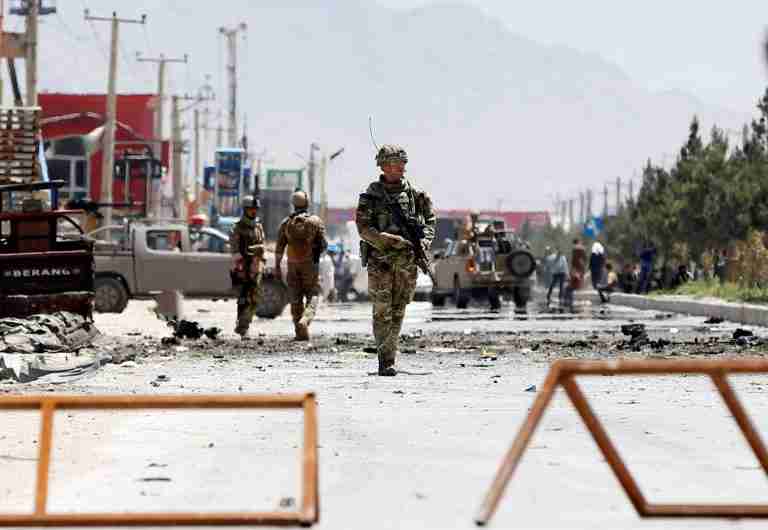
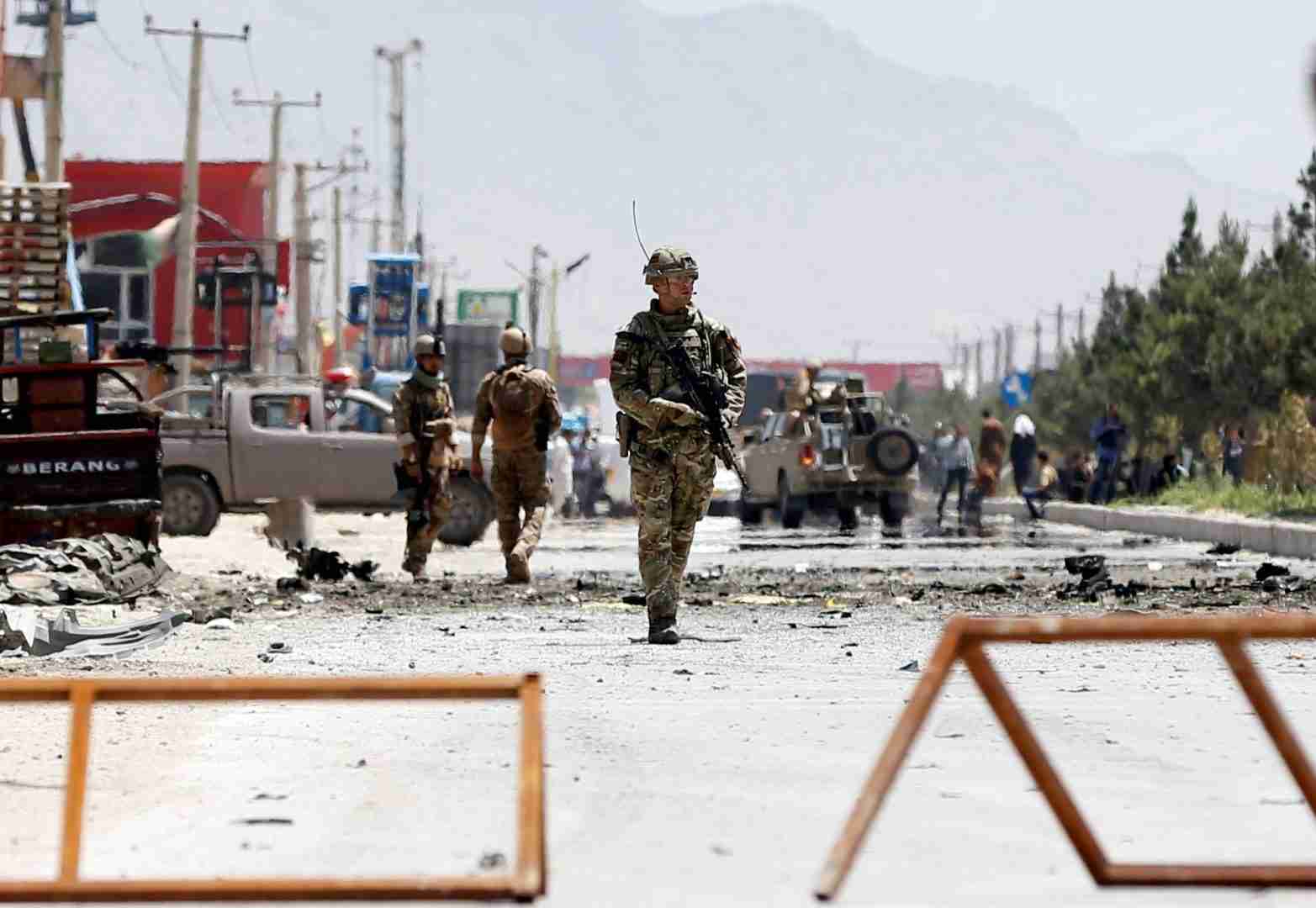
Britain lost 457 service personnel killed in Afghanistan, its deadliest overseas war since the 1950s
International News via Reuters:
British Prime Minister Keir Starmer called U.S. President Donald Trump’s comments about European troops staying off the front lines in Afghanistan insulting and appalling, joining a chorus of criticism from other European officials and veterans.
“I consider President Trump’s remarks to be insulting and frankly appalling, and I’m not surprised they’ve caused such hurt for the loved ones of those who were killed or injured,” Starmer told reporters.
When asked whether he would demand an apology from the U.S. leader, Starmer said: “If I had misspoken in that way or said those words, I would certainly apologise.”
Britain lost 457 service personnel killed in Afghanistan, its deadliest overseas war since the 1950s. For several of the war’s most intense years it led the allied campaign in Helmand, Afghanistan’s biggest and most violent province, while also fighting as the main U.S. battlefield ally in Iraq.
Starmer’s remarks were notably strong coming from a leader who has tended to avoid direct criticism of Trump in public.
Trump told Fox Business Network’s “Mornings with Maria” on Thursday the United States had “never needed” the transatlantic alliance and accused allies of staying “a little off the front lines” in Afghanistan.
His remarks added to already strained relations with European allies after he used the World Economic Forum in the Swiss ski resort of Davos to again signal his interest in acquiring Greenland.
Dutch Foreign Minister David van Weel condemned Trump’s remarks on Afghanistan, calling them untrue and disrespectful.
Britain’s Prince Harry, who served in Afghanistan, also weighed in. “Those sacrifices deserve to be spoken about truthfully and with respect,” he said in a statement.
‘WE PAID IN BLOOD FOR THIS ALLIANCE’
“We expect an apology for this statement,” Roman Polko, a retired Polish general and former special forces commander who also served in Afghanistan and Iraq, told Reuters in an interview.
Trump has “crossed a red line”, he added. “We paid with blood for this alliance. We truly sacrificed our own lives.”
Britain’s veterans minister, Alistair Carns, whose own military service included five tours including alongside American troops in Afghanistan, called Trump’s claims “utterly ridiculous”.
“We shed blood, sweat and tears together. Not everybody came home,” he said in a video posted on X.
Richard Moore, the former head of Britain’s MI6 intelligence service, said he, like many MI6 officers, had operated in dangerous environments with “brave and highly esteemed” CIA counterparts and had been proud to do so with Britain’s closest ally.
Under NATO’s founding treaty, members are bound by a collective-defence clause, Article 5, which treats an attack on one member as an attack on all.
It has been invoked only once – after the September 11, 2001 attacks on New York and Washington, when allies pledged to support the United States. For most of the war in Afghanistan, the U.S.-led force there was under NATO command.
POLISH SACRIFICE ‘MUST NOT BE DIMINISHED’
Some politicians noted that Trump had avoided the draft for the Vietnam War, citing bone spurs in his feet.
“Trump avoided military service 5 times,” Ed Davey, leader of Britain’s centrist Liberal Democrats, wrote on X. “How dare he question their sacrifice.”
Poland’s sacrifice “will never be forgotten and must not be diminished”, Defence Minister Wladyslaw Kosiniak-Kamysz said.
Trump’s comments were “ignorant”, said Rasmus Jarlov, an opposition Conservative Party member of Denmark’s parliament.
In addition to the British deaths, more than 150 Canadians were killed in Afghanistan, along with 90 French service personnel and scores from Germany, Italy and other countries. Denmark – now under heavy pressure from Trump to transfer its semi-autonomous region of Greenland to the U.S. – lost 44 troops, one of NATO’s highest per-capita death rates.
The United States lost about 2,460 troops in Afghanistan, according to the U.S. Department of Defense, a figure on par per capita with those of Britain and Denmark.
Reporting by Sam Tabahriti and Elizabeth Evans in London, Stine Jacobsen in Copenhagen and Terje Solsvik in Oslo, Malgorzata Wojtunik in Gdansk, additional reporting by Andrew MacAskill, Muvija M and James Davey in London and Bart Meijer in Amsterdam; Writing by Sam Tabahriti; editing by Gareth Jones, Andrew Heavens, Ros Russell and Diane Craft
Have you ever wondered what it’s like to work at sea while serving your community?
The Royal Bermuda Regiment is inviting residents to an open house at its west-end facility tomorrow, offering a closer look at the unit’s role in protecting Bermuda’s waters and ensuring maritime safety.
Captain Jason Harrell, Second-in-Command of the RBR Coast Guard, outlines what visitors can expect.
For those interested in joining the battalion, a recruitment camp is also scheduled for next month. And as Captain Harrell explains, serving specifically with the Coast Guard offers valuable hands-on training and learning opportunities.
The open house takes place tomorrow at Scenic House, 35 Malabar Road on Boaz Island, from 10 am to 1 pm.
“Open your hearts and your homes to foster Bermuda’s children.”
That’s the call from Minister of Youth, Social Development and Seniors, Tinee Furbert.
According to the latest reporting cycle, more than 50 children are currently in foster care, and Government is urging more families to step forward to meet growing and evolving needs.
Alisa Bernardo spoke with Minister Furbert about the ongoing demand for foster parents and the impact they can have.
Education Minister confirms there was a think‑tank session with Parish Primary & Middle School Principals, but next steps of education transformation are still being determined
Minister of Education Crystal Caesar. File photo
Statement by the Minister of Education, Crystal Caesar
Minister Caesar said: “I want to make it abundantly clear that no decisions have been made regarding the critical next steps in Education Transformation. In December 2025, at my request, the Principals of Middle and Parish Primary Schools came together for a think‑tank session to review enrollment data, registration, and key data related to school readiness for September 2026. As the front-line leaders in schools, it makes sense to hear from them as we prepare for student transitions in September 2026.
In addition to meetings with principals, there have been discussions with school boards, unions, additional school principals, staff, and parents at affected schools, as well as with Department of Education staff, making for a total of 21 stakeholder meetings. We have received recommendations from principals on the intended student transitions which are aimed at ensuring schools have the right facilities and supporting students’ developmental readiness. We will continue stakeholder engagement and welcome feedback.
The 2026/2027 school year is a pivotal year in our education transformation and as such we are taking the time to consult widely, listen intently and expect that in mid-February we will be able to inform our internal stakeholders first, followed by a public announcement on agreed next steps.”
Students and parents protest against school reform reversal; idea to go back to Primary 1-6 comes from principals themselves
Photo supplied
Students from Francis Patton Primary staged a roadside protest this morning, saying they don’t want to see Government backtrack on changes already enacted through education reform.
The Royal Gazette reports that the gathering involved mostly Year 7 and 8 students – those who could be displaced if current concerns prove true.
Francis Patton was opened as one of the first two Parish Primaries in September 2023, and is now teaching students from Year 1 to Year 8 – retaining pupils for an additional two years than was done with the previous model.
Under the Government’s education reform, public middle schools would eventually be abolished, and senior schools would start receiving Year 9 students.
However, parents learned on Wednesday that consideration was being given to returning Parish Primary schools to the previous model of teaching years 1 to 6, and middle schools keep teaching years 7-9 as lower secondary schools.
Parents were also present at today’s protest, with students brandishing signs that read “Let us stay at Francis Patton”, and “Parents deserve clarity, not confusion”…
Notably, the proposal to physically reverse some of the school changes comes from Parish Primary and Middle School principals themselves, in discussion with the Minister of Education, Crystal Caesar.
Infrastructure, oversubscription and parental concerns were apparently cited as factors in the proposal. We understand further stakeholder discussions will take place before any decisions are made.
Meanwhile, parents of Year 6 and Year 7 students across Bermuda’s four parish schools have called for a meeting with government leaders to discuss the reforms.
In a statement, the parents said they are upset and frustrated by the constant changes being made to the education system.
Elliot Parish Primary School PTA will hold a Town Hall at the school, 6pm on Monday, to discuss ongoing education reform.
B.U.T: “Public education deserves clarity; it deserves honesty; and it deserves leadership that brings stability – not confusion.”
The Bermuda Union of Teachers is compelled to speak out following a deeply troubling sequence of communications by the Ministry of Education over the past 24 hours. These recent revelations have caused widespread confusion, anxiety, and frustration among principals, teachers, parents, and students.
School leaders were summoned to a meeting with less than 24 hours’ notice, and presented with a plan described as being “co-signed” by principals, when – in fact – it only reflected the views of a small subset of BPSS principals. On the same day, teachers and parents were called into emergency meetings where this proposal was presented – not as a discussion point, but as the confirmed new direction for education reform. Schools have been left to manage the fallout of these communications without clarity, documentation, or proper engagement after neither teachers nor their Union were properly consulted before these announcements.
This approach has created massively unnecessary disruption across the system.
Jonathan Tankard, President of the Bermuda Union of Teachers (BUT) states:
“What we have seen over the past 24 hours is not leadership through clarity, it is confusion caused by rushed decisions and poor communication. Teachers and principals were placed in impossible positions, and parents were left anxious because information was shared without honesty or proper process.”
Following the Ministry’s subsequent public statement suggesting that the record needed to be “set straight,” the Union is concerned that the Ministry’s public narrative does not align with what teachers have reported directly to the Union, nor with what parents have publicly shared about how meetings unfolded.
The BUT General Secretary, Dante Cooper adds:
“If the Ministry’s public statements are accurate, then it should be quite straightforward to clearly explain what the plan actually is. To date, that has not happened. Instead, we’ve seen fragmented messaging that presents proposals as decisions and consultation as an afterthought.”
For nearly a decade, education reform, while challenging, has been grounded in engagement, co-design, and stakeholder feedback. Teachers and parents have continued to engage with the burden of reform because they were part of the process and because decisions, even when difficult, were communicated through established consultative structures.
That standard has not been met this week.
The President further states:
“Teachers did not create this mess. Parents did not create this mess. Students certainly did not create this mess. It is the result of a failure to consult meaningfully and to communicate responsibly.”
Meaningful consultation is not optional. It is required under established policy, procedure, and the Collective Bargaining Agreement. It is also essential to maintaining trust in a public education system already under significant strain.
The General Secretary continues:
“Students, parents, and teachers cannot take another round of uncertainty driven by unclear leadership. If there is a plan, then lay it out clearly. If there is not, then stop presenting proposals as settled decisions. The people of Bermuda and its children deserve better.”
The Union is calling on the Ministry of Education and the Bermuda Government to immediately pause further announcements, correct the record where necessary, and engage in genuine, structured consultation with teachers, parents, and school communities before any further steps are taken.
Public education deserves clarity; it deserves honesty; and it deserves leadership that brings stability – not confusion.
The yen suddenly swung from a loss to a gain versus the dollar, suggesting to traders that Japan may have run rate checks with banks – often a signal of readiness to intervene
International News via Reuters:
MSCI’s global equities index was rising modestly on Friday and benchmark U.S. Treasury yields edged down while the yen gained against the dollar as traders bet that Japanese authorities are close to intervening directly to support the currency.
The yen suddenly swung from a loss to a gain versus the dollar, suggesting to traders that Japan may have run rate checks with banks – often a signal of readiness to intervene.
Earlier in the day the Bank of Japan signaled its readiness to continue raising still-low borrowing costs in a politically-charged atmosphere, ahead of a snap election next month.
After two days of gains, Wall Street equities were making little progress, suggesting a muted ending for a week punctuated by a sell-off then a relief rally linked to U.S. President Donald Trump’s withdrawal of tariff threats and ruling out seizing Greenland by force.
With a busy week ahead, including a Federal Reserve meeting, key economic releases and earnings reports, Gene Goldman, Chief Investment Officer at Cetera Investment Management in El Segundo, California said that investors were taking a breath and “in a wait-and-see approach.”
“There’s really no big drivers today and markets really benefited the last couple of days from easing geopolitical risks,” he said. “Stocks are taking a breather because of anticipation of a really big week.”
Fed funds futures are pricing an implied 97% probability that the U.S. Federal Reserve will hold rates steady next week, according to the CME Group’s FedWatch tool.
With disappointing forecasts weighing on Intel shares after its quarterly update late on Thursday, investors were waiting for reports from Microsoft, Meta Platforms and industrial giant Caterpillar among others in the week ahead.
While global stocks have clawed back much of the ground lost in Tuesday’s sell-off, investors are still waiting for details of a deal being negotiated between the U.S. and European leaders regarding Greenland. As a result some big Northern European investors are increasingly wary of the risks of holding U.S. assets.
Investors are also watching for any signs of progress from U.S.-brokered trilateral talks over Ukraine, with its President, Volodymyr Zelenskiy saying on Friday that the vital question of territory in Ukraine’s war with Russia would be discussed in Abu Dhabi on Friday and Saturday.
On Wall Street at 11:33 a.m. (1633 GMT), the Dow Jones Industrial Average <.DJI> fell 286.46 points, or 0.57%, to 49,100.07, the S&P 500 <.SPX> rose 5.37 points, or 0.08%, to 6,918.72 and the Nasdaq Composite <.IXIC> rose 99.59 points, or 0.43%, to 23,535.61.
MSCI’s gauge of stocks across the globe <.MIWD00000PUS> rose 1.93 points, or 0.19%, to 1,037.96.
The pan-European STOXX 600 <.STOXX> index fell 0.21%.
In currencies, the yen was volatile with a sudden spike earlier on speculation of a potential intervention, while the dollar edged lower and was set for its steepest weekly decline since June.
The dollar index <=USD>, which measures the greenback against a basket of currencies including the yen and the euro, fell 0.25% to 98.06.
With the euro <EUR=> up 0.1% at $1.1766, the dollar weakened 0.47% against the Japanese yen <JPY=> to 157.65. Sterling <GBP=> strengthened 0.59% to $1.3577.
Japanese Finance Minister Satsuki Katayama said on Friday she was watching currency markets closely, but declined to comment on the speculation.
In Treasuries, the yield on benchmark U.S. 10-year notes <US10YT=RR> fell 0.6 basis points to 4.245%, down from 4.251% late on Thursday, while the 30-year bond <US30YT=RR> yield fell 0.6 basis points to 4.8427%.
The 2-year note <US2YT=RR> yield, which typically moves in step with interest rate expectations for the Federal Reserve, fell 1.2 basis points to 3.603%, from 3.614% late on Thursday.
In energy markets, oil prices rebounded after Trump renewed threats against Iran, raising concerns of military action that could disrupt crude supplies while there are outages in Kazakhstan.
U.S. crude rose 2.81% to $61.03 a barrel and Brent rose to $65.82 per barrel, up 2.75% on the day.
In precious metals markets, silver and gold set new records with silver prices rising above $100 an ounce for the first time and gold hitting another record and en-route to $5,000/oz as investors continued to pile into safe haven assets amid geopolitical turmoil.
Spot gold <XAU=> rose 0.94% to $4,983.11 an ounce. U.S. gold futures <GCc1> rose 0.55% to $4,936.00 an ounce.
Elsewhere in metals, copper <CMCU3> rose 3.08% to $13,148.50 a tonne. Three-month aluminum on the London Metal Exchange <CMAL3> rose 1.1% to $3,167.50 a tonne.
Reporting by Sinéad Carew in New York, Iain Withers in London and Gregor Stuart Hunter in Singapore, additional reporting by Naomi Rovnick; Editing by Jane Merriman, Kirsten Donovansinead.carew@thomsonreuters.com
To provide the best experiences, we use technologies like cookies to store and/or access device information. Consenting to these technologies will allow us to process data such as browsing behavior or unique IDs on this site. Not consenting or withdrawing consent, may adversely affect certain features and functions.
Functional
Always active
The technical storage or access is strictly necessary for the legitimate purpose of enabling the use of a specific service explicitly requested by the subscriber or user, or for the sole purpose of carrying out the transmission of a communication over an electronic communications network.
Preferences
The technical storage or access is necessary for the legitimate purpose of storing preferences that are not requested by the subscriber or user.
Statistics
The technical storage or access that is used exclusively for statistical purposes.The technical storage or access that is used exclusively for anonymous statistical purposes. Without a subpoena, voluntary compliance on the part of your Internet Service Provider, or additional records from a third party, information stored or retrieved for this purpose alone cannot usually be used to identify you.
Marketing
The technical storage or access is required to create user profiles to send advertising, or to track the user on a website or across several websites for similar marketing purposes.