Tuesday, November 3, 2026
Home Blog Page 693

Ray-Ban maker shares hits all-time high as investors bet on Meta AI glasses boom

The AI-powered glasses contributed over four percentage points to sales growth

International News via Reuters:

Shares in Ray-Ban maker EssilorLuxottica rose 14% to hit an all-time high on Friday, adding nearly $20 billion in market value as investor enthusiasm for its AI-powered Ray-Ban Meta glasses gathered momentum.

The Paris-listed group, founded by late Italian entrepreneur Leonardo Del Vecchio and a possible contender in the race to buy fashion group Armani, reported on Thursday third-quarter sales growth of 11.7% from a year ago to 6.9 billion euros ($8.1 billion).

The results beat expectations and marked the company’s best quarterly performance ever amid strong demand for wearable products such as the smart glasses it has been developing with Meta since before the pandemic.

Even though the smart glasses business has until now accounted for only a fraction of EssilorLuxottica’s total revenue, it has become a focal point for analysts and investors, as well as a catalyst for the company’s investments.

Barclays analysts have predicted smart glasses could become the most disruptive innovation since mobile phones, forecasting 60 million units sold globally by 2035.

The AI-powered glasses contributed over four percentage points to sales growth, said Chief Financial Officer Stefano Grassi, with demand prompting EssilorLuxottica to accelerate production capacity plans for the glasses ahead of schedule.

“The exponential growth of wearables provided an extra-boost to the top line performance,” the company said in a statement on Thursday.

SHARES POST BIGGEST DAILY RISE SINCE 2008

EssilorLuxottica’s shares were up 13.8% by 1400GMT,  the biggest daily gain since 2008, lifting the company’s market capitalisation to 126.5 billion euros.

The move drove the European luxury benchmark Stoxx Europe Luxury 10 up over 7% on the week, the index’s biggest weekly gain since January.

The latest Ray-Ban Meta models, priced from $379 to $799 for a new flagship version with built-in display, are currently sold in limited physical stores with expansion to Canada, France, Italy and Britain planned for early 2026.

The emerging success of Meta’s Ray-Ban smart glasses has reignited a long dead category of eyewear computers as Google and Microsoft had previously abandoned the market.

By marrying upgraded cameras and generative AI features with Ray-Ban’s designs, Meta has lured big tech rivals back into the market. Google and Samsung are working on glasses based on the Android XR platform. Apple is reportedly working on smart glasses.

J.P. Morgan analysts said in a note to investors the smart glasses were now a “material growth driver” while the company’s core business remained resilient.

Equita analysts upgraded their annual revenue forecast for wearables, and now expect an impact on the group’s sales of about one billion euro this year, according to a research note.

“The acceleration in third-quarter revenues and the level of confidence expressed on fourth-quarter and mid-term prospects are an important indicator of the success of the group’s strategic drivers,” they said.

($1 = 0.8540 euros)

Reporting by Gianluca Lo Nostro, additional reporting by Laura Contemori and Elisa Anzolin; Editing by Milla Nissi-Prussak, Lisa Jucca and Matt Scuffham

Canada and China discuss disputes over canola and EVs, says Ottawa

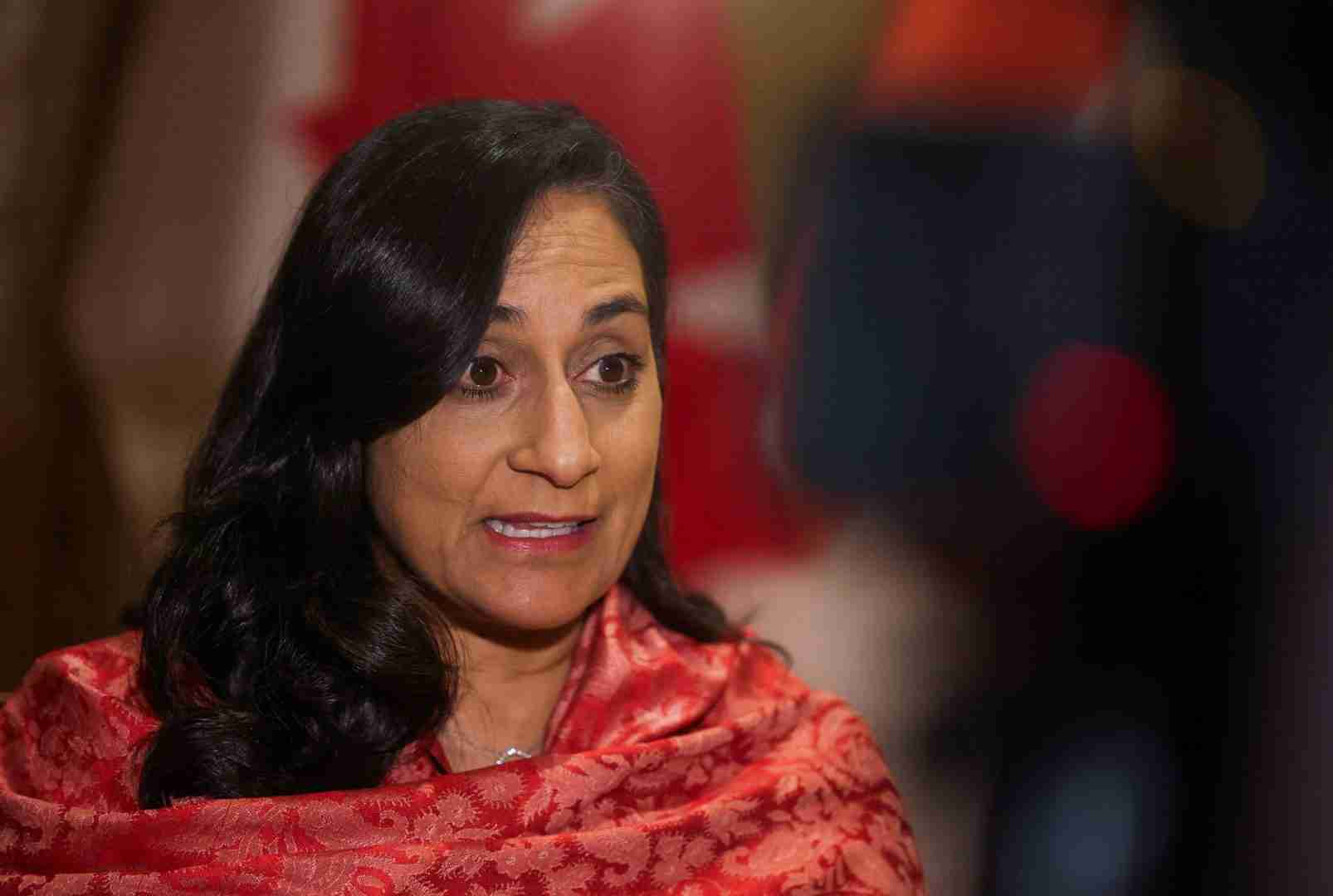
Canadian Foreign Minister Anita Anand met Chinese counterpart Wang Yi in Beijing as part of an effort by both countries to improve relations, which have been poor for years

International News via Reuters:

Senior Canadian and Chinese officials discussed bilateral trade disputes involving canola and electric vehicles on Friday, Ottawa said, but gave no indication of any immediate breakthrough.

Canadian Foreign Minister Anita Anand met Chinese counterpart Wang Yi in Beijing as part of an effort by both countries to improve relations, which have been poor for years.

China announced preliminary anti-dumping duties on Canadian canola imports in August, a year after Canada said it would slap a 100% tariff on imports of Chinese electric vehicles.

“The ministers discussed issues of respective sensitivity, such as agriculture and agri-food products, including canola, as well as seafood, meat and electric vehicles,” the Canadian foreign ministry said in a statement.

“(They) agreed that regular and candid communication is essential to build trust, enhance cooperation and address respective concerns.”

An official Chinese readout of the meeting said Yi had told Anand that Beijing was willing to work with Canada to restart dialogue and exchanges at all levels and to promote the resolution of each nation’s legitimate concerns.

Canadian Prime Minister Mark Carney said on Thursday he expected to meet senior Chinese leaders soon but sidestepped a question about dropping tariffs on electric vehicles in exchange for relief from the canola duties.

Reporting by David Ljunggren in Ottawa, Xiuhao Chen and Ryan Woo in Beijing and Katharine Jackson in Washington;Editing by Doina Chiacu and Nia Williams

IMF urges more joint EU borrowing to pay for bloc’s public goods

Joint borrowing by EU countries is a highly controversial topic

International News via Reuters:

The European Union should jointly borrow to pay for European public goods like defence, research and development and energy, Alfred Kammer, the head of the International Monetary Fund’s European Department, told Reuters on Friday.

Joint borrowing by EU countries is a highly controversial topic. The bloc’s biggest economy, Germany, is especially sensitive to joint debt, but a number of other northern European countries are also sharply opposed.

The EU broke the taboo in 2020 when it jointly borrowed 800 billion euros to re-launch the European economy after the COVID-19 pandemic, and the option of more joint borrowing, while still very difficult, has been in the public debate since then.

EU URGED TO FINANCE RISE IN PUBLIC GOODS SPENDING WITH DEBT

The threat of Russian aggression in Europe has dramatically increased the need for defense spending, and competition from China and the U.S. has added to pressure to boost European innovation and lower energy prices.

“We are suggesting concretely to more than double the European Union spending on these public goods, going up from 0.4% of GNI (gross national income) to 0.9% of GNI,” Kammer said in an interview. That increase would be roughly equivalent to 100 billion euros ($117 billion).

“We have one more recommendation, and that is to finance this increase in the EU budget with common debt in order to pay for these European goods, because they are a must, they need to be done, the benefits accrue to everybody, and you want to make sure that they start accruing now,” he said. 

“And with that, of course, you are going to service that debt over time. For that, you need to have an increase in own resources (revenues to EU budget) to do that service. So don’t shy away from thinking about common debt for common interests,” Kammer said.

Common EU defense projects, paid for jointly by the EU, are already happening through the EU programme of 150 billion euros of cheap EU loans, though probably more money would be needed given the huge scale of necessary defence investment. 

Joint financing to create a European energy market would be new – the EU needs not only to switch away from burning fossil fuels to zero-emission energy sources but also build networks across borders to transport the electricity all over the bloc.

Investing in research and development and innovation would also benefit all 27 EU countries and the bloc’s 450 million citizens.

“Those public goods are going to support many other reform efforts, so they are key in terms of moving up,” Kammer said, adding that a coordination mechanism at the EU level is needed and doing so would save money. 

“More coordination at the European level on the energy electricity market saves 7% of the costs of the clean transition,” Kammer said.

“Other studies have said that, on defense spending, when you move to common procurement and have a more coordinated effort, you would actually save 30% compared to national-level efforts,” Kammer said. “It’s cheaper to do them at the European level.”

The EU has been discussing the idea of public goods as part of the debate about the bloc’s next seven-year budget starting from 2028, but no conclusions have been agreed.

($1 = 0.8554 euros)

Reporting by Jan Strupczewski; Editing by Paul Simao

Meta to give teens’ parents more control after criticism over flirty AI chatbots

Earlier this week, the company said its AI experiences for teens will be guided by the PG-13 movie rating system, as it looks to prevent minors from accessing inappropriate content

International News via Reuters:

Meta said on Friday it will let parents disable their teens’ private chats with AI characters, adding another measure to make its social media platforms safe for minors after fierce criticism over the behavior of its flirty chatbots.

Earlier this week, the company said its AI experiences for teens will be guided by the PG-13 movie rating system, as it looks to prevent minors from accessing inappropriate content.

U.S. regulators have stepped up scrutiny of AI companies over the potential negative impacts of chatbots. In August, Reuters reported how Meta’s AI rules allowed provocative conversations with minors.

The new tools, detailed by Instagram head Adam Mosseri and Chief AI Officer Alexandr Wang, will debut on Instagram early next year, in the U.S., United Kingdom, Canada and Australia, according to a blog post.

Meta said parents will also be able to block specific AI characters and see broad topics their teens discuss with chatbots and Meta’s AI assistant, without turning off AI access entirely.

Its AI assistant will remain available with age-appropriate defaults even if parents disable teens’ one‑on‑one chats with AI characters, Meta said.

The supervision features are built on protections already applied to teen accounts, the company said, adding that it uses AI signals to place suspected teens into protection even if they say they are adults.

A report in September showed that many safety features Meta has implemented on Instagram over the years do not work well or exist.

Meta said its AI characters are designed not to engage in age-inappropriate discussions about self-harm, suicide or disordered eating with teens.

Last month, OpenAI rolled out parental controls for ChatGPT on the web and mobile, following a lawsuit by the parents of a teen who died by suicide after the startup’s chatbot allegedly coached him on methods of self-harm.

Reporting by Jaspreet Singh in Bengaluru; Editing by Shinjini Ganguli

MSA Wins First Ever Primary School Girls Football Title

Mount Saint Agnes Academy (MSA) has claimed its first-ever Primary School Girls Seven-A-Side Football tournament title, defeating BHS 3-0 in a dramatic penalty shootout after a hard-fought scoreless final.

The final capped a thrilling tournament that showcased the competitiveness of the island’s youth football.

Path to the Final

MSA showed resilience in their semi-final match, edging past Somersfield Academy 2-1. Both goals for the eventual champions were scored by Maribella Sebastiao, with Molly Morton scoring the lone goal for Somersfield.

BHS booked their place in the final with a commanding 3-0 semi-final victory over Saltus Grammar School. Eliza Grasso, Bella Artuso, and Lizzie Furtado were all on target to secure BHS’s spot.

Playoff Drama

The road to the semi-finals was equally dramatic:

Somersfield Academy needed a penalty shootout in the play-offs after being held to a 1-1 draw by Francis Patton. Skyla Mota had given Francis Patton the lead before Myla Desjardins equalised for Somersfield late in the game.

Saltus Grammar School earned their semi-final berth by defeating defending champions Warwick Academy 2-0, with goals coming from Nia Maughan and Sofia Cooper.

The victory marks a historic moment for Mount Saint Agnes Academy’s football program.

Spencer Moss Becomes Bermuda’s First U.S. Open Official

Bermuda’s Spencer Moss will make history this month after being hand-selected by the World Squash Officiating Committee to referee at the prestigious U.S. Open of Squash in Philadelphia.

The U.S. Open, a Platinum event on the Professional Squash Association (PSA) World Tour, attracts the world’s top-ranked players and runs from 19 to 25 October.

Moss’s appointment is a historic achievement, as he becomes the first Bermudian official ever to referee at this elite level of international squash.

“This is a tremendous honour for Spencer and for Bermuda,” said Micah Franklin, Head of Squash at the Bermuda Squash Association (BSA). “His selection is not only a personal achievement but a reflection of the continued development of squash on the island.”

As Bermuda’s highest-qualified squash official, Moss’s journey highlights the BSA’s commitment to developing technical officials through its Long-Term Athletic Development (LTAD) Programme.

“Spencer’s success is a testament to the power of hard work, dedication, and passion in turning dreams into reality,” Franklin added. The entire Bermudian squash community extends its congratulations to Moss as he prepares to represent the island on the global stage.

Julia Hawley Finishes Fourth in World Aquabike Final

Julia Hawley delivered a superb performance at the World Triathlon Championship Finals in Wollongong, Australia, narrowly missing out on a medal with a fourth-place finish in the Age Group Aquabike event.

Competing in the highly competitive 60-64 Female Age Group, Hawley clocked a total time of 1 hour, 49 minutes, and 1 second (1:49:01).

Hawley demonstrated strong pace across both legs of the standard distance event:

1.5 km Swim: She completed the opening swim leg in 27 minutes, 22 seconds (27:22).

40 km Bike: She followed up with a powerful ride, covering the bike course in 1:17:19.

Her consistent effort saw her secure a top-five finish on the world stage, a commendable result in the final championship event of the season.

Thomas Cechini Helps Loyola Men Sweep Tri-Meet

Thomas Cechini and his Loyola University Maryland Swimming and Diving teammates delivered a dominant performance at a tri-meet in Baltimore, sweeping both opponents in decisive fashion.

The Loyola men’s team secured comprehensive victories over both Patriot League rivals, defeating Lehigh 250-48 and American University 252-47.

Cechini contributed valuable points across freestyle events:

200 Yard Freestyle: Cechini touched the wall in second place with a swift time of 1 minute, 42.37 seconds (1:42.37), narrowly missing the victory.

500 Yard Freestyle: In the longer distance event, Cechini secured fourth place, clocking 4:44.03.

200 Yard Freestyle Relay: Cechini anchored the Loyola University Men’s relay team, which finished with a combined time of 1:25.87.

The decisive sweep marks a strong showing for the Greyhounds as they continue their 2025/26 collegiate season.

Madagascar coup leader Randrianirina sworn in as president

Ex-leader Andry Rajoelina, whom lawmakers impeached after he fled abroad at the weekend, has condemned the takeover and refused to step down while in exile

International News via Reuters:

Madagascar’s coup leader Colonel Michael Randrianirina was sworn in as president on Friday to cheers, blaring trumpets and raised swords, days after taking control of the island nation in the wake of youth-led protests that forced out his predecessor.

Ex-leader Andry Rajoelina, whom lawmakers impeached after he fled abroad at the weekend, has condemned the takeover and refused to step down while in exile, despite widespread defections in the security forces and the High Constitutional Court ratifying the army takeover within hours of it happening.

The African Union and the United Nations Secretary-General Antonio Guterres have condemned the coup, which came after weeks of “Gen Z” protests initially triggered by severe, chronic power and water shortages.

MILITARY-LED COMMITTEE TO RULE FOR UP TO TWO YEARS

“I will fully, completely, and justly fulfil the high responsibilities of my position as President of the Republic of Madagascar,” Randrianirina said in a ceremony at the High Constitutional Court, a colonial-era red-brick building of French windows, segmental arches and stone balustrades.

“I swear that I will exercise the power entrusted to me and dedicate all my strength to defending and strengthening national unity and human rights,” he added, before military officers raised swords and blew trumpets to mark the handover.

While many of the youths cheered the demise of Rajoelina, who came to office in a 2009 coup, some are already expressing misgivings about the swiftness with which the army stepped in to fill the power vacuum.

Even Gen Z protesters who turned up to celebrate the new military leader’s inauguration did not consider their work done.

“Not yet,” 18-year-old student Mioty Andrianambinintsoa said outside the court, as dignitaries draped in the red, green and white of the Malagasy flag walked past her to waiting jeeps. “This is a stage. Our aims haven’t been achieved.”

Asked what those aims were, fellow protester Francko Ramananvarivo, 23, said: “Our objective is to be led by a government that is close to the people. We are not there yet.”

Randrianirina has said that a committee led by the military will rule for up to two years alongside a transitional government before organising new elections.

ELITE ARMY UNIT

Randrianirina is a commander in the elite CAPSAT army unit that played a role in the 2009 coup that brought Rajoelina to power, although he was not involved in that putsch himself. He broke ranks with the president during the protests, urging soldiers not to fire on protesters and offering to protect them.

Underlying Madagascar’s periodic upheavals is a young population – the average age is under 20 – and some of the world’s worst poverty, which blights the lives of three-quarters of its roughly 30 million people.

Despite exports of prized commodities such as vanilla, nickel, sapphires and the white pigment ilmenite, the Indian Ocean island’s average income is barely $600 a year, while prices of basic goods such as the staple rice have spiralled.

Between its independence in 1960 and 2020, GDP per capita plunged by nearly half, according to the World Bank, making it one of the few nations to have become worse off over that period.

Reporting by Tim Cocks and Lovasoa Rabary; Editing by Ammu Kannampilly and Alex Richardson

English winemakers hope for export boost as they toast warmest summer

Days before pickers started to harvest this year’s crop, sparkling wine from southern England beat French Champagne to win one of the industry’s most prestigious awards

International News via Reuters:

English winemakers are betting that surging exports can sustain their once novelty product after domestic sales growth slowed, hoping for a boost from Britain’s warmest summer on record this year as climate change optimised conditions.

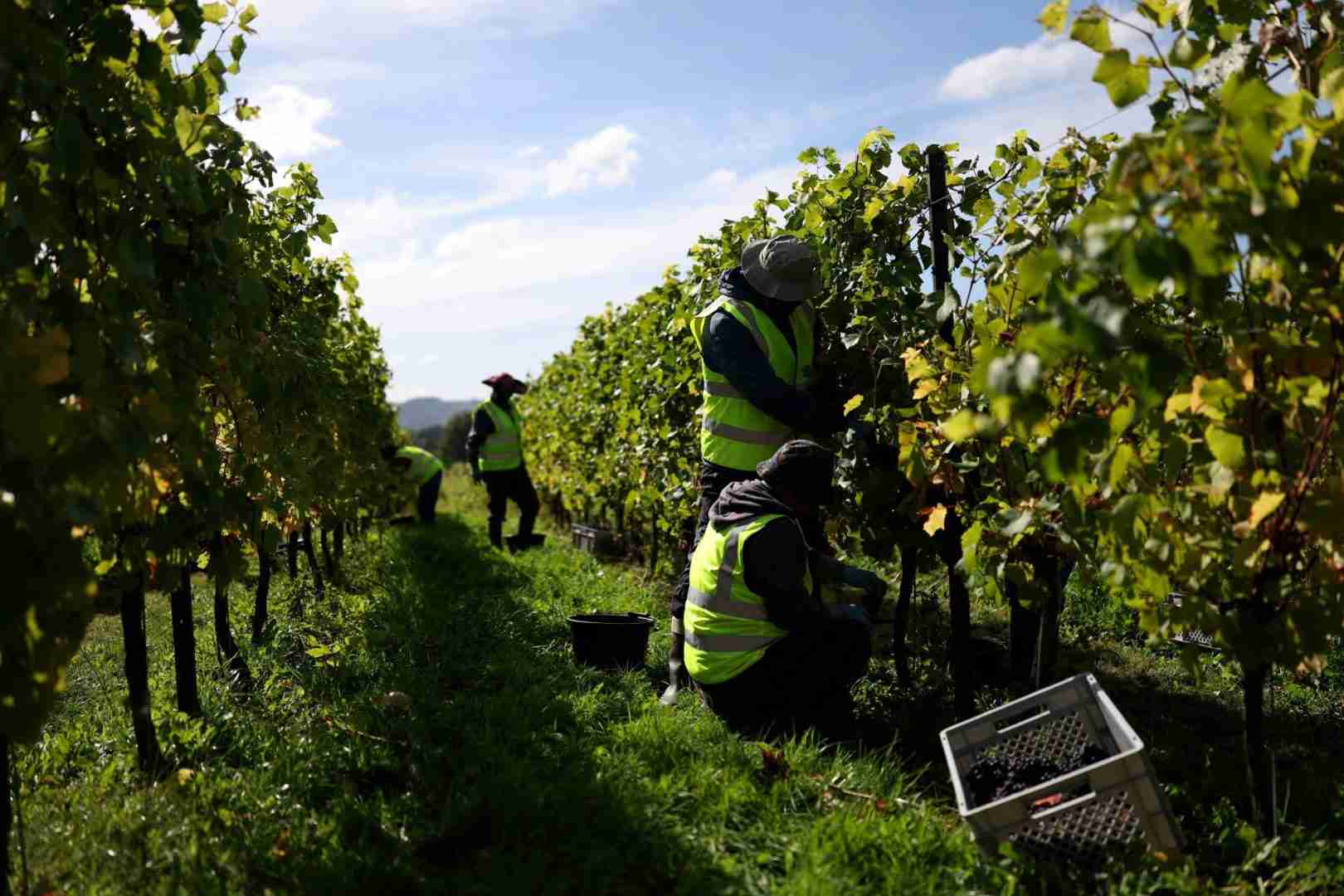
Days before pickers started to harvest this year’s crop, sparkling wine from southern England beat French Champagne to win one of the industry’s most prestigious awards, lifting its prospects in markets like Norway, Japan and China. 

Foreign sales have become more important as a subdued economy at home weighs on demand for a premium product. International producers are snapping up the country’s increasingly attractive land to produce wine to sell home and abroad.

“Export is where the real growth is in the coming period,” said Brad Greatrix, senior winemaker at Nyetimber, the English company which became the first non-French winner of the International Wine Challenge sparkling wine award in September. 

FROM FAIRWAYS TO VINEYARDS 

English wineries started to emerge in the 1990s as adventurous landowners took advantage of warmer summers. Now, on chalky slopes across southern England, vines are being planted on land once used for crops, apple orchards and golf courses.

Since 2000, English wine production has risen by an average 7% per year, and is set to keep growing after land dedicated to vines jumped by 30% between 2020 and 2024.

However, while British demand has driven growth so far, last year sparkling wine sales – which at 6.2 million bottles accounted for 70% of total wine sales – were flat, down from 11% growth the previous year. In September, Chapel Down, Britain’s biggest wine producer, cancelled plans to build a new winery.

Nicola Bates, CEO of industry body WineGB, said steady sales were an achievement when restaurants and bars were struggling, and when Champagne shipments to Britain fell 13% last year. 

For many consumers English fizz is a luxury product, with the biggest brands Chapel Down and Nyetimber costing 30 pounds ($40) and 42 pounds respectively per bottle, similar to Champagnes.

With more vines being planted, Bates said, “we need to be growing sales at a faster pace for mid- to long-term health”.

NORWEGIANS REQUESTING ENGLISH WINE

Though some winemakers will not sell this year’s prized vintage for several years, exports are a bright spot they hope to build on. Export volumes grew 35% to account for 9% of total sales of English wine in 2024, and Bates said she was targeting doubling that figure by 2030.

Norway tops the list of buyers by volume. Its imports of English sparkling wine jumped to 111,639 litres last year from 451 litres in 2015, according to its wine monopoly, the single state body allowed to import wine and spirits.

That growth is far ahead of rises from other countries, said Arnt Egil Nordlien, the monopoly’s head of product.

Aleksander Iversen, a sommelier at Brasserie Coucou in Oslo, says Norwegians are open-minded and curious about wine. Some customers specifically request English wines while others discover it on recommendation.

“Most are surprised by the quality, they often remark that it rivals top Champagne, but with its own unique character,” he said. 

MORE UNPREDICTABLE WEATHER

This year, English vineyards have experienced “almost perfect growing season conditions”, said Alistair Nesbitt, chief executive at Vinescapes, a viticulture consultancy.

The average temperature in southern England during the spring to autumn grape growing season has increased by 1 to 1.5 degrees Celsius over the last 40 to 50 years, he said, but it’s not always straightforward.

Climate change means more unpredictable weather events and that is also affecting England. Persistent wet weather in 2024, for example, hit the grape harvest, cutting production by half compared to the previous year.

While climate change means more variability for wine producers globally, Nesbitt said cooler climates like England have the advantage over areas in southern Europe, which are being hit by more frequent droughts and heatwaves. 

Wine producers from the U.S., France and Australia started buying English land around a decade ago, with French Champagne house Taittinger acquiring a site in 2015 and California’s Jackson Family Wines establishing a presence in 2023.

“If you’re in a real climate-stressed area of the world, and you want to keep your wine production enterprise going, you look to cooler areas like the UK,” he said.

($1 = 0.7493 pounds)

Reporting by Sarah Young and Gerhard Mey in London, Nora Buli and Gwladys Fouche in Oslo, Writing by Sarah Young; Editing by Aidan Lewis

Bank of England’s Pill supports more cautious pace of rate cuts

The BoE is trying to gauge whether inflation pressures in Britain’s economy are abating sufficiently for it to resume cutting borrowing costs

International News via Reuters:

Bank of England Chief Economist Huw Pill said on Friday that interest rates will probably need to be cut more slowly because of stubborn inflation pressures still in the economy.

Pill, who is one of the Monetary Policy Committee members who has been most vocal about inflation risks, said there were still signs that underlying price growth was too strong and high inflation expectations risked becoming embedded.

“All this supports my view that the MPC should adopt, from this point forward, a more cautious pace in withdrawing monetary policy restriction so as to ensure continuation in disinflation towards the 2% target,” Pill said in a speech to the Institute of Chartered Accountants in England and Wales.

Pill voted against the BoE’s most recent rate cut to 4% in August.

The BoE is trying to gauge whether inflation pressures in Britain’s economy are abating sufficiently for it to resume cutting borrowing costs.

“While I would expect further cuts in Bank Rate over the coming year should the economic and inflation outlook evolve broadly as the MPC expects, it will continue to be important to guard against the risk of cutting rates either too far or too fast,” Pill said in Friday’s speech.

“I continue to view a decision to keep Bank Rate on hold as a ‘skip rather than a halt’ in monetary policy normalisation. But the need to recognise the stubbornness of inflationary pressures is becoming more pressing.”

Governor Andrew Bailey said earlier this week that the latest round of labour market data backed his view that underlying inflation pressures were cooling.

Investors recently brought forward their bets on when the BoE is likely to make its next rate cut which is now almost priced in fully for February. On Monday, before the labour market data, those bets had pointed to a move in April.

Reporting by William Schomberg and Muvija M, writing by Sarah Young; editing by William James