Blume took the helm at Porsche 10 years ago but for the past three years has also been CEO of parent Volkswagen
International News via Reuters:
-Porsche named Michael Leiters, former CEO of McLaren, as a potential successor to CEO Oliver Blume on Friday, in a move to end Blume’s dual leadership role after criticism from investors.
Blume took the helm at Porsche 10 years ago but for the past three years has also been CEO of parent Volkswagen. Both automakers are undergoing restructuring that some investors have said requires a CEO’s undivided attention.
“Negotiations with Dr. Leiters will be initiated,” Porsche said in a statement on Friday, adding that leading members of the supervisory board had authorised the body to begin talks with Blume on ending his CEO contract at Porsche.
There is no plan for Blume to step down from Volkswagen. Porsche and VW face major challenges from tariffs, weak Chinese demand and a costly shift to electric vehicles.
Several German media reported earlier Friday that Porsche’s supervisory board had agreed to part with Blume so that he could focus on Volkswagen, with the Bild newspaper citing six sources as saying he would leave next year.
Volkswagen did not immediately respond to requests for comment.
During the three years of Blume’s dual role shares in Volkswagen have fallen by more than a third, while Porsche’s stock is down more than half.
Punished for the stock market decline since its listing three years ago, Porsche exited the blue-chip DAX last month.
Porsche has struggled particularly in its key market China and Blume recently announced a costly strategy reversal, away from EVs and back towards combustion engine models.
Reporting by Rachel More. Writing by Friederike Heine; Editing by Mark Potter and Elaine Hardcastle
The banking sector’s exposure in two recent U.S. auto bankruptcies has rekindled concerns about lending standards more than two years after Silicon Valley Bank’s failure
International News via Reuters:
Global financial stocks slid on Friday as a rout in U.S. regional banking shares heightened concerns about credit quality and mounting risks in the sector.
The banking sector’s exposure in two recent U.S. auto bankruptcies has rekindled concerns about lending standards more than two years after Silicon Valley Bank’s failure, when high interest rates drove paper losses on its bonds and sparked a global bank stocks rout.
Investors are now trying to assess whether recent issues in U.S. credit markets will have a similar effect, as an overnight selloff on Wall Street rippled across Asia and Europe and shone a spotlight on the recent AI-led surge in broader stock markets that some fear could have created a bubble.
DEUTSCHE BANK AND BARCLAYS LEAD EUROPEAN LOSSES
“What we see in the banks selling off overnight in the U.S., Asia wakes up to it, Europe wakes up to it, and so it spreads,” said TD Securities head of global macro strategy James Rossiter.
European banks fell almost 3%, with Deutsche Bank and Barclays sliding around 6%, and Societe Generale down 4.6%, after financial firms in Asia, especially Japanese banks and insurers sank.
In pre-market U.S. trading, the SPDR S&P regional banking ETF was down 2.4%, a day after the benchmark tumbled 6%, its steepest one-day selloff in six months.
Shares of Zions Bancorp, at the heart of the investor scrutiny, slid 1.7%, with big banks down a similar amount.
U.S. stock futures fell and in a sign of the fears of contagion, big tech names fell more than banks, with Nvidia around 3% lower.
The latest selloff came after Zions said it would take a $50 million loss on two commercial and industrial loans from its California unit, while Western Alliance disclosed it had initiated a lawsuit alleging fraud by Cantor Group V, LLC. Attorneys for Cantor denied the allegations.
Such disclosures would not typically impact broader markets, but drew attention as they followed the collapse of two U.S. companies, FirstBrands and Tricolor.
Those failures rattled investors worried about risks in private credit, a booming but less regulated market where companies have borrowed heavily in the past few years.
Credit impairments in private debt have been rising and default rates have hit 5.5%, said Mark Dowding, chief investment officer at RBC BlueBay Asset Management, citing latest available data for the second quarter.
“At the same time, it has also been striking that where credit events have occurred, this has gone hand-in-hand with a weakening of covenants and investor protections, inferring larger losses on default than have historically been the case,” he added.
JPMorgan Chase CEO Jamie Dimon said earlier this week about credit markets: “When you see one cockroach, there are probably more, and so everyone should be forewarned.”
BROADER MARKET IMPACT
“Investors will have memories about how problems in regional banks in 2023 sparked a sharp decline in global bank stock prices and falls in broader global stock markets as well,” said Vasu Menon, managing director of investment strategy at OCBC Bank in Singapore.
Big U.S. banks have largely reported strong earnings in recent days, but with valuations across equity markets already high, investors are nervous.
European bank shares are up some 40% year-to-date, while world stocks have risen 16%, as investors flocked to companies that might benefit from the AI boom.
There has already been unease that the rally might have gone too far, with periodic sharp falls and gains for safe-haven assets.
Worries about an escalation in U.S.-Chinese trade tensions sparked selling in stocks late last week.
Investors are now fully pricing in an October U.S. rate cut, sending government bond yields lower, and the safe-haven Swiss franc has appreciated.
Gold meanwhile hit a fresh record high, set for its best week in over 17 years.
Reporting by Ankur Banerjee in Singapore and Alun John in London. Additional reporting by Kevin Buckland in Tokyo Stella Qiu in Sydney and Dhara Ranasinghe in London and Medha Singh in Bengaluru. Editing by Mark Heinrich and Mark Potter
He Weidong, China’s number two general, and Miao Hua, the Chinese army’s top political officer, are the most senior military officials to be purged as part of an anti-corruption campaign
International News via Reuters:
Two top Chinese generals have been expelled from the ruling Communist Party and the military for “serious violations of discipline and law”, the country’s defence ministry said on Friday.
He Weidong, China’s number two general, and Miao Hua, the Chinese army’s top political officer, are the most senior military officials to be purged as part of an anti-corruption campaign that has targeted the People’s Liberation Army leadership since 2023.
He’s removal is the first of a sitting general on the Central Military Commission since the 1966-1976 Cultural Revolution. He has not been seen in public since March but the investigation of his activities had not previously been disclosed by Chinese authorities.
He, Miao and seven other senior military officials named in the announcement “seriously violated Party discipline and are suspected of serious duty-related crimes involving an extremely large amount of money”, defence ministry spokesperson Zhang Xiaogang said.
Their offences were “of a grave nature, with extremely detrimental consequences”, the statement added.
The expulsion of He, 68, has implications beyond the military, as he also sat on the 24-member Politburo, the ruling Communist Party’s second-highest echelon of power.
One of two vice-chairmen of the commission, the general is the third-most powerful commander of the People’s Liberation Army and has been considered a close associate of President Xi Jinping, the army’s commander-in-chief.
The announcement came just days before the Communist Party’s Central Committee, an elite body of 200-plus senior officials, is due to hold its Fourth Plenum in Beijing. More personnel decisions, such as the expulsion of Central Committee members, are expected to be formalised at the meeting.
Miao was removed from the Central Military Commission in June after being put under investigation for “serious violations of discipline” last November.
The pound fell 0.13% to $1.34225, though it was still headed for a weekly rise of 0.7%
International News via Reuters:
Sterling fell on Friday, as investors rushed to safe-haven currencies like the Swiss franc and Japanese yen in light of growing anxiety over the outlook for the U.S. economy, regional banks and global trade tensions.
The pound fell 0.13% to $1.34225, though it was still headed for a weekly rise of 0.7%. Against the Swiss franc, the pound fell 0.5% to 1.0594 francs, its weakest since late 2022.
The dollar came under broad pressure, partly from investors seeking what they perceive to be a safer alternative currency, but also from the expectation that the Federal Reserve will need to cut rates by a percentage point in the coming six months.
A government shutdown has cut off the supply of key data releases, but other metrics are pointing to a slowing labour market and more muted economic activity.
The British economy, meanwhile, just about managed to return to growth in August, offering finance minister Rachel Reeves some relief ahead of her budget that is due in late November.
That said, the International Monetary Fund said this week that Britain’s economy was on course to have the second-fastest growth among the Group of Seven nations in 2025, after the United States, and the Bank of England should be cautious in its approach to rate cuts.
The BOE, which is juggling persistent inflation with meagre economic growth, is not expected to cut rates again until at least February or March.
“With a sparse UK calendar today, sterling’s path will depend on U.S. speaker tones and any Bank of England observations amid looming fiscal budget preparations,” strategists at Monex said.
A slower pace of cuts from the BOE has provided support to sterling, which is up by nearly 7.5% against the dollar this year.
Yet deep-seated concern among investors about the ability of Reeves to keep Britain’s finances on track have tempered gains and weighed on the government bond market this year.
Her November budget is expected to bring with it more tax increases and spending cuts, which in turn may stifle things like consumer spending and business activity.
Reporting by Amanda Cooper; Editing by Alex Richardson
Aston Villa said travelling Maccabi fans – who were involved in violence a year ago in Amsterdam – would be barred from the Europa League match on November 6
International News via Reuters:
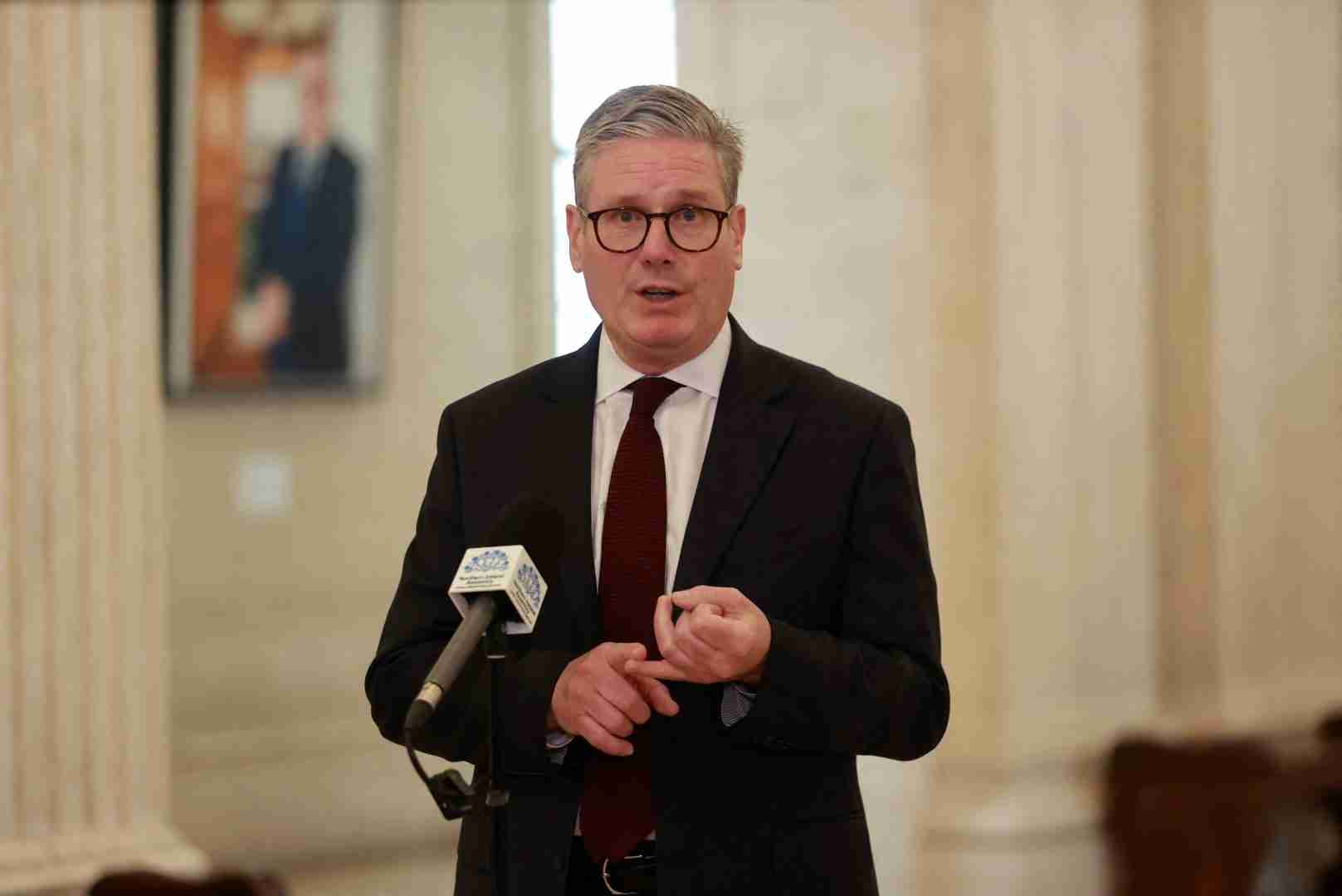
British Prime Minister Keir Starmer has said fans of Israeli side Maccabi Tel Aviv should not be barred from a soccer match in Birmingham next month, as tensions over antisemitism and protests against Israel’s war in Gaza dog his government.
Aston Villa said travelling Maccabi fans – who were involved in violence a year ago in Amsterdam – would be barred from the Europa League match on November 6 after West Midlands police expressed concerns about potential protests outside the stadium.
Israeli Foreign Minister Gideon Saar described the announcement as “shameful”.
Starmer posted on X that it was “the wrong decision”.
“We will not tolerate antisemitism on our streets,” he wrote. “The role of the police is to ensure all football fans can enjoy the game, without fear of violence or intimidation.”
ISRAELI TEAMS A FOCUS FOR GAZA PROTESTS
Maccabi did not immediately respond to a request for comment. Israeli teams have become a focus for pro-Palestinian protesters as passions over the Gaza conflict have run high.
Last November, more than 60 people were arrested in Amsterdam after clashes following a match between Maccabi and Ajax.
Police said Maccabi fans were chased and beaten by anti-Israeli gangs on scooters. Five people were treated in hospital.
Video verified by Reuters showed Maccabi fans in the days before the game chanting anti-Arab slogans. Police said Maccabi supporters burned a Palestinian flag, pulled down another and vandalised a taxi. The mayor later said she would not host Maccabi again.
Fighting antisemitism is high on Starmer’s agenda after two Jewish worshippers died on October 2 in an attack on a synagogue in Manchester. On Thursday he pledged extra funding for protection of Jewish communities, who had accused his Labour government of neglecting them.
POLICE FEAR REPEAT OF AMSTERDAM VIOLENCE
Later on Friday, a court was due to rule on an appeal by his interior ministry seeking to reinforce a decision to ban the campaign group Palestine Action under anti-terrorism laws, a ban that has in turn angered free-speech campaigners.
West Midlands Police said they had recommended the ban on Maccabi fans to ensure public safety, adding in a statement:
“This decision is based on current intelligence and previous incidents, including violent clashes and hate crime offences that occurred during the 2024 UEFA Europa League match between Ajax and Maccabi Tel Aviv in Amsterdam.”
The ban has drawn condemnation from lawmakers across Britain.
However, the local independent member of parliament, Ayoub Khan, said Israeli teams should be banned from European competition.
“From the moment that the match was announced, it was clear that there were latent safety risks that even our capable security and police authorities would not be able to fully manage,” he said in a statement.
Last Saturday, police in Norway used tear gas on pro-Palestinian demonstrators after the Israeli national team played in Oslo. On Tuesday in Udine, Italy, mostly peaceful protests at the team’s second match ended in clashes involving police.
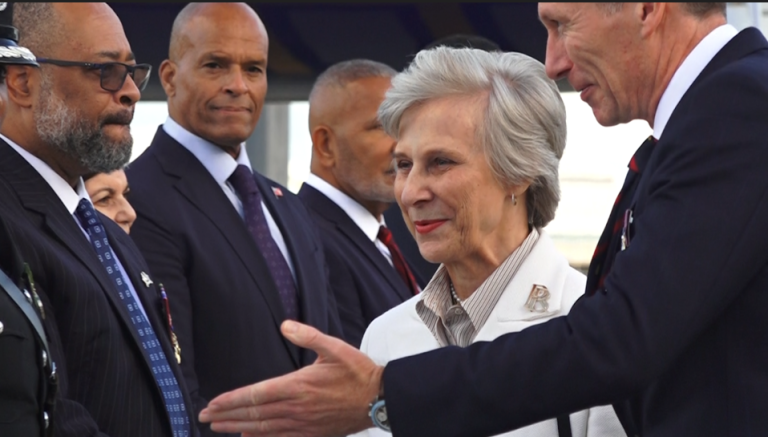
The Duchess of Gloucester has arrived in Bermuda for her fourth visit to participate in the Royal Bermuda Regiment’s 60th Anniversary celebrations as their Colonel-in-Chief, and as Patron of Masterworks.
Anonymous donors have contributed to a reward of up to $20,000 for information to help the search for 15-year-old Ja’Dore Wilson
A $20,000 reward has now been posted through Crimestoppers and anonymous donors in the continuing search for teen girl, Ja’Dore Wilson.
Efforts have been ramped up as donors and community leaders have vowed to help the family and police in their efforts.
The 15-year-old was last seen on September 17th, almost a month ago.
During a news conference this afternoon, it was announced that volunteers and police will meet as designated locations each night at 6pm and this weekend to progress the search.
Detective Inspector Kenten Trott of the Vulnerable Persons Unit said finding Ja’Dore has been their top priority.
Former PLP MP and concerned citizen Wayne Caines, who is coordinated a community search for Ja’Dore in collaboration with police explains how technology will assist them.
A What’s App group, QR code and website has been launched to log and tips or sightings at www.missingpersonbda.com.
Crimestoppers says their call centre based in Miami will not ask for your name nor on their online anonymous platform to give tips and information at 800-8477.
UK pension funds invest far less in private markets like infrastructure and private debt and equity than in countries such as Canada and Australia
International News via Reuters:
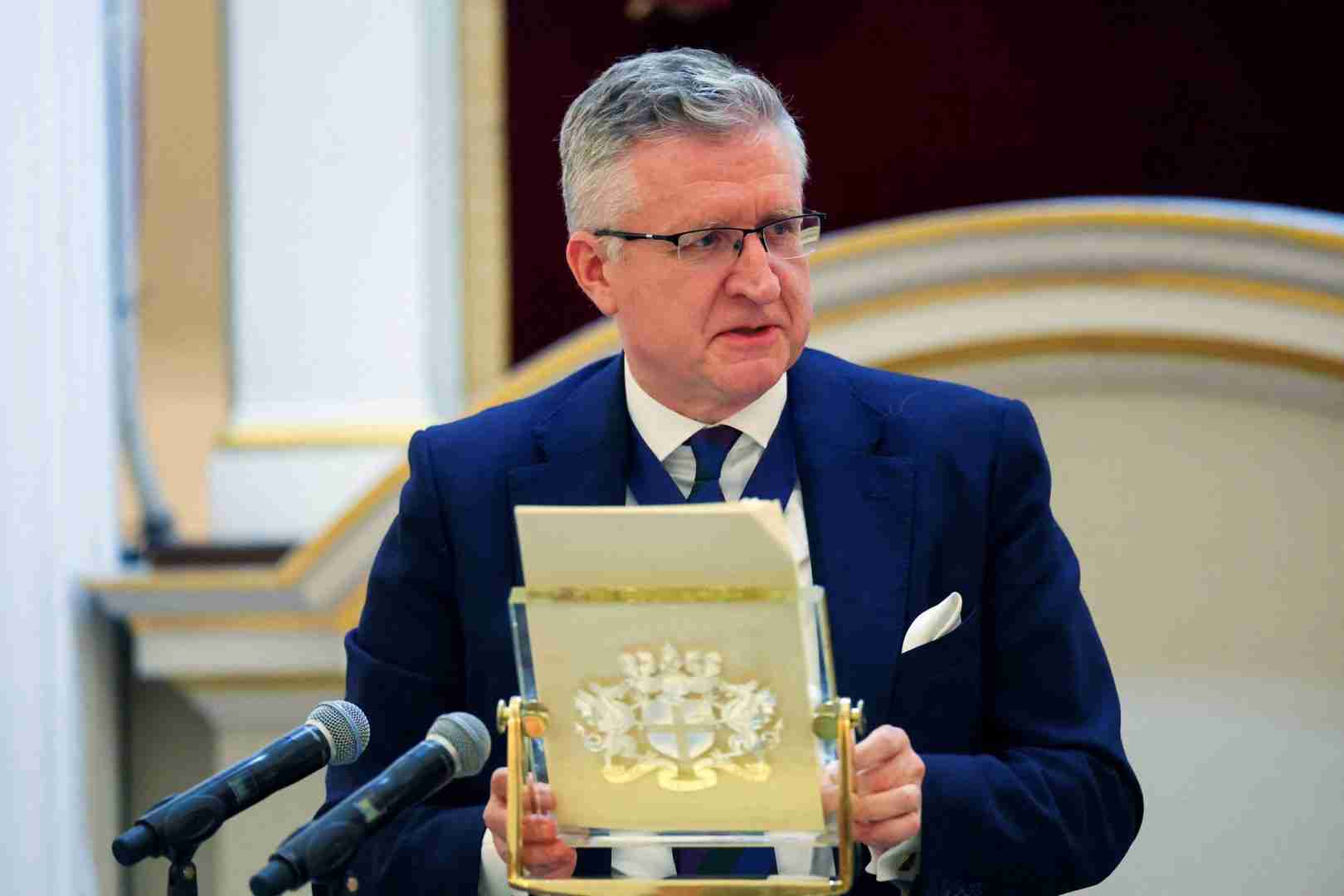
British pension funds should club together on major investment projects to pool resources and help attract foreign capital, the Lord Mayor of London said on Thursday, renewing his calls for funds to invest more in unlisted assets.
UK pension funds invest far less in private markets like infrastructure and private debt and equity than in countries such as Canada and Australia. Changing that is a key component of finance minister Rachel Reeves’ drive to fund infrastructure projects and boost the economy.
Alastair King, who finishes his one-year tenure as the ceremonial head of the City of London financial district next month, told Reuters that he was pushing for funds to collaborate to spur investment.
MORE ‘SHOVEL READY’ PROJECTS NEEDED
The Financial Times reported on Thursday that the City of London Corporation and the government were leading an initiative, to be announced next week, to encourage 20 of the biggest UK pension funds to team up, known as Sterling 20.
King did not comment on the initiative. The UK finance ministry declined to comment.
“There needs to be pressure (on funds) kept up,” said King, whose role is to act as ambassador for UK financial and professional services.
When speaking to foreign investors weighing investment in Britain, too many were put off by “the lack of domestic lead investors”, a problem that more collaboration among UK funds could help solve, King added.
Sterling 20 would build on the so-called Mansion House Accord signed in May, which saw 17 firms commit to allocating 10% of their defined-contribution pension assets to unlisted assets – half of it in the UK – by 2030.
King also said it was unfair to just “harangue” pension funds into investing differently, and that they needed to be presented with more good opportunities including early-stage companies and “shovel-ready” projects.
He cited data showing that 1 in every 14,000 pounds of pension fund assets went into venture capital funding, against $1 in every $200 in the United States.
He repeated calls for the government to change rules around tax-incentivised savings accounts to favour buying UK shares over cash.
King, who is returning to his job as an asset manager, will be succeeded by Susan Langley, who will be the third woman in the City of London Corporation’s history to hold the office, and the first to use the Lady Mayor title.
Reporting by Tommy Reggiori Wilkes and Phoebe Seers. Editing by Mark Potter
Dombrovskis said he presented the idea of the EU loan, which could be up to 185 billion euros over two years, to G7 finance ministers
International News via Reuters:
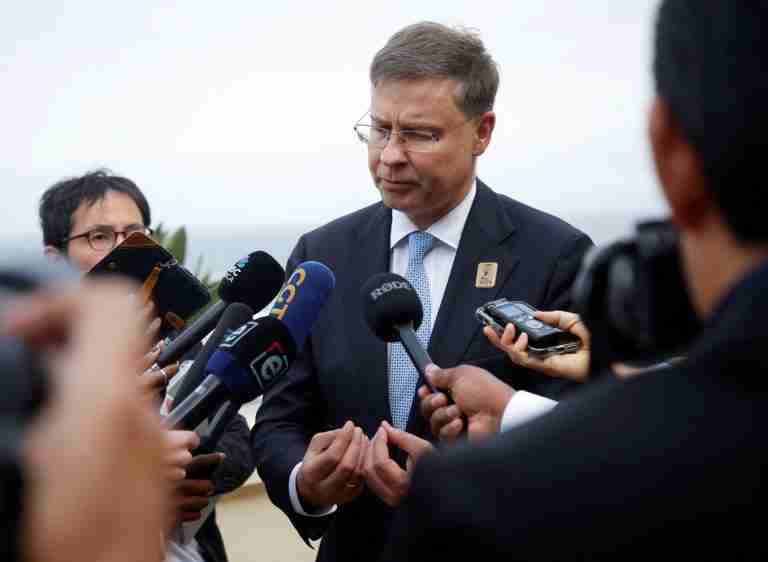
Canada and Britain have expressed interest in working on the EU idea of a reparations loan for Ukraine based on immobilised Russian assets, European Economic Commissioner Valdis Dombrovskis said on Thursday.
Speaking to Reuters on the sidelines of the International Monetary Fund meetings in Washington, Dombrovskis said he presented the idea of the EU loan, which could be up to 185 billion euros over two years, to G7 finance ministers.
“I presented the work we currently do on the reparation loan, but I also emphasize the need for other partners to play their part to provide support for Ukraine and to contribute to the financial assurances needed for the IMF program,” he said.
“I will be having later today also a bilateral meeting with U.S. Treasury Secretary Scott Bessent and probably will be able to zoom in more on what exactly the U.S. plans are in this regard,” Dombrovskis said.
“We think that this (reparations loan) model is scalable and other G7 members, which also hold Russian assets in their territory, can also use a similar approach, of course, in line with their legal systems and so on.
“And actually the UK and Canada have indicated interest to actually work on a similar model as our reparations loan,” he said.
Reporting by Jan Strupczewski; Editing by Andrea Ricci
Britain’s Crown Prosecution Service unexpectedly dropped charges last month against two British men who were accused of spying for Beijing between 2021 and 2023
International News via Reuters:
Britain’s MI5 spy chief said on Thursday he was frustrated by the collapse of a China spying case which has led to intense scrutiny of whether the government was to blame, saying Chinese operatives posed a daily national security threat.
Britain’s Crown Prosecution Service unexpectedly dropped charges last month against two British men, former parliamentary researcher Christopher Cash and academic Christopher Berry, who were accused of spying for Beijing between 2021 and 2023.
They had denied passing politically sensitive information to the Chinese state, while Beijing said the case was entirely fabricated.
IS CHINA A THREAT TO UK NATIONAL SECURITY?
The CPS said the case was abandoned because it needed evidence showing Britain considered China a threat to national security, but the government had not provided it after months of requests.
Opponents say that decision was because Prime Minister Keir Starmer wanted to appease Beijing. He has denied that accusation, saying his government could only describe China in the terms used by the previous Conservative government which called it an “epoch-defining challenge”.
“Of course, I am frustrated when opportunities to prosecute national security threatening activity are not followed through for whatever reason,” MI5 Director General Ken McCallum told reporters after delivering his annual speech on the threats to Britain.
“It’s frustrating when they don’t happen, but I would invite everyone to just not miss the fact that this was a strong disruption in the interests of the UK’s national security,” said McCallum, who stated MI5 had “intervened operationally” against China in the last week, without giving details.
Asked whether China posed a threat to British national security, he replied: “Do Chinese state actors present a UK national security threat? And the answer is, of course, yes, they do, every day.”
But he said Britain and China had a complex relationship and there were broader policy issues to consider.
“That one is perfectly legitimately a matter for government,” he said.
BRITAIN SEEKING CLOSER TIES WITH BEIJING
Starmer’s government has been trying to forge closer ties to China in its pursuit of economic growth, employing what it calls a “three Cs approach” – to compete, cooperate and confront – leading to accusations from opponents that it has prioritised this over national security.
Starmer, who used to be England’s top prosecutor and head of the CPS, on Wednesday sought to draw a line under the spy case controversy by publishing three witness statements from Britain’s Deputy National Security Adviser Matthew Collins, which the CPS said had failed to provide the evidence it needed.
While the documents detailed widespread Chinese malign activity, they did not unequivocally state that Britain saw China as a threat to national security.
In his second statement, Collins said China presented “the biggest state-based threat to the UK’s economic security”, but added: “It is important for me to emphasise, however, that the government is committed to pursuing a positive economic relationship with China.”
China’s London embassy dismissed the statements as being “rife with unfounded accusations”.
“China never interferes in other countries’ internal affairs and always acts in an open and above board manner,” a spokesperson said.
Opponents say Starmer has questions to answer as to why the government did not ensure the CPS had what it needed to progress the case, and whether any pressure was brought to bear on Collins.
“I feel I have to just say that I do consider him to be a man of high integrity and a professional of considerable quality,” McCallum said of Collins.
A number of parliamentary committees say they will hold investigations into what happened, and the spotlight is also on the CPS over why it decided to drop the case despite the witness statements.
“These statements were more than adequate to proceed with a prosecution in my view,” England’s former director of public prosecutions Ken Macdonald told the Financial Times.
Reporting by Michael Holden; Additional reporting by Elizabeth Piper; Editing by Alex Richardson and Deepa Babington
Official data on Tuesday showed Britain’s unemployment rate edged up to its highest in over four years while wage growth slowed
International News via Reuters:
Britain’s labour market is weakening, but not at so sharp a rate that it requires the Bank of England to cut interest rates further, BoE policymaker Catherine Mann said on Thursday.
Official data on Tuesday showed Britain’s unemployment rate edged up to its highest in over four years while wage growth slowed.
“What has transpired is that the labour market has modestly loosened but it is not falling off of the cliff,” Mann told an event hosted in Washington by a U.S. foundation, the Reinventing Bretton Woods Committee.
Mann voted against the BoE’s most recent rate cut in August and last month said she believed high British inflation had become persistent and that further rate cuts were unlikely to be appropriate barring a sharp economic downturn.
Reporting by David Milliken; Editing by Andrea Ricci
To provide the best experiences, we use technologies like cookies to store and/or access device information. Consenting to these technologies will allow us to process data such as browsing behavior or unique IDs on this site. Not consenting or withdrawing consent, may adversely affect certain features and functions.
Functional
Always active
The technical storage or access is strictly necessary for the legitimate purpose of enabling the use of a specific service explicitly requested by the subscriber or user, or for the sole purpose of carrying out the transmission of a communication over an electronic communications network.
Preferences
The technical storage or access is necessary for the legitimate purpose of storing preferences that are not requested by the subscriber or user.
Statistics
The technical storage or access that is used exclusively for statistical purposes.The technical storage or access that is used exclusively for anonymous statistical purposes. Without a subpoena, voluntary compliance on the part of your Internet Service Provider, or additional records from a third party, information stored or retrieved for this purpose alone cannot usually be used to identify you.
Marketing
The technical storage or access is required to create user profiles to send advertising, or to track the user on a website or across several websites for similar marketing purposes.