The estimates are based on either 85% or a “very unlikely” 100% of eligible consumers
International News via Reuters:
Britain’s motor finance industry is on the hook for 8.2 billion to 9.7 billion pounds ($11 billion-$13 billion) to compensate consumers for unfair car loans, the regulator said on Tuesday, in plans that point to a lower bill than the sector had feared.
The new estimates, outlined by the Financial Conduct Authority in a six-week consultation released after the market close, further cut forecasts of the hit to banks such as Lloyds Banking Group, Close Brothers and Barclays.
“Many motor finance lenders did not comply with the law or the rules,” said FCA Chief Executive Nikhil Rathi. “Now we have legal clarity (after court rulings), it’s time their customers get fair compensation.”
LOWER THAN PREVIOUS COMPENSATION ESTIMATES
The estimates are based on either 85% or a “very unlikely” 100% of eligible consumers, who signed 14.2 million unfair motor loans between 2007 and 2024 – 44% of all agreements made in the period – taking part in the planned redress scheme.
The FCA said consumers in Britain who fell victim to motor finance mis-selling could be eligible for around 700 pounds in compensation on average. Payouts could start next year.
But at an evening news conference, Rathi stressed the numbers were estimates and susceptible to change.
Many of the car loans, which were packaged up by car dealers, stem from discretionary commission agreements (DCAs), in which lenders allowed car dealerships to earn higher fees by ramping up the interest rates consumers paid on the loans.
The FCA banned DCAs in 2021.
But consumers will also be eligible for compensation if there was a very high commission arrangement or there was an exclusive, contractual arrangement between the lender and the car dealer.
The regulator had previously estimated that a compensation scheme would cost between 9 billion and 18 billion pounds and that most individuals could receive less than 950 pounds in compensation.
That estimated bill had already calmed the industry’s worst fears that the costs of the saga could rival that of Britain’s payment protection insurance mis-selling scandal, which cost lenders more than 40 billion pounds between 2011 and 2019.
Even with the lowered total bill, the scandal will still be one of the costliest for British banks.
Lenders, which also include the UK arms of Santander and Bank of Ireland and the lending arms of big automakers, have set aside more than 2 billion pounds between them to cover potential compensation claims.
($1 = 0.7440 pounds)
Reporting by Kirstin Ridley and Phoebe Seers. Editing by Tommy Reggiori Wilkes and Mark Potter
Private credit for emerging markets — driven by investors’ hunt for yields and saturation in developed Western markets — could grow exponentially
International News via Reuters:
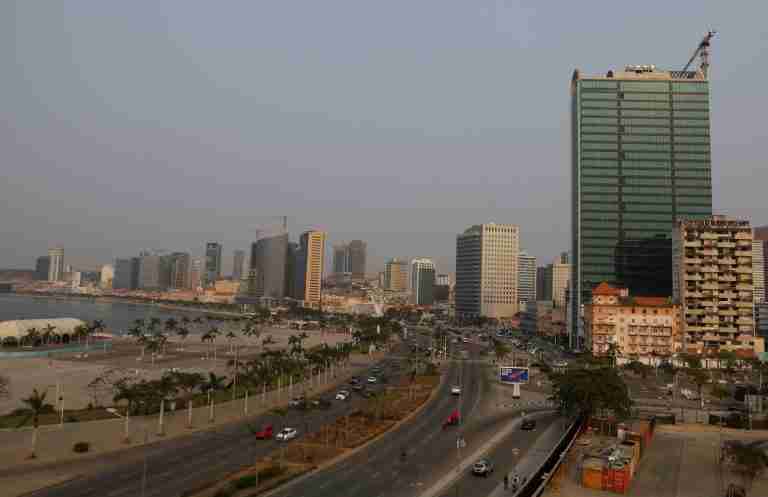
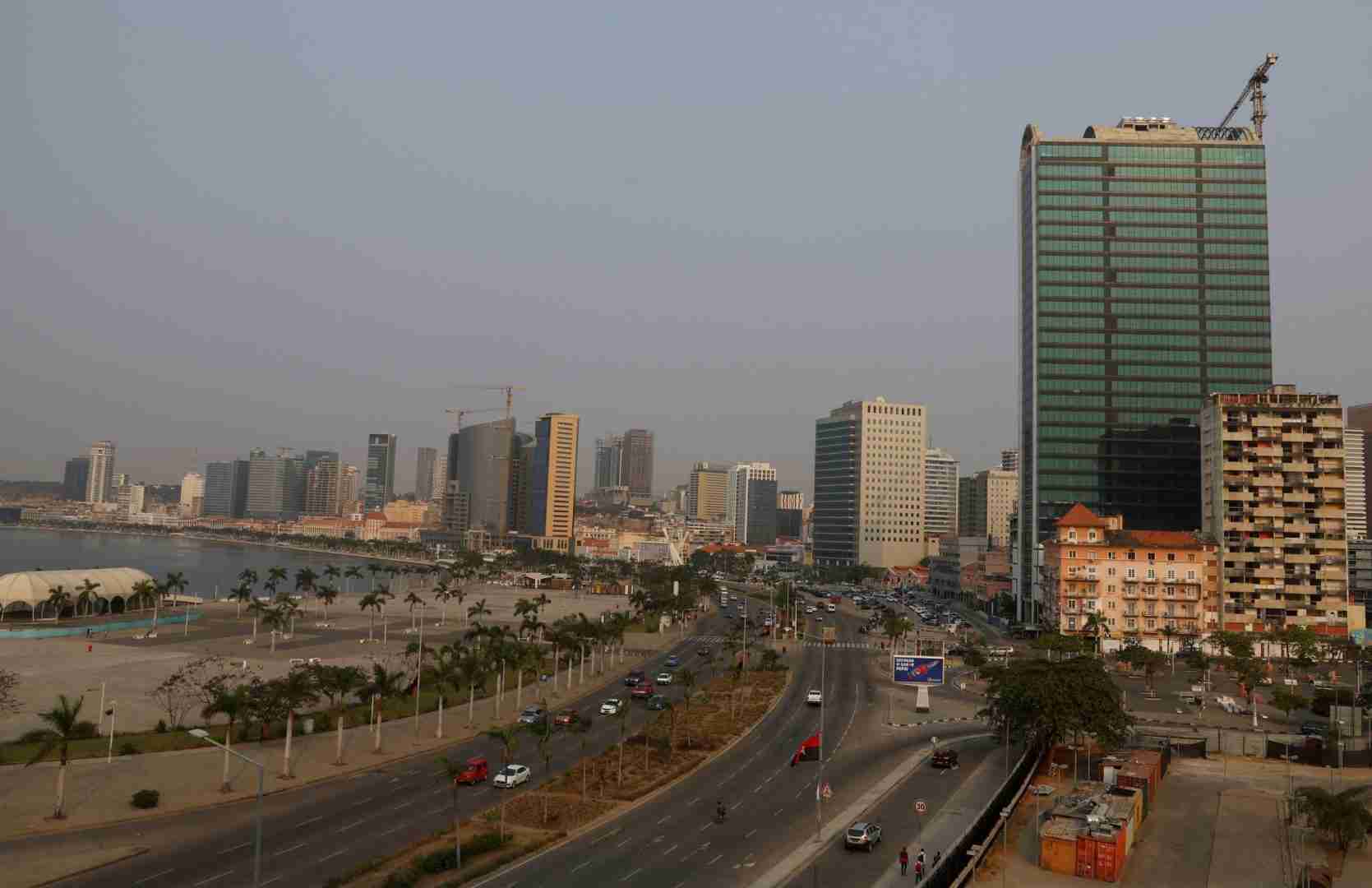
An intricate series of pipes off Angola’s Atlantic coast snakes toward a new fuel refinery that signals the country’s push for energy independence — and its use of private creditors, instead of banks, to fund a big-ticket project.
“We’re not the lender of last resort,” said Felipe Berliner, co-founder of emerging markets asset manager Gemcorp, which invested in the project as well as led the syndicate that provided the bulk of funding for the refinery, using private capital. “Sometimes we are the only lender.”
Private credit for emerging markets — driven by investors’ hunt for yields and saturation in developed Western markets — could grow exponentially, veteran investors told Reuters, providing tens of billions in funding as bilateral lending and foreign aid shrink.
“This is a paradigm shift,” said Pramol Dhawan, head of emerging markets portfolio management at PIMCO. “The need to globally reallocate is not a hedge — it’s a secular thesis.”
PIMCO has committed around $30 billion across 140 emerging market deals in five years, and expects to boost annual lending by 30% this year to $10 billion. Other investors are targeting similar increases.
RAPID GROWTH, BUT YIELDS SQUEEZED
Private credit skyrocketed over the past 20 years, with global assets under management rising to over $1.2 trillion from $200 million in the early 2000s, according to the Bank for International Settlements.
The funding filled a gap for companies, mainly in the U.S., as banks limited lending due to regulations and capital requirements.
Today, emerging markets get less than 10% of that cash.
But the U.S. and Europe are saturated; competition has driven down margins, and bets are riskier. Experts from JPMorgan CEO Jamie Dimon to the IMF warn private credit looks shaky; the collapse of U.S. firms Tricolor and First Brands underscored the risks.
Emerging markets, investors say, have bankable projects so keen for cash that you can pick and choose.
“Emerging market companies have been forced to be more fundamentally conservative,” said Matt Christ, portfolio manager at London-based global investment manager Ninety One. Developed markets are “priced for perfection”, while emerging markets offer more upside.
He said EM yields are 150 to 300 basis points higher than their developed market peers — and risk is often lower than ratings suggest.
Christ, whose private credit portfolio is around $8 billion globally, sees scope to expand to $15 billion. EM firms, he said, are used to volatility and political instability — unlike most Western firms.
“Developed market companies are going into an era they’ve never experienced before, but emerging market companies have been doing this for a long time,” he said.
Gustavo Ferraro, head of capital solutions at emerging markets-focused fund manager Gramercy, also said EM risk profiles and returns have surpassed those in developed markets.
“The U.S. market isn’t the benchmark anymore,” he said. “Our (investors) want yield and uncorrelated exposure.”
Gramercy has doubled its private credit investment in five years to $4.8 billion, focusing on Latin America, Turkey and parts of Africa.
Ninety One said that in Turkey, where authorities are limiting bank lending to cool inflation, private credit is filling a gap.
FROM SOVEREIGNS TO SAUDI COMPANIES
Most EM private credit is asset-backed — giving investors anything from company shares to control over the project itself.
The structure favours infrastructure, but funding has gone to sovereign budgets and Turkish cities’ transport networks.
Angola’s new refinery, mostly funded by Gemcorp with state oil company Sonangol also providing funds, will ultimately run at 60,000 barrels per day and make sub-Saharan Africa’s No. 2 oil producer less reliant on costly fuel imports. The plant’s first phase, which cost $475 million, is due to start operation by the end of the year.
Gemcorp has also funded a wind farm in Lake Turkana in Kenya, a water sanitation project in Angola and power transmission between Angola and Namibia.
A Gemcorp survey showed 67% of EM private credit went to large or medium corporates, and 22% to sovereign or quasi-sovereign projects.
Gemcorp is launching a $1 billion fund targeting mid-market Saudi companies.
“They are underfunded, they don’t have access to the flexible capital they need to maintain growth from the government’s fiscal push,” Berliner said.
The firm also funds Central American commodity exports to the U.S., West African fuel prepayment deals and gold producers.
Berliner and others say private credit is flexible, fast and offers customised repayment terms — from upfront fees to extended maturities or EBITDA warrants (earnings before interest, taxes, depreciation, and amortization) — making it ideal for upstarts and lower-rated sovereigns.
“We’re not replacing banks anymore. We’re building something that didn’t exist,” Ferraro said. “This is bespoke financing for bespoke problems. That’s what EM has in abundance.”
Privately, some bond investors worry private credit — nimbler and less onerous than bonded debt — could eat into their business. Others fear bigger problems if borrowers hit trouble.
“If something goes wrong, like a big restructure, how does private credit deal with that? We don’t really know,” said Daniel Cash, associate professor of law at the UK’s Aston University, adding that the “much more opaque” lending could also create issues.
Reporting by Libby George in London and Rodrigo Campos in New York. Additional reporting by Nell Mackenzie; Editing by Susan Fenton
Brent crude futures were down 30 cents, or 0.46%, to $65.17 a barrel at 1:06 p.m. EDT. U.S. West Texas Intermediate crude was down 20 cents, or 0.32%, to $61.49
International News via Reuters:
Oil prices edged lower on Tuesday as investors weighed a smaller-than-expected increase to OPEC+ output in November against signs of a potential supply glut.
Brent crude futures were down 30 cents, or 0.46%, to $65.17 a barrel at 1:06 p.m. EDT. U.S. West Texas Intermediate crude was down 20 cents, or 0.32%, to $61.49.
Both contracts settled more than 1% up in the previous session after the Organization of the Petroleum Exporting Countries plus Russia and some smaller producers, together known as OPEC+, decided to increase collective oil production by 137,000 barrels per day, starting in November.
The move was in contrast to market expectations for a more aggressive increase, a sign that the group remains cautious in light of predictions for a global supply surplus in the fourth quarter as well as next year, said ING analysts.
Market sentiment remains subdued, in particular after Saudi Arabia opted to keep the official selling price of its flagship crude to Asia unchanged, defying analyst expectations for an increase, StoneX analyst Alex Hodes said in a note on Tuesday.
On the demand side, India’s fuel demand rose by 7% year-on-year in September, according to data from the Petroleum Planning and Analysis Cell of the country’s oil ministry.
On the supply side, U.S. oil production is expected to hit a larger record of 13.53 million bpd this year, up from a prior forecast of 13.44 million bpd, the Energy Information Administration said on Tuesday.
Global oil inventories are also expected to rise through next year as non-OPEC+ countries lead oil output growth, according to the EIA, putting significant downward pressure on commodity prices in the months ahead.
JPMorgan said global oil inventories, including crude stored on water, have risen every week in September, adding 123 million barrels during the month.
China is building oil reserve sites at a rapid clip as part of a campaign to boost stockpiles, according to public data, traders and industry experts.
Geopolitical factors have kept a floor under prices, with conflict between Russia and Ukraine affecting energy assets and creating uncertainty over Russian crude supply.
Russia’s Kirishi oil refinery halted its most productive distillation unit after a drone attack and subsequent fire on October 4, with recovery likely to take about a month, two industry sources said on Monday.
Investors are also awaiting U.S. oil stocks data, due later on Tuesday from the American Petroleum Institute.
“Right now the market is locked in a sideways pattern, waiting to see what happens with inventories,” said Phil Flynn, a senior analyst at Price Futures Group.
Reporting by Georgina McCartney in Houston, Enes Tunagur and Robert Harvey in London, Anjana Anil in Bengaluru and Siyi Liu in SingaporeEditing by Clarence Fernandez, David Goodman, Rod Nickel and Nia Williams
Opposition accused of failing in its primary role, to evaluate legislation
Statement by Owen K. Darrell, Minister of Tourism, Culture & Sport, Constituency #15, Pembroke East, Senator
The One Bermuda Alliance’s embarrassing admission that there was “some misunderstanding of the technical aspects of the deal” demonstrates a disturbing lack of competence and leadership within that organization.
The Opposition’s role is a critical part in Bermuda’s governance. Their primary function is to evaluate and critique legislation to hold the government accountable. They have admitted that in this instance they failed to perform their primary role.
The OBA have admitted that their Senate team was either incapable of comprehending legislation that has been in the public domain for weeks and was already debated and supported by the OBA in Parliament, or that there is no communication within their Party.
The OBA’s incompetence or failure to communicate with each other could have jeopardized a new hotel development and delayed jobs and opportunities for Bermudians.
Fortunately, the people will not have to pay the price for the OBA inability to perform.
Their incompetence and abject failure to perform their constitutional roles is something that should embarrass every member of the OBA and remind every Bermudian that they are just not ready.
Due to rising imports and U.S. tariffs, EU steel producers are operating at only 67% of capacity
International News via Reuters:
The European Commission proposed on Tuesday cutting tariff-free steel import quotas by almost half and a 50% duty for excess shipments in a bid to preserve viable steelmaking in the European Union.
Due to rising imports and U.S. tariffs, EU steel producers are operating at only 67% of capacity and the new measures, in line with those reported by Reuters last week, are designed to push that up towards 80%.
EU steel is currently protected by safeguards that cap imports of 26 steel grades, with 25% tariffs above those limits. However, they have steadily risen each year despite declining demand and, under World Trade Organization rules, must expire in mid-2026.
The Commission is now proposing a tariff-free import volume of 18.3 metric tons a year, down 47% from 2024 quotas, and a doubling of the out-of-quota duty to 50%, in line with Canada and the United States, though the latter’s tariffs apply from the very first ton.
The Commission said the quota volumes would match imports from 2013, when it says overcapacity began. The measures, which will require approval by EU governments and the European Parliament, will also require importers to show proof of the origin of their steel.
Axel Eggert, director general of European steel association Eurofer, said the measures would cut imports to a 15% market share and were the vital step the industry was seeking, potentially saving hundreds of thousands of jobs.
The bloc will also need to enter negotiations with WTO partners, the outcome of which could be tariff-free allocations. Only European Economic Area countries Iceland, Liechtenstein and Norway will be exempt.
The top exporters of steel to the EU in 2024 were Turkey, India, South Korea, Vietnam, China, Taiwan and Ukraine.
The new system could help secure a deal with the United States to replace 50% U.S. tariffs with a quota system, as outlined in the U.S.-EU deal at the end of July.
The EU hopes like-minded partners will cooperate to address overcapacity, which could involve ring-fencing their respective production from China in particular.
Reporting by Philip Blenkinsop; Editing by Emelia Sithole-Matarise
The charge – relating to the alleged display of a flag of Iran-backed Lebanese militia Hezbollah during a London concert in November 2024 – was thrown out last month
International News via Reuters:
Britain’s prosecution service said on Tuesday it was appealing a court decision to dismiss terrorism charges against a member of Irish rap group Kneecap, Liam Óg Ó hAnnaidh, also known as Mo Chara.
The charge – relating to the alleged display of a flag of Iran-backed Lebanese militia Hezbollah during a London concert in November 2024 – was thrown out last month after the court ruled it had been brought outside the six-month statutory limit.
“We are appealing the decision to dismiss this case as we believe there is an important point of law which needs to be clarified,” a spokesperson for the Crown Prosecution Service said.
Ó hAnnaidh, 27, under the anglicised name Liam O’Hanna, was charged in May under the Terrorism Act which states that it is a criminal offence to display an article in a way which arouses reasonable suspicion that someone is a supporter of a banned organisation.
Kneecap, known for politically charged lyrics and pro-Palestine messaging, has previously said the case was an attempt to silence dissent. The group cancelled its U.S. tour in August, citing the legal proceedings.
Northern Ireland First Minister Michelle O’Neill last month welcomed the court’s decision to throw out the case, saying the charges were part of an attempt to silence critics of Israel.
Reporting by Sam TabahritiEditing by William Schomberg
Stablecoins are digital tokens that have stable value against a regular currency and are backed by reserves like the currency itself or other assets
International News via Reuters:
Euro zone finance ministers will discuss on Thursday how they can support the development of euro-denominated stablecoins so as not to leave the rapidly growing market only to the United States, a senior euro zone official said.
Stablecoins are digital tokens that have stable value against a regular currency and are backed by reserves like the currency itself or other assets. The stablecoin market is now around $300 billion, but is forecast to grow tenfold over the next decade, the official said.
Almost all stablecoins now are denominated in U.S. dollars and U.S. legislation called the Genius Act from July aims to keep that dominance by requiring stablecoin issuers to base them on U.S. dollars or U.S. treasuries.
“So the discussion is basically how should we position ourselves towards all this,” said the official, who has taken part in the preparations for the ministerial meeting.
Last month, a consortium of nine European banks, including heavyweights ING and UniCredit launched a euro-denominated stablecoin to counter U.S. digital market dominance. But euro stablecoins still account only for around $620 million out of the $300 billion total issuance.
Europe has its own legislation on stablecoins, called Markets in Crypto-Assets Regulation (MiCA), and the ministers will discuss if it needs to be changed to help create euro-denominated stablecoins.
“(The ministers will discuss) whether we have got the right balance between risk mitigation and promoting financial innovations, whether we should be more supportive, if there are some regulatory issues that we need to fix to better nurture the development of high quality European stable points and also discuss how all this links together with the digital euro,” the official said.
“This is very much an early engagement. It is mainly about putting this issue in the hands of finance ministers, getting their attention, first reactions, and we will then see where it takes us later,” the official said.
Reporting by Jan Strupczewski; Editing by Toby Chopra
Police and firefighters were using drones and sniffer dogs to search for the missing inside the building located near the Spanish capital’s opera house and the royal palace
International News via Reuters:
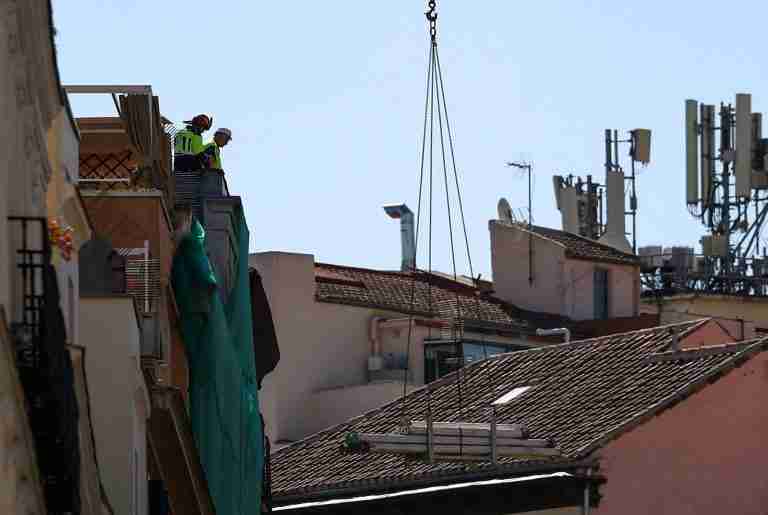
At least four construction workers were missing after a building under renovation partly collapsed in central Madrid, authorities said on Tuesday.
The three men and one woman were reported missing by the construction company in charge, Madrid’s Deputy Mayor Inma Sanz told reporters.
“The upper floors collapsed and fell downwards, therefore we’re talking about a very significant amount of rubble that will take a long time to clear – not just hours, but probably several days,” Sanz said.
Police and firefighters were using drones and sniffer dogs to search for the missing inside the building located near the Spanish capital’s opera house and the royal palace.
Two people were lightly injured while a third person was taken to hospital with a broken leg, said Beatriz Martin, an emergency services spokesperson.
The partial collapse of the five-storey building occurred inside, leaving its facade intact, Martin added.
Construction worker Mikhail was pumping concrete into the building’s lower floors and was outside when the collapse occurred. He said he saw a large cloud of dust and immediately sprinted away.
“I was the first to run, I didn’t care about anything else. I’ll save my life first and, if I can, save others later,” he told reporters.
The building was being converted into a hotel by developer Rehbilita, according to information on its website. Rehbilita did not immediately respond to a request for comment.
Reporting by David Latona, Emma Pinedo, Guillermo Marzine and Corina Pons; Writing by Charlie Devereux; Editing by Andrei Khalip and Inti Landauro
Freshman golfer Dylan Muso, competing individually for McDaniel University, concluded the 36-hole opening day of the West Pines Collegiate Open tied for 33rd place in the individual standings at 5-over par 147. The tournament, hosted at the West Pines Golf Club, provides Muso with further challenging competitive exposure.
Muso’s overall performance was notable for his resilience and aggressiveness in hunting birdies, having amassed eight total birdies over the two rounds, the highest total for any McDaniel player on the day.
Round analysis
Round 1: Muso shot 2-over par 73. This round was characterized by steady play, featuring 3 Birdies and 11 Pars before being slightly marred by a late double bogey.
Round 2: He posted a 3-over par 74. This round saw a more volatile scorecard, with 5 Birdies showing his willingness to attack the course, balanced by 6 Bogeys and 1 Double Bogey.
Muso enters the final round positioned in the middle of the pack, looking to maintain his strong birdie rate while minimizing dropped shots to climb the leaderboard.
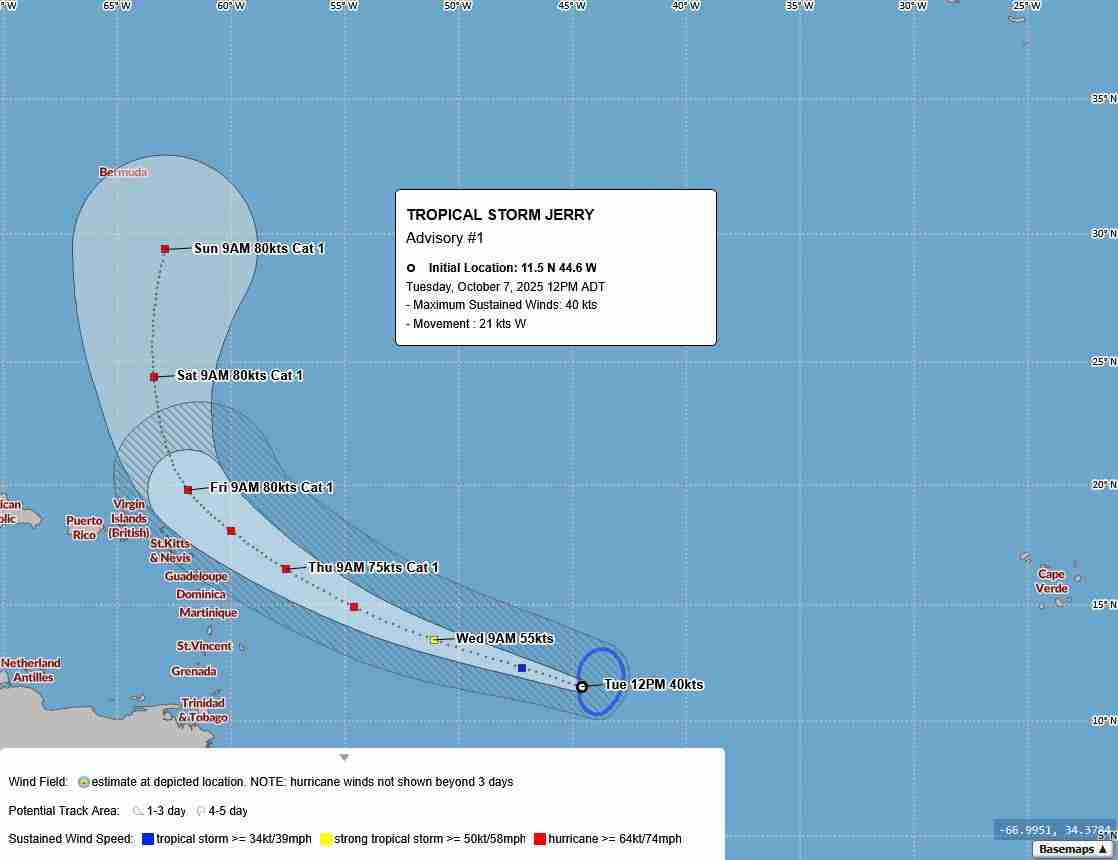
Conditions are expected to be favorable for gradual intensification, and Jerry is forecast to reach hurricane strength in the coming days. The projected track suggests Jerry will approach near the northern Leeward Islands by Thursday or Friday. Many models suggest that after that, Jerry will begin to curve northward — turning away from the U.S. coastline and veering into the open Atlantic.
A new tropical storm, Jerry, has formed in the central Atlantic and is being monitored closely by forecasters. As of the latest advisories, Jerry is located around 1,300+ miles east of the northern Leeward Islands, moving west-northwest at about 24 mph.
Some forecast guidance indicates that Jerry’s northward turn could steer it well east of Bermuda. However, it’s still early in its development and track, forecast confidence is low, and small shifts in direction could change the risk profile for the Island.
Runner Gabriella Cechini has reinforced her strong start to the cross country season, delivering a top-ten performance at the prestigious Paul Short Run Presented by ASICS at Lehigh University.
Representing Mercersburg Academy, Cechini competed in the highly competitive Girls Brown 5K Race. She crossed the finish line in an excellent sixth place with a time of 18 minutes and 52 seconds, achieving a sub-19-minute effort that placed her among the top competitors in the enormous regional field.
Cechini’s strong individual finish provided a significant boost to the Mercersburg Academy Girls team, helping them secure a respectable 10th place finish overall in the final team standings.
Given the depth of talent at the Paul Short Run, Cechini’s consistent success marks a crucial step in her development as she progresses through the demanding fall season schedule.
To provide the best experiences, we use technologies like cookies to store and/or access device information. Consenting to these technologies will allow us to process data such as browsing behavior or unique IDs on this site. Not consenting or withdrawing consent, may adversely affect certain features and functions.
Functional
Always active
The technical storage or access is strictly necessary for the legitimate purpose of enabling the use of a specific service explicitly requested by the subscriber or user, or for the sole purpose of carrying out the transmission of a communication over an electronic communications network.
Preferences
The technical storage or access is necessary for the legitimate purpose of storing preferences that are not requested by the subscriber or user.
Statistics
The technical storage or access that is used exclusively for statistical purposes.The technical storage or access that is used exclusively for anonymous statistical purposes. Without a subpoena, voluntary compliance on the part of your Internet Service Provider, or additional records from a third party, information stored or retrieved for this purpose alone cannot usually be used to identify you.
Marketing
The technical storage or access is required to create user profiles to send advertising, or to track the user on a website or across several websites for similar marketing purposes.