Conservationists turn to genetics to unravel a surprising twist in the life of one of the world’s rarest seabirds
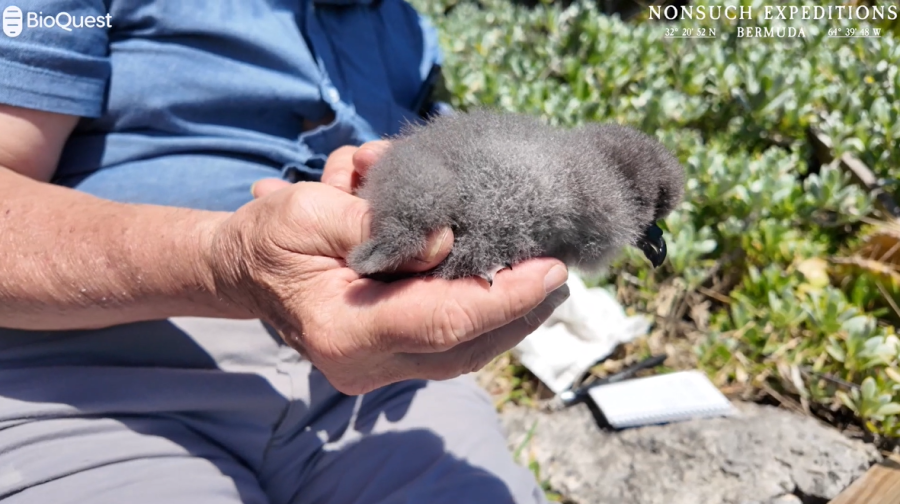
Cradling a cahow chick in their hands, Jeremy Madeiros, Chief Terrestrial Conservation Officer and apprentice Haley Raynor from BioQuest pose a playful question: “Whose your daddy, bie?”
It’s not a question conservationists ever thought they’d be asking – especially of a species generally believed to be monogamous.
But over on Nonsuch Island, where it’s currently nesting season for Cahows – Bermuda’s only endemic bird – a rare event is challenging long-held assumptions.
Jean-Pierre (JP) Rouja, Nonsuch Expeditions Founder, CahowCam Creator and BioQuest Co-Founder said, “This year in particular, there’s been a lot of activity in the nest where we have the cameras and at a certain point last fall, we noticed some mating activity and we suspected that it might not be the resident male but we weren’t quite sure.”
“Sure enough, when Jeremy and I got out there the next day to do a health check. We found that it was the resident female of the nest, but the male that was in with her, was not the resident male. And you know, which was a surprise for us because they are generally thought to be monogamous. But it just happened that the male from that nest had not come back yet. And the other guy was visiting.”
For the past 14 years, conservationists have been livestreaming Cahow nest activity around the clock, providing unprecedented insights into the species’ life cycles and breeding patterns.
This technology offered a front-row seat to an unexpected love triangle, which not only led to a fight between the non-resident male and the returning resident male, but also produced a chick whose true parentage is now in question.
Researchers say a paternity test will be needed to determine who the father is.
And the drama doesn’t end there. The non-resident male eventually returned to his original mate – and welcomed a chick of his own – raising the possibility of half-sibling chicks that only genetic testing can confirm.
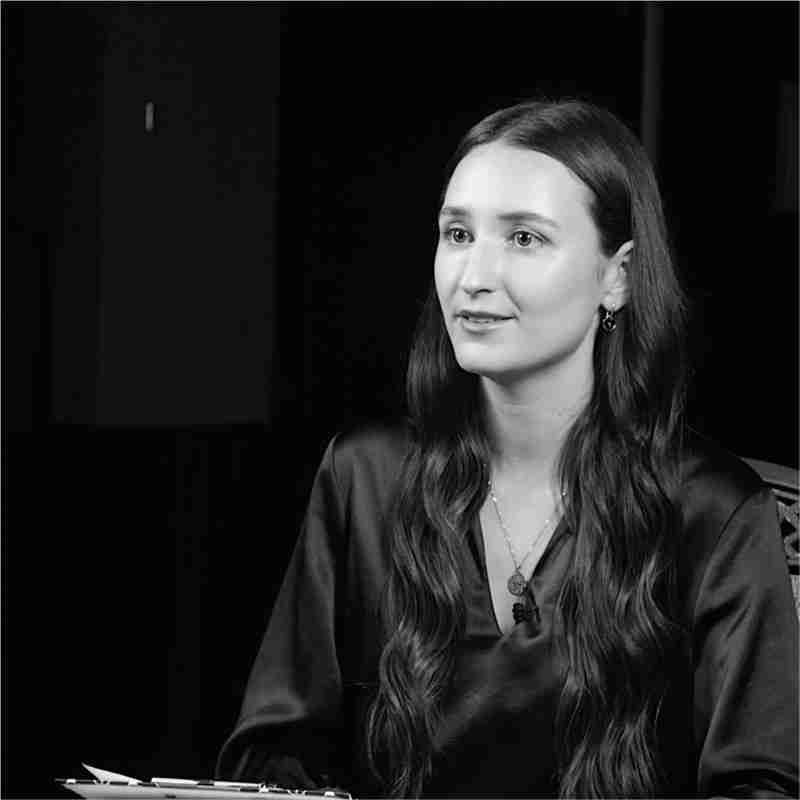
Ms Raynor explained that the next course of action is to “collect blood samples from the two baby chicks to see if they’re potentially related and then from there we can figure out who the father is.”
She added, “From previous lab work, we have the sample for the potential father of the chick so what we’re going to do is prep that, sequence it and see if he’s the father.”
This genetic work will be carried out by BioQuest, an NGO focused on biodiversity conservation through genomics, co-founded by JP Rouja and Dr Carika Weldon, founder of CariGenetics.
Mr Rouja described genomics as the “latest tool in the conservation toolkit,” allowing researchers to fill in gaps in the Cahow family tree and safeguard the future of the critically endangered species.
“Through BioQuest, we’ve already created the reference genome for the cahow, which is a really big deal,” said Mr Rouja. “And now we’re moving on to a population study where we’re doing genomics of as many birds in the population that we can get samples from. Through that, kind of like a ‘23 and Me’, we will be able to build a family tree of the cahows and from that we’ll be able to get a better understanding of why some pairs are more successful than others/ some pairs never produce a chick, and going back through the family tree of a species that was thought extinct for 300 years.”
The work could also help guide other conservationists working to rescue small, vulnerable populations elsewhere.
“Bermuda is definitely leading the charge in this area of research,” added Mr Rouja. “We’re doing everything open source and sharing as much as we can with others around the world from the cahow cam designs to what we’re going to be learning through this process, it’s all about sharing and helping other species.”
This nesting season, 40 Cahow pairs are producing around 24 chicks. Within the next two years, conservationists expect the Nonsuch colonies to become the largest sub-colonies in Bermuda – and the world – with technology playing a vital role in the species’ recovery.
As for the burning question of paternity? We’ll have to wait just a little longer for the results.