
Posits a combined opposition does not mean uniformity
Update from the Emperial Group via press release:
From the very beginning, the Emperial Group has expressed the importance of a unified combined opposition for the purpose of achieving the combined opposition’s common objective, which is to remove the incumbent Progressive Labor Party (PLP) government because of its incompetent leadership manifested in broken promises.
In the run-up to the February 18 General Election, the debate over the role and effectiveness of independent candidates has intensified.
Scott Pearman of the One Bermuda Alliance (OBA) recently asserted that independents lack the cohesion needed to govern effectively, warning that their presence may fragment the opposition and diminish its ability to lead.
While Pearman raises a valid concern about unity in governance, unity does not mean
uniformity.
The emergence of 27 registered independent candidates in this election is not
a fluke—it is a direct response to the failures of both major parties to serve the people
effectively. Bermudians are demanding representation that prioritizes their interests, not
party politics.
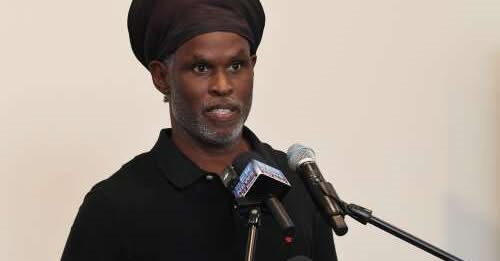
Former Progressive Labour Party MP Rolfe Commissiong has articulated a key point that
Scott Pearman overlooks: Bermuda’s political order must evolve beyond rigid party
structures.
Commissiong, now an independent candidate, recognizes that traditional party politics
has often prioritized internal power struggles over the needs of the people.
He, like many others, advocates for a cooperative approach where independents and opposition forces align strategically rather than compete needlessly.
The “Vote 4 Unity” campaign is not about dividing the opposition—it is about bringing it
together in a way that ensures every vote counts.
In this election, it is crucial that independents and the OBA do not cancel each other out in key constituencies.
Instead of working against one another, both groups must identify where their strengths align and
strategically cooperate to challenge the current administration.
The goal is – unlike what the PLP would wish – not to weaken the opposition but to
strengthen it through strategic unity.
This means ensuring that seats are not lost due to vote-splitting and that opposition forces work as a united front where necessary.
Pearman’s view implies that voters must choose between the OBA and the PLP, but that is
precisely the thinking that has led us to this political moment.
Bermudians have already decided that the old system is not enough. They are seeking representatives who are accountable to them—not to party leaders.
The rise of independent candidates does not weaken democracy—it strengthens it. By electing independents who are willing to work collaboratively with traditional opposition forces, Bermudians can reshape governance into something more representative, transparent, and effective.
This election is about more than party loyalty. It is about strategy, leadership, and the
courage to embrace a new way of governing.
A vote for an independent is not a gamble—it is a vote for accountability, for strategic
governance, and for a Bermuda that belongs to the people, not just political parties.
The choice is clear. Work together, or lose together. It’s time to choose unity.
Update via Emperial Group press release