Thursday, November 5, 2026
Home Blog Page 1029

Brightening up the city, one mural at a time

Seven Bermudians among artists starting work today
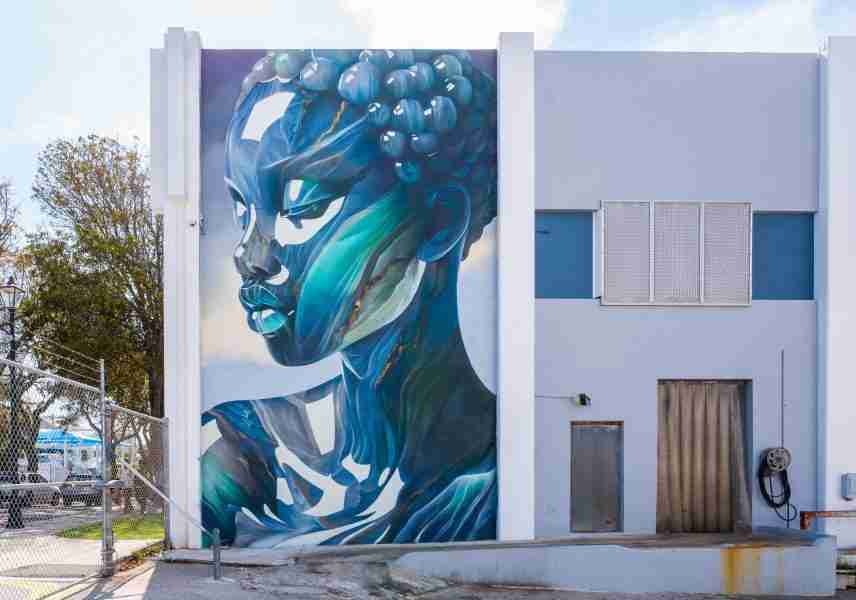
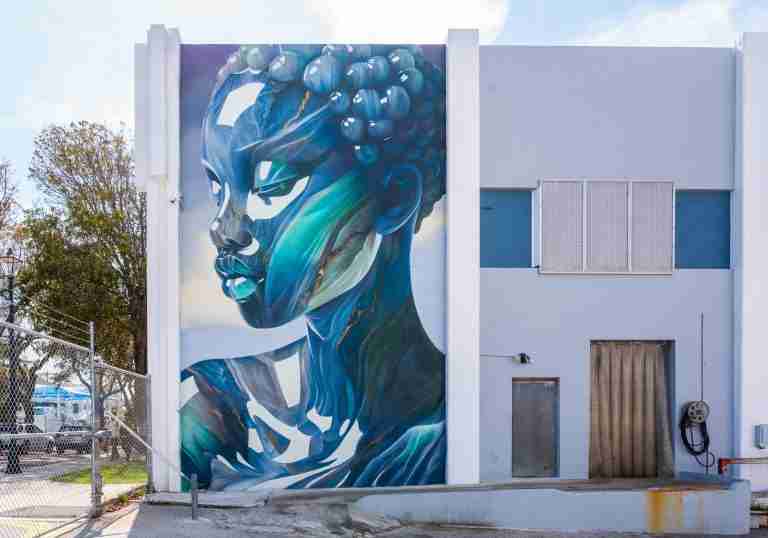
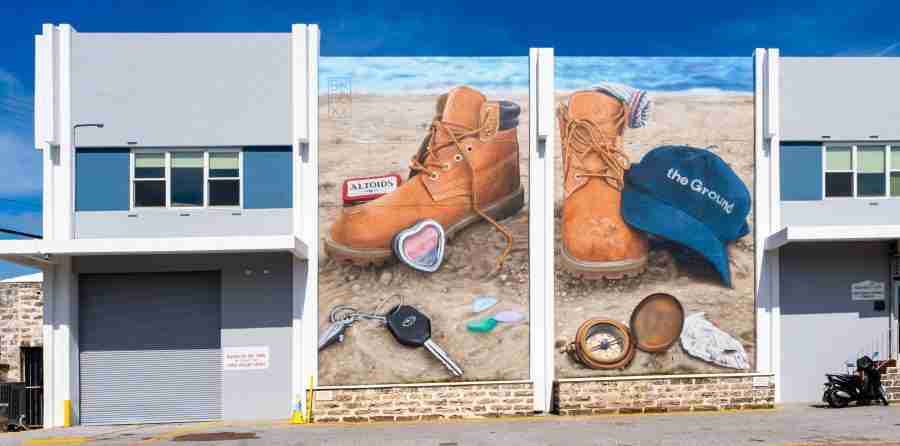
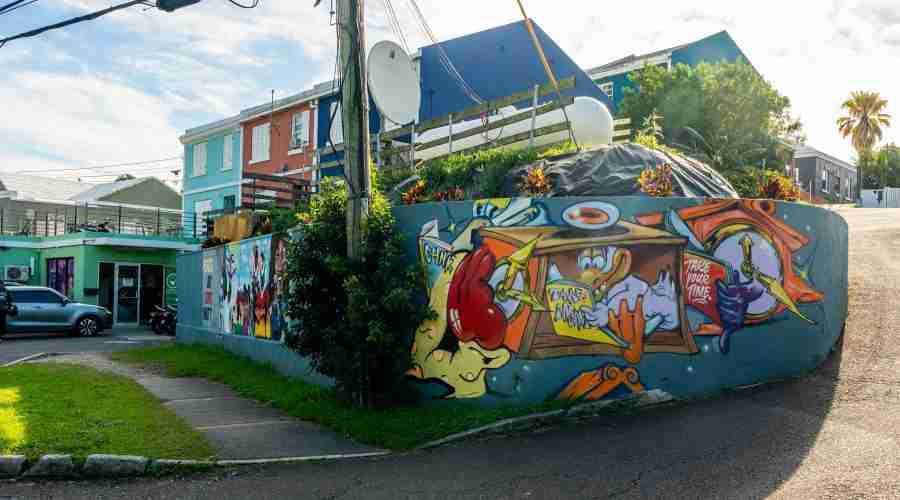
Images show murals that were painted during last year’s Bermuda Walls event. Photos supplied

Media release:
Bermuda Walls returns this week for a spectacular celebration of street art which will see the creation of more than 10 new murals across Hamilton in a collaboration between local and international artists. 
From today, the public are invited to keep their eyes peeled for the 11 international and 7 Bermudian muralists who are hitting the streets, and to tag them in photos on social media to help document the creative process. The festival aims to paint the town multicolour in a celebration of all things Bermuda. 
On Sunday, April 13th,  the public is invited to witness the finished murals while enjoying a fun (and free) family day out at Woodlands Road. Attendees can look forward to live DJ music, a pop-a-wheelie competition hosted by Mr Fotogenik, bouncy castles and much more. For those looking to make a day of it, food and drink will be available from a wide array of local food trucks, including Ashley’s Lemonade and J&B’s Wood Fired Pizza. 
Those attending the celebration will also have a chance to grab an exclusive goodie bag, including a limited run tee-shirt and a selection of products from Butterfield & Vallis.

Locations for the new murals are Parson’s Road (where four containers have been set up), Belvin’s on Happy Valley Road, the side of Par-La-Ville Parking lot, the Royal Gazette building on Par-La-Ville Road and Butterfield & Vallis on Woodland Road – where the final celebrations on Sunday will also take place. 
A map of the various sites will be shared later this week. For the real-time updates and news on the works happening, the public is encouraged to check out the festival’s Instagram at @bermudawalls.
The local artists featured this year are: Robyn Hooper; James Cooke, Keile Rabain, Shanna Hollis, Alshante Foggo, Jabarri Wilson and Carlos Santana.
The local artists featured this year are: Robyn Hooper; James Cooke, Keile Rabain, Shanna Hollis, Alshante Foggo, Jabarri Wilson and Carlos Santana. They will be joined by international muralists Hiero; Bacon; BK Foxx; CP1; CHNK; Binho; Karol Stefanini; JEKS; Nico; MRB Baby and Grabster.
‘Last year made it clear – Bermuda Walls belongs here,’ said Spencer Butterfield, CEO of Butterfield & Vallis and Co-Founder of Bermuda Walls. ‘Seeing the community embrace this festival of the arts was incredible, and we’re excited to keep building on that energy. This year, we invite everyone to come out, celebrate art and support the artists while enjoying a one-of-a-kind day out with friends and family.’
Nhuri Bashir, co-founder of Burnt House Productions and Bermuda Walls, said: ‘Bermuda Walls might only be a year old but already it feels like we started something that’s gonna last. This year, I’m especially excited about the new murals that are taking place in North Hamilton, the neighbourhood where I grew up. Art has the power to transform spaces and bring people together, and we can’t wait for everyone to see what’s coming.’
Glayson Leroy added: ‘I want to thank the people of Bermuda for welcoming this festival with open arms. Seeing the island come alive with colour and creativity has been inspiring. We’re so pleased to be bringing even more talent this year, and I for one can’t wait to see the magic they make.’

The Bermuda Walls festival celebration will take place this Sunday, April 13th, from 11am until 4pm. No tickets are required. Parking is available at the Bermuda Athletics Association and at Bull’s Head car park. Follow @BermudaWalls on Instagram for more updates. 
The event is made possible by further sponsorship and support from Butterfield & Vallis, The Hamilton Princess & Beach Club, Monster Energy, BermudAir, Burnt House Productions, Galera Collective,  BEDC, Montana Cans, World Wide Walls, BDA Spirits, Current Vehicles, All Rise Ltd., TFL Hospitality, SISL, BAA, Isolated and Masterworks.  
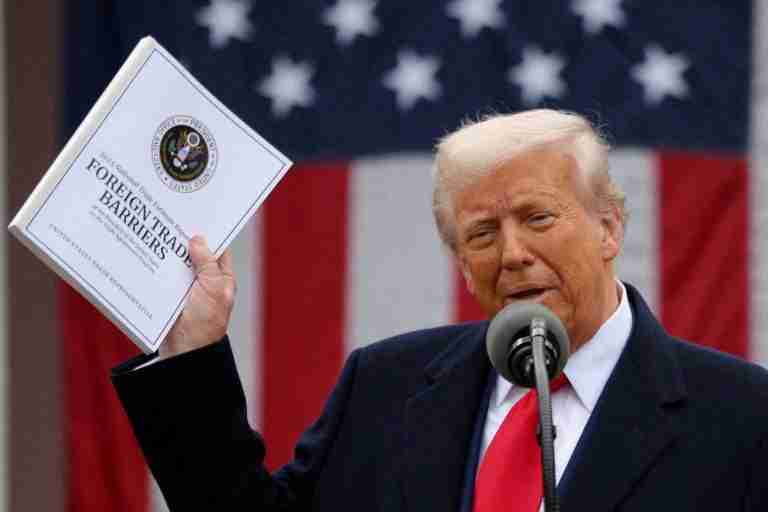
Trump compares tariffs to ‘medicine’ as Asian markets convulse

Asian stocks saw steep losses in early trading on Monday

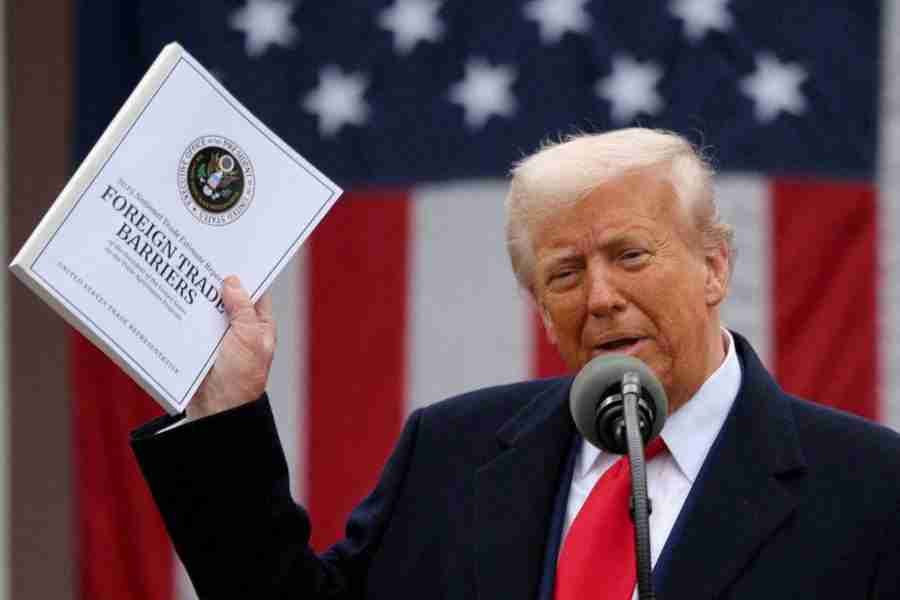
Donald Trump at the White House in Washington, D.C., April 2, 2025. REUTERS/Carlos Barria

International news via Reuters:

U.S. President Donald Trump said on Sunday foreign governments would have to pay “a lot of money” to lift sweeping tariffs that he characterized as “medicine,” prompting further carnage in global financial markets.

Asian stocks posted steep losses in early trading on Monday and U.S. stock market futures opened sharply lower as investors registered concerns that Trump’s tariffs could lead to higher prices, weaker demand, lower confidence and potentially a global recession. 

Speaking to reporters aboard Air Force One, Trump indicated he was not concerned about losses that have already wiped out trillions of dollars in value from share markets around the world.

“I don’t want anything to go down. But sometimes you have to take medicine to fix something,” he said as he returned from a weekend of golf in Florida.

Trump said he had spoken to leaders from Europe and Asia over the weekend, who hope to convince him to lower tariffs as high as 50% due to take effect this week.

“They are coming to the table. They want to talk but there’s no talk unless they pay us a lot of money on a yearly basis,” Trump said.

Trump’s tariff announcement last week jolted economies around the world, triggering retaliatory levies from China and sparking fears of a global trade war and recession.

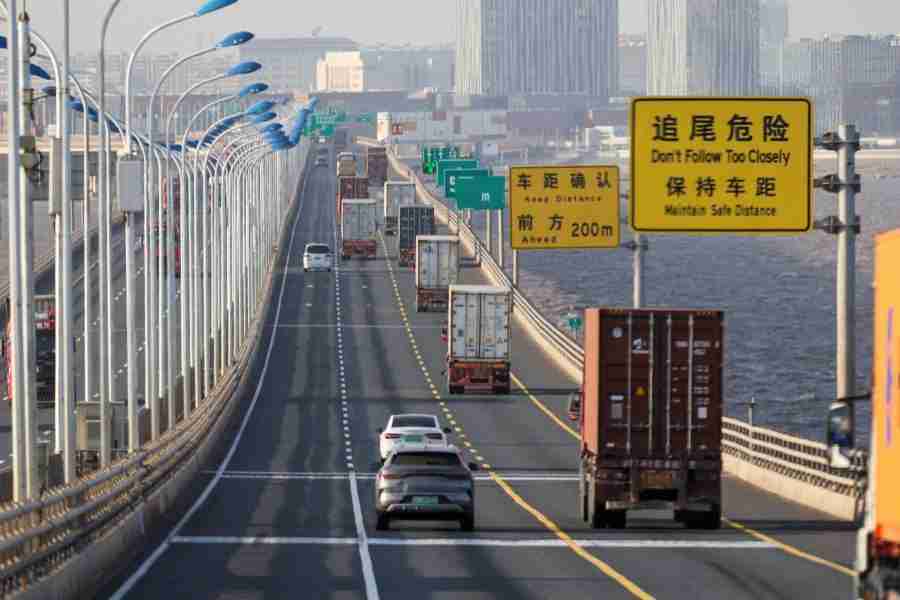
FILE PHOTO: Trucks loaded with shipping containers pass over Donghai Bridge to exit Yangshan Port outside of Shanghai, China, February 7, 2025. REUTERS/Go Nakamura/File Photo/File Photo

Investors and political leaders have struggled to determine whether Trump’s tariffs are here to stay, or part of a permanent new regime or a negotiating tactic to win concessions from other countries.

On Sunday morning talk shows, Trump’s top economic advisers sought to portray the tariffs as a savvy repositioning of the U.S. in the global trade order.

Treasury Secretary Scott Bessent said more than 50 nations had started negotiations with the U.S. since last Wednesday’s announcement. “He’s created maximum leverage for himself,” Bessent said on NBC News’ ‘Meet the Press’.

Commerce Secretary Howard Lutnick said on CBS News’ ‘Face the Nation’ the tariffs would remain in place “for days and weeks.”

White House economic adviser Kevin Hassett sought to tamp down concerns that the tariffs were part of a strategy to pressure the U.S. Federal Reserve to lower interest rates, saying there would be no “political coercion” of the central bank.

JPMorgan economists now estimate the tariffs will result in full-year U.S. gross domestic product declining by 0.3%, down from an earlier estimate of 1.3% growth, and that the unemployment rate will climb to 5.3% from 4.2% now.

Billionaire fund manager Bill Ackman, who endorsed Trump’s run for president, said Trump was losing the confidence of business leaders and warned of an “economic nuclear winter” unless he called a time out. 

TARIFF DEALMAKING

U.S. customs agents began collecting Trump’s unilateral 10% tariff on all imports from many countries on Saturday. Higher “reciprocal” tariff rates of 11% to 50% on individual countries are due to take effect on Wednesday at 12:01 a.m. EDT (4:01 a.m. GMT).

Some governments have already signaled a willingness to engage with the U.S. to avoid the duties.

Taiwan’s President Lai Ching-te on Sunday offered zero tariffs as the basis for talks with the U.S., pledging to remove trade barriers and saying Taiwanese companies will raise their U.S. investments.

Israeli Prime Minister Benjamin Netanyahu said he would seek a reprieve from a 17% tariff on the country’s goods during a planned meeting with Trump on Monday.

An Indian government official told Reuters the country does not plan to retaliate against a 26% tariff and said talks were under way with the U.S. over a possible deal.

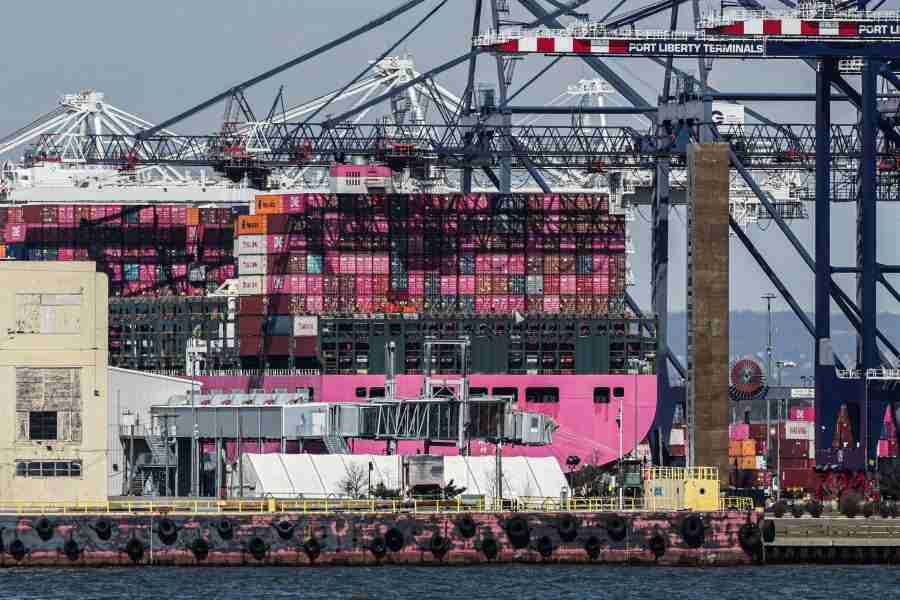
FILE PHOTO: Containers are stacked on the deck of cargo ship One Minato at Port Liberty New York in Staten Island, New York, U.S., April 2, 2025. REUTERS/Jeenah Moon/File Photo

In Italy, Prime Minister Giorgia Meloni – a Trump ally – pledged on Sunday to shield businesses that suffered damage from a planned 20% tariff on goods from the European Union.

Italian wine producers and U.S. importers at a wine fair in Verona on Sunday said business had already slowed and feared more lasting damage.

Reporting by Trevor Hunnicutt, Jarrett Renshaw, Daphe Psaledakis, Steve Holland, Douglas Gillison, Ted Hesson, Kanishka Singh and Susan Heavey in Washington; Tom Westbrook in Singapore; Ben Blanchard in Taipei; Sara Rossi in Verona, Italy; Khanh Vu and Francesco Guarascio in Hanoi; and Shivangi Acharya and Aftab Ahmed in New Delhi; Writing by Andy Sullivan and Ted Hesson; Editing by Ross Colvin, Chizu Nomiyama, Diane Craft, Nick Zieminski and Lincoln Feast

Aid cuts could leave more women dying in pregnancy and birth, UN says

Resulted in reduced staff numbers, closed facilities and supply chain disruptions

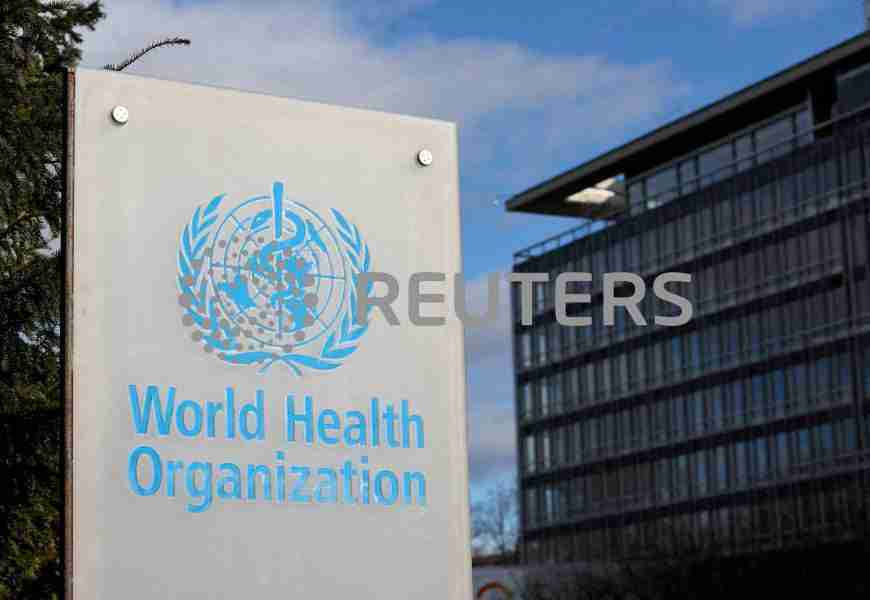
FILE PHOTO: A view shows The World Health Organization (WHO) headquarters in Geneva, Switzerland, January 28, 2025. REUTERS/Denis Balibouse/File Photo/File Photo

International news via Reuters:

Cuts to aid budgets are threatening to undermine years of progress in reducing the number of women dying during pregnancy and childbirth, and could lead to a rise in deaths, the United Nations has warned.

Globally, there was a 40% decline in maternal deaths between 2000 and 2023, a report by UN agencies including the World Health Organization (WHO) showed on Monday, largely due to better access to essential health services.

That could now go into reverse, the WHO said in a statement accompanying the report which did not mention specific cuts but came in the wake of a foreign aid freeze by the U.S. government and the ending of funding through the United States Agency for International Development (USAID) for many programmes.

Other donor countries including Britain have also announced plans to cut aid budgets.

“One of the headline messages is that the funding cuts risk not only that progress, but we could have a shift backward,” said Dr Bruce Aylward, Assistant Director-General, Universal Health Coverage at the WHO.

The cuts have had “pandemic-like effects” on health systems globally and could have a “more structural, deep-seated effect,” Aylward added.

The WHO said the cuts were already rolling back vital services for maternal, newborn and child health in many countries, reducing staff numbers, closing facilities and disrupting supply chains for supplies including treatments for hemorrhage and pre-eclampsia.

Cuts to other areas, such as malaria and HIV treatment, would also impact maternal survival, the UN said.

Even before the aid cuts led by the United States, things were backsliding in some countries, and progress has slowed globally since 2016, the report said.

In 2023, despite recent progress, a woman still died roughly every two minutes – around 260,000 in total that year – from complications that were mainly preventable and treatable, it added.

The situation was particularly bad in countries affected by conflict or natural disaster, although the U.S. itself is one of only four countriesto have seen its maternal mortality rate increase significantly since 2000, alongside Venezuela, the Dominican Republic and Jamaica.

The COVID-19 pandemic also had an impact, the report said: 40,000 more women died due to pregnancy or childbirth in 2021, bringing the total number of deaths that year to 322,000.

“While this report shows glimmers of hope, the data also highlights how dangerous pregnancy still is in much of the world today – despite the fact that solutions exist,” WHO Director-General Tedros Adhanom Ghebreyesus said.

The report itself was part-funded by USAID.

Reporting by Jennifer Rigby and Mariam E Sunny; Editing by Andrew Heavens

EU finance ministers to discuss joint fund to buy and own defence gear

The EU is looking to boost military spending by 800 billion euros over the next four years

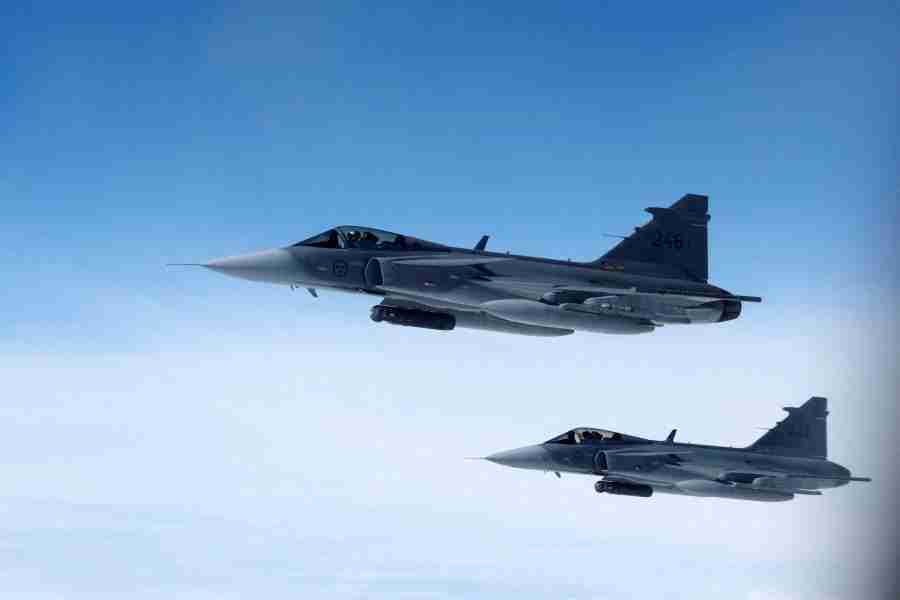
FILE PHOTO: Swedish Air Force Saab JAS 39 Gripen fighter jets fly alongside an aircraft simulating aerial interceptions, during a media day illustrating how NATO Air Policing safeguards the Allies’ airspace in the northern and northeastern region of the Alliance, July 4, 2023. REUTERS/Piroschka van de Wouw/File Photo

International news via Reuters:

European Union finance ministers will discuss this week the setting up of a joint intergovernmental defence fund that would buy and own defence equipment, and charge members a fee for its use, a paper prepared for the ministers’ discussions showed.

The paper, drafted by the Bruegel think tank, was commissioned by the Polish presidency of the EU and could generate large defence funding without boosting national public debt levels – a worry of many high-debt countries.

The paper is part of an EU discussion on how to finance preparations against a potential attack from Russia as European governments realise they can no longer fully rely on the United States for their security.

The EU is already looking to boost military spending by 800 billion euros ($876.40 billion) over the next four years by loosening its fiscal constraints on defence investment and jointly borrowing for large defence projects against the security of the EU budget.

The defence fund, to be discussed on Saturday during an informal meeting of EU finance ministers in Warsaw, would come on top of the already announced financing initiatives. 

The fund, called the European Defence Mechanism (EDM), would be established under an intergovernmental treaty and have substantial paid-in and callable capital, allowing it to borrow on the market.

The EDM, which could also issue loans, would admit members from outside the European Union, like Britain, Ukraine or Norway.

The added benefit of the Bruegel idea would also be to promote a single European market for defence equipment to lower costs and pool resources.

Defence procurement and production in the 27-nation EU is highly fragmented with at least seven different types of tanks, nine types of self-propelled howitzers and seven different types of infantry fighting vehicles, which increases costs, reduces interoperability and hinders economies of scale.

FOCUS ON “STRATEGIC ENABLERS”

The Bruegel proposal said the fund could focus on “strategic enablers” – costly military infrastructure and equipment armies need to operate, now often provided by the United States.

These include joint command and control systems, satellite-based intelligence and communication, development of expensive new weapon systems such as fifth- or sixth-generation fighter jets, integrated weapon systems needed by multiple countries like strategic air defence, strategic large-scale air transport and maritime logistics, missiles and nuclear deterrence.

“The European Defence Mechanism … would serve as an exclusive procurement agency in specified areas, as planner, funder and potentially owner of strategic enablers, and as a legal commitment to observe defence single market rules within the jurisdictions of its members,” the Bruegel proposal said.

Bruegel said Europe had a chance to reduce its military dependence on the U.S. by 2030 only if it pooled procurement to the greatest extent possible and created a common European defence market including Britain as a major industrial defence player to boost competition.

To boost Europe’s own defence industry, the EDM would buy only from contractors from EDM countries, or from consortia with a defined minimum degree of participation by contractors headquartered in EDM countries.

A majority of the EDM board could override this rule to accommodate circumstances in which the desired military capability cannot be bought from an EDM country, or only at a much higher cost.

Crucially for high-debt EU countries, the EDM would allow them to keep their public debt from increasing because as the owner of the defence assets, the debt incurred to acquire those assets would remain on the EDM’s books, rather than national accounts. This is important for countries like Italy, Spain, Greece, Belgium, Portugal or France.

Bruegel said that when lending to its members, the EDM could apply a standard rate, and a subsidised one for “frontline states” with contributions from a trust fund replenished periodically by all members.

Frontline states are those with a common border with Russia or Belarus, a high level of national military spending, or both. 

($1 = 0.9128 euros)

Reporting by Jan Strupczewski; Editing by Richard Chang

UK house prices fall as market feels tax break hangover

House prices fell by 0.5% last month from February

FILE PHOTO: A general view of Whitstable Heights a new housing development, as the UK government aims to build 1.5 million new homes, in Whitstable, Britain, September 11, 2024. REUTERS/Chris J. Ratcliffe/File Photo

International news via Reuters:

British house prices unexpectedly fell in March, according to data from mortgage lender Halifax which represented the latest sign of a cooling in the market after a rush to buy homes ahead of the expiry of a tax break.

House prices fell by 0.5% last month from February, Halifax said on Monday.

A Reuters poll of economists had pointed to a rise of 0.1%.

Halifax also revised down its estimate for a fall in house prices in February to a drop of 0.2% from an originally reported 0.1% decrease.

However, prices in March this year compared with the same month last year were up by 2.8%, the same pace of annual increase as seen in February.

The expiry at the end of March of temporary tax incentives for buyers of less expensive homes as well as for first-time buyers encouraged buyers to move ahead more quickly with their plans in the months leading up to the change.

Last week, another mortgage lender, Nationwide, said its measure of house prices was flat in March and it expected the market to remain soft in the coming months.

Amanda Bryden, head of mortgages at Halifax, said demand was returning to normal levels after the rush created by the tax change deadline and new applications for loans were slowing.

“Looking ahead, potential buyers still face challenges from the new normal of higher borrowing costs, a limited supply of available properties to choose from, and an uncertain economic outlook,” Bryden said.

“However, with further base rate cuts anticipated alongside positive wage growth, mortgage affordability should continue to improve gradually, and therefore we still expect a modest rise in house prices this year,” she said.

Reporting by William Schomberg Editing by Kate Holton

North Korea holds first Pyongyang marathon after pandemic

About 200 foreigners arrived on Friday and Saturday in Pyongyang for the event

International news via Reuters:

North Korea on Sunday held its first Pyongyang International Marathon in six years, hosting foreign runners in the reclusive country that has largely closed its borders since the COVID-19 pandemic.

Athletes from China, Ethiopia and other countries participated in the event, according to state TV.

The marathon is one of several events held to celebrate the April 15 birthday of Kim Il Sung, North Korea’s founder and grandfather of current leader Kim Jong Un.

About 200 foreigners arrived on Friday and Saturday in Pyongyang where those running practiced at a hotel for the Sunday race, said Simon Cockerell, general manager at Beijing-based Koryo Tours, in Instagram posts.

The Koryo Tours is an official partner of the Pyongyang Marathon, aiding the sign-up process for international competitors.

The isolated state sealed its borders in 2020 at the start of the pandemic but has been slowly lifting restrictions since 2023.

It has allowed Russian tourist groups into the country but its capital remains closed to regular tourism.

The marathon is a return course running through central Pyongyang, passing major landmarks and heading out into the countryside before coming back through the city to a stadium filled with 50,000 spectators, Koryo Tours said.

At the stadium, a huge crowd of North Koreans – some wearing masks – greeted the runners, and foreign participants took pictures of the spectators with mobile phones, state television footage showed.

A North Korean runner was the first to cross the finish line, according to state TV.

Reporting by Ju-min Park; Editing by David Gregorio, Christopher Cushing and Clelia Oziel

Britain to relax EV targets as automakers reel from tariffs

Government’s new measures include a reduction in fines for car manufacturers

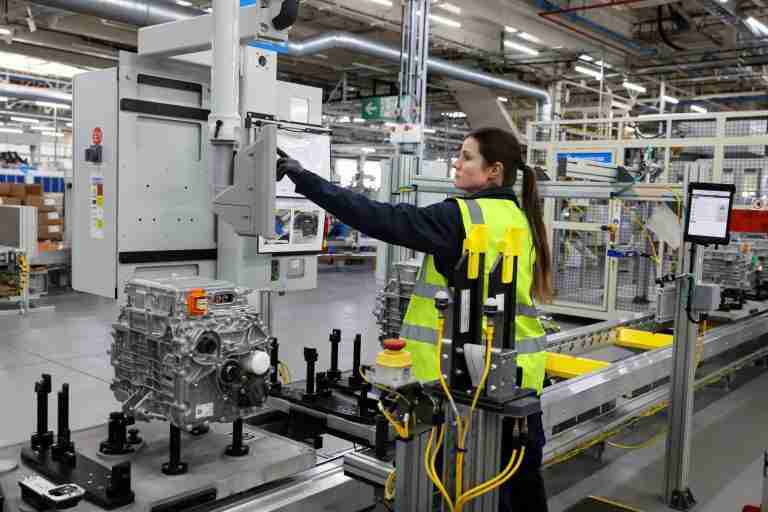
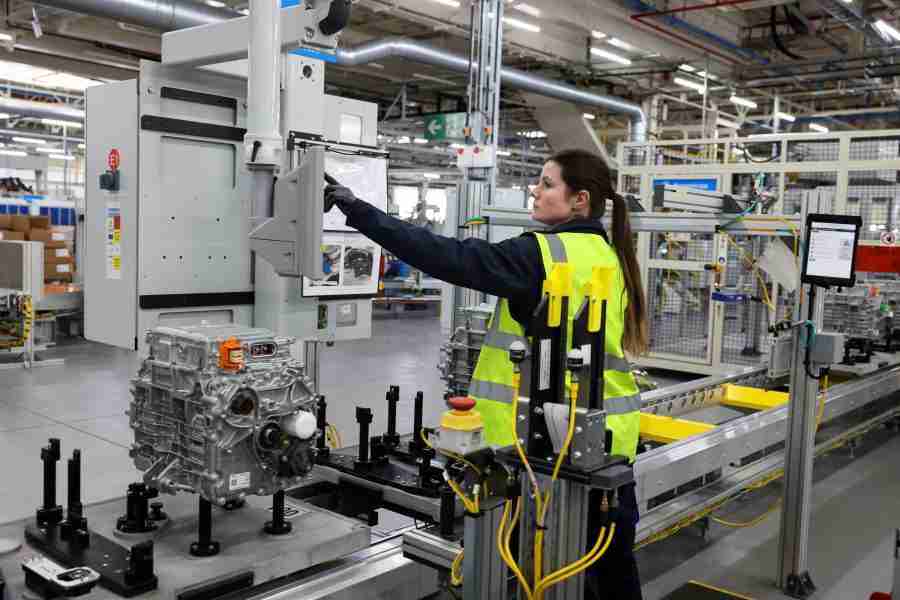
FILE PHOTO: A person works on the production line of the eDrives used in a variety of Ford electric vehicles, during a media tour of the Ford Halewood transmissions plant in Liverpool, Britain December 3, 2024. REUTERS/Temilade Adelaja/File Photo=

International news via Reuters:

Britain softened demands on automakers to switch to production of electric vehicles on Monday, seeking to alleviate pressure on an industry left reeling from U.S. President Donald Trump’s tariffs.

The sector welcomed the move, but said the government needed to go further to protect it from the fallout of the 25% U.S. tariff on car imports imposed on April 3, as markets plunged on worries of a global trade war and economic slowdown.

British car manufacturers mainly sell luxury and premium cars to the United States – their second largest export market after the European Union.

More than 1 million British-made cars worth about 7.6 billion pounds ($9.79 billion) were shipped to the U.S. last year.

Jaguar Land Rover, one of Britain’s biggest producers, sent shockwaves through the industry on Saturday when it said it was pausing car shipments to the U.S. for a month to consider how to mitigate the costs of the tariffs.

The government’s new measures include a reduction in fines car manufacturers must pay if they cannot comply with EV sales targets and will also exempt micro-volume manufacturers including Aston Martin, Bentley and McLaren.

It said the 2030 phase-out date for new petrol and diesel cars would not change.

But under the new plan, it will allow full hybrid and plug-in hybrid vehicles and cars – like the Toyota Prius and Nissan e-Power – to be sold until 2035.

Mike Hawes, head of UK auto industry group SMMT, said a package of measures was now needed to support manufacturing and the supply chain in order to properly bolster carmakers, which employ some 200,000 workers directly and many more indirectly.

“Given the potentially severe headwinds facing manufacturers following the introduction of U.S. tariffs, greater action will almost certainly be needed to safeguard our industry’s competitiveness,” he said.

The European Commission set out plans to soften its rules earlier this month, giving automakers three years, rather than one, to comply with its CO2 emissions targets for cars and vans.

Transport minister Heidi Alexander said on Monday that the U.S. tariffs had given urgency to a government consultation on electric vehicle rules that had already been underway.

“We are absolutely seized of the fact that this government needs to do absolutely everything it can to shelter British businesses,” she told the BBC.

Starmer said on Saturday that the government’s priority remained to try and secure a trade deal with the U.S. that could include tariff exemptions.

While overall EV sales rose last year in Britain, they were driven by commercial buyers, with only one in 10 individual car buyers choosing to go electric.

EVs made up 19% of sales last month, well short of the 28% that carmakers would have needed to achieve in 2025 to meet the government’s EV mandate.

($1 = 0.7765 pounds)

Reporting by Sarah Young in London, Janaki Venugopalan in Bengaluru and Sachin Ravikumar in London; Editing by Nick Zieminski and Joe Bavier

New Zealand aims to nearly double defence spending to 2% of GDP

The NZ$9 billion budget is a significant boost to the 2024/25 NZ$5 billion budget

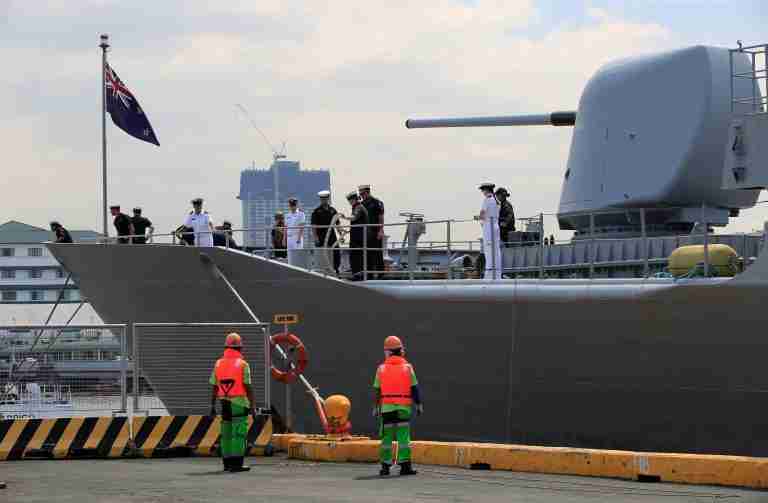
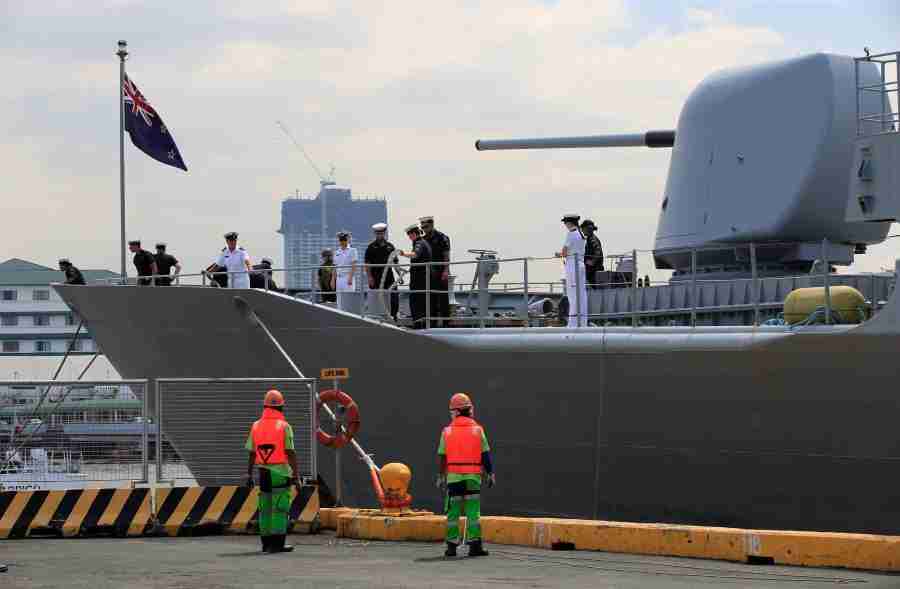
FILE PHOTO: Crew members of the Royal New Zealand Navy frigate HMNZS Te Kaha (F77) prepare to dock upon arrival at the South Harbor, for a four-day goodwill visit in metro Manila, Philippines April 4, 2017. REUTERS/Romeo Ranoco/File Photo

International news via Reuters:

New Zealand said on Monday it would boost defence spending by NZ$9 billion ($5 billion) over the next four years, and aim to nearly double spending to 2% as a share of GDP in the next eight years, at a time of rapidly growing tension worldwide.

The details came in remarks by Prime Minister Christopher Luxon, who called for more spending on defence to ensure prosperity.

“New Zealand and our allies and partners across the world are no longer in a benign environment,” he told a press conference at the release of the Defence Capability Plan.

“My primary focus is the economic importance of this country. However, there can be no prosperity without security, and defence is one vital component of that picture.”

The Defence Capability Plan maps out new funding of NZ$9 billion over the next four years to boost defence capability. It comes on top of baseline spending set to be announced in May.

The new spending is a significant boost to Defence Force spending of just under NZ$5 billion in 2024/25.

New Zealand’s first national security review in 2023 called for more military spending and stronger ties with Indo-Pacific nations to tackle issues of climate change and strategic competition between the West, and China and Russia.

New Zealand’s Defence Force has struggled with systemic underspending over the past several decades, which amounts to just over 1% of GDP now.

High attrition in recent years has seen the force idle three of its ships and put on ice plans for a new vessel designed for patrol of the Southern Ocean, though attrition has fallen in the last year.

Over the next four years, the plan envisages the defence force will invest in projects such as boosting strike capability, buying an uncrewed aerial system, replacing helicopters and extending the life of its frigates.

It also plans to replace the Boeing 757 fleet after some embarrassing breakdowns that grounded delegations abroad.

Reporting by Lucy Craymer in Wellington; Editing by Alasdair Pal and Clarence Fernandez

Apple appealing against UK ‘back door’ order, tribunal confirms

The iPhone maker removed some of its most advanced security encryption for cloud data

FILE PHOTO: Apple iPhone 16 smartphones are displayed at a store in London, Britain, October 6, 2024. REUTERS/Hollie Adams/File Photo

International news via Reuters:

Apple is appealing against a British government order to create a “back door” to its encrypted cloud storage systems, the Investigatory Powers Tribunal (IPT) confirmed on Monday.

The IPT said in a written ruling that it had refused the British government’s application that “the bare details of the case”, including that it was brought by Apple, be kept private.

Apple and Britain’s Home Office, its interior ministry, did not immediately respond to requests for comment.

The Washington Post reported in February that Britain had issued a “technical capability notice” to Apple to enable access to encrypted messages and photos, even for users outside the country.

Apple has long said that it would never build a so-called backdoor into its encrypted services or devices, because once one is created, it could be exploited by hackers in addition to governments, a sentiment echoed by security experts.

The iPhone maker in response to Britain’s sweeping demands removed its most advanced security encryption for cloud data, called Advanced Data Protection, for new users in Britain.

The Financial Times later reported Apple had brought an appeal against the order, but details of the case have been shrouded in secrecy and neither Apple nor the British government have publicly confirmed the technical capability notice.

The IPT’s ruling said that neither Apple nor Britain had confirmed or denied the accuracy of media reports, adding: “This judgment should not be taken as an indication that the media reporting is or is not accurate.”

The Home Office had argued that publicising the existence of the appeal or that it was brought by Apple could damage national security.

But Judges Rabinder Singh and Jeremy Johnson said: “We do not accept that the revelation of the bare details of the case would be damaging to the public interest or prejudicial to national security.”

Monday’s ruling follows a hearing in London last month, which was held in secret with media not allowed to attend.

Reporting by Sam Tobin; Editing by Sachin Ravikumar

Premier Congratulates Top Spelling Bee Winners

The Spelling Bee took place in March and brought together students from across Bermuda

Government update via press release:

On Friday, April 4, the Premier the Hon. David Burt, JP, MP, welcomed the top three finalists of the 2025 Bermuda National Primary School Spelling Bee to the Cabinet Office.

The occasion was an opportunity for the Premier to recognise their success in one of the island’s most anticipated academic competitions for primary students.

Held in March, the Spelling Bee brought together students from across Bermuda who demonstrated remarkable language skills, composure under pressure, and a genuine love of learning.

This year’s top three were:

  • 1st Jared Arnante, age 10 – Somersfield Academy (Winner)
  • 2nd Olivia Brown, age 12 – Warwick Academy
  • 3rd Samantha Hernandez, age 13 – Dellwood Middle School

Premier Burt said, “I welcomed Jared, Olivia, and Samantha to the Cabinet Office to recognise their achievement in this year’s Spelling Bee. The level of confidence and knowledge that they brought to the competition is something that we should all be proud of. These students are an example to other students that learning can be exciting and that academic achievements can be recognized and celebrated.”

The Premier also acknowledged the ongoing efforts of the Bermuda Spelling Bee Trustees, including the Chairman and Deputy Chairman, Mr. Robert Horton, along with teachers and families, for their commitment to supporting educational enrichment across the island.

Premier Burt meets with new US Consul General

Antoinette Hurtado arrived in Bermuda late last month

Government update via press release:

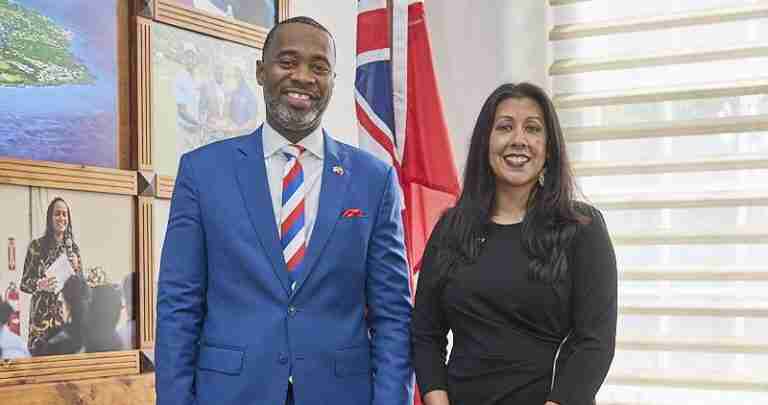
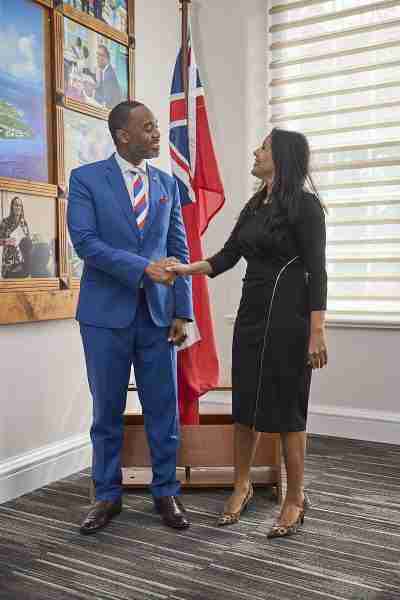
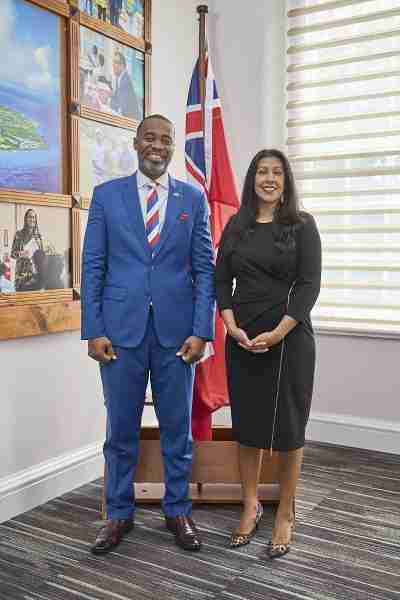
The Cabinet Office advised that the Premier, the Hon. David Burt, JP, MP, met with the newly appointed US Consul General, Antoinette Hurtado, during an introductory visit following the start of her tenure in March.

The meeting provided an opportunity to reaffirm the enduring partnership between Bermuda and the United States. Discussions encompassed a range of shared priorities, including trade, national security, and the strengthening of economic ties. Both parties explored avenues to further align and enhance bilateral relations.

The Shiprider Agreement, signed in early March, was highlighted as a strong example of ongoing cooperation. The agreement aims to bolster joint efforts in addressing issues such as illegal immigration, drug smuggling, human trafficking, and illegal fishing within and around Bermuda’s territorial waters.

The Premier also raised concerns about proposed US policy changes that could have significant implications for Bermuda, highlighting, in particular, the potential economic impact of new port fees discussed during his recent visit to Washington, DC.

Premier Burt underscored how such measures could increase shipping costs and affect the cost of living for residents, while also noting broader concerns around the stability of Bermuda’s reinsurance sector and other key areas requiring ongoing dialogue and consideration.

The Premier said, “The Government welcomes the new U.S. Consul General, Antoinette Hurtado, to Bermuda. With over 20 years of experience as a Foreign Service Officer in the U.S. Department of State, and a career spanning numerous international postings—she began her tenure as Consul General in Bermuda this past March. Our objective is to remain a trusted ally, and we anticipate that U.S. policy decisions will fully consider the depth of our shared interests, the strength of our bilateral ties, and Bermuda’s strategic relevance.”

US Consul General, Hurtado said, “I want to thank Premier David Burt for his warm welcome. We had a fruitful conversation about our areas of shared interest including security, business, and trade.  The United States is Bermuda’s closest neighbor and we have a four-centuries long history and partnership.  I look forward to working with the Premier and Government of Bermuda officials to continue and strengthen that partnership and to enhance our already close ties.”

Government issues warning about fake AI social media post

Fraudulent accounts and posts misleading the public in an attempt to defraud

Government update via press release:

The Cabinet Office advised this evening that a recent video post circulating on Facebook purporting to be a statement from the Premier, the Hon. E. David Burt, JP, MP, and/or the Government of Bermuda is a fake AI-generated scam.

A Cabinet Office spokesperson noted that fraudulent accounts and posts promoting AI generated false information, are being used to mislead the public and potentially defraud unsuspecting individuals.

Often such social media posts or direct messages use the likeness of local public personalities and copy the design of local news outlets, to make their offerings look more legitimate.

A Cabinet Office spokesperson said, “With the rise of artificial intelligence, fake videos, false representations, and messages are becoming more common.

“Unfortunately, individuals have been scammed in the past, and we urge all residents to exercise caution and remain vigilant when online. It is crucial to verify the authenticity of any social media account, particularly if it is claiming to represent the Premier or any other Government of Bermuda official. Only trust information from verified sources.”

“Lastly, if anyone receives the referenced fake AI post, they should report it directly on the platform. As a reminder, no government official will ever use social media to promote an investment. The public is once again encouraged to only rely on official information and official advisories from the Government of Bermuda.”