The Instagram-owner’s global net ad revenues are expected to reach $243.46 billion in 2026, ahead of Google’s projected $239.54 billion, the market research firm said
International News via Reuters:
Meta Platforms is projected to surpass Alphabet’s Google in digital advertising revenue globally by the end of 2026, and dethrone the search-engine behemoth in the lucrative business, according to Emarketer.
The Instagram-owner’s global net ad revenues are expected to reach $243.46 billion in 2026, ahead of Google’s projected $239.54 billion, the market research firm said.
Meta’s Advantage+ automated ad suite has been gaining strong advertiser adoption due to its ability to streamline campaign setup and enhance return on marketing spend.
“In surpassing Google, Meta has essentially had many of its core strategies validated,” said Max Willens, principal analyst at Emarketer.
While Google has other growth avenues, including YouTube Premium subscriptions, but its broader business mix could make it harder to outpace Meta in ad revenue.
Analysts have said smaller platforms like Snap and Pinterest remain most exposed to ad budget cuts during geopolitical uncertainty, as spending concentrates on larger platforms such as Meta and Google.
Emarketer said the driving force behind the change is Meta’s accelerated growth rate, which is forecast to increase to 24.1% this year from 22.1% in 2025. Google’s growth rate is expected to remain steady at 11.9% this year.
The social media giant intensified competition in the ad market after launching ads on WhatsApp and Threads, creating direct rivalry with platforms like Elon Musk’s X. Simultaneously, Instagram’s Reels continue to jostle with TikTok and YouTube Shorts within the lucrative short-video market.
Google, Meta and Amazon are projected to account for 62.3% of 2026 digital ad spending globally, Emarketer said.
The research firm added that recent court rulings against Meta and YouTube are not expected to materially impact the forecast, which was completed before those verdicts.
Reporting by Jaspreet Singh in Bengaluru; Editing by Tasim Zahid
Oil prices surged, with no sign of a swift reopening of the Strait of Hormuz to ease the biggest ever disruption in supplies
International News via Reuters:
The deadline passed on Monday for the start of a U.S. military blockade of ships leaving Iran’s ports, and Tehran threatened to retaliate against ports of its Gulf neighbours after weekend talks on ending the war broke down.
Oil prices surged, with no sign of a swift reopening of the Strait of Hormuz to ease the biggest ever disruption in supplies.
Since the war started on February 28, Iran has effectively shut the strait to all vessels except its own, saying passage would be permitted only under Iranian control and subject to a fee.
U.S. President Donald Trump said Washington would block Iranian vessels and any ships that paid such tolls and that any Iranian “fast-attack” ships that went near the blockade would be eliminated. U.S. Central Command said the measure would take effect from 10 a.m. ET (1400 GMT) on Monday.
NATO allies including Britain and France said they would not be drawn into the conflict by taking part in the blockade, stressing instead the need to reopen the waterway, through which about one-fifth of the world’s oil normally passes.
A ceasefire that halted six weeks of U.S. and Israeli airstrikes looked in jeopardy, with only a week left to run. Washington said Tehran rejected its demands at weekend talks in Islamabad, the highest-level discussions since Iran’s 1979 Islamic Revolution.
BLOCKADE COMES INTO FORCE
The U.S. military’s regional Central Command said the blockade would be “enforced impartially against vessels of all nations” entering or leaving Iranian ports in the Gulf and the Gulf of Oman.
“The blockade will not impede neutral transit passage through the Strait of Hormuz to or from non-Iranian destinations,” Central Command said in a note to seafarers seen by Reuters on Monday.
Two Iranian-linked tankers, the Aurora and New Future, laden with oil products, left the strait on Monday before the deadline, according to LSEG data.
An Iranian military spokesperson called any U.S. restrictions on international shipping “piracy,” warning that if Iranian ports were threatened, no port in the Gulf or Gulf of Oman would be secure. Any military vessels approaching the strait would violate the ceasefire, Iran’s Revolutionary Guards said.
On Sunday, Trump had posted on social media that ships paying Iran an “illegal toll” would not be granted safe passage, adding, “Any Iranian who fires at us, or at peaceful vessels, will be BLOWN TO HELL!”
‘ZERO LESSONS LEARNED’ SAYS TEHRAN
Trump has also lashed out at U.S.-born Pope Leo, denouncing him as “terrible” in a rare direct attack on the pontiff who has spoken out against the war.
With the war unpopular at home and rising energy prices causing political blowback, Trump paused the U.S.-Israeli bombing campaign last week after threatening to destroy Iran’s “whole civilisation” unless it reopened the strait.
Israel has continued to bombard Iran-backed Hezbollah in Lebanon and on Monday Israeli troops launched an attack to seize a key south Lebanon town from the group. Israel and the U.S. have said the campaign against Hezbollah was not part of the ceasefire, while Iran has insisted it is.
Iran has ignored the demand to open the strait, while bringing new demands to the talks, including recognition of its control of the waterway, lifting of sanctions and the withdrawal of forces from U.S. military bases across the Middle East.
Pakistani Prime Minister Shehbaz Sharif said efforts were still on to resolve the conflict after the direct talks between the U.S. and Iran in Islamabad at the weekend.
Trump has declared victory, despite failing to achieve the objectives he set out at the start of the war: to eliminate Iran’s ability to strike its neighbours, end its nuclear programme and make it easier for Iranians to topple their government.
Iran retains missiles and drones that can hit Gulf neighbours, and a stockpile of uranium enriched to near bomb-making levels. Tehran’s leadership, which faced a popular uprising at the start of the year, has withstood the U.S. onslaught with no sign of organised opposition.
Emboldened Iranian officials say they will make a deal only if the U.S. makes further concessions. Iran had “encountered maximalism, shifting goalposts, and blockade” from the United States at the talks, said Foreign Minister Abbas Araqchi.
“Zero lessons learned,” he added. “Good will begets good will. Enmity begets enmity.”
OIL BENCHMARKS UNDERSTATE DISRUPTION
Benchmark oil prices, which had eased last week after the ceasefire was announced, surged by around 7% on Monday, back above $100 a barrel.
Traders say the main benchmarks – used to set prices for trillions of dollars’ worth of commodities worldwide – actually understate the severity of a disruption with no precedent in modern times.
Trump has long said a bump in U.S. gasoline prices would be short-lived. But he told Fox News’ “Sunday Briefing” that they could stay high through November’s midterm elections.
Iran’s chief negotiator, Mohammad Baqer Qalibaf, posted a map of Washington-area gasoline prices on social media with the comment: “Enjoy the current pump figures. With the so-called ‘blockade’. Soon you’ll be nostalgic for $4–$5 gas.”
Reporting by Reuters bureaus; Writing by Peter Graff and Keith Weir; Editing by Hugh Lawson and Ros Russell
Vujcic said the Europe’s energy system is now more resistant to energy shocks caused by the clashes in the Middle East than it was in 2022, when Russia invaded Ukraine, thanks to the diversification of supplies
International News via Reuters:
Current energy prices are still closest to the ECB basic scenario and they should not influence inflation and growth, the European Central Bank’s incoming vice president Boris Vujcic said on Monday, N1 regional television reported.
Vujcic said the Europe’s energy system is now more resistant to energy shocks caused by the clashes in the Middle East than it was in 2022, when Russia invaded Ukraine, thanks to the diversification of supplies.
“We are not in an unfavorable and even less so in a very unfavorable scenario, either with regards to oil or with regards to gas,” Vujcic told a financial forum in Croatia. “And that is good news.”
Vujcic said that the energy shock is still of weak intensity due to the two-week ceasefire in the U.S.- Iran war but that the market may be hit if the war escalates again.
Reporting by Daria Sito-Sucic; Editing by Toby Chopra
Trump said the U.S. military would work with other countries to block all maritime traffic in the waterway, after weekend talks failed to reach an agreement to end the six-week conflict with Iran
International News via Reuters:
NATO allies said on Monday they would not get involved in U.S. President Donald Trump’s plan to blockade the Strait of Hormuz, proposing instead to intervene only once fighting ends, in a move likely to anger Trump and increase strains in the alliance.
Trump said the U.S. military would work with other countries to block all maritime traffic in the waterway, after weekend talks failed to reach an agreement to end the six-week conflict with Iran. The U.S. military later specified that the blockade, due to have started at 1400 GMT on Monday, would only apply to ships going to or from Iranian ports.
Since the start of the war on February 28, Iran has largely blocked off the strait for all ships apart from its own. It has been seeking to make its control of the strait permanent and possibly collect levies from ships that use it.
“The Blockade will begin shortly. Other Countries will be involved with this Blockade,” Trump said in a post on Truth Social on Sunday.
But NATO allies including Britain and France said they would not be drawn into the conflict by taking part in the blockade, saying instead they were working on an initiative to open the waterway, where a fifth of global oil supplies normally passes.
Their refusal to participate is yet another point of friction with Trump, who has threatened to withdraw from the military alliance and is weighing pulling some U.S. troops from Europe after several countries denied U.S. military planes use of their airspace for attacks on Iran.
CONSIDERABLE PRESSURE
“We’re not supporting the blockade,” British Prime Minister Keir Starmer told the BBC.
“My decision has been very clearly that whatever the pressure, and there’s been some considerable pressure, we’re not getting dragged into the war,” he said.
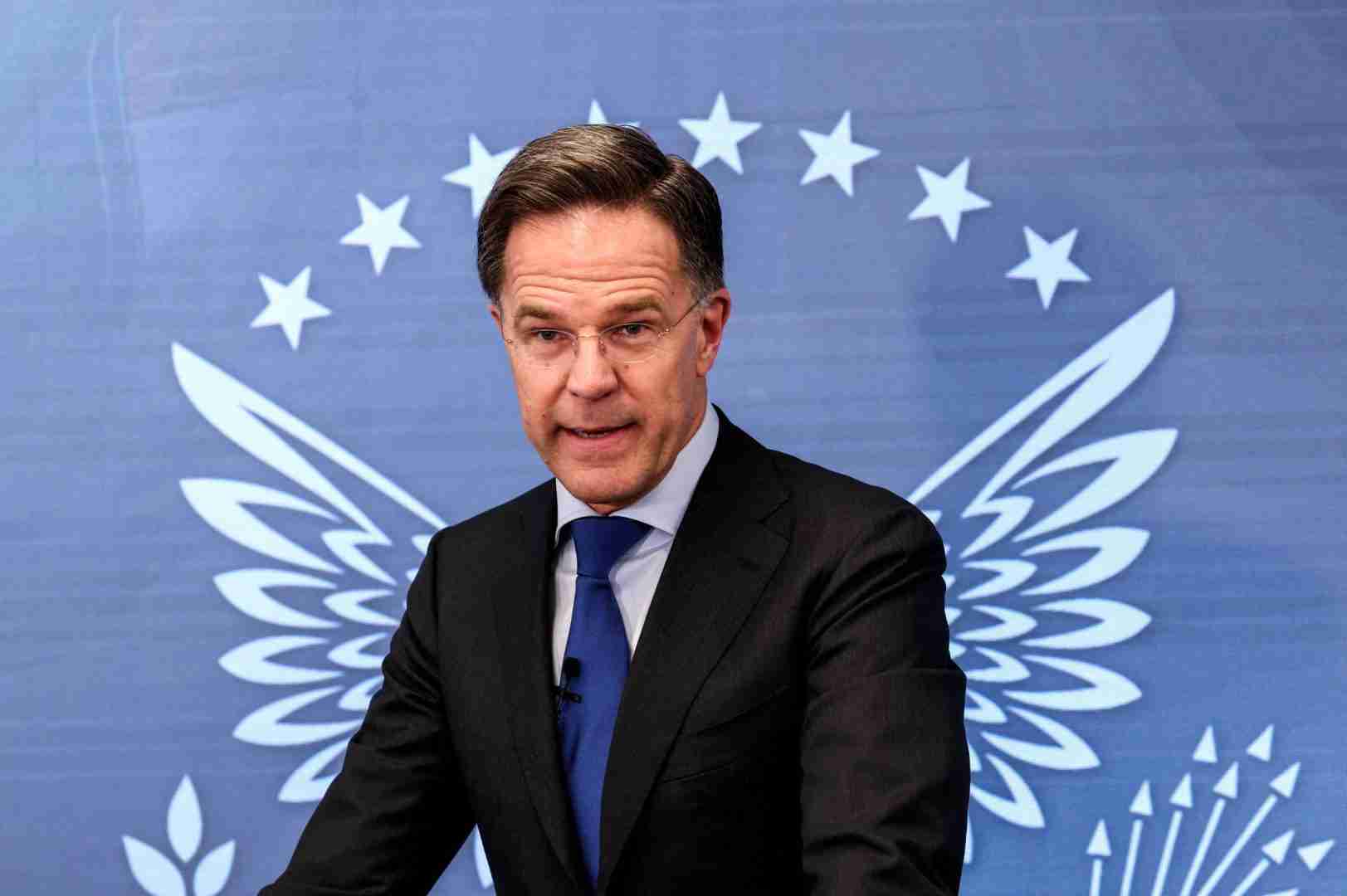
NATO Secretary General Mark Rutte told European governments that Trump wants concrete commitments in the near future to help secure the Strait of Hormuz, diplomats told Reuters last week.
NATO could play a role in the strait if its 32 members could agree on the formation of a mission, Rutte said on April 9.
Several European countries have said they’re willing to help in the strait but only once there is a durable end to hostilities and an agreement with Iran that their ships will not be attacked.
France will organise a conference with Britain and other countries to create a multinational mission to restore navigation in the strait, French President Emmanuel Macron said on X on Monday.
“This strictly defensive mission, distinct from the belligerents, will be deployed as soon as the situation allows,” Macron said.
The initiative aims to establish rules for safe passage and the coordination of military vessels to escort tankers, Starmer said in parliament on Monday.
“Let me be very clear, this is about safeguarding shipping and supporting freedom of navigation once the conflict ends. Our shared aim here is a coordinated, independent, multi-national plan,” he said.
A meeting to draw up plans for the mission involving about 30 countries, including Gulf countries, India, Greece, Spain, Italy, the Netherlands and Sweden, could happen as soon as Thursday in Paris or London, a French diplomatic source said.
The military ships would provide reassurance without being belligerent, the source said, adding that Iran and the U.S. would be informed of the mission but play no direct part.
Another European diplomatic source questioned whether Trump would welcome a mission now that he had ordered the blockade.
“Since Trump is now using the strait as his own leverage, does he even want a mission there?” the source said.
The Strait of Hormuz should be reopened by diplomacy, Turkish Foreign Minister Hakan Fidan said on Monday, adding that creating an international force to oversee it would be complicated. He called for NATO to reset its ties with Trump at a summit in Ankara in July.
Reporting by Sam Tabahriti, John Irish, Michel Rose and Andrew MacAskill; Writing by Charlie Devereux; Editing by Keith Weir, Peter Graff and Andrew Heavens
The Ministry of Public Works & Environment has reminded fishers that the annual Hind Grounds and Grouper Grounds closure comes into effect on 15 April 2026
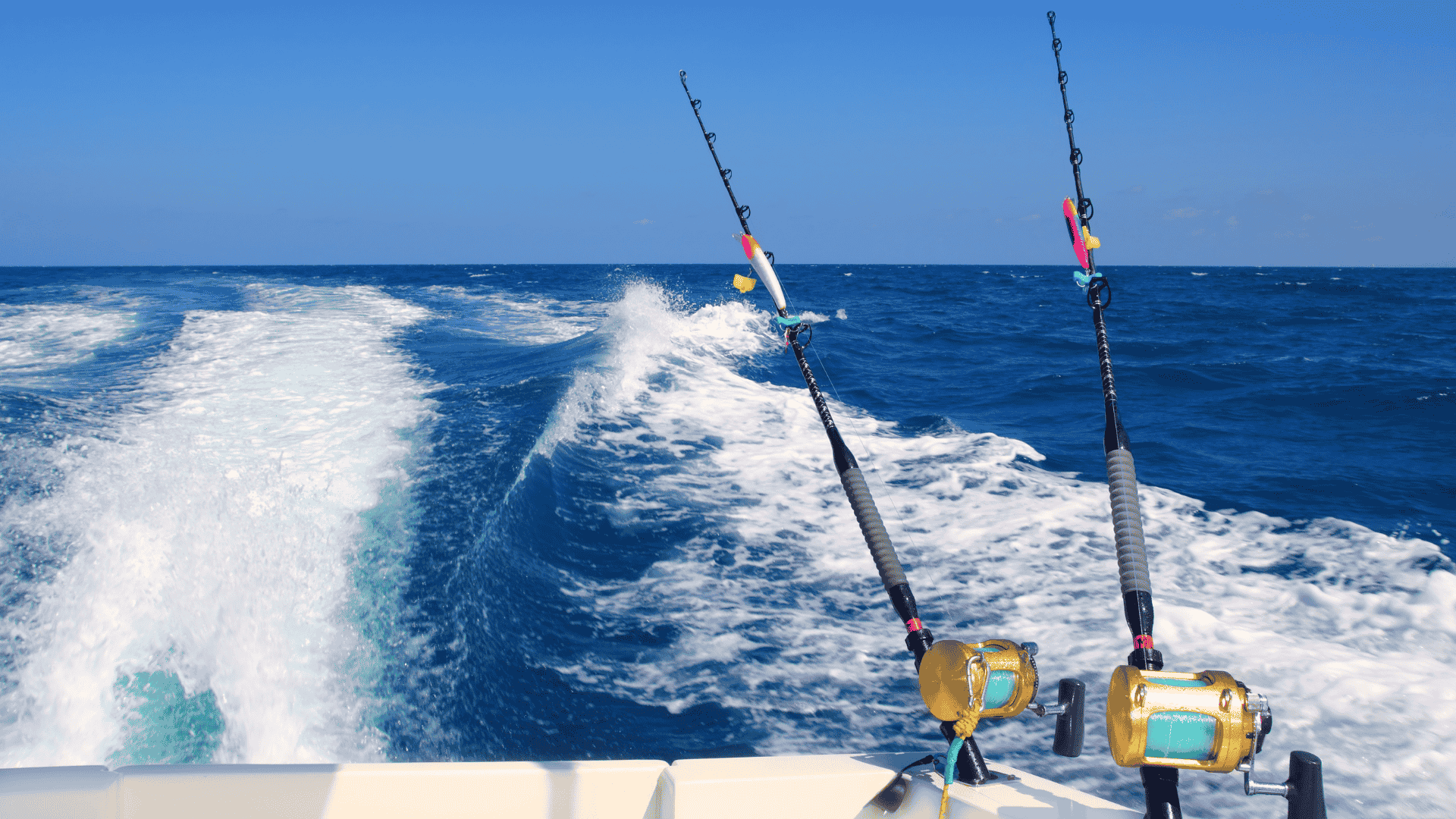
Commercial and recreational fishers are reminded that fishing in Bermuda’s Seasonally Protected Areas — known as the “Hind Grounds” and “Grouper Grounds” — will be prohibited from 15 April through 14 August 2026.
The closure is intended to protect spawning Red Hinds and Black Groupers during their breeding season.
Fishers should also note that Extended Closure Areas around important Black Grouper aggregations will remain closed to fishing beyond the seasonal reopening date. While the Seasonally Protected Areas reopen on 15 August 2026, the Extended Closure Areas will remain closed until 1 December 2026.
For more information, contact the Department of Environment and Natural Resources, Marine Resources Section at 293-5600 or at fisheries@gov.bm.
Media release supplied by the Government of Bermuda, Ministry of Public Works & Environment.
The Department of Workforce Development will be closed from April 13 to 15 as it relocates to the Bermuda College campus
The Ministry of Economy and Labour has advised the public that the Department of Workforce Development will be temporarily closed from today, Monday, April 13, through Wednesday, April 15, 2026, to facilitate its move to Bermuda College.
The Department is scheduled to reopen on Thursday, April 16, 2026, from its new location on the Bermuda College campus.
According to the Ministry, the closure is necessary to allow for the safe and efficient transportation of equipment, the setup of office space, and the installation of IT and telephone systems — measures intended to ensure all services are fully operational upon reopening.
While closed to in-person visits, the Department will continue to monitor and respond to inquiries related to Bermuda Job Connect during the transition period.
The Ministry said the relocation supports enhanced service delivery and strengthened collaboration with Bermuda College.
Members of the public can visit www.dwd.bm or call 441-297-7714 for further information.
Media release supplied by the Department of Communications, Government of Bermuda.
Dennis Mbelenzi and Maddie Durkin produced commanding performances on the roads of Bermuda to claim the prestigious RenaissanceRe 10-Mile Challenge titles.
In the men’s elite division, Mbelenzi was in a league of his own, stopping the clock in a blistering 53 minutes and 55 seconds.
His relentless pace left perennial contender Sean Trott to settle for second in 56:16, while Kallan Richardson rounded out the podium just under a minute later.
Maddie Durkin delivered a masterclass in endurance in the women’s race, finishing an incredible 12th overall in 1:04:13.
She secured a comfortable cushion over runner-up Stepanka Sprincova (1:06:54), with Teresa Ruiz finishing third.
The five-mile challenge offered a unique family double as Colette Durkin mirrored her relative’s success to win the women’s title in 37:07, holding off Anna Laura Hocking.
In the men’s sprint, Chayce Smith dominated the field, surging ahead to win in 28:54, well clear of Tim Price and Chefton Hall.
The event highlighted the enduring strength of Bermuda’s running community, with the Durkin family emerging as the standout story of the day.
As the season intensifies, the island’s top athletes now shift their focus toward a busy summer of international fixtures.
David Selley and Steven Bridges produced a stellar performance in challenging conditions to claim second place at the IHRA New Orleans Powerboat Grand Prix.
The Super Stock Class lived up to its reputation for high-octane drama, providing a fast and furious spectacle on the waters of Louisiana.
Navigating a course that demanded technical precision and immense physical durability, the S25 Team Bermuda duo remained in the hunt for the top spot throughout a grueling contest.
In a finish that went down to the wire, Selley and Bridges crossed the line just 2.6 seconds behind the eventual winners.
Despite the testing conditions, the Bermudian pair maintained a relentless pace, narrowly missing out on victory in a sprint to the checkered flag that captivated the New Orleans crowds.
Further down the field, fellow Bermudian pilot Luis Martins also faced the elements alongside throttleman Nick Imprescia in S-12 Nuff Said.
The pair battled through the wake of the lead pack to secure a respectable fifth-place finish, ending the grand prix 43.1 seconds adrift of the winners.
The result reinforces the status of the island’s racers as genuine contenders in the competitive Super Stock division.
As the teams depart New Orleans, the focus shifts to the next round, where Team Bermuda will look to go one better and claim the top step of the podium.
Swimmer Sam Williamson enjoyed a flawless outing at the RHAC Spring Invitational in Toronto, claiming two gold medals and a vital qualifying standard for the Central American and Caribbean Games.
The meet at the Richmond Hill Aquatic Centre proved to be a successful hunting ground for Williamson, who demonstrated both speed and stamina across multiple disciplines.
He opened his account in the 100m Freestyle, setting the pace early by clocking the fastest time in the preliminaries before returning to clinch gold in a sharp 53.42 seconds.
While the freestyle sprint showcased his raw pace, it was in the 200m Individual Medley that Williamson produced his most significant performance.
After leading the morning heats, he found another gear in the final to shave nearly three seconds off his preliminary time.
His winning effort of 2:08.55 was not only enough to secure his second gold medal but also saw him dip well under the 2:09.32 mark required for the CAC Games.
By meeting the qualifying standard with room to spare, Williamson has underscored his status as one of the region’s rising talents.
The double victory in Canada provides a perfect platform for the major championships ahead.
With the CAC standard now secured, the focus shifts to maintaining this momentum as the international season begins in earnest.
Pria Wilson signaled her arrival as a major force on the international stage
Wilson secured a remarkable golden hat-trick while competing at the IMG Academy Invitational in Bradenton, Florida.
The host-academy standout began her day by leading the field in the 100-metre preliminaries with a time of 12.13 seconds.
But she was only just getting started.
In the final, Wilson found another gear, storming to gold in a blistering 12 seconds flat.
The dominance continued into the 200 metres.
Navigating the curve with trademark power, Wilson stopped the clock at 24.98 seconds—an overall winning time that left the rest of the field in her wake.
She completed her triple-gold haul in the 4×100 metre relay. Teaming up with Reegan Clutter, Aniyah Walker, and Marchele Robbins, the IMG quartet produced flawless baton exchanges to take the top spot in 47.32 seconds.
It is a resounding statement of intent as the outdoor season intensifies.
To provide the best experiences, we use technologies like cookies to store and/or access device information. Consenting to these technologies will allow us to process data such as browsing behavior or unique IDs on this site. Not consenting or withdrawing consent, may adversely affect certain features and functions.
Functional
Always active
The technical storage or access is strictly necessary for the legitimate purpose of enabling the use of a specific service explicitly requested by the subscriber or user, or for the sole purpose of carrying out the transmission of a communication over an electronic communications network.
Preferences
The technical storage or access is necessary for the legitimate purpose of storing preferences that are not requested by the subscriber or user.
Statistics
The technical storage or access that is used exclusively for statistical purposes.The technical storage or access that is used exclusively for anonymous statistical purposes. Without a subpoena, voluntary compliance on the part of your Internet Service Provider, or additional records from a third party, information stored or retrieved for this purpose alone cannot usually be used to identify you.
Marketing
The technical storage or access is required to create user profiles to send advertising, or to track the user on a website or across several websites for similar marketing purposes.