Wednesday, November 4, 2026
Home Blog Page 410

Suspect shot dead after crashing truck into Detroit-area synagogue

Michigan State Police reported an active shooting incident at about 12:30 p.m. local time (1730 GMT) at Temple Israel Synagogue in the Detroit suburb of West Bloomfield
International News via Reuters:

A male suspect was killed in a confrontation with security personnel after crashing his truck through the doors and into the hallway of a Detroit-area synagogue on Thursday, with no one else reported seriously injured in the incident, authorities said.

Michigan State Police reported an active shooting incident at about 12:30 p.m. local time (1730 GMT) at Temple Israel Synagogue in the Detroit suburb of West Bloomfield. It was unclear from preliminary briefings by law enforcement officials whether the suspect was actually armed with a gun.

Authorities said the suspect was shot dead, but whether he was killed by gunfire from security or took his own life was not immediately known.

“We can’t say what killed him at this point, but security did engage the suspect with gunfire,” Oakland County Sheriff Michael Bouchard told reporters.

Bouchard said the suspect breached the entrance to the building in his truck and drove the vehicle down the hall before being confronted by security.

“We have no victims, other than one of the lead security people who was hit by the car and was taken to the hospital for treatment. That individual should be okay,” the sheriff said.

NO CHILDREN OR STAFF INJURED

No children or staff were injured in the incident, authorities said.

CNN, citing multiple law enforcement sources, said a large amount of explosives was found in the back of the suspect’s car. Bouchard said investigators were still searching the vehicle.  

Temple Israel, which has more than 12,000 members, runs an early-childhood center that serves children as young as six weeks old, according to its website. 

Local news media reported that children from the daycare center, some of whom had escaped to nearby homes, were ushered away from the synagogue and taken on buses to a nearby location to be reunited with their parents.

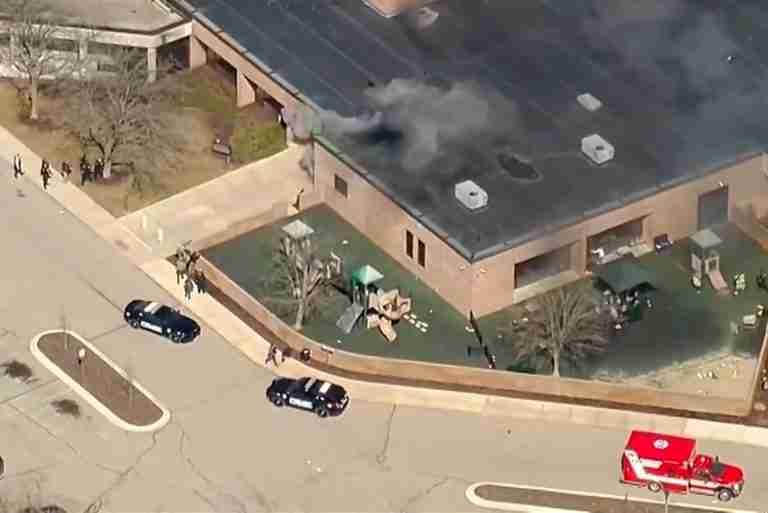
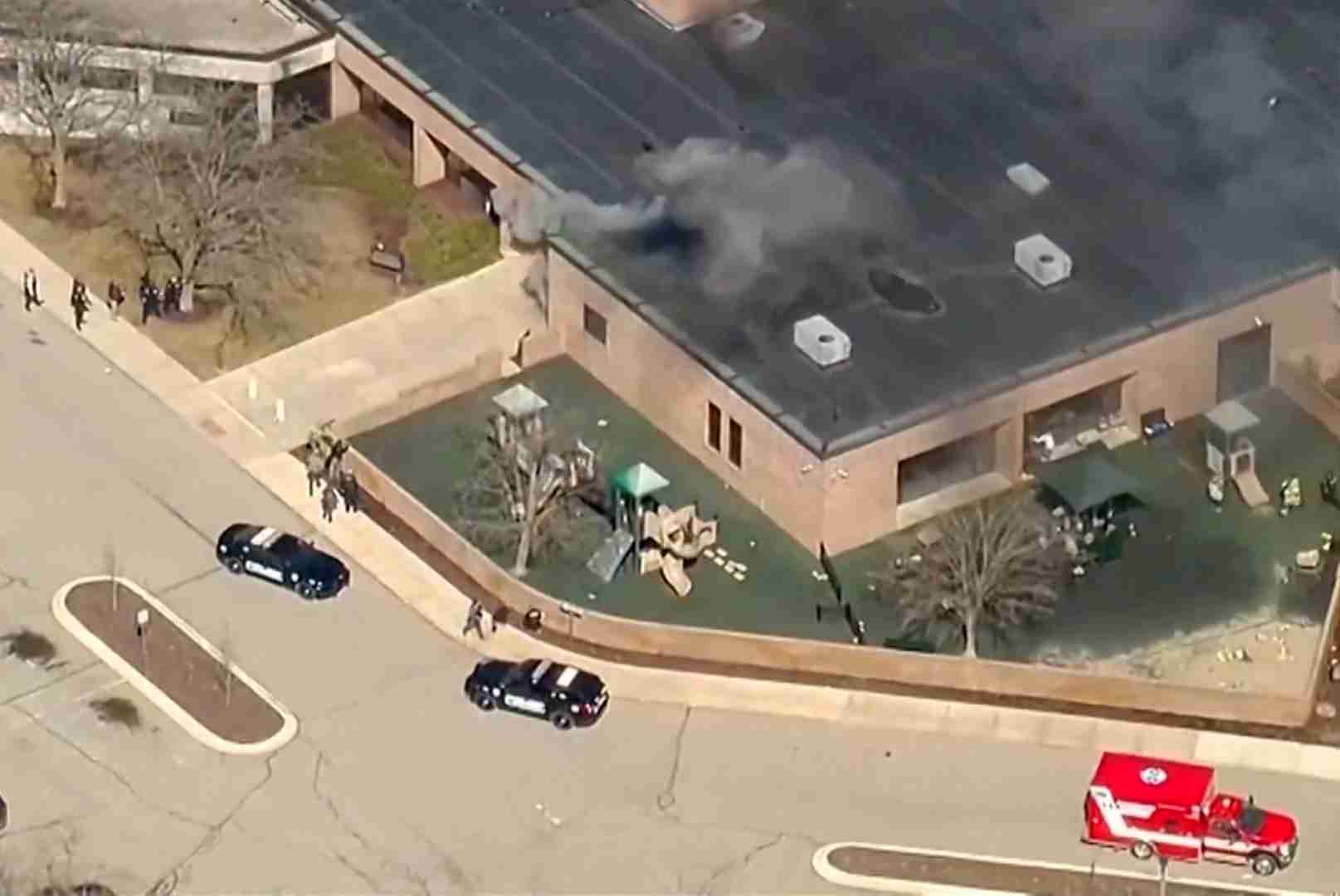
Aerial news footage at the outset of the incident showed plumes of smoke rising from the roof of the building, as swarms of police and fire department vehicles converged on the scene.

FBI ON SCENE

FBI Director Kash Patel wrote on X: “FBI personnel are on the scene with partners in Michigan and responding to the apparent vehicle ramming and active shooter situation out of Temple Israel Synagogue in West Bloomfield Township, Michigan.”

The Jewish Federation of Detroit posted a message on its Facebook page saying its affiliated agencies were “currently in precautionary lockdown” in response to the Temple Israel incident.

Jewish organizations throughout the United States have been operating under heightened security since U.S. and Israeli forces launched airstrikes on Iran on February 28, sparking an intensifying war across the Middle East. 

“We’ve been talking for two weeks about the potential, sadly, of this happening. So there was no lack of preparation,” Bouchard said on CNN. “All Jewish facilities in the area are going to have a lot of extra presence around it until we figure this out.”

The incident comes amid heightened concerns about growing antisemitism in the U.S. Over the last two years, anti-Jewish hate crimes accounted for nearly two-thirds of religiously-motivated hate crime incidents, according to FBI data. 

“Antisemitism has no place in Michigan and cannot be tolerated,” Michigan Attorney General Dana Nessel said in a statement. “In moments like these, it’s more important than ever that we come together, stand with our neighbors, confront hate whenever it appears, and build stronger communities.”

Reporting by Jasper Ward in Washington; additional reporting by Andrew Goudsward; Writing by Steve Gorman; Editing by Scott Malone, Chris Reese, David Gaffen and Lisa Shumaker


European rights body says abortion refusal complaints in Poland have ceased

Poland, a predominantly Catholic country, introduced a near-total abortion ban in 2021 under the previous nationalist government after pregnancy termination due to foetal abnormalities was ruled unconstitutional

International News via Reuters:

The number of legal abortions in Poland doubled in 2024, while complaints to Polish authorities over conscience clause refusals in the country have ceased, the Council of Europe said on Thursday.

Poland, a predominantly Catholic country, introduced a near-total abortion ban in 2021 under the previous nationalist government after pregnancy termination due to foetal abnormalities was ruled unconstitutional.

Prime Minister Donald Tusk’s pro-European coalition won the 2023 election partly on the promise it would ease the restrictions, but it has so far failed to agree on a bill. Nationalist President Karol Nawrocki has signalled he will block any attempt at liberalisation.

However, Tusk’s government has taken steps to enforce the existing law. Ministers issued recommendations to hospitals and prosecutors clarifying that abortion on the grounds of a woman’s mental health is legal, and that all hospitals are obliged to provide the procedure.

The Council of Europe’s Committee of Ministers said on Thursday the government’s actions “appear to bring results in practice.”

“The number of lawful abortions has doubled year to year and no complaints have recently been received about the refusal of abortion based on the conscience clause”, the committee said in its decision on Poland’s compliance with judgments concerning access to legal abortion.

It also noted “that since the introduction of the unconditional obligation of hospitals to provide abortion as a contracted medical service, no complaint has been reported about a refusal of lawful abortion based on the conscience clause.”

The committee, however, expressed regret over the lack of progress in adopting legislation on the safe termination of pregnancy.

Health ministry data shows that nearly 900 legal abortions were performed in Polish hospitals in 2024, compared with 425 a year earlier. There were 411 legal terminations in the first half of 2025, with full-year data not yet available.

Before the 2021 ruling that tightened the law, more than 1,000 abortions were performed annually in Poland, nearly all attributed to foetal abnormalities.

Reporting by Anna Wlodarczak-Semczuk; Editing by Pooja Desai

Motorcyclist hospitalised after crash on Mullet Bay Road

Police appeal for witnesses after 21-year-old St. George’s man suffers head injuries in late-night collision with wall near Wellington Slip Road.

Images and media release supplied by the Bermuda Police Service.

A 21-year-old St. Georges Man continues to receive treatment at hospital for head injuries sustained after the motorcycle he was riding collided with a wall on Mullet Bay Road in St. Georges. 

The incident occurred shortly after 9:00 p.m. on Wednesday, March, 2026 when the motorcyclist was traveling east on Mullet Bay Road.  As he approached the bend near Wellington Slip Road he reportedly lost control of the bike and collided with a wall in the eastbound lane  

Upon police arrival officers observed an off duty firefighter attending to the bike rider. The firefighter informed officers that the subject possibly had head trauma. 

The injured male was attended to at the scene and conveyed by ambulance, to King Edward VII Memorial Hospital for further treatment.   

An investigation into this collision is now in progress and anyone with information, is asked to contact Police Constable, Lisa-Nicole Tucker, on 717-2454 or, via email at ltucker@bps.bm 

UK equities drop as oil surge intensifies inflation concerns

The blue-chip FTSE 100 closed down 0.4%, while the mid-cap FTSE 250 fell 0.9%

International News via Reuters:

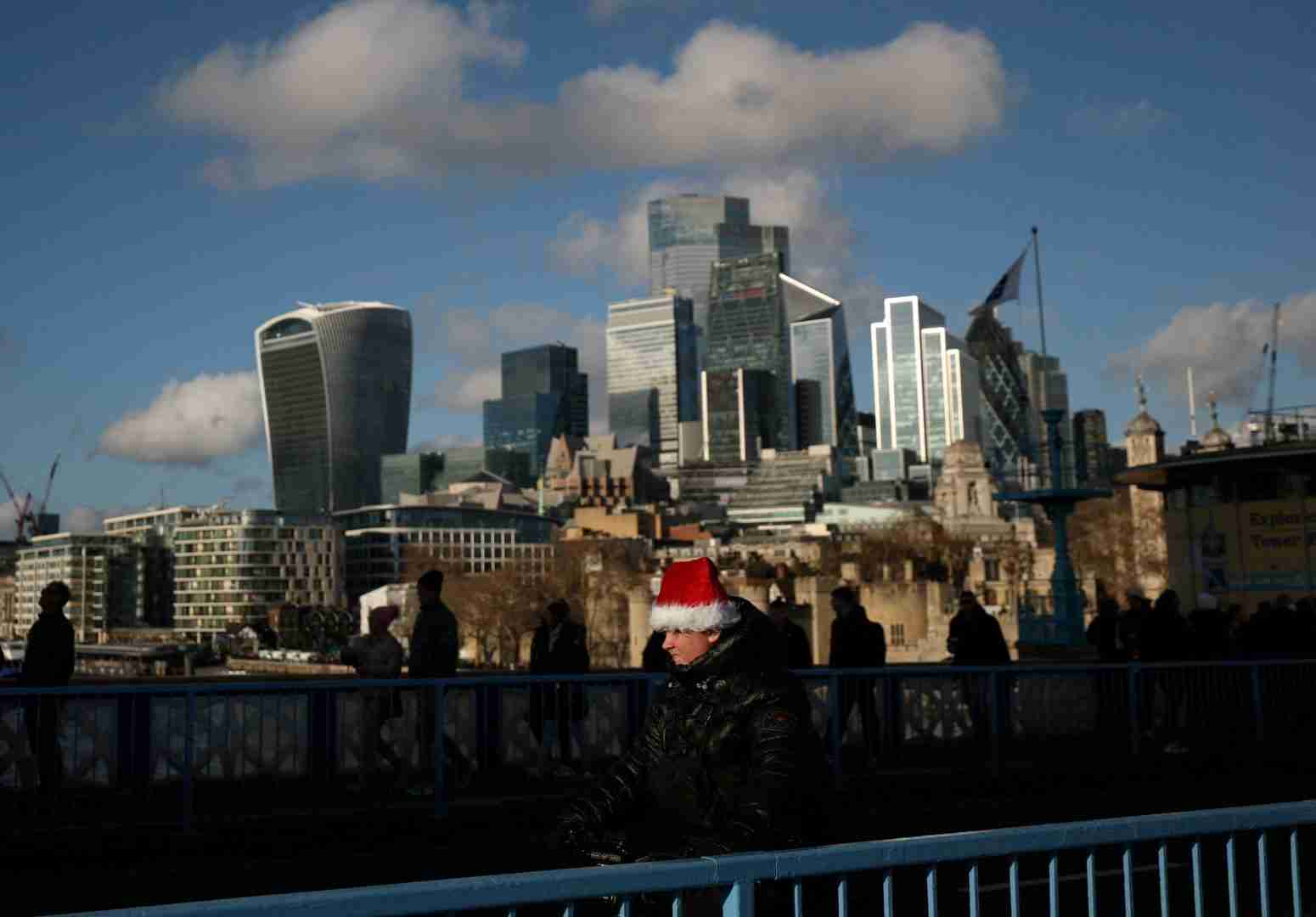
UK stocks closed lower for a second straight day on Thursday after Iran stepped up attacks on oil and transport facilities across the Middle East, driving a surge in crude prices that stoked concerns about rising inflationary pressures.

The blue-chip FTSE 100 closed down 0.4%, while the mid-cap FTSE 250 fell 0.9%.

Oil prices climbed back to $100 after Iranian boats appeared to have attacked two fuel tankers in Iraqi waters and the country’s supreme leader said the closure of the vital Strait of Hormuz should continue.

The FTSE 350 energy index <.FTNMX601010> jumped 2.6% to a record high as crude prices gained almost 9%.

Britain is seen as more exposed than many other Western countries to an energy price shock due to its stretched public finances and its heavy reliance on imported gas.

“The longer the disruption goes on, the greater the impact on energy prices and in turn global inflation. This then has implications for interest rates too,” said Danni Hewson, head of financial analysis at AJ Bell.

Money markets have abandoned expectations of early Bank of England easing, with futures no longer pricing in a March cut, instead seeing a roughly 40% chance of a quarter-point rise in borrowing costs in December.

A survey from RICS showed Britain’s housing market has lost steam as demand faded from buyers concerned about the implications of the Middle East conflict and possible increases in mortgage rates on the back of energy price rises.

Banks were among the worst-hit sectors in Europe as investors feared a hit to the economy from inflationary pressures. An index of UK banks dropped 4.8%.

HSBC this week closed its Qatar branches while Standard Chartered evacuated its Dubai office and told staff there to work from home, in a sign of how the conflict has rattled their day-to-day activities.

TP ICAP rose 10.7% to the top of the mid-cap index after the inter-dealer broker posted a 3.6% rise in annual pre-tax profit.

Reporting by Tharuniyaa Lakshmi in Bengaluru; Editing by Shreya Biswas

Price regulation of certain drugs under review

Phase II of the National Drug Formulary, which affects the price of GLP-1 medications such as Ozempic, is under review

File photo.

Moves to regulate the price of certain drugs are being held back for now.

The Bermuda Health Council has advised that Phase II of the National Drug Formulary implementation and enforcement has been temporarily paused while the council reviews rapid changes in the market.

Phase II was set to be implemented on March 1st, but it will now be reviewed alongside a recent consolidation move by Allshores, delaying implementation until at least May 1st.

Regulated pricing for generic medicines, and all other Phase I requirements, remain in effect.

However, certain medicines previously identified within earlier implementation phases, including GLP-1 therapies such as Ozempic, will be addressed within the Phase II framework, pending completion of the review.

A press release states: “The pharmaceutical market is currently experiencing rapid changes in purchasing arrangements, pricing structures, and distribution dynamics both locally and internationally.

“As these developments evolve, the Health Council believes it is important to conduct a broader review to ensure that regulatory implementation remains aligned with the principles of fairness, transparency and equitable access to medicines.

“The review will examine current market conditions, including whether emerging purchasing and distribution arrangements could create unintended consequences such as disparities in access, pricing distortions, and unfair competitive conditions within the sector.”

This move by the Health Council follows an announcement by Allshores that Phoenix Pharmacies was to become its designated provider for a list of 46 medications, prompting concern from independent pharmacies and doctors.

Subsequently, Health Minister Kim Wilson instructed the Health Council to formally request that Allshores implement a 60-day deferral of its pharmacy network policy to the 1st of May.

The Health Council advises that the initial National Drug Formulary pricing framework included margins on the landed cost of medicines – 15% for high-cost medicines, and 25% for all others … and a standard $35 dispensing fee per prescription.

The Health Council says it will now assess whether this structure supports the intended policy objectives of affordability, fair competition, and consistent compliance across the local pharmaceutical market.

The phased implementation strategy is also under review.

The Health Council states: “Depending on the findings, Phase II may be consolidated into a broader single-stage rollout rather than continuing with a piecemeal implementation approach …”

The public will be updated once the review is complete.


Bermuda Health Council Public Advisory

The Bermuda Health Council (Health Council) advises pharmaceutical importers, retailers, and other stakeholders that Phase II of the National Drug Formulary implementation and enforcement has been temporarily paused. During this period, Phase I requirements remain in effect. 

This pause will remain in effect while the Health Council undertakes a broader review of recent developments within Bermuda’s pharmaceutical market, including engagement with relevant stakeholders. Details of the original phased implementation approach are available within the Drug Formulary Consultation, Implementation and Enforcement Plan published on the Health Council’s Engagement page. 

What This Means for Pharmaceutical Importers and Retailers 

During this review period: 

  • Phase I requirements remain in force, including regulated pricing requirements for generic medicines. 
  • No enforcement actions related to Phase II medicines will be undertaken while the review process is underway. 
  • Medicines that fall within Phase II will be addressed following completion of the review and the issuance of updated guidance. 

As part of this process, certain medicines previously identified within earlier implementation phases, including GLP-1 therapies such as Ozempic, will be addressed within the Phase II framework pending completion of the review. Stakeholders will be provided with further guidance once the review has concluded. 

Why This Decision Was Made 

The pharmaceutical market is currently experiencing rapid changes in purchasing arrangements, pricing structures, and distribution dynamics both locally and internationally. As these developments evolve, the Health Council believes it is important to conduct a broader review to ensure that regulatory implementation remains aligned with the principles of: 

  • fairness 
  • transparency 
  • equitable access to medicines 

The review will examine current market conditions, including whether emerging purchasing and distribution arrangements could create unintended consequences such as: 

  • disparities in access 
  • pricing distortions 
  • unfair competitive conditions within the sector 

The Health Council will also examine whether aspects of the current regulatory framework require updates to ensure the system continues to operate effectively as the market evolves. 

Transparency on the Drug Pricing Framework 

For transparency, the initial National Drug Formulary pricing framework was developed using a structured approach that includes: 

  • a $1.50 wholesale floor for saleable units 
  • a 15% wholesale margin on landed cost for high-cost medicines 
  • a 25% wholesale margin on landed cost for other medicines 
  • a standard $35 dispensing fee per prescription 

As part of the current review, the Health Council will assess whether this structure continues to support the intended policy objectives of affordability, fair competition, and consistent compliance across Bermuda’s pharmaceutical market. The aim is to ensure that the framework operates effectively while avoiding unintended legal or operational gaps that could undermine compliance or market stability. 

Review of GLP-1 Medications 

The review will also include GLP-1 medications such as Ozempic and similar therapies, which are currently experiencing significant changes in pricing, demand, and supply dynamics globally. 

Given the rapidly evolving international market for these medicines, the Health Council is reviewing the available data and market conditions to ensure that regulatory and pricing decisions remain informed by the most current evidence and market realities. 

Regulatory and Legislative Alignment 

As part of the review process, the Health Council will also examine areas where existing legislative and regulatory standards may require clarification or alignment, including provisions within the Pharmacy and Poisons Act and related regulatory frameworks. 

This work forms part of the Health Council’s broader efforts to strengthen Bermuda’s pharmaceutical sector and ensure that regulatory structures continue to support a transparent, stable, and sustainable market environment. 

The review will also consider barriers that may exist within the current system that affect patient access to essential medicines and pharmacy services, with the goal of identifying practical opportunities for improvement within the pharmacy sector. 

What Happens Next 

Once the review process is complete, the Health Council will issue a follow-up advisory outlining: 

  • the outcome of the review 
  • any updates to implementation guidance 
  • a revised timeline for enforcement 

As part of this process, the Health Council will also assess whether the current phased implementation approach remains the most effective strategy. 

Depending on the findings, Phase II may be consolidated into a broader single-stage rollout rather than continuing with a piecemeal implementation approach, in order to provide greater clarity and consistency for stakeholders. Stakeholders will be given adequate notice prior to any changes to the implementation schedule or enforcement activities. 

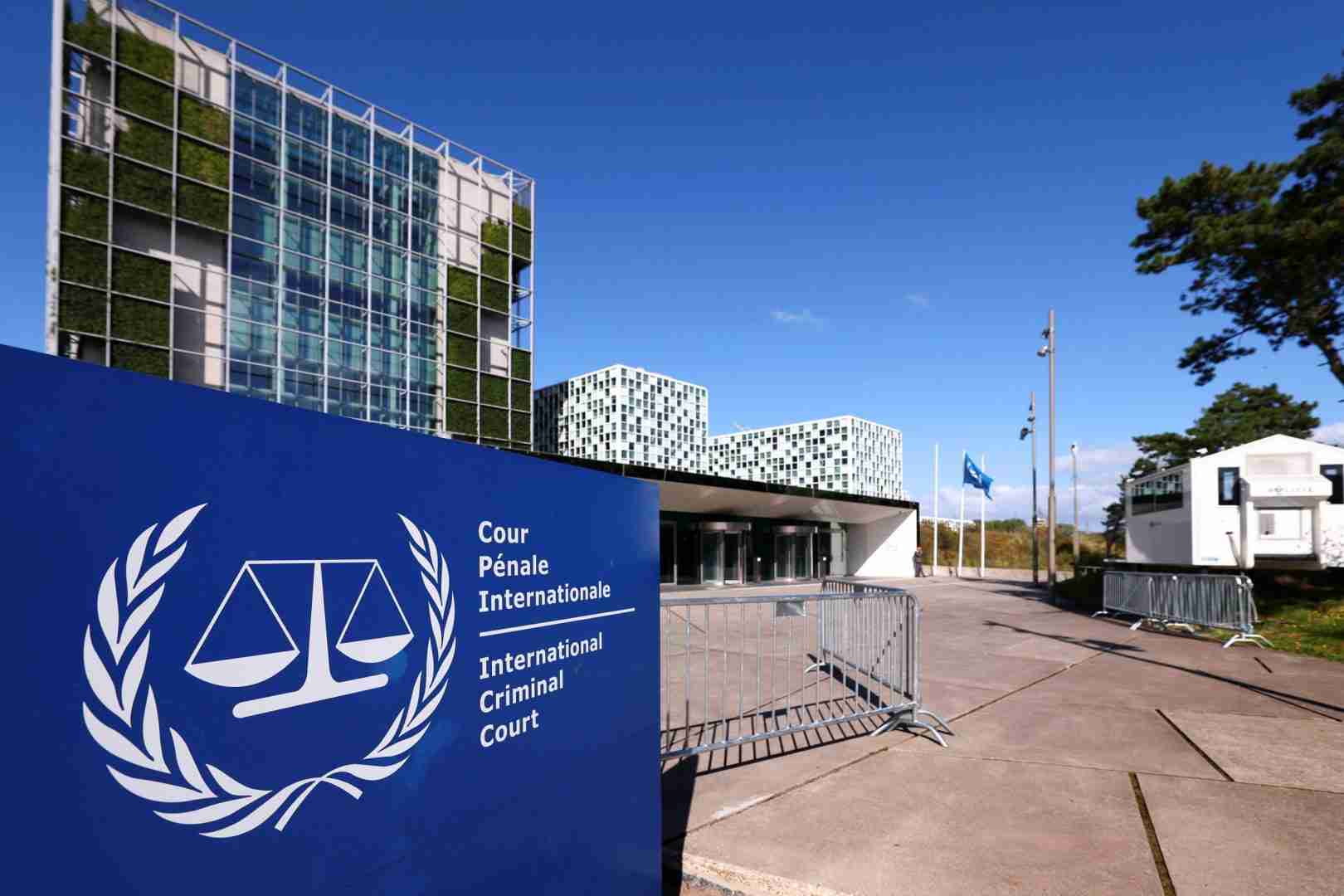
ICC opens probe into alleged crimes against humanity by Belarus

Belarus is not a member of the ICC, but the case was brought by Lithuania, which is a member

International News via Reuters:

Prosecutors at the International Criminal Court said on Thursday they had opened an investigation into whether the government of Belarus committed crimes that led to deportations of its opponents. 

Belarus is not a member of the ICC, but the case was brought by Lithuania, which is a member.

Prosecutors determined that at least part of the alleged crimes by Belarusian authorities were committed on Lithuania’s territory, giving them jurisdiction.

The Belarusian embassy in the Netherlands did not reply to a request for comment.

The prosecutors said there was reason to believe the actions of Belarus were targeted against “actual or perceived opponents” of the Belarusian government.

“There is also a reasonable basis to believe that these crimes were committed as part of a widespread and systematic attack against the civilian population, considering their large scale, the number of victims, and the organised nature of the acts”, they added.

Belarusian opposition leader Sviatlana Tsikhanouskaya said she welcomed the announcement.

“Hundreds of thousands of Belarusians have suffered, and continue to suffer, because of the regime’s actions. Lukashenka’s policies also create threats for Belarus’ neighbors,” she said in a statement.  “This decision restores hope. That justice will prevail, that those responsible will be held accountable, and that the victims will finally receive truth and justice.”

Reporting by Bart Meijer and Makini Brice; Editing by Mark Porter

Caribbean islands seek $200 million for regional biodiversity push

The 30X30 initiative by the Organisation of Eastern Caribbean States (OECS) and its 12 members is part of a broader global drive towards targets

International News via Reuters:

A group of Caribbean countries plan to raise $200 million for a joint bid to boost biodiversity, in a push for more influence on internationally financed environment projects to maximise their impact, Grenada’s climate ambassador has told Reuters.

The 30X30 initiative by the Organisation of Eastern Caribbean States (OECS) and its 12 members is part of a broader global drive towards targets, agreed in 2022, that include protecting 30% of the world’s land and sea by 2030.

The hope is that such cross-border initiatives, with government oversight from the start, will be more effective as they harness the power of multilateral, bilateral, philanthropic and private sector funding along with financial tools such as debt-for-nature swaps, Safiya Sawney said.

CARIBBEAN ISLANDS SEEK TO MAKE ENVIRONMENT FINANCE PAY

While around $650 million was raised to fund conservation in member states over the 20 years to 2024, governments often had to consider the priorities of multilateral donors before their own. For lack of coordination, some donors duplicated efforts.

“From the outside looking in, you say, ‘Well, that’s a lot of money. Why do you need more?’. The issue … is that we’re not seeing that in the impact,” she added, in an interview last week.

A report from the Back to Blue initiative, which focuses on ocean sustainability policy, suggested regional approaches such as “OECS 30X30” could be transformative in closing a huge funding gap.

Small Island Developing States (SIDS) worldwide – which will bear the brunt of rising sea levels – need around $12 billion a year to adapt to the effects of climate change, and get just $2 billion, according to the Global Center on Adaptation.

“There’s a huge disconnect between what the governments have invested time and effort into planning for themselves, based on their own indigenous circumstances, and what the donor is funding,” Sawney said.

“We’re challenging them to say ‘No, you have to do a better job if you really want to ensure that your money stretches. You have to trust us, trust that we know what would we need to do for ourselves’.”

Sawney said that, as development aid budgets are cut in richer countries, it was important to scale projects regionally and attract more private sector investors.

“For us, the programme is really, really important because it’s really on us to be able to show investors, particularly non-traditional investors, that we’re a good bet.”

Reporting by Simon Jessop; Editing by Kevin Liffey

London overtakes San Francisco, New York as top FinTech hub, growth capital fund says

European FinTech funding grew 37% between 2022 and 2025, while investment in top U.S. hubs declined 13%, reaching an equivalent 40 billion euros each, according to data published by Finch Capital on Thursday

International News via Reuters:

London has overtaken San Francisco and New York as the world’s largest financial technology hub, as European FinTech funding achieved parity with the United States for the first time, according to data released by growth capital fund Finch Capital.

European FinTech funding grew 37% between 2022 and 2025, while investment in top U.S. hubs declined 13%, reaching an equivalent 40 billion euros each, according to data published by Finch Capital on Thursday.* Late-stage funding remains a challenge, as every Europeanround over one billion euros was led by U.S. investors * Nine billion euros discrepency is “a policy gap, not amarket verdict”, Finch Capital partner Aman Ghei says * European pension funds allocate just 0.02% of assets toventure capital, significantly lagging the U.S. rate of 1.9%.Bridging this gap could unlock 37.5 billion euros annually,Finch Capital estimates * Ghei highlighted Europe’s strength in regulatory-intensiveverticals, with CFO office and regulatory software firmsachieving a 2.54x return, compared to 1.31x in the U.S * Ghei also pointed to corporate investment opportunitiesthat U.S. companies are seizing more aggressively, citing ASML’sinvestment in AI firm Mistral as an example * European capital exists and reliance on U.S. investors isnot a necessity, he added

Reporting by Leo Marchandon in Gdansk; Editing by Matt Scuffham

Iran vows to keep Strait of Hormuz closed in new leader’s first statement

In a defiant address, Khamenei said Iran’s neighbours should close all U.S. bases on their territory, which Iran would continue to attack

International News via Reuters:

Iran will fight on and keep the Strait of Hormuz shut, new Supreme Leader Mojtaba Khamenei said on Thursday in a statement read out on state television, the first remarks attributed to him since he succeeded his slain father.

In a defiant address, Khamenei said Iran’s neighbours should close all U.S. bases on their territory, which Iran would continue to attack.

“I assure everyone that we will not neglect avenging the blood of your martyrs,” he told the Iranian people.

“The popular demand is to continue our effective defence and make the enemy regret! The lever of blocking the Strait of Hormuz must continue to be used,” he said of the shipping route, where a fifth of global oil normally runs past Iran’s coast.

State television offered no explanation for why Khamenei’s first remarks were read out by a presenter rather than delivered in a video address. No images have yet been released of him since the strike that killed his father, Supreme Leader Ayatollah Ali Khamenei.

Iranian officials have said the younger Khamenei was lightly wounded. He said in his address that his wife, sister and other family members were also killed.

TANKERS ABLAZE IN IRAQI PORT

Shortly after his address, the Revolutionary Guards announced that, in keeping with his orders, they would keep the strait shut.

Two tankers were ablaze in an Iraqi port on Thursday after a hit by suspected Iranian explosive-laden boats, a step-up in attacks that have cut off oil from the Middle East. The attacks were a clear sign of defiance of U.S. President Donald Trump, who said on Wednesday the United States had already won the war.

Images verified by Reuters as having been filmed from the shore of the port of Basra showed ships engulfed in massive orange fireballs that lit up the night sky. At least one crew member was killed in the attacks.

Hours earlier, three other ships had been struck in the Gulf. Iran’s Revolutionary Guards claimed responsibility for at least one of those attacks, on a Thai bulk carrier that was set ablaze, which the Guards said had disobeyed their orders. Another container vessel reported being struck by an unknown projectile near the United Arab Emirates on Thursday.

GLOBAL ENERGY SUPPLIES DISRUPTED

The war that began with a U.S.-Israeli bombing campaign at the end of February has so far killed around 2,000 people and caused what the International Energy Agency describes as the biggest disruption to global energy supplies in history.

Undermining U.S. and Israeli claims to have knocked out much of Iran’s stock of long-range weapons, more drones were reported on Thursday flying into Kuwait, Iraq, the UAE, Bahrain and Oman.

Lebanon’s Iran-backed militia Hezbollah fired its biggest volley of rockets into Israel of the war, prompting fresh Israeli strikes on Beirut.

Oil prices soared back above $100 a barrel, having come down earlier in the week when Trump said the war would be over soon. Iran has said it will not let oil through the Strait of Hormuz, the world’s most important energy trade route, until U.S. and Israeli attacks cease. [O/R]

TRUMP SAYS ‘WE WON’

Trump has repeatedly tried to calm energy markets this week by saying the surge in oil prices will be short-lived.

But he has not explained how the war will end, or presented a plan to reopen the blockaded strait. U.S. and Israeli officials say the aim is to destroy Iran’s missile and nuclear programmes, but Trump has also demanded Iran’s “unconditional surrender” and the power to determine its leaders.

“You never like to say too ⁠early you won. We won,” ​Trump told a campaign-style rally in Hebron, Kentucky, on Wednesday. “In ​the first hour it was over.”

But he added: “We don’t want to leave early, do we? We got to finish the job.”

On Thursday, Trump said the United States profited from higher oil prices, but that his priority was stopping Iran from obtaining a nuclear weapon. The U.S. is a net oil exporter but is also the world’s biggest oil consumer, burning around twice as much as its peer, the European Union. Economists say sustained high prices would cause broad inflation.

‘SECURITY FORCES ARE EVERYWHERE’

Inside Iran, residents said security forces were increasing their presence on the streets, demonstrating their continued control.

“Security forces are everywhere, more than before. People are afraid to come out, but supermarkets are open,” teacher Majan, 35, said by phone from Tehran.

Three sources told Reuters that U.S. intelligence indicated that Iran’s leadership was still largely intact and not at risk of collapse any time soon.

Israel and the United States have called on Iranians to rise up and topple their clerical rulers. Many Iranians want change and some openly celebrated the death on the war’s first day of the elder supreme leader, whose security forces had killed thousands of anti-government protesters in January. But there has been no sign of organised anti-government activity while the country is under attack.

TEHRAN SEEKS PROLONGED ECONOMIC SHOCK

Khamenei’s remarks reinforce the message from Iran that its strategy now is to impose a prolonged economic shock to force Trump to back off. A spokesperson for Iran’s military command said on Wednesday that the world should prepare for oil prices of $200 a barrel.

Thursday’s surge in oil prices came despite the announcement the previous day that developed countries would release 400 million barrels of oil from their strategic reserves, nearly half from the United States.

That is by far the biggest-ever coordinated intervention into the oil markets. But releasing the reserves will take months, and account for just three weeks of supply from the blockaded strait.

“The only way to see oil prices trade lower on a sustained basis is by getting oil flowing through the Strait of Hormuz,” ING analysts said. “Failing to do so means that the market highs are still ahead of us.”

Reporting by Parisa Hafezi in Dubai, Alexander Cornwell in Tel Aviv and Jana Choukeir in Dubai and Bo Erickson in HEBRON, Kentucky, and Reuters bureauxWriting by Peter GraffEditing by Michael Perry, Alex Richardson and Gareth Jones

Beyond the boundary: The hidden engine driving associate cricket

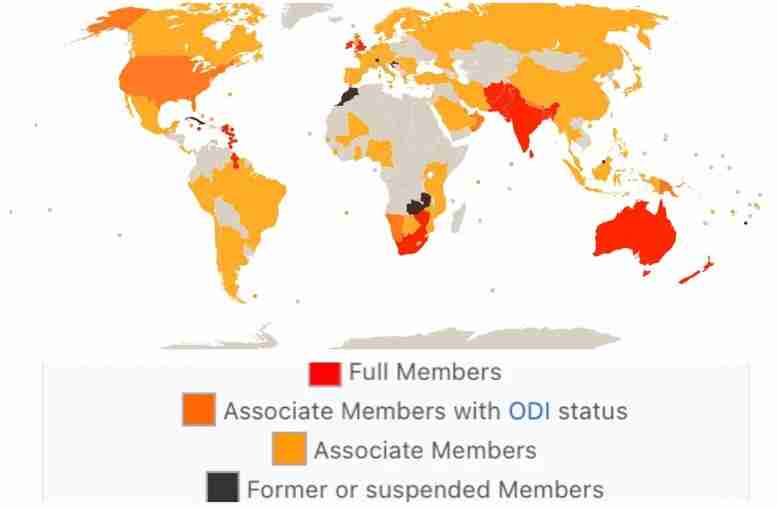
While global conversations focus on World Cups and franchise leagues, a vital financial engine operates behind the scenes: the ICC pathway hosting model. For Associate Members, hosting these tournaments is a crucial economic catalyst that strengthens domestic cricket.

The ICC’s qualification pathways require a dense calendar of regional events across diverse geographies. When an Associate Member hosts, the ICC provides a structured funding framework that offsets costs and injects capital directly into the local economy. For many boards, this is their most significant financial inflow outside annual grants.

ICC funding typically covers major operational expenses, including:

  • Venue preparation and match operations.
  • Team accommodation and travel.
  • Broadcast, digital coverage, and match officials.

This support removes financial risk, making hosting financially neutral or even positive. Beyond the tournament, the upgrades to pitches, outfields, and practice facilities remain as permanent assets, transforming local grounds into internationally viable venues. For Associate nations, these events ensure the sport’s foundations are built on world-class soil.

Phoenix rise as Tigers roar: Netball Bermuda Winter League standings confirmed

Bermuda’s netball landscape has been painted in shades of red and yellow this winter, as Phoenix and Tigers emerged as the dominant forces in the final standings for the 2025/26 season.

The Tigers remain the apex predators of the top flight, finishing a commanding ten points clear at the summit of the Premier Division. Their tactical execution left the chasing pack in the dust, with Storm Surge and Phoenix Heat trailing in second and third respectively.

However, the broader story of the season is the staggering dominance of the Phoenix franchise, which secured a “triple crown” of division titles. In the First Division, the Phoenix Flames delivered a masterclass in efficiency to rack up 40 points, holding off a tight battle for silver between Storm NexGen and Atlantic Aces.

The youth ranks proved equally fertile ground for the organization. Phoenix Fire ended the 16 & Under campaign as the island’s most prolific side, amassing 42 points—the highest total across all divisions. Meanwhile, the Phoenix Embers clinical run earned them the 13 & Under title, narrowly beating out a resilient challenge from the Storm club’s dual-threat Lightning and Thunder rosters.