Shortly before 6:30 PM on Friday, February 13, 2025, Police and other first responders were dispatched to a reported single vehicle road traffic collision involving a motorcycle near the junction of Quarry Road and Harrington Sound Road Hamilton Parish.
Details are limited at this time.
It is understood the male motorcycle rider was found unresponsive, but has since regained consciousness.
He was attended to at the scene by Emergency Medical Services personnel and has since been transported by ambulance to King Edward VII Memorial Hospital.
The roadway remains closed at this time. However, all traffic eastbound and westbound, is being diverted along Quarry Road.
Where possible, motorists are advised to use alternative routes to get to their destinations.
Responding to a challenge from Bermuda Broadcasting, new OBA Leader Ben Smith agrees to have his MPs and Senators annually update the public on their financial interests
‘What’s in it for them?’
…that’s a question often asked about politicians, sometimes accompanied by speculation and even conspiracy theories about backroom deals and conflicts of interest.
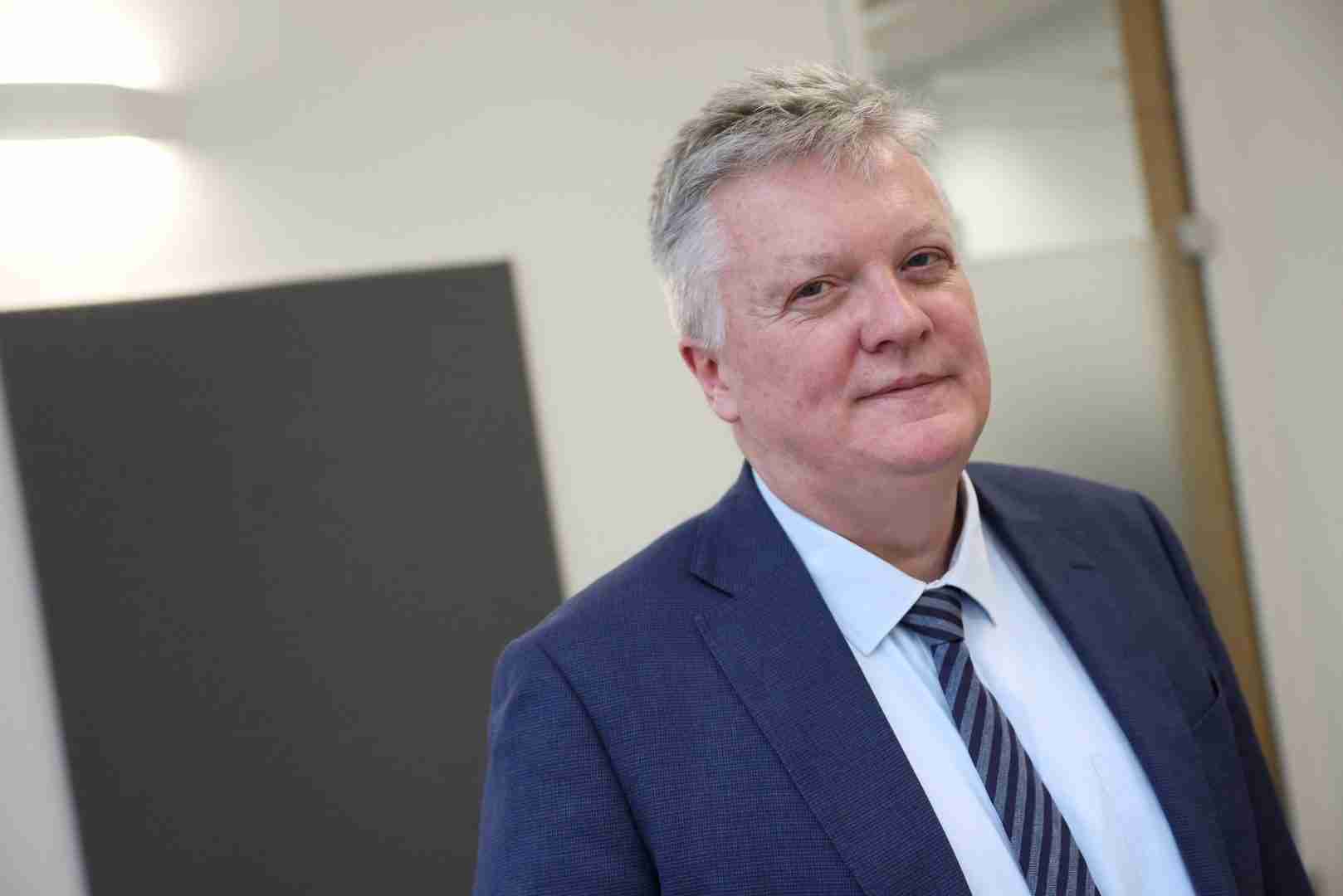
New OBA Leader Ben Smith says that he doesn’t want the public looking at him and his team and thinking they are gaining because of politics. Therefore, he accepted a challenge from Bermuda Broadcasting to have his MPs and Senators update their Register of Interests every year.
The Register of Interests was set up following a long-running campaign by former UBP MP and Attorney General under the OBA, Trevor Moniz.
MPs and Senators fill out the Register to provide information on any monetary interests that could be perceived to potentially influence their parliamentary actions.
Some of the Registers have not been updated for several years. Premier David Burt’s, Wayne Furbert’s, Kim Swan’s, and Diallo Rabain’s date back to 2018 or earlier.
However, such Registers may not need to be updated if nothing has changed.
All the same, Ben Smith recently lauded the OBA’s principles of ‘honesty, integrity, and transparency’, so Gary Foster Skelton challenged him to try and leave no room for doubt…
WATCH the interview above. The FULL interview with Ben Smith is available HERE and below…
The Bermuda Society of Arts, in collaboration with the Deep Cut Community, has curated a special exhibition in recognition of a century of Black History commemorations, running now through February 24th.
The initiative features black art, an archive of black film and music, and community screenings taking place three times a week, creating space for reflection, education, and cultural celebration. We spoke to organizer Nzingha Ming, director of the Bermuda Society of Arts, and founder Yasmin Eve-Townsend, who shared more about the importance of the project and encouraged the public to come out and take part.
The NATO alliance will become more European-led, with a continuing strong presence of the United States, as European allies significantly increase military spending
International News via Reuters:
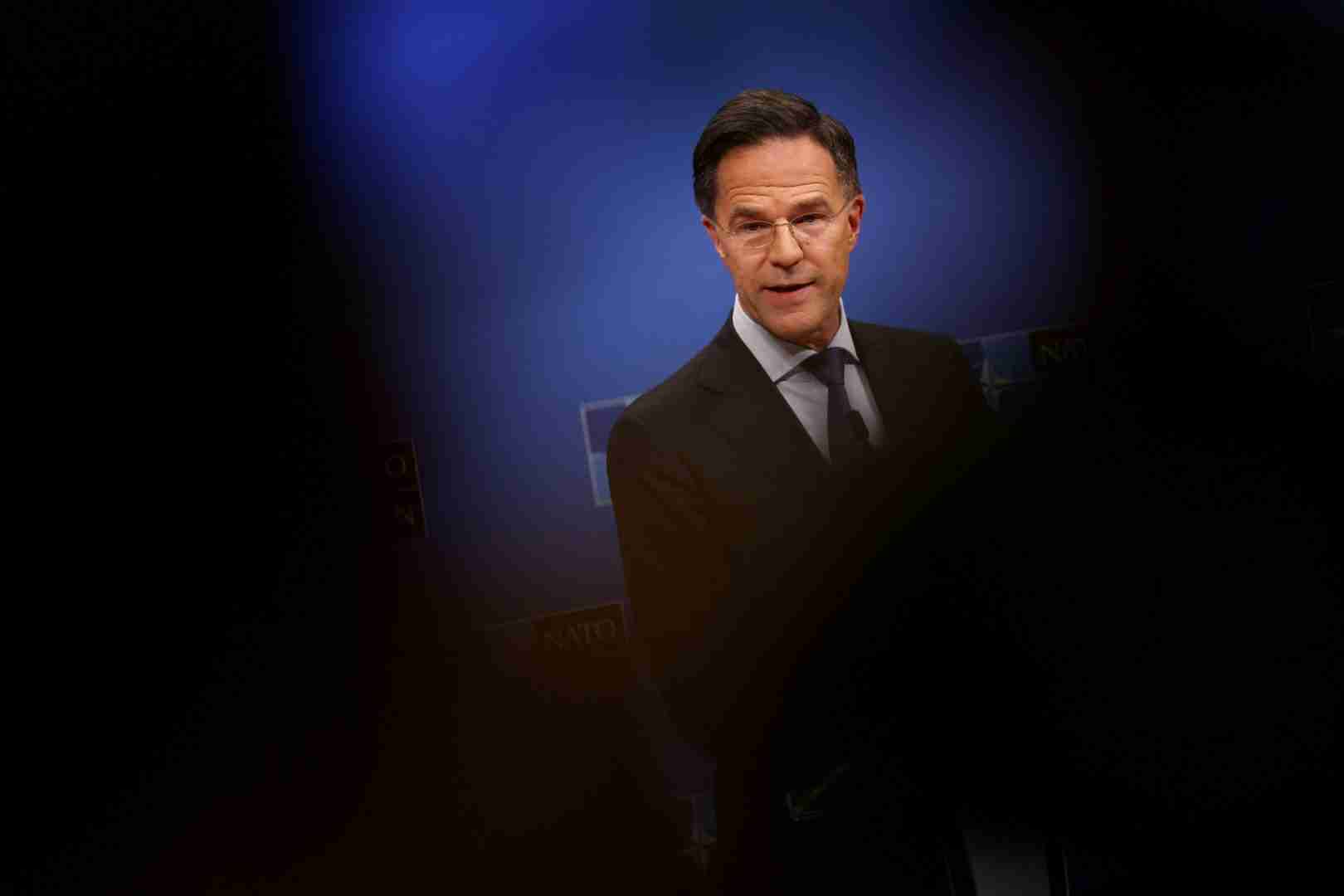
The NATO alliance will become more European-led, with a continuing strong presence of the United States, as European allies significantly increase military spending, NATO Secretary General Mark Rutte said on Friday.
“Over the coming years we will more and more sea a NATO that is more European-led, but at the same time with the US absolutely anchored in the organization,” Rutte told reporters on the sidelines of the Munich Security Conference.
“We will do this step by step, in close conjunction with the United States, based on the defense planning process we have.”
Reporting by Andrew Gray, writing by Bart Meijer, editing by Charlotte Van Campenhout
A live NASA-SpaceX webcast showed the 25-story-tall vehicle rising from the launch tower as its nine Merlin engines roared to life
International News via Reuters:
A SpaceX rocket soared into orbit from Florida early on Friday with a crew of two U.S. NASA astronauts, a French astronaut and a Russian cosmonaut headed to the International Space Station for an eight-month science mission in microgravity.
The two-stage Falcon 9 rocket, topped with an autonomously operated Crew Dragon capsule dubbed “Freedom”, was launched from the Cape Canaveral Space Force Station, along Florida’s Atlantic Coast, at about 5:15 a.m. EST (1015 GMT).
A live NASA-SpaceX webcast showed the 25-story-tall vehicle rising from the launch tower as its nine Merlin engines roared to life, gulping 700,000 gallons of fuel per second, emitting clouds of vapor and a reddish fireball that lit up the predawn sky.
‘THAT WAS QUITE A RIDE’
Nine minutes into its flight, the Falcon 9’s upper-stage rocket had accelerated to more than 17,000 miles per hour (27,360 kph) before thrusting the Crew Dragon into orbit. By then, the reusable lower-stage booster had flown itself back to Earth and touched down safely at a Cape Canaveral landing pad.
The four crew were set to reach the space station on Saturday afternoon after a 34-hour flight, docking with the orbiting laboratory platform some 250 miles (420 km) above Earth.
The mission, designated Crew-12, marks the 12th long-duration ISS team that NASA has flown aboard a SpaceX launch vehicle since the private rocket venture founded in 2002 by billionaire Elon Musk began sending U.S. astronauts to orbit in May 2020.
Crew-12 was led by Jessica Meir, 48, a veteran astronaut and marine biologist on her second trip to the space station, nearly seven years after making history with NASA colleague Christina Koch by completing history’s first all-female spacewalk.
“Thank you team, that was quite a ride,” Meir radioed to the SpaceX flight control center near Los Angeles. “Crew-12 is grateful and ready for the journey ahead. We’re on our way.”
Joining her on the flight was Jack Hathaway, 43, a former U.S. Navy fighter pilot and rookie astronaut; European Space Agency astronaut Sophie Adenot, 43, a master helicopter pilot from France; and Russian cosmonaut Andrey Fedyaev, a former military pilot on his second mission to the ISS.
ORBITING LABORATORY
Upon arrival, the team will get busy with a host of scientific, medical and technical research tasks in microgravity, according to NASA.
Those include studies of pneumonia-causing bacteria to improve treatments on Earth, and experiments with plant and nitrogen-fixing microbe interactions to boost food production in space.
Much of the science agenda is aimed at perfecting technologies that NASA hopes to deploy in future astronaut missions to the moon and Mars as part of its fledgling Artemis program, successor to project Apollo a half-century ago.
The Artemis II mission, a 10-day test voyage designed to fly four astronauts around the moon and back, is due to launch as early as next month.
Crew-12 will be welcomed aboard the space station by three current ISS occupants – NASA astronaut Chris Williams and Roscosmos cosmonauts Sergey Kud-Sverchkov and Sergei Mikaev.
Four Crew-11 members who were supposed to have stayed aboard until the arrival of Crew-12 departed a few weeks early, when an undisclosed serious health condition affecting one forced an unprecedented medical evacuation flight home in mid-January.
The ISS, which spans the length of a football field and ranks as the largest human-made object in space, has been continuously operated by a U.S.-Russian-led consortium that includes Canada, Japan and 11 European countries.
The first hardware for the outpost was launched more than a quarter century ago. It was conceived as part of a multinational venture to improve ties between Washington and Moscow following the Soviet Union’s collapse and the end of Cold War rivalries that spurred the original U.S.-Soviet space race in the 1950s and 1960s.
NASA has said it is committed to keeping the space station operating until the end of 2030.
Reporting by Steve Nesius in Cape Canaveral, Florida; Writing and additional reporting by Steve Gorman in Los Angeles; Editing by Clarence Fernandez and Alex Richardson
Competing aboard the Swan 58 WaveWalker, Caffari headlines a regatta that has become a key Caribbean proving ground ahead of the RORC Caribbean 600
International News via Reuters:
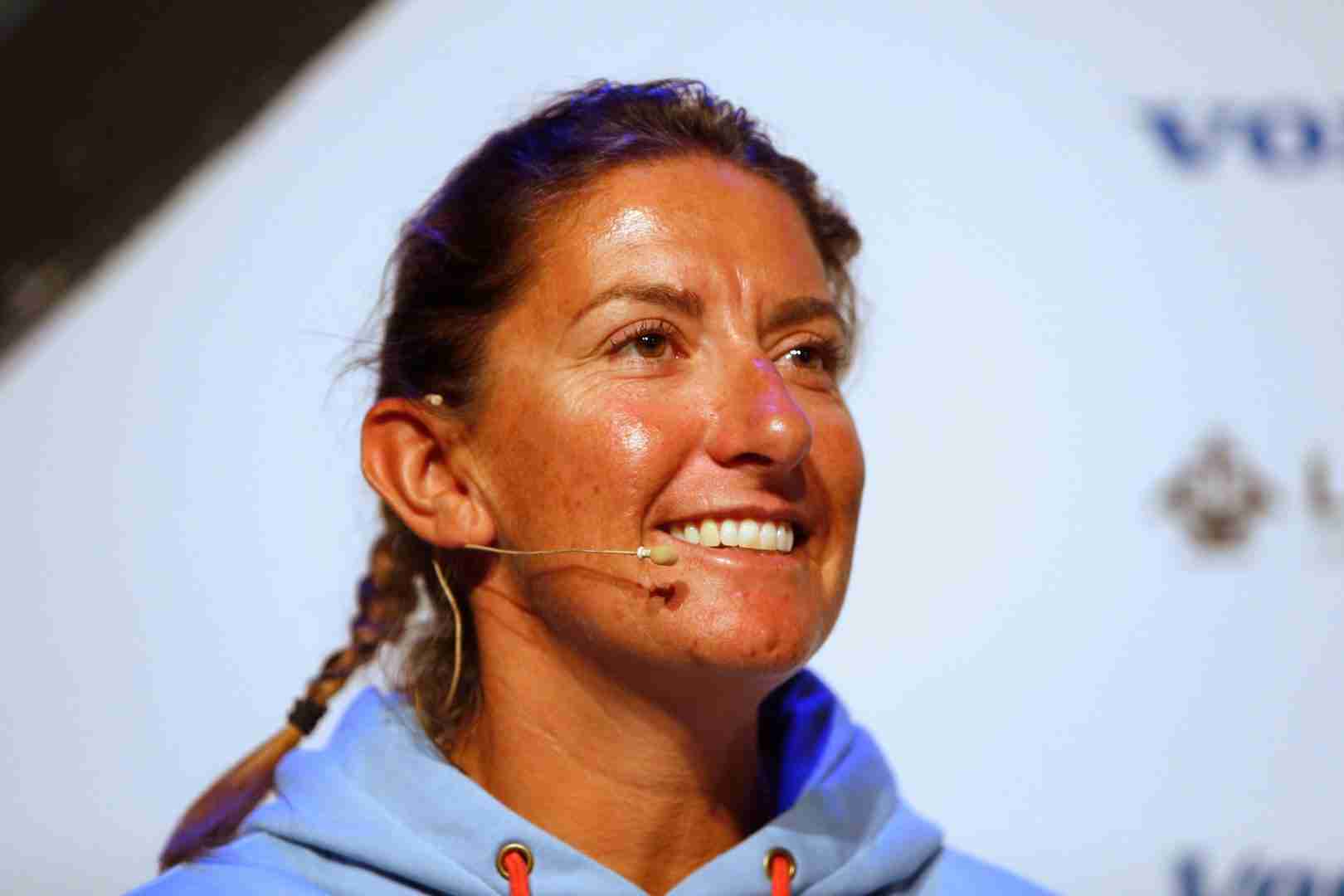
British sailor Dee Caffari arrives in Antigua fresh from a sub-58-day round-the-world race and will next week swap the vast emptiness of the Southern Ocean for the tight, tactical racing of the 2026 RORC Nelson’s Cup Series.
Competing aboard the Swan 58 WaveWalker, Caffari headlines a regatta that has become a key Caribbean proving ground ahead of the RORC Caribbean 600.
The Nelson’s Cup, which begins on Tuesday, is designed as both a stand-alone regatta and the final dress rehearsal before the RORC Caribbean 600. Over two days of inshore racing and the Antigua 360 circumnavigation, crews are pushed into constant manoeuvres, rapid decision-making and immediate debriefs in racing that compresses the learning curve.
For international teams arriving from winter campaigns in Europe and beyond, the series provides something no training programme can replicate: real opposition in Caribbean conditions. Trade winds, Atlantic swell and heat place their own demands on sailors and equipment.
Caffari has described the shift from round-the-world endurance to short-course intensity as “active recovery”, but the stakes remain high. The Nelson’s Cup is a final chance for teams to fine-tune performance before the Caribbean 600, with Antigua quickly exposing who is ready and who is not for the 600-nautical-mile offshore yacht race that will start and finish in Antigua later this month after circling 11 Caribbean islands.
Reporting by Ossian Shine; Editing by Clare Fallon
The Capital Markets Union would allow the bloc to invest at scale at a level to match the United States
International News via Reuters:
EU governments have long preached unity as the best response to U.S. and Chinese economic pressure, but are discovering they need urgently to boost Europe’s competitiveness and that waiting for all 27 member states to agree may take too long.
That was the clear message from an informal EU summit in Belgium on Thursday, where French President Emmanuel Macron and European Commission President Ursula von der Leyen gave the bloc until June to progress on a stalled union of financial markets.
The Capital Markets Union would allow the bloc to invest at scale at a level to match the United States, but vested interests in various countries and professional groups have held back any integration for more than a decade.
Now, unless there is sufficient progress by June, a smaller group of at least nine European Union members could press ahead in “enhanced cooperation” with the required steps and reforms, von der Leyen and Macron said.
“Often we move forward with the speed of the slowest and the enhanced cooperation avoids that,” von der Leyen told reporters on Thursday. “The pressure and the sense of urgency is enormous, and that can move mountains.”
The first movers could be the six leading economies who took part in talks last month hosted by Germany on a “Europe of two speeds” to break decision-making inertia and galvanise the EU economy. The other five countries were France, Italy, Spain, Poland and the Netherlands.
If EU leaders needed a reminder of threats to their economic model, data showed on Friday that the bloc’s trade surplus shrank further in December as tariffs weighed on exports to the U.S. and rising Chinese imports crowded out domestic production.
MULTI-SPEED EU ALREADY EXISTS
Some of those not invited to the German-led group of six have expressed alarm.
“It is a good idea to threaten member states to agree on some files, but a very bad idea for the future of Europe,” said one EU diplomat.
“Quite simply, it just flies in the face of the unity we like to parade in other areas,” said another.
But a third diplomat said it was clear that plan A was to make progress with all 27 EU members and it was good to have a plan B.
“It’s a hostile world out there. Prosperity is under threat if these bottlenecks continue,” the third diplomat said, noting that Europe already operated at different speeds elsewhere.
Certain flagship EU projects, including the euro currency and the Schengen passport-free travel zone, allow groups of EU countries to move ahead, while others can join later.
The Schengen area, for example, does not include Cyprus or Ireland, but does include four non-EU countries. The European Public Prosecutor’s Office has 24 EU participants and the Unitary Patent system 18.
As recently as December, EU leaders agreed to provide a 90 billion euro loan to Ukraine, but the Czech Republic, Hungary and Slovakia opted out.
Karel Lannoo, CEO of the Centre for European Policy Studies, said the EU should still try to advance as 27, not “become more concentric circles”.
“You need to advance as Europe, and that’s what we need to see also in the context of the threats from the United States and Russia,” he said.
The European Policy Centre think-tank said a coalition of the willing was no silver bullet, noting that talks on creating the Capital Markets Union had been long held up by disagreements among big EU members, including France, Germany and Italy.
European Council President Antonio Costa, who chaired Thursday’s meeting, said the topic of a coalition of the willing was not part of the official discussions, but diplomats said it was raised on the sidelines.
“Europe has never really suffered from a lack of plans or grand vision; the real obstacle has almost always been weak implementation and national interests taking precedence over European ones,” ING Bank economists Carsten Brzeski and Bert Colijn said in a note to clients.
“Whether this time will be any different remains to be seen.”
Reporting by Philip Blenkinsop, Alex Chituc, Lili Bayer and Jan StrupzewskiEditing by Gareth Jones
Last month, the farmers ended weeks of nationwide blockades over delayed farm aid payments
International News via Reuters:
Greek farmers drove dozens of tractors into central Athens on Friday to protest over rising production costs and tough competition from abroad, saying that what the government had offered them so far was not enough to stay afloat.
People lined up and applauded as tractors arrived in front of the parliament building. The farmers said they would stay overnight.
Stavros Kozoutzis, a farmer from Komotini, in the north of the country, said: “Unfortunately, the summer cultivation period is about to begin, and we do not have the money to plant this year’s crops.”
Last month, the farmers ended weeks of nationwide blockades over delayed farm aid payments. The Greek government says it has disbursed much of the overdue payments and announced cheaper fuel and cover for future output losses.
But the head of the farmers’ union in the central agricultural region of Larissa said on Friday that many farmers had not yet received full compensation for last year’s crop and livestock losses, while guaranteed minimum prices for their products and investment in irrigation and infrastructure against future floods were core demands the government has not met.
“We are giving a battle for our survival. We left the blockades… but our fight continues as our main demands have not been satisfied,” Rizos Maroudas told public broadcaster ERT, hours before farmers reached Athens.
The sector has also been hit by rolling outbreaks of sheep and goat pox with hundreds of thousands of animals being culled since 2024.
Footage from local television showed veterinarians dressed in yellow uniforms spraying tractors with disinfectants before they reached the Greek capital.
Reporting by Angeliki Koutantou; Editing by Alex Richardson
Pill has voted against the BoE’s last four interest rate cuts and said interest rates were now “a little bit too low”, although just about high enough to be putting some downward pressure on inflation
International News via Reuters:
Bank of England Chief Economist Huw Pill said underlying inflation in Britain was settling at about 2.5% a year, higher than the BoE’s 2% target, which made it inappropriate to cut interest rates further.
Pill has voted against the BoE’s last four interest rate cuts and said interest rates were now “a little bit too low”, although just about high enough to be putting some downward pressure on inflation.
“I still think we’re sufficiently restrictive – although there’s some ambiguity there – that holding at this level and being cautious will be enough,” he said at an event in London hosted by the bank Santander.
POLICYMAKERS DIVIDED ON FUTURE RATE CUTS
After cutting rates six times since August 2024, the BoE’s Monetary Policy Committee is now divided on how much further, if at all, rates should fall.
The MPC’s last three meetings have resulted in 5-4 splits and financial markets see just one or two more cuts this year – though the narrow majority was in favour of a hold last week, and remarks by Governor Andrew Bailey made some economists think the next cut could come as soon as March.
The BoE forecasts inflation will fall sharply from 3.4% in December to close to its 2% target in April or May, largely due to one-off effects related to regulated prices and measures from finance minister Rachel Reeves’ November budget.
Pill said he worried that the return to target would be temporary.
“I think when we look at where we are now, short of something happening, underlying inflation is going to be two and a half percent, once we take that half-percentage-point impact from the budget out of the forecast we have for April-May,” he said.
In minutes of February’s decision, Pill said interest rates had been cut too fast previously and that inflationary pressures stemming from that “still need to be contained and eliminated”.
PILL SEES ‘SHALLOW SAUCER’ PATH FOR WAGES AND PRICES
In his comments on Friday, Pill likened the outlook for businesses’ wage and price-setting plans to a “shallow saucer” with a small dip followed by a rise at the end and repeated his view that the cooling of inflation pressures was incomplete.
“In order to complete that (disinflation) process, monetary policy has a part to play and that means we do need to retain some restrictiveness in the stance of monetary policy until that process of disinflation is complete,” Pill said.
Four of the MPC’s nine members last week voted for a rate cut due in large part to concerns about a slowdown in the labour market, where the jobless rate has risen to its highest in nearly five years.
But Pill said much of the recent rise in unemployment could be due to structural factors, rather than a cyclical slowdown that could be ameliorated by rate cuts.
“The important thing to say is growth in the UK is positive … we’re not seeing some sort of collapse in activity,” he said.
Reporting by David MillikenEditing by William Schomberg, William Maclean
The euro was 0.07% lower at $1.1863 against the dollar, but was set to gain 0.4% this week
International News via Reuters:
The U.S. dollar was mostly flat against peer currencies on Friday after data showed a less-than-expected increase in inflation in January, suggesting the Federal Reserve could continue to hold rates steady in the near term.
The Japanese yen was set for its strongest weekly gain in a year.
U.S. Labor Department data on Friday showed that the consumer price index rose 0.2% last month compared with an estimate of 0.3% from economists polled by Reuters.
The euro was 0.07% lower at $1.1863 against the dollar, but was set to gain 0.4% this week. Against the Swiss franc, the dollar weakened 0.13% to 0.7684 and was on course for a weekly loss of 0.95%.
The dollar’s behavior reflects market positioning as it awaits fresh central bank signals on the direction of interest rates, said Olivier Bellemare, senior derivatives trader at Monex Canada in Montreal.
MARKET REACTION IS ‘TIMID’
Earlier this week, data suggested the U.S. labor market was stabilizing with a drop in the U.S. unemployment rate amid strong jobs growth in January and a less-than-expected decrease in the number of Americans filing new applications for unemployment.
“The market reaction to the data was timid at best and the moves were mostly tactical,” Bellemare said.
The dollar index edged higher by 0.02% to 96.95, on track to shed 0.73% for the week.
The yen has dominated activity in the foreign exchange market this week, after Japanese Prime Minister Sanae Takaichi’s historic election win allayed some investor worries about the government’s finances.
YEN’S STRONGEST PERFORMANCE IN A YEAR
The yen was still headed for a gain of 2.64% for the week, its largest rise since February last year, although it was down 0.15% on the day at 153.08.
The yen was down 0.14% against the euro but still was headed for a 2.27% weekly jump against the single currency, its strongest performance in a year.
“Over the longer term, yen‑weakening risks remain firmly in place,” said Bank of America Global Research analysts led by Claudio Piron in an investor note. “But in the near term, the combination of potential intervention and scope for the market to further price-in Bank of Japan hikes at the March and April meetings skews the risk‑reward for USD/JPY to the downside.”
The Australian dollar, the top-performing major currency of 2026 so far after soaring in recent weeks on a hawkish Reserve Bank of Australia, was down 0.47% at $0.705, but still headed for a 0.66% gain this week.
The Canadian dollar strengthened 0.01% versus the greenback to C$1.361 per dollar, still set to drop 0.45% for the week.
Reporting by Chibuike Oguh in New York; Additional reporting by Amanda Cooper; Editing by Barbara Lewis and David Holmes
The blue‑chip FTSE 100 rose 0.4%, hovering below record highs touched on Thursday
International News via Reuters:
Britain’s FTSE 100 locked in a third straight week of gains on Friday, as corporate takeovers and expectations of monetary policy easing helped counter global concerns about AI’s disruptive potential on a swathe of industries.
The blue‑chip FTSE 100 rose 0.4%, hovering below record highs touched on Thursday. The FTSE 250 mid‑cap index gained 0.5%, securing its first weekly rise after two consecutive weeks of losses.
A burst of new AI tool releases since late January has fuelled volatility in global markets, as investors weighed the threat newer models pose to traditional businesses.
INVESTORS CHEER M&A DEALS
London-listed credit analytics firm Experian, exchange operator London Stock Exchange Group, information group RELX, which were among the worst-hit stocks in the global selloff, rebounded on Friday.
Investors have cheered major M&A deals this week, including a U.S. buyout of fund manager Schroders and NatWest Group’s plans to buy wealth manager Evelyn Partners.
The week also saw data that showed Britain’s economy grew just 0.1% in the fourth quarter, matching the previous quarter’s pace and partly reflecting uncertainty in the run-up to finance minister Rachel Reeves’ November budget.
Investors are pricing in a 63.4% chance that the Bank of England will lower borrowing costs by 25 basis points when it meets in March.
BoE Chief Economist Huw Pill, however, warned underlying inflation was still running near 2.5% and said rates must remain restrictive until disinflation is firmly secured.
Among other stock movers, NatWest reported a 24% jump in annual profit, just ahead of forecasts, and set more ambitious performance targets as it steps up investment in Britain’s costly but potentially lucrative wealth management market.
However, the bank’s shares fell 2.5% following a strong run last year.
Defence stocks got a lift, adding 3.1% after a report that Prime Minister Keir Starmer plans to push a multinational defence initiative at the Munich Security Conference this weekend.
Reporting by Tharuniyaa Lakshmi in Bengaluru; Editing by Shailesh Kuber and Alex Richardson
To provide the best experiences, we use technologies like cookies to store and/or access device information. Consenting to these technologies will allow us to process data such as browsing behavior or unique IDs on this site. Not consenting or withdrawing consent, may adversely affect certain features and functions.
Functional
Always active
The technical storage or access is strictly necessary for the legitimate purpose of enabling the use of a specific service explicitly requested by the subscriber or user, or for the sole purpose of carrying out the transmission of a communication over an electronic communications network.
Preferences
The technical storage or access is necessary for the legitimate purpose of storing preferences that are not requested by the subscriber or user.
Statistics
The technical storage or access that is used exclusively for statistical purposes.The technical storage or access that is used exclusively for anonymous statistical purposes. Without a subpoena, voluntary compliance on the part of your Internet Service Provider, or additional records from a third party, information stored or retrieved for this purpose alone cannot usually be used to identify you.
Marketing
The technical storage or access is required to create user profiles to send advertising, or to track the user on a website or across several websites for similar marketing purposes.