The Bermuda National Bowling Team concluded the Men’s Doubles event at the International Bowling Federation (IBF) World Bowling Championships in China, with none of the Bermudian pairs advancing to the next round despite achieving some strong individual game scores.
The highest placement for the Bermudian contingent came in the Men’s Doubles Squad 2 Division, where the pairing of Lamar Richardson and Dennis Joell finished in 22nd place. They accumulated a total pin count of 1361. Their best performance was an excellent game score of 243.
In the Men’s Doubles Squad 1 Division, Dayvon Tucker and Anthony Hayward finished 28th overall, totaling 1215 pins, with a highest game score of 202.
The final pair, Michael Honore and David Maycock, also finished 28th in the Squad 3 Division, recording a total of 1269 pins, with their best game reaching 212.
The team now shifts its focus to the remaining events in the World Championships, aiming to translate their ability to post high-scoring games into advancing results.
The Bermuda Men’s Squash team successfully capped their campaign at the Caribbean Area Squash Association (CASA) Senior Championships by defeating Jamaica to secure the Bronze Medal, having already achieved their primary goal of qualifying for the CAC Games.
The third-place play-off against Jamaica began with a tense, five-game battle. Taylor Carrick showed immense resolve to secure the crucial opening points for Bermuda, winning 3-2 against Ashante Smith with a decisive 12-10 finish in the final set (5-11, 11-9, 11-9, 3-11, 12-10).
Once the momentum shifted, the rest of the team asserted control:
Noah Browne extended the lead, defeating Adam Ardito 3-0 (11-7, 11-1, 11-8), pushing Bermuda’s score to 6-2.
Micah Franklin continued his strong tournament run, also winning 3-0 against Jonathan Walker (12-10, 11-8, 11-9).
Anaya Smith closed out the match in convincing fashion with a straight-sets 3-0 win over Tobias Levy (11-2, 11-5, 11-7), sealing the final team score at 12-2.
The decisive victory confirms Bermuda’s status as one of the top four nations in the region, bringing a successful conclusion to their individual and team competitions at the CASA Championships in Guyana.
The 8th Portugal Grand Prix in Vilamoura concluded with Bermuda’s Sebastian Kempe achieving a significant result, racing up the leaderboard in the highly competitive Senior ILCA 7 fleet to finish the regatta in an impressive 13th place overall.
Kempe began the final day in 21st position overall with 77 net points, having already climbed dramatically from an initial 40th place standing. The Bermudian sailor demonstrated exceptional consistency throughout the final three races to solidify his final result.
Kempe maintained his focus on the final day, starting with a strong 13th-place finish in the first race. He followed up with an 11th-place finish before recording his best result of the day in the final race, crossing the line 9th.
His final ranking of 13th overall in the elite ILCA 7 fleet marks a successful conclusion to his participation in the prestigious regatta, proving his ability to compete with top international sailors.
The Association said it stresses that meaningful consultation and transparent documentation must come before any public marketing of the initiative
Full press release from the Bermuda Taxi Owners and Operators Association:
The Bermuda Taxi Owners and Operators Association (BTOA) is raising urgent concerns about the Government’s recent public promotion of proposed amendments to the Motor Car Act 1951 and the introduction of a new ride-share pilot programme. The Association stresses that meaningful consultation and transparent documentation must come before any public marketing of the initiative.
While BTOA supports innovation within Bermuda’s transportation system, the Association emphasises that responsible progress must be guided by clear policy frameworks, evidence-based assessments, and open dialogue with all affected stakeholders. At present, no white paper, draft legislation, policy brief, or technical overview has been released for public or industry review.
BTOA President Ricky Tucker notes, “It is highly unusual and concerning that the Government is actively promoting a pilot programme before publishing the foundational documents that allow the public, transportation workers, and legislators to properly understand what is being proposed. Transparency must come before promotion.”
The Association is seeking answers in four key areas:
1. Impact Assessments Must Be Published
BTOA is requesting confirmation of whether full economic, environmental, social, and transportation impact studies have been completed. Such assessments are essential to understand how introducing commercial ride-sharing using private vehicles may affect road congestion, emissions, public safety, Government revenue streams, tourism mobility, and the long-term stability of Bermuda’s regulated professional transportation industry.
2. Policy Framework and Consultation Records Are Needed
The Association is asking for the release of the policy framework, including the objectives, regulatory structure, compliance standards, safety requirements, and evaluation metrics that would govern the pilot. BTOA also seeks clarification on the extent of genuine consultation with transport associations, tourism partners, enforcement bodies, and operational agencies.
3. Insurance and Commercial Financial Structures Must Be Resolved
Introducing ride-sharing requires specialised commercial insurance products and revised banking and financing considerations. BTOA is calling for confirmation that Bermuda’s insurers and financial institutions have completed the necessary modelling, pricing, and product development to safely support private vehicles operating commercially.
4. Public Promotion Should Not Precede Documentation
The Association is urging the Government to pause promotional activity until the required reports, legislative drafts, and consultation findings are published. Responsible policymaking demands transparency, evidence, and open engagement.
“BTOA remains committed to working collaboratively with the Government to strengthen Bermuda’s transportation ecosystem,” the Association states. “However, Bermuda deserves clarity and proper consultation before fundamental changes are introduced.”
Shares of Big Yellow fell 4.8% in afternoon trading
International News via Reuters:
Blackstone is “seriously contemplating” abandoning its bid for British self-storage company Big Yellow Group ahead of the upcoming deadline for a firm offer, Sky News reported on Monday, citing sources familiar with the matter.
Shares of Big Yellow fell 4.8% in afternoon trading.
Reuters could not immediately verify the report.
Blackstone declined to comment, while Big Yellow did not immediately respond to a Reuters request for comment.
Reporting by Unnamalai L and Simone Lobo in Bengaluru; Editing by Maju Samuel
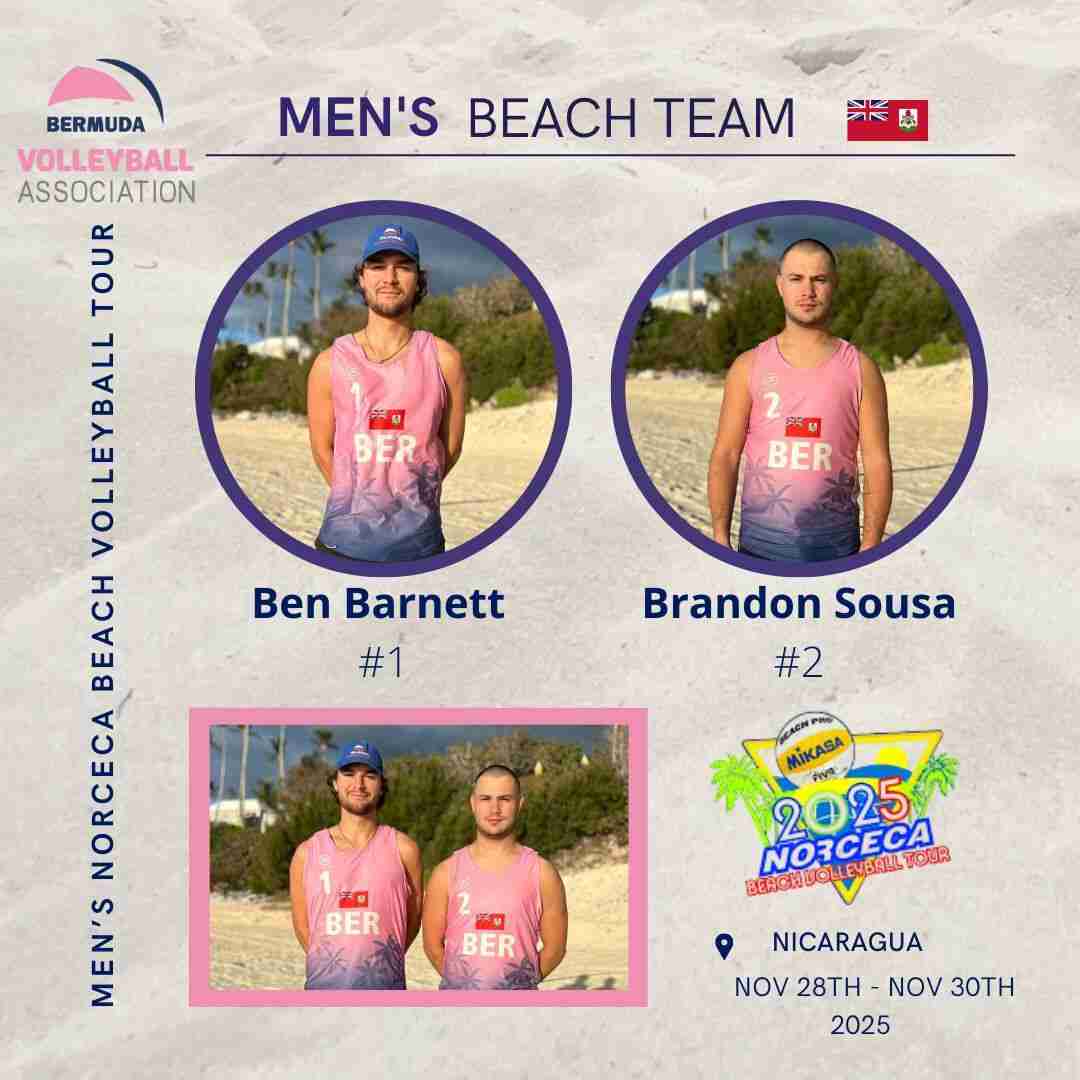
Bermuda’s Benjamín Barnett and Brandon Sousa concluded their participation at the 16th stage of the NORCECA Beach Volleyball Continental Tour in Managua, Nicaragua, securing a 15th-place finish due to a withdrawal in the final play-off match.
The Bermudian duo was scheduled to face Nicaragua’s second team, Jefferson Cascante and Denis López, in the 15th/16th Place Play-off match.
However, the Nicaraguan team was unable to take to the court due to an injury. As a result of the withdrawal, Barnett and Sousa were awarded the victory by default, confirming their final ranking of 15th place in the tournament standings.
The finish concludes the Bermudians’ run at this stage of the NORCECA tour, an experience that provides important competitive practice against top regional teams.
Unilever is considering selling historic British food brands including Marmite, Colman’s and Bovril
International News via Reuters:
Unilever said on Monday it would sell its British snack brand Graze to Katjes International, owner of gummy sweets Candy Kittens, for an undisclosed sum, as the consumer goods firm looks to exit some of its food business to focus on beauty and wellbeing.
Unilever is considering selling historic British food brands including Marmite, Colman’s and Bovril, Reuters reported last month.
The sale of Graze marks another step in Unilever’s strategy to streamline its portfolio, moving away from parts of its food business.
The company, which acquired Graze in 2019 for an undisclosed amount, said the deal is expected to close in the first half of 2026.
Reporting by Ankita Bora in Bengaluru; Editing by Mrigank Dhaniwala
Officials suspect the virus may have spread after a wild boar ate contaminated food, possibly a sandwich brought from outside Spain
International News via Reuters:
Spain has called in its military to help contain an outbreak of African swine fever near Barcelona, a move aimed at protecting the country’s multi-billion-euro pork export industry.
Officials suspect the virus may have spread after a wild boar ate contaminated food, possibly a sandwich brought from outside Spain.
Authorities confirmed on Friday that two wild boar found dead had tested positive for the disease. A 6-km exclusion zone was set up around the affected area in Bellaterra, on the far side of the Collserola mountain range from the coastal city.
Three hundred Catalan police and rural wardens were deployed to the area in northeastern Spain at the weekend, followed by 117 members of Spain’s military emergency unit on Monday, who will use drones to locate and remove potential infected animals.
“The most likely option … is that cold cuts, a sandwich, contaminated food, could end up in a bin … and then that a wild boar would have eaten it and become infected,” Catalonia’s agriculture minister Oscar Ordeig told local radio on Monday.
African swine fever, while harmless to humans, spreads rapidly among pigs and wild boar, posing a significant economic risk to Spain, one of the world’s largest pork exporters.
The infected area is close to the AP-7 highway, a major transport route linking Spain and France. Eight more suspected cases were being investigated and more cases expected, regional authorities said.
RISK TO SPAIN’S PORK INDUSTRY
As officials await final test results, Ordeig later told a briefing it was likely that human activity brought the virus to Spain from other parts of Europe, since no infected boars had been found elsewhere in Catalonia or neighbouring France.
A European Commission spokesperson said it would not comment on the source of the outbreak until results of sequencing tests were known. A team of EU veterinarians will visit the area this week to survey, provide advice and prepare a report with recommendations, the spokesperson said.
Spain’s agriculture minister Luis Planas said Saturday that about one-third of the country’s pork export certificates have been blocked as a result of the outbreak, though no farms have tested positive so far. Pork farms within a 20-km radius of the initial infection site are facing operating and sales restrictions.
Additional reporting by Philip Blenkinsop in Brussels and Emma Pinedo in Madrid. Writing by Emma Pinedo, editing by Aislinn Laing and Ros Russell
Ueda said on Monday the BOJ would consider the “pros and cons” of raising interest rates at its next policy meeting in December
International News via Reuters:
The dollar weakened against the Japanese yen on Monday following Bank of Japan Governor Kazuo Ueda’s strongest indication to date that a December interest rate increase could be under consideration, providing support to the embattled yen.
Meanwhile, mounting expectations for a December interest rate reduction by the Federal Reserve exerted downward pressure on the dollar across the board.
Ueda said on Monday the BOJ would consider the “pros and cons” of raising interest rates at its next policy meeting in December, offering the strongest hint so far that a hike may materialise this month.
He subsequently told a press conference that he would elaborate on the central bank’s future rate hike path once rates are raised to 0.75%, adding that December’s policy decision would take into account wage information and other data.
That pushed the dollar down by nearly 1% to 154.665 yen, before the U.S. currency pared losses to trade down 0.7% at 155.09 yen.
“It does seem like the BOJ is indicating greater comfort with moving towards hikes,” Jayati Bharadwaj, head of FX strategy at TD Securities, said.
“We expect them to actually hike in December, so it does take us closer to our call and that’s actually helping the yen.”
Traders have priced in a growing chance of a December hike from the BOJ, with the yen’s slide to 10-month lows last month adding to the case for raising rates.
The yen rallied against a range of currencies, leaving the euro down 0.4%, and the pound and Australian dollar both down 0.7% .
DOLLAR DOWNBEAT
In the broader market, the dollar eased as investors braced for a pivotal month that could bring the Fed’s final rate cut of the year and the confirmation of a dovish successor to Chair Jerome Powell.
Data on Monday showed U.S. manufacturing contracted for the ninth straight month in November, with factories facing slumping orders and higher prices for inputs as the drag from import tariffs persisted.
The euro rose to a more than two-week high of $1.1652, while sterling pared earlier losses to trade up 0.1% at $1.3254, having logged its best week in over three months in a relief rally after British Finance Minister Rachel Reeves’ budget revelations.
Traders are now pricing in an 88% chance the Fed will cut by 25 basis points when it convenes next week, according to the CME FedWatch tool.
What is less clear-cut is what happens after December.
Money markets right now show very little chance of another cut much before the spring and some analysts believe December might even yield a “hawkish cut” – trader-speak for a cut accompanied by indications from policymakers that another near-term fall in borrowing costs may not be forthcoming.
FED LEADERSHIP
Either way, with investors assuming a December cut is close to a done deal, alongside a report that White House economic adviser Kevin Hassett could be the next Fed chair, the dollar is struggling, having clocked its worst weekly performance against a basket of major currencies in four months last week.
“With December FOMC now closer to fully pricing a 25bp cut, we think the market will increasingly focus on the pricing of subsequent meetings,” Goldman Sachs economists said in a note.
“Division on the committee is restraining more dovish pricing, but with a large amount of labor market data due before the January meeting we think too little is priced in Q1.”
Trading on the foreign exchange market was back to normal on Monday following an hours-long outage at the world’s largest exchange operator CME Group last week, which upended transactions across stocks, bonds, commodities and currencies.
Bitcoin fell below $90,000 on Monday, as a selloff gathered pace following the steepest monthly decline since mid-2021, as renewed risk aversion drove investors out of stocks and digital assets. Bitcoin was last down 6% at $85,690.
Reporting by Saqib Iqbal Ahmed in New York and Amanda Cooper in London; Additional reporting by Rae Wee in Singapore; Editing by Mark Heinrich and Andrea Ricci
The UK government is understood to have agreed to lower an industry sales rebate rate on NHS drug prices and to also improve the NHS’s cost-effectiveness measure for drugs
International News via Reuters:
The UK is poised to agree on a major pharmaceuticals deal with the U.S., which will mean zero import tariffs on pharmaceutical products into the U.S. and lead to an increase in NHS spending on medicines, The Times reported on Monday.
The UK government is understood to have agreed to lower an industry sales rebate rate on NHS drug prices and to also improve the NHS’s cost-effectiveness measure for drugs, the report said, citing industry sources.
The British government will commit to increasing the percentage of the NHS budget that it spends on medicines, it said.
Reuters couldn’t immediately verify the report.
Reporting by Ruchika Khanna in BengaluruEditing by Bernadette Baum
The world’s largest cryptocurrency fell by as much as 6.1% at one point
International News via Reuters:
Bitcoin fell below $90,000 on Monday, as a selloff gathered pace following the steepest monthly decline since mid 2021, as renewed risk aversion drove investors out of stocks and digital assets.
The world’s largest cryptocurrency fell by as much as 6.1% at one point. By 1120 GMT, it was down 5.2% at $86,461, set for its biggest one-day fall in a month and hovering near last month’s eight-month low of $80,553.
Bitcoin shed more than $18,000 in November, as a record amount of money rushed out of the market, making this its largest dollar loss since May 2021, when a number of cryptocurrencies collapsed.
RISK INDICATOR
Given its relatively short lifespan, there is not much in the way of seasonality to guide traders’ expectations for how bitcoin usually behaves in December.
On average, bitcoin has tended to rise by around 9.7% in December, ranking it third in terms of performance, with October being the strongest month, with an average gain of 16.6%, and with September, the weakest month, with an average loss of 3.5%.
Of more relevance might be bitcoin’s tight correlation with the stock market at the moment, analysts said.
“Bitcoin tends to be a leading indicator for overall risk sentiment right now, and its slide does not bode well for stocks at the start of this month,” XTB research director Kathleen Brooks said in a note.
“There is no obvious driver (on Monday). However, the sharp decline in volatility last week, the VIX fell back below the average for the last 12 months, may have unnerved some investors who remain concerned about an uncertain outlook into year-end,” she said.
CME bitcoin futures also show the growing bearishness.
Bitcoin futures that expire in three months’ time are trading at their smallest premium to those that expire this month in at least a year, reflecting how investors are less willing to bank on a sustained rise in the price over time.
Ether, was down nearly 6% at $2,845, having lost some 22% in value in November, the most since February’s 32% slide.
NEGATIVES STACKING UP
Jefferies strategist Mohit Kumar said that a number of crypto-negative factors were adding to the pressure on bitcoin on Monday.
S&P Global downgraded its rating of Tether, the world’s largest stablecoin last week, citing an increase in higher-risk assets in its reserves and “persistent gaps in disclosure,” which Tether said it “strongly disagrees” with. Meanwhile, Phong Le, chief executive of Strategy, the world’s largest corporate owner of bitcoin, told the “What Bitcoin Did” podcast on Friday the company would consider selling its holdings if its “mNAV” metric – the company’s enterprise value against the value of its bitcoin holdings – fell below 1. That ratio is currently around 1.19, according to Strategy’s website.
Shares in Strategy and other crypto companies such as Coinbase and miners Riot Platforms and MARA Holdings were down 3-4% in premarket trading.
Given how much Strategy shares have fallen in the last year, with a slide of 60% compared with a 13% drop in bitcoin in that time, the company could already risk being ejected from benchmark indices, which would exacerbate the pressure on the company’s stock and its mNAV metric. Index provider MSCI ends a consultation this month on whether to exclude from its benchmarks those companies whose holdings of digital assets exceed 50% of their total assets.
Since hitting a record of around $4.3 trillion in size, the crypto market has lost over $1 trillion in value, according to CoinGecko.
Additional reporting by Shashwat Chauhan; Graphic by Dhara Ranasinghe; Editing by Louise Heavens and Susan Fenton
To provide the best experiences, we use technologies like cookies to store and/or access device information. Consenting to these technologies will allow us to process data such as browsing behavior or unique IDs on this site. Not consenting or withdrawing consent, may adversely affect certain features and functions.
Functional
Always active
The technical storage or access is strictly necessary for the legitimate purpose of enabling the use of a specific service explicitly requested by the subscriber or user, or for the sole purpose of carrying out the transmission of a communication over an electronic communications network.
Preferences
The technical storage or access is necessary for the legitimate purpose of storing preferences that are not requested by the subscriber or user.
Statistics
The technical storage or access that is used exclusively for statistical purposes.The technical storage or access that is used exclusively for anonymous statistical purposes. Without a subpoena, voluntary compliance on the part of your Internet Service Provider, or additional records from a third party, information stored or retrieved for this purpose alone cannot usually be used to identify you.
Marketing
The technical storage or access is required to create user profiles to send advertising, or to track the user on a website or across several websites for similar marketing purposes.