Tuesday, November 3, 2026
Home Blog Page 66

Opinion: Unelected Senators ‘throttled’ cost of living bill

The OBA voted for the status quo with regard to price controls … and Bermudian families are paying for it

Statement by Alexa Lightbourne, Minister of Home Affairs:

On 14 September, the Senate defeated the Cost of Living Commission Amendment (No. 2) Bill 2026 on a tied vote. Every Opposition senator voted against it. The Leader of the Opposition had the audacity to call the result a win “for all Bermudians”. The single person, the senior, the family at the register, won nothing that day. Their bill is the same this week as it was last week, and the information that could change this remains out of the public’s view.

The Bill did three things. Firstly, it allowed the Cost of Living Commission to designate critical services and monitor their prices. Secondly, it set a process for reviewing price increases on essential commodities. Lastly, it allowed the Commission to work with other public authorities that protect consumers. Each power served one purpose, which is to let the public body charged with the cost of living see how a price is built.

The Opposition Senate Leader says the Bill gave Government sweeping discretionary powers over business with no “demonstrated mechanism for bringing prices down”. The mechanism is information. A country cannot lower a cost it cannot see. Every serious remedy for high prices starts with the same question: where in the chain, from the dock to the shelf, does the dollar go?

The record shows why the law was needed. The Commission asked five grocers for pricing data under the existing law. One answered, and the Ministry has publicly credited Lindo’s for doing so. The reporting template was approved by retailers, at an in-person meeting, along with the Ministry. It was built on an export they described as easy to produce from their own inventory system. Four of five still did not file. Voluntary cooperation was tried, and it produced a twenty per cent response rate.

The Opposition says the real drivers are shipping, import duty and energy. Government agrees that they matter, and has acted on them. Duty on essential goods has been cut. The question that follows every duty cut is whether the savings reached the shelf. Today nobody can answer it with evidence. The Chamber of Commerce, which opposed the Bill, proposed an independent check of a shipment to confirm that duty relief reached the consumer. That proposal concedes the central point. Relief that cannot be traced cannot be guaranteed, and the Bill gave the Commission the means to trace it.

Consider how the Bill fell. The House of Assembly passed it. That House holds 36 members, each chosen by voters, and 25 of them sit with the Government that Bermudians elected in 2025 on a promise to act on the cost of living. The Senate holds eleven members, and none of them holds a seat won at the polls. Five sit on the advice of the Premier and carry the programme the country voted for. Three sit on the advice of the Opposition Leader. Three are chosen at the Governor’s discretion and answer to no constituency, no platform and no election. On 14 September the three Opposition senators voted no. Two of the Governor’s appointees, the President, Senator Joan Dillas-Wright, and the Vice-President, Senator John Wight, voted no with them. The third was absent. Five appointed votes stopped a Bill that the elected House had passed.

The Senate has a concise role, which is to revise and to improve. Bermudians are entitled to ask how far unelected representation should be able to throttle the programme of an elected Government, and on whose behalf. A senior on North Shore can remove her MP at the next election. She has no means of removing a senator she never chose.

The power to stop a Bill carries a duty to master it. The Hansard of the Senate debate records senators who opposed the Bill, opening their questions with an admission that they should already know the answer. The points raised were elementary, and the answers sat in the Bill, in the brief, and in the existing Act. A family’s grocery bill deserves better preparation from those who hold a veto over its relief. When preparation is thin, the weight falls on the people’s agenda.

Scrutiny improves a law. The Opposition tabled no amendment to this Bill in the House, and none in the Senate. The government, by contrast, changed course where retailers made a sound case. When grocers raised concern about perishables, the Commission agreed that price increase submissions will be reviewed by a quorum and returned within 24 hours of receipt.

The status quo has a constituency, and it has never been the household. We see its cost when a senior on a fixed pension puts the chicken back. We see it when a mother takes a second shift to cover the same cart of groceries. We see it when a young Bermudian studies the price of coming home and decides to stay away. The Chamber’s own paper cites Government survey work showing cost of living as the leading reason Bermudians give for leaving.

The Opposition knows how to bring legislation. It tabled an Absentee Voting Bill in 2025. It tabled a road safety Bill this summer. It says it will support any law that lowers the cost of living, and it has named shipping, duty and energy as the causes. The country should now see that Bill. Bermudians are entitled to read its clauses, to test its mechanism, and to know the date by which a family would feel it at the register.

The mandate of 2025 was for unity, equity and tangible progress. Government will keep using every power it holds to deliver it. Until the Opposition tables its answer, its vote stands as a vote for prices as they are. Bermudian families have paid for the status quo long enough.

Alexa Lightbourne is the Minister of Home Affairs.
China’s industrial rise hits German manufacturers hard, ECB finds

China has been expanding its global presence in recent years, focusing much of its effort on higher-value and technology production, taking on some of the best-established markets of export-reliant European companies

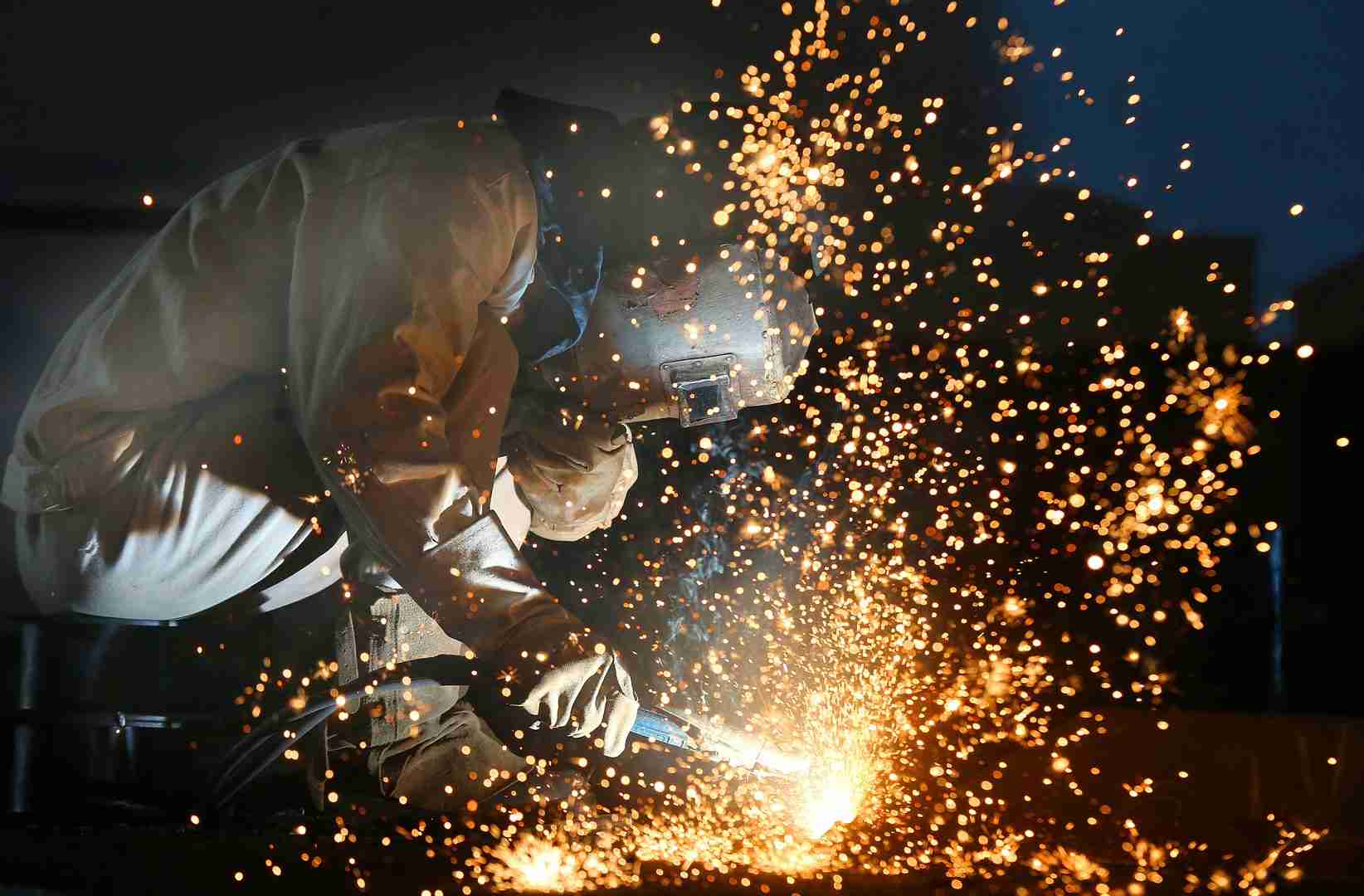
A worker works on a production line at a factory of a ship equipments manufacturer, in Nantong, Jiangsu province, China March 2, 2020. China Daily via REUTERS

International News via Reuters:

The industrial transformation of China is squeezing European firms out of global markets, particularly in machinery and transport equipment, with German companies taking some of the biggest hits, the European Central Bank said on Tuesday.

China has been expanding its global presence in recent years, focusing much of its effort on higher-value and technology production, taking on some of the best-established markets of export-reliant European companies.

“The EU’s share in global goods exports has declined, particularly in sectors and destinations where China has strengthened its global presence, notably machinery and transport equipment,” the ECB said in an Economic Bulletin article.

Among the EU’s biggest nations, Germany has the greatest export similarity with China while Italy has the smallest, the paper found. However, smaller countries, like Ireland or Greece, were among the least exposed.

“This points to intensifying competition in sectors that have been key drivers of growth in some European economies over past decades, including automotive production and industrial machinery,” the ECB added.

On top of crowding out European firms from third-country markets, China is also importing fewer products from Europe as its domestic production kicks in.

“The fall is most pronounced in economies integrated into European manufacturing and automotive value chains, including Germany and several central European economies,” the ECB added.

Reporting by Balazs Koranyi; Editing by Emelia Sithole-Matarise

France urges EU to postpone methane reporting requirements

Macron’s letter to Commission President Ursula von der Leyen, dated September 18, was first reported by French newspaper Les Echos and has been seen by Reuters

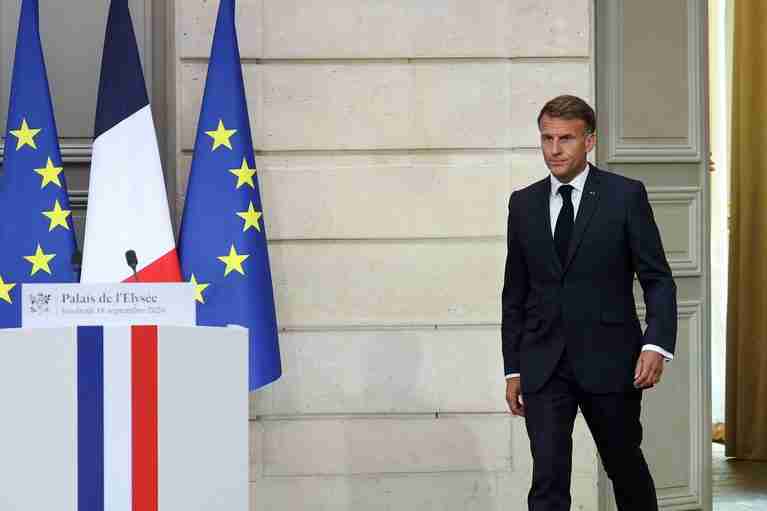
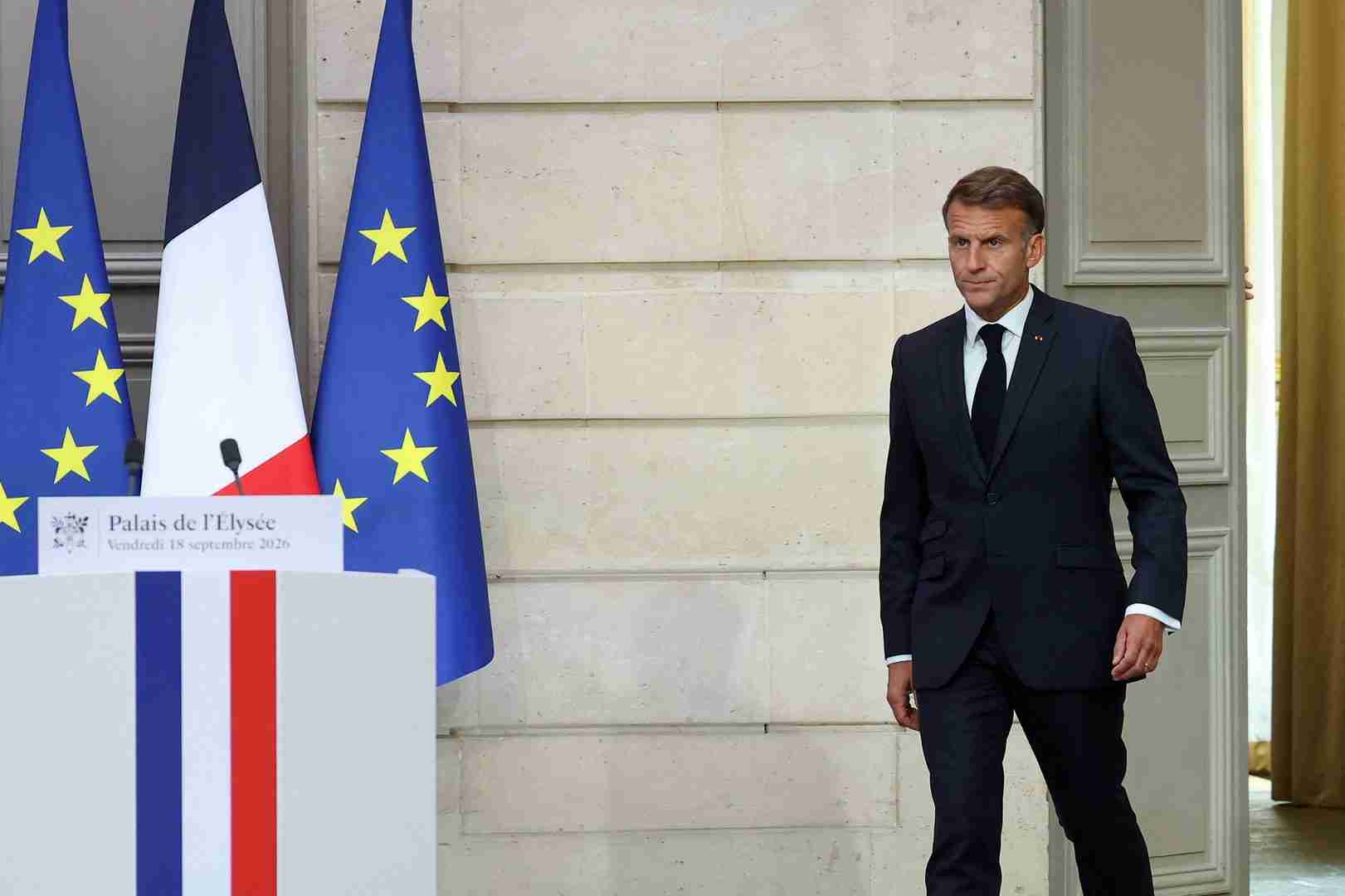
France’s President Emmanuel Macron arrives to address the audience during a press conference at the presidential Elysee Palace in Paris, France. on September 18, 2026. THOMAS SAMSON/Pool via REUTERS

International News via Reuters:

French President Emmanuel Macron has written to the European Commission urging it to postpone new methane reporting rules for oil and gas importers, arguing they could create legal risks for importers as energy supplies tighten.

Macron’s letter to Commission President Ursula von der Leyen, dated September 18, was first reported by French newspaper Les Echos and has been seen by Reuters.

Macron’s government faces pressure from unions in various sectors and opposition parties jostling for position ahead of the 2027 presidential election, who have criticised the president for failing to do more to address cost-of-living concerns.

The EU’s new rules, due to come into effect on January 1, will require monitoring and verification of methane emissions for oil and gas deliveries to the bloc, aiming to curb leaks of the potent greenhouse gas and imposing fines if companies breach the regulation.

Macron called for the regulations to be delayed by a year until January 1, 2028.

Methane is the second-biggest contributor to global warming behind carbon dioxide.

The European Commission is closely monitoring developments in fuel markets and will analyse Macron’s suggestions, a Commission spokesperson said. 

“If we see any security of supply issue we are of course ready to consider further measures,” the spokesperson added.

Two EU officials told Reuters the Commission was looking into the methane law’s potential impact on energy supplies, but had not yet decided to move ahead with changes to the law. “I wouldn’t yet say it’s a given that we’re going to look into reopening it,” one of the officials said.

More than a dozen EU members, including Germany, Europe’s biggest gas market, have already asked for the rules to be delayed or suspended.

In response, the European Commission in July instructed EU member states to waive financial penalties linked to the regulation for three years, until the end of 2029, but has not agreed to postpone implementation of the rules.

MACRON’S OTHER PROPOSALS

EU countries themselves negotiated and approved the methane rules in 2023, but some governments say it should now be rolled back, to avoid the risk that it adds global fuel supply disruptions caused by the Iran war.

Macron, in his letter, also called for the EU to temporarily loosen fuel-quality rules to boost European production of kerosene and diesel, as supply pressures mount. French refiners estimate that this could increase their fuel production by 5% to 20%, he said.

The French president also proposed relaxing biofuel-blending limits, including allowing distributors to replace B7 diesel, which contains up to 7% biodiesel, with B10, containing up to 10%.

MORE FLEXIBILITY

Macron asked the Commission to examine possible temporary changes to European requirements governing fuel density, vaporisation limits and desulphurisation.

As a result of the deterioration in international fuel supply, refiners and importers are reporting increasing difficulties in confirming deliveries for the coming weeks, Macron said. 

Macron said similar flexibility had been granted during the COVID-19 crisis.

The measures could help bolster European fuel supplies at a time when the bloc remains heavily reliant on the Middle East, which accounts for 36% of its kerosene imports and 18% of diesel imports, according to the letter.

The French prime minister’s office said that, while the government had not earned more VAT revenue from the increase in fuel prices, it would propose to parliament the creation of a “golden rule” in the upcoming budget law.

The rule would ensure that any increased revenue earned from increased fuel prices “will be neutralized and returned to the French people at the pump.”

Reporting by Elizabeth Pineau, Makini Brice and Forrest Crellin; Editing by Emelia Sithole-Matarise and Susan Fenton

Novo Nordisk and UNICEF renew push to prevent childhood obesity

The expansion follows UNICEF’s 2025 Child Nutrition Report that found childhood obesity had overtaken underweight for the first time on record

The logo of pharmaceutical company Novo is displayed in front of its offices in Bagsvaerd, Copenhagen, Denmark, September 21, 2026. REUTERS/Tom Little

International News via Reuters:

Novo Nordisk and UNICEF have expanded their partnership to help prevent childhood overweight and obesity, the Danish drugmaker said on Tuesday.

The expansion follows UNICEF’s 2025 Child Nutrition Report that found childhood obesity had overtaken underweight for the first time on record.

• Novo will commit an additional $18 million from 2026 through 2030 to support prevention initiatives in Mexico, Colombia, Indonesia, the Philippines, India, Egypt and Kenya, Senior Vice President Elin Jäger told Reuters.

• This will include interventions such as nutrition and physical activity counselling or basic mental health screening and support, Novo said.

• The four-year programme will run from 2027 to 2030, with funding starting in 2026, and aims to reach more than 80 million children.

• The expansion is part of Novo’s updated sustainability strategy launching next week, Jäger said.

Reporting by Patrick Wingrove, writing by Vera Dvorakova; Editing by Milla Nissi-Prussak

Burnham wants ‘Made in Europe’ plan to involve Britain

The Made in Europe policy aims to curb reliance on Chinese components by prioritising European-made goods – a worry for the British auto industry which feeds parts into EU supply chains and sells cars across the bloc

International News via Reuters:

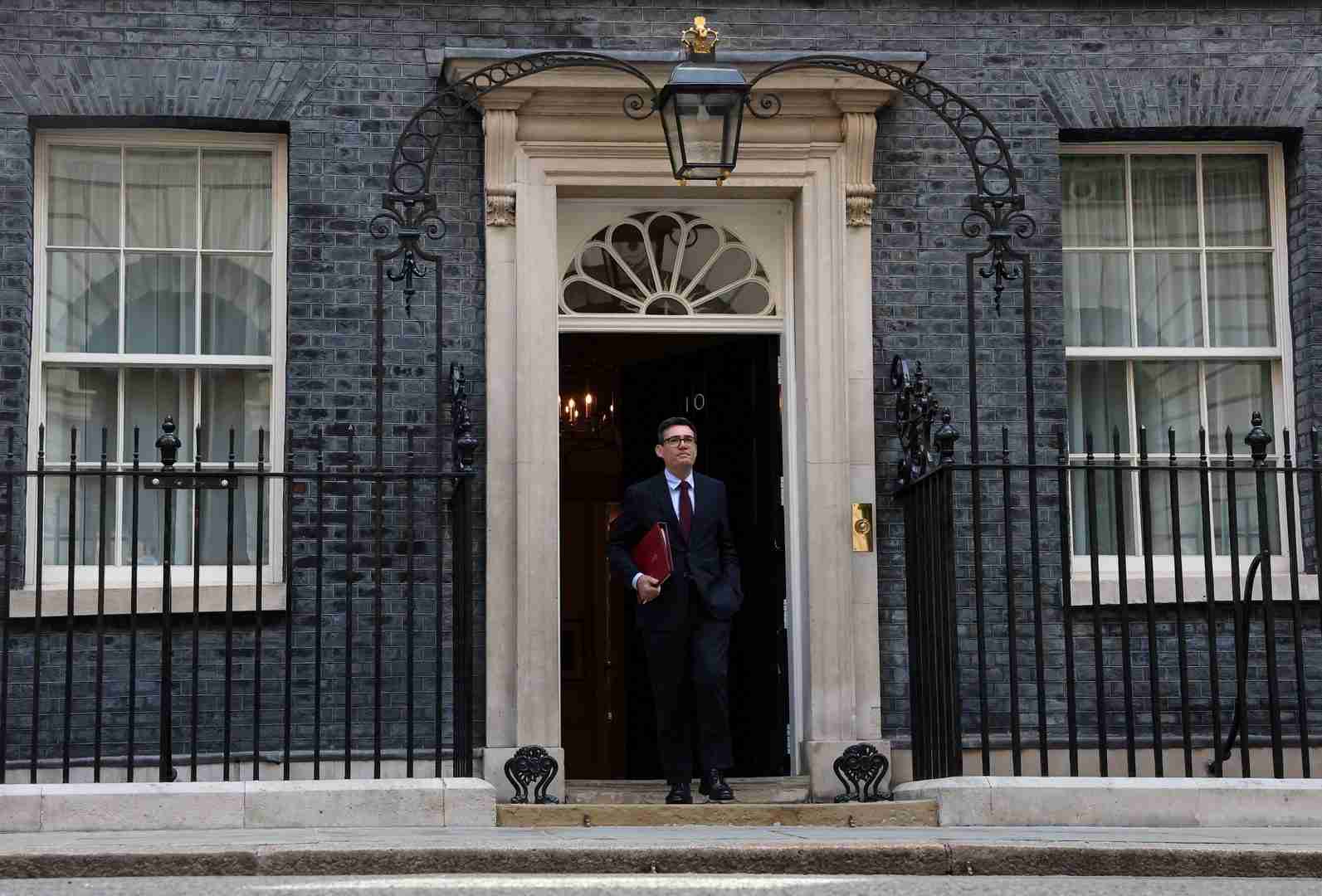
Prime Minister Andy Burnham said he would argue for Britain to be a “trusted partner” to the European Union’s “Made in Europe” scheme, saying they should not be pitted as enemies on a policy that has the potential to hammer the UK’s car industry. 

The Made in Europe policy aims to curb reliance on Chinese components by prioritising European-made goods – a worry for the British auto industry which feeds parts into EU supply chains and sells cars across the bloc.

Travelling to New York for his first United Nations General Assembly as prime minister, Burnham told reporters he believed there was support for Britain to have access to the scheme.

“Europe’s argument is not with us. We both suffer the same effects as other countries, particularly steel,” he said on the flight to New York on Monday, where he is expected to meet European Commission President Ursula von der Leyen.

Britain has argued that the “Made in Europe” plan could impact supply chains and create unnecessary trade barriers between it and some member countries, with Burnham urging the two sides to avoid further “collateral damage.”

He is also anxious not to miss out on another scheme after talks to join the EU’s SAFE defence fund broke down.

“We are making the argument: we are not your enemies here… we are not the problem,” Burnham said of the scheme. “Let’s work towards a trusted partner approach that doesn’t cause a problem where there wasn’t a problem and where we have common cause.”

CAR TRADE WORTH €80 BILLION 

The Society of Motor Manufacturers and Traders on Tuesday said that Britain’s exclusion from the EU’s proposed “Made in Europe” provisions would put its automotive industry in jeopardy and threaten its contribution to the EU’s economy.

The SMMT said that the UK-EU trading relationship in the sector was worth €80 billion a year, and interdependence in supply chains meant that carmakers in Europe would also be damaged if Britain was excluded from the policy.

SMMT Chief Executive Mike Hawes said it would be an own goal: “weakening competitiveness, reducing scale and limiting consumer choice”.

Britain’s uncertain status within the scheme is just the latest area of contention since it voted to quit the EU in 2016. For those who backed the departure, a Britain outside the EU would be free to trade with faster growing countries around the world. 

But since then, the advance of China, the unpredictability of Donald Trump’s US and rapid technological innovation have put that decision into sharper relief.   

Burnham has said he wants to go further and faster on deepening relations with the EU, which improved under predecessor Keir Starmer following years of distrust. 

Burnham said he was focussed on a forthcoming UK-EU summit after it was delayed by Britain’s change in leader in July, adding that he hoped it would still take place this year.    

Reporting by Elizabeth Piper and Alistair Smout; Editing by Kate Holton and Andrew Cawthorne

Cechini earns fourth-place finish in Ben Bloser Invitational

Mercersburg Academy siblings Gabby and Joseph Cechini delivered strong performances against competitive fields at the Ben Bloser Bulldog Cross Country Invitational at Big Spring High School in Newville, Pennsylvania.

Leading the way for the Blue Storm was Gabby Cechini, who produced an impressive run in the Varsity Girls A and AA Division.

Navigating the demanding course with composure, she crossed the line in fourth position with a sharp time of 19 minutes 12.63 seconds to secure a top-five finish among the region’s elite prep runners.

In the Varsity Boys A and AA Division race, Joseph Cechini battled through a crowded, fast-paced field to stop the clock in 18:24.87, finishing 94th overall to round out a solid showing for the Mercersburg duo.

Muso battles to opening round 77 at The Gauntlet 

Dylan Muso produced an eventful opening round to leave himself tied for 26th place as McDaniel College got under way at The Gauntlet at Hawk Pointe Golf Club in Washington, New Jersey.

Representing the Green Terror against a testing collegiate field, Muso carded a five-over-par 77 to stay within touching distance of the top 20 heading into the second round.

Muso showed sharp shot-making ability throughout the afternoon, rolling in three birdies, but found trouble on a demanding layout that punished errant tee shots.

His round was a mixture of composure and recovery, balancing nine pars with four bogeys and a pair of costly double bogeys.

Despite the dropped shots, Muso’s resilience keeps him in the hunt for a climb up the leaderboard as the tournament progresses.

Pilgrim seals top-15 finish in Africa Triathlon Cup

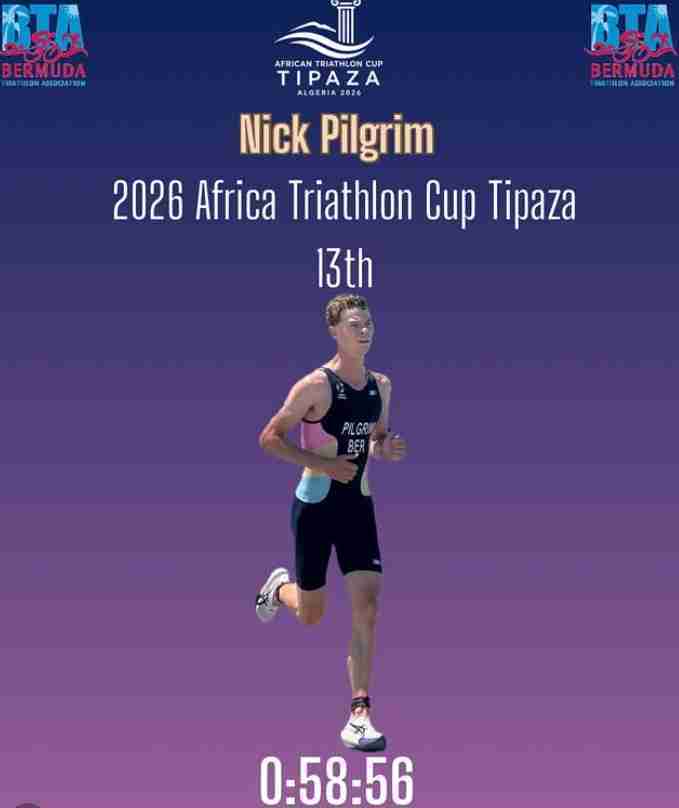
Bermudian triathlete Nick Pilgrim produced a resolute, well-rounded performance to secure a 13th-place finish at the 2026 Africa Triathlon Cup in Tipaza, Algeria.

Taking on an international elite field along the Mediterranean coast, Pilgrim dipped beneath the hour mark to stop the clock in a total time of 58 minutes 56 seconds.

The Bermudian established a solid foundation in the water, completing the swim leg in 9:33 to stay firmly within touch of the main pack heading into the first transition.

Out on the bike course, Pilgrim dug deep over a testing circuit, navigating the technical sections to register a split of 30:02 and keep himself in contention for the upper half of the field.

He then rounded out his afternoon with a sharp effort on the concluding run leg, clocking 17:09 across the final discipline to battle through to 13th position.

Rental car driver arrested after crash

Around 1:45 p.m. on Monday, September 21, 2026, police officers attended a single vehicle road traffic collision involving a rental car, just west of Mullet Bay Park, Mullet Bay Road, St. George’s.

The vehicle was reportedly being driven east along Mullet Bay Road, St. George’s, when the female driver collided with the boundary wall of a nearby residence.

Both the wall and the rental car were left with minor damage

Officers arrived to find the driver still seated inside the vehicle. Upon speaking with her, they observed her breath smelled strongly of intoxicants.

The driver was informed there was reason to believe she was driving while impaired by alcohol.

She was subsequently arrested and cautioned.

The driver complained of chest pains and was conveyed by ambulance to King Edward VII Memorial Hospital.

The collision is now under investigation.

Any witnesses, or persons with information who have not yet spoken to police, are asked to contact Police Constable, Robert Butterfield, by calling the main police number, 295-0011, or via e-mail, rbutterfield@bps.bm

Football: Senior men’s team announced

The Bermuda Football Association (BFA) announced the Senior Men’s National Team that will play in the next edition of the Concacaf Nations League.

League B features 16 national teams divided into four groups. Bermuda has been placed in League B, Group B, along with Guadeloupe, Saint Lucia, and Barbados. Group Stage matches will be played at centralized venues, a format change introduced in the last edition to reduce travel demand and support Member Associations in delivering the highest possible standards of competition.

During the September – October FIFA International match window, Bermuda will play Guadeloupe and St. Lucia in St. Lucia on September 25th and 28th, respectively.

The team will then travel to Barbados to play the Bajan Tridents twice on October 2nd and 5th.

Following Group Stage action, the four group winners will advance to the League’s Championship to compete for the title of League B Champions and be promoted to League A, while fourth-place finishers will be relegated to League C.

Bermuda Squad

Goalkeepers:

Milai Perott – Corby Town Football Club

Jahquil Hill – Dandy Town Hornets

Coleridge Fubler – Binfield FC

Defenders:

Emeer Peets – Boston United;

London Steede – North Village Rams

Lejuan Simmons – Dandy Town Hornets

Deniche Hill – FC Halifax Town;

Brighton Morrison – Binfield FC;

Jorj Dublin – Devonshire Colts;

Harry Twite – Basford United FC;

Caleb McDowall – Anderson University.

Midfielders:

Sincere Hall – North Village Rams

Ne-Jai Tucker – Walton and Hersham FC;

Blayz Borgesson – Burnley FC;

Riley Robinson – Glacis United FC.

Forwards:

Diego Richardson – Devonshire Colts

Djair Parfit – Unattached

Enrique Russell – PHC Zebras

Zeiko Lewis – Young Men’s Social Club

Elisha Darrell – Devonshire Colts

Luke Robinson – Glacis United FC

Ajani Burchall – NC State University

Nahki Wells – Luton Town FC

Justin Donawa – Somerset Trojans 

Davis Cup recap: Valuable learning experience for our top tennis players

The W.E.R. Joell Tennis Stadium was packed and rocking over the weekend, as the Gombey Warriors took on Mexico in Davis Cup World Group II.
And while the visitors had the final say, Team Bermuda gave the home crowd plenty to get behind.
Julie Matthews-Borchardt reports.

Trump set for whirlwind UN meetings with wars in Iran, Ukraine on agenda

Trump is expected to start the day with a speech to assembled delegates, before meeting with no fewer than 11 world leaders, bilaterally or in group settings

International News via Reuters:

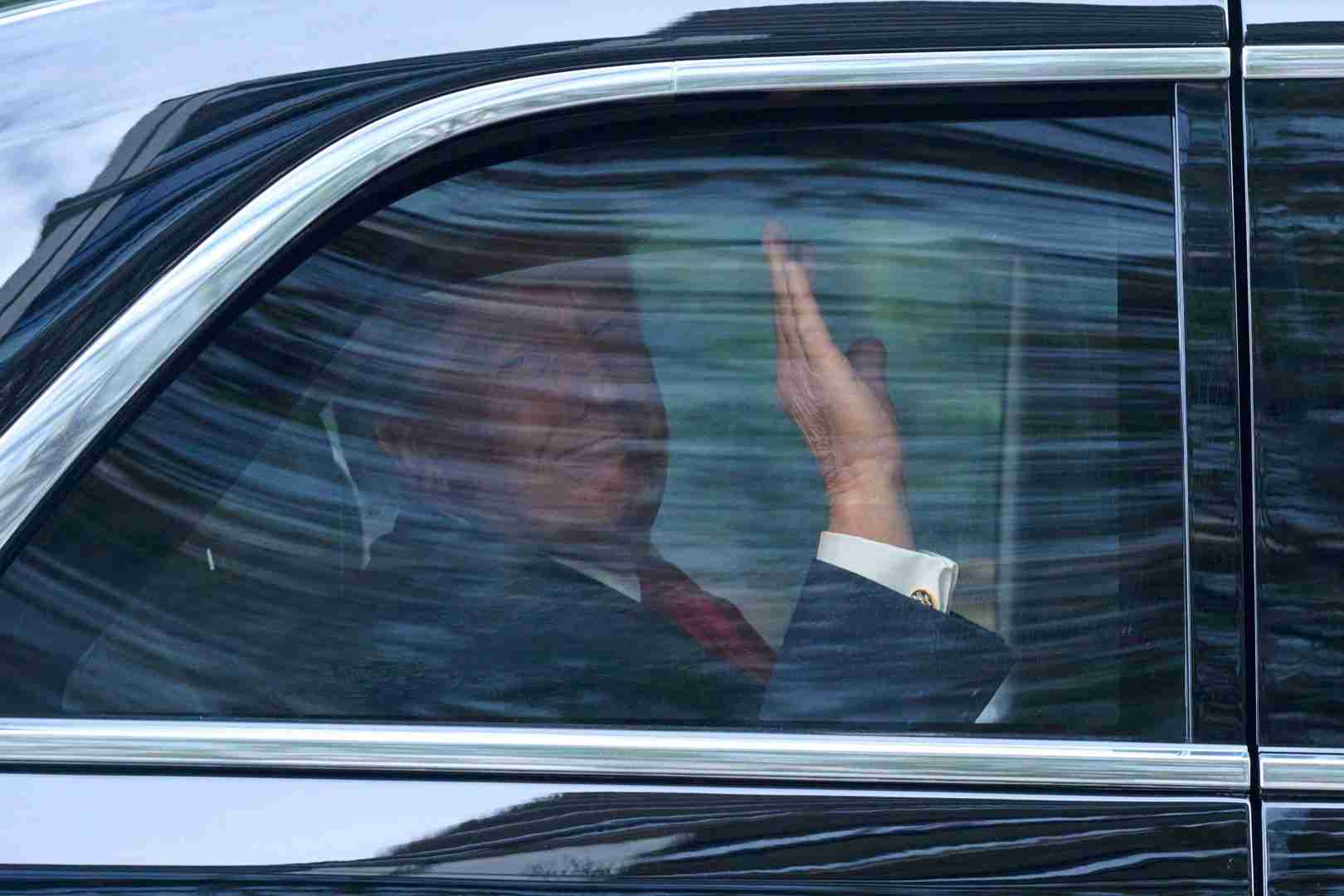
Donald Trump is set for a whirlwind schedule of meetings with leaders from four continents at the UN General Assembly on Tuesday, against the backdrop of an unstable Middle East and a four-and-a-half-year-old war in Ukraine that shows no signs of abating despite the US president’s repeated attempts at mediation.

Trump is expected to start the day with a speech to assembled delegates, before meeting with no fewer than 11 world leaders, bilaterally or in group settings. While the contents of his speech are unknown, Trump last year caused a stir with a combative speech, saying that their countries were “going to hell” for, among other things, climate policy and mass migration.

Later in the day, Trump will meet with British Prime Minister Andy Burnham, Ukrainian President Volodymyr Zelenskiy, Venezuela’s interim leader Delcy Rodriguez, Danish Prime Minister Mette Frederiksen, Greenland Prime Minister Jens-Frederik Nielsen, and the representatives of the Gulf states of the United Arab Emirates, Saudi Arabia, Oman, Bahrain, Kuwait and Qatar.

In the evening, he may meet dozens more leaders, albeit briefly, during a leaders’ reception. Trump met with French President Emmanuel Macron on Monday. Additions to his Tuesday schedule are possible.

The long list of foreign leader meetings reflects the US president’s focus on foreign affairs during his second term, during which he has started multiple wars, questioned longstanding alliances, threatened allies with invasion and sought to broker well over a dozen conflicts, with mixed success.

The US-Israeli war against Iran has been particularly consequential, driving up fuel prices globally, dragging down Trump’s approval ratings and presenting a challenge for Republicans running in the November congressional midterm election. On Monday, a Reuters/Ipsos poll showed Trump’s approval rating falling to an all-time low of 32%, as his fellow Republicans soured on his handling of the cost of living. 

Among the closely watched meetings will be the seven-way gathering with the Gulf leaders, many of whom are alarmed by the recent advances of the Houthis, Iran-backed militants who have captured wide swathes of Yemen, attacked US ally Saudi Arabia and threatened shipping through the strategic Bab el-Mandab strait.

Political allies and opponents will also be closely watching Trump’s first-ever meeting with Venezuela’s Rodriguez, who rose to power with the Trump administration’s blessing after US forces snatched President Nicolas Maduro in January and took him to New York to face drug trafficking charges.

Trump’s allies say the US is working with Rodriguez to open Venezuela’s oil sector to US investment, but Democrats and some Republicans say his administration has not done enough to press for new elections in the South American nation. 

During the meeting with the leaders of Denmark and Greenland, its overseas territory, Trump will ink an accord designed to increase US military presence on the island while limiting that of geopolitical adversaries. Danish and Greenland officials hope the accord will put an end to Trump’s past comments suggesting he might take Greenland by force.

Reporting by Gram Slattery and Humeyra Pamuk; Editing by Don Durfee and Kevin Buckland