Thursday, November 5, 2026
Home Blog Page 1040

Trump cuts hit struggling food banks, risking hunger for low-income Americans

Food banks are handling unprecedented demand as U.S. hunger rates climb after years of decline

Sara Busse, coordinator for Trinity’s Table, a Charleston-based feeding ministry, adds canned goods to a food pantry at the Roosevelt Community Center as food banks across the country, already strained by rising demand, say they will have less food to distribute because of federal funding cuts and pauses by the Trump administration, in Charleston, West Virginia, U.S., March 19, 2025. REUTERS/Evelyn Hockstein

International news via Reuters:

Food banks across the country, already strained by rising demand, say they will have less food to distribute because of at least $1 billion in federal funding cuts and pauses by the Trump administration, according to Reuters interviews with organizations in seven states.

Hunger in the U.S. has ticked up in recent years with rising inflation and the end of pandemic-era programs that expanded food aid. President Donald Trump’s administration has vowed to lower inflation by cutting back on government spending, including two U.S. Department of Agriculture programs that helped schools and food banks buy food from local farms.

Senior citizens receive a hot meal at the Roosevelt Community Center as food banks across the country, already strained by rising demand, say they will have less food to distribute because of federal funding cuts and pauses by the Trump administration, in Charleston, West Virginia, U.S., March 19, 2025. REUTERS/Evelyn Hockstein

Reuters spoke with food banks in seven states who said cancellation and pauses of the programs meant they expected to offer less produce, meat and other staples in the coming weeks and months, leaving scarcer food for those reliant on free supplies that helped stave off hunger.

One reason is fewer expected shipments from USDA’s The Emergency Food Assistance Program (TEFAP), one of the agency’s core nutrition programs that buys food from farmers and sends it to food pantries, some of the organizations said.

Vince Hall, chief government relations officer for Feeding America, the nation’s largest food bank network, said the USDA is reviewing the program and had paused half of TEFAP funding – $500 million – sourced from the Commodity Credit Corporation, which generally gives the department a broad discretionary funding pool for various programs. 

A USDA spokesperson told Reuters the agency is still making purchases to support food banks but did not respond to detailed questions about TEFAP spending and why food banks are seeing reduced deliveries.

Seniors pray before receiving a hot meal at the Roosevelt Community Center as food banks across the country, already strained by rising demand, say they will have less food to distribute because of federal funding cuts and pauses by the Trump administration, in Charleston, West Virginia, U.S., March 19, 2025. REUTERS/Evelyn Hockstein

Feeding America has spoken with the Trump administration about the pause and urged it to make a quick decision on whether to unfreeze the funds, Hall said.

That pause compounds losses from the agency’s cancellation of the Local Food Purchase Assistance (LFPA) program, which funded about $500 million annually for food banks, the organizations told Reuters. 

Chad Morrison, head of Mountaineer Food Bank in West Virginia, said he saw on a weekly forecast from the state of West Virginia that about 40% of the organization’s expected April deliveries of products like cheese, eggs and milk from TEFAP would be canceled.

That will reduce the amount of food its network of 450 food pantries and other feeding programs provide, Morrison said.

Food banks are handling unprecedented demand as U.S. hunger rates climb after years of decline. In 2023, 13.5% of Americans struggled at some point to secure enough food, the highest rate in nearly a decade, according to the most recent USDA data. In rural America, the hunger rate is even higher, at 15.4%, the data shows.

Senior citizens receive a hot meal at the Roosevelt Community Center as food banks across the country, already strained by rising demand, say they will have less food to distribute because of federal funding cuts and pauses by the Trump administration, in Charleston, West Virginia, U.S., March 19, 2025. REUTERS/Evelyn Hockstein

Anna Pesek, a farmer in Delaware County, Iowa, said about 20% of sales from her Over the Moon farm last year were from the LFPA, which sent her turkeys and pork to food banks across the state.

Funding for that program has also been cut.

She expects her pasture-raised products will no longer make their way to pantries without the agency funding.

“It feels really devastating,” she said.

‘IT’S FRIGHTENING’

Food banks and pantries in West Virginia, Illinois, Iowa, Minnesota, Wisconsin, California and Nebraska have together lost millions of dollars of federal funding and food deliveries in recent weeks, according to Reuters interviews.

Julie Yurko, president and CEO of Northern Illinois Food Bank, which serves 13 counties in the state, said that over the last 18 months, her organization received $3 million from the LFPA to buy onions, potatoes, apples and other produce from local farmers.

Without that program, “we are going to have less produce to give to our neighbors,” she said. 

Illinois had $14.7 million in funding terminated and another $6.4 million in other USDA funds frozen in recent weeks, halting a food box program that paired local farmers with food pantries, said Jerry Costello, director of the state’s Agriculture Department.

Savannah Oates, advocacy and public relations manager at Community Action Partnership of Kern in Kern County, California, said about half the food for the organization’s food bank comes from TEFAP.

With deliveries paused, she said the group has about two to six months of supplies in stock and is hoping to supplement their offerings with leftover food from local restaurants.

Jane Parrish, 86, collects food from a pantry supported by Trinity’s Table at the Roosevelt Community Center as food banks across the country, already strained by rising demand, say they will have less food to distribute because of federal funding cuts and pauses by the Trump administration, in Charleston, West Virginia, U.S., March 19, 2025. REUTERS/Evelyn Hockstein

In Charleston, West Virginia, Sara Busse, volunteer coordinator for Trinity’s Table, a food aid group, stood in a parking lot and surveyed a meager delivery of USDA-supplied food: two boxes each of dried potato flakes and shelf-stable milk and two cases of vegetarian baked beans. 

Before the Trump administration began, the deliveries filled an 18-wheeler, she said.

Now, the program may need to halt its meal service to senior groups altogether, she said.

“It’s dreary, it’s very frightening. We’re all losing sleep,” she said.

At Charleston’s East End Resource Center, Martha Ross, 78, looked over Trinity’s Table’s sparse donations during a recent senior meal, noting it was far less than usual.

“I guess we’ll get real skinny,” Ross said, her voice tinged with dry humor.

Reporting by Leah Douglas in Washington, P.J. Huffstutter in Charleston, West Virginia, and Renee Hickman in Chicago; Editing by Emily Schmall and Aurora Ellis
Australian government seeks to woo voters with surprise tax cuts

The budget also features an A$8.5 billion investment in public healthcare

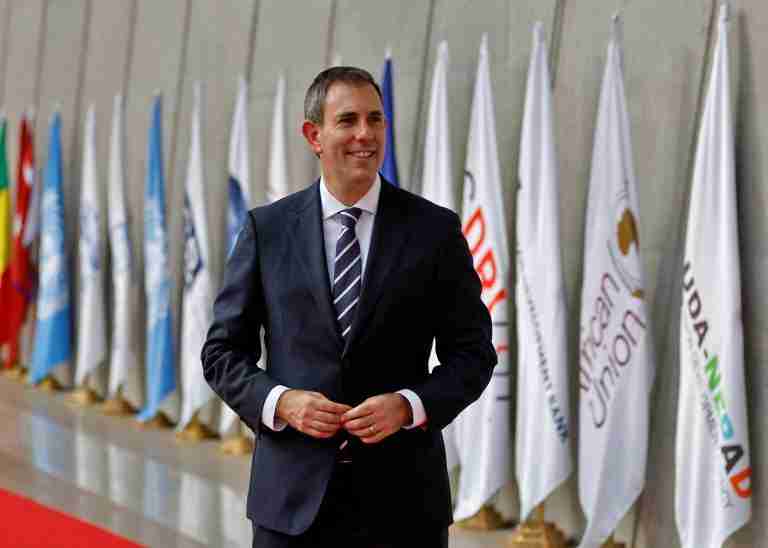
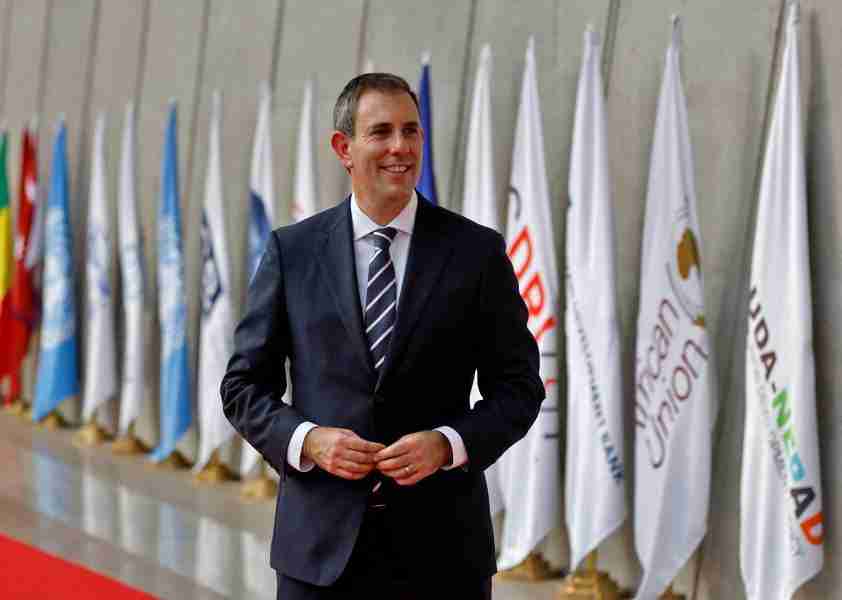
FILE PHOTO: Australian Treasurer Jim Chalmers poses for a photograph as he arrives to attend a G20 finance ministers’ and Central Bank governors’ meeting at Gandhinagar, India, July 18, 2023. REUTERS/Amit Dave/File photo

International news via Reuters:

Australia’s government launched fresh tax cuts on Tuesday and announced other cost-of-living relief in a major push to win back disgruntled voters, tipping the budget back into the red.

Prime Minister Anthony Albanese’s centre-left government is seeking to win a second term in a May election and is running neck-and-neck in the polls against the conservative Coalition opposition.

Treasurer Jim Chalmers in his fourth budget also unveiled new efforts to boost economic resilience and competitiveness, acknowledging heightened new global risks from trade wars as well as geopolitical tensions.

“This budget is really a platform for prosperity in a new world of uncertainty,” Chalmers said in a press briefing. “It recognises the cost of living pressures are front of mind for many Australians.”

In keeping with the practice of recent years, most of the measures announced in the budget had already been flagged.

However, the two new rounds of tax cuts, worth A$17.1 billion ($10.7 billion), came mostly as a surprise and build on those introduced last year.

Through cutting the lowest tax bracket, a worker on average earnings will get a new tax cut of A$268 in the fiscal year ending June 2027 and A$536 in the following fiscal year, more modest than the A$1,654 relief in the tax cuts introduced this fiscal year.

The budget also features an A$8.5 billion investment in public healthcare. It will also extend electricity rebates until the end of the year, roll out funding for public schools and cut student debt.

That will knock the underlying budget balance for the 2025 fiscal year back into the red after two years of surpluses.

The A$27.6 billion deficit is slightly worse than the government’s projection of A$26.9 billion in December. Most analysts had expected an improvement in the fiscal position.

Deficits are expected to widen to a total of A$179.5 billion over the forward estimates.

‘AUSTRALIAN EXCEPTIONALISM’

The budget also included A$3 billion in investment to support local production of green metals, A$20 million to encourage consumers to buy Australian-made goods and initiatives to boost economic competitiveness.

Some of this largesse will be funded by a tax windfall from an unexpectedly tight labour market and still strong mining profits. The government now expects the jobless rate to peak lower at 4.25% and upgraded its near-term outlook for company receipts thanks to resilient commodity prices.

In his budget, Chalmers projected a robust Australian economy in the face of growing global headwinds. The economy has moved past its trough, expanding at the fastest pace in two years last quarter, while the unemployment rate stayed at a historically low 4.1%.

It estimated a modest impact from higher U.S. tariffs on Australia by 2030.

“This genuinely is a story of Australian exceptionalism in the context of global economic uncertainties,” Chalmers said.

The increased spending and strong labour market, however, mean inflation is now expected to pop up again to 3% over the next fiscal year, the top of the central bank’s target band of 2-3%, before steadying at 2.5%.

The budget provides some relief to households but does not address the stickier parts of inflation including elevated insurance and rental costs, Katrina Ell, head of Asia-Pacific Economics at Moody’s Analytics said in a statement.

“Inflation remains a critical issue heading into the Federal election as non-discretionary goods and service prices remain well above pre-pandemic levels and wages haven’t kept pace,” Ell said, adding that Moody’s Analytics still expects the Reserve Bank of Australia to reduce the cash rate by a further 50 basis points this year.

The RBA has warned further policy easing is not guaranteed, having just cut interest rates for the first time in over four years last month.

The RBA sees underlying inflation settling at 2.7% over the long term, above the midpoint of the target band. The market is not pricing in another full rate cut until July, while rates are only seen falling to 3.4% by the end of the year, from 4.1% currently.

Reporting by Stella Qiu; Editing by Sam Holmes and Kim Coghill

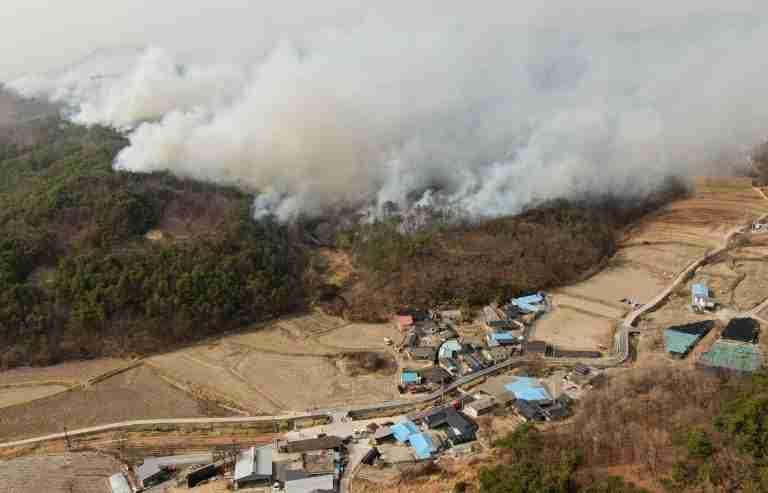
South Korea wildfires continue to rage as new evacuations ordered

At least four people have been killed and hundreds forced to flee their homes

A helicopter sprays water near Gounsa temple to protect it from a wildfire, in Uiseong, South Korea, March 25, 2025. REUTERS/Minwoo Park

International news via Reuters:

Wildfires expanded in South Korea’s southeast region on Tuesday, threatening a world heritage site and forcing thousands more residents to evacuate their homes.

With a population of 150,000 people, the city of Andong, home to Hahoe Village, a UNESCO World Heritage site, issued an alert to its residents to evacuate to safe areas, according to a city official and a public text alert.

The official said the blaze was currently about 10 kilometres (6.21 miles) from Hahoe.

Deadly wildfires continued to rage across the region as authorities designated the affected counties ‘special disaster zones’.

At least four people have been killed and hundreds forced to flee their homes since blazes broke out in several areas on Saturday, stoked by strong winds and dry weather.

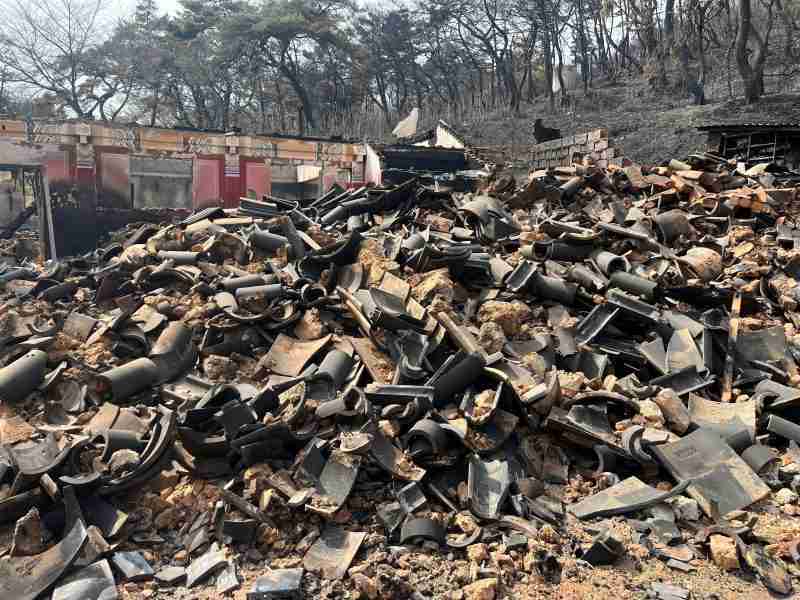
The wildfires have already gutted local landmarks including ancient Buddhist temples.

“Because this is such an old temple, it is so regrettable and heartbreaking that it has been burned down,” said Jeung Meung-suk, a 55-year-old Buddhist follower at Unramsa, a thousands-year old temple whose most buildings were burnt.

Acting President Han Duck-soo on Tuesday vowed to deploy resources from helicopters to workers on the ground to put out the fires as quickly as possible.

Reporting by Minwoo Park, writing by Ju-min Park; Editing by

Britain proposes to allow mobiles to make satellite calls

January saw Vodafone make the world’s first satellite video call using a standard smartphone

FILE PHOTO: A man talks on the phone while walking along the high street of Richmond, in London, Britain, October 11, 2024. REUTERS/Jaimi Joy/File Photo

International news via Reuters:

Britons could be making satellite calls using their ordinary smartphones later this year after the country’s telecoms regulator proposed allocating radio frequencies to enable services to begin.

Specialised equipment, such as the terminals used on ships and aircraft, is currently required to make satellite calls, although some smartphones can use low-bandwidth connections to send texts, for example to emergency services.

In January, however, Vodafone made the world’s first satellite video call using a standard smartphone in a remote region of Wales with no mobile coverage, using a trial licence.

Regulator Ofcom said it was proposing to allow mobile networks and satellite operators to use mobile airwaves – called radio spectrum – to connect mainstream handsets in the UK.

The technology could be used to provide connections in Britain’s most rural and hard-to-reach places.

Ofcom’s preferred approach would be to amend the licences already held by mobile network operators and create an exemption for handsets connecting to these services.

Alternatively, it could introduce a new licence for the services or permit licence exempt use subject to conditions.

Ofcom could begin authorising direct-to-device service later this year. The consultation period for submissions closes on May 20.

Reporting by Pushkala Aripaka in Bengaluru and Paul Sandle in London; Editing by Janane Venkatraman and Ed Osmond

The United States puts unacceptable pressure on Greenland, Denmark says

Comes as a high profile U.S. delegation visits the semi-autonomous Danish territory this week

Denmark’s Prime Minister Mette Frederiksen looks on as she attends a European Union summit in Brussels, Belgium March 20, 2025. REUTERS/Yves Herman/File Photo

International news via Reuters:

The United States is putting unacceptable pressure on Greenland, Denmark’s Prime Minister Mette Frederiksen told broadcaster TV2 on Tuesday, ahead of a trip to the semi-autonomous Danish territory this week by a high-profile U.S. delegation.

The U.S. visit, which runs from Thursday to Saturday, will be led by Usha Vance, wife of Vice President JD Vance, and include White House National Security Adviser Mike Waltz and Energy Secretary Chris Wright.

“I have to say that it is unacceptable pressure being placed on Greenland and Denmark in this situation. And it is pressure that we will resist,” Frederiksen told TV2.

The delegation had not been invited by the governments of Greenland or Denmark.

Brian Hughes, spokesman for the White House National Security Council, said the delegation aimed to “learn about Greenland, its culture, history, and people.”

Frederiksen dismissed the idea of a private visit: “You cannot make a private visit with official representatives from another country.”

Reporting by Louise Breusch Rasmussen, editing by Terje Solsvik

Indonesia to join BRICS’ New Development Bank, president says

Announcement during a visit by former Brazilian President Dilma Rousseff

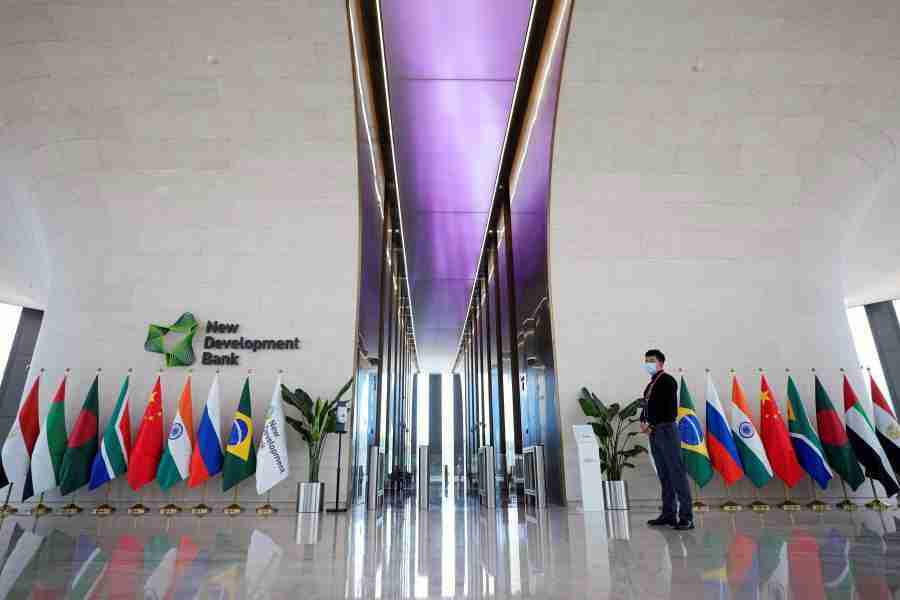
A view of logo of New Development Bank (NDB) at its headquarters in Shanghai, China July 10, 2023. REUTERS/Aly Song/File Photo

International news via Reuters:

Indonesia will join New Development Bank, a multilateral bank developed by BRICS member nations, President Prabowo Subianto said on Tuesday.

Joining NDB as a member would help Indonesia accelerate its economic transformation, Prabowo said. The BRICS group also includes Brazil, Russia, South Africa, China, India, Egypt, Ethiopia, Iran and the United Arab Emirates.

Prabowo made the announcement during a visit by NDB president and former Brazilian President Dilma Rousseff.

Rousseff said the bank is interested in collaborating in sectors such as renewable energy and biodiesel, as well as technological development.

Prabowo has presented dozens of projects for potential partnership with NDB, Rousseff told reporters.

Reporting by Stefanno SulaimanWriting by Fransiska Nangoy; Editing by Martin Petty

In Buenos Aires’ poor neighborhoods, residents recall beers and chats with Pope Francis

Locals have been celebrating the discharge from hospital of Pope Francis

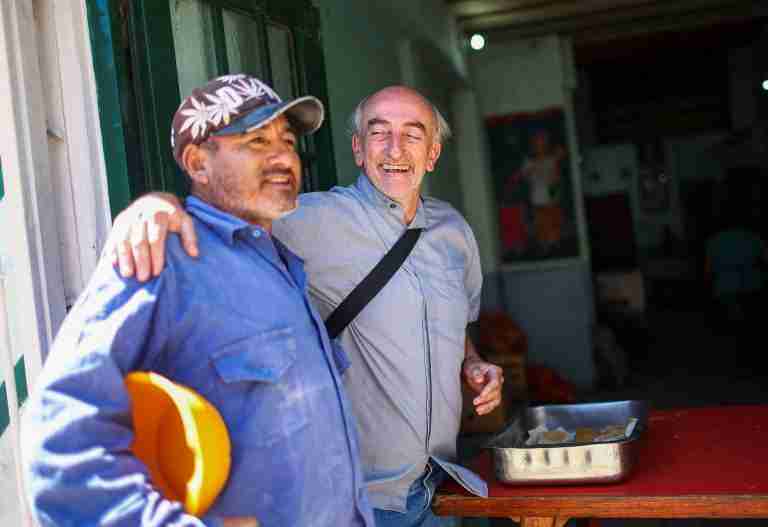
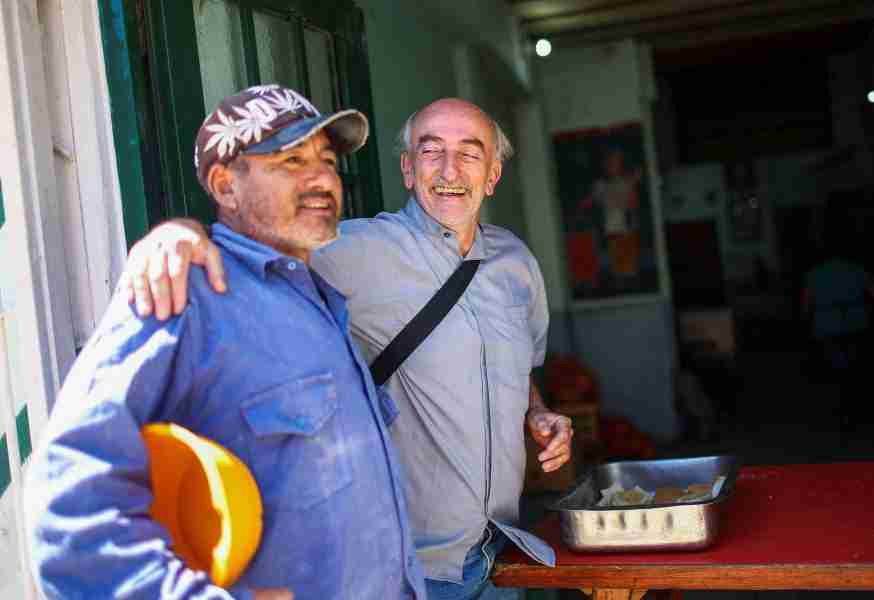
Lorenzo “Toto” de Vedia, priest at the Virgen de Caacupe chapel, where Pope Francis, then a young Jorge Mario Bergoglio used to visit regularly, greets a neighbour at a soup kitchen at the Villa 21-24, in Buenos Aires, Argentina March 10, 2025. REUTERS/Agustin Marcarian

International news via Reuters:

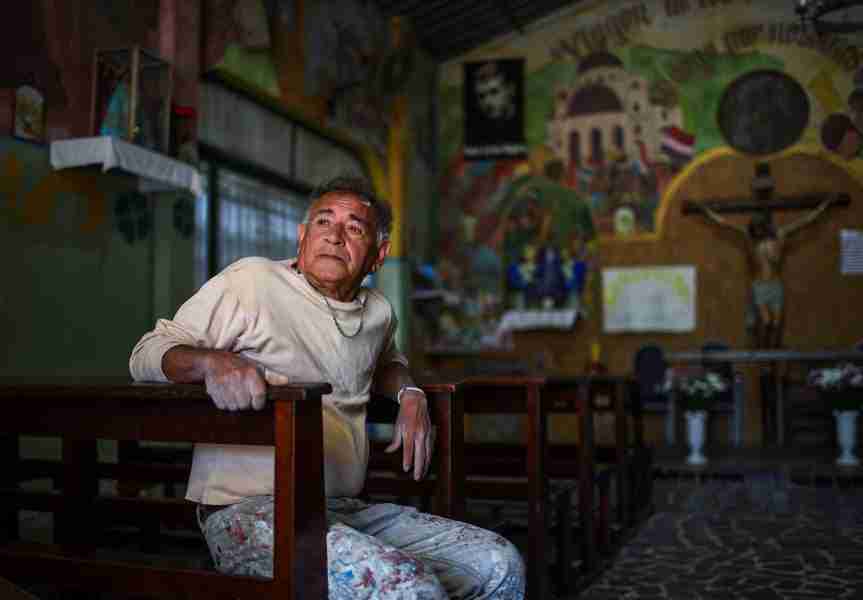
In the impoverished Buenos Aires neighborhood of Villa 21-24, 68-year-old painter Heriberto Ayala still remembers how Pope Francis, then Jorge Mario Bergoglio, an archbishop, came to visit regularly on the number 70 bus and break bread with locals.

He recalled one time sharing a beer.

“We had pitchers of cold water and beer. And I, you see, grabbed it and said, ‘here you go, Father.’ But instead of passing him water, I passed him the beer. He said, ‘oh, how nice,'” Ayala reminisced with a chuckle.

Locals have been celebrating the discharge from hospital of Pope Francis.

In recent weeks the 88-year-old pope has been battling the most severe health crisis of his 12-year papacy, an absence from public life that shone a spotlight on his frailty and age.

“We are all very pleased, very happy the pope is recovering,” said Hector Novara at a church service in the capital on Sunday. “I identify with the pope as an Argentine, and for what he does in the world.”

The Argentine pontiff is known for his informal style, rejection of pomp, and push to make the Roman Catholic Church more liberal and inclusive.

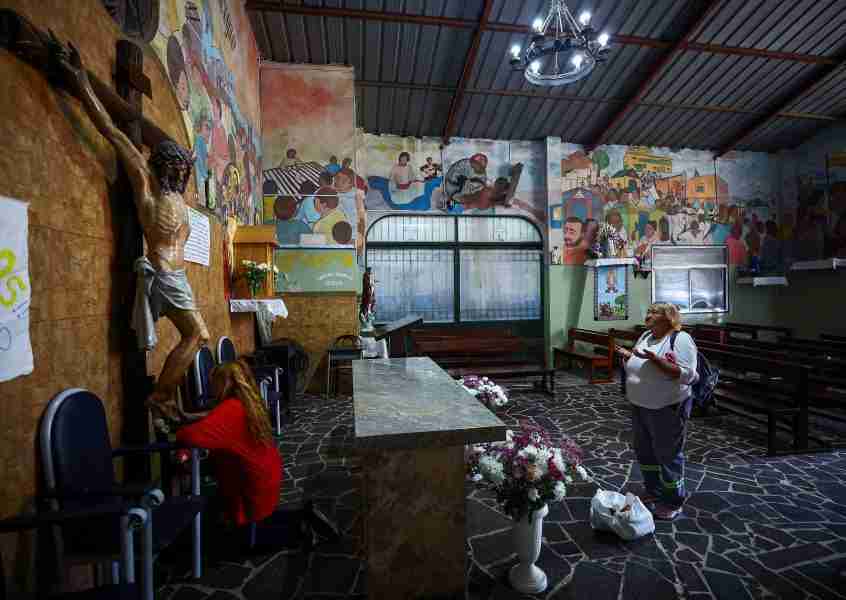
Catholic faithful pray inside the Virgen de Caacupe chapel, where Pope Francis, then a young Jorge Mario Bergoglio used to visit regularly, at the Villa 21-24, in Buenos Aires, Argentina March 10, 2025. REUTERS/Agustin Marcarian

Some have linked that back to his time visiting and preaching in poor barrios in his home country, later earning him the nickname of “papa villero”, or slum pope.

Reuters spoke to half a dozen residents and churchgoers in those neighborhoods who all remembered the former archbishop of Buenos Aires as a simple man, who would arrive by bus with a briefcase and well-worn shoes.

He would walk the streets, listening to locals while sometimes serving and sharing meals with them.

“He walked all over the neighborhood, sweating with us.

I know him very well. He was kind, he would sit and drink mate with us,” said 78-year-old Antonia Pesoa, referring to a popular local herbal tea.

“He helped us; he loved the humble people very much.”

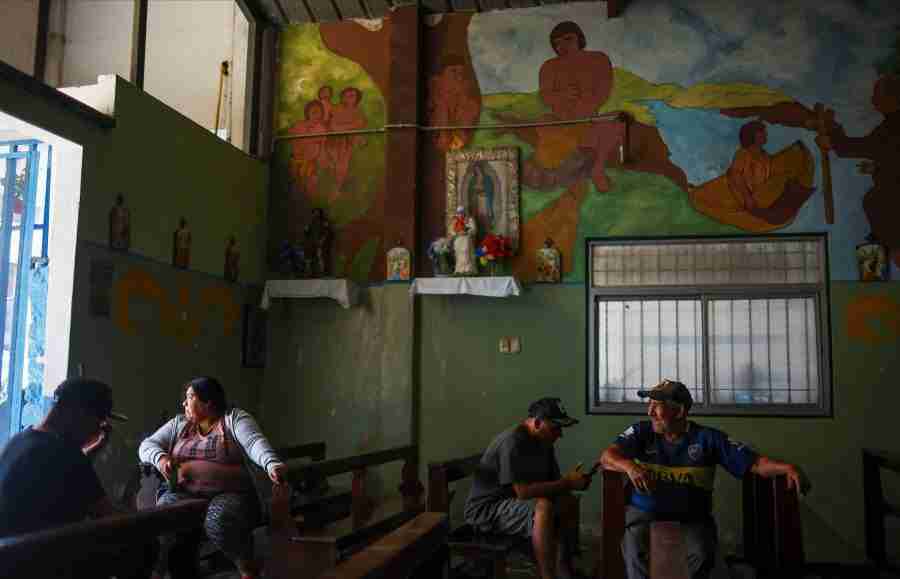
Children play inside the Virgen de Caacupe chapel, where Pope Francis, then a young Jorge Mario Bergoglio used to visit regularly, at the Villa 21-24, in Buenos Aires, Argentina March 10, 2025. REUTERS/Agustin Marcarian

In Villa 21-24, part of the larger Barracas area, messy power lines crisscross the sky above colorful buildings and ramshackle homes made of corrugated metal and plastic.

Here the pope’s illness has led to a wellspring of prayer and support.

“For the residents of Villa 21, Pope Francis is part of the family,” said Lorenzo “Toto” de Vedia, a priest of the Virgen de los Milagros de Caacupé parish in Barracas, adding that the neighborhood had been “deeply troubled” by his illness.

People wait for priest Lorenzo “Toto” de Vedia, inside the Virgen de Caacupe chapel, where Pope Francis, then a young Jorge Mario Bergoglio used to visit regularly, at the Villa 21-24, in Buenos Aires, Argentina March 10, 2025. REUTERS/Agustin Marcarian

“Of course it’s been 11 or 12 years since he left office to become pope, but we always feel him very close.”

Francis is the first Latin American pope in history, though he has never returned to his native country since being made the head of the Church in 2013.

His attempts to modernize the Church and address sensitive issues such as the treatment of immigrants and global conflicts have led to clashes at times with conservatives.

He has eschewed many of the trappings of his post, declining to move into the palatial apartments used by his predecessors and driving around Rome in a Ford Focus.

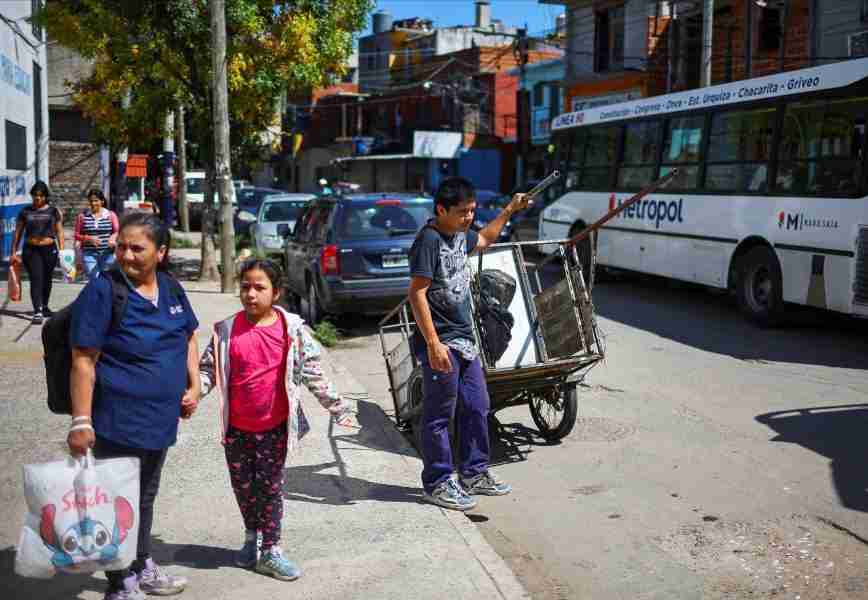
A garbage recycler holds his cart outside the Virgen de Caacupe chapel, where Pope Francis, then a young Jorge Mario Bergoglio used to visit regularly, at the Villa 21-24, in Buenos Aires, Argentina March 10, 2025. REUTERS/Agustin Marcarian

Rita Fernández, 70, called Francis “very down-to-earth” and remembered when he would visit her neighborhood over 20 years ago.

“We would all sit around the table to eat together, like a family,” she said, adding that the locals would often ask Bergoglio why he wanted to be there.

“He would then say that he felt better here than in the cathedral.”

When he was elected pope she was overwhelmed. “It was crazy, my God. An emotion we didn’t know. Both the priest and I shed tears,” she recalled.

Elba Castro, 83, also remembered Bergoglio coming to Villa 21 in his time as archbishop. She lamented that he had not returned to “see his children” since becoming pope, a decision that some have attributed to his desire to avoid getting caught up in Argentina’s polarized political climate.

“It gives me a kind of pain,” said Castro. “He was from here.”

Reporting by Lucila Sigal; Editing by Adam Jourdan and Rosalba O’Brien

Olympics-Brisbane to build main stadium on parkland for 2032 Summer Games

AOC welcomed the announcement as a ‘very positive step’

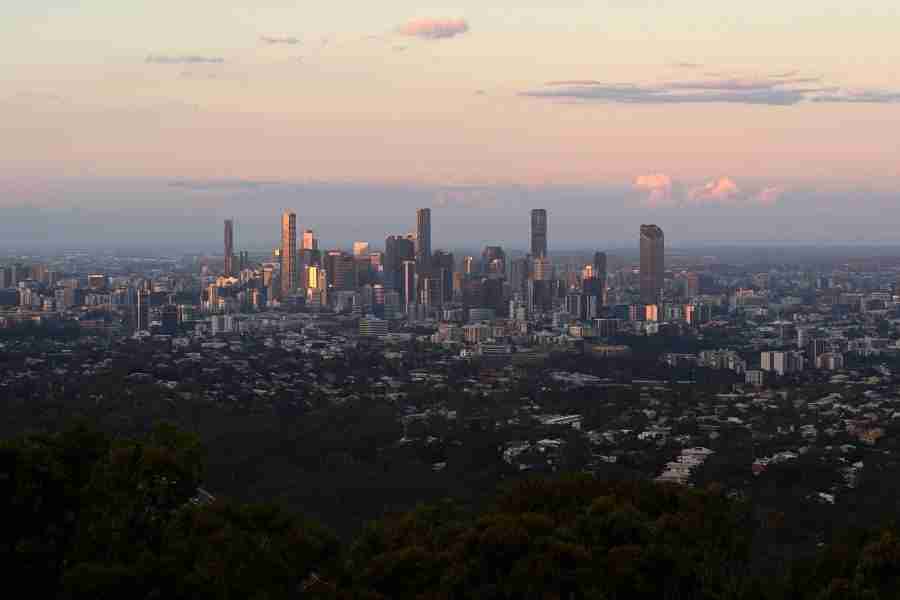
FILE PHOTO: A view of the city skyline of Brisbane, Australia, July 4, 2021. Picture taken July 4, 2021. REUTERS/Jaimi Joy/File Photo

International news via Reuters:

A new 60,000-seat stadium and a national aquatics centre will be built in an inner city Brisbane park for the 2032 Olympics, Queensland State Premier David Crisafulli announced on Tuesday as he unveiled the third venue plan for the Games.

Crisafulli said another 20,000-seat boutique stadium would be constructed at Brisbane Showgrounds, while some events have been moved out of the city to regional Queensland.

Brisbane’s Queensland Tennis Centre will be upgraded with the addition of a new 3,000-seat showcourt, while the Gabba ground will host cricket at the Games before being torn down.

The issue of venues has been a matter of much political conflict since the Games were awarded to Brisbane in 2021 and Crisafulli said organisers could now get started on constructing and refurbishing the various arenas.

“Finally, Queensland has a plan,” Crisafulli said in Brisbane.

“The time has come to just get on with it. We will.”

A A$2.5 billion ($1.57 billion) indoor arena and entertainment venue which was to have been paid for by the federal government will now be put out to private tender with the promised funds going to other infrastructure.

Crisafulli is likely to come under fire for the stadium plan as he went on the record opposing the construction of a new arena in the city in the run-up to the state elections that brought him to power last November.

“It’s my decision,” he added. “I wasn’t prepared to take the politically easy option when the truth is that wouldn’t be of benefit to the state.

“I believe in this plan and I think Queensland is going to back it.”

Environmental lobby group Save Victoria Park picketed outside Crisafulli’s announcement on Tuesday and issued an open letter last week saying any construction in the park for the Olympics would be an embarrassment for Brisbane.

“Do we really want to be known as the city that concretes over its historic parkland for a mega stadium?” said spokesperson Sue Bremner.

Another major reverse on venues looks unlikely, however, as Australian Olympic Committee (AOC) chief executive Matt Carroll has already warned that the plan needs to be in place by the end of June.

The AOC on Tuesday welcomed the announcement as a “very positive step towards delivering a successful Games”.

BEST OF QUEENSLAND

Tuesday’s announcement came on the back of a second review of the venue options undertaken by a seven-person panel, which reported earlier this month. The government said they had adopted over 90% of the panel’s recommendations.

Queensland is nearly five times the size of Japan and Crisafulli said it was only fair that the whole state would take part in hosting the Games.

The rowing will now take place on a crocodile-infested river in Rockhampton some 600 km to the north of Brisbane, while sailing events will be staged in the Whitsunday Islands near the Great Barrier Reef.

Brisbane organising committee chief Andrew Liveris said he had been in contact over the plans with Kirsty Coventry, who is the International Olympic Committee’s point person for the Games and was elected as the new head of the Olympic movement last week.

“This is a go-get-it-done plan and this will be delivered,” he said.

“Queensland gets the best of venues, the Games get the best of Queensland.”

($1 = 1.5906 Australian dollars)

Reporting by Nick Mulvenney, editing by Peter Rutherford

New garbage trucks added to fleet

Government promises more efficiency and reliability

One of the four new trucks. Photo: DCI

Press release:
“The Ministry of Public Works and Environment is pleased to announce the arrival of a new cohort of garbage collection trucks, marking a step forward in supporting Bermuda’s waste management infrastructure.
The new vehicles — four in total — were recently delivered to the Marsh Folly waste facility in Pembroke, where the Hon. Jache Adams, Minister of Public Works and Environment, conducted an inspection and met with frontline crews.

Minister Jache Adams at the wheel of one of the new garbage trucks.   Photo: DCI

“These new additions represent a meaningful investment in the efficiency and reliability of Bermuda’s public waste collection services,” said Minister Adams.
“Garbage collection is a vital public service, and we are committed to ensuring our teams have the tools and resources they need to get the job done.”
The newly acquired trucks, which are expected to enter active service by the end of the week, are built with more robust engineering than previous models, specifically selected for their durability and suitability to Bermuda’s unique climate and road conditions.
With enhanced mechanical reliability and a design tailored for long-term performance, these vehicles are expected to improve overall service continuity across the Island.

From left: Kirk Outerbridge, Permanent Secretary for the Ministry of Public Works and Environment; Donnell Bailey, Supervisory Foreman, Solid Waste Management – Waste Collections; Mark Husdan, Solid Waste Manager, Works & Engineering and Minister Adams.  Photo: DCI

Minister Adams took the opportunity to commend the dedicated staff of the Department of Works and Engineering’s Waste Management section, praising their commitment to weekly residential garbage collection — even during periods when the fleet faced strain due to operational constraints.
“Our crews have worked tirelessly to maintain service standards for the public, often under demanding circumstances,” the Minister said.
“Their professionalism and dedication have not gone unnoticed, and with the introduction of these new trucks, we are better equipped to support them in their vital roles.”
The Ministry reaffirms its commitment to continuous improvement and investment in Bermuda’s public services. These new trucks underscore a forward-looking approach to ensuring sustainable, reliable waste collection for all residents.”

EXCLUSIVE: First Bermudian pilot joins BermudAir

Tariq Lynch-Wade transitions from Head of Safety of the boutique airline into full-time pilot role, marking a historic moment

Locally based airline, BermudAir, has welcomed its first Bermudian pilot to its roster.

Tariq Lynch-Wade touched down at the airport today, piloting his first commercial flight for the airline onboard BermudAir’s 2T551/552 Bermuda to Baltimore service.

Mr Lynch-Wade, who has been serving as BermudAir’s Head of Safety since May 2024, is now transitioning into a full-time pilot role.

Adam Scott, Founder & CEO of BermudAir, commented: “Tariq’s journey is an inspiration, and we are incredibly proud. From his leadership in aviation safety to his passion for mentoring future pilots, Tariq’s transition into a full-time pilot role is not just a personal achievement, but a historic moment for our airline and Bermuda’s aviation community.”

According to a press release issued by the airline, Mr Lynch-Wade’s aviation journey began in 2003, when he earned a Bachelor of Science in Aviation/Airway Management and Operations from Jacksonville University, followed by flight training at Delta Connection Academy.

He has been flying for around two decades in various parts of the world, and his career also includes 14 years at the Bermuda Civil Aviation Authority, where he attained the position of Director of Operations.

Outside of his professional endeavours, Mr Lynch-Wade is a founding member of Aviators Alliance Bermuda.

BermudAir said today’s momentous occasion demonstrates its “commitment to developing local talent and strengthening Bermuda’s presence in global aviation.”

Alisa Bernardo was the only reporter to join Mr Lynch Wade’s family at the airport today as they welcomed him home.

WATCH the full report above.

Up close and personal with 2025 Bermuda Idol winner

Annual competition took place at the Ruth Seaton James auditorium on the 15th of March

At just 14 years old, Serilina Fisher has already made a huge mark as the youngest winner of Bermuda Idol.

Excited about her victory, she sat down with Kendal Trott to reflect on her unforgettable performance, share her unwavering passion for music, and give supporters a sneak peek into the upcoming tour she’s set to embark on.