Thursday, November 5, 2026
Home Blog Page 127

At least 38 dead after Indonesia’s magnitude-7.7 earthquake, officials say

Tsunami waves of less than 1 metre (3 feet) were recorded in several areas of the Southeast Asian nation after the early morning tremor
International News via Reuters:

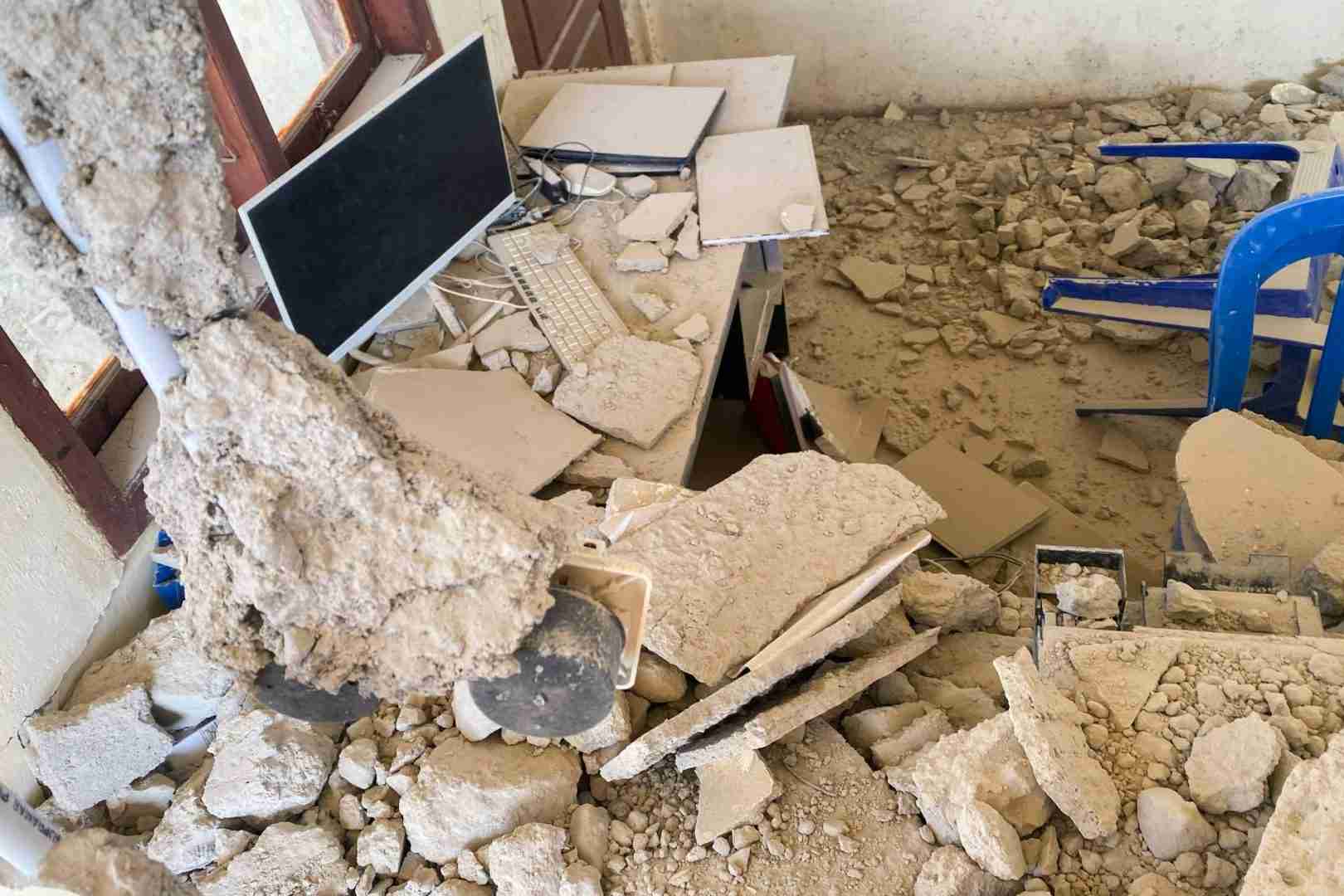
At least 38 people died after an earthquake of magnitude 7.7 and dozens of aftershocks struck off eastern Indonesia on Saturday, officials said, as rescue workers rushed to reach areas closest to the epicentre.

Tsunami waves of less than 1 metre (3 feet) were recorded in several areas of the Southeast Asian nation after the early morning tremor. The tsunami warning was lifted about three hours after the quake.

“As of 15:00 (0800 GMT), the recorded figures are 38 fatalities, two people seriously injured, 11 with minor injuries,” Suharyanto, head of the National Disaster Management Agency, or BNPB, told a televised press conference. He added that approximately 2,000 people had fled to safer ground.

Earlier, rescuers in the port town of Maumere found 20 dead, six injured and two trapped under the rubble, said Fathur Rahman, head of the city’s rescue agency. Maumere is the main town in Sikka Regency on Flores Island in the east of Indonesia’s vast archipelago.

Suharyanto said residents remain trapped in several buildings in earthquake-affected areas and there are reports of landslides blocking several roads.

TEAMS HAVE YET TO REACH REGION CLOSEST TO EPICENTRE

Teams have yet to reach Nagekeo, the region closest to the epicentre, and communications signals there had been affected, Fathur told Reuters. Attempts to reach Nagekeo by car were blocked by landslides, while another team was attempting to go by ferry, he said.

About 2,000 residents in Nagekeo evacuated, and damage was reported to a number of houses, warehouses and government facilities, the BNPB said. Authorities also reported traffic congestion and power outages affecting parts of the regency, it said.

The governor of East Nusa Tenggara Province, Emanuel Melkiades Laka Lena, told a press conference at least five people died from collapsing rubble as they slept.

Parts of a building collapsed into dust and rubble as people screamed and ran in the street, a video on Facebook, verified by Reuters as being at a port in Maumere, showed.

“The quake was massive, the shock was so strong, we were resting at home with family,” said Nona, a 51-year-old resident of Talibura, a village in East Nusa Tenggara. “There were 13 of us inside the house and we all ran to save ourselves.”

Strong shaking was felt across East Nusa Tenggara, West Nusa Tenggara and parts of South Sulawesi, and residents in several areas reported shaking lasting about one minute, the BNPB said in a statement.

“Most of the people felt the shock and scattered out of their homes,” it said.

A hospital in the district of Ende in East Nusa Tenggara Province was moving patients outside, Kompas TV footage showed, and Kompas.com reported at least one landslide.

Indonesian geophysics agency BMKG recorded the first quake at 4.58 a.m. (2158 GMT) at a depth of 15 km (9 miles), followed by several aftershocks.

In 1992 the same area was hit by a magnitude-7.5 quake, causing extensive destruction at that time, the agency said.

Australia’s tsunami warning centre said the undersea earthquake would pose “no tsunami threat to the Australian mainland, islands or territories”.

Indonesia straddles the “Pacific Ring of Fire”, a seismically active zone, where different plates on the earth’s crust meet, creating a large number of earthquakes and volcanoes.

Reporting by Dewi Kurniawati, Bernadette Christina, Fransiska Nangoy and Steffano Sulaiman in Jakarta; Additional reporting by Carlos Méndez and Mrinmay Dey in Mexico City, Writing by Josh Smith; Editing by Mark Porter, Lisa Shumaker, William Mallard and Barbara Lewis


Cap on lobster licences remains at 75

The Ministry of Public Works and Environment has confirmed that the cap of 175 recreational lobster diver licences will remain in place for the upcoming 2026–2027 season, which opens on 1st September 2026. This cap is unchanged from last season and continues to support the sustainable management of Bermuda’s spiny lobster population.

Licence Application and Allocation Process:

Recreational lobster diver licences will not be issued on a first come, first served basis. Key dates and requirements are as follows:

  • Application Period: The application period will open at 5:00 pm on Friday, 14 August and close at midnight on Sunday, 23 August 2026.
  • Submission Site:  Applications should be submitted online at
    https://forms.gov.bm/Apply-for-lobster-diving-spearfishing-licence.   Applying does not guarantee a licence.
  • Eligibility: Divers licensed in the 2025–2026 season must have submitted their catch statistics (including nil catches) by 30 April 2025 to qualify for relicensing.
  • Notification: Successful applicants will be notified via email on Monday, 24 August 2025.
  • Licence Collection and Payment: Selected applicants must visit the DENR offices in the Botanical Gardens to complete any paperwork and pay for their licence by 4:30 PM on Friday, 28 August 2026.
  • Nominee Option: Successful applicants, who are overseas during the application process may nominate someone to pay on their behalf. The nominee must bring the diver’s licence card to receive the season’s sticker. If a new card is needed, the diver must appear in person to have their photo taken before fishing.
  • Licence Reallocation: Any unpaid licences by 4:45 PM on Friday, 28 August 2026 will be reallocated, and successful applicants will be notified on Monday, 31 August 2026.

The Ministry encourages all interested recreational lobster divers who meet the eligibility criteria to apply early.

These measures are important to protecting Bermuda’s marine resources and ensuring the sustainability of the spiny lobster fishery for future generations.

For further information, please contact the Department of Environment and Natural Resources at fisheries@gov.bm or 293-5600.

Iran defiant on strait as Trump tells Americans to accept high gas prices

Trump urged Americans to accept slightly higher gasoline prices while the conflict with Iran continues

International News via Reuters:

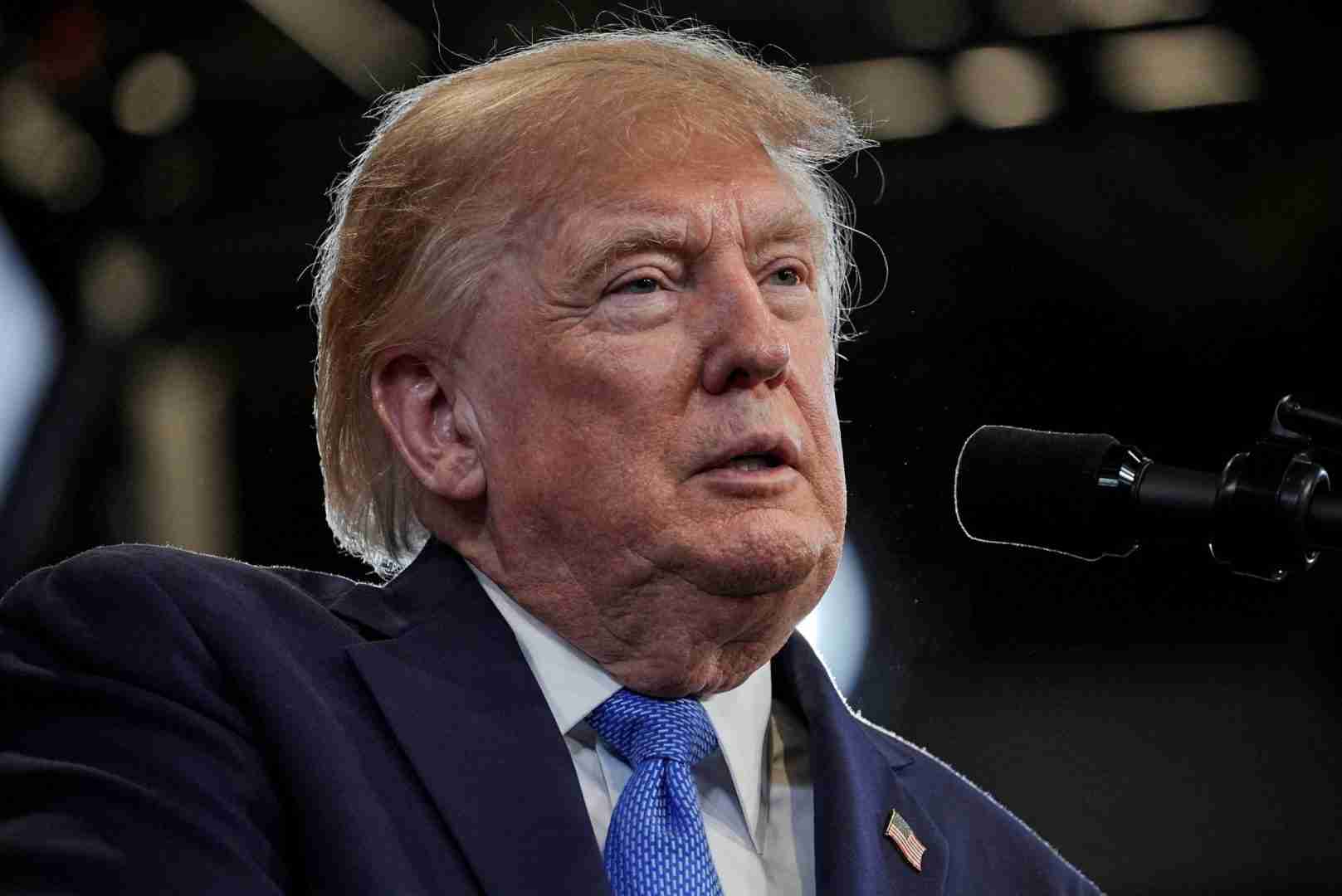
Iran called on the U.S. to accept defeat while President Donald Trump blasted Tehran as “very evil” and told Americans to brace for continued high fuel prices as a result of the war.

Progress toward peace talks and oil tanker traffic through the strategic Strait of Hormuz waterway remained halted, with no sign the warring parties were moving toward ending the conflict that the U.S. and Israel launched on February 28.

“This strait will be opened and closed only under Iran’s command, and so long as you do not accept the reality of defeat and stop indulging in fantasies, Iran will continue to enforce the blockade,” Iran’s Deputy Foreign Minister Kazem Gharibabadi posted on X early on Saturday.

U.S. GASOLINE UP 29% ON YEAR, IRAN ALSO FEELS IMPACT

Foreign Minister Abbas Araqchi said Iran had not decided to resume talks with the U.S. He told Iranian news outlet Shahrara News in an interview published on Saturday that Washington must meet conditions on the strait in order for shipping to resume in the waterway that handled one-fifth of the world’s oil before the war.

Trump urged Americans to accept slightly higher gasoline prices while the conflict with Iran continues.

He told a political rally in Garden City, New York, on Friday that paying “a tiny little bit more for your gasoline” is worth the cost of ensuring “a very evil country” could not have a nuclear weapon, one of the president’s stated rationales for the war.

In a trend that has sparked inflation and disappointed voters, the average U.S. price of a gallon of gasoline was about $4.08 on Friday, up 29% from a year earlier, according to the American Automobile Association.

Trump, a Republican, campaigned for reelection on a promise to lower energy costs, and Democrats are seeking to make the war’s fallout an issue in November congressional elections.

Crude oil futures rose $1 a barrel on Friday. Benchmark Brent futures were on track for a weekly rise of 6.0% and West Texas Intermediate 5.4%.

“The Strait of Hormuz cannot be seized by a tweet or an aircraft carrier, by issuing an order or by delivering an election speech,” Gharibabadi said.

Despite Iran’s defiant tone, though, there were signs of an economic toll there too.

President Masoud Pezeshkian, in remarks on state television, blamed high inflation on a U.S. blockade of Iranian ports and sanctions on Iran’s oil exports.

NO CRUDE OIL VESSELS TRANSITING STRAIT

Trump and Treasury Secretary Scott Bessent each pledged to inflict more financial damage on Iran. Bessent told Newsmax’s “Rob Schmitt Tonight” program on Thursday that announcements of more measures against Iran were coming next week.

Tehran calls its enforcement of strait traffic a blockade – the term Washington uses for its threat against Iranian vessels leaving their ports.

“What we’re doing is a great service for the world, not only for ourselves … and we’re really doing a great job,” Trump said, adding that a 260-day deployment by a U.S. aircraft carrier supporting the war effort was “not nearly long enough.”

Only two vessels passed through the Strait of Hormuz on Friday with no crude oil shipments visible, according to analysis from ship-tracking firm Kpler. Some ships may cross the strait undetected with their transponders off, but the figures are nowhere near the more than 130 ships that traversed it daily before the war.

Vessels that dare navigate the strait without Iranian permission risk missile or drone strikes. The United Arab Emirates’ Abu Dhabi National Oil Company said two of its vessels were attacked transiting the strait on Thursday evening, and the Emirati state news agency WAM reported another vessel came under attack on Friday.

A bulk carrier was struck in the hull by an unknown projectile in the Strait of Hormuz on Friday, the United Kingdom Maritime Trade Operations Centre said on Saturday, adding that the crew were safe, no damage assessment had been reported and that the environmental impact was unknown.

A ⁠tentative June deal to end the war is in tatters.

“We did not have a ceasefire in the first place that we would now want to extend,” Araqchi said. “We had ‘the end of the war,’ and now there is a new situation.”

Attacks by Iran-backed Houthis in Yemen renewed concerns about a widening regional war. Yemen’s internationally recognised government said the Houthis fired six ballistic missiles at the Red Sea port of Mocha on Friday, killing four civilians.

The Houthi-run SABA news agency cited a military source as saying the group had targeted an Aramco facility in the Saudi city of Najran with a drone.

Reporting by Menna Alaa El Din and Enas Alashray in Cairo, Humeyra Pamuk in Garden City, New York, and Jarrett Renshaw in Washington; Writing by Daniel Trotta and William Mallard; Editing by Sergio Non and Cynthia Osterman

ABIR appoints new Treasurer and finance panel members

The Board of the Association of Bermuda Insurers and Reinsurers (ABIR) has approved the appointment of a new Treasurer, Elizabeth Breeze, Head of Hiscox Capital Partners.

Ms. Breeze joined Hiscox in 2012 and was appointed Head of Hiscox Capital Partners in 2025. For over 20 years, Ms Breeze has developed deep expertise across capital markets, insurance and reinsurance and strategic leadership, most recently as Chief Financial Officer, Hiscox Re.

Her career began at KPMG in London, where she qualified as a chartered accountant, specialising in the audit of London market insurance companies. She later transferred to KPMG Bermuda, advising reinsurance entities across audit and advisory engagements.

In addition to a new treasurer, the ABIR board also appointed several new finance committee members: Kierra Smith, Chief Financial Officer, Convex Re Ltd., Haynes Finney, Bermuda CFO, Partner Re and John Huff, President & CEO, ABIR.

Mark Cloutier, Chair, ABIR said, “On behalf of the board of the Association of Bermuda Insurers and Reinsurers, I wish to welcome the new members of the Finance Committee. ABIR remains well-capitalised and looks forward to continuing its role as a leading advocacy, public policy and education trade association for the Bermuda market for many years to come. At this time, I also recognise outgoing Treasurer, Paul Konyecsni, for his years of dedication. I congratulate him on his retirement from Axis and thank him for his service.”

About ABIR: The Association of Bermuda Insurers & Reinsurers (ABIR), which represents Bermuda’s major property and casualty insurers and reinsurers doing business in 150 countries, was founded in 1993. For three decades, the Bermuda market’s risk-bearing capacity has played a key role in enabling insurance to be accessible and affordable, to the benefit of consumers around the world. Bermuda is an internationally recognised centre of global expertise on underwriting for catastrophe, climate, cyber, mortgage and credit risk transfer products, along with other specialty insurance and reinsurance. For more information, visit www.abir.bm or follow us on X @ABIR_Bermuda

Spain disregarded Ceuta warnings before migrant rush, say border workers’ unions

A Spanish court ruling, published on June 29, stated migrants could only be immediately pushed back from entering Ceuta if they crossed a physical barrier, specifying that anyone swimming to the enclave did not

International News via Reuters:

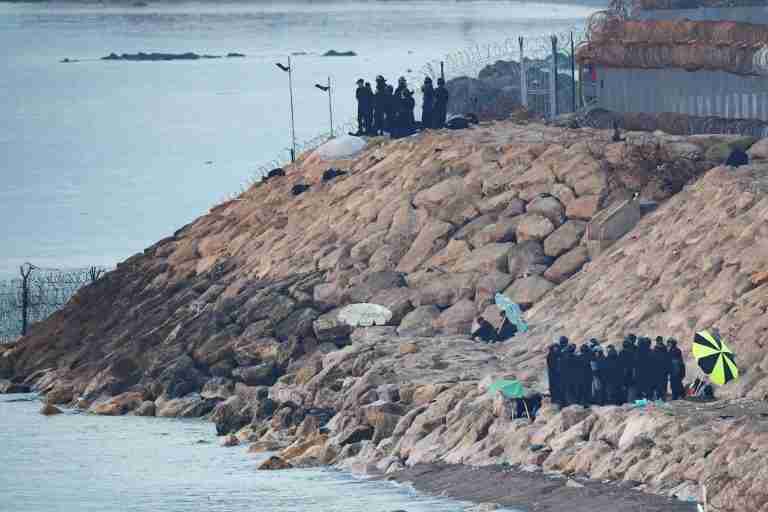
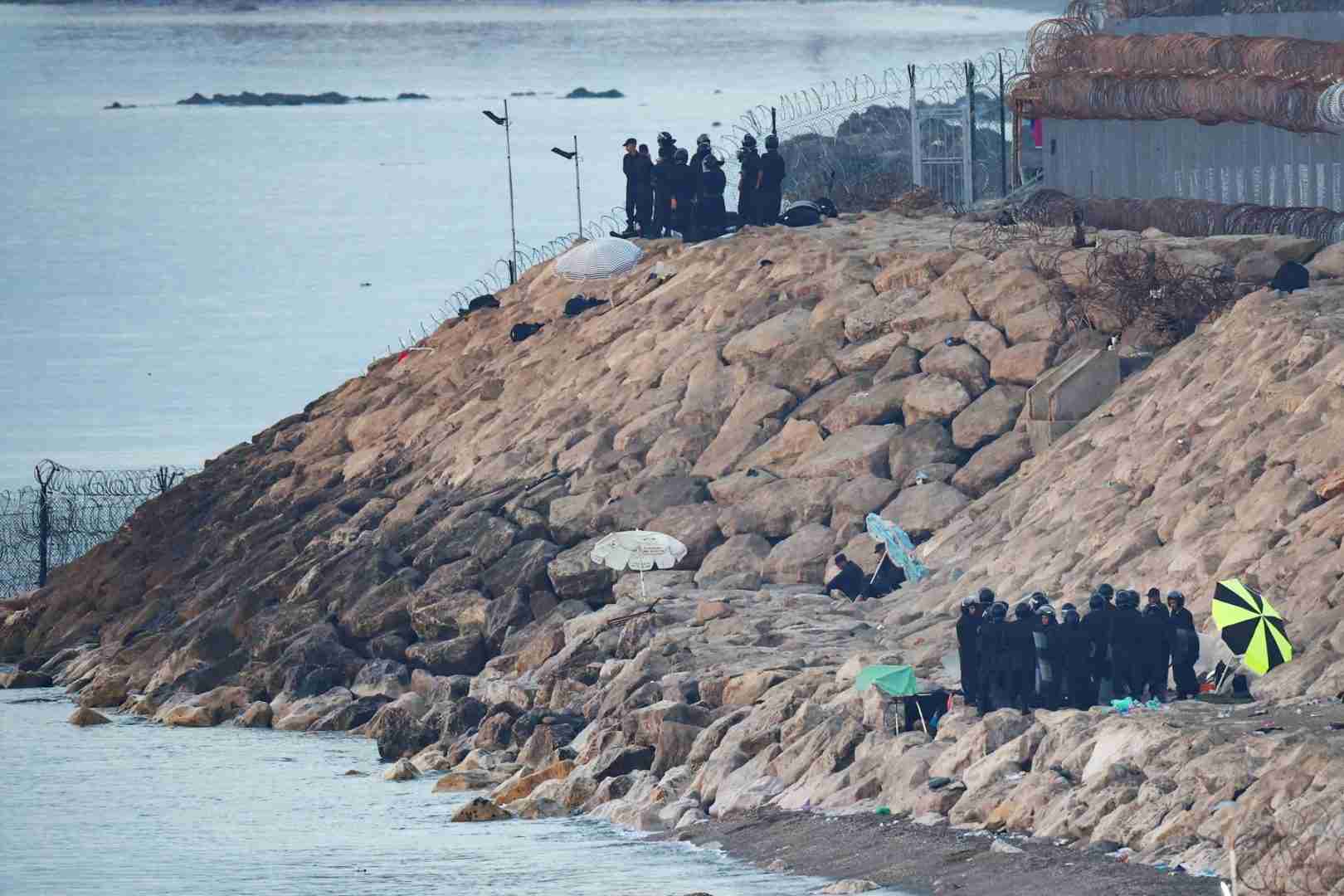
In the weeks before a rush of more than 70,000 migrants into the Spanish enclave of Ceuta, border workers warned Spain’s central government that more people, spurred on by social media, were arriving by sea, adding they feared an escalation.

Spain’s government did not heed their warnings and took little action, they told Reuters.

A Spanish court ruling, published on June 29, stated migrants could only be immediately pushed back from entering Ceuta if they crossed a physical barrier, specifying that anyone swimming to the enclave did not.

News of this ruling and videos of migrants successfully entering Ceuta encouraged more and more to try their luck.

Spain’s government blamed the deadly rush of July 29-30 on misinformation about the ruling spread by criminal networks.

However, public and private warnings issued by trade unions representing border workers, seen by Reuters, highlight that Spanish authorities were warned weeks earlier that arrivals to the enclave in North Africa could escalate and urged to act fast.

Spanish authorities say 80 people died in the rush and Moroccan authorities said 14 bodies were recovered in their territory, putting the number of confirmed deaths at 94. Human rights groups say more remain missing and the number could be higher.

‘AN EXPLOSIVE COCKTAIL’

Rachid Sbihi, spokesperson for Spain’s Civil Guard police trade union AUGC in Ceuta, said no one could have imagined the scale of what eventually took place on July 30.

“[But] we understood the ruling would trigger more arrivals. The ruling, the criminal gangs, and social media networks were an explosive cocktail,” he told Reuters.

Asked about comments that Spain did not act in time, a Spanish Interior Ministry spokesperson said authorities had studied various options after the court ruling before installing a floating barrier on the ocean on August 1.

“This prior assessment and analysis work allowed the floating barrier to be put in place just 48 hours after the decision to install it was made, following the massive arrival on July 30,” they said in a written statement to Reuters.

‘A LEGAL LOOPHOLE’

Reuters reviewed six instances of written statements and letters to the national government representative in Ceuta and the enclave’s police chief from Spanish border unions calling for guidance and action from government after the court ruling.

“[The ruling] has opened a legal loophole which only well-defined protocols can close,” the AUGC Civil Guard union said in an online statement on July 10. Until a physical barrier is installed at sea, “the ball is in the court of those who must provide clear instructions to agents at the border every night,” it said.

“Criminal gangs analyse every normative and legal change and adapt their routes and methods when they notice return procedures have become slower or more complex,” warned police union SUP three days later on X, calling for reinforcement of their numbers and a “coherent and effective” immigration policy to avoid the ruling being exploited.

In a letter to Ceuta’s police chief dated July 23 and seen by Reuters, the union flagged “constant arrivals by sea with direct repercussions on staff which conventional police infrastructure is not conceived to handle” and called for the establishment of a temporary reception centre.

Spain’s Interior Ministry, responsible for police, did not respond while the government delegate offered an appointment weeks later, according to spokespeople from unions AUGC and SUP.

There is no link between the rising arrivals before July 29-30 and the mass crossing that followed, a spokesperson for the delegate to Ceuta said. The delegate was unable to attend meetings requested by the unions but was in constant communication with the police and Civil Guard, they added.

Spokespeople for the police and Civil Guard declined to confirm what discussions were held with the delegate. Police unions said if any meetings had taken place, no fresh instructions resulted from them.     

THE PULL FACTOR

    Morocco is one of several North African countries the European Union pays to help police its borders. Rabat received €152 million ($176 million) in 2023.

Morocco says it spends around €500 million a year on border control in the north and it steps up frontier checks when calls for collective crossings are detected on social media, according to analysts.

Although Spanish and Moroccan border staff flagged more crossing attempts from mid-July, more stringent measures in Morocco – such as bus and train station checks – only began one to two days before the mass crossing. Only when the surge of arrivals spiralled into the tens of thousands on July 29 did Morocco send significant reinforcements, according to media reports, testimonies from NGOs and a Reuters witness.

“They didn’t do anything proactive. That strikes me as a policy failure,” said Riccardo Fabiani, North Africa project director at International Crisis Group.

In Morocco, a senior government official said they had asked Spanish counterparts after the ruling if it would generate problems. They did not disclose what Spain answered. Tackling the consequences was Spain’s responsibility, added the official, who declined to be named.

Increasing the numbers of security forces would have achieved nothing, the senior Moroccan government official told journalists on August 3, noting the pull factor was too strong.

EU URGED TO DO MORE TO DETER MIGRANTS

The border rush, and Madrid and Rabat’s stance in the weeks before, raise questions about Europe’s reliance on other countries to police its borders. Nevertheless, Spain and Morocco have praised their cooperation, and the EU said it could provide more financial support. The European Commission said in a statement it would continue to work with both Spain and Morocco to strengthen the border, and the two countries were investigating last month’s events at the frontier.

Moroccan officials however have also stressed Europe must do better at deterring migrants in the first place.

Spain’s government has set itself apart on migration from many peers, urging a more humanitarian approach and registering undocumented migrants to allow them to work and support its fast-growing economy.

“If Spain announces that it is willing to receive all immigrants, why are we forcing people to jump the fences and throw themselves into the sea?” Moroccan Justice Minister Abdellatif Ouahbi said this week in an interview with Spain’s EFE agency. “Let’s open the borders… If you are going to receive them, why are we stopping them?”

($1 = 0.8636 euros)

Reporting by Victoria Waldersee and Ahmed Eljechtimi, Additional reporting by Aislinn Laing; Editing by Alexandra Hudson

Woman charged over vandalism of Washington’s World War Two memorial

Pirro said on social media that Melissa Farris faces charges each carrying penalties of up to 10 years in prison

International News via Reuters:

A Kentucky woman has been taken into custody and charged with two felony counts in connection with the vandalism at the World War Two memorial in Washington, U.S. Attorney for the District of Columbia, Jeanine Pirro, said on Friday.

Pirro said on social media that Melissa Farris faces charges each carrying penalties of up to 10 years in prison.

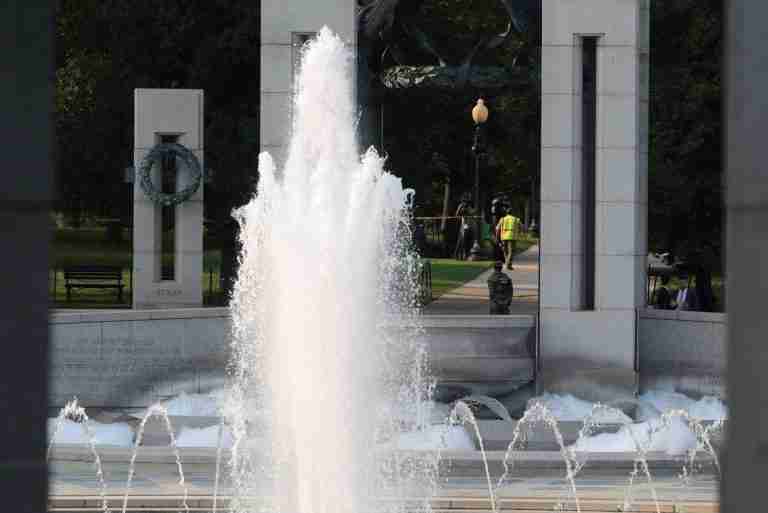
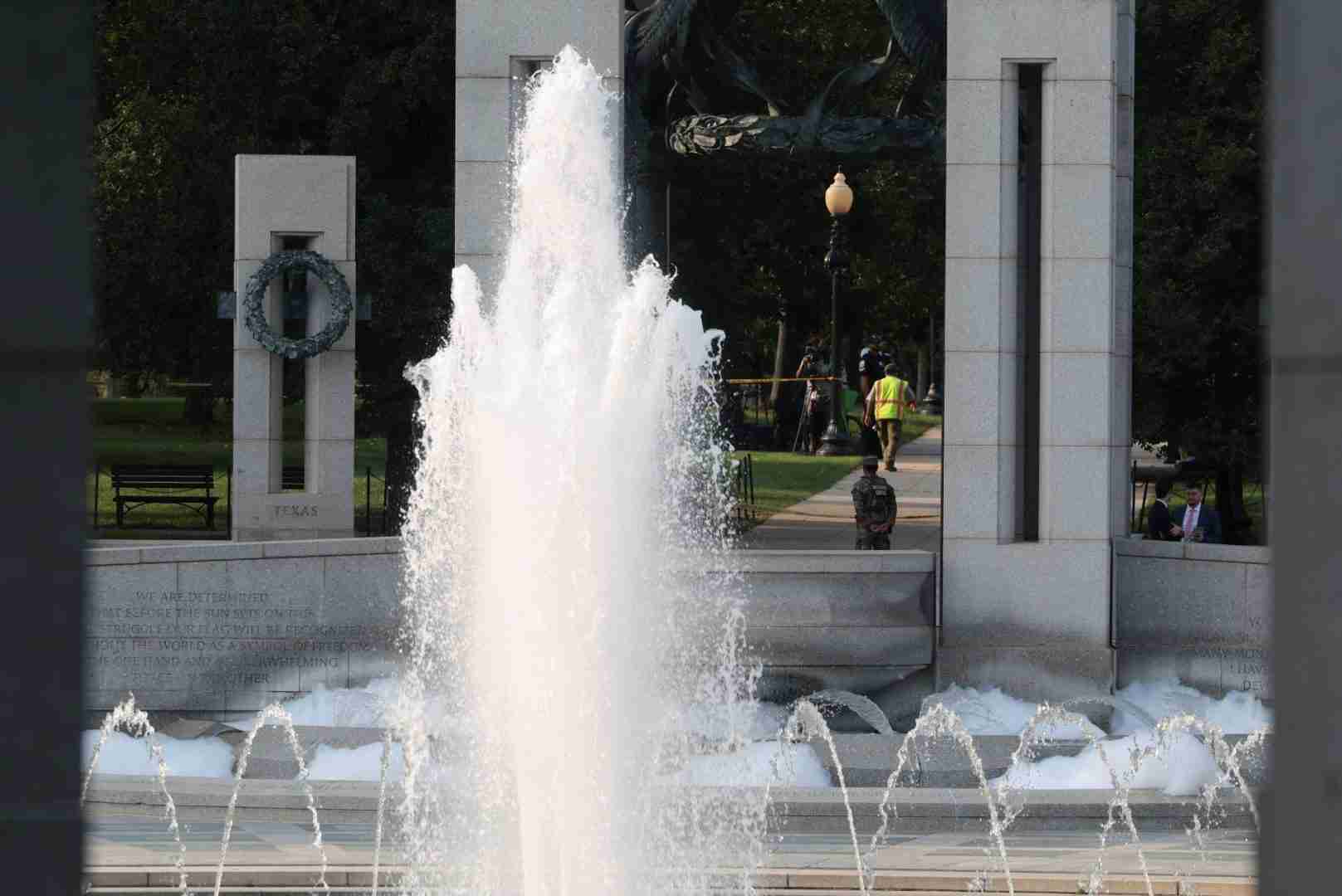
The World War Two memorial was vandalized with bubbly soap and graffiti on Thursday. The fountain bubbled over with suds and the words “Clean hands Dirty $” were painted on one surface, splattering the area with red and green paint.

In videos posted to her Facebook account, Farris records herself spray painting the memorial and asking why she has not been arrested. She describes herself on the social media platform as a “pirate captain” who is “panhandling for America.”

The criminal complaint filed Friday quotes Farris as saying,

“Someone has to make choices that are different and I am accountable for my actions,” she said. “I am going to make these choices today and I will step foot into the courtroom and I will wait to be arrested  …. Our government needs to be accountable for their choices too.”

In later videos posted after the incident, she appears disheveled and crying, saying she knows she upset people by her actions but was trying to get help for herself.

According to the complaint, a witness took a photo of Farris spray painting the memorial, an image that was circulated among U.S. Park Police.

An officer recognized Farris as someone they had arrested three days earlier for unlawfully camping on federal property a few blocks from the memorial.

Law enforcement found a white sign with painted letters in a nearby trash can with paint that appeared to match the paint that was used on the memorial. 

Along with her statement on X, Pirro posted photos of a woman who appears to be Farris holding a can close to the red paint on the memorial.

Two of Farris’ family members contacted by Reuters declined to comment.

TRUMP CONDEMNS INCIDENT

Pirro has recently drawn President Donald Trump’s anger for dropping charges against four people accused of vandalizing the Reflecting Pool after Trump oversaw renovations of the pool.

The pool’s condition soon deteriorated, with a peeling liner and algae blooms. Pirro blamed that deterioration on faulty installation in dropping the vandalism charges. 

Trump said in response that Pirro had “folded like an umbrella.” 

Trump appeared to link the Reflecting Pool damage to the World War Two memorial in a post on social media on Friday, calling it an insult to Americans who had died in the conflict.

“First the Reflecting Pool, now this,” he wrote. “We are on their trail! Where do these animals come from???”

Reporting by Ismail Shakil and Dan Rosenzweig-Ziff; editing by Michelle Nichols and Sanjeev Miglani

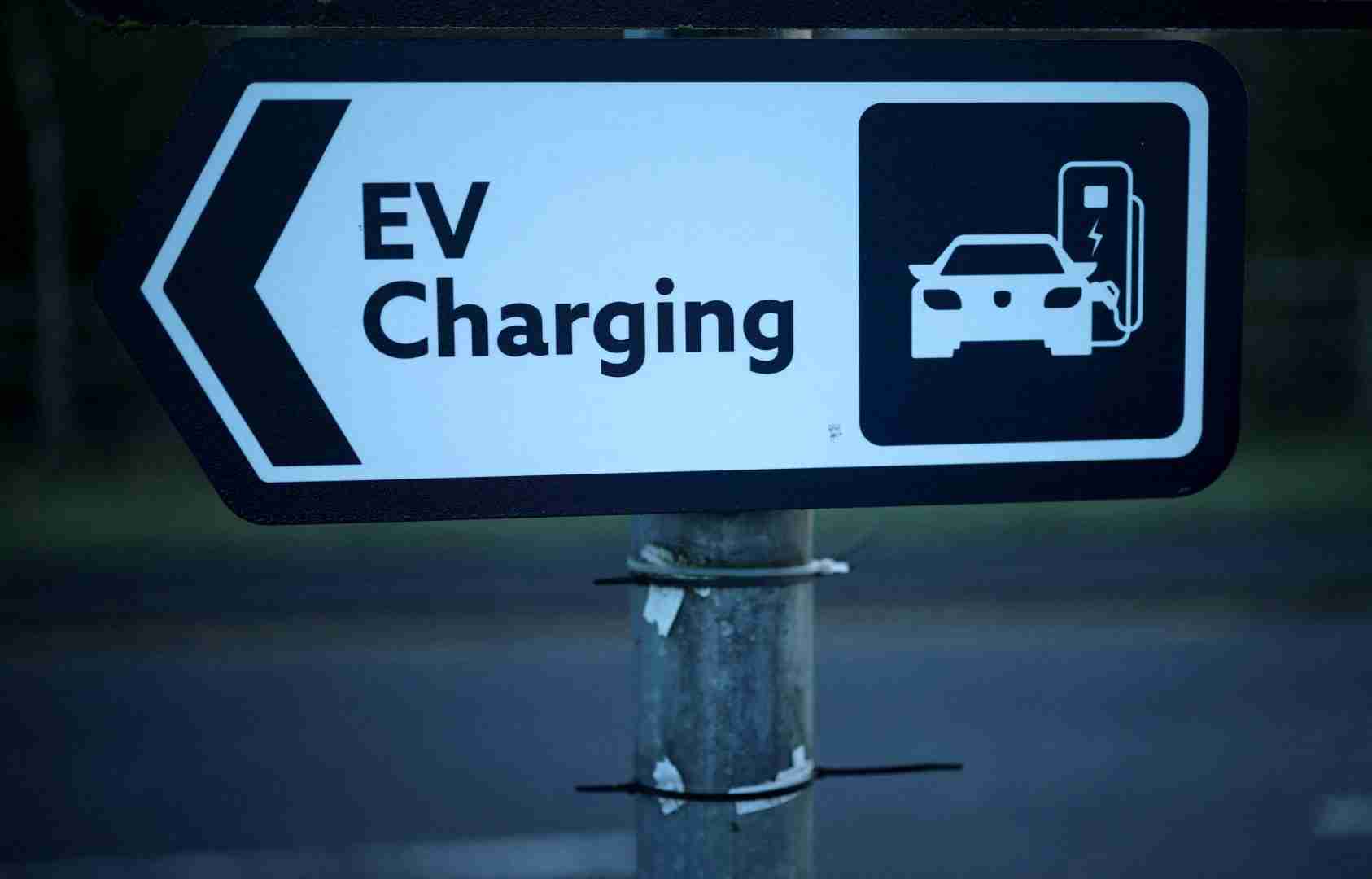
Britain considers easing 2030 zero-emission vehicle targets

The mandate, introduced in 2024, requires carmakers to ensure a rising proportion of their annual sales are zero-emission vehicles, with EVs accounting for 33% of new car sales in 2026, 80% in 2030 and 100% by 2035

International News via Reuters:

Britain on Friday set out a range of options that could ease the pressure on car manufacturers to switch new sales to zero-emission vehicles, launching a review of the existing targets which gradually phase out new petrol and diesel cars.

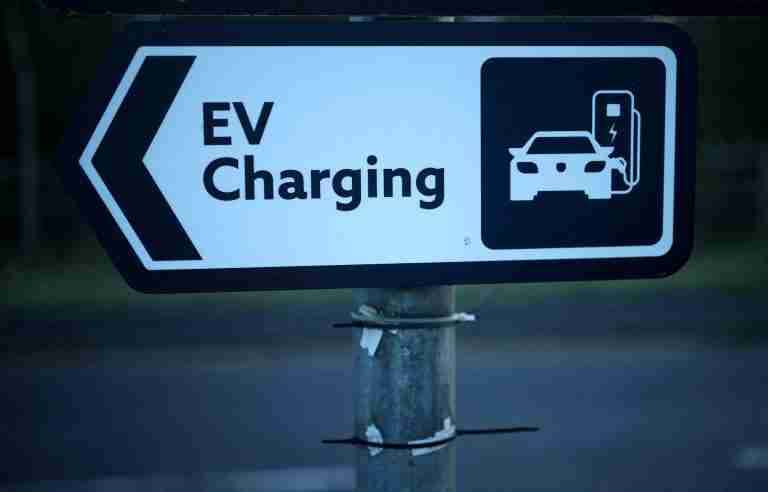
The mandate, introduced in 2024, requires carmakers to ensure a rising proportion of their annual sales are zero-emission vehicles, with EVs accounting for 33% of new car sales in 2026, 80% in 2030 and 100% by 2035.

The policy is designed to accelerate the industry’s transition to electric vehicles by imposing fines on manufacturers that miss the targets. Carmakers have argued, however, that supply-chain disruptions and insufficient consumer demand are making the requirements difficult to meet.

A government consultation opened on Friday seeking views from the industry on four alternative pathways for the targets. Three would retain the 2035 endpoint but cut the 2030 target to as low as 50%. A fourth would keep the existing path but introduce new flexibility to help manufacturers comply.

“In the context of challenging and complex global economic conditions, including supply chain disruption and tariff and trade uncertainty, the UK is reviewing targets to ensure they remain pro-business and grounded in the real world,” a Department for Transport statement said.

The Society of Motor Manufacturers and Traders has previously argued for an urgent review of the whole mandate, saying higher energy prices, incomplete charging infrastructure and weak consumer confidence were holding back demand despite manufacturers offering substantial discounts on EVs.

The Labour government, which inherited the ZEV policy from the Conservative Party when it came to power in 2024, last year introduced a number of technical changes that made it easier for manufacturers to meet the targets.

Battery EVs accounted for 27.4% of new car registrations in July, data published earlier this month by industry body New AutoMotive showed. The body said this showed sales were ahead of the level required for compliance once existing flexibilities within the mandate were taken into account.

Reporting by William James, Editing by William Maclean

France’s top court blocks social media ban for under-15s

The bill would have barred children younger ​than 15 from opening a social media account from ​September 1

International News via Reuters:

France’s top court on Friday blocked a bill banning social media access for under-15s, saying it infringed upon freedom of expression and delivering a setback for President Emmanuel Macron, who asked his government to rewrite the legislation.

The bill would have barred children younger ​than 15 from opening a social media account from ​September 1. Accounts already open would be closed within four months by social media platforms, which would also need to use age verification approved by the French privacy regulator.

But France’s Constitutional Council found that the bill, while requiring everyone to give proof of age, failed “to specify the conditions and limits” under which it should be provided, as well as infringing on freedoms and privacy.

“The Council holds that the contested provisions, on the one hand, disproportionately infringe upon the freedom of expression and communication and, on the other, fail to provide the legal safeguards necessary to ensure the right to respect for private life,” it said.

French lawmakers had approved the bill in July, becoming the first in Europe to follow Australia, whose world-first ban barred access to platforms including Facebook, Snapchat, TikTok and YouTube for under-16s in December. Lawmakers there are considering stricter penalties after data showed mixed success.

Countries around the globe, including China, the United Arab Emirates and Turkey, have either instituted measures intended to curtail or bar access to social media for young people, or have said they were planning them.

The European Union has said it was planning to seek stronger protections for children from harmful social media features.

Social media companies generally oppose blanket bans, saying they have measures already in place to protect younger users, including age restrictions, though they have also said they would comply with ​government bans. Google, Meta, Snap and TikTok did not immediately respond to requests for comment.

Macron, who in April urged teenagers to turn off their devices and read in order to become better citizens, has ordered Prime Minister Sebastien Lecornu to rework the draft legislation to take the Constitutional Council’s concerns into account, the Elysee said in a statement.

The Elysee said Macron was determined for the reform to take effect before spring 2027, when France holds a presidential election. Macron cannot run for a third term.

Reporting by Elizabeth Pineau and Sudip Kar-Gupta; Writing by Makini Brice; editing by Richard Lough, Aidan Lewis

UK regulator bans, fines former Blue Horizon executives for false statements

The two former executives are Paul Taylor, who was CEO between 2022 and 2025, and Esmeralda Toni, who was a managing director

International News via Reuters:

The British financial regulator on Friday fined and banned two former executives of UK-based Blue Horizon Asset Management from working in financial services for falsifying information while pursuing takeovers of a bank and a football club.

Here are some details from the Financial Conduct Authority’s (FCA) decision: 

• The two former executives are Paul Taylor, who was CEO between 2022 and 2025, and Esmeralda Toni, who was a managing director.

• Taylor was fined £489,000 ($660,883), while Toni was fined £121,200.

• Taylor was found to have made misleading statements and falsified documents while attempting to acquire an undisclosed UK bank as well as the Reading Football Club. Toni knowingly helped Taylor falsify documents to the UK bank, the financial regulator said in a statement.

• Taylor falsified documents claiming to be the owner of a bond portfolio worth approximately €200 million on both occasions, the regulator said.

• During the FCA investigation, Toni denied providing misleading statements and the creation of false documents.

• Blue Horizon was one of the prospective bidders for Reading Football Club, which was ultimately bought by U.S.-based sports investment firm Redwood Holdings.

• Blue Horizon Asset Management did not immediately respond to a Reuters email requesting comment; Taylor and Toni could not be reached for comment.

($1 = 0.7399 pounds)

Reporting by Simone Lobo in Bengaluru; Editing by Harikrishnan Nair

Policy proposed to ‘promote fair competition’

The proposed Competition Act 2026 is online at forum.gov.bm, accompanied by a public consultation period from now until September 15th

New laws to govern competition among grocery stores, healthcare providers and more are being proposed – and the Regulatory Authority will administer it.

Government wants your feedback on the policy, which it sets in the context of recent corporate mergers in the grocery and retail sectors.

WATCH the report above. Press release and policy document below.


Government of Bermuda Press Release:

The Ministry of Home Affairs is advancing the Government’s commitment made in the 2024 and 2025 Throne Speeches, to introduce modern competition legislation in Bermuda. As part of this work, the Ministry is consulting the public and stakeholders on the Government’s policy on Market Fairness in Bermuda.

The policy provides the foundation for a proposed Competition Act 2026. The proposed law would establish rules to promote fair competition, address harmful business conduct, and provide for the review of certain mergers and acquisitions in essential sectors. Four principles govern the design: proportionality to Bermuda’s economic scale, a focus on harmful conduct rather than market position itself, priority attention to seven essential sectors, and transparency through the publication of key regulatory decisions and findings.

The Government’s core objective is markets that work fairly for the consumers and businesses that depend on them. The framework would address anti-competitive harm that adds avoidable pressure to the cost of living, while recognising the realities of operating in a small island economy.

The consultation is on the policy. The views received will shape the drafting of the Competition Act 2026 before the Government brings legislation to the Legislature. The Ministry has engaged private sector project managers to support stakeholder engagement and the collection and analysis of feedback, and to keep the process transparent, consistent, and methodologically sound which will advance in the coming weeks. 

Minister of Home Affairs, the Hon. Alexa N. H. Lightbourne, JP, MP, said,“Competition law is about markets that work fairly for the people and businesses that depend on them. In an economy of our size some concentration is inevitable. The question is whether the rules make that concentration serve consumers. This consultation asks Bermudians to help settle those rules. The views you share will shape the legislation the Government brings to the Legislature.”

Through the consultation, the Ministry will hear from those the framework would affect, including consumers and members of the public, small, medium-sized, and large businesses, industry and professional associations, legal and regulatory bodies, and other identified groups.

The consultative policy document is available online at https://forum.gov.bm/en/projects/promoting-competition-and-market-fairness-in-bermuda.

The consultation remains open until 15 September 2026. All interested persons are encouraged to review the policy document and share their views on any aspect of the proposals.

Legendary reggae singer Sanchez set to take the stage in Bermuda

Reggae fans are in for a special night this Saturday, August 15th, as legendary Jamaican singer Sanchez takes the stage at the National Sports Centre.

With a catalogue spanning more than three decades, Sanchez has earned fans around the world with his unmistakable voice and timeless reggae hits — and this weekend, Bermuda audiences will get the chance to experience those classics performed live with a full band.

Bermuda Broadcasting’s Radio and Programme Director Marcus George sat down with Kendelle Webb, CEO of Envy Productions, to talk about what audiences can expect, why this is a show reggae lovers won’t want to miss, and why now is the time to secure your tickets.