Thursday, November 5, 2026
Home Blog Page 140

Eight public service scholarships announced

The Government has awarded eight Public Service Scholarships of up to $30,000 per year to support Bermudians pursuing studies in disciplines critical to the future of the Public Service.

The scholarships were presented during the 2026 Public Service Scholarship Awards Programme, where the Minister of the Cabinet Office, the Hon. Dr. Emilygail Dill, JP, MP, congratulated this year’s recipients and reaffirmed the Government’s commitment to investing in Bermuda’s future public service leaders.

Addressing scholarship recipients, their families, and guests, Minister Dill highlighted the importance of the Public Service Scholarship Awards Programme in developing a highly skilled, innovative, and resilient Public Service equipped to meet Bermuda’s future needs.

The Minister noted that the programme provides Bermudians with opportunities to pursue studies in disciplines that support the future needs of the Public Service while helping to build a strong pipeline of local talent and specialised expertise.

Minister Dill also highlighted that the scholarships extend beyond financial assistance by providing recipients with internship and work placement opportunities within Government departments and, where appropriate, external partner organisations. These experiences allow students to develop professional skills while gaining valuable insight into public service and its role in improving the lives of Bermuda’s residents.

Congratulating the recipients on their achievement, Minister Dill said, “Today, we are not simply recognising your academic achievements; we are expressing our confidence in your potential to become our future leaders, innovators, and public servants. Each of you has accepted both an extraordinary opportunity and an important responsibility.”

The Minister encouraged recipients to embrace every opportunity throughout their studies, recognising that the knowledge, skills, and experience they gain will help shape Bermuda’s future.

The 2026 Public Service Scholarship recipients are:

  • A’Naije Keesee-Ming – Master of Arts in Business Management & Economics, University of Glasgow
  • Andreaz Glasgow – Doctor of Philosophy, University of Gloucestershire
  • Dr. Attiya Talbot – Master of Science in Public Health, University of London
  • Ca’Mya Rose – Bachelor of Science, Howard University
  • J’Hordon Emery – Doctor of Medicine, St. George’s University
  • Kianya Rabone – Master of Science, University of Derby
  • Nicholas Terra – Law, University of Leeds
  • Zajae Lee – Doctor of Dental Surgery, Howard University

This year’s recipients will pursue studies in business management, economics, law, medicine, dentistry, public health, science, and research, reflecting the diverse expertise needed to strengthen Bermuda’s Public Service and support the Island’s future workforce needs.

Minister Dill also recognised the parents, guardians, teachers, mentors, family members, and friends whose encouragement and support helped the recipients reach this important milestone.

In closing, Minister Dill reaffirmed the Government’s commitment to investing in Bermudians and strengthening the Public Service through education and workforce development.

Minister Dill said, “This programme is about far more than scholarships. It is about creating opportunities for Bermudians to fulfil their potential. It is about strengthening our Public Service and developing the homegrown talent needed to lead Bermuda into the future with excellence, integrity, and purpose.”

The Minister concluded by encouraging recipients to pursue their studies with confidence and ambition.

Minister Dill said, “Dream boldly, study diligently, embrace every opportunity, and never lose sight of the difference you can make. Bermuda is counting on you, and we look forward to the day when you return as valued colleagues and leaders in our Public Service.”


Cyclosporiasis cases in Michigan climb to over 12,400, health officials say

Michigan has reported the first two deaths associated with the outbreak, saying both individuals had significant underlying health conditions

International News via Reuters:

Michigan health officials reported 12,485 cases linked to a cyclosporiasis outbreak on Thursday, up 267 cases from its last update a day earlier.

Michigan has reported the first two deaths associated with the outbreak, saying both individuals had significant underlying health conditions.

Here are some details:

• The state said the two Michigan cases became ill before the voluntary recall of iceberg lettuce announced by the U.S. Food and Drug Administration on July 17.

• The outbreak in Michigan has resulted in 279 hospitalizations as of August 6, according to the state health department’s latest update.

• Cases of the intestinal infection caused by the cyclospora parasite, which can cause diarrhea, nausea and other gastrointestinal symptoms, have risen steadily across the United States in recent months, according to the U.S. Centers for Disease Control and Prevention.

• An FDA investigation has linked the multistate outbreak, which has spread to 15 states to iceberg lettuce served at Taco Bell restaurants and sourced from privately held Taylor Farms operations in central Mexico, but authorities are still looking for other potential sources.

• The total case count associated with this multistate outbreak is now 6,358 illnesses reported from 15 states with at least 278 hospitalizations, CDC and FDA said. The agencies’ surveillance lags state reporting by several weeks.

• Consumers in the U.S. have been steering clear of some restaurant chains and buying less lettuce in grocery stores as a ​multistate outbreak of a parasitic disease has fueled confusion over what is safe to eat.

• Cyclosporiasis can be contracted by consuming food, typically raw fruits and vegetables, or water contaminated with feces.

Reporting by Siddhi Mahatole and Christy Santhosh in Bengaluru; EDiting by Tasim Zahid

Mexican jalapenos tied to Salmonella outbreak in 27 US states

Both the Centers for Disease Control and Prevention (CDC) and the Food and Drug Administration (FDA) said 36 hospitalizations and no deaths have been reported, while the investigation remains ongoing

International News via Reuters:

U.S. health officials are investigating a Salmonella outbreak linked to Mexican jalapeno peppers that has sickened 345 people in 27 states, prompting supplier Coast Citrus Distributors to recall peppers sent to restaurants including Chipotle Mexican Grill and QDOBA.

Both the Centers for Disease Control and Prevention (CDC) and the Food and Drug Administration (FDA) said 36 hospitalizations and no deaths have been reported, while the investigation remains ongoing.

FDA said illnesses began between June 19 and July 20. Salmonella infections can cause diarrhea, fever, and stomach cramps and can be particularly severe in young children, older adults, and people with weakened immune systems.

The outbreak comes amid heightened scrutiny of food safety in the restaurant industry following a recent U.S. cyclosporiasis outbreak that prompted investigations by health authorities and renewed concerns about produce supply chains.

The FDA and the CDC linked that outbreak to lettuce served at Yum Brands’ Taco Bell restaurants and later identified Taylor Farms’ operations in central Mexico as the source of the lettuce. On Wednesday, the agencies expanded the cyclosporiasis probe to 15 U.S. states.

Chipotle previously faced a series of foodborne illness outbreaks that hurt sales and led the burrito chain to adopt stricter food safety procedures.

OUTBREAK LINKED TO JALAPENOS FROM SINALOA

Health agencies linked the outbreak to jalapeno peppers supplied by a common grower in Sinaloa, Mexico, and distributed in the U.S. by Coast Citrus Distributors. 

The company has agreed to recall the remaining product and is notifying affected customers, the FDA said.

The U.S. investigation identified restaurants including Chipotle and QDOBA, a Mexican-style restaurant chain, that had received jalapenos imported by Coast Citrus Distributors.

Chipotle has since switched jalapeno suppliers for its restaurants beginning July 20, while QDOBA stopped using jalapenos on July 28 and is no longer serving them, the FDA said.

Coast Citrus, when contacted by Reuters, said it did not have an immediate comment.

Chipotle shares fell more than 8% on Tuesday after the company said it had removed jalapenos from restaurants in Minnesota and other locations that received the product.

“FDA does not consider there to be a current ongoing risk from these establishments to consumers in this outbreak,” the FDA said in a statement.

The FDA said Coast Citrus does not appear to have supplied jalapenos directly to grocery stores and advised consumers and businesses not to eat, sell, or serve recalled peppers from Sinaloa.

Reporting by Abu Sultan in Bengaluru and Mrinmay Dey in Mexico City, Additional reporting by Fabiola Arámburo in Mexico City; Editing by Shreya Biswas and Rashmi Aich

Fire destroys at least 60 hectares at Indonesia’s Mount Bromo park, agency says

Mount Bromo in the province of East Java is one of several active volcanoes in Indonesia and is popular with tourists

International News via Reuters:

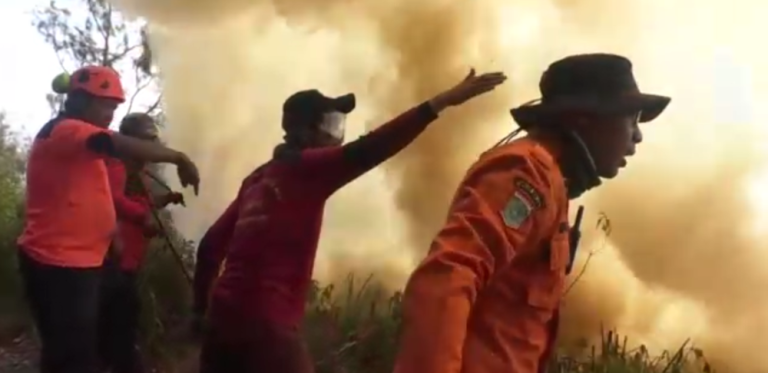
A fire has been raging in Indonesia’s Mount Bromo national park since Monday, destroying at least 60 hectares of land, the country’s disaster mitigation agency said on Thursday.

Mount Bromo in the province of East Java is one of several active volcanoes in Indonesia and is popular with tourists.

Here are the details:

• The fire has raged since Monday and burned at least 60 hectares (148 acres) of the area, the agency said.

• Disaster authorities have dispatched a fire truck, a water tank, and a drone to spray water and identify hotspots, the agency said.

• A steep contour of an active hotspot has made it harder for authorities to extinguish the fire, the agency said, adding that heavy winds could spread the fire farther.

• The cause of the fire and casualties are unclear. Footage taken by Reuters as the fires burned showed charred land, greying foliage and significant tree damage.

• Authorities have closed parts of the park to tourists since Monday, the agency said.

Reporting by Prasto Wardoyo in Probolinggo; Writing by Stanley Widianto; Editing by David Stanway

Afghan accused of killing Scottish woman in Athens to await trial in jail

The man, accused of manslaughter, robbery and illegal gun possession, exercised his right to silence and did not respond to the charges, awaiting other evidence

International News via Reuters:

A Greek court ordered on Thursday that a 26-year-old Afghan boxer accused of killing a Scottish woman whose body was found in a suitcase in Athens be held in jail pending trial, legal and police sources said.

The man, accused of manslaughter, robbery and illegal gun possession, exercised his right to silence and did not respond to the charges, awaiting other evidence, his lawyer said.

The body of Elisabeth Jane Ross, a 38-year-old certified psychotherapist and volunteer aid worker, was found on July 18 in a suitcase on an abandoned construction site after she had been missing for three days.

The suspect, who police officials describe as a professional boxer from Afghanistan who was granted asylum in Greece, was arrested on Sunday.

He denied killing the woman during the initial questioning by detectives, two police officials told Reuters this week. 

He told police that he found Ross’ body in an apartment bathroom, panicked, placed it in a suitcase and tried to dispose of it, the officials said.

A post-mortem examination could not determine the cause of death due to decomposition but did not rule out asphyxiation, one of the officials said.

The suspect’s lawyer Christos Erdas said in a statement that his client exercised his right to silence and requested documents and evidence related to her personal belongings that emerged during the police probe. The coroner’s report and toxicological test results have not yet been included in the case file, according to Erdas.

“The examination of the body did not show any injury and an evident cause of death is totally missing,” he said.

“His stance before the prosecuting and investigating authorities does not constitute a stance of refusal, but on the contrary, it is a stance of reservation so that he responds comprehensively when the case file is complete,” Erdas added.

Reporting by Renee Maltezou, writing by Ivana Sekularac; Editing by Edward McAllister, Hugh Lawson and Andrei Khalip

Students share input on national energy policy

On June 8, 2026, the Department of Energy welcomed Neriah Bean and Benjamin Crofton for its inaugural eight-week internship under its Energy Scholarship and Bursary Programme.

The internship was designed to immerse the students in the Department’s work and provide practical experience across the areas that shape Bermuda’s energy sector.

The programme forms part of the Ministry of Home Affairs’ broader commitment to preparing Bermuda for its energy future by investing in Bermudian talent. It aims to build local expertise and experience while supporting greater continuity and long-term sustainability within the sector.

During the internship, Neriah and Benjamin gained exposure to the Department’s responsibilities across electricity, telecommunications, broadcasting, and space and satellite operations. They also represented the Department at the Bermuda Government’s recent“Reimagining Public Service” Career Fair, engaging with attendees and sharing their experiences as interns.

As part of their policy exposure, the students reviewed the National Electricity Sector Policy and provided feedback from their perspectives as young Bermudians.

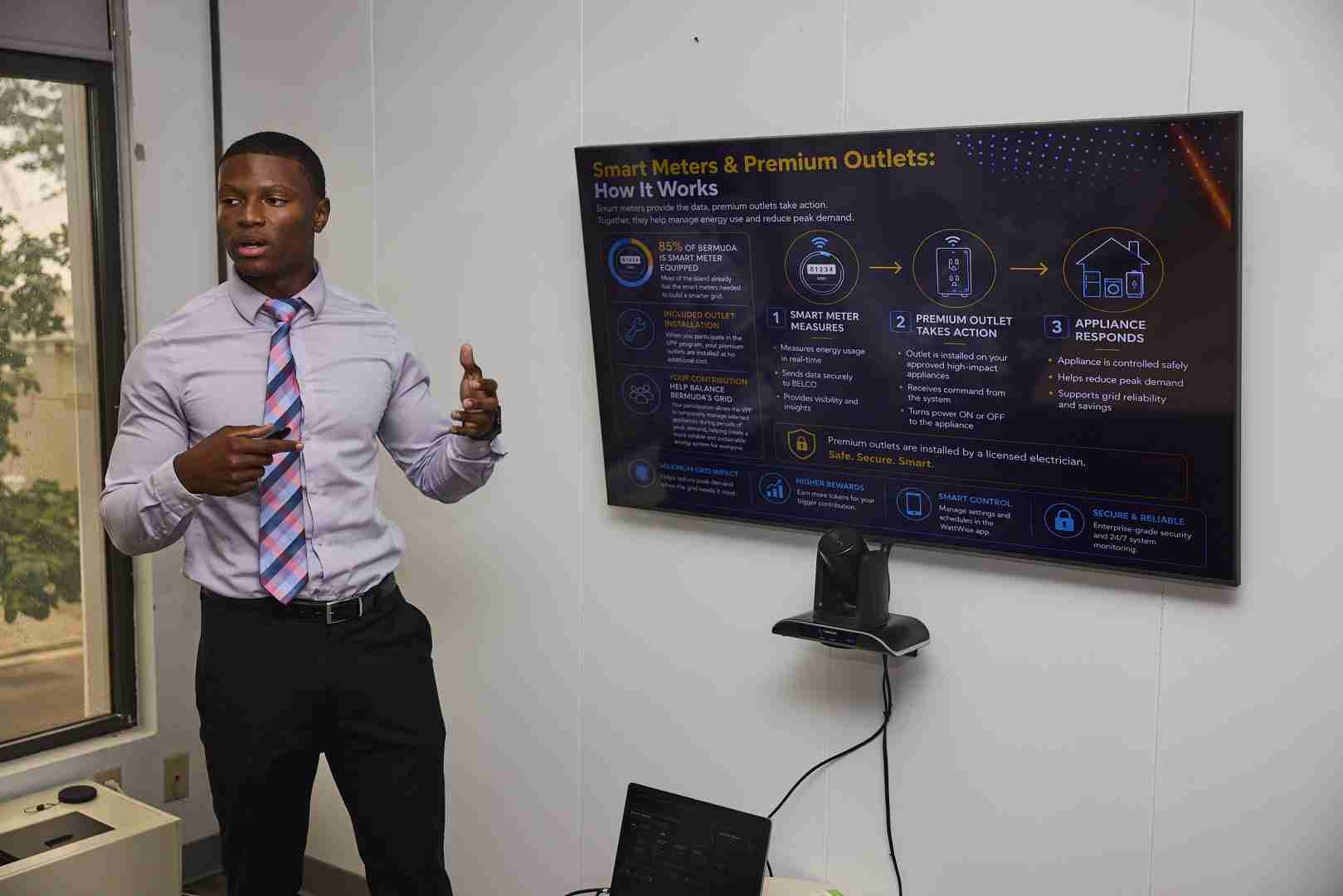
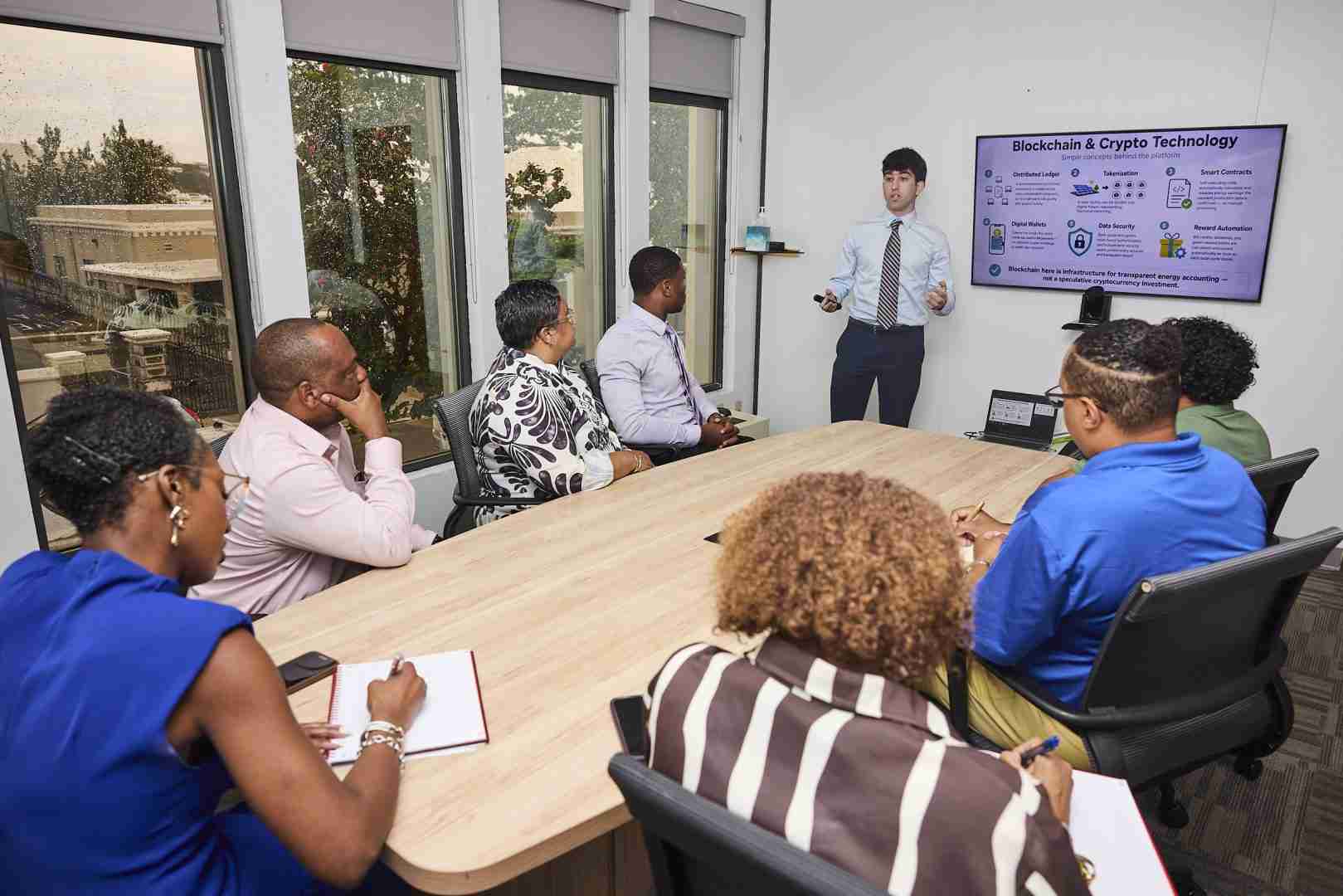
A major component of the internship challenged each student to research and develop an energy concept that could be integrated with digital finance solutions to explore innovative approaches to reducing energy costs. Each intern was provided with a digital wallet containing $100 USDC, a stablecoin, giving them practical exposure to digital finance and decentralized finance (DeFi) investment vehicles. These funds were intended to provide hands-on experience with digital finance and DeFi while encouraging them to continue their journey in digital finance throughout their university studies and, it is hoped into their future careers.

The students presented their proposals to the Minister of Home Affairs, the Hon. Alexa Lightbourne, JP, MP, Director of the Department of Energy, Adrian Dill, Ministry of Home Affairs Permanent Secretary, Valerie Robinson-James and other Ministry representatives.

Minister Lightbourne said, “Preparing Bermuda for its energy future also means preparing Bermudians to lead it. This internship gave Neriah and Benjamin the opportunity to examine policy, explore emerging technologies and bring their perspectives to the challenges and opportunities facing our energy sector. Our young people have an important role in shaping what comes next, and by investing in their knowledge, skills and experience today, we are building the Bermudian talent needed to strengthen and sustain the sector for the future.”

The students’ work will extend beyond the internship, with their proposals to be presented to the Energy Policy Steering Committee for consideration.

The eight-week internship concluded on 29 July, with both students gaining practical experience to complement their studies while providing the Department with valuable youth perspectives on Bermuda’s energy future.

The Intention Effect | The Hidden Power of Community

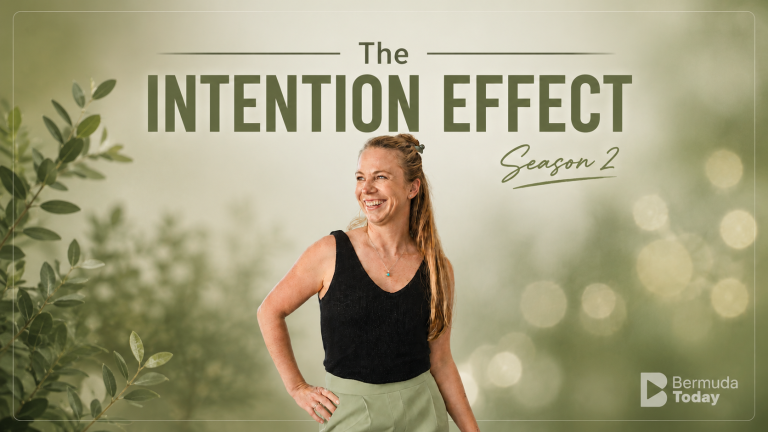
In the first episode of season 2, Shara explores the vital role of community and social connections in health and longevity. Shara shares compelling research and personal stories to highlight how meaningful human relationships are essential for a healthier, longer life.

Budapest dims historic landmarks to save energy during heatwave

City halls, factories and some churches across neighbouring Romania were also dimming lights, halting production and rationing electricity as authorities try to keep the country’s only working nuclear reactor running during a drought

International News via Reuters:

Hungary has switched off decorative lighting on Budapest’s parliament building, the Buda Castle and Chain Bridge to save energy in a heatwave, disappointing some tourists but in a move welcomed by residents — and swarming mayflies.

City halls, factories and some churches across neighbouring Romania were also dimming lights, halting production and rationing electricity as authorities try to keep the country’s only working nuclear reactor running during a drought.

A prolonged heatwave and record-low water levels on the Danube forced Hungary to largely shut down its sole nuclear plant, which uses river water for cooling, stretching power supply capacity to its limits over the past week.

On Thursday, temperatures were scaling 40 degrees Celsius to 42 C (104 degrees Fahrenheit to 108 F), well above average for August.

“I’m very disappointed because I come to Budapest maybe once in a lifetime and I climbed up the hill yesterday and I was waiting for the building to be lit,” Silke Schneiders, a German tourist, said. “I was going on a river cruise as well by night, and all the lights and the bridge were pitch black.”

But many Hungarians said it was the right decision as they were having to cut power consumption after a government appeal to ease pressure on the grid.

“Obviously, it sucks, but I can appreciate and be grateful for what I have here,” said tourist Benjamin Thomas Tucker.

Romania’s capital city Bucharest dimmed street lighting by a third on Wednesday evening and switched off lighting at night at landmark buildings and museums to save power. Other cities are enforcing similar measures.

“It seems we’ve reached this point due to poor decisions, given the climate crisis we’ve faced for decades,” said Mircea, 25, a food engineer, in front of the dark city hall.

However, Budapest’s mayflies, a protected species swarming in huge numbers in the summer, would benefit from the darkness, said Gyorgy Kriska, associate professor at Eotvos Lorand University.

“Light pollution is dangerous for mayflies as they are drawn to the lamps and light at the riverbank. Switching off the lights is the best way to protect them,” Kriska said.

Hundreds of thousands, sometimes millions, of mayflies emerge from the water and engage in a frantic rush to reproduce before they die within just a few hours.

Writing by Krisztina Than, Reporting by Anita Komuves and Daniel Weiner, Krisztina Fenyo in Budapest, Octav Ganea and Luiza Ilie in Bucharest; Editing by Janet Lawrence

Pressured by Tesla, European regulators keep ‘Full Self-Driving’ safety data secret

Four months ago, the Netherlands approved Tesla’s Full Self-Driving (FSD) system and has since then advocated for its adoption across the EU

International News via Reuters:

Four months ago, the Netherlands approved Tesla’s Full Self-Driving (FSD) system and has since then advocated for its adoption across the EU.

But Dutch road regulator RDW won’t tell the public why it concluded the driver-assistance system is safe or how it evaluated the technology, which for years has faced regulatory investigations and lawsuits over FSD-involved crashes in the United States.

Releasing such details would violate Tesla’s commercial secrets, the regulator told Reuters, echoing the automaker’s own demands on the regulator for confidentiality. Since late 2024, Tesla has pressed RDW to keep documentation about the FSD safety review secret, according to previously unreported email correspondence between the Dutch regulator and Tesla, obtained by Reuters through a public-records request.

Tesla has called FSD approval key to boosting sales in Europe, where it’s trying to regain market share lost in recent years and faces fierce competition from Chinese EVs.

European regulators have historically been more cautious about automated driving than the United States, requiring automakers to get approval before deploying driver-assistance systems such as FSD.

Tesla CEO Elon Musk has repeatedly said FSD, which requires a human driver to pay strict attention, will soon be fully autonomous. A Reuters investigation in May found that Tesla’s self-published FSD safety statistics are highly exaggerated and the company is nowhere near releasing self-driving technology at scale.

Reuters reported in June that Tesla had shared inflated FSD-safety data from the United States with several EU regulators including RDW as it sought approval. RDW said it did not rely on Tesla’s statistics and did its own “extensive testing” on closed tracks and public roads, in various conditions, without specifying how it measured performance or safety.

European vehicle-safety law experts say RDW is withholding far too much information under the guise of trade secrets, potentially at the expense of public safety. Details on RDW’s testing and Tesla’s performance are matters of broad public interest, said Oliver Carsten, a transportation-safety professor at the University of Leeds who has been involved in crafting European automated-driving regulations.

“I don’t see any reason why that couldn’t be public,” he said.

Frank Mutze, policy and project manager for the advocacy group European Transport Safety Council, said the public is left to trust that authorities “have done their homework, which of course isn’t good enough for us.”

RDW declined to say how it evaluated FSD safety testing or to release documents on the testing, citing an “obligation to protect manufacturer-specific information.” The agency did not explain how details of its testing or conclusions about the system’s performance could reveal commercially sensitive information.

Tesla did not respond to requests for comment.

TESLA DEMANDS FOR SECRECY

RDW announced in April that it had concluded FSD is “safer than other driver assistance systems.” In June, RDW said it is “at least as safe as other driver assistance systems.” The agency offered no data or evidence supporting those statements.

RDW is now seeking EU approval for FSD, which requires a “yes” vote from representatives of 55% of member states that make up 65% of the bloc’s population. A vote could happen in October.

Tesla made secrecy a priority throughout its application, according to correspondence between the automaker and the regulator beginning in late 2024.

In one example from April 2025, a Tesla representative sought to confirm RDW would “never” release a particular document and asked how it would ensure it was “withheld from public disclosure.” Tesla, the employee said, could not provide more information to RDW “until this matter is clarified.”

RDW told Tesla that disclosure under public records law shouldn’t be a problem because “manufacturers always have the option to request an exemption from disclosing certain information.”

RDW told Reuters it has not withheld information at Tesla’s request but rather makes its own decisions on how to protect company trade secrets.

Tesla has a history of trying to shield information it gives regulators from public view. In the United States, it petitions federal safety regulators to redact basic details about every crash involving its driver-assistance systems.

Other European regulators, who are getting some unspecified FSD testing information from RDW, have taken a similar line on confidentiality. Regulators in six European countries including Germany, Norway and Denmark all told Reuters they could not release data on FSD testing or performance because of concerns about trade secrets. The Norwegian Public Roads Administration said it had reviewed data the Dutch provided on its assessment of FSD and that the data “is not the same as what Tesla publishes on its website,” referring to the inflated safety statistics examined in the Reuters investigation.

Tesla’s statistics claim the vehicles are safer than what’s documented in the data European regulators are reviewing, the Norwegian agency has told drivers in emails reviewed by Reuters.

European traffic-safety experts said that regulators’ insistence on confidentiality is particularly concerning given the unorthodox way Tesla is seeking FSD approval. Tesla is pursuing a special exemption from EU motor-vehicle regulations, which currently only allow hands-free automated driving systems like FSD to operate on highways and prohibit their use on more congested urban roads.

Some regulators have provided clues about their concerns. France’s transportation minister last month said the country would not approve FSD in its current form because of concerns about speeding and insufficient technology to ensure the human driver is paying attention.

Finland’s Transport and Communications Agency said the system “has been observed to often make safer decisions than a human driver” but also highlighted concerns about its operation on steep, windy roads and questioned whether drivers could safely retake control if the system makes sudden mistakes.

Reporting by Chris Kirkham and Marie Mannes; additional reporting from Toby Sterling, Christina Amann, Gilles Gillaume and Stine Jacobsen; editing by Mike Colias and Brian Thevenot.

Bosnia’s UNESCO Vjetrenica ‘wind cave’ provides heatwave relief

Vjetrenica, which means wind cave, is located in the south of Bosnia and Herzegovina, about 25 km (15 miles) north of the Adriatic town of Dubrovnik, where cruise liners in high season arrive daily with thousands of visitors

International News via Reuters:

As southern Bosnia sweltered in 40 degree Celsius (104 degrees Fahrenheit), tourists have taken shelter in the constantly cool temperatures of the UNESCO-listed Vjetrenica cave.

Vjetrenica, which means wind cave, is located in the south of Bosnia and Herzegovina, about 25 km (15 miles) north of the Adriatic town of Dubrovnik, where cruise liners in high season arrive daily with thousands of visitors.

Numbers allowed to visit the cave are limited because of the sensitivity of the environment. Its constant 11 degrees Celsius (52 F) temperature year-round has made it a refuge for biodiversity as well as for humans.

Visitor groups of a maximum of 80 at a time explore some of the 7.5 km labyrinth of dark corridors and spacious chambers, where legend says fairies used to dance all the way down to the Adriatic Sea. 

“Initially when we are entering the cave, it’s a nice wind and then it’s very cold and it does not only give a cool for your eyes but also for your body,” said Ranjithkumar Rajendran, a neurobiologist based in Germany, who visited the cave with his family.

“It’s literally like free air conditioning,” said Mila Jankovic, a young Serb living in England.

Davor Bakovic, director of the Vjetrenica public institution that manages the cave, said increasingly intense summer heatwaves had meant that more than half of last year’s 21,000 visitors to the cave arrived during the summer months. 

He also said Vjetrenica was working with scientific organisations to try to protect the biodiversity of the cave, which has been home to hundreds of organisms.

The most famous is Proteus anguinus, the European blind cave salamander that can live up to 100 years.

Reporting by Daria Sito-Sucic; editing by Barbara Lewis

South Korea province deploys drones to warn elderly farmers amid heatwave

Temperatures in the eastern province, a key farming belt, have soared as high as 41.2 degrees Celsius (106.16 degrees Fahrenheit)

International News via Reuters:

Hwang Hyun-guk, a 69-year-old farmer in South Korea, often gets engrossed in tending his pepper crop. These days, however, as the country grapples with its worst heatwave in years, drones flying overhead urge him to take breaks, cool down and work shorter hours.

The drones, equipped with loudspeakers and thermal imaging cameras, are part of measures taken by North Gyeongsang Province to protect its farmers, many of whom are elderly, and reduce heat-related illnesses.

Temperatures in the eastern province, a key farming belt, have soared as high as 41.2 degrees Celsius (106.16 degrees Fahrenheit).

South Korean President Lee Jae Myung has called the heatwave a “national disaster” and on Thursday ordered an all-out response as deaths attributed to the heat rose to 21.

The province built the drone surveillance system in partnership with the Korea Forest Service in 2023 to monitor wildlife.

Authorities began using drones for heatwave alerts last year, after officials sought to make broader use of the technology, said Hwang Han-jae, an official in the Safety and Administration Office in the provincial government.

The official drives out twice a day to fly the drones, which can travel up to 5 kilometres (3.11 miles) and reach areas that would otherwise be difficult to access. The drones broadcast warnings such as “Do not work for long hours” and “There is a heatwave alert, so be careful.”

In rural areas, local leaders broadcast heat warnings through a loudspeaker, but many farmers cannot hear the messages when in the fields, he said.

“We can also send drones to broadcast alerts to particularly concerning spots, based on what the thermal imaging camera shows us,” said Hwang.

Government data shows the province accounts for 16.7% of South Korean farming households, the highest share nationwide.

People aged 65 and older make up 59.2% of the farming households in the province.

Other South Korean regions, such as Gwangju and South Jeolla, also use drones to broadcast heatwave warnings.

Hwang, the farmer, said this year’s heatwave was worse than previous years, prompting him to cut his morning working hours from seven to five and hire two migrant workers to help. They harvest crops under umbrellas, moving on wheeled stools.

“We spend less time in the fields this year, since it’s challenging to work outdoors under the scorching temperature,” he said. “We’ve also seen a 30% decrease in crop yields compared to last year because of the heat,” he said.

Reporting by Hyeyoon Cho and Daewoung KimEditing by Ed Davies