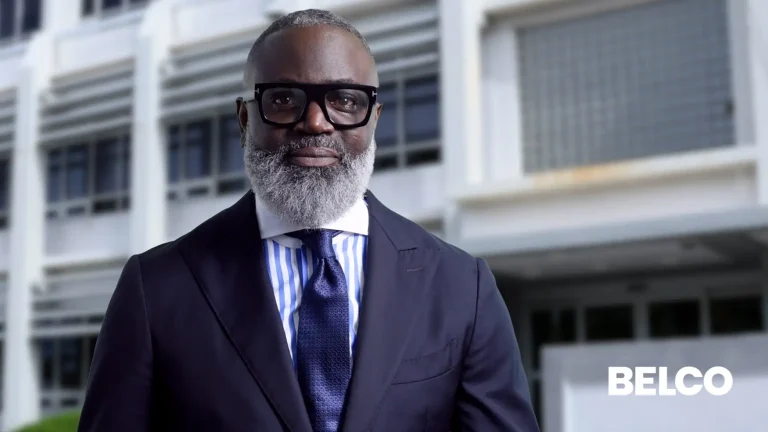
BELCO declined an interview on the findings of the Caribbean Energy Price Index, and instead sent a video response acknowledging Bermuda’s high electricity costs
BELCO President Wayne Caines has responded to the figures highlighted in Marla Dukharan’s Caribbean Energy Price Index.
BELCO declined a television interview and instead sent a video response in which Mr Caines acknowledges that the cost of electricity in Bermuda is expensive.
He says that BELCO’s customers deserve to understand why, and what is being done about it.
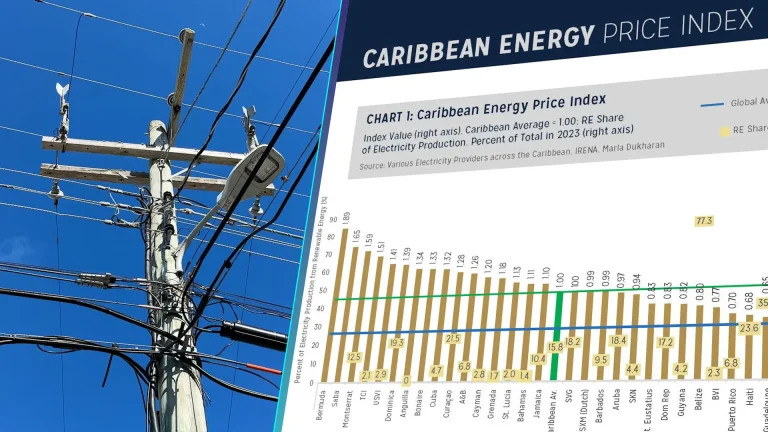
A first-of-its-kind energy price index shows Bermuda’s electricity costs surging above most of the Caribbean
We know Bermuda’s electricity costs a lot.
…but did you know just how much more we pay, compared to our neighbours to the south?
Economist Marla Dukharan has published the Caribbean Energy Price Index – a first of its kind comparison of energy costs across the 34 Caribbean jurisdictions and Bermuda.
Her data shows that our power costs surge above most of the Caribbean.
WATCH the report above. BELCO provided a response HERE.
Trump said he had asked the Department of Defense to postpone “any and all” military strikes against Iranian power plants and energy infrastructure for five days
International News via Reuters:
The dollar fell against most major currencies on Monday after U.S. President Donald Trump delayed striking Iran’s energy infrastructure following what he called productive talks between the two countries, easing near-term concerns about further supply shocks and slightly boosting risk assets.
Trump said he had asked the Department of Defense to postpone “any and all” military strikes against Iranian power plants and energy infrastructure for five days.
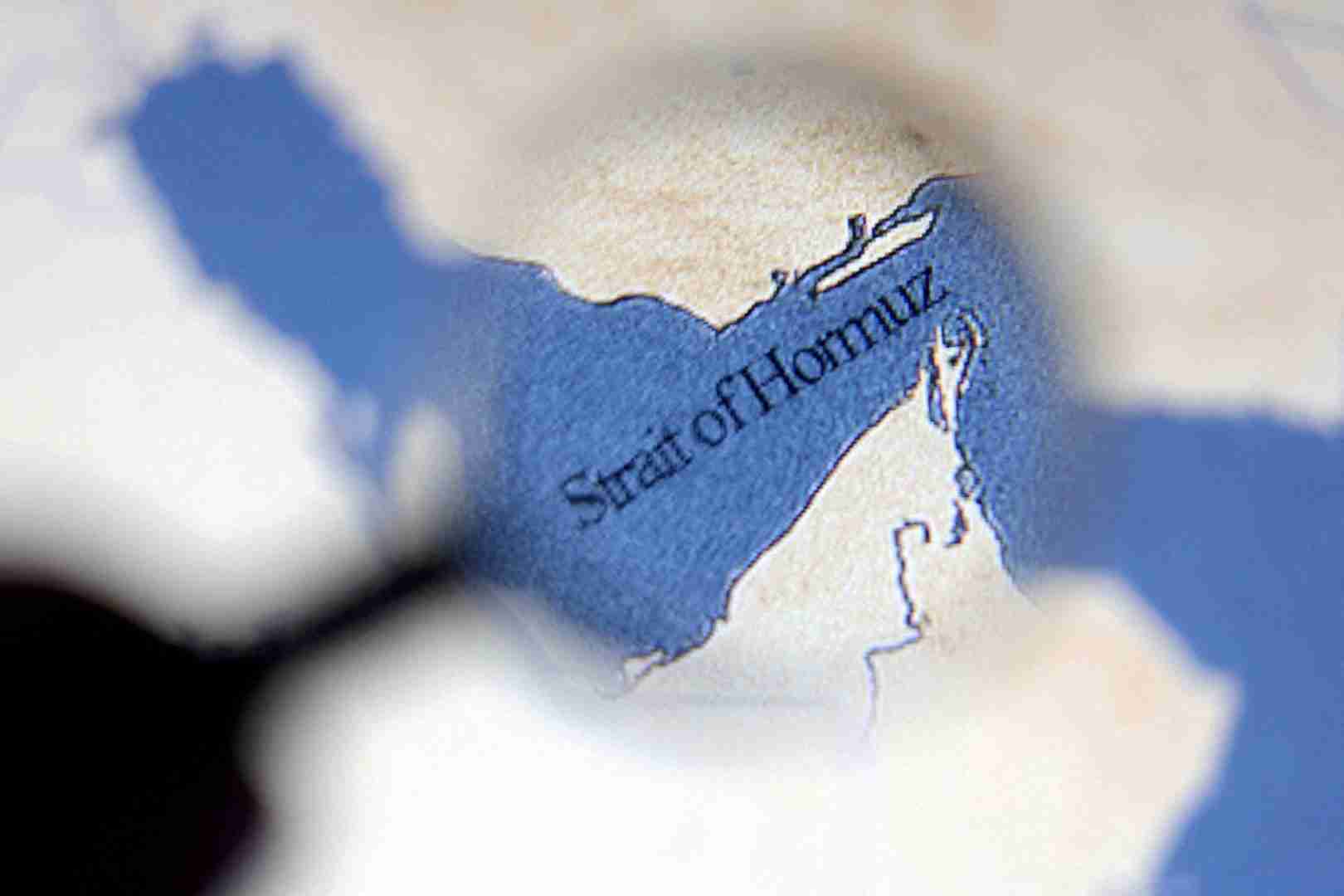
He made the announcement on Truth Social just hours before a deadline he had set for Tehran to “fully open” the Strait of Hormuz, threatening to destroy Iranian power plants in a further escalation in a conflict now in its fourth week.
Iran’s foreign ministry denied the talks shortly thereafter, adding that the country’s conditions to end the war had not changed.
“Everything seems so fleshed out that I think the market is having a hard time believing it’s complete fiction,” said Steven Englander, head of global G10 FX research and North America macro strategy at Standard Chartered in New York.
“Whether they are close to a deal as Trump laid out is a different story, but I think the market is going with the idea that there has been some sort of communication going on.”
DOLLAR FALLS AGAINST EURO, YEN AND STERLING
The dollar remained weak in afternoon trading, with the euro rising 0.4% to $1.1616. Earlier, it hit its highest since March 11.
The buck was 0.6% weaker against the yen at 158.30 yen, retreating slightly from the key 160 yen level that puts traders on alert for potential intervention from the Bank of Japan.
Meanwhile, sterling rose 0.71% to $1.3436, after hitting its highest level since March 10.
That left the dollar index, which measures the U.S. currency against a basket of peers, down 0.4% at 99.08.
On Friday, the index had notched its first weekly decline since the start of the war, as the inflationary effects of surging oil prices prompted central banks to turn hawkish, supporting other currencies.
Global stock [MKTS/GLOB] and energy markets also recovered sharply after Trump’s comments. [O/R] U.S. Treasury yields also retreated from multi‑month highs.
A reporter for the U.S. news outlet Axios said Turkey, Egypt and Pakistan had met Trump’s special envoy Steve Witkoff and, separately, Iranian Foreign Minister Abbas Araghchi.
Araghchi’s ministry said there were “initiatives” to reduce tensions, the Mehr News Agency reported.
The price of the benchmark Brent blend crude oil was down around 12% at $98.65 a barrel, after earlier falling to $96.
Elias Haddad, global head of markets strategy at Brown Brothers Harriman in London, said until there is further clarity, it is too early to call peak fear or de-escalation in the Iran conflict.
“But the market is starting to sniff out the more encouraging outlook,” Haddad said. “Assuming that we still haven’t reached de-escalation, the big risk that I see is that this energy shock morphs into a fiscal shock.”
Reporting by Laura Matthews in New York; Additional reporting by Harry Robertson in London, and Rocky Swift in Tokyo; Editing by Andrei Khalip, Aidan Lewis, Kevin Liffey and Andrea Ricci
The push to revive the deal comes amid conflict in the Middle East and heightened global trade tension as the EU looks to strengthen its position vis-a-vis the United States and China, following a deal struck with India in January
International News via Reuters:
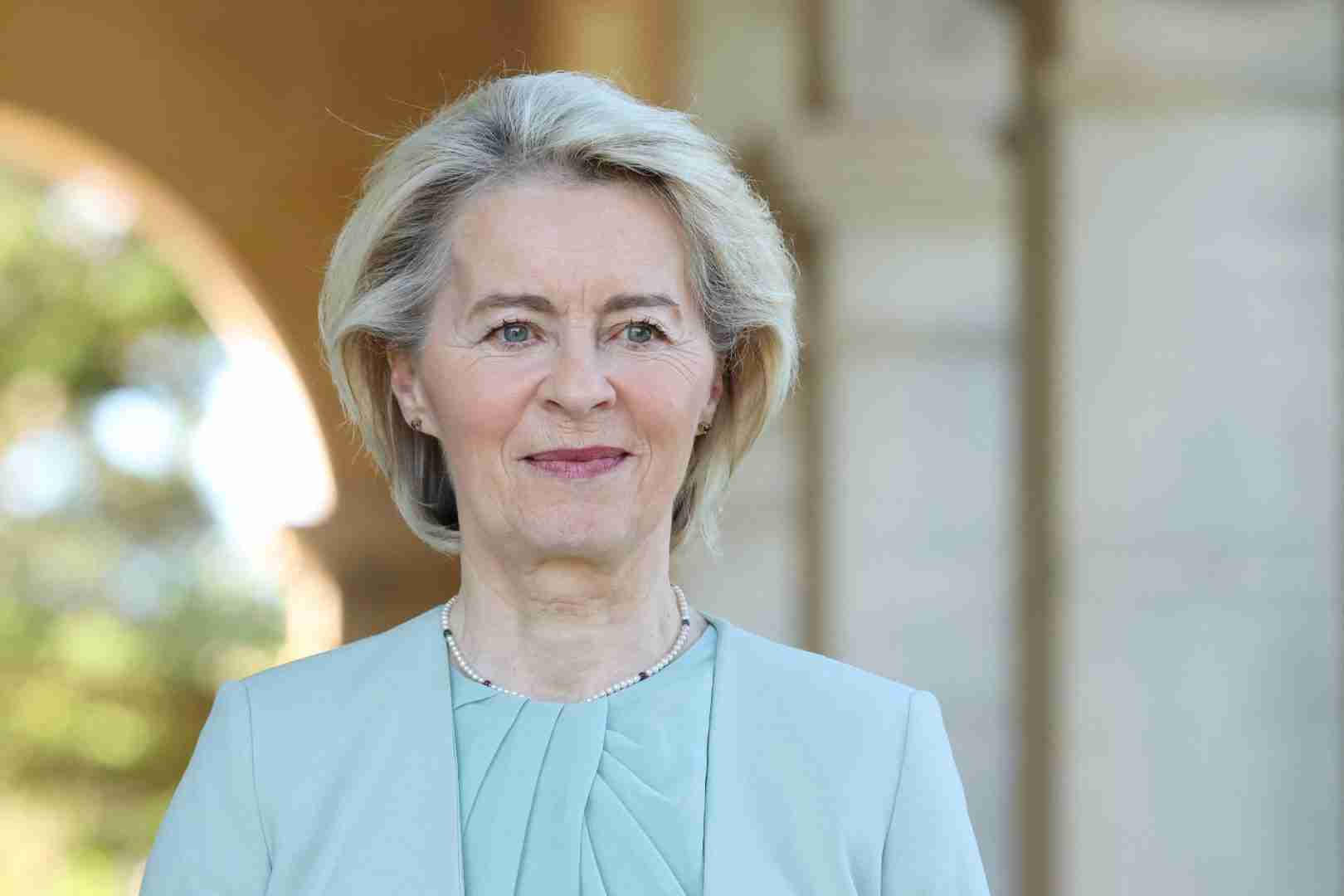
European Commission President Ursula von der Leyen will meet Australian Prime Minister Anthony Albanese in Canberra on Tuesday as both sides seek to clinch a long-delayed free trade deal following negotiations launched in 2018.
The push to revive the deal comes amid conflict in the Middle East and heightened global trade tension as the EU looks to strengthen its position vis-a-vis the United States and China, following a deal struck with India in January.
The talks collapsed in 2023 largely over disagreements on EU quotas for meat imports and protections for the agricultural sector. But recent signals suggest renewed momentum, fuelling hopes that a deal could be finalised during the visit.
“We look forward to welcoming President von der Leyen tomorrow,” Albanese told parliament on Monday, adding that a free trade deal with the EU would further strengthen the Australian economy and boost jobs.
“I’m sure it will be a great success.”
Von der Leyen is set to address parliament on Tuesday.
This month Trade Minister Don Farrell said he was confident an agreement could be reached in the national interest, while EU trade chief Maros Sefcovic said talks had been moving in the right direction.
Australia wants bigger quotas on meat exports to Europe, while the EU is pushing for lower tariffs on manufactured goods, particularly cars, and better access to Australia’s critical minerals to reduce dependence on China.
Australian media say the pact would scrap the current import tariff of 5% on European cars, potentially lowering the prices of offerings from BMW and Mercedes in Australia.
Trade between the two is substantial, with total goods trade of 47.2 billion euros ($54.5 billion) in 2025, and a surplus of 26.5 billion euros for the EU.
Services trade was 38.1 billion euros in 2023, with a surplus of 17.9 billion euros also in favour of the bloc.
($1=0.8662 euros)
Reporting by Renju Jose in Sydney; Editing by Clarence Fernandez
While the ECB’s immediate focus is the conflict in the Middle East and what it may mean for inflation, Lane highlighted AI as a key long-term driver for the bloc’s economic fortunes
International News via Reuters:
Artificial intelligence could lift euro zone productivity growth by more than 4 percentage points over the next decade, although a prolonged energy shock could slow progress, European Central Bank chief economist Philip Lane said on Monday.
While the ECB’s immediate focus is the conflict in the Middle East and what it may mean for inflation, Lane highlighted AI as a key long-term driver for the bloc’s economic fortunes.
He told an ECB conference the potential payoff from AI adoption would vary widely depending on how fast the technology spread.
A take-up rate in line with previous innovations such as the internet would deliver at least 1.5 percentage points of extra productivity growth in 10 years, Lane said. But if adoption continued at today’s pace and reached at least half the economy, the gain could exceed 4 percentage points.
“The greatest impact will be achieved if AI materially boosts the pace of innovation, as rather than just boosting the level of productivity, this could increase the long-run potential growth rate,” Lane said.
He warned, however, that persistently high fuel costs curb progress in building new AI models and curtail the adoption rate too, given the technology’s high energy use.
EUROPE IS BEHIND
Europe is starting from behind, Lane noted. Only about 3% of euro-area patents relate to AI, compared with 9% in the United States.
And euro zone residents are spending nearly 250 billion euros ($290 billion) a year on royalties to foreign patent-holders — mostly U.S.-based — underscoring the bloc’s dependence on imported technology.
Lane partly blamed Europe’s shallower capital markets, which he said constrain the investment needed to scale up innovation.
“Ensuring broad access to finance, supporting diffusion among smaller firms and investing in skills and complementary intangible assets will be central to realising AI’s potential while limiting adjustment costs,” he said.
($1 = 0.8617 euros)
Reporting by Francesco Canepa, editing by Andrei Khalip
Diplomats said the draft text was backed by other Gulf Arab states and the United States, although they said it was unlikely to succeed
International News via Reuters:
Bahrain has put forward a draft United Nations Security Council resolution that would authorise countries to use “all necessary means” – diplomatic language for force – to protect commercial shipping in and around the Strait of Hormuz, according to a text seen by Reuters on Monday.
Diplomats said the draft text was backed by other Gulf Arab states and the United States, although they said it was unlikely to succeed.
The move underscores mounting concern in the region that Iran could continue to threaten the Strait of Hormuz, a strategic chokepoint that carries about a fifth of global oil supplies and underpins Gulf economies.
Closing the Strait has been one of Iran’s main objectives. Shipping through the waterway has ground to a near-halt after Iran hit vessels in its conflict with the U.S. and Israel.
The draft resolution calls Iran’s actions a threat to international peace and security.
The text would authorise countries, acting alone or through voluntary multinational naval coalitions, to use “all necessary means” in and around the Strait of Hormuz – including in the territorial waters of littoral states – to ensure passage and to prevent moves that block or interfere with international navigation.
The resolution also expresses the readiness to impose measures, including targeted sanctions.
The Bahraini and U.S. missions at the United Nations did not immediately respond to requests for comment.
The draft text “demands that the Islamic Republic of Iran immediately cease all attacks against merchant and commercial vessels and any attempt to impede lawful transit passage or freedom of navigation in and around the Strait of Hormuz.”
Two European and one Western diplomat said there was little prospect of such a resolution being adopted by the Security Council as Iran’s allies Russia and China were likely to veto the text if needed.
A resolution needs at least nine votes in favour and no vetoes by Russia, China, the U.S., Britain and France to be adopted by the 15-member body.
The Russian and Chinese missions to the United Nations were not immediately available for comment.
However, the diplomats said France was also working on an alternative draft resolution that would seek a U.N. mandate once the situation had calmed.
Three U.S. officials have told Reuters that 2,500 Marines, along with the USS Boxer, an amphibious assault ship, and accompanying warships would deploy to the region, although they did not say what their role would be.
Two officials said there had been no decision on whether to send troops into Iran itself. Sources previously told Reuters that possible targets could include Iran’s coast or Kharg Island oil export hub.
The resolution would be placed under Chapter Seven of the U.N. Charter, which allows the council to authorize actions ranging from sanctions to the use of force.
Additional reporting by David Brunnstrom in Washington; Editing by Cynthia Osterman
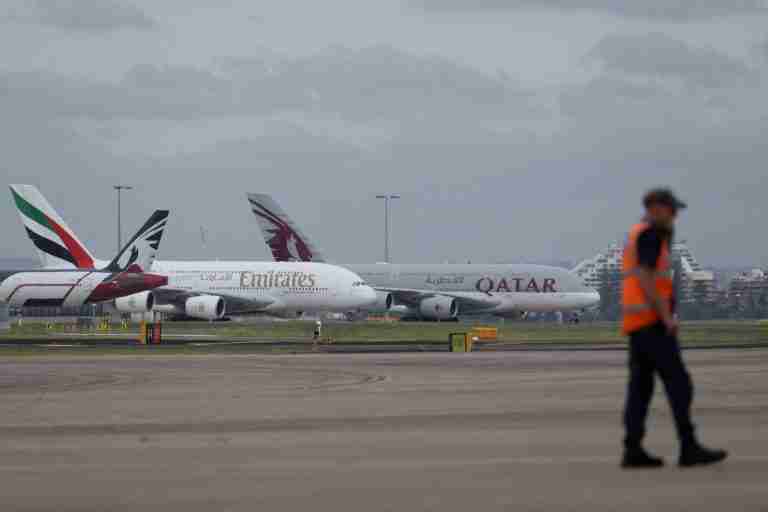
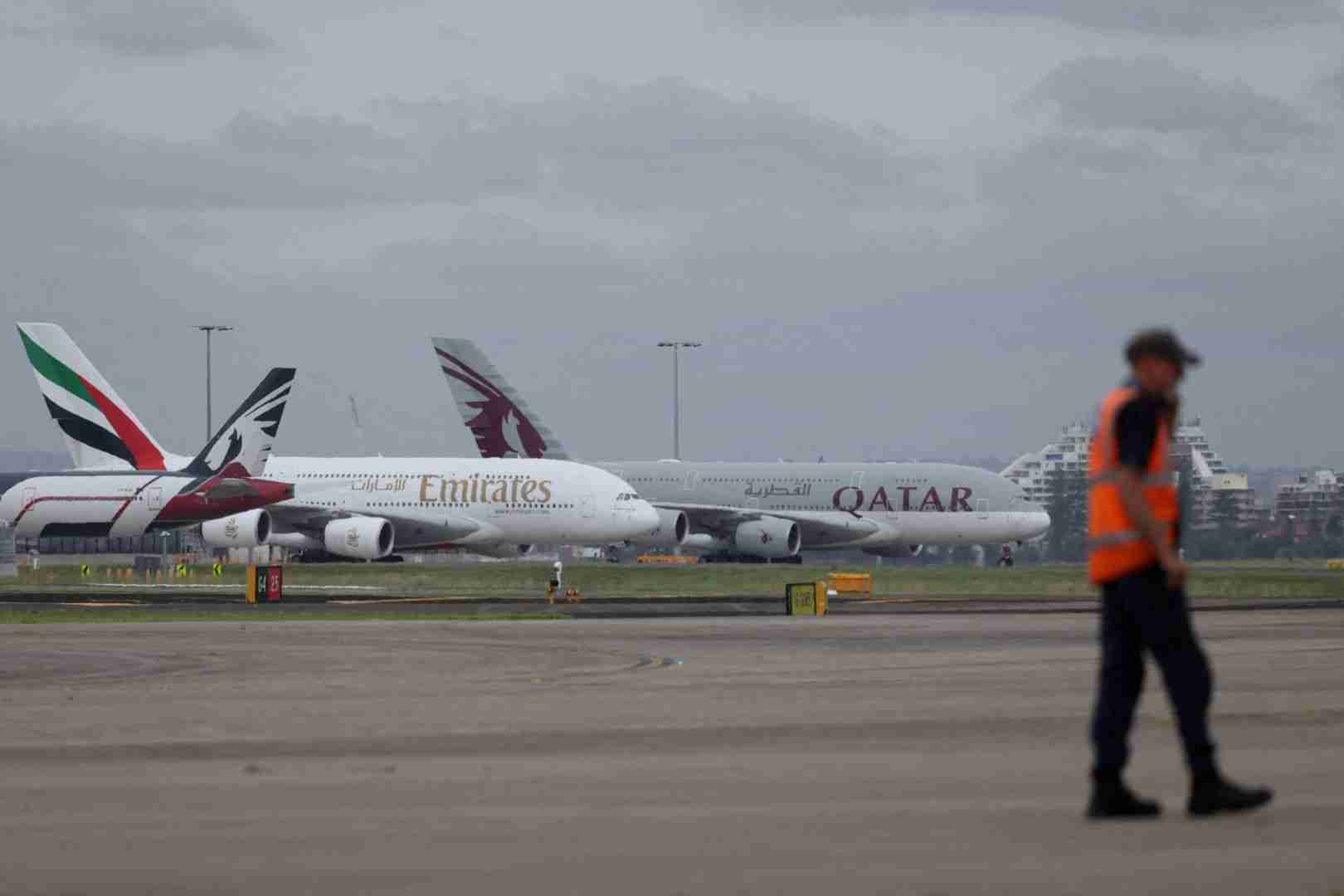
Travel Edge agent Joe Amaral said clients, many of them employed in the hospitality sector, are struggling to secure flights to Bermuda due to ongoing conflict in the gulf region
Its a level of disruption to global travel not seen since the 2020 pandemic.
That’s the assessment from one of the islands travel agents who tells us how the airspace closures in Iran and the gulf region are potentially having an impact on local business.
Guest workers, many of them in the hospitality sector, are struggling to find flights back to the island in time for the busy summer period.
The 1.42-billion-euro ($1.65 billion) joint venture includes UPM’s communication papers unit and Sappi’s graphic paper business in Europe
International News via Reuters:
EU antitrust regulators will decide by April 28 whether to approve a proposed graphic paper joint venture between Finnish forestry firm UPM-Kymmene and South Africa-listed wood fibre group Sappi, according to a filing on the European Commission site.
The 1.42-billion-euro ($1.65 billion) joint venture includes UPM’s communication papers unit and Sappi’s graphic paper business in Europe.
UPM will contribute assets in Germany, Finland, Britain and the United States to the joint venture while Sappi’s contribution will come from assets in Austria, Germany, the Netherlands and Finland.
The deal comes amid falling demand in the industry due in part to digitalisation, structural overcapacity, high energy costs and rising paper imports from Asia and Latin America.
The Commission, which acts as the EU competition enforcer, can clear the deal with or without demanding concessions after its preliminary review or it can open a full-scale investigation subsequently if it has serious concerns.
($1 = 0.8628 euros)
Reporting by Foo Yun CheeEditing by Tomasz Janowski
Consumer confidence fell to -16.3 this month from a revised -12.3 in February, coming well below expectations for -14.4 in a Reuters poll of economists
International News via Reuters:
Euro zone consumer confidence fell to its lowest level since late 2023 this month, a European Commission survey showed on Monday, offering early evidence of how the war with Iran and surging energy prices may impact the broader economy.
Consumer confidence fell to -16.3 this month from a revised -12.3 in February, coming well below expectations for -14.4 in a Reuters poll of economists. For the broader EU, the indicator fell to -15.2 from -11.8, the Commission said in a flash release that will be followed by more detailed results later this week.
“The four-point drop in March is one of the largest falls on record other than at the start of the pandemic and the Ukraine conflict,” Andrew Kenningham at Capital Economics said. “Based on our current working assumptions about oil and gas prices, we think household spending will decline and cause GDP to stagnate over the next two quarters.”
PRICE GROWTH SEEN ACCELERATING
Oil prices have surged since the start of the U.S. and Israeli war on Iran, pushing up household fuel costs immediately and raising the prospect of rapid inflation.
This has already raised borrowing costs for households, including through some mortgage rates, as financial investors think the European Central Bank will be forced to raise interest rates to curb price pressures.
This is likely to be especially painful for households as they are hit with higher pump prices and increased borrowing costs, eroding their disposable income.
All this is coming as wage pressures have finally dissipated in the euro zone, according to the ECB’s own wage tracker, which shows negotiated wage growth of 2.6% this year, a figure that is largely consistent with inflation holding at the bank’s 2% target.
However, price growth is now certain to accelerate given the spike in energy costs and the ECB’s most benign scenario sees it jumping to 2.6% this year and the severe scenario putting it above 4%.
While the ECB normally looks past such energy price surges, policymakers said they will raise interest rates if there is risk that price growth is getting entrenched.
“We can do little about the inflation spike in the next few months,” ECB policymaker Peter Kazimir said. “But if we judge that the risk of inflation remaining above our target for a prolonged period is significant, we will act with appropriate forcefulness to bring inflation back down to our target.”
Reporting by Rafal Nowak in Gdansk and Balazs Koranyi in Frankfurt; Editing by Alison Williams
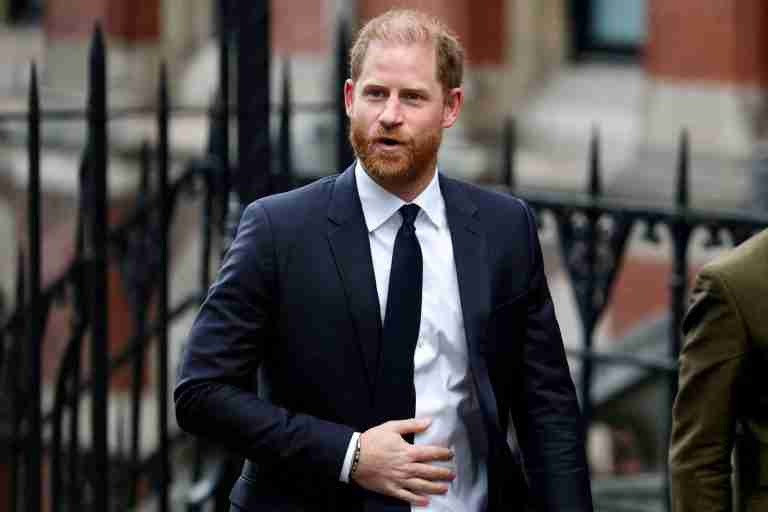
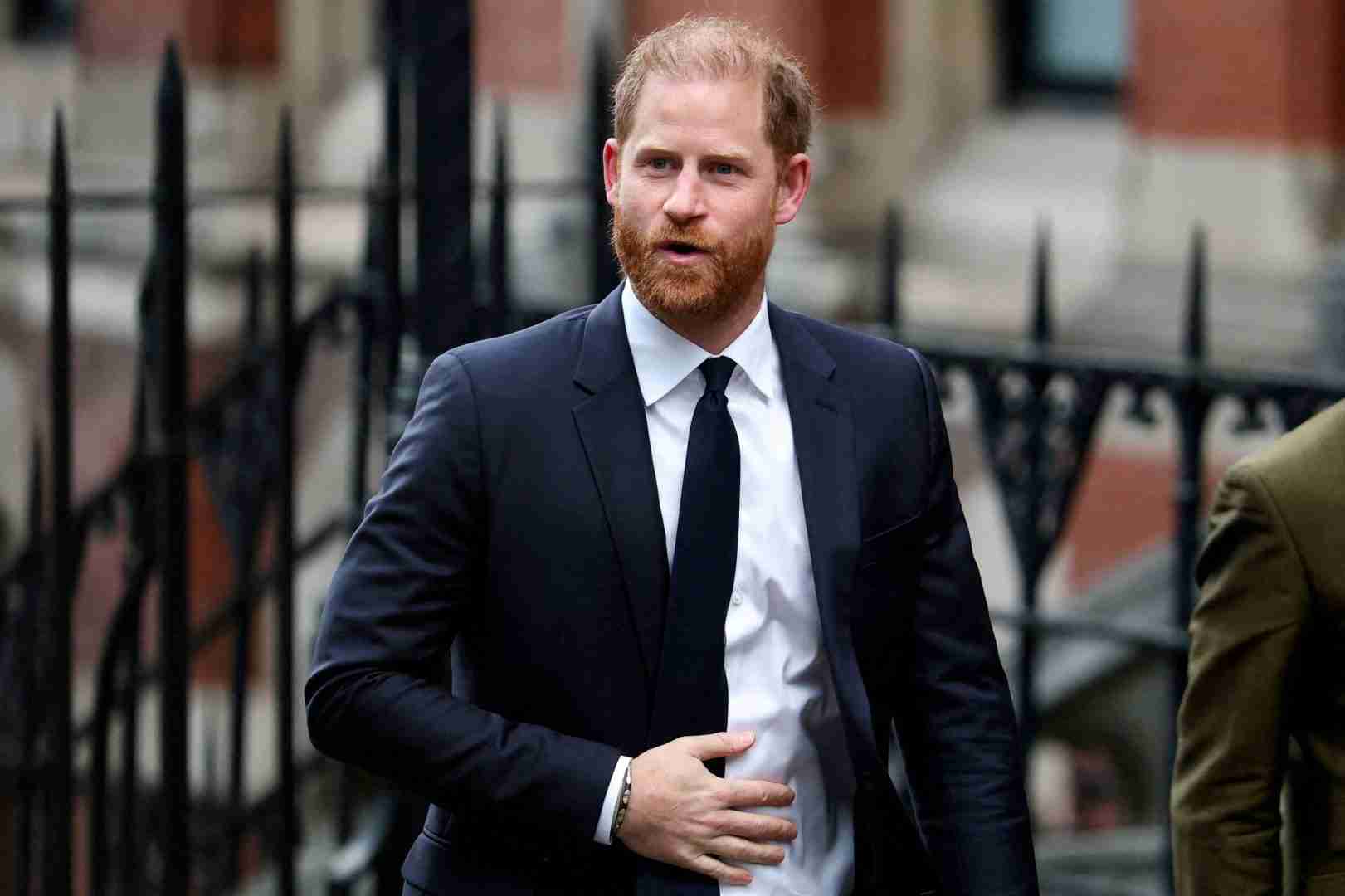
Harry, the younger son of King Charles, and six others including singer Elton John have accused Associated Newspapers’ tabloids of being involved in widespread unlawful information
International News via Reuters:
A key witness in a privacy lawsuit brought by Prince Harry and other high-profile figures against the Daily Mail told London’s High Court on Monday the claimants had been conned and he denied signing a damning statement against the paper’s publisher.
Harry, the younger son of King Charles, and six others including singer Elton John have accused Associated Newspapers’ tabloids of being involved in widespread unlawful information gathering including phone-hacking dating back 30 years.
Associated, which also publishes the Mail on Sunday, has denied any wrongdoing.
The trial has already heard evidence from Harry and the other claimants as well as numerous senior current and former journalists and staff at Associated.
On Monday private investigator Gavin Burrows, whose testimony could decide the outcome, said the lawsuit “was based on a pack of lies”.
WITNESS: STATEMENT ‘HAS NOTHING TO DO WITH ME’
In August 2021, the claimants’ lawyers say Burrows signed a witness statement in which he stated he had “targeted hundreds, possibly thousands of people” for Associated, from tapping landlines and hacking voicemails to obtaining information by deception.
Those allegations help form a substantial part of the claimants’ case.
Burrows later told Associated’s legal team he had never made this statement and that his signature had been faked, telling the court he had first heard about the allegations attributed to him by reading a newspaper report.
“This statement has nothing to do with me,” Burrows – who gave evidence from an undisclosed overseas location as he says he and his family have received threats – told the court by videolink.
“You have got to explain to your claimants how you have been conned,” he said during testy exchanges with their lawyer David Sherborne who was given permission to treat his own witness as “hostile”. “This thing is based on a pack of lies.”
Associated have cast the whole case as manufactured and funded by opponents of the press such as the late motor racing boss and privacy campaigner Max Mosley, and that a “research team” assisting the claimants’ lawyers had paid witnesses to provide evidence.
Sherborne accused Burrows of lying, suggesting he had only decided to change his evidence after he fell out with one of the research team, Graham Johnson, a journalist who was convicted of phone-hacking and now writes about tabloids’ unlawful activities.
Johnson has previously told the court that Burrows had agreed to a book deal and to help with documentaries for which he had been paid 75,000 pounds ($100,747.50), and that their relationship fell apart in early 2022.
Burrows said he had no knowledge that he would be used in the Associated litigation until January 2023 when he became “absolutely furious” that his name was being linked. He said he approached the publisher because he thought one of the claimants, racism campaigner Doreen Lawrence, was being conned.
“The whole thing is a thing of fiction,” he said. He told the court he had never worked for or been paid by Associated.
Burrows is the last witness at the trial, which began in January, with closing submissions due later this month.
($1 = 0.7444 pounds)
Reporting by Michael Holden; Editing by Andrew Heavens
“We are looking at measures to deal with profiteering … we might look at what further teeth we can give the CMA (Competition and Markets Authority) to deal with this,”
International News via Reuters:
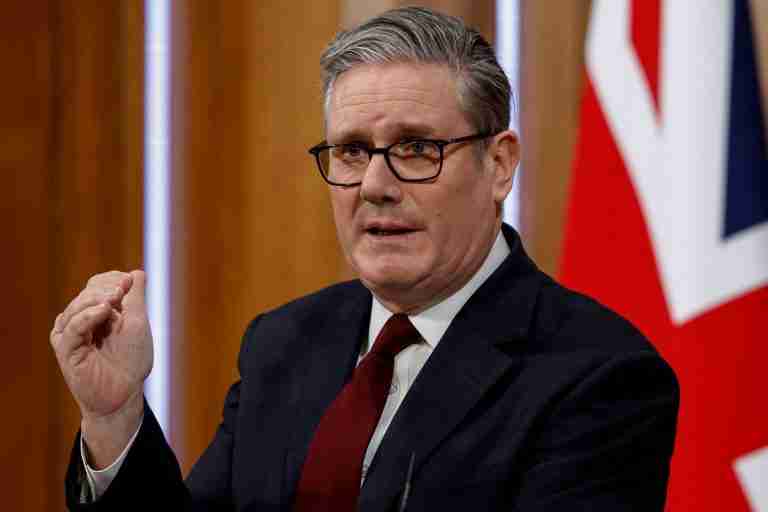
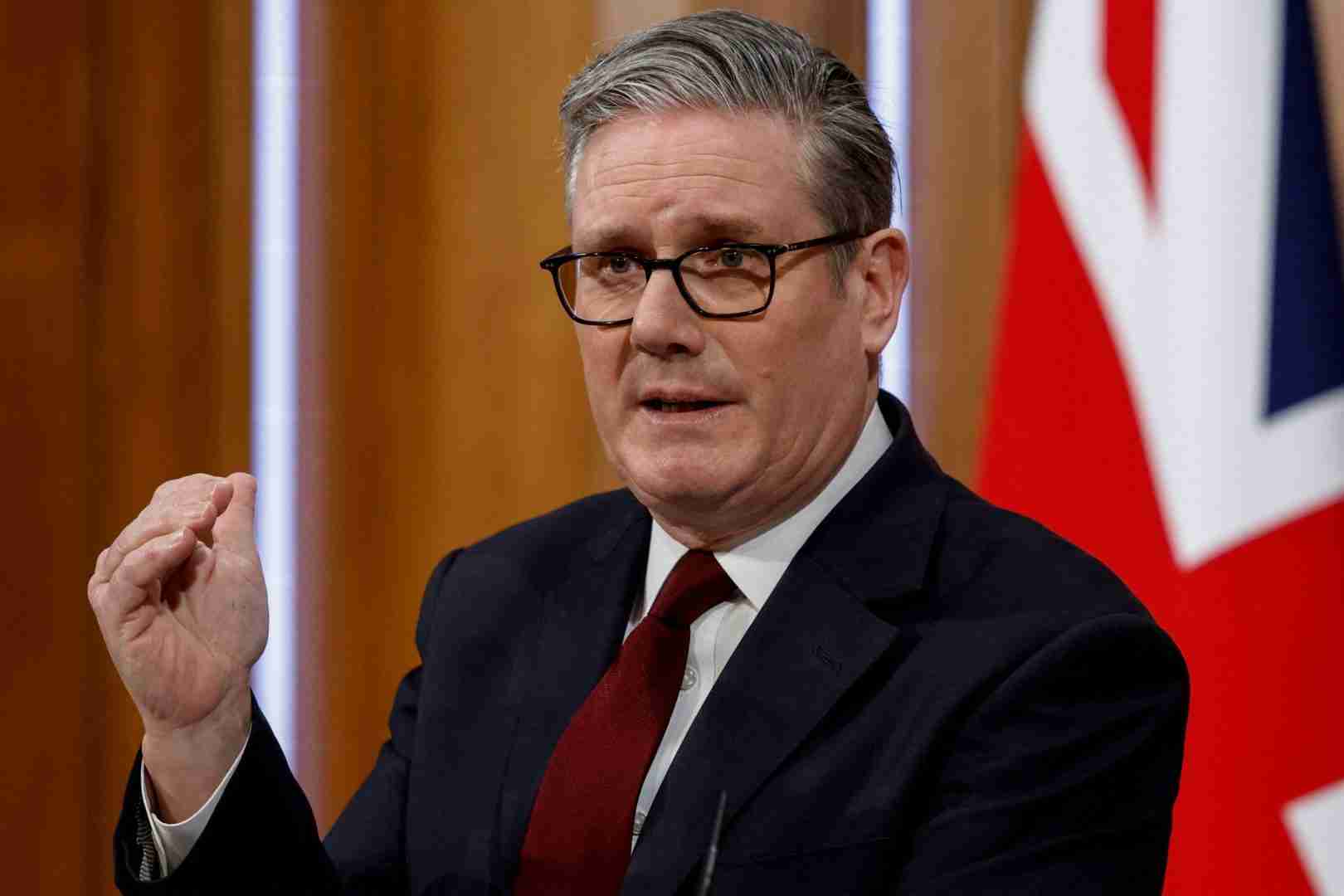
Britain’s Prime Minister Keir Starmer said on Monday that his government may consider expanding the powers of the competition regulator to tackle price gouging and profiteering in the energy market, given the impact of the Middle East conflict.
“We are looking at measures to deal with profiteering … we might look at what further teeth we can give the CMA (Competition and Markets Authority) to deal with this,” Starmer told a parliamentary committee.
“I want to see more on price gouging or profiteering … we’re actively considering whether the CMA should have additional powers to deal specifically with that, but at the moment we’re making sure they’re focused on anti-profiteering.”
To provide the best experiences, we use technologies like cookies to store and/or access device information. Consenting to these technologies will allow us to process data such as browsing behavior or unique IDs on this site. Not consenting or withdrawing consent, may adversely affect certain features and functions.
Functional
Always active
The technical storage or access is strictly necessary for the legitimate purpose of enabling the use of a specific service explicitly requested by the subscriber or user, or for the sole purpose of carrying out the transmission of a communication over an electronic communications network.
Preferences
The technical storage or access is necessary for the legitimate purpose of storing preferences that are not requested by the subscriber or user.
Statistics
The technical storage or access that is used exclusively for statistical purposes.The technical storage or access that is used exclusively for anonymous statistical purposes. Without a subpoena, voluntary compliance on the part of your Internet Service Provider, or additional records from a third party, information stored or retrieved for this purpose alone cannot usually be used to identify you.
Marketing
The technical storage or access is required to create user profiles to send advertising, or to track the user on a website or across several websites for similar marketing purposes.