Randy Broadbelt, Media Executive at the Bermuda Taxi Owners & Operators Association, told Gary Foster Skelton that they believe the new rideshare laws could fragment the industry further.
He reiterates the BTOA’s position that enforcement has been lacking for years to ensure all taxi operators are providing the service they agreed to provide upon being licensed.
Bermuda’s young Gombey Warriors produced an inspired performance to claim a hard-fought 3–3 draw against group giants Costa Rica in their Concacaf Under-20 World Cup Qualifier at the Costa Rican Football Federation Field #2 in Alajuela. The result was a significant milestone for head coach Cecoy Robinson’s side, as they faced a nation that had previously won all five of their previous qualifying meetings.
Costa Rica entered the contest as heavy favorites, seeking a third consecutive victory to cement their position at the top of Group E. In testing, windy conditions, the hosts appeared to be on course for another win when they broke the deadlock in the 14th minute with a clinical strike from the edge of the penalty area. Bermuda were handed a lifeline in the 20th minute when they were awarded a penalty, but the opportunity was missed, allowing the Costa Ricans to take a slender 1–0 lead into the interval.
The second half began with immediate drama as Bermuda drew level in the 47th minute. A powerful drive from Jace Donawa was parried by the Costa Rican goalkeeper, only for the alert Xahvi DeRoza to pounce on the rebound. It was DeRoza’s second goal of the qualifying tournament and marked the first time the Costa Rican defence had been breached in the campaign.
Bermuda then stunned the hosts in the 60th minute to take a 2–1 lead. DeRoza was again the hero, intercepting a poor back-pass before rounding the keeper to slide the ball into an empty net. Costa Rica fought back to level the scores at 2–2 in the 71st minute, taking advantage of a corner that the Bermudian defence failed to clear.
The lead swung back to Bermuda in the 77th minute when Donawa unleashed a thunderous free kick from the edge of the box that left the goalkeeper with no chance. The drama intensified just two minutes later when Costa Rica were awarded a penalty of their own. Daniel Powell produced a magnificent save to deny the spot-kick, but the relief was short-lived as the hosts managed to bundle the ball home from the resulting corner to ensure the points were shared.
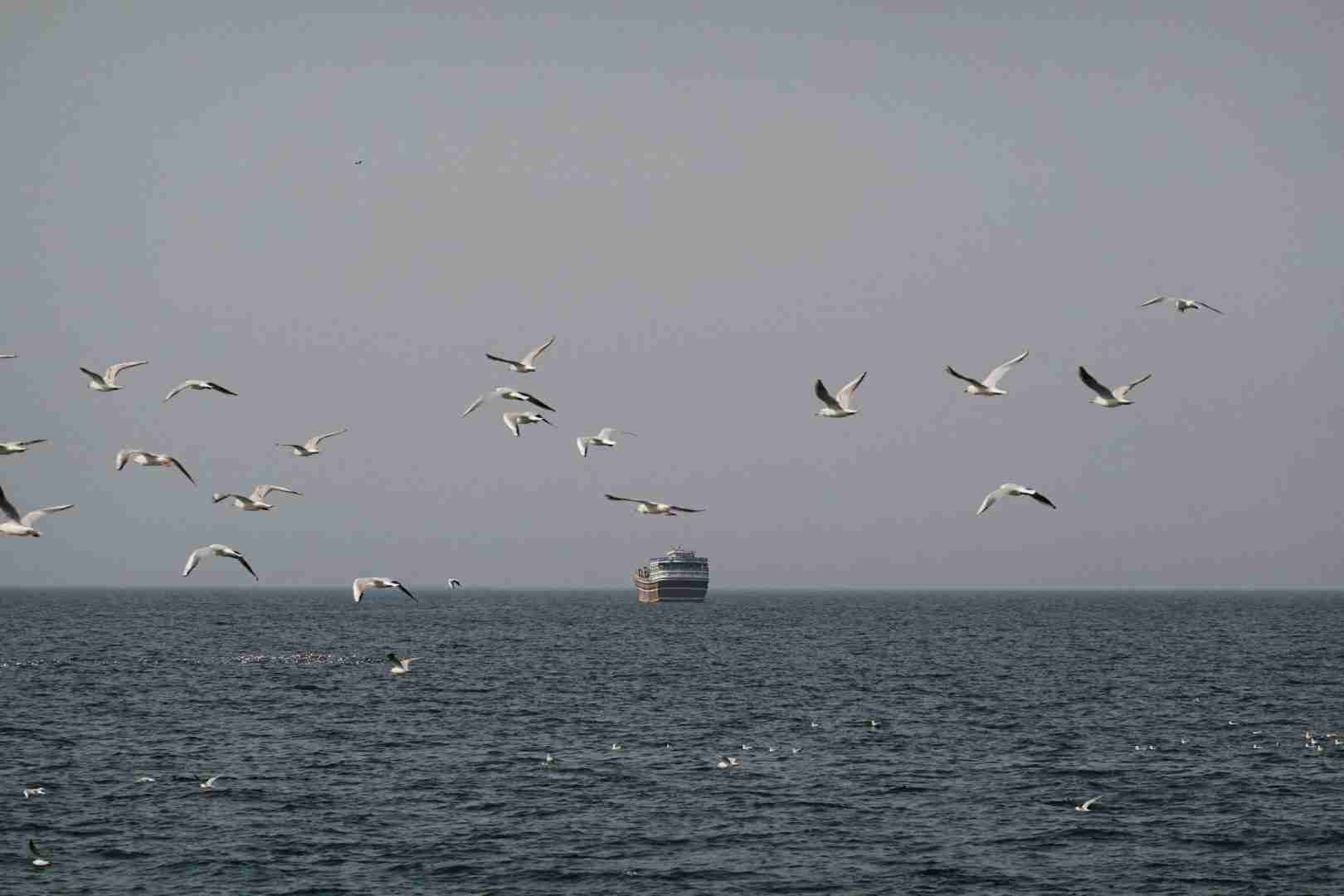
This is Iran’s most explicit warning since telling ships it was closing the export route on Saturday, a move that threatens to choke a fifth of global oil flows and send crude prices sharply higher
International News via Reuters:
An Iranian Revolutionary Guards senior official said on Monday that the Strait of Hormuz is closed and Iran will fire on any ship trying to pass, Iranian media reported.
This is Iran’s most explicit warning since telling ships it was closing the export route on Saturday, a move that threatens to choke a fifth of global oil flows and send crude prices sharply higher.
“The strait (of Hormuz) is closed. If anyone tries to pass, the heroes of the Revolutionary Guards and the regular navy will set those ships ablaze,” Ebrahim Jabari, a senior adviser to the Guards commander-in-chief, said in remarks carried by state media.
The strait is the world’s most vital oil export route, which connects the biggest Gulf oil producers, such as Saudi Arabia, Iran, Iraq and the United Arab Emirates, with the Gulf of Oman and the Arabian Sea.
The closure was triggered by U.S. and Israeli strikes on Iran on February 28 seeking to topple its leaders, with U.S. President Donald Trump offering Iranians help in ousting the ruling clerics.
In response, Iran fired several barrages of missiles at its Gulf neighbours hosting U.S. military bases such as Qatar, Kuwait and Bahrain. Tehran also fired missiles at the United Arab Emirates, Saudi Arabia and Oman.
With this closure, Tehran made good on years of threats to block the narrow waterway in retaliation for any attack on the Islamic Republic.
About 20% of the world’s daily oil consumption passes through the Strait of Hormuz, which is about 33 kilometers (21 miles) wide at its narrowest point.
Oil markets have focused on tensions between Tehran and its old foes, the U.S. and Israel, fearing that a full-blown conflict would disrupt supplies and destabilise the region.
The move also comes after global shipping had already experienced disruptions linked to drone and missile attacks carried out by Yemen’s Iran-aligned Houthi militants. The group has targeted vessels in the Red Sea and the Gulf of Aden since the Gaza war broke out in 2023.
Reporting by Jaidaa Taha and Menna Alaa El-Din; Writing by Jana Choukeir and Tala Ramadan; Editing by Michael Georgy, Nadine Awadalla and Lisa Shumaker
The 49-year-old Slovak winemaker was returning from an ayurvedic retreat in Sri Lanka when she became stranded in the Qatari capital
International News via Reuters:
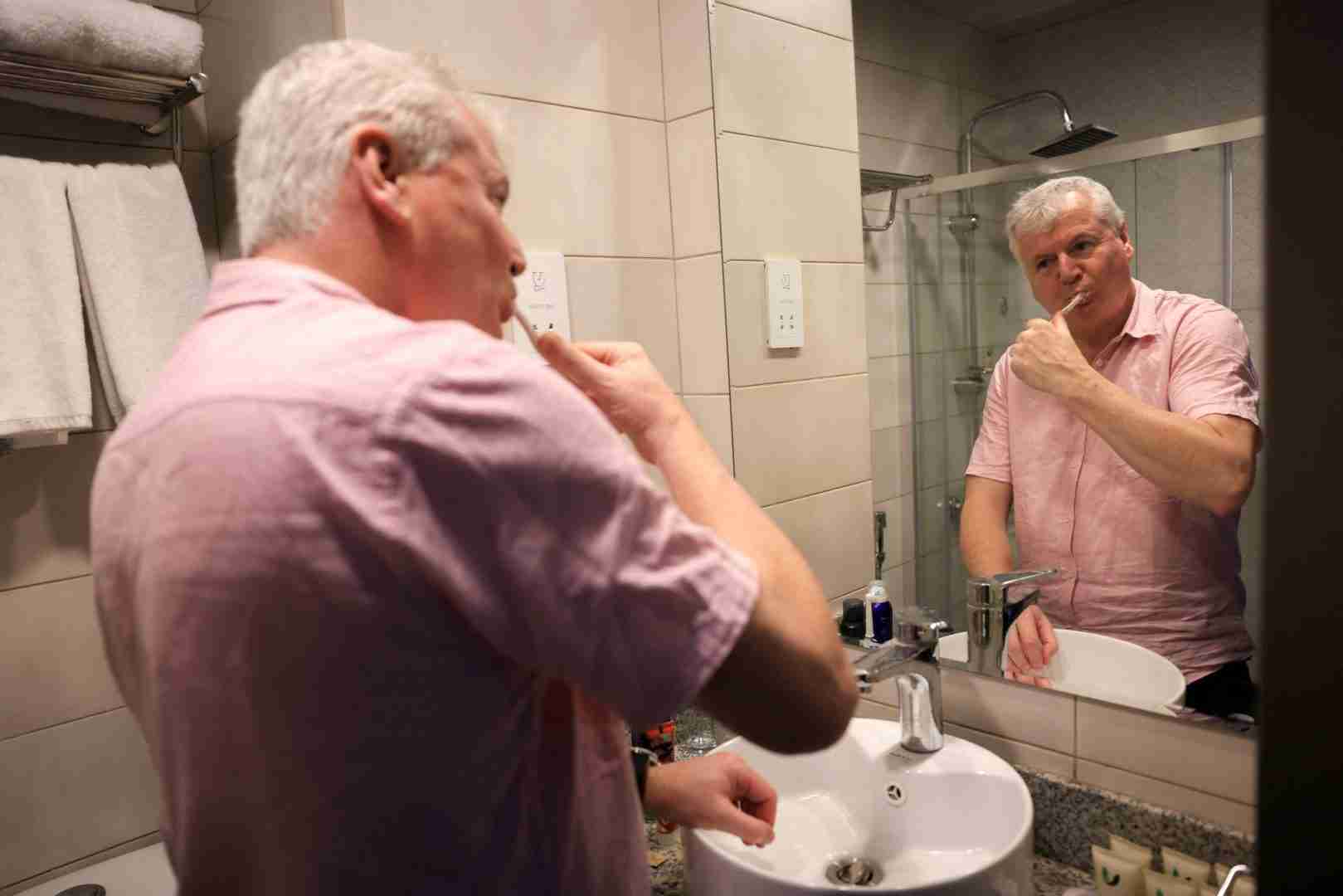
In the lobby of a tired hotel near Doha airport, stranded travellers wear identical fake Adidas T-shirts bought from a nearby store and swap tips on where to buy underwear.
“It’s our uniform,” said Erika Macikova.
The 49-year-old Slovak winemaker was returning from an ayurvedic retreat in Sri Lanka when she became stranded in the Qatari capital. Her luggage remains at the airport, but she was evacuated to a hotel alongside hundreds of other passengers.
With no spare clothes, Macikova tracked down open shops and began sharing their names with fellow globetrotters.
Tens of thousands of travellers across the Middle East were entering a third day of limbo after escalating conflict between the U.S., Israel and Iran disrupted flights worldwide and forced the closure of major airports including Dubai, the world’s busiest international hub.
BIGGEST UPHEAVAL TO GLOBAL AIR TRAVEL SINCE COVID-19
Many of those stuck in the region, like Macikova, were simply changing planes.
Dubai, which handles more than 1,000 flights a day, and nearby Doha and Abu Dhabi sit at the crossroads of east‑west air travel, funnelling long‑haul traffic between Europe and Asia through tightly scheduled connecting flights.
The upheaval is rippling far beyond the Middle East, with tens of thousands of passengers stranded in places including Bali, Kathmandu and Frankfurt.
The UAE’s civil aviation authority said it assisted about 20,200 travellers on Saturday. Data shows at least 4,000 flights were cancelled in the space of three days.
In Dubai, James Gaskin spent Monday morning washing his underwear and a collection of novelty socks in his bathroom sink.
After a week in India for work, the 53-year-old procurement manager from northern England was already short of clean clothes when his connecting flight back to Britain was cancelled. He was taken to a local hotel with hundreds of other passengers.
Like many of them, Gaskin said he had little idea what was unfolding when he landed at Dubai airport.
“A lady came to the gate and just stood on a chair and made an announcement that everyone’s got to leave the airport. All very calm and orderly,” he said. “In a British way, I did six hours of queuing without any real drama.”
But the baggage hall descended into chaos, he said, as passengers pulled bags off carousels, seeking their own.
“Even though it was pandemonium, I was pretty relaxed,” he said.
But then “there were quite a few bangs, the airport got hit”, he said. “That brought it home.”
“The general feeling is, the longer it goes on, the more edgy people are getting.”
PASSENGERS WHATSAPP TO SHARE COPING TIPS
Across hotels in the region, strangers trade information on where to find washing machines, how to navigate airline helplines or retrieve luggage, and whether it makes sense to pool resources and try to leave by car.
They gather in hotel lobbies to play games or watch sports, or head to shopping malls to buy snacks. WhatsApp groups have sprung up.
Many are trying not to dwell on their situation, even as loud bangs overhead remind them why they are stuck.
Macikova was spending as much time as possible inside the hotel because she felt most secure there.
She was immersed in a romantic novel, but Gaskin was bored. His wife had sent him logins to various streaming services but he had not felt like watching them.
British friends Julie Hardy and Francis McKay, who had been on a two-week tour of southern India, were staying at the same low-rise hotel near the airport.
On Sunday, they took a taxi to a nearby mall to buy medication, cheese and crackers, and to have lunch.
It was fun, they said. The nights are harder.
On Saturday night, two alarms went off on Hardy’s phone and she rushed to the hotel lobby in her nightie, which no one seemed to find surprising.
“I’m very reluctant to go to bed up here,” she said. “I would rather be downstairs for as long as possible … I can’t relax, because I think something’s going to happen in the night and I’m going to have to get up quickly and evacuate.”
McKay was anxious too and, while it sounded dramatic, worried whether she would see her family again:
“It’s the unknown, and I’ve never been in a war zone.”
Reporting by Lucy Craymer in Dubai and Justyna Pawlak;Editing by Josephine Mason and Kevin Liffey
As the conflict entered its second day, Trump said 48 Iranian leaders had been killed and that the U.S. military had started sinking Iran’s Navy, destroying nine Iranian warships so far and “going after the rest
International News via Reuters:
The U.S. military announced on Sunday the first American casualties of President Donald Trump’s intensifying attack on Iran, as a new poll showed only one in four Americans supported strikes against the Middle Eastern country.
As the conflict entered its second day, Trump said 48 Iranian leaders had been killed and that the U.S. military had started sinking Iran’s Navy, destroying nine Iranian warships so far and “going after the rest.”
U.S. aircraft and warships have struck more than 1,000 Iranian targets since Trump ordered the start to major combat operations on Saturday, the U.S. military said. The strikes include B-2 stealth bombers dropping 2,000-lb bombs on hardened, underground Iranian missile facilities.
Iran’s retaliatory attacks also started taking their toll. Although the U.S. military reported no casualties on Saturday, on Sunday it said three U.S. troops were killed and another five were seriously wounded in U.S. operations against Iran.
U.S. Central Command said several other U.S. troops suffered minor shrapnel injuries and concussions as well. It did not disclose where or how those casualties took place.
Two U.S. officials, speaking on condition of anonymity, told Reuters the U.S. service members were killed on a base in Kuwait.
Trump sought to brace the U.S. public for more casualties as he acknowledged the deaths, the first in major operations since he returned to office last year. The U.S. bombing of Iran’s nuclear sites last June and the U.S. military’s seizure of Venezuela’s president in January did not lead to U.S. fatalities.
In a video address, Trump lamented the deaths but added that “sadly, there will likely be more before it ends.”
“But America will avenge their deaths and deliver the most punishing blow to the terrorists who have waged war against, basically, civilization,” he said.
Michael Waltz, the U.S. envoy to the United Nations, said in a post on X: “Freedom is never free.”
TRUMP SAYS STRIKES ON IRAN COULD LAST FOUR WEEKS
A day after the killing of Supreme Leader Ali Khamenei pitched the Middle East and the global economy into deepening uncertainty, the U.S. and Israel pressed ahead with a military campaign that has sent shockwaves through sectors from shipping to air travel to oil.
U.S. officials have said to expect a multi-day campaign. Reuters has reported planning for a sustained operation that could last weeks.
In a separate interview with the Daily Mail, Trump said the strikes could go on for four weeks.
“It’s always been a four-week process. We figured it will be four weeks or so. It’s always been about a four-week process so – as strong as it is, it’s a big country, it’ll take four weeks – or less,” Trump was quoted as saying.
Iran’s foreign minister said in a post on X that his country’s military had studied “defeats of the U.S. military to our immediate east and west,” referring to Afghanistan and Iraq.
“We’ve incorporated lessons accordingly,” he said. “Bombings in our capital have no impact on our ability to conduct war.”
A Reuters/Ipsos poll that concluded on Sunday showed 27% of Americans approved of the strikes, while 43% of the respondents disapproved and 29% were not sure. About nine in 10 respondents said they had heard at least a little about the strikes.
NO SIMPLE ANSWER FOR WHAT’S NEXT
Iranian President Masoud Pezeshkian said a leadership council composed of himself, the head of the judiciary and a member of the powerful Guardian Council had temporarily assumed the duties of supreme leader following the killing of Khamenei, who had led Iran since 1989.
Trump has called on Iranians to topple their government, but on Sunday told a magazine that Iran’s new leadership wanted to talk to him and that he has agreed.
“They want to talk, and I have agreed to talk, so I will be talking to them. They should have done it sooner … They waited too long,” Trump was quoted as saying in an interview with the Atlantic magazine.
Democratic U.S. Senator Chris Coons said he did not see how regime change in Iran could happen with the current operation. “There’s no example I know of in modern history where regime change has happened solely through air strikes,” Coons said on CNN’s “State of the Union” program.
Jonathan Panikoff, a former U.S. deputy national intelligence officer for the Near East, said Washington and Israel appear to be pursuing a strategy aimed not only at degrading Iran’s military response capabilities, but at destabilizing the regime itself by removing its senior leadership and testing the loyalty of the rank and file.
The success of that approach, he said, would ultimately depend on whether security forces stand aside or defect if public unrest resurfaces.
“There’s no simple answer for what’s going to come next,” Republican Senator Tom Cotton, who chairs the Senate Intelligence Committee, said on CBS News’ “Face the Nation” program.
Republican Senator Lindsey Graham, a staunch Trump ally and defense hawk, echoed Trump’s call for the Iranian people to decide who should lead their government.
“You know, this idea, ‘You break it, you own it,’ I don’t buy that one bit,” Graham said on NBC’s “Meet the Press” program.
“This is not Iraq. This is not Germany. This is not Japan. We’re going to free the people up from a terrorist regime.”
Reporting by Phil Stewart, Idrees Ali and Doina Chiacu; Editing by Paul Simao
The government’s decision, which was rejected by a senior Hezbollah politician, underlined a dramatic shift in Lebanon’s power balance since the once-dominant group was pummelled by Israel during a war in 2024
International News via Reuters:
Lebanon’s government on Monday banned military activities by Hezbollah after it opened fire on Israel to avenge the killing of Iran’s supreme leader, a move likely to fuel tension with the Tehran-backed group as it faces a new Israeli offensive.
The government’s decision, which was rejected by a senior Hezbollah politician, underlined a dramatic shift in Lebanon’s power balance since the once-dominant group was pummelled by Israel during a war in 2024, reshaping politics in a country that suffered civil conflict from 1975-90.
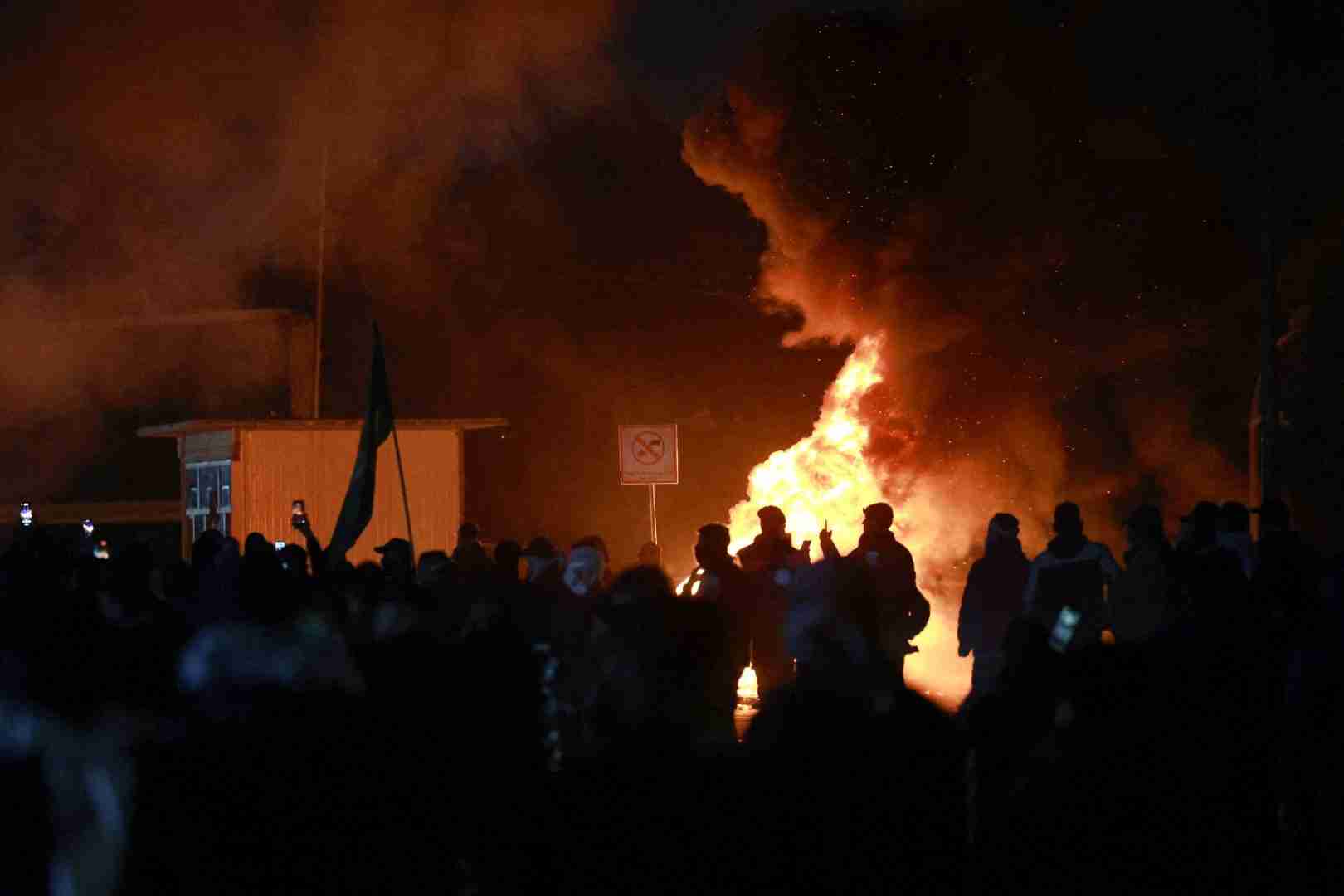
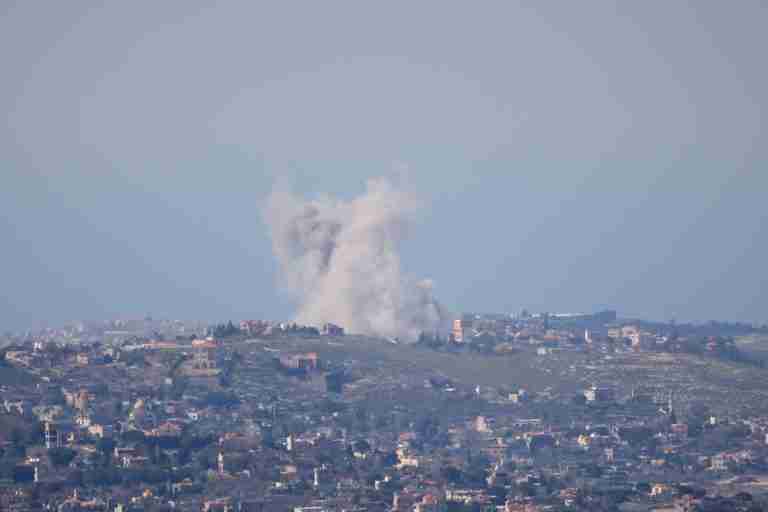
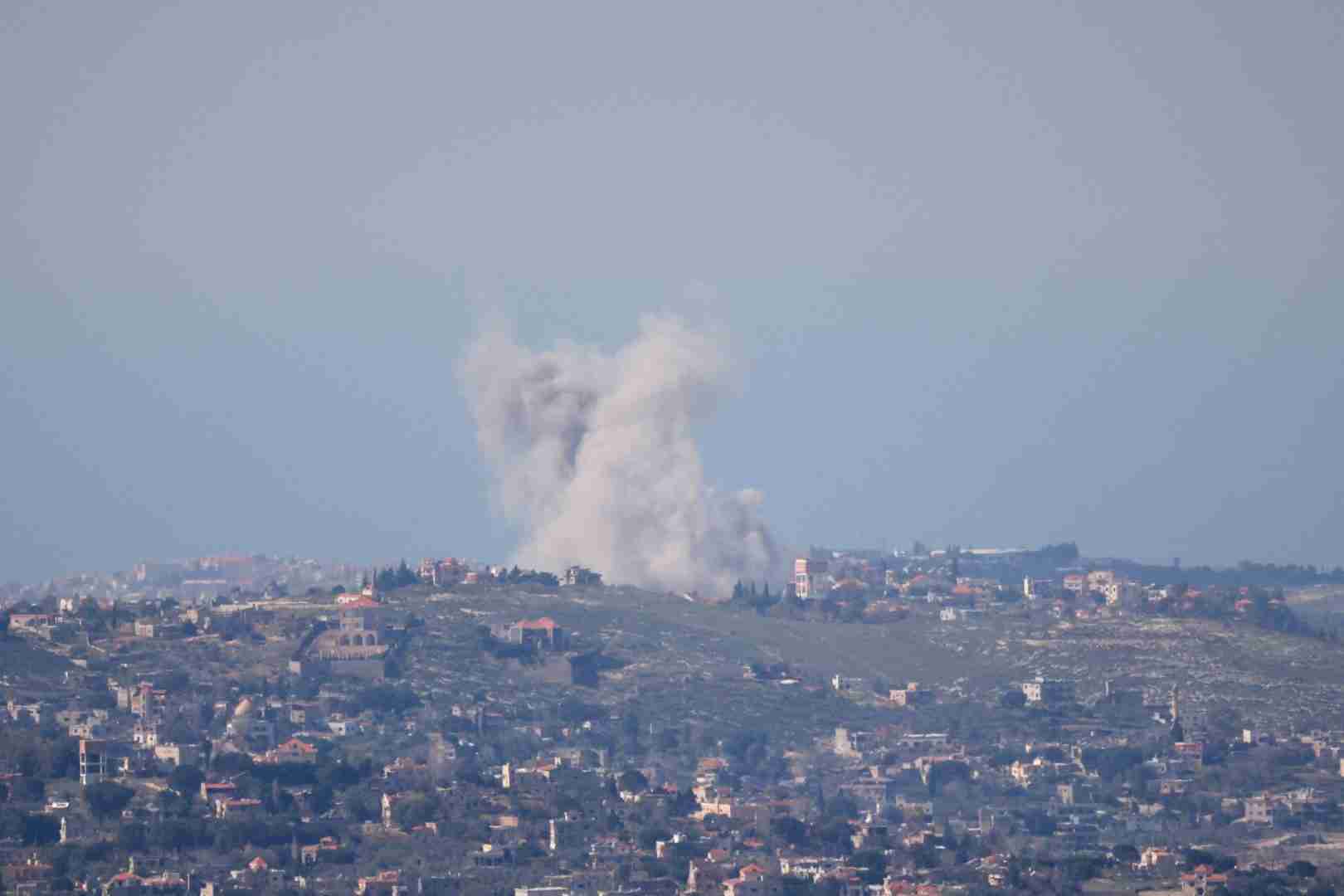
Israel launched heavy airstrikes on the Hezbollah-controlled southern suburbs of Beirut and more widely in Lebanon, in response to the Hezbollah drone and rocket strike, killing 52 people and wounding more than 150, according to a Lebanese health ministry official.
RESIDENTS FLEE, CLOGGING ROADS
Roads were jammed as people fled from targeted areas which bore the brunt of Israeli bombardment in 2024.
The violence widened the conflict that has spread through the Middle East since the United States and Israel attacked Iran on Saturday, prompting Iranian retaliatory strikes across the region.
Hezbollah, a Shi’ite Muslim group established by Iran’s Revolutionary Guards in 1982, said its attack was to avenge “the pure blood” of Iranian Supreme Leader Ayatollah Ali Khamenei, who was killed on Saturday, and “in defence of Lebanon”.
It was Hezbollah’s first attack since the 2024 war, despite near-daily Israeli strikes targeting the group.
Israel held Hezbollah responsible for the escalation and declared Hezbollah leader Naim Qassem a “target for elimination”. The Israeli military said it had killed Hussein Makled, a top Hezbollah intelligence official.
There was no confirmation from the group.
Israel said no injuries or damage were reported from Hezbollah’s attacks.
“We have launched an offensive campaign against Hezbollah … We must prepare for many prolonged days of combat ahead,” Israeli Chief of the General Staff Eyal Zamir said.
DISREGARD FOR THE ‘MAJORITY OF LEBANESE’
In a statement after a cabinet meeting, Prime Minister Nawaf Salam said Hezbollah’s attack showed disregard for “the will of the majority of Lebanese” and that Lebanon rejected being dragged into the regional conflict.
The state, he said, rejected any military actions launched from Lebanon “outside the framework of its legitimate institutions and affirmed that the decision of war and peace is exclusively in its hands”.
This “necessitates the immediate prohibition of all Hezbollah’s security and military activities as being outside the law, and obliging it to hand over its weapons to the Lebanese state”, he said.
Senior Hezbollah politician Mohammed Raad, in a written statement issued by the group, said there was no justification for the “government to take bold and confrontational measures against Lebanese citizens who reject occupation”.
In 2008, an attempt by the Lebanese government to outlaw Hezbollah’s military telecom network led to armed conflict, during which Hezbollah fighters took over parts of Beirut.
Paul Salem of the Middle East Institute think-tank said the decision was historic but implementing it would be challenging.
“A clash is possible, and maybe a clash here and there is necessary if the state is going to behave like a state and implement its laws,” he said.
“The state is not interested in confrontation – they are very aware of the risks, and they are not going to seek a broad confrontation – but this sends an important signal to Hezbollah that they have gone way beyond the pale,” he said.
‘WE ARE VERY TIRED OF WARS’
Fatima Haroun, who fled her home in the southern suburbs, described scenes of panic during the airstrikes.
“Everyone was screaming, in the streets, fleeing,” she said, as she sat on Beirut’s seafront corniche. “We are very tired of wars … We want safety.”
Hezbollah was the only Lebanese faction to keep its weapons at the end of the civil war – a conflict fought along sectarian lines – and used them to fight Israeli troops that occupied south Lebanon until 2000.
The Lebanese government, which took office a year ago, has sought its disarmament. The Lebanese army has made progress in this direction in areas near the Israeli border, where Hezbollah has not obstructed its efforts to clear weapons caches – as required by a U.S.-backed ceasefire.
But Hezbollah refuses to disarm in full, saying the ceasefire agreement does not apply to the rest of Lebanon.
Hezbollah said its attack had targeted an Israeli military missile-defence facility south of the city of Haifa. The Israeli military said several projectiles fell in open areas and one was intercepted by the Israeli air force.
Reporting by Laila Bassam, Tom Perry and Maya Gebeily in Beirut, Jana Choukeir in Dubai; Yomna Ehab and Nayera Abdallah in Cairo; Steven Scheer in Jerusalem; Writing by Nayera Abdallah and Tom Perry; Editing by Bill Berkrot, Michael Perry and Sharon Singleton
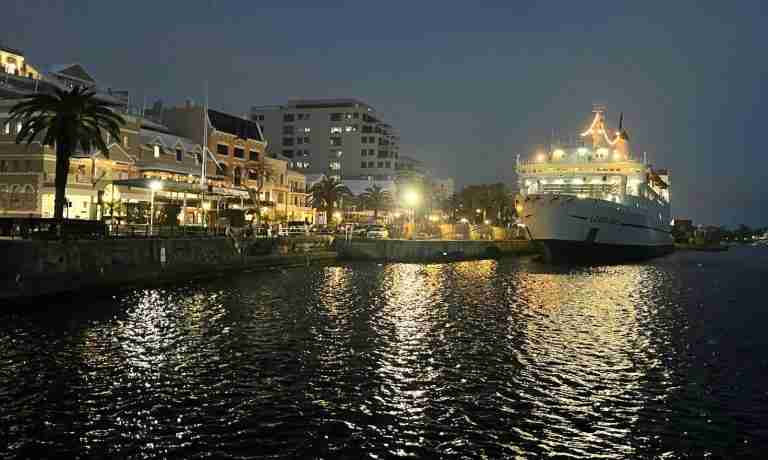
The Logos Hope – known as a floating book fair – has welcomed more than 9,000 visitors since docking on Front Street a couple of weeks ago. The vessel, which carries thousands of book titles across a wide range of genres, will remain open to visitors through Wednesday before leaving the island. In a follow-up to our story marking the ship’s arrival, we spoke to Managing Director Decio de Carvalho about the Mission of the Logos Hope.
The Director of Public Prosecutions, Cindy Clarke, confirms that one of her Crown Counsel was recently threatened in the court precincts while performing their professional duties.
This incident follows a recent matter in which a Magistrate was similarly threatened in the execution of judicial functions.
Ms Clarke stated: “Let me be absolutely clear: threats directed at prosecutors or members of the judiciary strike at the very heart of our justice system.
“Such conduct is not merely an affront to an individual officer of the court — it is an attack on the rule of law itself.
“The individuals charged in connection with these incidents have been remanded into custody. This reflects the seriousness with which the courts and this Department regard any attempt to intimidate judicial officers or prosecutors.
“Where credible threats are made, firm and immediate action will follow. An independent and fearless justice system depends upon prosecutors, magistrates and judges being able to discharge their constitutional duties without intimidation, harassment, or fear of reprisal.”
Ms Clarke added: “If our justice system is corrupted by threats or attempts at coercion, there will be grave consequences not only for those directly targeted but for public confidence in the administration of justice.
“Such behaviour will not be tolerated, and it will be met with the full force of the law; for this I wish to thank the Commissioner of Police and the members of the Bermuda Police Service for their quick response and engagement.”
In January 2025, the Director publicly called for enhanced court security measures, highlighting concerns about increasing hostility within court precincts.
As reported at that time, those concerns were raised in the interest of protecting all participants in the justice process, including judicial officers, prosecutors, court staff, defendants, witnesses, and members of the public.
Ms Clarke emphasised: “These events underscore the urgency of that call. The courts must remain places where disputes are resolved by law, evidence, and reasoned judgment, not by intimidation or menace.
“The safety and integrity of our courts are essential to maintaining the rule of law in this jurisdiction.
“This Office will continue to work closely with law enforcement, the judiciary, and court administration to ensure that appropriate safeguards are in place.
“We will also continue to pursue, without hesitation, those who seek to undermine the administration of justice through threats or violence.
“The rule of law is the foundation of a democratic society. It must be protected: firmly, consistently, and without compromise.”
Starmer said he was moved to allow the “limited” use of British military bases by the U.S. on Sunday after Britons came under attack by “reckless” Iranian drone and missile strikes
International News via Reuters:
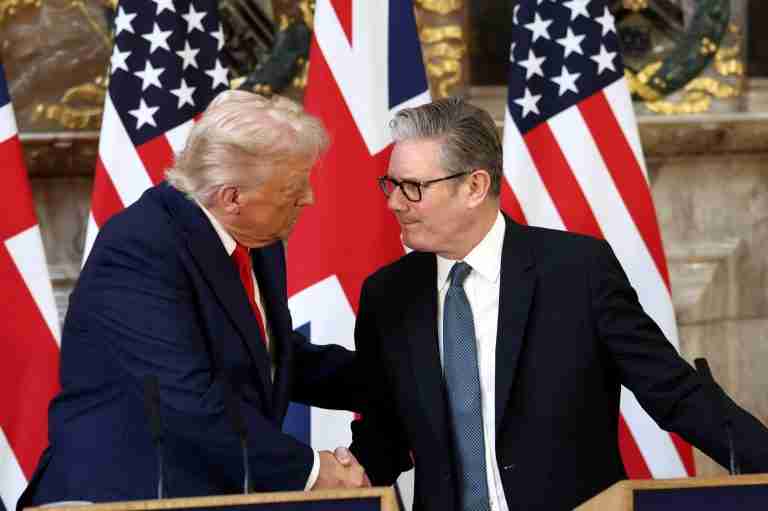
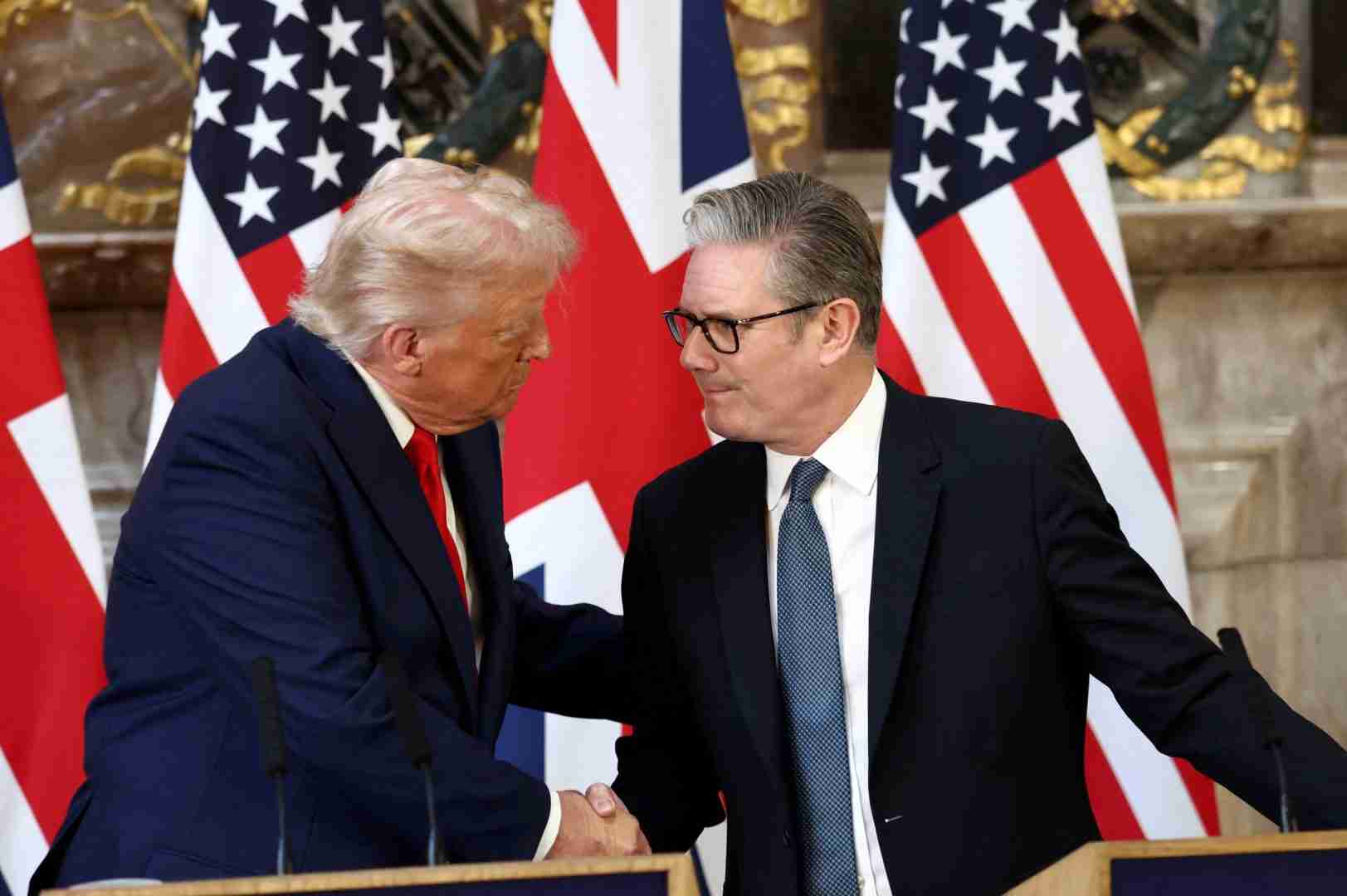
Prime Minister Keir Starmer defended his actions in the Middle East on Monday, brushing off President Donald Trump’s criticism of Britain for not joining strikes against Iran by saying his decisions were guided by law and the “national interest”.
In an address to parliament, Starmer said he was moved to allow the “limited” use of British military bases by the U.S. on Sunday after Britons came under attack by “reckless” Iranian drone and missile strikes but he stood by his decision not to join “offensive strikes” on Iran that were launched on Saturday.
Buffeted by opposing views in Britain, Starmer has had to navigate calls from the left to condemn the U.S. and Israeli action, while on the right, populist Reform UK leader Nigel Farage criticised him for not giving them his backing.
“We were not involved in the initial strikes against Iran, and we will not join offensive action now. But in the face of Iran’s barrage of missiles and drones, we will protect our people in the region,” Starmer told a silent parliament.
“President Trump has expressed his disagreement with our decision not to get involved in the initial strikes, but it is my duty to judge what is in Britain’s national interest. That is what I’ve done, and I stand by it.”
STARMER WARNS OF ‘MISTAKES OF IRAQ’
Earlier, Trump told the Daily Telegraph he believed Britain had taken too long to let Washington use its bases in operations against Iran.
In an interview published on Monday Trump said Starmer appeared to be “worried about the legality” of the strikes.
“That’s probably never happened between our countries before,” Trump said of the disagreement, adding Starmer’s shift in stance took “far too much time”.
A former human rights lawyer, Starmer has long promoted his “iron-clad” commitment to international law.
In parliament, he said he did not want to repeat mistakes made over the invasion of Iraq in 2003, when Britain joined U.S. action to remove Saddam Hussein that was justified on false claims that the country had weapons of mass destruction.
“We all remember the mistakes of Iraq, and we have learned those lessons. Any UK actions must always have a lawful basis, and a viable, thought through plan,” Starmer said. “This government does not believe in regime change from the skies.”
BRITAIN WILL DEFEND BRITONS, ALLIES IN THE REGION
The U.S. and Israel launched air strikes against Iran on Saturday that killed its Supreme Leader Ali Khamenei and Trump said Starmer should have approved from the get-go the American use of Diego Garcia, the strategically important air base.
Late on Sunday, Starmer said he accepted a U.S. request for their use in any “defensive” strikes against Iranian targets.
He said this was essential to defend the 300,000 Britons who are in the region, where Iran has struck hotels and airports with missiles and drones in Gulf countries hosting U.S. bases.
But he was immediately accused by opposition parties for performing his latest U-turn in a premiership peppered with them on policy, and what Farage called a “frankly pathetic” immediate response to the Iran strikes – accusations Starmer denied.
“It is very clear that the death of the Supreme Leader will not stop Iran from launching these strikes,” Starmer said. “In fact, their approach is becoming even more reckless and more dangerous to civilians.”
On Sunday, an Iranian-made drone hit Britain’s RAF Akrotiri base in Cyprus, causing limited damage and no casualties.
Trump said it was “useful” that the U.S. would now be able to launch operations from Diego Garcia but said he was “very disappointed in Keir” for a deal Starmer made on the sovereignty of the Chagos Islands where it is based.
Trump has changed position on the Chagos deal, which Britain says secures the future of the base from future legal challenges while transferring sovereignty of the archipelago to Mauritius.
Starmer’s spokesperson said bilateral relations with the United States and Trump remained strong.
“The UK and U.S. are staunch allies, as we have been for many decades,” the spokesperson told reporters.
Reporting by Sarah Young, Elizabeth Piper, Alistair Smout, Andrew MacAskill, William James and Sam TabahritiEditing by William Schomberg, William James, Aidan Lewis and Alison Williams
In France, the U.S. electric vehicle maker’s registrations, a proxy for sales, rose 55% even as most rivals sold fewer cars in the country than a year ago
International News via Reuters:
Tesla gained market share in key European markets in February, official data showed, signalling some stabilisation on the continent after two straight years of declining sales.
In France, the U.S. electric vehicle maker’s registrations, a proxy for sales, rose 55% even as most rivals sold fewer cars in the country than a year ago.
Registrations more than doubled from February 2024 in Portugal. They increased 74% in Spain, 32% in Norway and 14% in Belgium, but fell 45% in the Netherlands, 18% in Denmark and 7% in Italy.
The UK and Germany, Europe’s largest car markets, are set to report later in the week.
Tesla’s European sales fell 27% last year amid rising competition, particularly from Chinese EV brands, controversy over Elon Musk’s politics and an ageing model lineup.
Last year, Tesla unveiled cheaper versions of its Model Y and Model 3 in the U.S. and Europe, which started to roll out to consumers late last year.
The company’s market share in the European Union, Britain and the European Free Trade Association slid marginally to 0.8% in January from 1% in the same month in 2025.
That remains far below its 1.8% market share in 2025, 2.5% in 2024 and 2.9% in 2023, when its signature Model Y SUV was the world’s best-selling model.
Reporting by Alessandro Parodi, Camille Raynaud, Anna Ringstrom, Marie Mannes and Javi West Larrañaga; Editing by Nivedita Bhattacharjee and David Gregorio
Though France and Britain are both nuclear powers, most European countries have relied primarily on the United States for deterring any potential adversaries — a decades-old pillar of transatlantic security
International News via Reuters:
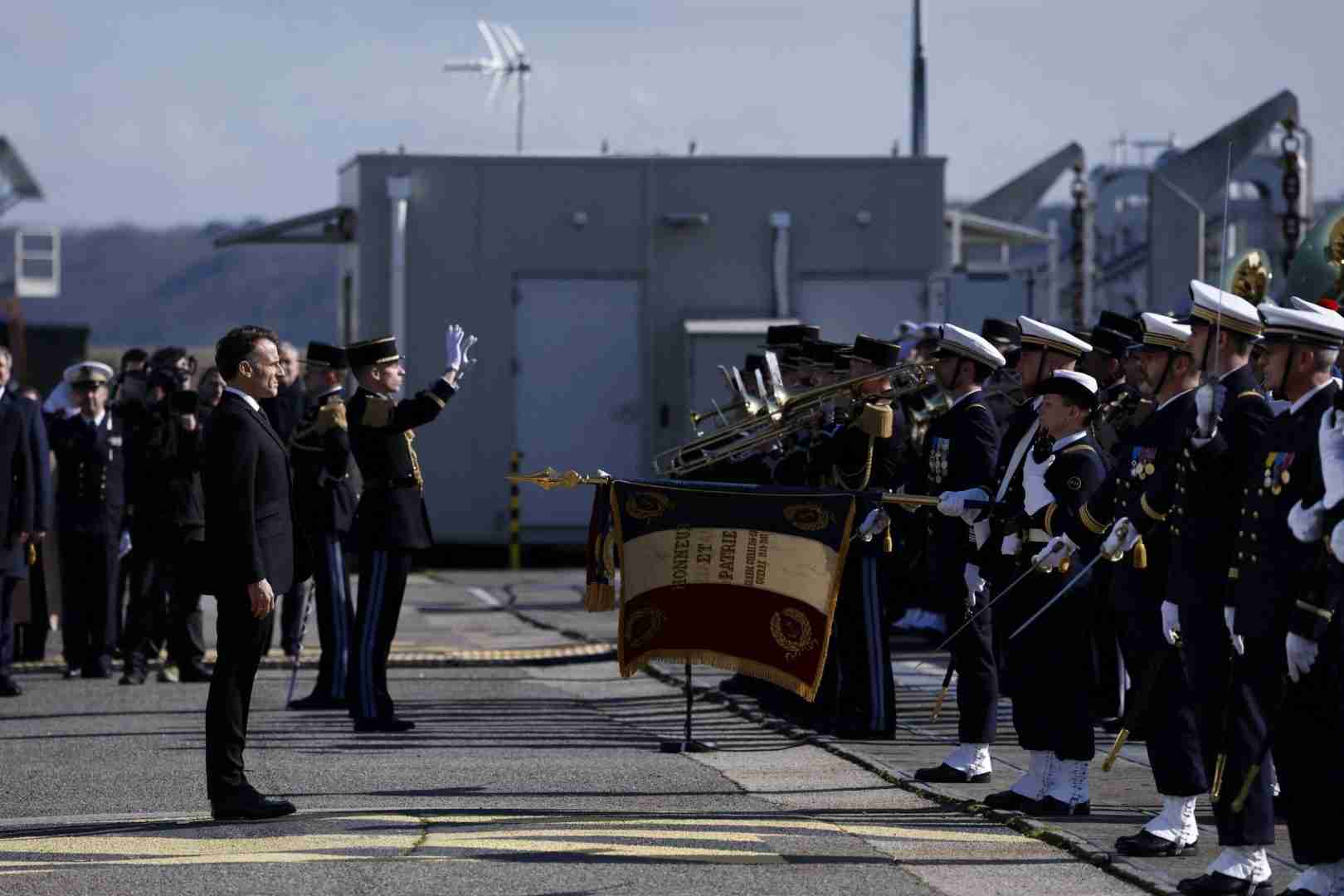
France will expand its nuclear arsenal and will potentially allow European partners to host its aircraft on nuclear deterrence missions, President Emmanuel Macron said on Monday, signalling a major doctrine change for France and the continent.
Though France and Britain are both nuclear powers, most European countries have relied primarily on the United States for deterring any potential adversaries — a decades-old pillar of transatlantic security.
But Trump’s rapprochement with Russia on the Ukraine war and his harsher posture towards traditional allies have rattled European governments, and some countries have expressed interest in how Paris could protect them by extending its nuclear umbrella.
“We are currently experiencing a period of geopolitical upheaval fraught with risk,” Macron said in a speech delivered from a submarine base in Brittany, adding that a hardening of the French deterrence model was needed.
Unveiling the update to France’s nuclear doctrine, a once-per-term ritual for presidents, Macron promised more cooperation with European allies that have expressed interest.
Germany, but also Greece, Poland, the Netherlands, Belgium, Denmark and Sweden would be able to take part in French nuclear wargames.
“I believe I can say our partners are ready,” Macron said.
Still, Macron gave no details on how the enhanced nuclear drive would be funded, while making clear decision-making on nuclear strikes will remain solely in the hands of the French president.
ARMING UP TOGETHER
German Chancellor Friedrich Merz said in a joint statement with Macron that France and Germany had established a nuclear steering group to discuss deterrence issues and would start concrete cooperation this year.
That would include participation by conventional German forces in French nuclear exercises and joint visits to strategic sites, as well as the development of non-nuclear capabilities with France and other European partners.
Polish Prime Minister Donald Tusk said on X Poland was in talks “with France and a group of closest European allies on the programme of advanced nuclear deterrence”.
“We are arming up together with our friends so that our enemies will never dare to attack us,” he added.
The French leader said it would be possible to establish, under unspecified circumstances, strategic assets in other European countries that would be part of what he called a new “forward deterrence” doctrine.
“Our strategic air forces could be spread deep into the European continent,” Macron said, without giving more details.
Although the size of France’s nuclear arsenal is based on a strategy of “strict sufficiency”, the number of French warheads will be increased, Macron said.
France spends roughly 5.6 billion euros ($6.04 billion) a year to maintain its stockpile of 290 submarine- and air-launched weapons — the world’s fourth-largest arsenal. Britain has 225 nuclear warheads. Russia and the United States have more than 5,000 each.
Macron said close ties on nuclear deterrence will continue with Britain. He also said the current rethink of French nuclear doctrine has been done in total transparency with Washington, and was complementary to NATO’s nuclear mission.
Reporting by Michel Rose and Inti Landauro in Paris; additional reporting by Friederike Heine in Berlin, Alan Charlish in Warsaw and Elizabeth Pineau in Paris; Editing by Richard Lough, Aidan Lewis and Andrei Khalip
To provide the best experiences, we use technologies like cookies to store and/or access device information. Consenting to these technologies will allow us to process data such as browsing behavior or unique IDs on this site. Not consenting or withdrawing consent, may adversely affect certain features and functions.
Functional
Always active
The technical storage or access is strictly necessary for the legitimate purpose of enabling the use of a specific service explicitly requested by the subscriber or user, or for the sole purpose of carrying out the transmission of a communication over an electronic communications network.
Preferences
The technical storage or access is necessary for the legitimate purpose of storing preferences that are not requested by the subscriber or user.
Statistics
The technical storage or access that is used exclusively for statistical purposes.The technical storage or access that is used exclusively for anonymous statistical purposes. Without a subpoena, voluntary compliance on the part of your Internet Service Provider, or additional records from a third party, information stored or retrieved for this purpose alone cannot usually be used to identify you.
Marketing
The technical storage or access is required to create user profiles to send advertising, or to track the user on a website or across several websites for similar marketing purposes.