




Number of child care allowance recipients rose 65%
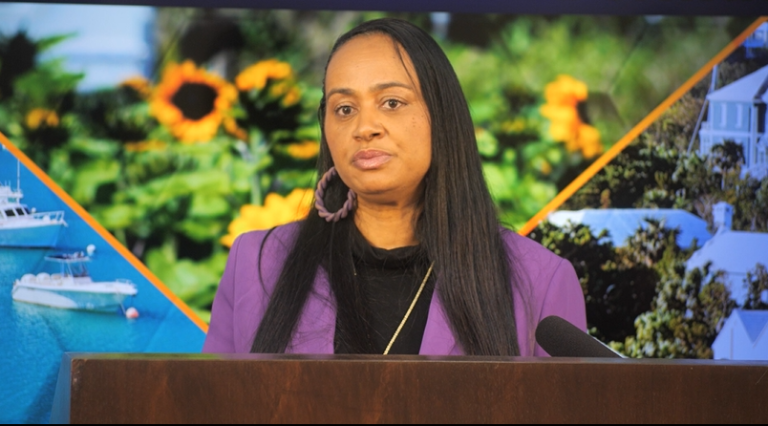
Tinee Furbert, the Minister of Youth, Social Development and Seniors updated the House of Assembly on the Annual Financial Assistance Report 2024/25

The number of families receiving Child Day Care Allowance jumped 65% in 2025 while the number of overall people receiving Financial Assistance went down 1%, according to the latest government report.
Tabling the document in the House of Assembly this morning, Minister Tinee Furbert of Youth, Social Development and Seniors said 1,043 pensioners and seniors, 728 people with disabilities, 74 unemployed and 132 low-income earners received financial assistance.
Meanwhile, the number of child day care allowance recipients rose from 158 to 260.
The total average of financial assistance clients fell from 1,977 service users to 1991 compared to the previous year.
Minister Furbert said, “The Actual programme expenditure for grants directly supporting financial assistance and child day care allowance recipients totalled $51.74 million.
“The highest financial assistance expenditures were rent, nursing and rest home fees, food, and health insurance for HIP and Future Care.”
These figures were outlined in the Annual Financial Assistance Report 2024/25, made public on the government’s website.
Minister Furbert further said that work will continue to improve the use of data collection to remain compliant with the relevant legislation and monitor expenditure at the Department of Financial Assistance.
She added, “These measures enableDFA to demonstrate compliance with legislation, improve service delivery to meet client needs and minimize financial and operational risks. During the period 2024/2025, transaction monitoring was performed on 78,023 – line transactions with no non-compliance issues identified.”
The Financial Assistance Annual Report is online at gov.bm now and hard copies will be available next week at the Ministry of Youth, Social
Development and Seniors Headquarters.
Allshores instructed to delay Phoenix deal

Health Minister Kim Wilson says Bermuda’s competition laws must be modernised to guard against ‘de facto monopolies’

Following a move by an insurer to narrow its drug distribution network, the Health Minister has reiterated that Government is committed to introducing anti-monopoly legislation. (SCROLL down for full Ministerial statement)
This week, Bermuda Broadcasting broke the story that Phoenix Pharmacies was to become Allshores’ designated provider for a list of 46 medications, prompting concern from independent pharmacies and doctors.
However, Kim Wilson today said she has directed the Bermuda Health Council to “formally request that Allshores implement a 60-day deferral of its pharmacy network policy to 1 May”.
“This pause is essential to allow comprehensive review, data analysis, and structured dialogue. Decisions of this magnitude must be guided by evidence and public accountability.”
The Minister of Health added that, in both their 2025 election platform and the 2025 Throne Speech, Government had made it clear that they intend to introduce modern anti-trust legislation.
“In a small island economy such as Bermuda’s,” the Minister said, “markets are naturally concentrated”.
“Without appropriate legislative safeguards, consolidation can occur quickly and with system-wide consequences.”
“Competition law is not about punishing success; it is about protecting the public interest. It ensures that innovation thrives, that consumer choice is preserved, and that market power is not exercised in ways that undermine affordability, fairness, or access.”
Citing the merger of BF&M and Argus into Allshores, and the vertical integration now extending into pharmacy networks, Minister Wilson says this shows why “Bermuda must modernize its competition framework”.
However, she added that proposed legislation will not target any single entity, but will establish clear, fair and transparent rules that promote a level playing field.
Along with the introduction of such legislation, the Minister also said Government is committed to enhancing the existing national drug formulary to reduce costs.
UPDATE, 5pm Friday:
The Bermuda Health Council has been in touch with Allshores regarding the Minister’s request to pause its plans. No change to the timeline has yet been confirmed.
A BHeC spokesperson told Bermuda Broadcasting, “at this time, the Council has not received confirmation that the effective date has been adjusted.”
“Implementation decisions remain within Allshores’ operational remit, and any change to the timeline would be communicated directly by them.”
In a statement this afternoon, Allshores said, “we anticipate continuing to work collaboratively and in partnership with the Health Council over the coming days — as we have done throughout the development of this initiative and prior to its launch.”
“We remain committed to maintaining an open and constructive dialogue as this initiative progresses.”
Ministerial Statement by Minister of Health, Kim Wilson
UK’s Starmer vows to fight political ‘extremes’ after suffering vote defeat
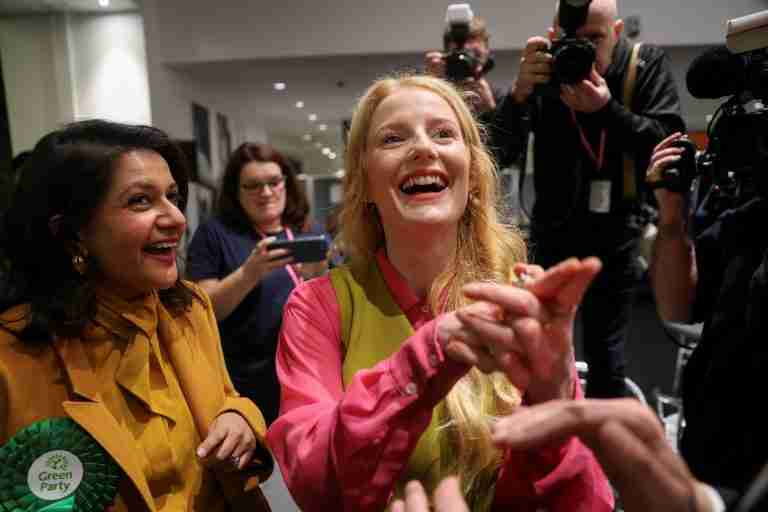
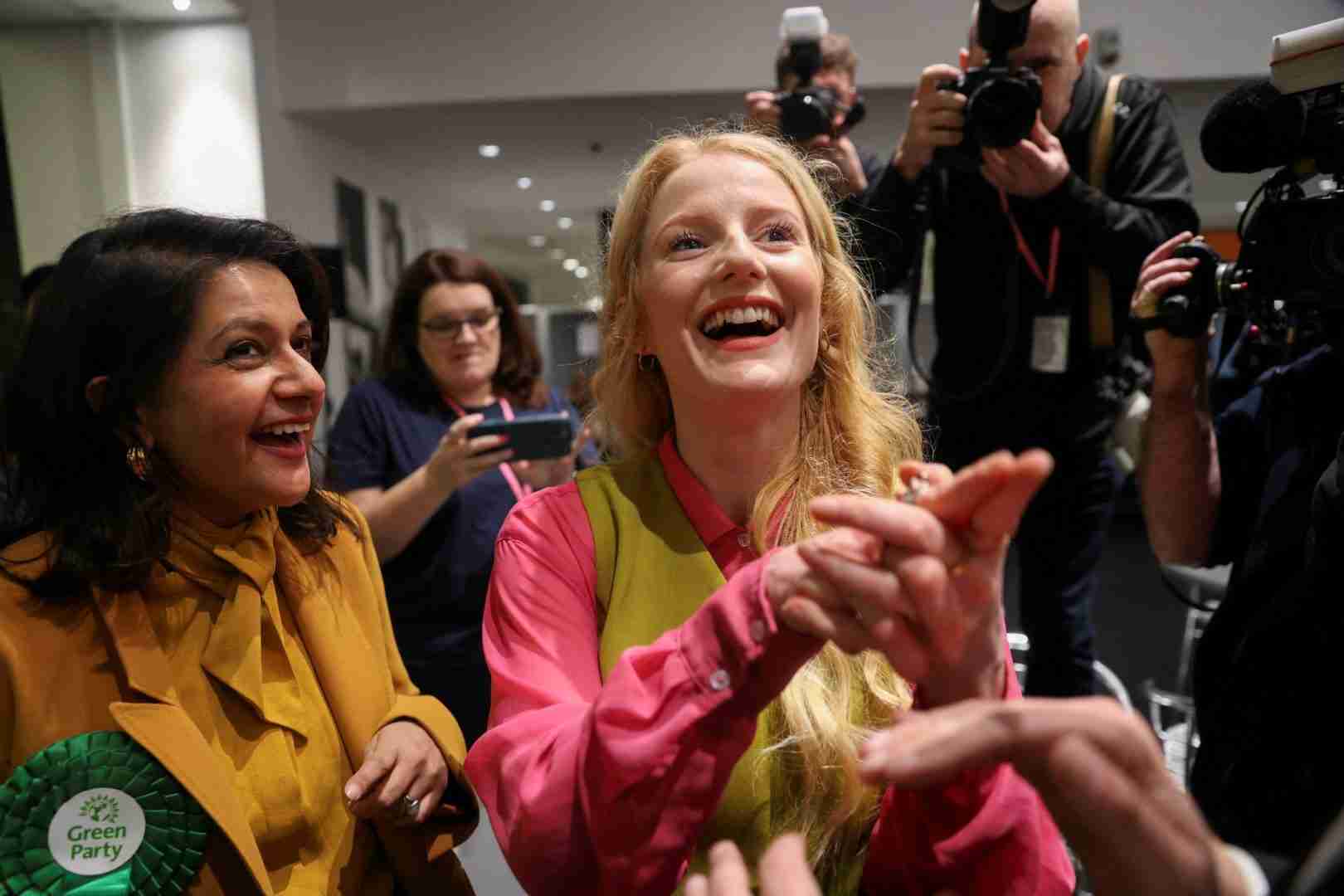
The Green Party’s Hannah Spencer won the contest for the vacant parliamentary seat of Gorton and Denton, with Nigel Farage’s populist Reform UK party coming second, and Labour pushed into third place
International News via Reuters:
British Prime Minister Keir Starmer pledged to fight political “extremes” on the right and left on Friday after his Labour Party suffered a humiliating election defeat to the left-wing Green Party in an area it had dominated for almost a century.
In a result that underscored the breakdown of Britain’s two-party politics, the loss of one of Labour’s safest seats in the northwestern English region of Greater Manchester piles pressure on Starmer to prove he should keep his job following weeks of political turmoil and calls for him to resign.
The Green Party’s Hannah Spencer won the contest for the vacant parliamentary seat of Gorton and Denton, with Nigel Farage’s populist Reform UK party coming second, and Labour pushed into third place.
Starmer described the result as “very disappointing”, arguing that while governing parties were often punished at such elections, he understood voter anger.
“I will … fight against the extremes in politics on the right and the left, parties who want to tear our country apart,” he told reporters, promising to work “as long as I’ve got breath in my body” to deliver the change he promised when he won a landslide national election in 2024.
GREENS TARGETING AT LEAST 30 SEATS
But his words will do little to calm some in his party, who criticised an election strategy that focused on the threat from Reform, rather than targeting the Greens.
Spencer told a news conference the party would go from strength to strength before the next national election, which must take place by mid-August 2029, and Green leader Zack Polanski said he wanted to secure at least 30 seats, possibly up to 50, in Britain’s 650-seat parliament.
John Curtice, Britain’s most respected pollster, called the result a “seismic moment”, which means the “future of British politics looks more uncertain than at any stage” since the end of World War Two, uncertainty reflected across much of the West.
STEEP FALL IN SUPPORT FOR LABOUR
Starmer had staked his personal authority on Labour winning the seat by blocking one of his rivals, the popular Manchester Mayor Andy Burnham, from standing, and by visiting the constituency this week, when British leaders normally avoid campaigning in local areas if they risk losing.
The defeat comes after Starmer faced the most dangerous moment of his premiership this month when some of his lawmakers said he should resign over his decision to appoint Labour veteran Peter Mandelson as ambassador to Washington, despite his links to the late sex offender Jeffrey Epstein.
Labour won just over half the vote in Gorton and Denton at the last general election in 2024.
On Friday, the Green Party won 40.7% of the vote. Reform came second with 28.7% and Labour finished third with 25.4%.
OLD LOYALTIES FRACTURE AS VOTERS SHIFT TO INSURGENT PARTIES
Labour lawmakers say Starmer is unlikely to face an immediate threat to his position, but some on Friday questioned his election strategy.
“In an election we tried to make into one of unity versus division, the electorate chose division – just not the division we were campaigning most against,” said one Labour lawmaker on condition of anonymity.
Starmer could be challenged after May elections, some said, when Labour is expected to fare badly in local and regional polls, including for the parliaments in Wales and Scotland.
Gorton and Denton was once part of Labour’s coalition of industrial areas in England considered to be so impregnable it was called the Red Wall.
But the election contest was an example of how the British electorate has become more volatile, with declining loyalty and growing support for insurgent parties on the right and left.
It was the first time the Green Party, which supports leaving NATO and legalising recreational drugs, had won a one-off election for a seat in parliament or one in the north of England. That takes the party’s total number of seats in the House of Commons to five out of 650.
The Labour government’s main challenge at the next election is likely to come from Reform, which holds only a handful of seats in parliament, but has been leading in opinion polls.
CHALLENGES FOR FARAGE’S REFORM TOO
However, Friday’s result shows how Reform could struggle to win in some places, particularly ethnically diverse urban areas.
Reform’s candidate Matt Goodwin alienated some voters in Gorton and Denton, which had a large number of Muslim residents, with his past comments that millions of British Muslims “are fundamentally opposed to British values and ways of life”.
Farage said the result, in an area where some Muslim voters have called for greater support for Palestinians in Gaza, was a “victory for sectarian voting and cheating”.
The Electoral Commission, an independent body which oversees elections, said it was “aware of the report” suggesting there had been instances of “family voting” when two voters either confer or direct each other on voting, which breaches the secret ballot.
“We encourage anyone who believes an offence has occurred to report it to the police,” it said in a statement.
Additional reporting by Elizabeth Piper, William James, Alistair Smout, Sam Tabahriti and Sarah Young; Editing by Clarence Fernandez, Michael Perry and Alison Williams
British Airways owner IAG beats profit estimates, but shares drop on outlook fears

European airlines have been buoyed by premium demand across the North Atlantic, a sector-wide trend in which affluent travellers continue to spend even as U.S. demand for economy fares has softened

International News via Reuters:
British Airways owner IAG reported better-than-expected annual profit on Friday, helped by lower fuel costs and demand strength on core transatlantic routes and in premium cabins.
Still, its shares were down 6% at 1127 GMT, with some analysts disappointed by a lack of profit guidance for this year and worried about potentially higher fuel prices.
European airlines have been buoyed by premium demand across the North Atlantic, a sector-wide trend in which affluent travellers continue to spend even as U.S. demand for economy fares has softened.
IAG has been a European leader in recent years thanks to strengthened transatlantic links in North and South America. However, price-sensitive travellers have pulled back against a backdrop of tariff-related uncertainty and shifting U.S. demand signals.
The group warned in November of weakness in the economy segment of the transatlantic market, sending its share price lower.
“Since Q3 we have seen a rebound,” Chief Executive Luis Gallego told a media call, adding that premium and corporate demand were performing particularly well at British Airways and that bookings for the first quarter of 2026 were strong.
The shares have since recovered, but IAG has lost top spot for share-price growth to Air France-KLM, shares in which have jumped by 50% in the past year. IAG shares are up 36% over the same period.
Other European carriers are also benefiting from robust demand at the top end of the market, with Lufthansa rolling out new premium seats and Air France-KLM enhancing premium products through upgraded cabins, lounges and onboard services.
IAG reported operating profit before exceptional items of 5.02 billion euros ($5.93 billion), slightly ahead of the 4.97 billion euros forecast by analysts polled by LSEG and up 13% year on year.
The company said on Thursday that it would return 1.5 billion euros to shareholders over the next 12 months, starting with a 500 million euro share buyback to be completed by the end of May.
It added that it expected capacity growth of about 3%, with no delivery delays projected from planemakers Airbus and Boeing.
Finance chief Nicholas Cadbury told reporters there was still little visibility for the second and third quarters, explaining why the group did not provide a more detailed outlook, and there was some weakness in the Africa and Middle East region.
($1 = 0.8462 euros)
Reporting by Joanna Plucinska in London and Raechel Thankam Job in Bengaluru. Editing by David Goodman and Mark Potter
EU fast-tracks contentious trade deal with South America’s Mercosur

The European Union normally waits for approval of its free trade agreements by EU governments and the European Parliament
International News via Reuters:
The European Union will provisionally apply a contentious free trade agreement with South American bloc Mercosur to ensure it secures first-mover advantage, European Commission President Ursula von der Leyen said on Friday.
The European Union normally waits for approval of its free trade agreements by EU governments and the European Parliament. However, EU lawmakers voted last month to challenge the agreement in the bloc’s top court, potentially delaying its full implementation by two years.
Approval by the EU assembly will still ultimately be required for the trade pact, but the EU and Mercosur can begin reducing tariffs and applying other trade aspects of the agreement before then.
The deal with Argentina, Brazil, Paraguay and Uruguay, concluded in January after some 25 years of negotiations, could remove around 4 billion euros ($4.7 billion) of duties on EU goods exports, making it the bloc’s biggest ever free trade agreement in terms of potential tariff reductions.
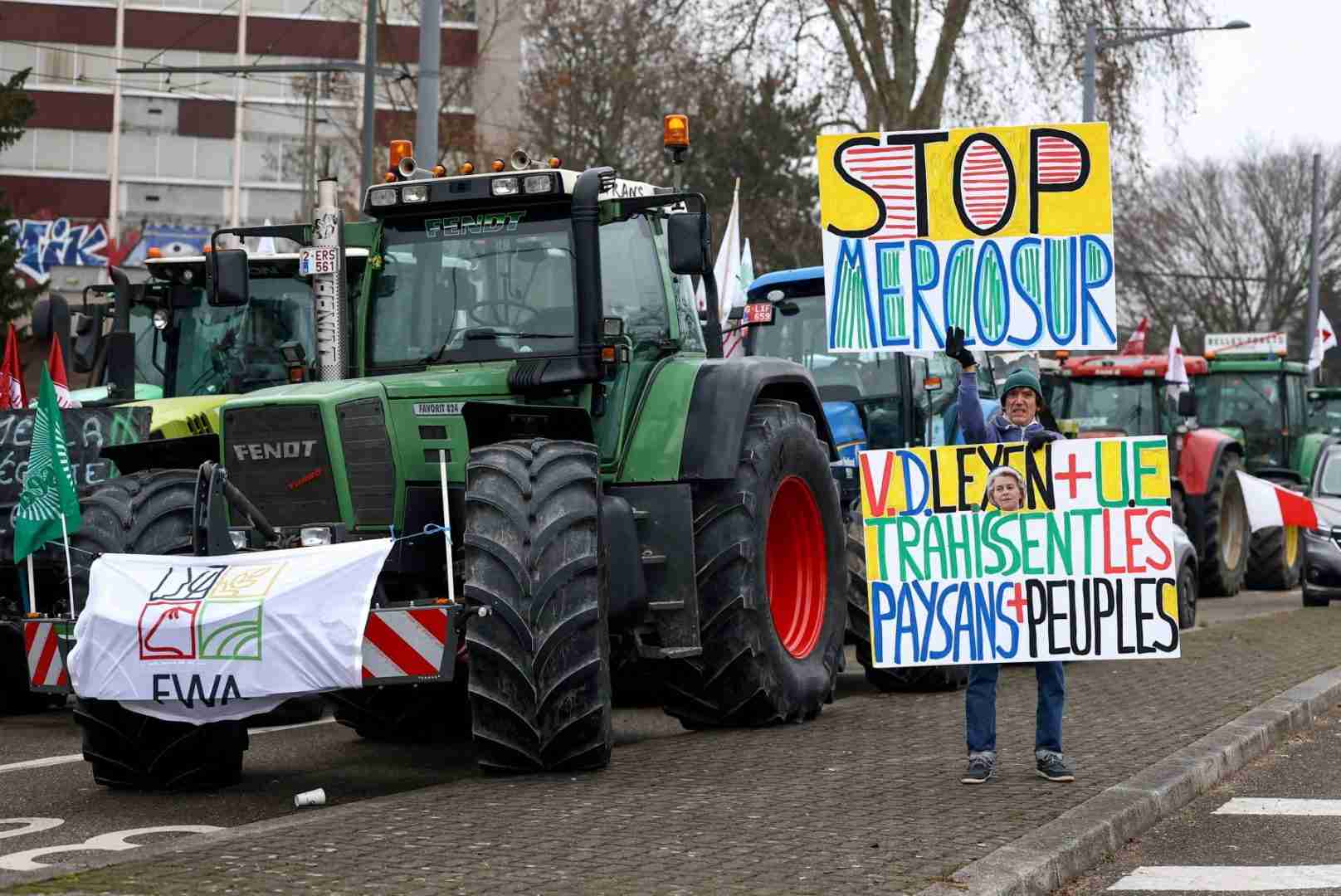
Germany and other supporters such as Spain say the deal is essential to offset business lost due to U.S. tariffs and to reduce reliance on China for critical minerals. Opponents led by France – the EU’s largest agricultural producer – say the deal will sharply increase imports of cheap beef, sugar and poultry, undercutting domestic farmers who have staged repeated protests.
The Commission’s move follows Argentina and Uruguay ratifying the agreement on Thursday, with Brazil and Paraguay expected to follow soon. Von der Leyen said the deal offers Europe first-mover advantage, but this advantage had to materialise.
“I’ve said before, when they are ready, we are ready,” von der Leyen said in a short statement. “On that basis, the Commission will now proceed with provisional application.”
($1 = 0.8473 euros)
Reporting by Philip Blenkinsop, editing by Andrei Khalip
Dancing robots bring support, company to Barcelona elderly

Like many countries, Spain faces rising life expectancy and falling birth rates, increasing pressure on its care sector to support an ageing population

International News via Reuters:
Barcelona resident Irene Veglison had not danced for more than two decades until a robot moved into her home three months ago.
The 67-year-old received the 1.35-metre-tall device in November as part of a government project to support people in the early stages of cognitive decline.
“We’re developing this pilot project to improve tele-assistance,” said Marta Villanueva Cendán, a councillor for Barcelona’s municipal council.
Like many countries, Spain faces rising life expectancy and falling birth rates, increasing pressure on its care sector to support an ageing population.
“In the future, we want the robots to detect risk and alert professionals, like if the person has fallen and cannot respond,” the councillor added.
Barcelona has deployed 600 such bots to private homes and care centres, under a programme backed by a 3.8 million euro ($4.47 million) grant from the European Union’s COVID recovery funds.
The devices are built by U.S.-based Misty Robotics and distributed in Europe by Catalan firm Grup Saltó.
Veglison, who lives with her two cats, has named her bot Sandi.
It reminds her to take her medication at 9 a.m., tells her when her doctor appointments are, wakes her up in the morning and bids her goodnight at the end of each day.
Nearly 2 million people over 65 live alone in Spain, three-quarters of them women, according to official data.
Studies estimate the country will need to double its long-term care workforce by 2030. Yet, pay about 10,000 euros below the national average has deterred younger workers and more than half of current staff are over 45, according to think-tank Funcas.
In an emergency, Veglison can call a social worker through the device, which has a camera that can be activated remotely to assess the situation and offer help.
Scrolling through YouTube on its built-in screen, she selected a French chanson and swayed with Sandi as the screen tilted back and forth with her movements.
The devices are fitted with screens offering entertainment apps, a calendar, maps, and a selection of cartoon-like faces to set when it is on standby, with expressions like “surprised”, “loving” or “asleep”.
“It’s not just a trinket: there are lots of people behind it who are looking out for you, checking whether you’ve fallen down, whether you’re okay,” Veglison said.
($1 = 0.8492 euros)
Reporting by Alba Ferrer, Victoria Waldersee; Writing by Victoria Waldersee; Editing by Nivedita Bhattacharjee
Greens directly challenge UK’s ailing Labour Party with vote win
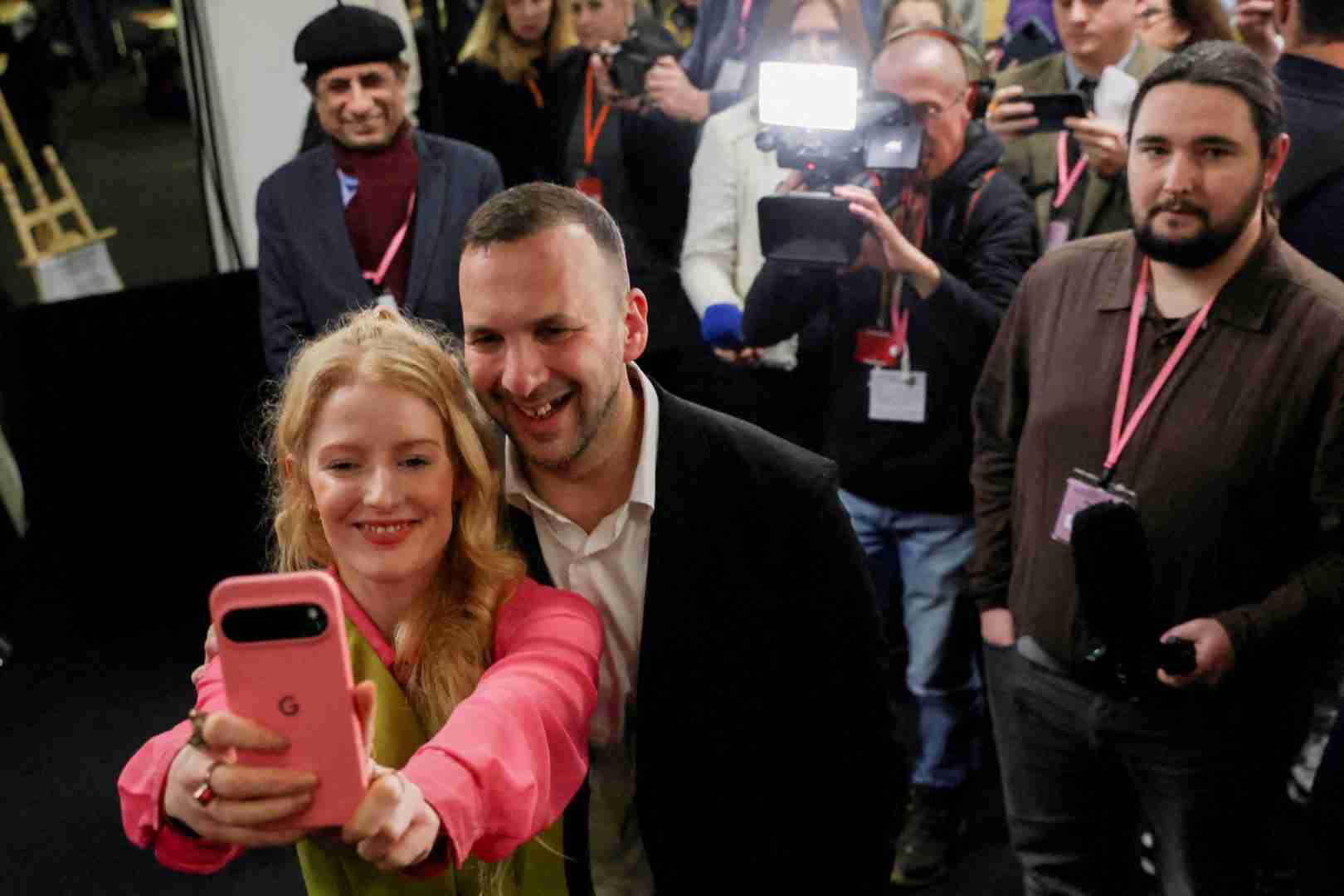
It was a direct challenge to the governing Labour Party of British Prime Minister Keir Starmer
International News via Reuters:
Hannah Spencer’s victory speech on becoming the Greens’ fifth lawmaker on Friday barely touched on the environmental issues that have defined the party, instead attacking “billionaires” profiting from Britain’s working class.
It was a direct challenge to the governing Labour Party of British Prime Minister Keir Starmer, criticised by some on the left of his movement for abandoning the party’s traditional socialist values to fight a threat from the populist Reform UK.
The landslide victory of the Greens in a so-called by-election in northwest England’s Greater Manchester has emboldened the voices calling for Starmer to abandon a strategy of tracking to the right on issues such as tackling illegal immigration to fight Brexit veteran Nigel Farage’s Reform.
And while governing parties almost always lose by-elections when voters often air their anger, the thumping defeat could empower those on the left to again challenge Starmer after an attempt earlier this month to force his resignation failed.
STARMER STRATEGY NEEDS TO CHANGE, UNION SAYS
The head of UNISON, Britain’s biggest trade union which is a large Labour donor, said Starmer was “reaping the electoral consequences” of his strategy in the election for a lawmaker to represent the voting area of Gorton and Denton in parliament.
“A Labour government should be standing up for workers, defending migrants and refugees, and taking the fight to Nigel Farage rather than letting him set the agenda,” UNISON general secretary Andrea Egan said in a statement.
“Under Keir Starmer the party is failing on every count, leaving the Greens to fill the vacuum. Cosying up to the rich and powerful, and protecting their interests whilst attacking ordinary working people and the left has singularly failed.”
Richard Burgon, a leftist Labour lawmaker who is a member of the Socialist Campaign Group in parliament, said on X the result “means ditching the approach of trying to ape Reform and kicking the left”, adding the strategy had “alienated so many people who have voted Labour previously”.
Labour was forced into third place in the election, which saw the Greens win with 40.7% of the vote and Reform take second place with 28.7%.
One centre-left Labour lawmaker described the Greens’ victory as “ultimately the worst possible outcome”.
“Now we can’t say we’re the best placed to beat Reform,” the lawmaker said on condition of anonymity.
GREENS CHALLENGING LABOUR ON THE LEFT
The sentiment was not lost on the Green Party, whose origins were in environmental campaigning but which has widened its policy offer to directly challenge Labour on the left.
Spencer’s victory speech was aimed directly at “people here … who feel left behind and isolated”, those who “instead of working for a nice life, we’re working to line the pockets of billionaires”.
She also criticised the “divisive figures who constantly scapegoat and blame our communities for all the problems in society”, promising to fight for “my Muslim friends”, a large population in the area which the Greens appeared to win over with a promise to better support Palestinians in Gaza.
Some Labour lawmakers said the Gaza message had led to abuse on the campaign trail over the party’s stance on the war, with some accusing them of being complicit in what the Greens say is the genocide of Palestinians.
The government says it is up to the international courts to determine whether genocide has occurred in Gaza, instead calling the situation a “humanitarian catastrophe”. Israel has strongly denied allegations of genocide.
Zack Polanski, leader of the Greens, denied that his party had played to racism during the campaign, telling BBC radio it was “calling out the bad decisions of this prime minister”.
Sharon Graham, head of the powerful Unite trade union, said the result was a “wake up call”.
“Labour need to now ditch the gimmicks and get back to being Labour – not new, not one that plays games, but real Labour,” she said on X.
Reporting by Elizabeth Piper; Additional reporting by William James and Sarah Young; Editing by Alison Williams
Munich Airport, Lufthansa pledge to overhaul emergency protocols after snowstorm mishap
The airport and airline apologised for what they deemed an “unacceptable” incident and announced new measures to prevent a recurrence
International News via Reuters:
Munich Airport and Lufthansa on Friday vowed to revamp emergency protocols following the stranding of around 600 passengers on six planes during a snowstorm last week.
“We, Munich Airport and Lufthansa, made mistakes that night and together we take responsibility,” Lufthansa’s Hub Manager for the Munich Airport Heiko Reitz said at a joint press conference in Munich.
The airport and airline apologised for what they deemed an “unacceptable” incident and announced new measures to prevent a recurrence.
Operational shortfalls on Feb. 19, including lack of terminal space, stretched bus capacity, and staff shortages amid a strict night curfew, were cited as key factors that delayed passenger transfer.
Passengers spent hours aboard aircrafts with limited food or blankets, facing sparse updates from crews. Lufthansa said it began contacting affected travellers the following day to handle compensation claims.
The response drew criticism from pilot and firefighter unions, while local politicians demanded accountability, warning the event could harm Munich’s reputation as a transit hub.
Lufthansa and Munich Airport pledged to improve coordination and readiness in future disruptions.
Reporting by Christina Amann, Kirsti KnolleEditing by Linda Pasquini
Britain’s FTSE 100 hits new peak on miners strength, on track for eighth monthly gain
The blue‑chip FTSE 100 rose 0.5% to 10,900 points as of 1022 GMT, while the mid‑cap FTSE 250 was up 0.2%, less than 2% from its 2021 peak
International News via Reuters:
London’s FTSE 100 climbed to a fresh record high on Friday and was set for its eighth straight monthly rise, boosted by heavyweight miners as lingering tariff concerns fuelled safe-haven demand in some commodities.
The blue‑chip FTSE 100 rose 0.5% to 10,900 points as of 1022 GMT, while the mid‑cap FTSE 250 was up 0.2%, less than 2% from its 2021 peak.
Precious‑metal miners and industrial‑metal miners rose as demand for gold and copper increased, with investors flocking to safe‑haven assets amid uncertainty over U.S. tariff policies and heightened tensions between the United States and Iran.
Mining stocks have been among the biggest contributors to the FTSE 100’s gains over the past year, supported by sustained tightness in commodity markets and firm metals pricing. [GOL/] [MET/L]
The FTSE 100 is on track for its longest monthly winning streak since 2012–2013.
The index has gained 6.6% in February, outperforming U.S. and European benchmarks as optimism around a potential Bank of England rate cut in March lifted sentiment. At times, however, gains have been tempered by worries that emerging AI tools could disrupt established business models, as well as trade-related uncertainties from U.S. President Donald Trump’s fresh tariffs earlier this month.
Among others, Rightmove rose 4.7% to the top of the benchmark index after the UK’s biggest property portal posted in‑line annual profit and announced a 90 million pounds share buyback.
Wizz Air slid 10.5% after major shareholder Indigo Partners sold 10 million shares at 1,250 pence apiece in a placement worth about 125 million pounds ($168.7 million).
Senior was up 18.2% after the engineering firm said it had received several takeover approaches in recent months and is considering two, with talks ongoing with an undisclosed bidder.
On the political front, Prime Minister Keir Starmer’s Labour Party suffered a defeat to the Green Party in a Manchester ward it had dominated for nearly a century, underscoring the fragmentation of Britain’s traditional two‑party system.
Reporting by Tharuniyaa Lakshmi in Bengaluru; Editing by Leroy Leo
Sterling struggles after UK Labour Party suffers defeat in stronghold

Sterling was heading for a second weekly decline, having lost 0.1% and on Friday stalled against both the dollar and the euro, which traded at $1.3483 and 87.55 pence, respectively

International News via Reuters:
The pound struggled to gain traction on Friday, as mounting geopolitical tensions prompted investors to back away from more typically volatile currencies, and after an election in northern England brought a resounding defeat for Prime Minister Keir Starmer’s Labour party.
Sterling was heading for a second weekly decline, having lost 0.1% and on Friday stalled against both the dollar and the euro, which traded at $1.3483 and 87.55 pence, respectively.
Britain’s left-wing Green Party on Friday scored a landslide victory in an area of Manchester the Labour party had dominated for almost a century, piling further pressure on Starmer to prove that he should keep his job following weeks of political turmoil and calls for him to resign.
Gilts edged up modestly, pushing yields lower. Five-year bonds, which are set for their strongest monthly performance since last October, were last yielding 3.703%, down 1.4 basis points on the day, near their lowest since September 2024.
The pound is highly sensitive to national politics. Doubt over Starmer’s future and whether a more left-leaning successor might be inclined to further strain the UK’s finances with more spending, for example, has acted as a drag on sterling for several weeks.
“Anything that is seen weakening the position of Prime Minister Keir Starmer has hit the pound as of late, and the success of a more left-wing party (Greens) in this special election might increase the perceived possibility of a more leftish successor to Starmer should he leave office early,” ING strategist Francesco Pesole said.
Prediction market Polymarket shows customers are placing a roughly 53% chance of Starmer stepping down by June, up from around 24% at the start of February.
Bank of England Chief Economist Huw Pill will address an economics panel later in the day. The BoE is widely expected to cut rates in March and deliver a second cut before the end of the year, based on money markets.
Reporting by Amanda Cooper; Editing by Toby Chopra

