Friday, November 6, 2026
Home Blog Page 464

Bank ‘risk transfer’ boom needs close monitoring, Basel Committee warns

These “synthetic risk transfers” (SRTs) involve a bank selling all or part of the credit risk of a group of assets to investors such as hedge or pension funds

International News via Reuters:

Banks are increasingly turning to bespoke deals with private investment funds to shed credit risk, but the market needs close monitoring as it spawns new vulnerabilities for the global financial system, the world’s forum for banking regulators said.

These “synthetic risk transfers” (SRTs) involve a bank selling all or part of the credit risk of a group of assets to investors such as hedge or pension funds. They allow banks to free up capital while maintaining their client relationships.

SRTs are not new, but they have proven particularly popular in the European Union, with new transactions more than tripling between 2016 and 2024 after EU regulatory changes provided some synthetic securitisations preferential prudential treatment, the Basel Committee on Banking Supervision said in a report on Tuesday.

U.S. volumes have also jumped following regulatory clarity in 2023 on how the deals are treated under bank capital requirements, added the committee, which is made up of banking regulators and central bankers from the G20 economies and other countries. 

Among European banks, Britain’s Barclays, Austria’s BAWAG and Greece’s Alpha are the heaviest users of SRTs relative to the size of their corporate loan books – with the average listed lender using them to cover about 12% of those loans, the report said.

WORRY OVER ‘SHADOW BANKING’ TIES

The committee said SRTs help banks boost lending that is subject to lower capital requirements but warned that heavy reliance on them left lenders exposed to the health of non-financial intermediaries buying the risk. If those investors falter, this could affect the flow of credit.

“A contraction in credit caused by a protracted freeze in SRT markets could exacerbate an economic downturn and increase stress in the non-financial sector, possibly triggering an adverse deleveraging feedback loop,” the committee wrote in the report.

Regulators globally are concerned about the growth of non-bank intermediaries involved in what is often referred to as ‘shadow banking’, because of a lack of transparency and the possibility of new risks that could endanger broader financial stability. 

The committee’s report also highlighted risks over growing links between banks and non-banks – because banks often finance the very investors buying the credit risk – as well as opaque individual deals and weakening underwriting standards.

While some of these risks are being monitored and addressed, the committee said closer supervision was needed as further growth of the SRT market could multiply the risks.

Reporting by Tommy Reggiori Wilkes, additional reporting by Valentina Za in Milan; Editing by Emelia Sithole-Matarise


Civil rights leader Rev. Jesse Jackson remembered as global champion for justice

0

St. Paul AME Pastor Reverend Nicholas Tweed reflects

The world is remembering civil rights leader Reverend Jesse Jackson tonight.  The long-time activist and founder of the Rainbow PUSH Coalition spent decades fighting for equality, justice and economic empowerment, becoming a global voice for peace and civil rights.

Here in Bermuda, Reverend Nicholas Tweed, Pastor of St. Paul AME Church, is reflecting on that legacy. Reverend Tweed, who met Jackson, says his passing is a powerful reminder of the responsibility leaders still carry today – to advocate for fairness, unity and equal opportunity for all.

Qian Dickinson spoke with Reverend Tweed about Jackson’s life, his personal memories, and why the work of justice and peace remains unfinished.

‘A modern transportation system is essential to economic growth’

Transport Minister meets with recently appointed members of the Public Service Vehicle Licensing Board

The Minister of Tourism & Transport, Culture & Sport, the Hon. Owen Darrell, JP, MP, met with the recently appointed members of the Public Service Vehicle Licensing Board (PSVLB) to outline the Government’s coordinated, multi-phase modernisation strategy aimed at improving the sustainability, efficiency, and digital experience of Bermuda’s transportation network for both residents and visitors.

Minister Darrell emphasised the Public Service Vehicle Licensing Board’s role in enforcing existing legislation and upholding fairness and equity, particularly in its handling of complaints, applications, and violations.

The Minister Darrell stated, “Modernisation is about utilising technology and making sure transportation is accessible and user-friendly. This approach is intended to improve the overall experience for individuals with broad needs and preferences. A modern transportation system is essential to economic growth. By forming a supportive environment for the public service vehicle industry, we project increased economic activity, job creation, and improved visitor experiences.”

As part of the transportation modernisation program, key initiatives include:

* The introduction of Digital Fare Media through the Shorelink App.

* The digitisation of Transport Control Department (TCD) applications and processes;

* The integration of electric buses into the Department of Public Transportation (DPT) fleet.

* The addition of two new high-performance, 550‑passenger ferries to replace ageing vessels; and

* Positioning ridesharing as one component of a modern, integrated transportation system.

To support the ridesharing initiative, the Government is amending the Motor Car Act 1951 to introduce app-based, for-hire vehicles. Under this system, available taxis will continue to receive priority for ride requests before private vehicles are dispatched, ensuring a balanced approach while protecting the local taxi industry, and addressing service gaps to support more consistent transportation access across Bermuda.

Oil prices slide 2% to two-week low on talk of progress in US-Iran talks

Brent futures fell $1.41, or 2.1%, to $67.24 a barrel at 11:50 a.m. EST (1650 GMT), while U.S. West Texas Intermediate (WTI) crude fell 65 cents, or 1.0%, to $62.24 in volatile trading

International News via Reuters:

Oil prices fell about 2% to a two-week low on Tuesday on hopes tensions between the United States and Iran were easing after Iran’s foreign minister said the countries had reached an understanding on the main “guiding principles” of their nuclear talks.

Brent futures fell $1.41, or 2.1%, to $67.24 a barrel at 11:50 a.m. EST (1650 GMT), while U.S. West Texas Intermediate (WTI) crude fell 65 cents, or 1.0%, to $62.24 in volatile trading, putting both crude benchmarks on track for their lowest close since February 2. Earlier in the session WTI prices rose more than $1.

Iran and the United States reached an understanding on the main “guiding principles” in a second round of indirect talks in Geneva over their nuclear dispute on Tuesday, but that does not mean a deal is imminent, Iranian Foreign Minister Abbas Araqchi said. 

The talks took place amid a U.S. military buildup in the Middle East. Iran’s supreme leader said on Tuesday that any U.S. attempt to depose his government would fail.

Oil prices are likely to stay volatile, with sharp two-way swings driven by diplomatic signals rather than pure demand-supply fundamentals, said Sugandha Sachdeva, founder of SS WealthStreet, a New Delhi-based research firm.

Investors are closely watching U.S.-Iran relations as any escalation or conflict could lead to Iran closing the Strait of Hormuz. About a fifth of the oil consumed globally passes through the Strait of Hormuz between Oman and Iran, making any disruptions in the area a major risk to global oil supplies.

Iran and fellow Organization of the Petroleum Exporting Countries (OPEC) members Saudi Arabia, United Arab Emirates, Kuwait and Iraq export most of their crude via the Strait, mainly to Asia.

In 2025, Iran was the third-biggest crude producer in OPEC behind Saudi Arabia and Iraq, according to U.S. Energy Information Administration data.

Another factor weighing on prices was the gradual increase in oil production at Kazakhstan’s giant Tengiz oil field after an outage in January, Russian news agency Interfax reported.

RUSSIA AND UKRAINE

Also in Geneva on Tuesday, Ukrainian and Russian officials were set to meet for a new round of U.S.-brokered peace talks, which the Kremlin said would likely focus on territory – the main sticking point.

Any peace resolution could see a lifting of sanctions on Russia, bringing Russian oil back to the mainstream market. In 2025, Russia was the third-biggest crude producer in the world behind the United States and Saudi Arabia, according to data from the U.S. EIA.

Ukraine, meanwhile, continued its attacks on Russian energy infrastructure. The Ukrainian military said on Tuesday it struck the Ilsky refinery, while a drone attack was also reported at the port of Taman.

Reporting by Scott DiSavino and Siddharth Cavale in New York, Robert Harvey in London, Mohi Narayan in New Delhi and Anushree Mukherjee in Bengaluru; additional reporting by Stephanie Kelly; Editing by Thomas Derpinghaus, Will Dunham, David Holmes, Chizu Nomiyama and Andrei Khalip

Qualcomm says UK lawsuit over smartphone chip royalties will be withdrawn

The British consumers’ association which goes by the name of Which? had brought the case on behalf of around 29 million people who bought iPhones or Samsung devices since 2015

International News via Reuters:

Chipmaker Qualcomm said on Tuesday a London lawsuit alleging it had abused its dominant position to force Apple and Samsung to pay inflated royalties will be withdrawn.

The British consumers’ association which goes by the name of Which? had brought the case on behalf of around 29 million people who bought iPhones or Samsung devices since 2015, seeking 480 million pounds ($652.03 million) in compensation.

Which? had argued at a trial last year that Qualcomm made Apple and Samsung pay inflated royalties even if its chips were not used in a device under a worldwide so-called no licence, no chips policy, which inflated the cost of devices.

Qualcomm, however, said the lawsuit mischaracterised its long-standing requirement for manufacturers to obtain a licence for its standard essential patents before buying chipsets.

The Competition Appeal Tribunal had yet to give a ruling following last year’s trial.

Which? said in a statement on Tuesday that it would apply to withdraw the case, having reached an agreement under which Qualcomm will make no payment to the claimant class.

It said it had concluded the tribunal would find Qualcomm did not coerce Apple or Samsung to sign any patent licences or chipset agreements, or agree to any licensing terms.

Which? also said the tribunal would find Qualcomm’s practices “did not infringe competition laws, did not result in inflated royalties, and did not lead to an increase in prices consumers paid for their mobile phones”.

A Qualcomm spokesperson said: “This recognition by the class representative, following a trial on the merits, reaffirms what the courts in the United States have repeatedly held: Qualcomm’s licensing practices are lawful and do not harm competition.”

Apple and Samsung did not immediately reply to a request for comment.

A similar consumer lawsuit against Qualcomm in California, which challenged the company’s patent licensing and exclusive-dealing chip agreements with Apple and other manufacturers, was dismissed in 2023.

($1 = 0.7362 pounds)

Reporting by Sam Tobin; Editing by Catarina Demony and Emelia Sithole-Matarise

Sweden and others oppose calls to delay new EU carbon market

The paper concerns the European Union’s upcoming second carbon market, known as “ETS2”, which from 2028 will impose a price on CO2 emissions produced by heating and transport fuels

International News via Reuters:

Sweden, Denmark, Finland and Luxembourg have opposed calls by other European governments to delay the EU’s upcoming carbon market, as political pressure mounts for the bloc to curb energy costs, a joint paper by the countries showed.

The paper concerns the European Union’s upcoming second carbon market, known as “ETS2”, which from 2028 will impose a price on CO2 emissions produced by heating and transport fuels.

The EU has already delayed the market’s launch by one year, and fast-tracked the distribution of revenues to governments from the scheme. But that has not quelled pushback from leaders in Slovakia and the Czech Republic, who say it will raise fuel bills. 

AMBASSADORS TO DISCUSS STRONGER PRICE CONTROLS

“Any further postponement or amendments related to the market-based price of ETS2 would substantially undermine the effectiveness of EU climate policy,” Sweden and the other countries said in the paper circulated among EU governments and seen by Reuters.

EU countries’ ambassadors meet on Wednesday to sign off on stronger controls on ETS2 prices, which Brussels proposed after 19 countries demanded this last year. The four countries’ paper said that once these changes are passed, the EU should leave the system alone.

Debates about changing ETS2 further “are reducing the system’s credibility and increase uncertainty for investment decisions by firms and households,” they said.

ETS2 is designed to encourage the shift to electric vehicles and cleaner home heating systems, by putting a price on CO2 emissions, and recycling the revenues from the scheme to subsidise electric cars and energy-saving home renovations for poorer households and smaller businesses.

Brussels has also faced mounting pressure from some governments and industries to weaken its existing carbon market, which puts a price on CO2 emissions from industries and power plants.

The European Commission will propose a review of the existing carbon market later this year. Some governments are eyeing that as a route to also change ETS2, since it is governed by the same law, EU diplomats said.

Reporting by Kate Abnett; Editing by David Holmes

EU approves higher dose of Novo Nordisk’s Wegovy

The decision follows a positive recommendation from the European Union’s drug regulator in December for the drug’s 7.2 milligram dose

International News via Reuters:

Novo Nordisk said on Tuesday the European Commission has approved a higher dose of its popular obesity drug Wegovy, providing patients and doctors with an option that may support greater weight loss.

The decision follows a positive recommendation from the European Union’s drug regulator in December for the drug’s 7.2 milligram dose.

With the approval, doctors in the EU may now prescribe the 7.2 mg dosage as three 2.4 mg injections, to be taken in one sitting, once a week, the Danish drugmaker said.

In a 72-week late-stage trial involving 1,407 adults without diabetes, participants on the 7.2 mg dose lost an average of 20.7% of body weight, compared with 17.5% for the 2.4 mg dose.

Novo has also applied for an EU approval of a 7.2 mg single-dose pen. If approved, this could be available this year, the company said.

Reporting by Mariam Sunny in Bengaluru; Editing by Shilpi Majumdar

F.A. Cup semi-final draw will see heavyweights collide

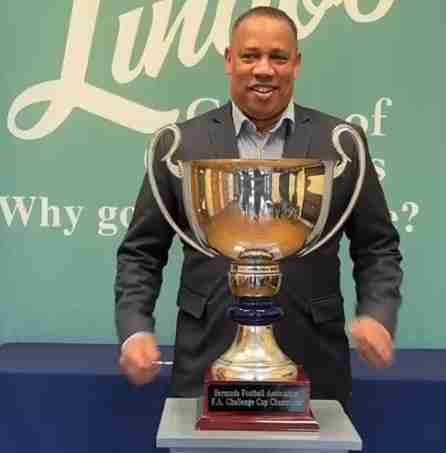
The road to the National Sports Center is set after the Bermuda Football Association hosted the FA Challenge Cup semi-final draw at the Clyde Best Centre of Excellence. With the island’s heavyweights successfully navigating a weekend of quarter-final drama, the resulting fixtures promise a mouth-watering conclusion to the country’s most prestigious knockout competition.

League leaders PHC Zebras will take on the resilient Devonshire Colts in the first semi-final. The Zebras reached the last four following a dramatic “great escape” against the Boulevard Blazers, where two stoppage-time goals from Jaylon Bather secured a 4–3 victory. They face a Colts side that has proven to be a formidable opponent this season, having secured their spot with a late 1–0 win over X-Roads. While PHC will start as favorites, the Colts’ current form suggests a classic encounter is on the cards.

The second semi-final is a true “clash of the titans” as defending champions North Village Rams face St George’s Colts. The Rams were forced to dig deep into extra time to get past Paget Lions in the previous round, with Jai Bean’s hat-trick proving the difference. They now meet a St George’s side that looked highly impressive in their 2–0 dismantling of Devonshire Cougars. Although Village have had the upper hand in their meetings so far this season, the East Enders will view this as their prime opportunity to reclaim the trophy.

The BFA is expected to confirm specific dates and neutral venues for these high-stakes matchups in the coming days.

A peek into the high-stakes drama of NFL training

The NFL Combine in Indianapolis is often described as the most high-stakes “job interview” in professional sport. For the world’s elite collegiate athletes, it is a week of rigorous physical testing and psychological scrutiny. For Bermudian personal trainer Liam Evans, it was a rare opportunity to step behind the curtain and observe the pinnacle of athletic preparation.

Evans reflected on his time embedded with a top-tier combine training programme, offering a unique perspective on what separates the professional elite from the amateur ranks. He was quick to dispel the myth that professional training involves “super-advanced” or “secret” exercises that are inaccessible to the public. Instead, he noted that the true difference lies in the intent and intensity brought to the fundamental movements.

“At this level, your training is essentially your job; your life depends on it,” Evans explained. “It’s not necessarily that they’re doing wild or different things. It’s that they are doing the fundamental exercises with incredible intent. Every lift, every sprint, has a meaning behind it.”

During his week as an observer, Evans witnessed the grueling daily schedule of a Combine prospect. The day begins early with speed work and sprint preparation—the 40-yard dash being the “holy grail” of Combine metrics—before transitioning to strength work and, crucially, performance therapy. For Evans, the challenge is now translating these “big-league” lessons to the Bermudian context.

“The successful ones don’t need to be told to show up or do the right things; it’s innate within them,” Evans noted. He believes the goal for local athletes is to adopt that “professional intent,” regardless of whether a multi-million dollar contract is on the line.

Terceira makes history with Miami breakthrough

Lee Terceira has etched her name into the tennis record books after a stunning victory at a Level 5 Open USTA Tournament in Miami. In doing so, she has become the first female junior from Bermuda to both compete in and win a Level 5 event in the Under 12 Division.

The achievement is all the more extraordinary given that Terceira was not originally accepted into the draw due to her ranking. It was only following a series of late withdrawals that a spot became available, and the young Bermudian received confirmation of her entry only the night before the first round began.

She began her campaign with a clinical performance in the Round of 16, dispatching Illinois’ Bhuvika Syamagari in straight sets. However, the true test of Terceira’s resolve arrived in the quarter-finals against second seed Sophie Murphy Alvarez. After dropping a one-sided first set, Terceira showed immense character to level the match, eventually winning a nerve-wracking final tie-breaker 10-6.

The semi-final followed a similarly dramatic script, with Terceira once again triumphing in a third-set decider against Andrea Rivas. In the championship match, she demonstrated a temperament for the big occasion, producing a disciplined and powerful display to defeat the number three seed, Lidiia Filippova, in straight sets.

This landmark victory marks a significant milestone for the Bermuda Lawn Tennis Association’s junior development programme and establishes Terceira as one of the region’s most formidable young talents.

Bermudian quartet excels in San Diego showcase

Bermuda’s youth football pipeline continues to impress on the world stage, as four standouts from IDA-Bermuda delivered marquee performances at the Surf Nation Champions League in San Diego this week. The event, held at the premier Surf Sports Park, serves as the ultimate scouting ground for the 2012 birth year, with players vying for spots on the Surf Select National team.

In the Boys’ Division, Vashon Martin, Xavier Hidalgo, and Cairo Burgess were instrumental in a perfect run for the New England Surf Select North East squad. The trio helped spearhead a dominant campaign that saw the team go undefeated to capture the Bronze flight title. Their journey to the trophy included high-scoring victories over San Diego Surf ECNL Blue (7-1) and White (3-0), a gritty 3-1 win over Solano Surf, and a final 5-5 shootout victory against Monterey Surf to lift the silverware.

On the girls’ side, Devi Samuels showcased her talent in the Under 14 Silver Division with Canada’s Ottawa City SC. Samuels was a key figure in the midfield as the team bounced back from an early loss to secure vital wins over Hawaii Surf SC and Central Coast Surf. While the team finished a strong second in the group, their bid for a final trophy was cruelly cut short when a severe Southern California storm forced the cancellation of the final showcase games.

The pathway for these youngsters remains bright. Through the partnership between Warwick Football Academy and the International Development Academy, coached by Richard Todd, these players are now in the frame for national selection. If called up, they will represent Surf Nation at elite international events later this year, including the Surf Cup International in Spain and the Target USA Cup in Minnesota.