



Latest figures show inflation edging up


Today, the Ministry of Economy and Labour released the Department of Statistics’ September 2025 Consumer Price Index (attached).
In summary, consumers paid 2.2 per cent more in September 2025 than they did a year ago for the basket of goods and services included in the Consumer Price Index [CPI]. This level of inflation increased 0.3 percentage points from the August 2025 annual inflation rate. Some highlights for September 2024 to September 2025 include:
- The Health & Personal Care division increased 3.9 per cent.
- The Rent division rose 1.9 per cent.
- The Education, Recreation, Entertainment & Reading division increased 2.5 per cent.
- The Food division increased 2.5 per cent.
- The Transport & Foreign Travel division advanced 2.4 per cent.
Between August 2025 and September 2025, the average cost of goods and services increased 0.3 per cent. Additional areas of note between August 2025 and September 2025 were as follows:
- The Education, Recreation, Entertainment & Reading division increased 2.2 per cent.
- The Tobacco & Liquor division increased 0.8 per cent.
- The Food division rose 0.1 per cent.
- The Rent division was unchanged.
*Note: The Government measures the annual and monthly inflation rates. Annual changes are from the same month last year, and monthly changes are from month to month. The September 2025 Consumer Price Index is available online at https://www.gov.bm/consumer-price-index.
Minister sees off deployed soldiers

Troops headed to Jamaica for hurricane recovery mission

Images supplied.
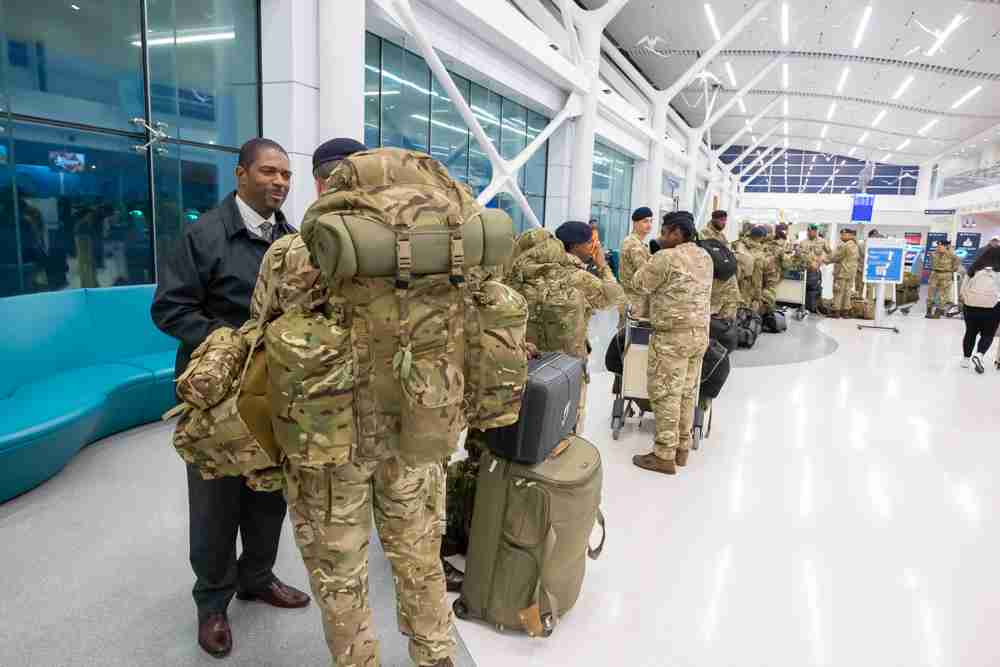
The Minister of National Security, the Hon. Michael A. Weeks, JP, MP, attended LF Wade International Airport on Sunday morning to personally wish members of the Royal Bermuda Regiment well as they departed Bermuda for a disaster recovery mission in Jamaica.
The Minister met with the soldiers ahead of their departure, thanking them for volunteering to serve overseas and commending their professionalism and commitment to assisting communities affected by Hurricane Melissa.
The deployment forms part of Bermuda’s commitment to support Jamaica following the catastrophic storm, which made landfall on 28 October 2025 as a Category Five hurricane and caused widespread devastation.
More than 700,000 people were affected, with dozens of communities cut off and over 200,000 homes destroyed or severely damaged. Up to twenty-seven Royal Bermuda Regiment personnel will serve in Jamaica from 15 to 28 February 2026, where they will work alongside regional partners in coordinated recovery efforts.

Their primary task will focus on repairing storm damaged roofs in the parish of St. Elizabeth, one of the hardest hit areas. Minister Weeks said, “It was important for me to be at the airport this morning to personally thank these men and women before they departed.
“Each of them volunteered for this mission, and that willingness to step forward and serve speaks volumes about the character and professionalism of the Royal Bermuda Regiment.”
He added, “This deployment reflects Bermuda’s commitment to provide support to our Caribbean neighbours in times of need. “When a country with whom we have strong historical ties faces devastation on this scale, support must go beyond words. These soldiers are carrying Bermuda’s support with them in a practical and meaningful way.”


The Minister also confirmed that he plans to travel to Jamaica next week to visit the troops in person and observe the recovery efforts firsthand. The soldiers will be embedded with the Jamaica Defence Force Engineer Regiment, which will lead and coordinate the recovery projects to ensure resources and skills are directed where they are most needed.
They will operate in field conditions and have met strict pre-deployment standards, including medical and fitness requirements. Minister Weeks said, “This mission also shows the strength of regional cooperation. By working alongside partner defence forces, Bermuda is contributing where the need remains real and where our skills can make a measurable difference for families working to rebuild.”
Minister Weeks thanked the Regiment’s leadership and all personnel taking part, stating that Bermuda made a commitment to assist, and this deployment ensures that promise is honoured.


First national LGBTQ+ survey under way

Findings to strengthen programs, support funding, and guide policy conversations

Bermuda has launched its first national survey focused on the lived experiences of LGBTQ+ people connected to the island. Conducted by Global Research in partnership with OUTBermuda, the survey invites people to share what life is really like in Bermuda, safely and anonymously.
It is designed to include people who are openly LGBTQ+, as well as those who do not feel safe enough to be out. The survey explores experiences across areas of daily life, including safety and belonging, access to healthcare and mental health support, experiences in schools and workplaces, community connection, and experiences of support or discrimination.
The findings will help build a clearer picture of the realities LGBTQ+ people face and will be used to inform advocacy, strengthen programs, support funding, and guide policy conversations. The research will also contribute to the continued development of OUTBermuda’s Policy Manifesto and long-term work to help shape the Bermuda our community deserves.
“This survey is about listening,” said Joshua Samuels, Executive Director of OUTBermuda. “It creates space for people to share their experiences in their own words, including those who have not always felt safe enough to be visible.”
The survey is open to people aged 18 and over who are LGBTQ+ and live in Bermuda, as well as LGBTQ+ Bermudians living overseas. Take the survey at https://www.research.net/r/LGBTQPlusSurvey2026
Participants may choose to enter optional prize draws, including a luxury weekend stay at the Hamilton Princess and an early completion draw for a weekend stay at the Rosedon Hotel.
Annual PALS Walk set to unite community

Fundraiser supports cancer patients and families across Bermuda
PALS is preparing for its 38th Annual Fundraising Walk – an event that not only raises money, but brings together hundreds of people whose lives have been touched by cancer.
As Alisa Bernardo reports, the organisation’s work continues to transform lives … providing support not just for patients, but their families as well.
WATCH the full report above.
Factbox-From Australia to Europe, countries move to curb children’s social media access

The ban comes amid mounting concerns over the impact of social media on children’s health and safety

International News via Reuters:
Australia in December became the world’s first country to ban social media for children under 16, blocking them from platforms including TikTok, Alphabet’s YouTube and Meta’s Instagram and Facebook.
The ban comes amid mounting concerns over the impact of social media on children’s health and safety.
Below is a summary of what countries and companies are doing to regulate access to social media.
AUSTRALIA
A landmark law forced major social media platforms to block minors under 16 from December 10, 2025, one of the world’s toughest regulations targeting major tech platforms.
Companies that fail to comply could face penalties of up to A$49.5 million ($34.9 million).
BRITAIN
Britain is considering an Australia-style ban on social media and tighter AI chatbots safety rules for children under 16 as early as this year, technology minister Liz Kendall said.
CHINA
China’s cyberspace regulator has put in place a so-called “minor mode” programme that requires device-level restrictions and app-specific rules to restrict screen time depending on age.
DENMARK
Denmark said in November it would ban social media for children under 15, while parents could provide access to certain platforms to kids down to the age of 13.
FRANCE
France’s National Assembly in January approved legislation to ban children under 15 from social media amid growing concerns about online bullying and mental health risks. The bill needs to pass through the Senate before a final vote in the lower house.
GERMANY
Minors aged 13 to 16 are allowed to use social media only if their parents provide consent. But child protection advocates say controls are insufficient.
GREECE
Greece is “very close” to announcing a social media ban for children under 15, a senior government source told Reuters on February 3.
INDIA
India’s chief economic adviser called for age restrictions on social media platforms in January, describing them as “predatory” in how they keep users engaged online, two days after tourist state Goa said it was weighing restrictions akin to Australia’s.
ITALY
Children under the age of 14 need parental consent to sign up for social media accounts, while no consent is required above that age.
MALAYSIA
Malaysia said in November it would ban social media for users under the age of 16 starting from 2026.
NORWAY
The Norwegian government in October 2024 proposed raising the age at which children can consent to the terms required to use social media to 15 from 13, although parents would still be permitted to sign off on their behalf if they are under the age limit.
The government has also begun work on legislation to set an absolute minimum age limit of 15 for social media use.
SLOVENIA
Slovenia is drafting a law that would prohibit children under 15 from accessing social media, Deputy Prime Minister Matej Arcon said in a news conference on February 6.
SPAIN
Spain will ban access to social media for minors under 16 and platforms will be required to implement age verification systems, Prime Minister Pedro Sanchez said early in February.
It was unclear if the proposed ban would require approval by the country’s highly fragmented lower house.
THE U.S.
The Children’s Online Privacy Protection Act prevents companies from collecting personal data from children under 13 without parental consent. Several states have passed laws requiring parental consent for minors to access social media, but they have faced court challenges on free speech grounds.
EU LEGISLATION
The European Parliament in November agreed on a resolution which is not legally binding calling for a minimum age of 16 on social media.
It urged a harmonised EU digital age limit of 13 for social media access and an age limit of 13 for video-sharing services and “AI companions”.
TECH INDUSTRY
Social media platforms including TikTok, Facebook and Snapchat say people need to be at least 13 to sign up.
Child protection advocates say the controls are insufficient, and official data in several European countries shows huge numbers of children under 13 have social media accounts.
($1 = 1.4174 Australian dollars)
Compiled by Christine Chen in Sydney, Hugo Lhomedet and Paolo Laudani in Gdansk; Editing by Milla Nissi-Prussak and Bernadette Baum
‘Global euro’ may have to come with some FX lift: Mike Dolan

European Union leaders and finance chiefs this past week have launched another push to bolster the bloc’s economic clout and reposition its defense

International News via Reuters:
As American and European policymakers know well, global currency dominance and exchange rate movement are different things. But there’s a decent argument that Europe’s push to widen euro usage necessarily involves some revaluation of the single currency.
As Transatlantic ties fray and European Commission President Ursula von der Leyen warned of lines that “cannot be uncrossed” after President Donald Trump’s bid for the U.S. to acquire Greenland, European Union leaders and finance chiefs this past week have launched another push to bolster the bloc’s economic clout and reposition its defense.
With the Munich Security Conference as the backdrop, an informal EU summit last week brought renewed impetus to deepen European capital markets integration. Leaders also discussed possibly expanding joint euro debt sales and – led by the European Central Bank on Saturday – widening euro access, liquidity and financing worldwide.
Some of this has been on the table before. But the urgency for action is now evident in a willingness for a two-speed advance with six core countries – Germany, France, Italy, Spain, the Netherlands and Poland – in the vanguard if agreement among the 27 is too cumbersome or slow. An EU6 summit is due early next month.
The plans are likely necessary, even if not yet sufficient, to expand the role of the euro and allow it to absorb some of the nervousness about the world’s overexposure to dollars at a time of enormous U.S. political and economic upheaval.
Whether that greater global role brings a less welcome appreciation of the euro’s value is another question.
As finance chiefs on both sides of the Atlantic ponder the potential for at least some shift in the scale of dollar dominance in reserves, trade, invoicing and commodity pricing, they have differing takes on any related exchange rate fallout.
Trump’s administration sees a “strong dollar” primarily in terms of the currency’s reach and pervasive use in cross-border finance – an extension of American power unrelated to the ebbs and flows of the exchange rate itself. The presumption is that the Trump team sees an unwinding of the dollar’s overvalued exchange rate as an integral part of its global trade reset.
Currency experts, such as Cornell professor and former IMF official Eswar Prasad, think a gradual weakening of the dollar’s exchange rate is possible without damaging its international dominance.
But Prasad, in a new book published this month called The Doom Loop, says this dominance, even though durable for reasons of inertia and scale, may well be at the heart of mounting global economic instability. And if that reaches a crescendo, the search for adequate alternatives inevitably rises, as gold’s parabolic recent price gains attest.
“While dollar dominance might prove a saving grace at times of crisis, it is that very dominance which has a destabilizing effect worldwide,” he wrote. “It exposes other countries to the mercurial and often undisciplined economic and financial policies of the United States.”
SWEET AND SOUR
Europe, on the other hand, clearly wants to lift the euro’s role but is far less keen on the exchange-rate appreciation that may follow, mainly because it would hurt export competitiveness at a time of great global trade uncertainty and further dampen inflation in the slower‑growth region.
Much like its U.S. counterparts, it would like the “exorbitant privilege” of being a bigger reserve currency but not the bloated exchange rate valuation that might go with it.
But if the U.S. side were happy with gradual dollar slippage on the exchanges and only a modest reduction in the dollar’s usage per se, would the Europeans be happy with the flipside of that scenario?
AXA Group Chief Economist Gilles Moec argued this week that disentangling the exchange rate impact from global usage was theoretically correct, but it would be hard to see any significant one-off shift not affecting the euro’s value.
Moec makes the point that during the last transition between dominant reserve currencies over a century ago, between the two world wars, when sterling ceded prominence to the dollar, the dollar appreciated on trend.
Even though the U.S. unsuccessfully tried to resist that rise by devaluing the dollar against gold at the time, he points out, demand from global investors for the new reserve currency mechanically won out.
“Our point here is that the European Central Bank cannot completely disconnect its support for an upgrade in the euro’s global role from monetary policy,” he concluded.
The plus side is that a “more assertive role” for the euro could be positive for the EU by triggering regular inflows from foreign investors into euro assets at a time when Europe needs it. What’s more, a stronger euro could aid a shift from an export-led economy to a domestically led growth mode.
“To ease the transition, though, a flexible monetary policy would be necessary to avoid a too brutal decline in competitiveness,” Moec concluded.
If Europe now feels it also needs to cross lines that cannot be uncrossed, then maybe it just has to take all that on the chin.
The opinions expressed here are those of the author, a columnist for Reuters.
Enjoying this column? Check out Reuters Open Interest (ROI), your essential new source for global financial commentary. Follow ROI on LinkedIn, and X.
Plus, sign up for my weekday newsletter, Morning Bid U.S. and listen to the Morning Bid daily podcast on Apple, Spotify, or the Reuters app. Subscribe to hear Reuters journalists discuss the biggest news in markets and finance seven days a week.
by Mike Dolan; Editing by Marguerita Choy
PLP to host Founders Day event

Annual ceremony will recognise service and leadership within the community
The Bermuda Progressive Labour Party issued the following media release.
The Bermuda Progressive Labour Party (PLP) will host its annual Founders Day & Drum Major Awards on Sunday, February 22, 2026, at 2:00 p.m. at the CedarBridge Academy Cafeteria.
Founders Day honors the vision and sacrifice of the PLP’s founders and recognizes individuals whose service and leadership reflect a continuing commitment to fairness, opportunity, and social progress in Bermuda.
This year’s program will feature a keynote address by the Hon. Jason Hayward, JP, MP, Minister of Economy and Labour, along with tributes to the Party’s legacy and the presentation of the 2026 Drum Major Awardees.
Party Chair Dawn Simmons said the event connects the Party’s history with its ongoing mission: “Founders Day allows us to honor those whose courage and conviction built this movement for fairness and representation. The Drum Major Awards celebrate modern examples of that same spirit of service. As we gather, we do so with gratitude for our past and determination about the work still ahead for the
people of Bermuda.”
Tickets are available at PLP Headquarters:
● General Admission: $65
● Patron Tickets: $120
Members of the public and supporters are invited to attend.
St. George’s invites support for Town events
Corporation calls on residents and businesses to get involved

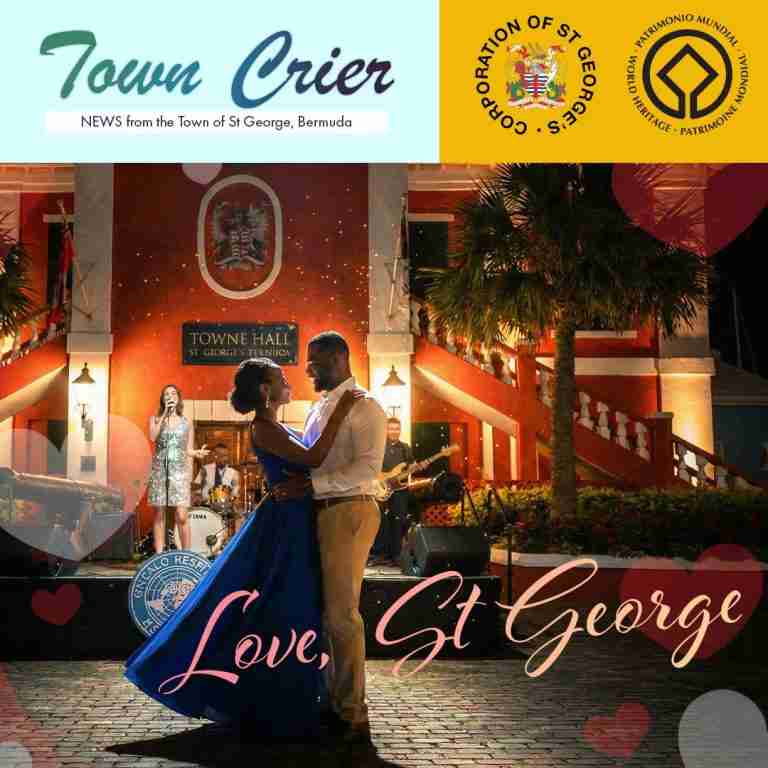
The Corporation of St. George’s (CSG) has made a heartfelt call for residents and visitors to “Show Up for St. George” in 2026, emphasizing
that love becomes real through action and community engagement. Releasing its February newsletter with the theme of love, they highlight the many ways to show love for one’s town and neighbor while receiving personal joy at any age.
Mayor Quinell Francis, JP, states, “Loving as community is caring. This year, show up for St. George and participate in activities for everyone this year that bring joy, showcase Bermudian talent, highlight our town’s history and honor those that contribute to our longevity through
sacrifice, hard work and dedication to the Town of St. George.”
The Town announced a series of forthcoming events and seeks business support through a vendor call. Town Manager Candy-Lee Foggo invites all businesses that wish to be vendors to reach out in the month of February to secure a spot for the Cup Match Extravaganza, Seafood Festival, New Year’s and more. She states, “These events bring substantial economic investment into St. George and add the cultural spark to our neighborhood.”
The newsletter’s essay “Love Songs for St George” highlights the willingness to engage and be open to sharing in others’ passion to be supportive; as the newsletter notes: showing up for a kid’s recital is more than listening—it is giving one hope and encouragement. Often times we don’t win, and it is at that tender age our presence helps us—child and adult—deal with the heartbreak of loss and shows there is a system of community support to help dream beyond the pain.
Ms. Foggo adds, “The community spotlights for MoonGate Brewery and Why Grow Up demonstrate that while we are 400 years old with known heritage, the Town is alive and always reimagining experiences to make its enjoyment unique and memorable.” The Council and its
Town partners continue work on their landmark mural installation, which is evolving as a living work of art with further refinements underway.
The public is invited to attend the town’s monthly Council meeting on February 26, where town matters are discussed and various infrastructure matters are debated, such as signs and planning approvals. The Council also offers a section for public feedback.
Mayor Francis closes by stating, “UNESCO World Poetry Day will be celebrated on King’s Square March 23 during lunch. This event is probably the first time for some of our children to experience public speaking and see how their research and rehearsal come together as a group performance with the theme ‘St. George’s Through My Eyes.'”
The full February newsletter is available through the Corporation of St. George’s official channels.
Read the newsletter: https://corpstgeorge.bm/thetown/newsletters
Sign up: https://corpstgeorge.bm/newsletter
Bermuda, UK seek Sargasso Sea protection
Joint initiative aims to secure international support under High Seas Treaty
Government House issued the following media statement.
The United Kingdom was one of the first signatories to a watershed international treaty to protect the high seas. During the decade long negotiations, the UK played a leading role to help find common ground to reach agreement. The final Biological Diversity Beyond National Jurisdiction (BBNJ Agreement), now commonly referred to as the “High Seas Treaty”, is viewed as critical in protecting the high seas, which
lie outside national waters.
The High Sea Treaty came into force in January this year. The passing of the UK’s BBNJ Act last week, brings the United Kingdom a step closer to its plans for ratification. Once some secondary legislation is passed this year the UK will join other states as a party to the treaty. The first meeting of states that have ratified the Agreement, called the “Conference of the Parties”, will take place before 16 January 2027. The UK has said it intends to play a leading role at this and subsequent meetings.
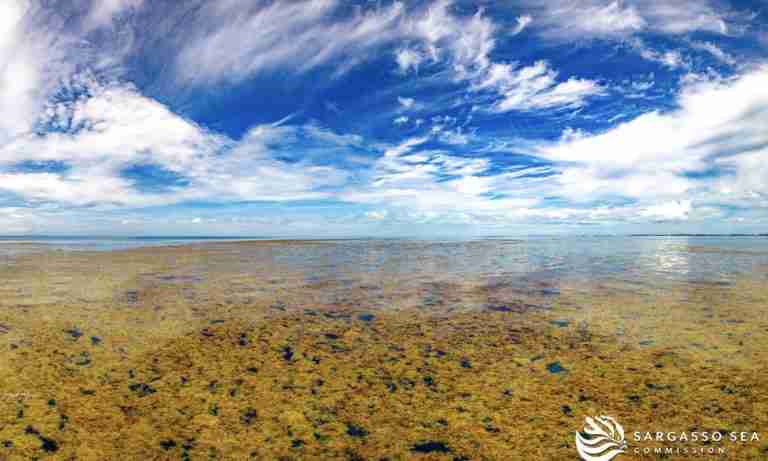
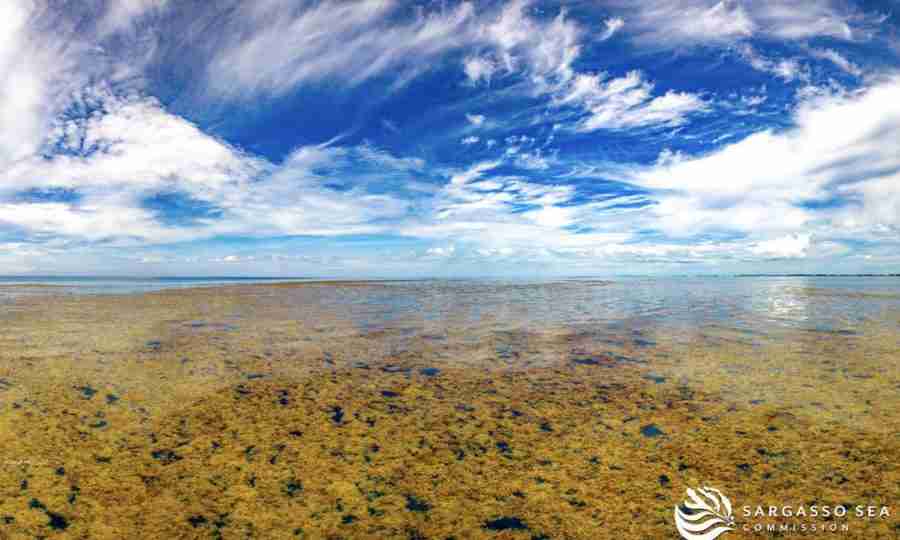
In an important new development, the Governments of the United Kingdom and Bermuda have today announced a joint initiative to seek the protection of the Sargasso Sea under the High Sea Treaty.
The initiative is to gain international support for the “Hamilton II Declaration”. The Declaration, currently a draft text, acknowledges the global importance of conserving the Sargasso Sea. The draft text of the Hamilton II Declaration was circulated to all United Nations member States, as well as all signatories to the original Hamilton Declaration.
The Declaration contains important political commitments, to be undertaken by signatory States and territories, to support the adoption of mechanisms within the High Seas Treaty to protect the Sargasso Sea. Those mechanisms are called Area Based Management Tools (ABMTs) and they can be adjusted to specific sectors or geographically defined areas to achieve both conservation and sustainable use
objectives. The Hamilton II Declaration does not intend to prescribe what exact management tools should be adopted in the Sargasso Sea – that will be subject to separate work under the treaty. Rather, the Declaration seeks to achieve the first key step of signalling political support by States and territories to develop a collective proposal under the BBNJ Agreement to protect those parts of the Sargasso Sea that are outside the jurisdiction of any state (high seas).
As the only land territory located within the Sargasso Sea, this international initiative places Bermuda at the leading edge of efforts to gain international support to protect the seas that surround Bermuda.
Minister of Public Works and Environment, The Hon Jache Adams, JP, MP said “Bermuda has played a central role in advancing international efforts to protect the Sargasso Sea, having led the development of the 2014 Hamilton Declaration and serving as host to the Sargasso Sea Commission. Over the past decade, Bermuda has championed science-based stewardship and helped to strengthen cooperation among governments, researchers, and ocean stakeholders to safeguard this globally important high-seas ecosystem. As work accelerates under the new BBNJ Agreement, Bermuda remains committed to supporting measures that enhance the conservation of the Sargasso Sea’s unique biodiversity and promote its long-term ecological resilience”
The draft text, which is not legally binding, was prepared at a Government House facilitated meeting in Bermuda last year. The informal meeting was attended by expert representatives from the Governments of the United Kingdom and Bermuda, with the assistance of representatives from some signatories to the original Hamilton Declaration, and members of the secretariat to the Sargasso Sea
Commission.
Governor Andrew Murdoch who made Government House facilities available to assist in the initiative, said:
“In my former role I was the Director of Ocean policy for the Foreign Office for 8 years. During that time, I was heavily involved in the work to finalise the text of the High Seas Treaty. I was at the final negotiation session in the United Nations in New York. During that final two-week negotiation session states came together, including working through the night, to get the treaty text agreed. It was a watershed moment when that happened. It signalled the ability of the world to take coordinated global action to tackle the climate and nature crisis. It also demonstrates the ongoing role of multilateral institutions in facing global challenges.
The treaty is critical to help protect the high seas – the ocean that lies beyond the limits of any coastal states waters – and its coming into force this year provides an opportunity to take steps that were not previously possible. For marine life, this means stronger protections in areas that have previously been vulnerable to exploitation. There are also benefits for people, as a healthy marine ecosystem underpins important global fisheries and climate regulation critical for communities around the world. I am delighted to be able to use Government House facilities to assist the Governments of Bermuda and United Kingdom in their joint initiative to protect the Sargasso Sea. I am convinced it will make a difference and commend them for their work.”
Recognising the vital role of civil society, and their interest in protecting and conserving the Sargasso Sea, the draft instrument provides an opportunity for non government partners to sign to signal support. As a draft text it will undergo a series of consultations to ensure it can best meet its objective, taking into account the views of various stakeholders. To this end the Governments of Bermuda and the United Kingdom intend to hold an engagement and consultation session with interested civil society representatives in Bermuda on 20 March. The importance of listening to stakeholders in Bermuda is recognised, and the meeting in March will be the first formal consultation on the draft text. It will be followed by other consultations, including in New York later March. The intention is to finalise the Declaration text and open it up for signature, before the first Conference of Parties.
Background
There is widespread recognition of the importance of the Sargasso Sea in global Ocean health. The Governments of Bermuda and the United Kingdom having long worked together to support science-led conservation of the Sargasso Sea, including as signatories to the Hamilton Declaration (2014) which established the Sargasso Sea Commission.
Two-thirds of the ocean lies beyond any nation’s jurisdiction and contain extraordinary biodiversity and ecosystems that are vital to the health of our planet. Without the protection of national laws, these vulnerable waters have been left open to exploitation and degradation.
The BBNJ Agreement – sometimes called the High Seas Treaty – is a landmark international agreement that will, for the first time, create a legal mechanism to establish protected zones in these waters. Through the application of Area Based Management Tools (ABMTs), part of the BBNJ Treaty’s framework for conserving and using marine biological areas beyond national jurisdictions, specific sectors or geographically defined areas can be managed to achieve conservation and sustainable use objectives. The Sargasso Sea fulfils many of the indicative criteria for potential ABMTs as set out in the BBNJ Agreement.
The BBNJ Agreement adopted after more than a decade of international negotiations will:
- enable the creation of Area Based management Tools, including marine protected areas, on the high seas
- require environmental impact assessments for activities that could have significant impact on marine ecosystems in areas beyond
national jurisdiction - ensure fair sharing of benefits from research into and utilisation of marine genetic resources, which have potential applications in
medicines, cosmetics and biotechnology - strengthen capacity-building for developing states, by promoting knowledge sharing, along with broader technology transfer
The UK Government introduced legislation on 10 September 2025 to enable the UK to implement its obligations under the BBNJ Agreement and move towards ratification. The Act received Royal Assent on 12 February. Further secondary legislation will be required before the BBNJ Agreement can be ratified by the UK.
North Korea’s Kim marks completion of Pyongyang housing project as key party congress nears

Kim has been touring construction sites and touting project progress ahead of this month’s Ninth Congress of the ruling Workers’ Party

International News via Reuters:
North Korean leader Kim Jong Un marked the completion of 10,000 new houses built in Pyongyang, state media KCNA said on Tuesday, as the country prepares to hold a key party congress.
Kim has been touring construction sites and touting project progress ahead of this month’s Ninth Congress of the ruling Workers’ Party, the country’s biggest political gathering that reviews performance, sets new policy goals and can bring leadership change.
On Monday, Kim oversaw the completion ceremony for 10,000 houses in Hwasong District, Pyongyang, which achieved the goal of 50,000 new houses in the metropolitan area set during the Eighth Congress five years ago, according to state broadcaster KCNA.
“Based on the transformational achievements… during the Eighth period, the Ninth Congress of the party will set a grander goal of restoration and creation,” Kim said, according to KCNA.
Kim’s daughter Ju Ae was shown at her father’s side at the completion ceremony, hugging and congratulating the residents of the new estate. There has been increasing speculation among analysts and from South Korea’s spy agency that Kim is grooming the teenager to succeed him.
As part of their tour of the housing project, North Korean state TV showed Kim and Ju Ae also visiting an arcade game centre that looked similar to an internet cafe, a musical instrument shop and an animal hospital where they petted a puppy.
Meanwhile, KCNA said those participating in the upcoming party congress arrived in Pyongyang on Monday.
In the past two instances in 2016 and 2021, the Congress began three to four days after representatives arrived in Pyongyang, according to Hong Min, an analyst at the Korea Institute for National Unification in Seoul.
Reporting by Joyce Lee and Sebin Choi; Editing by Lisa Shumaker, Ed Davies and Kate Mayberry
Traffic delay expected on Blue Hole Hill
Single-lane closure in place for wall works and bus layby relocation
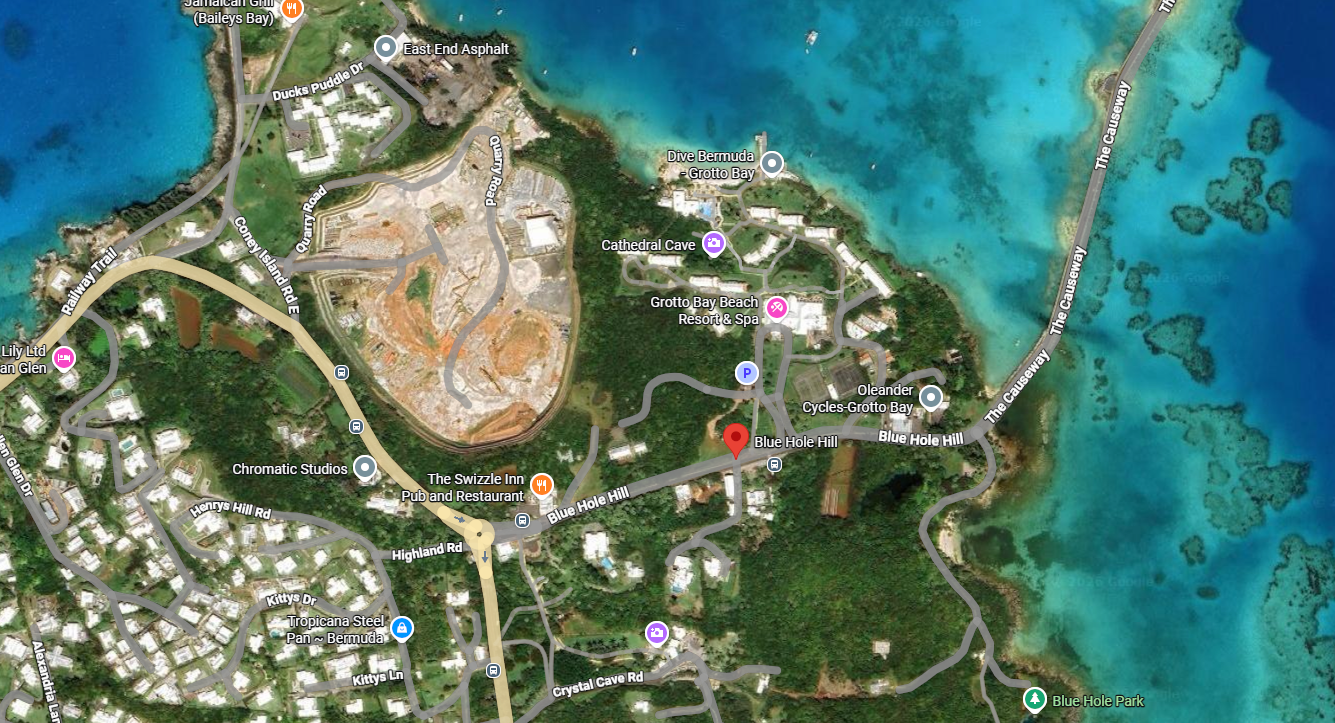
Image: Google Maps
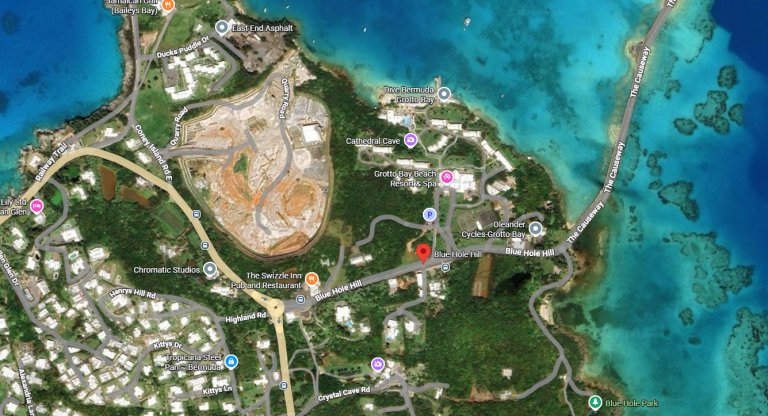
The Ministry of Public Works and Environment advises the motoring public of a single-lane closure on Blue Hole Hill in Hamilton Parish, adjacent to Grotto Bay Hotel, to facilitate wall construction and the relocation of a bus layby. The works will affect the eastbound lane from Monday, 16 February 2026, through Friday, 27 March 2026.
Work will take place daily between 7:30 a.m. and 3:00 p.m. Traffic controls will be managed by the Ministry of Public Works and Environment using stop-and-go signs and traffic signals.
Motorists are advised to proceed with caution, expect delays, and consider alternative routes where possible during the stated hours. Cooperation from the motoring public is appreciated as these improvements are carried out.
