Friday, November 6, 2026
Home Blog Page 611

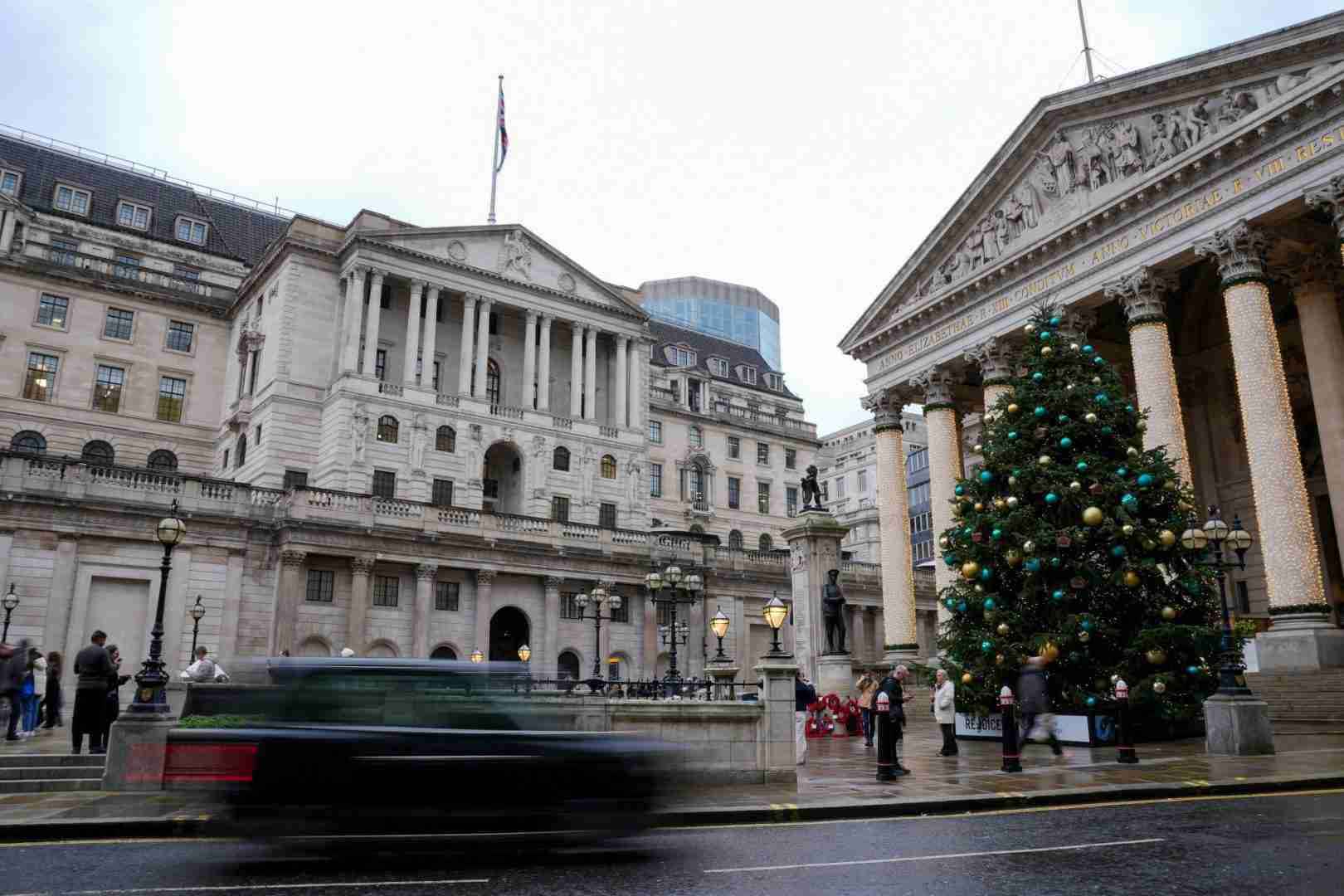
Bank of England launches stress test of private equity and credit

The central bank said the system-wide exploratory scenario will produce a final report in early 2027 and will focus on the impact on the British economy as a whole
International News via Reuters:

The Bank of England said on Thursday that it was launching a stress test of how the $16 trillion global private equity and private credit industries would deal with a major financial shock.

The central bank said the system-wide exploratory scenario will produce a final report in early 2027 and will focus on the impact on the British economy as a whole, rather than publish details on the vulnerabilities of individual firms.

“A range of alternative asset managers that are active in private markets, including major global players, have agreed to participate in this exercise,” BoE Deputy Governor Sarah Breeden said.

Private equity firms and other related lenders are an important source of finance for large British businesses.

Unlike the BoE’s regular stress tests of Britain’s banking system, the central bank cannot compel the participation of all financial firms as it does not directly regulate investment funds or private equity companies, especially those based overseas.

FOCUS ON INVESTMENT IN LARGE UK BUSINESSES

The BoE said it had secured participation from firms that make up around a third of Britain’s private-equity leveraged buyout activity, half of private credit in the UK corporate sector and 40% of employment in private equity-funded businesses.

The details of the test have not been decided, but it will be carried out in two stages to allow financial firms to tell the BoE how they would respond to other companies’ actions in a crisis.

The test will focus on investment in large British businesses and how the investors finance themselves. It will not focus on venture capital for smaller firms or commercial real estate.

Some of the alternative asset managers taking part include Apollo Global Management, Bain Capital, Blackstone, Carlyle, CVC Credit Partners, Goldman Sachs Asset Management, KKR and Permira.

On Tuesday, the BoE said in its half-yearly Financial Stability Report that although private markets had proven resilient so far, they had grown in size and had not been tested for their resilience to a big economic shock.

BoE Governor Andrew Bailey said in October that the collapse of two big U.S. companies, car parts maker First Brands and auto dealership and lender Tricolor, might be a warning of bigger problems to come.

On Tuesday, the BoE said these collapses showed how “high leverage, weak underwriting standards, opacity, complex structures, and the degree of reliance on credit rating agencies” could bite both banks and credit markets.

As Financial Stability Board Chair, Bailey has also stressed that this is a key area of focus for the Group of 20 leading economies’ financial risk watchdog.

“This will be an important part of the FSB’s surveillance work in the year ahead,” he said in a November letter to G20 leaders. 

The BoE has promised to share the findings of its private market stress test with international policymakers. 

Reporting by David Milliken and Phoebe Seers; Editing by William James and Emelia Sithole-Matarise


EU launches antitrust probe into Meta over use of AI in WhatsApp

The move, reported earlier by Reuters and the Financial Times, marks the latest action by European regulators against large technology firms

International News via Reuters:

Brussels has opened a new antitrust investigation into Meta Platforms over its rollout of artificial intelligence features in WhatsApp, the European Commission said on Thursday, reflecting rising scrutiny of Big Tech’s use of generative AI.

The move, reported earlier by Reuters and the Financial Times, marks the latest action by European regulators against large technology firms as the bloc seeks to balance support for the sector with efforts to curb its expanding influence.

The European Commission opened the investigation into “Meta’s new policy regarding AI providers’ access to WhatsApp” after the California-based company integrated its Meta AI system into the messaging service earlier this year.

A WhatsApp spokesperson said that “the claims are baseless”, adding that the emergence of chatbots on its platforms “puts a strain on our systems that they were not designed to support”.

“Even still, the AI space is highly competitive and people have access to the services of their choice in any number of ways, including app stores, search engines, email services, partnership integrations, and operating systems.”

Meta AI, a chatbot and virtual assistant, has been built into WhatsApp’s interface since March 2025 across European markets.

Italy’s antitrust watchdog opened a parallel investigation in July into allegations that Meta leveraged its market power by integrating an AI tool into WhatsApp. The probe was expanded in November to examine whether Meta further abused its dominance by blocking rival AI chatbots from the messaging platform.

The FT, citing officials, said that the EU probe will be conducted under traditional antitrust rules rather than the EU’s Digital Markets Act, the bloc’s landmark legislation currently used to scrutinize Amazon and Microsoft’s cloud services for potential curbs.

Reporting by Foo Yun-Chee, Mrinmay Dey and Rishabh Jaiswal in Bengaluru; Writing by Adam Jourdan; Editing by Mrigank Dhaniwala, Nivedita Bhattacharjee and Louise Heavens

Corrections salutes promotion of two leaders

The Department of Corrections has formally recognised the promotion of two senior officers during a ceremony last week attended by colleagues, family, and Government officials.

Hosted by Acting Commissioner of Corrections James Howard, the event honoured Assistant Commissioner Gladwin Simons and Assistant Commissioner Darynda Caisey-Brown, both of whom have been serving in their roles since August.

The ceremony provided an opportunity to publicly acknowledge their leadership, professionalism, and longstanding service to the Department.

The ceremony was attended by Acting Minister of Justice, the Hon. Michael Weeks, JP, MP, who commended the officers for their distinguished careers and their continued commitment to strengthening Bermuda’s corrections system.

Minister Weeks stated: “Assistant Commissioners Simons and Caisey-Brown have demonstrated exceptional leadership throughout their careers. Their promotions reflect years of dedicated service and an unwavering commitment to the safety, rehabilitation, and well-being of those in our correctional system.”

He added: “Both officers bring experience, integrity, and professionalism to their roles, and their work is vital to the Department’s mission. I am grateful for their continued service, and for the positive influence they have on their teams and on the individuals in our care.”

Minister Weeks also highlighted the broader significance of the appointments: “These promotions strengthen the senior leadership of the Department of Corrections at a time when effective management and forward-thinking oversight are essential. I congratulate both officers and wish them continued success.”

While the promotions took effect several months ago, the formal celebration was held this month due to scheduling considerations within the Department.

The Ministry expressed its appreciation to the families and colleagues who attended in support of the newly appointed Assistant Commissioners.

Photo attached (L-R): Minister Weeks, Assistant Commissioner Gladwin Simons, Assistant Commissioner Darynda Caisey-Brown, and Acting Commissioner of Corrections, James Howard.

UK consumers face higher energy bills after regulator approves $37 billion grid upgrade

The investment is higher than a provisional assessment by regulator Ofgem in July of 24 billion pounds and comes despite the British government’s pledge to reduce energy prices

International News via Reuters:

British energy regulator has approved a 28 billion pound ($37.33 billion) investment over the next five years to ensure a safe and reliable energy system in the future, part of an upgrade plan that will add 108 pounds to consumer bills by 2031.

The investment is higher than a provisional assessment by regulator Ofgem in July of 24 billion pounds and comes despite the British government’s pledge to reduce energy prices.

“The investment will support the transition to new forms of energy and support new industrial customers to help drive economic growth and insulate us from volatile gas prices,” Ofgem CEO Jonathan Brearley said on Thursday.

Under Britain’s regulatory framework, gas and electricity network companies must submit project plans and expected costs of investment, which are assessed by Ofgem.

Consumers pay for the investment through network charges, which currently make up almost a quarter of an average household energy bill.

The Department for Energy Security and Net Zero on Thursday said the investments were essential to keeping the lights on and to ensure energy security.

SSE, which owns Scottish and Southern Electricity Networks Transmission, said it welcomed the improvements to Ofgem’s initial proposals and will review and assess the price control package in the coming weeks.

National Grid also welcomed the decision, which it said recognised the need for significant investment to ensure reliable operations with the expected amount of power transport set to double.

Campaigners from the End Fuel Poverty Coalition said they, too, recognised the need to ensure a reliable energy supply and help homes benefit from more renewable energy generation.

“But that shouldn’t mean signing a blank cheque for network and transmission companies,” they said.

($1 = 0.7500 pounds)

Reporting by Raechel Thankam Job in Bengaluru and Nora Buli in Oslo; Editing by Sumana Nandy, Mrigank Dhaniwala and Jane Merriman

UK construction output plummets in November, business confidence erodes, PMI shows

Residential construction activity was at its weakest since May 2020, when lockdowns during the COVID pandemic halted building work

International News via Reuters:

British construction activity contracted last month at the fastest pace since May 2020, with steep falls in civil engineering, residential, and commercial building, partly due to uncertainty ahead of the government’s budget, a survey showed on Thursday.

S&P Global’s monthly purchasing managers’ index for the construction industry fell to 39.4 in November from 44.1 in October, extending its longest downturn since the global financial crisis and remaining well below the 50 mark that divides growth from contraction.

Residential construction activity was at its weakest since May 2020, when lockdowns during the COVID pandemic halted building work.

Activity in the commercial sector in November dropped at the sharpest pace in five-and-a-half years, with its subindex at 43.8. Civil engineering and new orders were also their weakest since May 2020.

“November data revealed a sharp retrenchment across the UK construction sector as weak client confidence and a shortfall of new project starts again weighed on activity,” said Tim Moore, economics director at S&P Global Market Intelligence.

“Total industry activity decreased to the greatest extent for five-and-a-half years, led by steep falls in infrastructure and residential building work. Commercial construction also faced severe headwinds during November as business uncertainty in the run-up to the budget pushed clients to defer investment decisions. 

Other recent business surveys have also shown similar concerns about investment, hiring and demand in the lead-up to finance minister Rachel Reeves’ annual budget on November 26, which included 26 billion pounds ($35 billion) in tax rises.

S&P Global said the pace of job-shedding accelerated last month, with the employment index at its lowest since August 2020, with firms citing elevated wage costs and less work.

The survey’s gauge of optimism struck a nearly three-year low, and cost pressure rose slightly.    

The all-sector PMI, which combines the services, manufacturing and construction sectors, stood at 50.1 in November compared to October’s 51.4.

($1 = 0.7525 pounds)

Reporting by Suban Abdulla; Editing by Toby Chopra

Vatican commission votes against allowing women as Catholic deacons

The commission, in a 7-1 vote, said historical research and theological investigation “excludes the possibility” of allowing women to serve as deacons at this time

International News via Reuters:

A high-level Vatican commission voted against allowing Catholic women to serve as deacons, maintaining the global Church’s practice of all-male clergy, according to report given to Pope Leo and released on Thursday.

The commission, in a 7-1 vote, said historical research and theological investigation “excludes the possibility” of allowing women to serve as deacons at this time but recommended further study of the issue.

The report said the group’s assessment of the matter was strong, but “does not as of today allow a definitive judgment to be formulated”.

The late Pope Francis instituted two commissions to study the possibility of women serving as Catholic deacons, who, like priests, are ordained, but cannot celebrate Mass.

The commissions met in secrecy. Thursday’s report is the first time that the results of the discussions have been made public.

Pope John Paul II banned women from serving as priests in 1994, but did not specifically address the issue of women deacons.

Advocates point to evidence that women served as deacons in the early centuries of the Church. One women, Phoebe, is mentioned as a deacon in one of the letters of the apostle St. Paul.

Reporting by Joshua McElwee, editing by Alvise Armellini

Sterling steady after biggest daily jump since April

The pound was last down less than 0.1% at $1.3348 after earlier touching its highest level in over five weeks at $1.33585

International News via Reuters:

The pound steadied against the dollar on Thursday after rising over 1% the day before, its biggest daily jump since April, as an upward revision of business activity data painted a brighter picture of the economy. 

The pound was last down less than 0.1% at $1.3348 after earlier touching its highest level in over five weeks at $1.33585.

November’s S&P Global UK Composite Purchasing Managers’ Index, which incorporates both services and manufacturing activity, was revised upwards on Wednesday, supporting the pound.

“The growth outlook doesn’t look as muted as it was initially assumed,” said Kirstine Kundby-Nielsen, analyst at Danske Bank. 

BUDGET WORRIES RECEDE

The pound has jumped in the last week after British finance minister Rachel Reeves’s long-awaited budget passed the bond market’s test without too much fuss. 

Investors had been concerned that Reeves’s announcements, which included tax rises and large-scale spending, could have spooked bond investors, pushing yields higher.   

But British borrowing costs have fallen since last week’s announcement. 

“The Labour government didn’t really stir markets that significantly,” said Danske Bank’s Kundby-Nielsen. 

“What we’ve been seeing over the past week is some of that budget risk being priced out.”

Analysts also said the budget measures were unlikely to cause a rise in inflation, allowing the Bank of England to lower interest rates in the near term. 

Markets are pricing in a 90% chance of a rate cut when the central bank meets later this month. 

Against the euro, the pound was little changed at 87.44 pence. 

Reporting by Samuel IndykEditing by Bernadette Baum

Premier hosts students in London

As the Premier, the Hon E. David Burt, JP, MP, concluded his engagements in London, he hosted a networking dinner on Friday, 28 November, for Bermudian Students and Recent Graduates in the UK.

The Premier was joined by the Attorney General and Minister of Justice, the Hon. Kim Wilkerson, JP; the Minister for Economy and Labour, the Hon. Jason Hayward, JP, MP; Cabinet Secretary, Maj. Marc Telemaque; Permanent Secretary for the Ministry of Economy and Labour, Aideen Ratteray-Pryse; UK Representative, Kimberley Durrant; and Deputy UK Representative, Brandon Sousa.

More than 70 young Bermudians studying and working in the UK attended the event. The Premier shared updates on key issues impacting Bermuda’s youth, including the cost of living, gang violence, and absentee voting. He emphasised the importance of maintaining strong connections with young Bermudians, listening to their experiences, and supporting their transition back home.

The Premier said: “Our annual student reception brings together Bermudian students and recent graduates, allowing Ministers to hear directly from Bermuda’s next generation of leaders.

“It was great to be joined by the Attorney General and Minister Hayward as we engaged with a talented and diverse group of young Bermudians.”

Screenshot

Attendees expressed appreciation for the opportunity to network with peers and engage directly with Government representatives.

The event was supported by the Government of Bermuda London Office.

UK Representative for the Government of Bermuda and London Office Director, Kimberley Durrant, stated: “The London Office remains committed to supporting Bermudians overseas. The annual networking dinner provides a valuable platform for attendees to share experiences and discuss their future aspirations with Government officials. We encourage those interested in attending future events to register with the London Office.”

Police issue safety tips for festive season 

With an increase in social as well as commercial events during December, there is usually an uptick in associated criminal activity and anti-social behaviour.

While the Bermuda Police Service (BPS) will continue visible patrols throughout the island, including strategic BPS traffic enforcement initiatives over the festive period, residents are reminded of the following common sense crime prevention awareness tips.

Shopping

  • Avoid travelling alone – take a friend with you. Don’t buy more than you can carry. Ask a store employee for help, if necessary.
  • Never leave a handbag unattended in a shopping cart, on a shop counter, or on the floor by your feet.
  • Before shopping with children, make a plan in case you are separated from each other. Identify, in advance, a central meeting place. Teach them they can ask store personnel, security employees or police officers, if they need help.
  • Park in a well-lit area. When approaching and leaving your vehicle, always notice your surroundings. Don’t approach the vehicle alone if people are standing nearby acting suspiciously.
  • Keep doors locked and windows closed when away from your car.
  • Have your keys in hand when approaching your vehicle. Check the interior and exterior before getting in.
  • Don’t leave packages visible in your unattended car. Secure items inside the trunk, or take them directly home.

Socialising

Carrying a small flashlight, cell phone and portable charger is recommended, in case someone needs to make an emergency call.

If going out to socialise, organise arriving and leaving with people you know.

When out socialising, don’t leave your drinks unattended and don’t accept drinks from unknown individuals.

Arrange for transportation home before you leave. Don’t drink and drive. Don’t let your friends or colleagues drink and drive.

Avoid giving rides to and taking rides from unknown persons, who may seem eager to assist.

Keep your wallet concealed inside a coat pocket, or pants pocket, when not in use.

Don’t take shortcuts through isolated areas.

Event aims to build career path for students

Bridgeway Education is preparing to host its University Fair Meet & Greet from December 4th to 6th, offering students and families the chance to connect directly with two world-class institutions: IE University and EHL, a global leader in hospitality business education. Attendees can also call 737-0502 to book private meetings with the schools this weekend.
Founder Neil Speight said the fair is especially valuable for those interested in careers in hospitality, tourism, airlines, entrepreneurship, and many other growing industries. Mr. Speight encourages anyone exploring these career pathways to come out, learn what these schools offer, and discover how Bridgeway can help match students with educational opportunities.

EU aims to improve defences against economic threats, such as China export curbs

The plans mark the culmination of Europe’s slow realisation that it must act fast and across sectors to end years-long dependency on single points of origin for energy or goods

International News via Reuters:

The European Commission on Wednesday unveiled plans to boost EU resilience to threats like rare earth shortages by strengthening trade measures and adding new economic security tools.

The plans mark the culmination of Europe’s slow realisation that it must act fast and across sectors to end years-long dependency on single points of origin for energy or goods. It follows several painful jolts in the form of the COVID pandemic, Russia’s war in Ukraine and the impact of U.S. tariffs.

The EU executive set out what it called an “economic security doctrine” for the 27-nation bloc, which is also contending with Chinese restrictions that have choked supplies of essential rare earths and chips.

The EU wants to remain a global manufacturing leader, but risks falling behind China and the U.S. in technologies like batteries and AI.

The EU agreed on Wednesday to end Russian gas imports by late 2027 and the Commission wants to repeat this success with the REsourceEU Action plan, which aims to speed up the development of its own resources.

EU TO REVIEW SUPPLY CHAINS, INBOUND INVESTMENT RULES

The Commission wants to coordinate more closely with EU members and business to review EU supply chains, rules on inbound investment, its defence and space sectors, and its strength in new technologies and critical infrastructure.

“We want to move from reacting to reshaping our policies,” Trade Commissioner Maros Sefcovic said.

Sefcovic said the Commission would review by the third quarter of 2026 how to speed up trade measures such as anti-dumping and anti-subsidy duties, now applied only after year-long probes.

New measures might be designed to counter unfair trade and market distortions, including overcapacity, to encourage firms in high-risk sectors to have more than one supplier and to set a preference that EU-based companies are used in public tenders for work in strategic sectors.    

The EU would also prioritise support for EU businesses that were reducing foreign dependencies in critical sectors or technologies.

Sefcovic said the EU would likely take some lessons from Japan, which responded to China suspending rare earth exports in 2010 over a territorial dispute by diversifying, recycling more, building reserves and forging partnerships.    

Commission Vice President Stephane Sejourne said the EU could make some diversification measures mandatory.

“For reasons of economic security, European companies – just like Japanese and U.S. companies, or indeed, Indian – need to stop buying 100% Chinese,” he said.

Reporting by Philip BlenkinsopAdditional reporting by Julia PayneEditing by Frances Kerry