Thursday, November 5, 2026
Home Blog Page 626

Dollar set for biggest weekly fall in four months, Fed in focus

The yen edged 0.11% higher to 156.27 per dollar, helped by a hawkish turn in tone from Bank of Japan officials
International News via Reuters:

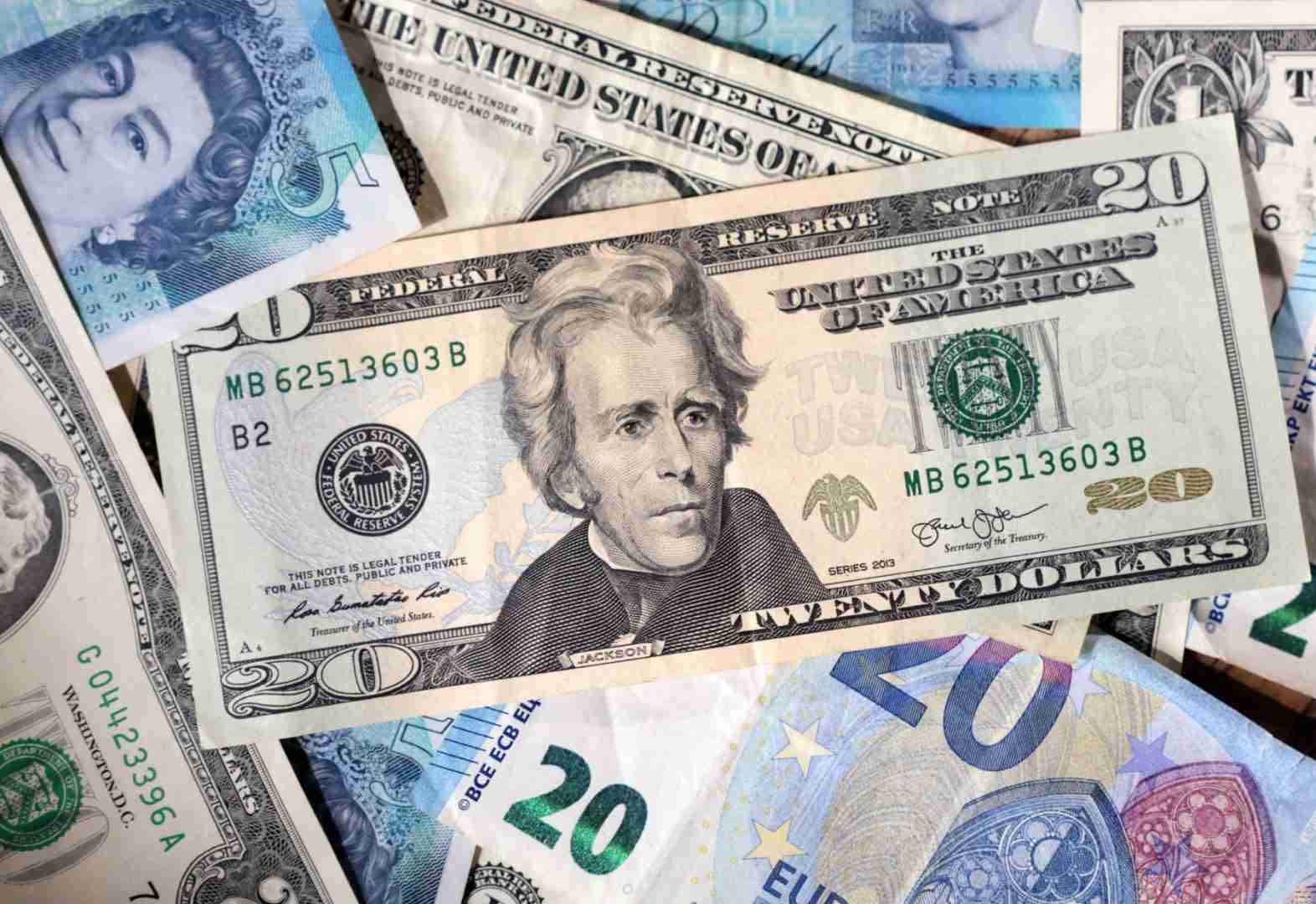
The U.S. dollar headed for its steepest weekly drop in four months on Thursday as investors bet on further monetary easing, amid pressure from President Donald Trump to cut rates.

The yen edged 0.11% higher to 156.27 per dollar, helped by a hawkish turn in tone from Bank of Japan officials.

U.S. markets are shut for Thanksgiving, leaving liquidity thin and amplifying trading moves.

“That could be an attractive environment for Japanese authorities to intervene in dollar/yen,” said Francesco Pesole, forex strategist at ING.

“However, there may still be a preference to intervene after a dollar-negative data event, and the stall in the pair may have removed some sense of urgency,” he added.

RATE OUTLOOK WEIGHS ON DOLLAR

The U.S. dollar index was up 0.1% at 99.65, having retreated from a six-month high hit a week ago to head for its largest weekly drop since July. It is currently down 0.54% on a weekly basis.

Mark Haefele, chief investment officer at UBS Global Wealth Management, urged investors to review their currency allocations as the appeal of the U.S. dollar fades, recommending the euro and Australian dollar over the greenback.

 If White House economic adviser Kevin Hassett – an advocate for rate cuts – were appointed the next Federal Reserve chair, it ought to be a negative catalyst for the dollar, investors said. 

Views on the dollar’s outlook remain divided.

“We’ve gone through a period where rate differentials and euro growth expectations clearly benefited Europe over the U.S.,” said Themos Fiotakis, global head of forex strategy at Barclays.

“Looking ahead, some of those assumptions are being challenged. The euro’s expensiveness is one reason, but the robustness and resilience of the U.S. economy is another,” he added.

EURO, SWISS FRANC AFFECTED BY UKRAINE PEACE TALKS

The euro dropped 0.13% to $1.1581, after hitting a 1 1/2-week high earlier in the session at $1.1613.

Markets are watching negotiations over a possible Ukraine peace deal, which could lift the single currency. 

U.S. envoy Steve Witkoff is expected to travel to Moscow next week for talks with Russian leaders, but a senior Russian diplomat said on Wednesday Moscow will make no big concessions. 

An agreement would instead weigh on the Swiss franc given its role as a geopolitical safe haven, but analysts say there is little sign of a ‘peace dividend’ yet as uncertainty remains high.

The dollar hit a one-week low against the Swiss franc at 0.8028, and was last up 0.20% at 0.8060.

AUSSIE AND KIWI ON THE RISE 

A resurgent New Zealand dollar skipped out to a three-week peak of $0.5728 and has gained about 2% since a hawkish shift at the central bank a day earlier.

The Reserve Bank of New Zealand cut rates on Wednesday but said a hold was discussed and flagged that the easing cycle was likely over. Helped by some strong economic data on Thursday, markets see rates rising and price in a hike by December 2026.

That contrasts with more than 90 basis points of cuts priced for the U.S. Federal Reserve between now and the end of next year.

The Australian dollar has also been gaining after a hotter-than-expected inflation reading on Wednesday added to the case that the easing cycle there is also finished.

Australia’s 3-year and 10-year rates of 3.86% and 4.5%, respectively, are the highest in the G10, which analysts said makes the currency look cheap. [AUD/]

At $0.6536 the Aussie is in the middle of a channel where it has traded for about 18 months.

Pushback from China’s central bank fixing mechanism steadied the yuan at 7.08 per dollar on Thursday. [CNY/]  

Reporting by Stefano Rebaudo, additional reporting by Tom Westbrook; Editing by Shri Navaratnam, Sam Holmes, Ros Russell and Alexander Smith
French antitrust watchdog dismisses complaint filed against Microsoft

The Autorite de la Concurrence, as the watchdog is known, said Qwant failed to bring elements sufficiently convincing to sustain its claims

International News via Reuters:

French antitrust watchdog on Thursday dismissed a complaint filed against Microsoft by local search engine Qwant which accused the U.S. company of abusing its dominant position.

The Autorite de la Concurrence, as the watchdog is known, said Qwant failed to bring elements sufficiently convincing to sustain its claims and also declined to enforce the interim action against Microsoft requested by Qwant.

Qwant, which has historically relied on Microsoft’s Bing platform to deliver search and news results, last month said that it expected its complaint to be dismissed and that it would challenge it in court or take it to other authorities.

The U.S. tech company welcomed the ruling. “We agree with the decision and remain committed to providing high-quality search services and fostering innovation for consumers and partners in France and across Europe,” a Microsoft spokesperson said.

Qwant had alleged Microsoft imposed exclusivity restrictions on Qwant in search results and search advertising, hampering the latter’s ability to develop its own search engine and its own artificial intelligence. The French company also alleged Microsoft favoured itself in allocating search advertising.

Microsoft is a major player in the search-engine syndication sector, where it provides search results to smaller European rivals besides Qwant, such as Ecosia, DuckDuckGo and Lilo.

Qwant did not immediately respond to a request for comment.

Reporting by Inti Landauro and Foo Yun CheeEditing by Tomasz Janowski

Euro zone sentiment indicator, lending data confirm lukewarm growth

The euro zone economy has proven unexpectedly resilient to trade shocks and uncertainty this year but growth remains unspectacular

International News via Reuters:

Bank lending to euro zone firms held steady last month while a key EU economic sentiment indicator edged up in November, adding to evidence that the currency bloc continues to grow steadily, even if only at a modest pace, latest data showed on Thursday.

The euro zone economy has proven unexpectedly resilient to trade shocks and uncertainty this year but growth remains unspectacular and the bloc keeps falling further and further behind global peers.

While the domestic economy keeps humming along on steady consumption, exports, the engine of growth in the past decade, continue to struggle as industry is losing its competitiveness, China is crowding out Europe in key markets and U.S. tariffs bite.

The European Commission’s Economic Sentiment indicators rose to 97.0 in November from 96.8 a month earlier, a marginal improvement that masks the diverging fortunes of key sectors.

The industrial confidence indicator fell again after a small improvement a month earlier and consumer confidence was steady.

Construction, however, jumped and there was also a notable rise in the services indicator, leaving the overall index in slightly positive territory.

Meanwhile, credit growth to businesses was unchanged at 2.9% in October compared to the previous month and loan growth to households accelerated to a 2-1/2-year high of 2.8% from 2.6%.

The M3 measure of money circulating in the euro zone, often an indicator of future activity, was also steady at 2.8%, in line with expectations in a Reuters poll of analysts.

Reporting by Balazs KoranyiEditing by Alexandra Hudson and Tomasz Janowski

Pope Leo arrives in Turkey on closely watched first overseas trip

The first U.S. pope chose mainly Muslim Turkey as his first overseas destination to mark the 1,700th anniversary of a landmark early Church council there that produced the Nicene Creed

International News via Reuters:

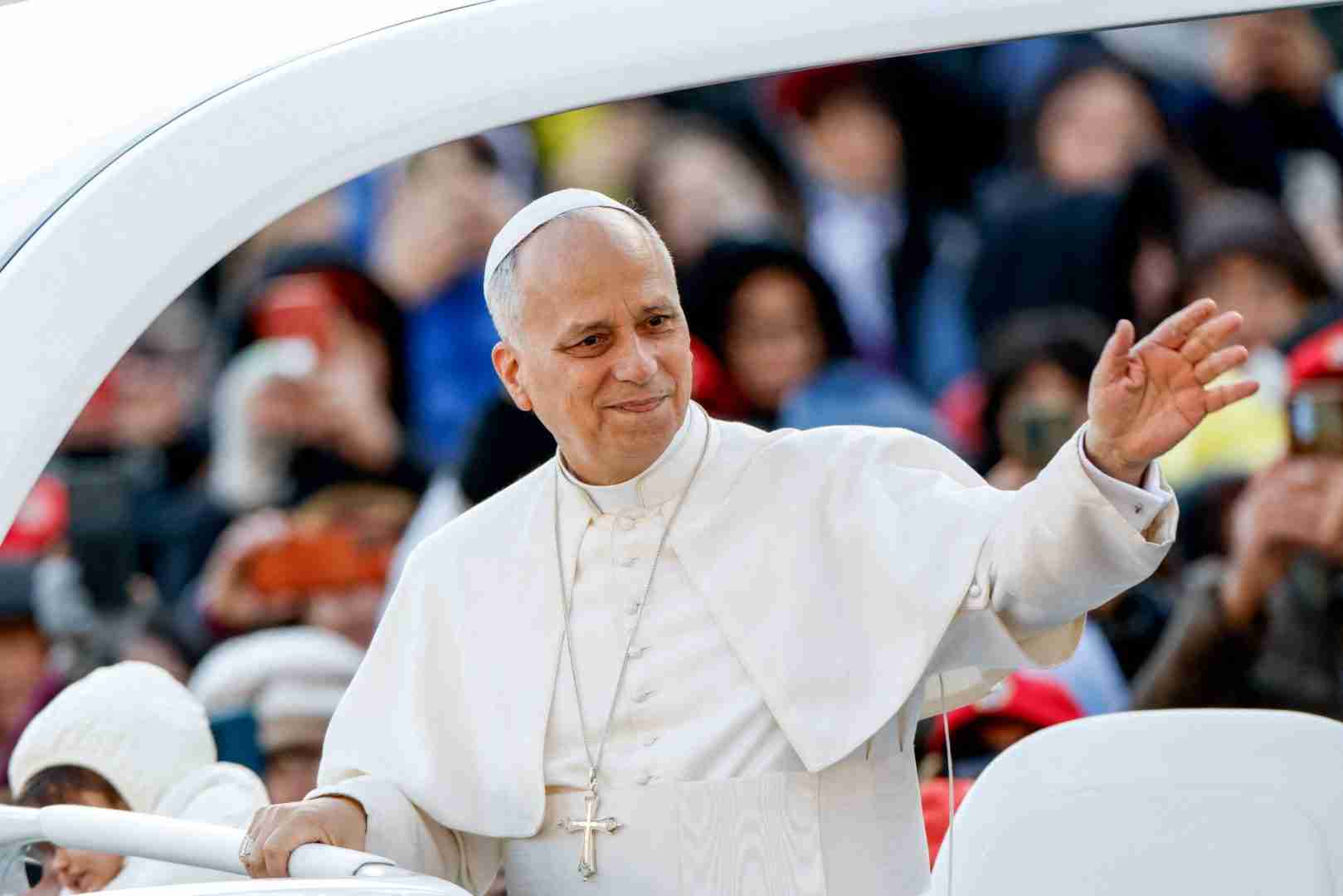
Pope Leo arrived in Turkey on his first trip outside Italy as leader of the Catholic Church on Thursday and was expected to make appeals for peace in the Middle East and urge unity among long-divided Christian churches.

The first U.S. pope chose mainly Muslim Turkey as his first overseas destination to mark the 1,700th anniversary of a landmark early Church council there that produced the Nicene Creed, still used by most of the world’s Christians today.

Leo landed in the capital Ankara shortly after midday (0900 GMT) for what is a crowded three-day itinerary in Turkey before heading on to Lebanon. It will be closely watched as he makes his first speeches overseas and visits sensitive cultural sites.

PAPAL TRIPS ABROAD DRAW GLOBAL ATTENTION

The Turkish and Vatican flags flew above the cockpit as Leo disembarked from the plane, to be greeted by a Turkish delegation led by the country’s culture and tourism minister.

Speaking to journalists aboard the papal flight from Rome, Leo said he wanted to use his first overseas trip to urge peace for the world, and to encourage people of different backgrounds to live together in harmony.

“We hope to… announce, transmit, proclaim how important peace is throughout the world,” the pope said at the beginning of the three-hour flight. “And to invite all people to come together, to search for greater unity, greater harmony.”

Foreign travel has become a major part of the modern papacy, with popes attracting international attention as they lead events with crowds sometimes in the millions, give foreign policy speeches and conduct international diplomacy.

“It’s a very important trip because we do not know much yet about Leo’s geopolitical views, and this is the first big chance for him to make them clear,” Massimo Faggioli, an Italian academic who follows the Vatican, told Reuters.

LEO TO MEET TURKISH PRESIDENT AND ORTHODOX PATRIARCH

Leo was elected in May by the world’s Catholic cardinals to succeed the late Pope Francis. A relative unknown on the world stage before his election, Leo spent decades as a missionary in Peru and only became a Vatican official in 2023.

Francis had been planning to visit Turkey and Lebanon but was unable to go because of his worsening health.

Leo, 70, was scheduled to meet President Tayyip Erdogan and address political leaders in the Turkish capital.

He will fly on Thursday evening to Istanbul, home to Patriarch Bartholomew, spiritual leader of the world’s 260 million Orthodox Christians.

Orthodox and Catholic Christians split in the East-West Schism of 1054, but have generally sought in recent decades to build closer ties.

Leo and Bartholomew travel on Friday to Iznik, 140 km (90 miles) southeast of Istanbul and once called Nicaea, where early churchmen formulated the Nicene Creed, which lays out what remain the core beliefs of most Christians today.

In a departure from normal practice – popes usually speak Italian on foreign trips – Leo is expected to speak English in his speeches in Turkey. 

On the flight to Ankara, two journalists presented the American pope with pumpkin pies, a staple of the U.S. Thanksgiving holiday that was also taking place on Thursday. 

PEACE WILL BE KEY THEME OF LEBANESE LEG

Peace is expected to be a key theme of the pope’s visit to Lebanon, which starts on Sunday.

Lebanon, which has the largest percentage of Christians in the Middle East, has been rocked by the spillover of the Gaza conflict as Israel and the Lebanese Shi’ite Muslim militant group Hezbollah went to war, culminating in a devastating Israeli offensive.

Last Sunday, Israel killed the top military official in Iran-backed Hezbollah in an airstrike on a southern suburb of the Lebanese capital Beirut despite a year-long, U.S.-brokered truce.

Vatican spokesman Matteo Bruni said on Monday that necessary security precautions were being taken to ensure the pope’s safety in Lebanon, but he would not comment on specifics.

Leaders in Lebanon, which hosts 1 million Syrian and Palestinian refugees and is also struggling to recover after years of economic crisis, are worried Israel will dramatically escalate its strikes in the coming months and hope the papal visit might bring global attention to the country.

Reporting by Joshua McElwee; Additional reporting by Daren Butler in Istanbul; Editing by Gareth Jones, Alvise Armellini, Jonathan Spicer and Alex Richardson

Sterling snaps five-day rally versus the dollar, caution on UK budget

The greenback edged up against its major peers on Thursday, pausing in what is set to be its biggest weekly decline since July

International News via Reuters:

Sterling snapped a five-day rally on Thursday as investor focus shifted back to economic fundamentals, with analysts questioning whether the fiscal tightening announced in the budget on Wednesday will actually be implemented.

The greenback edged up against its major peers on Thursday, pausing in what is set to be its biggest weekly decline since July. 

The pound was down 0.15% at $1.3219, after hitting a new one-month high earlier in the session at $1.3269.

Analysts said lingering concerns over growth and the Bank of England’s easing path were likely to keep the pound under pressure.

“Fears about slow growth, weak productivity and sticky inflation are not reflective of an attractive investment backdrop,” said Jane Foley, senior forex strategist at Rabobank, confirming the view that the euro will creep higher versus the British currency into 2026.

The single currency hit a fresh one-month high at 87.46 pence and was last roughly unchanged at 87.59 pence.

Sterling and UK bond prices edged up in volatile trade on Wednesday after British finance minister Rachel Reeves delivered a larger fiscal buffer than previously expected in a closely anticipated budget.

GILTS MARKET TAKES COMFORT 

However, the gilts market took comfort from Reeves’ reassurances that she would keep a tight grip on public finances, and from the news of an increase in fiscal headroom.

Yields on 30-year gilts, more sensitive to long-term fiscal concerns, dropped more than 10 basis points on Wednesday and were last up 2 bps at 5.228% on Thursday.

However, analysts are still worried about the UK fiscal trajectory.

“Sterling is not out of the woods yet,” said Dominic Bunning, head of G10 forex strategy at Nomura International.

“Backloading the tightening, until largely the next election, still risks credibility and cyclical momentum is soft but we will look for better levels to re-engage with the British pound underperformance trades,” he added.

Under current law, a nationwide vote is due by August 2029, though the prime minister can call an early election at any time.

“Most of the planned tax rises do not kick in until 2029 and beyond,” said David Zahn, Head of European Fixed Income at Franklin Templeton.

“This approach effectively kicks the can down the road until the next parliamentary election to deal with the spending gap,” he added.

Reporting by Stefano Rebaudo; editing by Ed Osmond

Bermuda to observe World AIDS Day

Stock image

On Monday, December 1, Bermuda will join the global community in observing World AIDS Day. The Ministry of Health invites the public to commemorate this important occasion at Victoria Park from 1:00 pm to 2:00 pm.

This year’s theme, “Overcoming Disruption – Transforming the AIDS Response”, serves as a reminder that the fight against HIV/AIDS is not over.

The Hon. Kim Wilson, JP, MP, Minister of Health, stated: “World AIDS Day is a time for us to stand together in solidarity, honour those we have lost, and renew our commitment to ending HIV/AIDS. I encourage everyone to come out, show support, and wear red as a symbol of awareness and unity.”

Minister Wilson will deliver remarks and attendees will also hear from key advocates, including Joshua Samuels, Executive Director of OUTBermuda, and Carolyn Armstrong, Executive Director of STAR. The event will also feature the unveiling of The AIDS Memorial Quilt, a powerful tribute to lives impacted by HIV/AIDS.

Minister Wilson continued: “Join us as we reaffirm that AIDS is not over. Together, we can transform the response and build a healthier Bermuda.”

UK tax office offers US-style whistleblower rewards

HMRC said such tax offences normally involved large companies, wealthy individuals or offshore avoidance schemes

International News via Reuters:

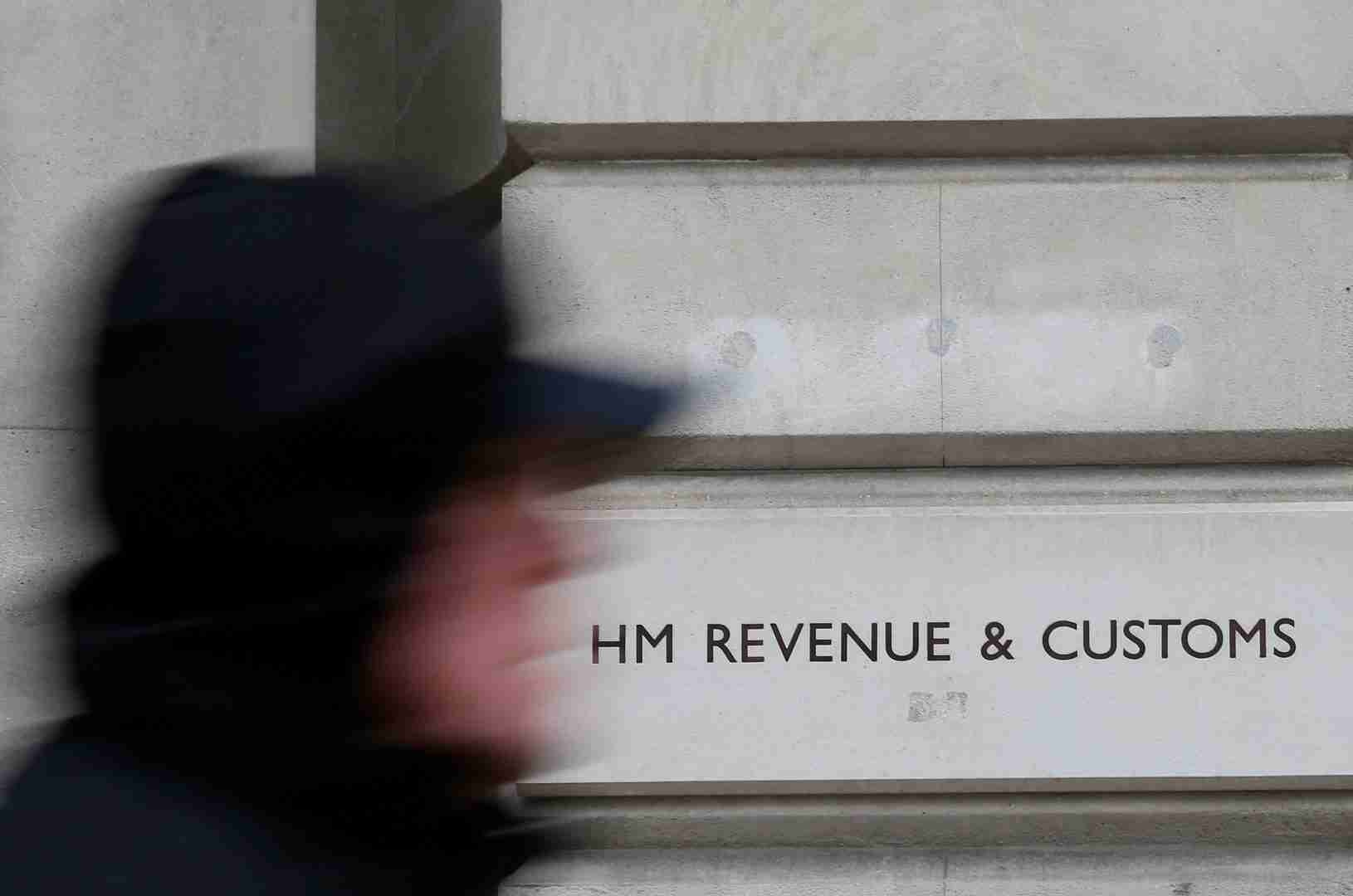
Informants who blow the whistle on serious tax avoidance or evasion in Britain could be awarded up to 30% of the tax collected under a novel, U.S.-style reward scheme outlined by the UK tax authority HMRC on Wednesday.

HMRC said such tax offences normally involved large companies, wealthy individuals or offshore avoidance schemes. But taxpayers involved in the schemes, anonymous tipsters and those acting on behalf of others would be among those excluded from the programme, it added.

Finance minister Rachel Reeves heralded the move in her second annual budget, in which she unveiled annual tax rises worth an annual 26.1 billion pounds ($34.5 billion) to meet her deficit-reduction targets.

Britain’s tax gap is in sharp focus. The country lost an estimated 46.8 billion pounds in unpaid tax for the 2023-2024 tax year, HMRC data shows, with 5.5 billion lost to tax evasion in 2022-23 – a figure lawmakers have said is probably a vast understimate.

U.S. agencies have awarded whistleblowers billions of dollars collectively for tips resulting in enforcement action.

But in Britain, there have been only limited payouts for informants, although the Serious Fraud Office (SFO) has called for whistleblowers to be financially rewarded for tipoffs that can risk their jobs, careers and sometimes their lives.

HMRC said under its strengthened reward scheme, informants could get between 15% and 30% of the tax collected, excluding penalties and interest, if tipoffs lead to a collection of at least 1.5 million pounds in tax.

However, payouts will be handed out at the agency’s discretion and are not guaranteed, it said.

Judith Seddon, a partner at law firm Ashurst, called for a broad consultation into how the scheme would work and clarity on eligibility requirements to avoid cases from collapsing due to procedural weaknesses or unclear processes. 

“The government has been signalling for some time that it wants to close the ‘tax gap’ and this whistleblowing incentive is a clear effort to support that objective,” she said.

Nick Barnard, a partner at law firm Corker Binning, noted that such a scheme would demand hefty resources to investigate reports that would vary in quality from “good, to well-meaning but unfounded, to out-and-out vexatious”. 

“Whilst whistleblowing might seem like a no-lose situation, it is not. HMRC should know better than anyone that there is no such thing as a free lunch,” he said.

($1 = 0.7566 pounds)

Reporting by Kirstin Ridley; Editing by Chizu Nomiyama

Anti-violence Strategy Coordinator starts in January

A candidate has been chosen to supervise delivery of the National Violence Reduction Strategy across Ministries and organisations

A candidate has been selected to supervise delivery of the National Violence Reduction Strategy across Ministries and organisations.

The Minister of National Security said the role “will provide cross ministry coordination, improve data collection, and monitor the delivery of all NVRS actions.”

“This is another first for Bermuda. We have never had a national coordinator dedicated solely to violence reduction.”

“This post will bring structure, consistency, and accountability to the work.”

Bermuda Broadcasting asked who will take the role, where they are from, what the role will cost and whether it is a single role or part of a new team.

Minister Weeks only advised that they have chosen a candidate and are close to signing.

“…until all the particulars are sorted out, I would hold that information”, he said. “They’re supposed to be starting in in January, so shortly we should be announcing the candidate to the public.”

Nigeria’s mass school kidnapping exposes Tinubu’s security struggles

The attack on the Catholic school has laid bare President Bola Tinubu’s faltering security efforts

International News via Reuters:

The families of Papiri had long called for security forces to protect their children at the school in northern Nigeria where more than 300 pupils were kidnapped by gunmen last week, in one of the country’s worst mass abductions.

They say that no one came.

“Neither the police, nor the military nor the Nigerian Security and Civil Defence Corps responded to our demands,” said Dauda Gwanja, whose 15-year-old son Zakariya was among the pupils abducted from St Mary’s school in Papiri village.

Instead, the village had arranged for volunteer men to guard the premises. But when dozens of gunmen on motorbikes stormed the school on Friday morning, the unarmed guards knew they stood no chance and fled, he told Reuters.

The attack on the Catholic school has laid bare President Bola Tinubu’s faltering security efforts, which have been under heightened scrutiny since U.S. President Donald Trump threatened military action over the treatment of Christians.

TINUBU’S SECURITY PROMISES UNFULFILLED

Two-and-a-half years into Tinubu’s term, rating agencies have praised his economic reforms but almost daily attacks remain broadly unchecked, despite his pledge to recruit more soldiers and police officers and better pay and equip them.

Armed gangs routinely kidnap schoolchildren for ransom in remote places like Papiri, a dusty village with a patchy phone network which lies 6 km (4 miles) from the nearest police outpost – which only deals with petty crime – and a four-hour drive from the nearest town.

In Nigeria’s northeast, attacks on civilians by jihadist militants appear to have eased in recent months, but insurgents have used drones and heavy firepower to overrun army bases, killing troops and carting away weapons.

The attack at St Mary’s school in Niger state, in which 12 teachers were also seized, was one of the worst mass abductions ever recorded in Nigeria – surpassing even the infamous Chibok kidnapping in 2014 of 276 schoolgirls by Boko Haram.

TINUBU REDEPLOYS SECURITY RESOURCES

It was the third mass abduction in northern Nigeria in the space of a few days, with another school and a church also targeted.

Tinubu cancelled two foreign trips following the abductions and ordered security forces to go after the assailants.

On Sunday, the 73-year-old president instructed the police to redeploy tens of thousands of officers assigned to “VIPs” including politicians, company executives and celebrities, to focus on core duties like protecting ordinary people.

Tinubu also said 30,000 more policemen would be recruited to fight the bandits that roam across isolated hamlets and border areas where the state is largely absent and weapons abound.

But the closure of nearly 50 schools in the north, for fear they could be targets of armed gangs, shows the limits of the government’s own faith in being able to stop the wave of kidnappings quickly.

QUARTER OF POLICE FORCE GUARDS VIPS

Agora Policy, a Nigerian think tank which has long called for police reform, says that at least 100,000 officers – more than a quarter of the total police force, Africa’s largest – are currently assigned to protecting VIPs and politicians.

“We should take this resurgence (in attacks)…to embark on the root-and-branch reforms that we have left undone for so long,” said Waziri Adio, the think tank’s head, calling for more police recruits and also better pay, training and equipment.

A low-ranking police officer earns a monthly net pay of 80,000 naira ($55) in Nigeria. When attached to politicians or other officials, police officers can receive handouts like food and gifts that exceed their salary, and the job is less risky.

The military are only relatively better paid – an army private earns 114,000 naira ($78.50) a month, rising to 200,000 naira if posted to the frontline fighting insurgents, two serving troops said.

Soldiers often complain of fatigue after being deployed for long periods without rest, and fret over the payments of allowances that boost their salary, said Mike Kebonkwu, a retired army officer and security analyst who has investigated insurgents’ attacks on troops.

He said that Nigerian security forces often have to contend with an enemy that is nimble and better adapted to the terrain, with bandits hiding in dense forests with their hostages.

INTELLIGENCE FAILURES COMPOUND SECURITY CRISIS

In Kebbi state in the northwest, questions were raised over how gunmen kidnapped 25 girls from a boarding school last week when authorities had received intelligence of a possible attack.

State governor Nasir Idris said soldiers had been deployed to protect the school but left in the early hours of November 17. Less than an hour later, gunmen attacked, killed the vice principal and abducted the girls, he said.

“We … ask the military authority to also investigate and find out who gave that order (to withdraw troops),” Idris told reporters last week.

A few days before that raid, a Nigerian brigadier-general was captured and killed by the militant group known as Islamic State West Africa Province in Borno state in the northeast.

The general had earlier escaped an ambush and was in contact with his base over the phone, sharing his live location. But insurgents got to him first, leading to suspicions that his location may have been leaked to them, two army sources said.

The military did not respond to Reuters questions about the two incidents. 

($1 = 1,452.6300 naira)

Reporting by MacDonald Dzirutwe, additional reporting by Ben Ezeamalu in Lagos, Abraham Achirga in Abuja and Ahmed Kingimi in Maiduguri, Editing by Silvia Aloisi and Ros Russell

Gov’t ‘doing what community is calling for to address violence’

Anti-Violence Strategy is in line with Town Hall feedback, says Minister; Regular updates on strategy implementation are planned

After a series of anti-violence Town Hall discussions and wide-ranging feedback and proposed solutions from the public, the response from Government is – ‘we’re already doing it’.

Michael Weeks sees the community’s comments as a confirmation of their plans with the National Violence Reduction Strategy, and its focus on preventing violence rather than simply responding to it.

He also told Gary Foster Skelton we should expect updates on the implementation of the NVRS about every six months (WATCH above).

Links to related Stories:

Pastor Leroy Bean: ‘Judge our success by the stories, not just the numbers’

AG Kim Wilkerson: Steering at-risk youth away from crime

Two National Guard members shot in Washington; White House on lockdown while Trump away

Homeland Security Secretary Kristi Noem said in a social media post that two Guard members had been shot and that her department was working with local police to gather more details

International News via Reuters:

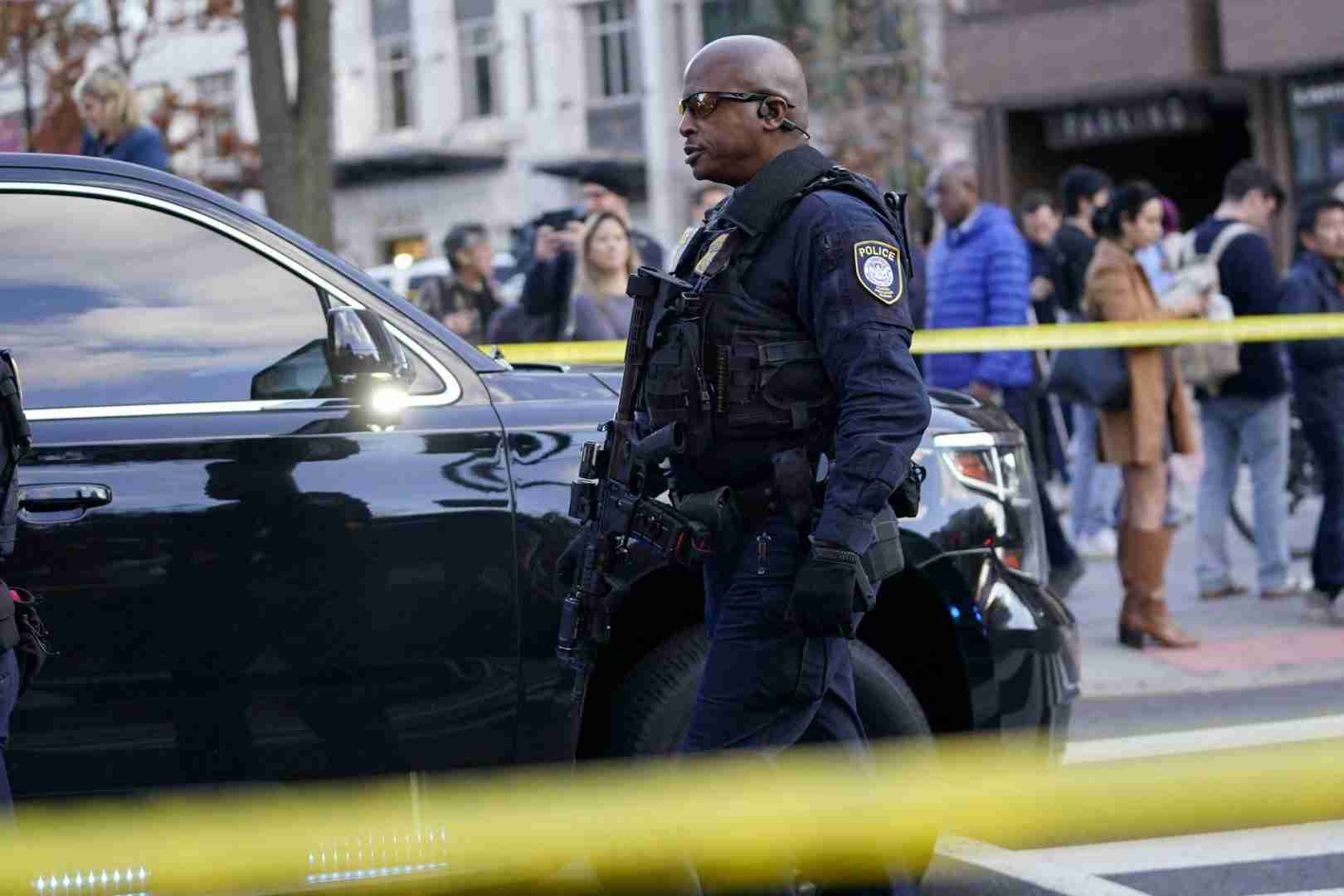
Two members of the National Guard were shot in Washington on Wednesday near the White House, putting the building into lockdown with President Donald Trump away in Florida.

Homeland Security Secretary Kristi Noem said in a social media post that two Guard members had been shot and that her department was working with local police to gather more details.

Police in Washington said one suspect was in custody following the shooting one block from the White House and that the area was secured.

“The president has been briefed,” White House spokeswoman Karoline Leavitt said.

Trump is at his resort in Palm Beach ahead of the Thanksgiving holiday on Thursday. U.S. Vice President JD Vance is in Kentucky.

Stacey Walters, 43, was in an Uber near the White House around 2:15 p.m. ET (1915 GMT) when she heard two loud booms and saw young children and other pedestrians running from the scene.

She said she heard someone yell “Help! Help!” and saw what appeared to be U.S. Secret Service agents running after someone in a hooded sweatshirt.

The Secret Service did not immediately respond to requests for comment.

Reporting by Jasper Ward and Jeff Mason; writing by Costas Pitas; editing by Susan Heavey and Paul Thomasch