Somerset Cricket Club retained the Cup Match trophy in commanding fashion, defeating St. George’s Cricket Club by an innings and 90 runs after a dominant second-day display.
Resuming on 277 for 6, Somerset powered on to 391, inspired by a blistering unbeaten 79 from just 50 balls by Malachi Jones. In his final Cup Match appearance, Jones struck nine fours and five sixes, providing the perfect farewell alongside retiring teammate Dion Stovell.
St. George’s never recovered from the daunting target. After reaching 75 for 2, they collapsed to 113 all out, losing their final eight wickets for just 38 runs. Jonte Smith top-scored with 41, while Derrick Brangman and Stovell shared the spoils with four wickets apiece.
Forced to follow on, the challengers showed greater resistance in their second innings, with Isaiah O’Brien making an entertaining 64, but were eventually dismissed for 188.
Brangman once again starred with the ball, claiming 4 for 50 to finish with eight wickets in the match as Somerset wrapped up an emphatic victory.
The triumph sealed another memorable Cup Match success for Somerset and provided a fitting send-off for club stalwarts Stovell and Jones, who ended their Cup Match careers as champions after playing pivotal roles in a comprehensive victory.
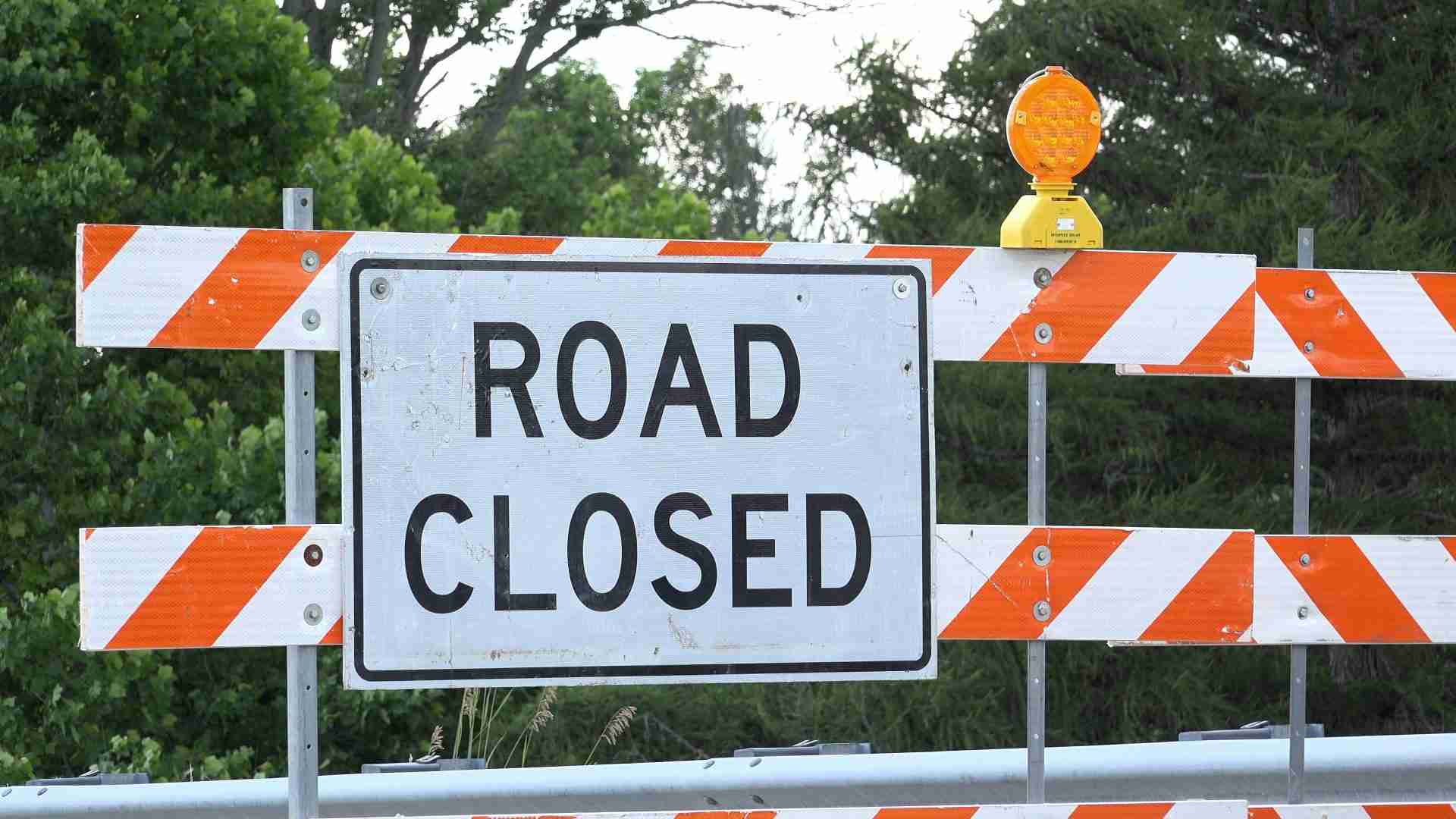
The Ministry of Public Works advises the public of traffic interruptions on Dutton Avenue associated with the Bacchanal Run event on Saturday, August 1, 2026, with road closures and traffic controls in place from 9pm Saturday, August first until 12am Sunday, August 2. The affected route will include sections of North Shore Road used by race participants.
The road closures are required to facilitate the safe staging of the Bacchanal Run Road Race and to provide a secure route for participants and event officials.
Motorists are advised to expect delays, follow directions from police officers and event marshals, and use alternative routes where possible while the event is underway
Please refer to the attached Road Traffic Notice for the full route and additional details.
OBA raises questions it says every Bermudian should be asking about our roads and infrastructure
Statement by Thomas Harvey, who ran as the One Bermuda Alliance candidate for Constituency #2, St. George’s West, in the 2025 General Election:
How much longer can Bermuda continue to ignore the condition of our roads and infrastructure?
Have you noticed the sinking impressions, depressions and areas where sections of our roads are deplorable?
Could the increasing size and weight of modern vehicles, particularly heavy trucks and construction vehicles, be contributing to the deterioration of Bermuda’s road network?
Are we asking the right questions about the impact that overweight and oversized vehicles are having on roads and supporting structures that were not designed for today’s level of heavy traffic?
Bermuda’s highways, roads and carriageways evolved from a transportation network originally built to accommodate much lighter forms of transportation than the heavy vehicles and construction equipment operating on them today. When many of Bermuda’s roads were originally developed, transportation consisted largely of horse-drawn carriages and much lighter vehicles.
A fully loaded Bedford truck in the 1960s may have weighed approximately 9,000 pounds. How does that compare with the weight of today’s heavy vehicles transporting aggregate, construction materials and equipment?
Are heavy vehicles being properly inspected? Large trucks are now using modified 20-foot shipping containers as dumpsters for transporting heavy aggregate and other materials. Have these vehicles been properly inspected and approved by the Transport Control Department (TCD)?
When we refer to the vehicle, are we only considering the trailer, wheels and mechanical components, or has the converted container itself been inspected and certified for the loads it is carrying?
What Is Happening to Bermuda’s Stone Retaining Walls?
As road users, we cannot overlook anything which may be contributing to the demise of our roads, and consequently, the deterioration of our vehicles. This leads me to ponder when was the last time Government engineers conducted a complete assessment of the stone retaining walls that support many of our roads?
These walls were built for a different era.
Were they ever intended to support the constant vibration, weight and pressure created by today’s heavy trucks, construction machinery and large vehicles?
Are We Addressing the Root Causes of Infrastructure Failures?
When significant public funds are required to repair roads, bridges and retaining structures, are we addressing only the visible damage, or are we identifying and correcting the underlying causes?
Every major repair project should include a full assessment of the factors that contributed to the failure, including vehicle weight, road design, drainage, erosion, climate impacts and the condition of supporting structures.
Examples across the island of areas where thorough assessments should be conducted:
The road west before Scaur Hill — where extensive repair work was required following roadway deterioration and structural concerns.
The Shelly Bay area — where sections of roadway and retaining structures required significant intervention, raising questions about long-term protection against erosion, heavy traffic loads and environmental pressures.
Middle Road in Smith’s Parish near Store Hill — where retaining wall and roadway concerns required major attention and demonstrated the vulnerability of Bermuda’s infrastructure.
Middle Road near Five Star Island in Southampton — where erosion and roadway conditions required significant works, highlighting the ongoing challenges created by coastal exposure and changing environmental conditions.
Black Watch Pass in Pembroke — where major improvements were completed after long-standing concerns about roadway safety, access and infrastructure limitations.
Palmetto Road Bridge in Pembroke — where a major bridge replacement project was ultimately required, demonstrating the need for continued assessment of Bermuda’s ageing infrastructure.
Canal Street Bridge — where a roadway failure occurred after a large crane traversed the area, raising questions about the capacity of existing roads and structures to safely accommodate exceptionally heavy loads.
These examples demonstrate that Bermuda’s infrastructure faces challenges from multiple factors, including age, environmental conditions, erosion and increasing vehicle weights.
The question is whether our planning and maintenance approach is keeping pace with those challenges.
Are we designing infrastructure solutions based on the conditions Bermuda faces today or are we continuing to repair yesterday’s infrastructure using tomorrow’s demands?
Are these isolated incidents, or are they signs of a wider infrastructure problem?
Should Bermuda be considering alternative solutions, including tunnels where practical, instead of continuing with costly bridge replacements?
When 20-yard aggregate dumpsters were first introduced, were they not originally approved for specific large-scale projects, including the demolition of the former Club Med property in St. George’s and later the Port Royal Golf Course redevelopment? Was it ever intended that these large-capacity dumpsters would become a permanent part of Bermuda’s trucking fleet?
Are Bermudians paying twice—once through the possible damage caused by heavier vehicle loads on our roads and retaining walls, and again through the cost of repairing the resulting infrastructure problems?
Cost effective solutions
Why are wooden roadside barriers still being installed when more durable materials have already proven successful in other locations, such as sections near John Smith’s Bay?
Would investing in stronger, longer-lasting materials reduce maintenance costs and inconvenience to the public?
Why does government continue to spend money repairing infrastructure without a clear, publicly available national maintenance strategy?
Bermuda should have an infrastructure plan that considers:
Our unique geology
Our historic stone retaining walls
Coastal erosion
Climate change and extreme weather
The increasing size and weight of modern vehicles
Long-term maintenance costs
A Question of Government Responsibility and Accountability
If Bermuda is performing well financially and maintaining a balanced budget, why are so many critical public assets still struggling?
Why are our roads deteriorating? Why does Sessions House remain unfit for use? Why has the Supreme Court Registry required significant attention? Why have other government facilities remained unusable or in poor condition? Is this simply a matter of funding, or is it a matter of planning, priorities and accountability?
The people of Bermuda deserve safe roads, reliable infrastructure, and responsible management of public funds.
It’s important that we protect our Island, preserve our heritage, and ensuree that future generations inherit infrastructure that is safe, sustainable and properly maintained.
The time has come for Bermuda to ask the difficult questions and for those responsible to provide the answers.
Thomas Harvey ran as the One Bermuda Alliance candidate for constituency 2, St. George’s West in the 2025 General Election.
A 17-year-old was arrested after a collision and the officer was taken to hospital
Media Release:
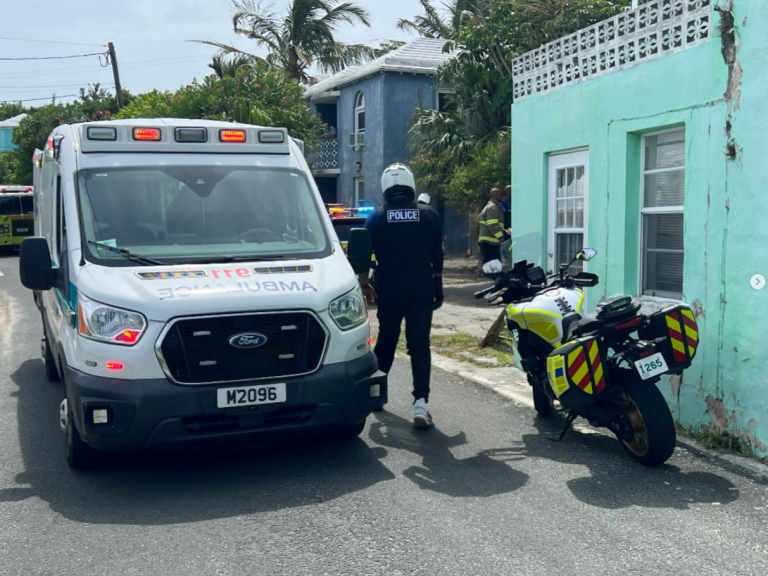
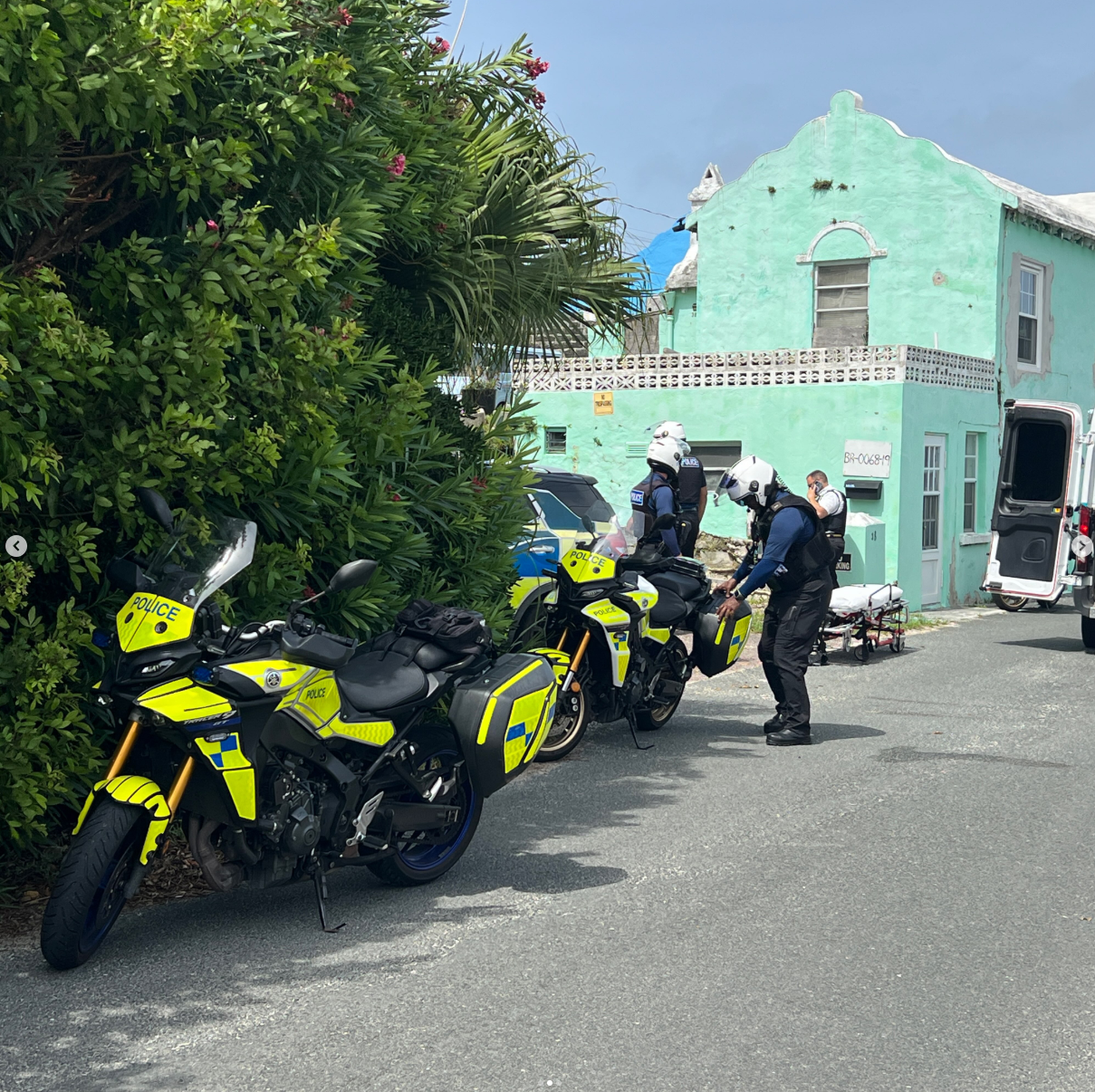
At approximately 3:10 p.m. on Thursday, July 30, 2026, police officers were conducting traffic enforcement on Middle Road, near Hog Bay Level, Sandys, when they had cause to stop a motorcycle being ridden by a male.
The bike rider failed to follow the officers’ instructions to stop, resulting in a pursuit which ended on Horseshoe Road, near its junction with Horseshoe Close, Sandys, after the subject and a police motorcycle were involved in a collision.
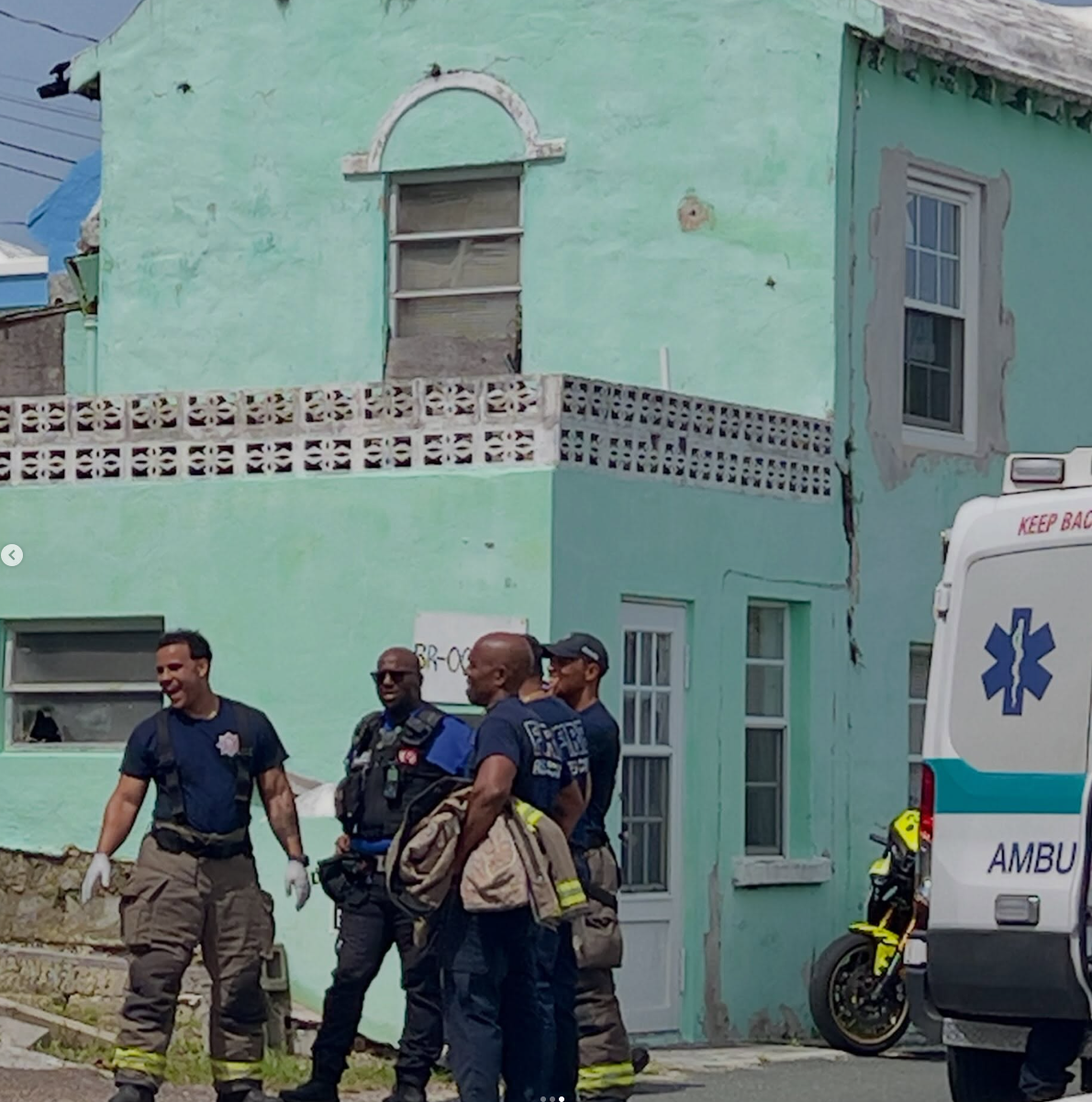
The police officer sustained back and leg injuries and was transported by ambulance to King Edward VII Memorial Hospital, where at last check, he continued to receive treatment for his injuries.
The suspect, a 17-year-old male, did not report any injuries. He was arrested and taken into custody at the Hamilton Police Station.
Checks revealed, the motorcycle he was riding was unlicensed and uninsured. He was also disqualified from riding motorcycles by reason of age.
He is expected to appear before the courts in due course.
The Bermuda Police Service reminds the public that failure to comply when lawfully instructed by a police officer to stop, is an offence which could result in a maximum fine of three hundred dollars, five demerit points recorded against you and being disqualified from driving all vehicles for up to three months.
The first day of Cup Match drew thousands of cricket fans, families and visitors to Somerset today. Amid friendly rivalries and colourful fashions, good food, music and community spirit, the atmosphere was infectious. Kendal Trott spoke to spectators about their Cup Match experience.
Somerset Cricket Club recovered superbly from an early setback to close the opening day of the 2026 Cup Match Classic on 277 for 6, after persistent rain delayed the start by more than two hours.
Five consecutive days of wet weather left the outfield saturated, forcing the first ball to be pushed back until 2:30pm. After winning the toss, Somerset chose to bat, but their innings could hardly have begun in worse fashion.
Captain Terryn Fray was dismissed from only the second ball of the match, handing St. George’s an immediate breakthrough.
Colt Jaiden Manders responded impressively alongside Kamau Leverock, the pair rebuilding with a 44-run partnership before Manders departed. Tre Manders then joined Leverock to add a further 55 runs for the third wicket, steadying Somerset after the early shock.
When Leverock fell, vice-captain Dominic Sabir took control of the innings. He shared a 33-run stand with Tre Manders before combining with Dion Stovell in the day’s defining partnership, adding 84 runs for the fifth wicket.
Sabir was the standout performer, top-scoring with a composed 67 from 99 deliveries, striking 10 fours and two sixes before becoming one of St. George’s late wickets.
By the close, Somerset had reached a competitive 277 for 6, setting the stage for an intriguing second day. Jonte Smith was the pick of the St. George’s bowlers, returning economical figures of 2 for 16 from six overs as honours remained finely balanced.
As Bermuda prepares for the 2026 Cup Match holiday, the Ministry of Health encourages residents and visitors to celebrate safely, stay aware of seasonal health risks, and look out for one another throughout the long weekend.
Minister of Health, Kim Wilson, JP, MP, said: “Cup Match is a special time for our island. Whether you’re enjoying the cricket, spending time with family, or taking in the holiday from the beach or the water, please take simple steps to protect your health and wellbeing.”
The Ministry reminds the public to take precautions in the summer heat. Apply broad‑spectrum sunscreen regularly, wear lightweight protective clothing, and seek shade during peak UV hours. Staying hydrated is essential: drink water throughout the day, especially if consuming alcohol or spending extended time outdoors. If drinking, do so in moderation and plan ahead for safe transportation. Never drive under the influence.
Be mindful of signs of heat‑related illness, including dizziness, nausea, or rapid heartbeat. Anyone feeling unwell should move to a cool area immediately and seek medical attention if symptoms persist.
Food safety remains important during holiday gatherings. Keep chilled foods cold, especially seafood and meats, and practise good hygiene when preparing or serving meals. Wash hands often and avoid cross‑contamination between raw and cooked foods.
Minister Wilson also noted that respiratory illnesses continue to circulate in the community: “I encourage everyone to take sensible precautions, particularly to protect our seniors and those with underlying health conditions. If you’re feeling unwell with cold or flu‑like symptoms, please stay home. Wearing a mask in crowded indoor settings or when visiting vulnerable loved ones can provide an added layer of care. Wash your hands regularly with soap and water or use hand sanitiser, and cover coughs or sneezes with a tissue or your elbow. These small actions help keep our community healthy.
“Cup Match is a time of joy, tradition, and togetherness. Let’s all do our part to ensure a safe and healthy holiday for everyone.”
Shomari Talbot-Woolridge traces the strong links between Bermuda and the Caribbean
Statement by Shomari Talbot-Woolridge, the PLP Candidate for Constituency #9, Smith’s West, & PLP Youthwing Chairman:
Some of the oldest fortunes in this country were made in the Caribbean.
Not near it. Not alongside it. In it. The land, the boats, the shopfronts, the family names that still carry weight on this island were built out of a relationship with a region we are now told we barely know.
Bermudians did not visit the Caribbean. We settled it.
In 1648 about seventy Bermudians sailed south to found a colony. Twenty eight of them were enslaved Africans. Their ship broke on a reef off Eleuthera. That expedition was the first concerted European effort to colonise the Bahamas. In 1666 another group settled New Providence and built what became Nassau. Bermudians founded the Bahamas. The first settlement and the capital.
From the 1670s we ran the salt trade in the Turks Islands and held it for a century and a half. Our own Assembly claimed seven hundred and fifty of the eight hundred rakers there were Bermudian. In 1710, when the Spanish and French took the islands, Bermuda did not petition London. Bermuda armed a sloop and cleared out the garrison. We fought a war over Caribbean salt.
The economies were one economy. The salt went north. The sugar came back. Salt, sugar and slaves were never three industries. They were one machine, and this island turned it.
Here is the part that should stop you.
Every February, Bermudian owners put enslaved Bermudians on ships and sent them south for the season. Not for a voyage. For six months. Wives left behind. Children left behind. The Crown’s own regulations of 1767 speak of the great number of enslaved people sent annually to those islands while their masters remained comfortably in Bermuda.
The traffic ran the other way too. Most of the people enslaved in Bermuda were not brought here from Africa. They were brought here from the Caribbean. Taken off one island and set down on another. Whole families cut in half by the width of an ocean, and the cut was made by Bermudian hands, for Bermudian profit.
That is how tied together these islands are. Our people are in their ground. Their people are in ours.
Mary Prince was born enslaved in Devonshire in 1788. She was sold at about twelve for fifty seven pounds, sold again, and shipped to Grand Turk to rake salt for ten years. She wrote of standing in salt water to her knees from four in the morning until nine at night, until her legs broke into boils that ate down to the bone. She was taken to Antigua, then to England, and in 1831 she published her account of it.
They printed it under the title The History of Mary Prince, A West Indian Slave, Related by Herself.
A West Indian slave. That is what they called a woman born in Devonshire.
Our National Hero. Her story is the story of us. It always was.
Now the money.
When Britain abolished slavery it paid compensation. Twenty million pounds, roughly forty per cent of the national budget, borrowed. Not one penny went to a freed person. The claims are public record, sitting in an archive at University College London where anyone can read them. Among them are two from St Vincent, settled in July 1836, naming merchants on St Vincent with other members of their family in Bermuda. A hundred and seventy three human beings. Four thousand eight hundred and eighteen pounds.
That money did not leave. It landed here.
Capital placed in the right hands in 1836 does not sit still. It bought land. It bought boats. It became shops that became stores that became banks. It paid for schooling, and for the schooling of the generation after that.
And it became names.
Names on buildings. Names over shopfronts. Names on companies that still trade in this country every day of the week. Names we say without hearing them.
Those names are not neutral. They are receipts.
So consider the arguments we are asked to take seriously now. That the Caribbean has nothing to offer us. That we are not like them. That the fit is wrong.
None of those objections were raised for three hundred years.
The relationship was never judged on whether it was close. It was judged on who was collecting.
What has changed is not the distance. What has changed is the distribution. The proposal on the table is a connection that pays into food security, energy, policing and training. A connection whose benefit reaches a household in Pembroke rather than a ledger in Hamilton.
That is the version we are told to be frightened of.
It was fine when a few were able to profit from the salt, the sugar and the slaves of the Caribbean. It is only a problem now that the profit might belong to everybody.
We have been in the Caribbean since 1648. You cannot join what you never left.
You can only stop pretending.
Happy Emancipation Day!
Happy Mary Prince Day!
Happy Cup Match!
Shomari Talbot-Woolridge is the PLP Candidate for Smith’s West, Progressive Minds; PLP Youthwing Chairman
Fortitude Reinsurance Company Ltd., (“Fortitude Re”) today announced a $50,000 donation to the Bermuda Education Network (BEN) through Fortitude Re 4 Good, the company’s umbrella for charitable giving, volunteerism and community partnerships. This contribution reflects the company’s ongoing commitment to education and community development across Bermuda.
The Bermuda Education Network is a nonprofit dedicated to improving public education by designing locally relevant curriculum and professional development programs for teachers and students. The donation will fund BEN’s educational programming, including the Fortitude Re Summer Reading Program, which provides primary-level students with additional academic support and enrichment experiences during the school break.
“At Fortitude Re, we know that strong readers become confident learners, and confident learners help build stronger communities,” said Amanda Stewart, SVP, Employee Experience and Executive Sponsor for Fortitude Re 4 Good. “We’re proud to partner with the Bermuda Education Network to help more children develop the literacy skills that will serve them throughout their lives. Investing in young readers today is an investment in Bermuda’s future.”
This contribution builds on Fortitude Re’s long-standing partnership with BEN. Since the collaboration began, Fortitude Re has contributed more than $500,000 to support teacher training, curriculum development, and the creation of BEN’s state-of-the-art Summer Reading Program, helping strengthen literacy outcomes for students across Bermuda. Beyond financial support, Fortitude Re colleagues regularly volunteer their time by reading with students through BEN’s Book Club, reinforcing the company’s commitment to investing in the next generation both inside and outside the classroom.
“The Summer Learning Program has provided unprecedented literacy intervention, free of charge to students who needed additional help,” said Becky Ausenda, Founder of BEN. “We are so grateful to Fortitude Re for their generous support which allowed us to develop the best possible intervention for children at a critical stage in their education career.”
In 2025, the partnership included support for 62 students, with 98 percent demonstrating measurable learning gains. This year’s program is currently serving 57 students. By continuing to invest in education, Fortitude Re 4 Good seeks to empower the next generation of Bermudian learners and ensure equitable access to high-quality educational resources.
Fortitude Re is a leading global reinsurer with more than $100 billion in reserves. Backed by world-class investors, including Carlyle and T&D Insurance Group, Fortitude Re combines deep expertise, disciplined execution, and a strong capital base to help clients navigate significant risk and capital challenges. Powered by a people-first culture that attracts, develops, and retains top industry talent, the company delivers innovative, tailored solutions that create lasting value for clients, partners, and policyholders. For more information, visit fortitude-re.com and follow Fortitude Re on LinkedIn.
About Bermuda Education Network
The Bermuda Education Network (BEN) is a registered nonprofit dedicated to improving public education across Bermuda. BEN connects educators, students, and community partners through curriculum design, enrichment programs, and professional development, helping to reduce literacy gaps and inspire lifelong learning. Visit www.bermudaeducationnetwork.com for more information.
Cup Match 2026 start delayed by three hours at Somerset
The Somerset Cricket Club says heavy rain and winds have forced a three-hour delay to Thursday’s opening of the Cup Match Classic.
The Somerset Cricket Club has delayed the start of the 2026 Cup Match Classic by three hours, citing recent torrential rain and winds that hampered ground preparations.
In a statement issued on July 30, 2026, the club said the decision was made after consulting the Joint Agency Command Centre and reviewing a forecast from The Bermuda Weather Service.
Gates will open at 6am on Thursday, with the first ball now bowled at 1pm, according to the club. The delay applies if there are no further hold-ups.
To make up for the lost time, play on Friday will begin one hour earlier, at 9am.
The club said the safety and general welfare of everyone was of paramount importance. It acknowledged the delay would bring some disappointment.
The Somerset Cricket Club also thanked plot holders who set up their viewing spots amid the heavy downpours that hit Bermuda this week.
The statement was issued in agreement with St. George’s Cricket Club.
Media release supplied by the Somerset Cricket Club, Inc.
The policy ties renewable deployment to least cost outcomes and measures progress against the 2025 average retail rate
Media Release:
The Ministry of Home Affairs has finalised the National Electricity Sector Policy 2026.
The finalised NESP which can be found here: www.gov.bm/articles/national-electricity-sector-policy-2026, replaces the National Electricity Sector Policy 2015 and sets the Government’s direction for Bermuda’s electricity sector through to 2045.
The public will be aware that consultation on the policy closed on 21 May 2026.
The 2015 policy established Bermuda’s first modern framework for the sector. In the eleven years since, the sector changed faster than the policy governing it.
The policy arrived at a time of rapidly moving energy events. In Bermuda, new licence classes were created. Distributed generation has increased. Fuel prices moved sharply due to various geopolitical factors. This has required the evolution of a policy grounded in the community’s needs.
The 2019 Integrated Resource Plan set a target of eighty-five per cent renewable generation by 2035, a figure produced through technical scenario work rather than declared as policy and never established as the least-cost pathway. The distance between the policy and the approved plan carried uncertainty into every investment decision that followed and placed tangible burdens on those who pay for electricity.
The NESP 2026 is intentionally technology agnostic. It endorses no generation technology in advance and prescribes no deployment schedule. Every resource option is compared on a levelised cost of electricity basis through the Integrated Resource Plan, and the shift to lower carbon generation proceeds where it holds or reduces rates against the business as usual case.
Affordability is a requirement linked to measurable customer outcomes rather than an ambition. The policy fixes the 2025 average retail tariff as the reference point against which future tariff performance is assessed.
“Affordability is structural, and this policy treats it that way,” said the Hon. Alexa Lightbourne, JP, MP, Minister of Home Affairs. “Every pathway is costed before it is adopted. Bermudians for too long have carried the price of plans that were never tested against the bill at the end of the month.”
Policy milestones will be agreed, as informed by data. The Regulatory Authority first derives candidate pathways through least-cost modelling. The Minister then declares the milestone by Ministerial declaration under section 7(2) of the Electricity Act 2016, stating the aggregate figure, the checkpoint years, and the evidence relied on. The Authority determines the annual pathway, the procurement volumes, and the technology mix through the Integrated Resource Plan. That sequence follows established practice in Hawaii, the United Kingdom, and the European Union, sized for Bermuda’s grid and institutions.
What has changed since 2015:
Planning authority: The Integrated Resource Plan will be developed and approved by the Regulatory Authority in collaboration with sectoral participants, in place of the previous arrangement once amended in law.-
Costed pathways: Renewable deployment proceeds where technologies are cost effective and deliverable. Targets are set on evidence and reviewed at each planning cycle.
Equity between customers: Tariffs must reflect the true cost of service so that grid-reliant customers do not carry the costs created by distributed generation.
Shared ownership: A Community and Cooperative Energy Licence is proposed, opening renewable participation to renters, apartment dwellers, low-income households, and small businesses.
Transport:Electric vehicles are treated as a driver of electricity sales and tariff stability, supported by a dedicated tariff, smart charging, and battery end-of-life planning.
Energy security: The policy carries an explicit Energy Security Statement covering import dependency, fuel diversification, and storage.
Workforce: Renewable energy installers will be licensed and certified nationally, with training pathways delivered through the Department of Workforce Development.
Accountability: The Regulatory Authority will publish an implementation schedule within six months, a progress report each year, and an interim report at the mid-point of each review cycle.
Minister Lightbourne confirmed that delivery will be measured publicly.
She concluded, “This policy advances energy democracy. The renter, the family in an apartment, and the small business owner should all be able to take part in renewable generation and share in what it returns. We are advancing a just energy transition; inclusive participation, social and economic opportunity, community empowerment, and environmental and climate justice.”
Members of the public can view the finalised NESP at either of these links: www.gov.bm/ministry/home-affairs of here www.gov.bm/articles/national-electricity-sector-policy-2026.
To provide the best experiences, we use technologies like cookies to store and/or access device information. Consenting to these technologies will allow us to process data such as browsing behavior or unique IDs on this site. Not consenting or withdrawing consent, may adversely affect certain features and functions.
Functional
Always active
The technical storage or access is strictly necessary for the legitimate purpose of enabling the use of a specific service explicitly requested by the subscriber or user, or for the sole purpose of carrying out the transmission of a communication over an electronic communications network.
Preferences
The technical storage or access is necessary for the legitimate purpose of storing preferences that are not requested by the subscriber or user.
Statistics
The technical storage or access that is used exclusively for statistical purposes.The technical storage or access that is used exclusively for anonymous statistical purposes. Without a subpoena, voluntary compliance on the part of your Internet Service Provider, or additional records from a third party, information stored or retrieved for this purpose alone cannot usually be used to identify you.
Marketing
The technical storage or access is required to create user profiles to send advertising, or to track the user on a website or across several websites for similar marketing purposes.