The Mexican authorities intend to treat the new arrangement as precautionary and canceled their previous line of about $35 billion, the IMF said in a statement
International News via Reuters:
The International Monetary Fund on Friday said its executive board had approved a new two-year, $24 billion flexible credit line for Mexico to act as a buffer against external risks, noting the country has steadily reduced its reliance on the precautionary fund in recent years.
The Mexican authorities intend to treat the new arrangement as precautionary and canceled their previous line of about $35 billion, the IMF said in a statement.
This marks Mexico’s eleventh such arrangement since 2009, with the credit line’s size shrinking from a peak of around $88 billion in 2017.
The IMF said the lower amount “reflects the Mexican economy’s increased buffers and resilience.”
Mexican officials had requested a new credit line for another two years at a lower access level, citing the government’s strong finances that make it less vulnerable to sudden shifts in capital flows, the Bank of Mexico and Mexico’s finance ministry said in a joint statement.
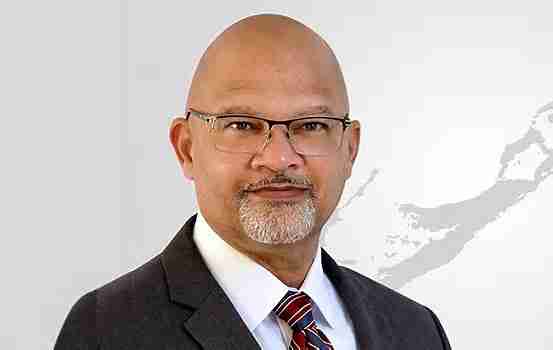
However, IMF Deputy Managing Director Nigel Clarke noted the country’s economy faces headwinds.
“Economic activity in Mexico remains soft, constrained by needed fiscal consolidation and still restrictive monetary policy, as well as the dampening effect of trade tensions,” he said.
He added that while the country has shown resilience, “trade-related risks have risen since the last FCL review.”
The new credit line will continue to play an important role in supporting Mexico’s macroeconomic strategy and provide “insurance against tail risks while bolstering market confidence,” according to the fund.
Reporting by Chris Thomas and Kylie Madry in Mexico City; Editing by Leslie Adler and Brendan O’Boyle
Outside, Indigenous groups rallied in protest at the ongoing industry and development in the forests they call home
International News via Reuters:
U.N. climate talks were nearing a midway point on Friday, with countries still wrangling over which issues they might be able to rally around in a final summit deal – and whether such a deal is even possible.
Outside, Indigenous groups rallied in protest at the ongoing industry and development in the forests they call home. They staged a peaceful sit-in at the summit entrance in the morning, before successfully demanding a meeting with COP30 President Andre Correa do Lago.
“We are the ones who protect the climate, and the Amazon cannot continue to be destroyed to enrich big companies,” read a statement from the Munduruku Indigenous group, whose territory in northern Brazil covers nearly 24,000 square km (9,000 square miles), about the size of the U.S. state of New Hampshire.
Brazilian President Luiz Inacio Lula da Silva has highlighted Indigenous communities as key players in this year’s COP30 negotiations.
“President Lula, we are here in front of COP because we want you to listen to us. We refuse to be sacrificed for agribusiness,” the statement said.
Brazil’s COP30 presidency has said it wants the summit to focus on realizing past promises, rather than making new ones.
To prevent an agenda battle at the summit’s start, Correa do Lago struck an early deal to keep contentious items like climate finance, a shortfall in national climate plans, trade and global greenhouse gas reduction goals to one side to be handled separately.
DELEGATES NERVOUS OVER AMBITION OF SUMMIT
The official agenda has negotiators from 195 governments working to flesh out earlier deals, such as advancing ways of measuring and supporting efforts to build resilience against weather extremes and other consequences of global warming, known in COP jargon as “adaptation.”
That approach to the talks left some nervous about the summit’s outcome – worrying that the talks could deliver a lightweight response to an escalating climate crisis, or instead fall apart altogether.
“If we continue on this current trajectory, there’s going to be a very, very weak outcome, that will kind of make this a washout when this was supposed to be a very pivotal moment,” said Andrew Wilson, deputy secretary general for policy at the International Chamber of Commerce.
Some countries including host Brazil are angling for a strong statement to advance countries’ COP28 promise to pursue “transitioning away from fossil fuels.”
It’s unclear if the two-week summit will deliver on that before it is scheduled to end on November 21.
With action on fossil fuels left off the formal agenda, one way of presenting agreed progress on the issue is to include it in a negotiated cover text, often seen as the conference’s central deal.
“I know it can be a difficult topic to sort of find the right way to talk about, but if we can have a chance to do that here in Belem, I think that’s a good thing,” Andreas Bjelland Eriksen, Norwegian climate minister told Reuters.
While a cover deal is still not certain, momentum is building for one to demonstrate that global unity on climate change is still intact outside of the United States pulling away.
Reporting by Adriano Machado, Valerie Volcovici, Simon Jessop and William James; Writing by Katy Daigle; Editing by Hugh Lawson
The Competition Appeal Tribunal (CAT) in a ruling on Friday threw out those parts of the case claiming losses from before October 2015 as having been brought too late
International News via Reuters:
Britain’s biggest mobile network providers including Vodafone and BT’s EE are facing a multi-billion-pound lawsuit for allegedly overcharging customers, after a London tribunal ruled on Friday that part of it could continue.
The case – which is also brought against Telefonica’s O2 and Hutchison’s Three UK, whose $19 billion merger with Vodafone was approved last year – was valued at over 3.2 billion pounds ($4.29 billion).
The Competition Appeal Tribunal (CAT) in a ruling on Friday threw out those parts of the case claiming losses from before October 2015 as having been brought too late.
But the CAT certified claims for losses from after October 2015 could proceed to trial.
Lawyers representing British consumer champion Justin Gutmann alleged the networks charged millions of British consumers who remained with the network after their minimum contract expired a “loyal penalty”, by continuing to charge for mobile devices which had already been paid off.
The networks’ lawyers argued, however, that the lawsuit is fundamentally flawed as it alleges anti-competitive behaviour “in an industry renowned for its competitiveness”.
EE said on Friday it did not accept the substantive allegations of the claim and intended to defend them robustly, while O2 said it welcomed the reduction in scope of the claim.
“We maintain that there is no merit to Mr Gutmann’s case for the remaining period and will continue to robustly defend our position as it proceeds,” an O2 spokesperson said.
VodafoneThree did not immediately respond to a request for comment.
($1 = 0.7451 pounds)
Reporting by Sam Tobin; editing by Sarah Young and Catarina Demony
Golf: The wait for a Bermudian player to make the cut at the Butterfield Bermuda Championship continues
The wait for a Bermudian player to make the cut at the Butterfield Bermuda PGA Championship continues, as all three local players failed to advance to the weekend rounds after two tough days of play at the Port Royal Golf Course.
Despite strong efforts and moments of brilliance from the trio, the challenging PGA Tour event proved too difficult to overcome the cut line.
Kenneth Leseur finished as the top Bermudian player, concluding his tournament at 3-over par. Leseur, competing in the event for the second time, posted an impressive even-par 71 in his second round, showcasing consistency after his roller-coaster opening round. His final round included three Birdies, twelve Pars, and three Bogeys.
Will Haddrell finished the tournament at 5-over par. The amateur and local qualifier found the conditions tough in his second round, shooting 4-over par. His final scorecard included two Birdies, ten Pars, and six Bogeys.
The third and final Bermudian player, young Oliver Betschart, finished at 7-over par. Betschart showed flashes of his immense potential during his second round of 2-over par, highlighted by carding a spectacular Eagle on his scorecard. He also recorded two Birdies, ten Pars, four Bogeys, and one Double Bogey, capping a valuable learning experience against a field of PGA Tour professionals.
All three players will take immense experience from competing in the flagship PGA Tour event on their home turf.
Former One Bermuda Alliance Senator Maurice Foley discusses Bermuda’s readiness for independence
Maurice Foley, OBA candidate for St. David’s (Consituency #3)
Full statement:
Every few years, the idea that Bermuda should become an independent country resurfaces; wrapped in emotion, history, and the promise of self-determination. But independence is not just about flags and anthems; it’s about whether we are truly prepared economically, socially, and educationally to stand on our own in a rapidly changing world.
At last week’s Parliamentary Prayer Breakfast, Gil Tucker delivered one of the most honest and necessary messages our island has heard in years. He spoke plainly about the government’s lack of return on investment, the need for management change or a paradigm shift, and the importance of stronger ties between business and education.
He reminded us that globalization is no longer on the horizon, it’s here. Remote work, artificial intelligence, and borderless industries mean Bermudians are competing with the world whether we realize it or not. Our students must be equipped not only with degrees but with adaptable skills, creativity, and readiness for a global economy if we expect Bermuda to remain competitive.
Most importantly, Tucker called for the creation of an Education Authority, a body that would keep education out of politics and focus instead on results, innovation, and fairness. He urged that Bermuda’s future demands open and honest dialogue, that our young people need the tools to compete, and that we must be willing to compete ourselves.
He said what many of us already feel: we don’t execute. We talk, we plan, we study, but we rarely follow through. His message was simple but sobering:
“The old way is not going to work anymore.”
Days later, Premier David Burt spoke at the Progressive Labour Party’s 62nd anniversary gala, again raising the topic of independence. He called it a “personal tragedy” that he could not bring Bermuda to independence and said it would be a tragedy for the PLP if Bermuda lacked the courage to become a full member of Caricom. He reminded the audience that with only 65,000 people, Bermuda’s market is small, and that entrepreneurs should look to the region for opportunity.
“For the entrepreneurs in this room,” he said, “you should want to sell your goods and services to others inside of the region to make more money and build wealth for you and your families.”
(Royal Gazette – November 9, 2025)
The Premier is right that Bermuda’s future cannot exist in isolation. But before we talk about independence or Caricom membership, we must talk about readiness. Because Bermuda today is not ready for either and neither will be a saviour.
Joining Caricom or declaring independence will not fix the fundamentals that hold us back. It won’t close the achievement gap in our public schools. It won’t create the jobs we’ve failed to build. It won’t solve the trust deficit between people and government. If we can’t manage what we already control, what makes us believe managing more will make us stronger?
We must speak honestly about what “free movement” within Caricom could mean for Bermuda. We have young Black males struggling not for lack of potential, but for lack of opportunity, mentorship, and consistent investment in their development. Free movement will not help them. If anything, it could make life harder by bringing in new competition for jobs they already find difficult to secure and for salaries that are already too low to survive on.
Before opening the door wider, we must fix what’s broken at home. That means preparing our own young men and women to compete successfully in any environment. It means giving them real skills, apprenticeships, and pathways into trades, technology, and entrepreneurship. Otherwise, Caricom’s promise of opportunity will pass over them entirely.
At the same time, we need to create clear pathways for Bermudians abroad to return home; pathways that make sense economically, professionally, and socially. Many of our brightest young people are studying, working, and thriving overseas, but see no viable route to come back. High living costs, limited job openings, and outdated immigration or housing policies make the idea of returning unrealistic.
If we truly believe in independence, in self-determination, or even in regional integration, then we must also believe in bringing our people home. Bermuda’s future should not be a story of permanent departure, but of return, contribution, and renewal.
That’s why Tucker’s call for an Education Authority should not be dismissed as a passing comment; it should be the starting point of national renewal. Education must be the foundation of any independent or regionally integrated Bermuda. The backbone of our nation is public-school education, and if that backbone is weak, the entire structure collapses. We must depoliticize education, modernize our classrooms, train and empower teachers, and prepare young Bermudians to thrive not just locally, but globally.
And while we debate independence, the world is already moving ahead. Artificial Intelligence (AI) is here; it’s reshaping industries, redefining work, and transforming how economies function. Globalization has erased the comfort of distance. Jobs, ideas, and opportunities now move at the speed of technology. Bermuda cannot afford to stand still while the rest of the world is evolving.
We must prepare our students now for jobs that don’t yet exist, equipping them with creativity, digital literacy, and adaptability. Change is inevitable. The question is not whether it’s coming but whether we are ready for it.
That readiness requires leadership and courage. We have tough decisions to make on behalf of our children. Do we continue the cycle of political infighting and complacency, or do we finally commit to long-term reform that puts our young people first?
Because if we fail to prepare them for the next economy, then independence will mean very little. We’ll still be dependent on imported talent, imported innovation, and imported solutions.
The business community, too, has a crucial role. It must work hand-in-hand with education to ensure students graduate with real skills and exposure. It must see the Caribbean not as competition but as collaboration, where Bermudian talent can lead projects, form partnerships, and scale ideas beyond our shores.
At the same time, the conversation about independence or Caricom should not be decided behind closed doors or at party galas. This is not a partisan issue; it’s a generational one. No single leader or government should decide Bermuda’s destiny. If this government truly believes Bermuda is ready, then let the people decide. Let there be a national referendum.
Let Bermudians young and old, workers and students, business owners and educators have an open, informed, and transparent conversation about what independence or integration truly means for our people, our economy, and our children’s future.
Bermuda today is a place of resilience and pride but also frustration, stagnation, and widening gaps. Bermuda tomorrow can be a place of opportunity, innovation, and shared prosperity if we act now, together, with courage and conviction.
Our greatness will not come from isolation, nor from nostalgic slogans. It will come from preparation, partnership, and performance.
So, before we talk about flying our own flag, let’s first make sure our children have a country worth coming home to, a country that rewards knowledge, welcomes competition, and values integrity.
Because as Gil Tucker said:
“The old way is not going to work anymore.”
And if Bermuda truly wants to stand tall in the world, we must first learn how to stand together.
Community action group to distribute 40-foot container of donated goods at St. Andrew’s Church Hall next Saturday
Image supplied.
New research suggests that cost-of-living challenges continue to affect Bermudian households.
One community action group has been working to ease that burden through regular free giveaway events.
Juliana Snelling, founder of the Grateful Bread, says demand is growing – but her team is ready to distribute a 40-foot container’s worth of donations at their next event on Saturday.
The group also credits its many volunteers, who help receive and sort the generous contributions.
The impact of these events continues to inspire volunteers to give their time and service.
The Grateful Bread’s next free giveaway takes place at St. Andrew’s Church Hall in Hamilton on Saturday, November 22.
Guests can browse and collect items between 1 and 5 pm. While those interested in volunteering on the day are encouraged to arrive from 11:30 am.
All of today’s runs are suspended owing to mechanical issues
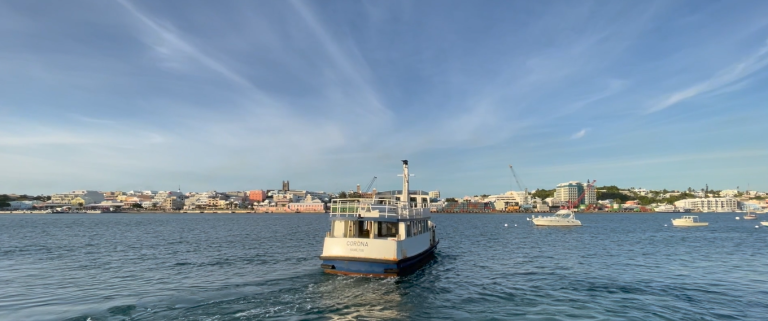
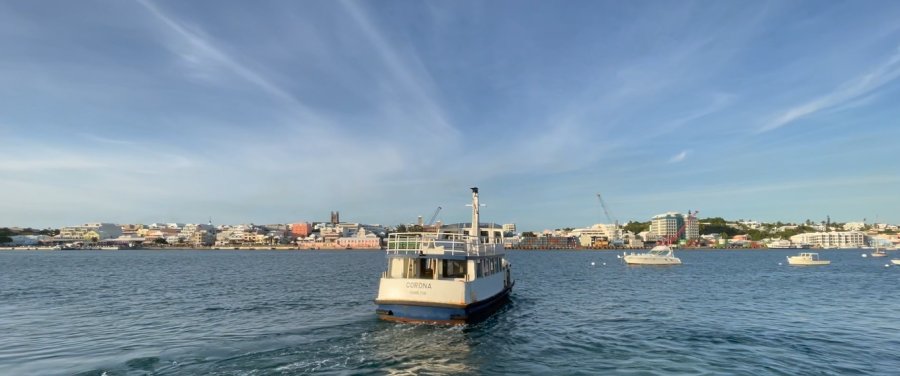
The Department of Marine and Ports Services is advising that the Pink route ferry services will be suspended until further notice due to mechanical issues. All of today’s runs are suspended.
The Department of Marine & Ports Services apologises for any inconvenience this may cause for commuters. The Department will issue a notice once the service is restored.
The move ends months of negotiations and regulatory scrutiny over the future of the right-leaning broadsheet
International News via Reuters:
U.S.-based private investment firm RedBird Capital Partners on Friday pulled out of a 500-million-pound ($671-million) bid for Britain’s Telegraph Media Group, the latest twist in a two-and-a-half year saga at one of Britain’s biggest newspapers.
A source close to RedBird told Reuters that sustained internal opposition from senior figures within the Telegraph newsroom had prompted it to walk away on Friday morning.
The move ends months of negotiations and regulatory scrutiny over the future of the right-leaning broadsheet, which has been in flux since a RedBird-IMI joint venture acquired it and The Spectator magazine in 2023, only for the then government to intervene and ban foreign state investment in UK newspapers.
RedBird then sought to formally request approval from the government to proceed with the acquisition under a revised structure, with the Abu Dhabi-backed IMI participating as a minority investor capped at 15%.
But the source said the regulatory clearance process had also been slower than expected, contributing to doubts about the timeline and feasibility of the acquisition. RedBird pulled out before any final regulatory decision had been communicated.
REDBIRD HAD WANTED BROADSHEET TITLES AND MAJOR WEBSITE
Telegraph Media Group is the publisher of the Daily Telegraph and Sunday Telegraph newspapers plus a news website, which is one of the biggest in Britain.
“Our immediate priority is to minimise disruption to the business and work with all stakeholders, including (the government’s media department), towards a solution,” a spokesperson said.
RedBird founder Gerry Cardinale had already been in discussions with other potential investors as part of the consortium model he was building, and could quickly re-engage, the source said.
RedBird, which manages about $12 billion in assets globally, said its conviction in the potential of the Telegraph “never wavered” when making the formal request to acquire it, despite challenges facing journalism, including AI and social media disruption.
Britain’s Department for Culture, Media and Sport declined to comment following RedBird’s withdrawal.
Giao Pacey, a media lawyer at Simkins, said the collapse of the deal underscored the growing complexity of media ownership in politically sensitive sectors, where regulatory uncertainty and reputational risks can derail even well-structured transactions.
SCRUTINY OVER FOREIGN INFLUENCE
Some campaigners and media commentators had urged the government to examine the deal’s implications for editorial independence and media plurality.
The proposed takeover had drawn criticism over foreign involvement, with questions raised about IMI’s ties to the UAE government and RedBird’s international affiliations, including links to China.
Luke de Pulford, executive director of the Inter-Parliamentary Alliance on China, told Reuters the withdrawal marked a victory for those concerned about foreign influence in UK media.
“The Telegraph does need to survive, and find a way out of its current limbo, but not at the cost of its freedom,” he said.
RedBird had denied any Chinese involvement in its bid and said it would safeguard editorial independence through an advisory board.
($1 = 0.7451 pounds)
Reporting by Sam Tabahriti in London. Additional reporting by Rishab Shaju in Bengaluru. Editing by Sarah Young, Louise Heavens and Mark Potter
A passer-by was hit in the foot by one of the shots fired by police
International News via Reuters:
French police shot and wounded a knife-wielding man in Montparnasse train station in central Paris on Friday, the city prosecutor’s office said.
A police officer shot the 34-year-old man in the leg and he then stabbed himself in the throat, the prosecutor’s office said in a statement, adding: “He was quickly taken care of by emergency services.”
A police source told Reuters the man was in hospital with life-threatening injuries.
A passer-by was hit in the foot by one of the shots fired by police, the prosecutor’s statement said.
The man had waved a knife at officers who were waiting for him at Montparnasse as part of an investigation of domestic violence carried out by police in a southern suburb of Paris.
A Reuters photographer who was at the station when the incident occurred said the incident had caused panic among commuters and weekend travellers, just a day after France marked the 10th anniversary of attacks by a jihadist group in Paris in which 130 people were killed.
“The memory of the attacks on November 13 (2015) is still there,” said one witness, Elvire Vaisse. “I thought to myself, ‘Here we go again.’ Suddenly I felt really stressed.”
Reporting by Stephane Mahe, Alessandro Parodi and Inti Landauro; writing by Richard Lough; editing by Philippa Fletcher and Gareth Jones
DENR is coordinating with other Government departments to contain the infestation and determine the extent of the problem
Images supplied. All photos are of the same species taken from other locations (i.e. not Bermuda)
Government press release:
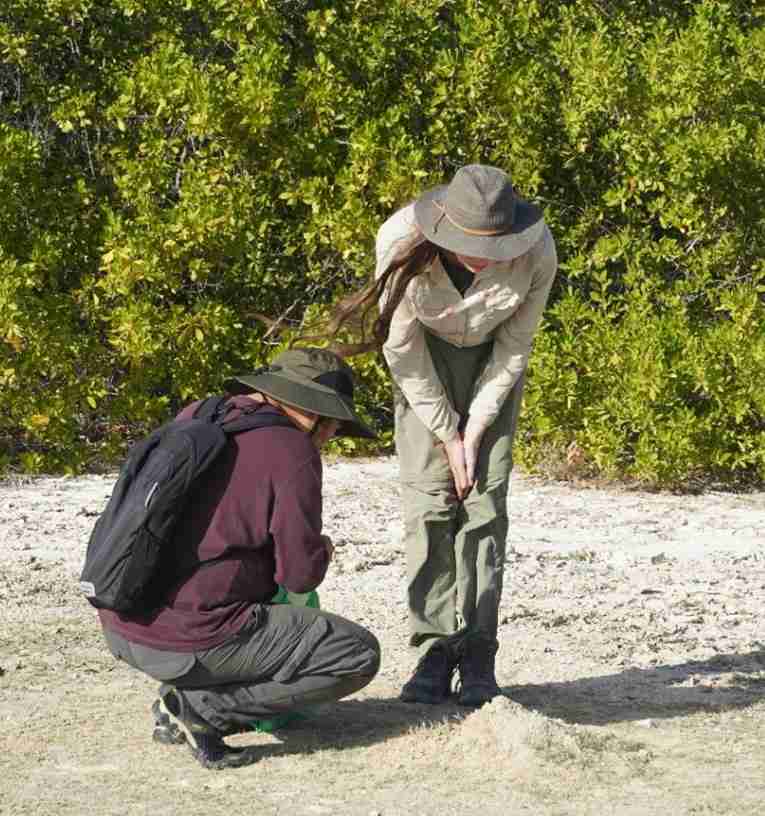
The Department of Environment and Natural Resources (DENR) has confirmed the presence of red imported fire ants (Solenopsis invicta) in Bermuda following a recent discovery in Hamilton Parish.
The finding was made by local plant pathologist Sam Fraser-Smith of PlantLab Ltd., who contacted DENR after a family member was stung by an unusual ant while standing on a residential lawn.
Recognising the potential significance of the discovery, Mr Fraser-Smith collected several specimens and promptly delivered them to DENR for identification.
Specialists from the Food and Environment Research Agency (FERA) and Buglife (UK) subsequently confirmed the specimens as red imported fire ants.Additional molecular work planned for the coming week will further verify the identification of Solenopsis invicta.
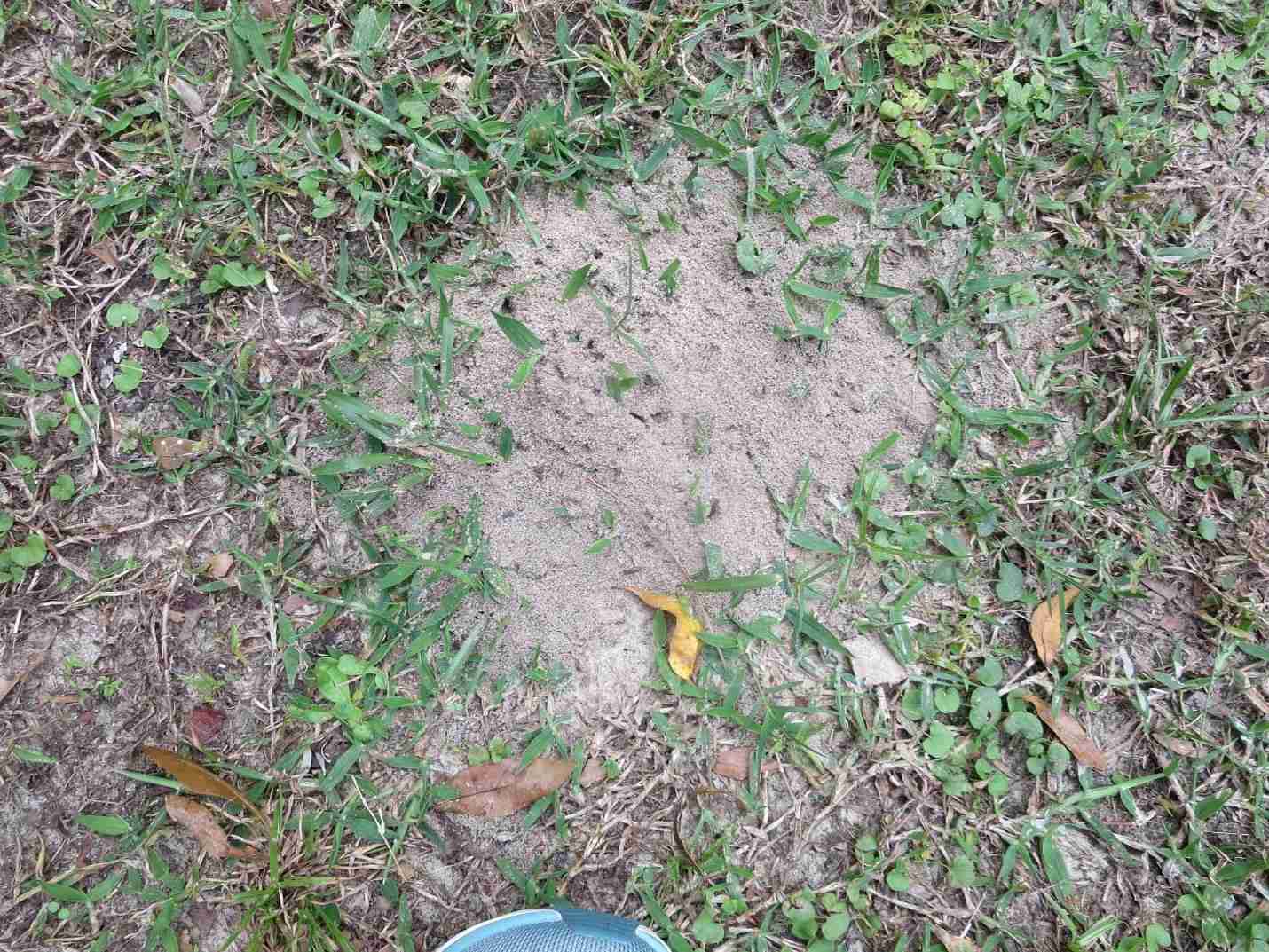
Three ant mounds were located and treated immediately to eradicate the colonies. Fire ants are among the most destructive invasive species in the world, known to cause significant ecological and agricultural damage, disrupt electrical and communication infrastructure, and pose risks to human health.
Their stings produce painful burning sensations, followed by small white blisters that can persist for several days. Fire ants live in large colonies built around a single queen, with worker populations reaching several hundred thousand. The colonies form extensive underground nests that may be visible as external mounds.
These mounds grow as the colony expands and can develop rapidly, particularly after rainfall. Mated females are capable of flying several miles to establish new colonies, making early detection and response critical.
Given Bermuda’s small size and the ants’ ability to spread quickly, DENR is coordinating with other Government departments to contain the infestation and determine the extent of the problem. The public is encouraged to remain vigilant and to report any suspected fire ant sightings.
Fire ants are similar in size to the Argentine ant and are distinguished by their reddish colour. Their mounds are made up of fine, light grey granular material and can form within one to two weeks.
Members of the public are advised not to disturb or handle suspected fire ant mounds. Instead, photographs should be taken from a safe distance and sent via email to fireants@gov.bm.
Reports should include a brief description of the location or GPS coordinates so that DENR staff can investigate.
DENR also reminds residents of the importance of maintaining good sanitation around homes and workplaces. Keeping areas clean and free of debris can reduce food sources and discourage the establishment of colonies.
Regular cleaning and bleaching of surfaces can also help remove pheromone trails used by fire ants to navigate.
Minister of Public Works and Environment, the Hon. Jache Adams, JP, MP, said: “The discovery of fire ants in Bermuda is a matter of serious concern, but it also highlights the value of public awareness and swift action.
“I commend Mr Fraser-Smith for recognising the significance of his find and reporting it promptly. With community vigilance and coordinated Government response, we can limit the spread of this invasive species and protect our environment, agriculture, and public health.”
To provide the best experiences, we use technologies like cookies to store and/or access device information. Consenting to these technologies will allow us to process data such as browsing behavior or unique IDs on this site. Not consenting or withdrawing consent, may adversely affect certain features and functions.
Functional
Always active
The technical storage or access is strictly necessary for the legitimate purpose of enabling the use of a specific service explicitly requested by the subscriber or user, or for the sole purpose of carrying out the transmission of a communication over an electronic communications network.
Preferences
The technical storage or access is necessary for the legitimate purpose of storing preferences that are not requested by the subscriber or user.
Statistics
The technical storage or access that is used exclusively for statistical purposes.The technical storage or access that is used exclusively for anonymous statistical purposes. Without a subpoena, voluntary compliance on the part of your Internet Service Provider, or additional records from a third party, information stored or retrieved for this purpose alone cannot usually be used to identify you.
Marketing
The technical storage or access is required to create user profiles to send advertising, or to track the user on a website or across several websites for similar marketing purposes.