
The Environmental Protection Agency posted its findings online three days after the Army blew up nearly 5 tons (4,500 kg) of highly volatile lead azide stored in 68 degrading plastic drums
International News via Reuters:
Lab results from the first water samples collected after the US Army detonation of an aging stockpile of lead-based explosives in Iowa found no evidence of contaminated drinking supplies attributed to the blast in surrounding areas, the US government said on Saturday.
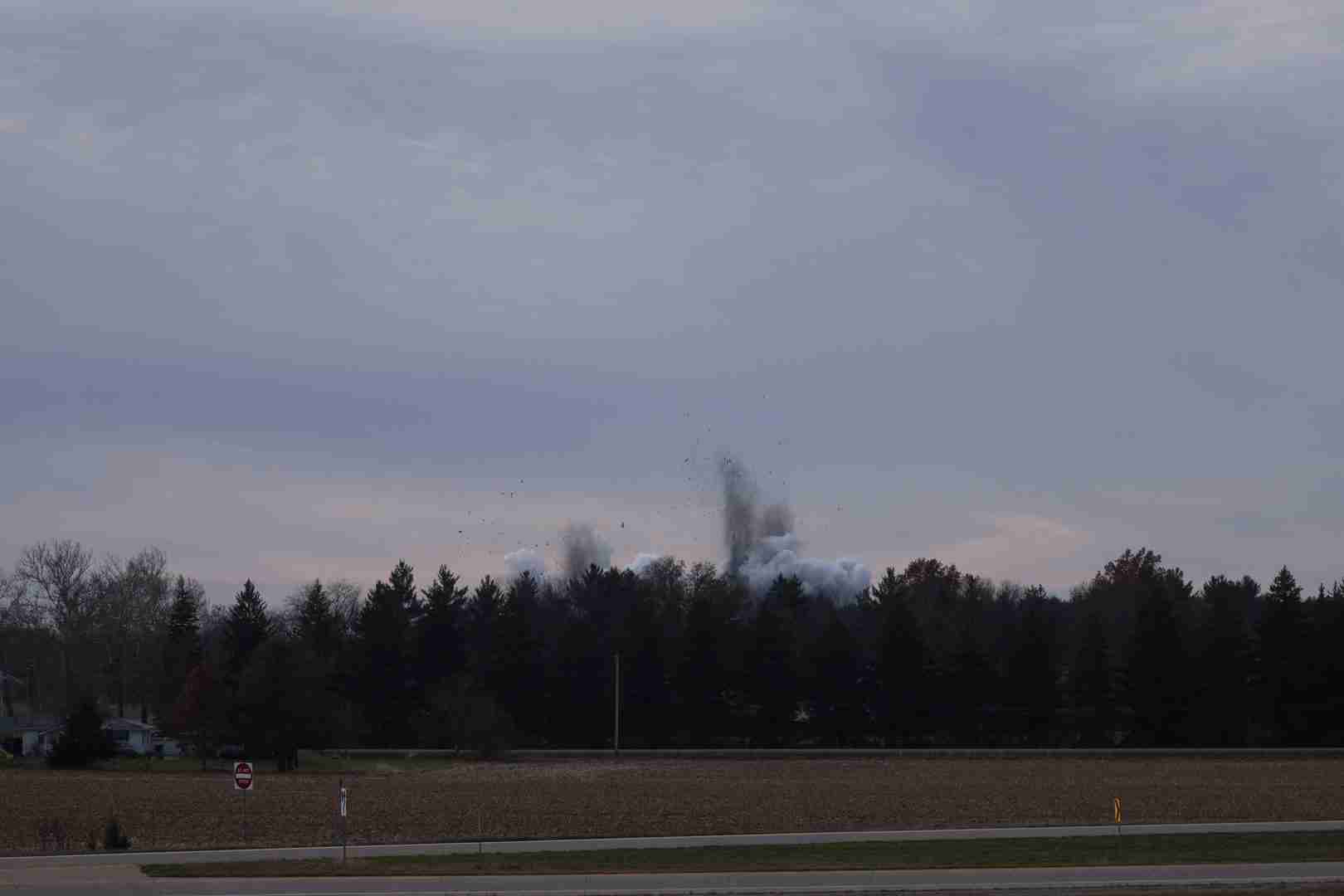
The Environmental Protection Agency posted its findings online three days after the Army blew up nearly 5 tons (4,500 kg) of highly volatile lead azide stored in 68 degrading plastic drums.
The orchestrated demolition was carried out in two simultaneous explosions at an Army munitions depot in the tiny farming town of Middletown, Iowa, about 150 miles (240 km) southeast of Des Moines, the state capital.
Initial lab results found no lead in any of 38 samples taken from public water supplies in the region after the explosions, including samples of fully treated drinking water and samples of untreated water taken from the point of intake, the EPA said.
The results show the detonation “did not result in an elevation of lead in water bodies that serve as sources of drinking water,” the EPA said in its statement.
The statement did not explain the geographic distribution of the water samples analyzed so far or clarify how many bodies of water or treatment plants were covered by the findings.
The agency said further lab results were still to come from additional samples collected from tap water, soil, outdoor structural surfaces and interior surfaces of homes and other buildings.
The EPA said its teams collected a total of more than 1,600 air, water, soil and dust samples after the detonation, roughly the same number taken before the blast, and that 187 homes and other structures were assessed, including schools, playgrounds, churches and daycare centers.
ZERO AIRBORNE LEAD DETECTED FOR 30 HOURS
Residents living closest to the Iowa Army Ammunition Plant were evacuated before Wednesday’s detonation as a precaution, while others sheltered in place inside their homes to avoid exposure to any lead dust emitted from the blast.
Immediately following the detonation, the Army and EPA said emission monitors had detected zero levels of airborne lead in the surrounding region, and an all-clear notice later in the day advised residents they could resume normal activities.
The EPA said on Saturday that its air monitoring operations recorded zero detection of airborne lead for 30 consecutive hours after the controlled detonation.
Army officials attributed the favorable air testing to an array of containment measures designed to muffle the blast and prevent toxic dust from being spewed over homes, crops and livestock beyond the detonation site.
Independent experts welcomed initial air quality readings but said atmospheric sampling was of limited value and that the real measure of lead fallout would come from sampling of water, soil, and structural surfaces, the analysis of which would take longer.
Lead exposure can cause a range of health problems, particularly in children, in whom it can interfere with cognitive development. Once it settles in the environment, it does not break down.
DETONATION FOLLOWED DAYS OF PUBLIC RANCOR
The “controlled, mitigated detonation” was conducted after days of public rancor and legal wrangling over the disposal plan, which US officials said was far safer than waiting for the chemicals to eventually blow up on their own.
The Army said that by the time an inspection of the stockpiled barrels in March found them to be on the verge of spontaneous explosion, it was too late to safely move the containers or to chemically neutralize them.
Critics, however, suggested that the situation reached crisis proportions because of inept management of the stockpile and poor planning.
Environmental groups filed suit challenging an emergency permit the EPA granted the Army to carry out the detonation, and President Donald Trump intervened on Monday to order the Army to hold off on the operation until the courts approved it.
Later that same day, the 8th US Circuit Court of Appeals upheld the EPA’s permit and lifted an earlier injunction it had imposed on the demolition, clearing the way for the Army to proceed two days later.
Following the blast, residents of the area expressed a mix of relief that toxic exposure appeared to have been minimized, and skepticism about the government’s level of transparency.
Army projections before the blast had shown that lead dust could settle on surfaces as far as 40 miles (64 km) southwest of the detonation site, extending through southeastern Iowa into northern Missouri.
US and Iowa agriculture officials also estimated that 350 farms might be affected by lead fallout based on weather forecasts.
Reporting by Steve Gorman in Los Angeles; additional reporting by Rishabh Jaiswal; Editing by Alex Richardson and Rod Nickel