Tuesday, November 10, 2026
Home Blog Page 459

Former UK ambassador Mandelson arrested after Epstein revelations

Mandelson, 72, was fired from the most prestigious posting in Britain’s diplomatic service in September, when the depth of his friendship with Epstein started to become clear
International News via Reuters:

Former British ambassador to the U.S. Peter Mandelson was arrested by London police on Monday on suspicion of misconduct in public office, following revelations over his ties to convicted sex offender Jeffrey Epstein.

Mandelson, 72, was fired from the most prestigious posting in Britain’s diplomatic service in September, when the depth of his friendship with Epstein started to become clear.

Police earlier this month began a criminal investigation into Mandelson after Prime Minister Keir Starmer’s government passed on communications between the former ambassador and Epstein.

“Officers have arrested a 72-year-old man on suspicion of misconduct in public office,” London’s Metropolitan Police said in a statement relating to an investigation into a former government minister.

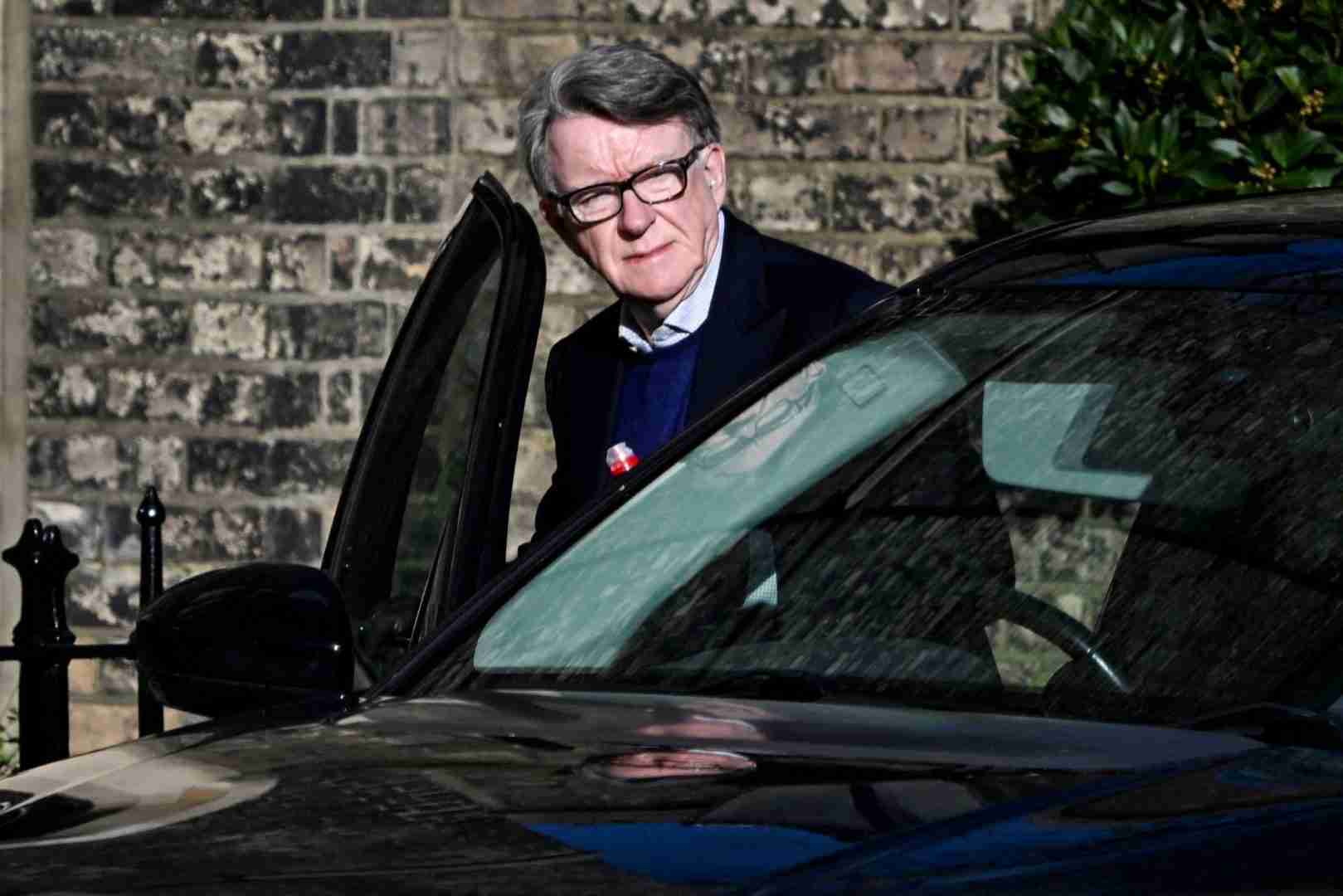
Mandelson was filmed leaving his central London home accompanied by plainclothes officers wearing body cameras, before being driven away in a car.

The arrest means police suspect a crime has been committed but does not imply any guilt.

There was no immediate response from Mandelson’s lawyers. 

EMAILS SHOWED MANDELSON AND EPSTEIN CLOSER THAN THOUGHT

Emails between Mandelson and Epstein, released by the U.S. Department of Justice in late January, showed the two men had a closer relationship than had been publicly known, and Mandelson had shared information with the financier when he was a minister in former Prime Minister Gordon Brown’s government in 2009.

Mandelson, who this month resigned from Starmer’s Labour Party and quit his position in parliament’s upper chamber, has previously said he “very deeply” regretted his association with Epstein. But he has not commented publicly or responded to messages seeking comment on the latest revelations.

Mandelson’s homes in London and west England were searched by police earlier this month.

“He was arrested at an address in Camden on Monday, 23 February and has been taken to a London police station for interview,” the police statement said. 

“This follows search warrants at two addresses in the Wiltshire and Camden areas.”

Last week, King Charles’ younger brother Andrew Mountbatten-Windsor was also arrested on suspicion of misconduct in public office over separate allegations he sent confidential government documents to Epstein. He has always denied any wrongdoing.

PRESSURE GROWS ON STARMER OVER VETTING BEFORE APPOINTMENT 

A conviction for misconduct in a public office carries a maximum sentence of life imprisonment, and must be handled in a Crown Court, which only deals with the most serious criminal offences.

Mandelson’s relationship with Epstein, who died in prison while awaiting trial in 2019 on sex trafficking charges, is at the centre of a British political scandal that has forced the resignation of two senior government officials.

Starmer, who has faced calls to step down over Mandelson’s appointment, faces further scrutiny after parliament ordered the release of documents relating to his vetting. A minister said on Monday that the first documents should be published in early March. 

MANDELSON HAD A DECADES-LONG CAREER IN UK POLITICS

Mandelson has had a turbulent, decades‑long career in British politics.

He came to prominence in the mid-to-late 1990s as one of the architects of former British Prime Minister Tony Blair’s New Labour project.

But Mandelson was forced to resign twice from the cabinet, first in 1998 for failing to disclose a home loan he had taken from a colleague, and second in 2001 after allegations that he had tried to influence a passport application.

But he was reappointed as a minister in Brown’s Labour government from 2008 to 2010 and eventually returned to public office when Starmer made him ambassador to the United States in late 2024.

His appointment as ambassador to the United States was initially seen as a shrewd move. He scored an early victory by ensuring Britain was the first country to agree a deal with the United States to lower some of President Donald Trump’s tariffs.

But he was fired a few months later when documents showed his close ties to Epstein. 

Starmer has said that Mandelson lied about the extent of his ties to Epstein during the vetting process.

Reporting by William James; editing by Michael Holden and Jon Boyle

Bermuda Motors issues recall of faulty BMW airbags

They urged owners to take immediate action if you drive a BMW 1, 2, 3 or X3 or X5 series due to safety concerns

Bermuda Motors is offering free airbag replacement for certain BMW vehicle model owners affected by ‘extremely dangerous’ airbags that have been recalled.


In a notice sent out by Allshores on behalf of Bermuda Motors, they announced motorists might be affected by recall of Takata brand airbags installed in BMWs manufactured between 2003-2017.


They urged owners to take immediate action if you drive:

• BMW 1 Series (Hatchback, Cabrio, Coupe)

• BMW 2 Series (Cabrio, Coupe, Active Tourer)

• BMW 3 Series (Sedan, Station Wagon, Cabrio, Coupe)

• BMW X3

• BMW X5

This recall was issued due to safety concerns with the airbags inflator, which have been found to ignite with explosive force, if ruptured during a crash.


Bermuda Motors described the fault as ‘extremely dangerous to you and passengers’, as metal shards may disperse throughout the passenger cabin.


For more information, call Bermuda Motors at 298-4209 or emailtechnicalcampaigns@bermudamotors.bm to find out if your vehicle is affected by the recall.

Meta users survey found 19% of young teens on Instagram report seeing unwanted nude images

Meta, which owns Facebook and Instagram, is facing allegations from global leaders that the company’s products harm young users

International News via Reuters:

Nearly 1 in 5 users aged 13 to 15 told Meta that they saw “nudity or sexual images on Instagram” that they didn’t want to view, according to a court filing. 

The document, made public on Friday as part of a federal lawsuit in California and reviewed by Reuters, includes portions of a March 2025 deposition of Instagram head Adam Mosseri.

Mosseri said the company does not share survey results “in general,” adding that self-reported surveys are “notoriously problematic,” according to the deposition. The survey was taken in 2021, said Andy Stone, a spokesperson for Meta. 

Meta, which owns Facebook and Instagram, is facing allegations from global leaders that the company’s products harm young users. In the U.S., thousands of lawsuits in federal and state court accuse the company of designing addictive products and fueling a mental-health crisis for minors.

The statistic on explicit images came from a survey of Instagram users about their experiences on the platform, Stone said, and not a review of posts themselves. 

The company in late 2025 said for teen users, it would remove images and videos “containing nudity or explicit sexual activity, including when generated by AI,” with exceptions considered for medical and educational content.

“We’re proud of the progress we’ve made, and we’re always working to do better,” Stone said. 

About 8% of users in the 13 to 15 age group also said they had “seen someone harm themselves or threaten to do so on Instagram,” according to the deposition.

Most sexually explicit images were sent via private messages between users, Mosseri said in his deposition, and Meta must consider users’ privacy when reviewing them.

“A lot of people don’t want us reading their messages,” he said.

Reporting by Courtney Rozen; Additional reporting by Jody Godoy in New York; Editing by Bill Berkrot

Insurer narrows its drug distribution network

Allshores has made Phoenix Pharmacies its sole provider for Ozempic, Adderall, Eliquis and more than 40 other drugs

Allshores, the amalgamation of health insurers Argus and BF&M, is restricting the coverage and dispensing of certain high-cost drugs to Phoenix Pharmacies exclusively.

As of April 1st, new prescriptions of drugs such as Ozempic, Adderall, Eliquis for Allshores insurees may only be honoured at the eight Phoenix Pharmacy locations.

That means more than two-thirds of Bermuda’s pharmacies, including at the hospital and independent locations such as Caesar’s and Robertson’s, will be unable to fulfill those prescriptions with Allshores’ insurance coverage.

Allshores sent a letter to pharmacies last week alerting them to the “critical change”, with a website link to a current list of 46 prescriptions that require fulfillment through Phoenix. (VIDEO of website below)

The prescriptions include diabetes and weight-loss drugs Ozempic, Mounjaro and Waygovy; Eliquis, a blood-thinner used to reduce the risk of stroke; ADHD treatment drug Adderall; Cellcept and Tacrolimus, prescribed to reduce the risk of organ rejection following a transplant; and specialized cancer drugs such as Lenalidomide.

In a statement today, Allshores stated that the change is being made because “high-cost prescription drugs — including GLP-1 treatments, biologics, and oncology therapies — have become one of the fastest-growing drivers of spending.”

“While these medications represent only about 3% of prescriptions, they account for more than 30% of total prescription spend among Allshores members.” (FULL statement below)

Allshores told pharmacies that by consolidating distribution through one pharmacy group, they can secure better pricing.

Today’s statement adds, “this initiative does not reduce pharmacy benefits. Benefit schedules have not changed, and coverage levels remain the same. In some cases, coverage for certain high-cost medications has improved. For most plans, eligible medications continue to be covered at 100% with no copay or deductible when dispensed through the designated pharmacy partner.”

Allshores states that Phoenix was selected as their designated provider following an “extensive RFP process”, and cited that it is “Bermuda’s largest pharmacy group, with eight convenient locations across the island and island-wide delivery.”

In its response to the move by Allshores, People’s Pharmacy told us in a statement today, “cost containment is a shared goal. We believe alternatives should be explored that achieve similar savings outcomes without forcing patients away from pharmacies that hold their complete medical history, which could lead to missed potential drug interactions.”

“Limiting medication access to a single pharmacy network raises concerns about reduced patient choice, the disruption of trusted care relationships, and the unintended impacts on the sustainability and diversity of Bermuda’s pharmacy sector.” (FULL statement below)


Statement by Allshores Limited:

Allshores Limited (“Allshores”) (BSX: ALSH) today announced a pharmacy partnership designed to help manage rising prescription drug costs while maintaining full coverage and continued access for members, particularly those managing chronic or complex health conditions.

This initiative does not reduce pharmacy benefits. Benefit schedules have not changed, and coverage levels remain the same. In some cases, coverage for certain high-cost medications has improved. For most plans, eligible medications continue to be covered at 100% with no copay or deductible when dispensed through the designated pharmacy partner.

As Bermuda continues to experience sustained healthcare cost increases, high-cost prescription drugs — including GLP-1 treatments, biologics, and oncology therapies — have become one of the fastest-growing drivers of spending. While these medications represent only about 3% of prescriptions, they account for more than 30% of total prescription spend among Allshores members. Many employer clients ask Allshores to use its purchasing power to negotiate on their behalf to help keep healthcare coverage affordable, and this initiative forms part of that effort.

Following a formal Request for Proposal (RFP) process, The Phoenix Stores — a long-standing Bermudian-owned business — was selected as the designated pharmacy provider for certain GLP-1 and other high-cost prescription medications.

Beginning March 1, new prescriptions for certain high-cost medications will be directed to The Phoenix Stores pharmacies as the designated provider. Effective April 1, new prescriptions for these medications filled at other pharmacies in Bermuda will be subject to coverage in accordance with the terms of their health plans.

Allshores began by informing physicians and pharmacies in advance to help ensure continuity of care and a smooth transition for patients. Communications to clients and members are now underway, including targeted outreach to the small group of members with chronic conditions who are directly impacted.

Physicians and pharmacies have been informed of these changes to support continuity of care, and relevant prescriptions will be directed to The Phoenix Stores pharmacies where appropriate. Regular prescriptions are not affected by this initiative — members may continue to fill all non-high-cost medications at the pharmacy of their choice, including The Phoenix Stores, in line with their existing coverage.

Specialty pharmacy models such as this are increasingly common internationally, helping improve health outcomes while managing rapidly rising prescription costs.

To support member convenience, The Phoenix Stores operates eight locations across Bermuda and offers complimentary island-wide home delivery, providing flexible options for accessing medications. Members do not need to take any immediate action.

A full list of medications included in this initiative is available at allshores.com/phoenix.

Allshores remains focused on balancing access to care, affordability for members, and the long-term sustainability of Bermuda’s healthcare system. The company will continue monitoring implementation closely and remain responsive to feedback from members, providers, and pharmacy partners.


Response from People’s Pharmacy to Allshores’ policy change:

People’s Pharmacy understands the need to address rising healthcare and insurance costs in Bermuda, and we recognize the important role insurers play in managing affordability for patients. At the same time, we believe it is essential to preserve independence and balance within Bermuda’s healthcare system. Patients benefit most when doctors, pharmacists, and insurers collaborate; ensuring care decisions remain centered on improving clinical outcomes while preserving patient autonomy and choice.

Cost containment is a shared goal. We believe alternatives should be explored that achieve similar savings outcomes without forcing patients away from pharmacies that hold their complete medical history, which could lead to missed potential drug interactions. Limiting medication access to a single pharmacy network raises concerns about reduced patient choice, the disruption of trusted care relationships, and the unintended impacts on the sustainability and diversity of Bermuda’s pharmacy sector.

It also raises an important broader question for our healthcare system: if access to one category of treatment can be consolidated in this way, what safeguards exist to ensure this approach does not expand over time to determine where patients must obtain other healthcare services? Maintaining balance today helps protect patient choice and system resilience tomorrow.

International experience also highlights the importance of carefully balancing cost management with patient choice. In Ontario, Canada, a similar specialty drug arrangement introduced in 2024 would have directed certain patients to obtain medications primarily through a single pharmacy network affiliated with Shoppers Drug Mart. Following concerns raised by patients, healthcare professionals, and government officials regarding competition, access, and continuity of care, the insurer reversed the policy and restored patient access to any pharmacy while continuing to pursue cost-management objectives.

Our priority remains the wellbeing of patients and maintaining a healthcare environment that supports access, continuity of care, and collaboration across the entire system.

‘Cost and ease of doing business’ still a concern for ABIC members

The Association of Bermuda International Companies (ABIC) Chair Christian Dunleavy issued his comments on the Government’s 2026/27 Budget

Full statement from ABIC:

ABIC, whose members are significant payers of the Corporate Income Tax and payroll taxes as well as key job creators, welcome the budget’s prioritization of CIT revenue for debt repayment.


ABIC also supports the establishment of a Stabilisation Fund to reduce the expected volatility of the CIT over time due to industry concentration among the CIT payers.


Additionally, ABIC supports the utilisation of a portion of the proceeds for efficient delivery of social services, critical when so many members of our community struggle to meet the cost of living.


The CIT has transformed the Bermuda’s Government’s revenues and presents an unexpected opportunity to reduce Bermuda’s debt burden.

Reducing and eliminating debt servicing will free up existing budget room for social services and reducing other taxes, mitigating the need for the increase or creation of new taxes and fees.


The cost and ease of doing business in Bermuda remain a key concern for ABIC members andour desire to support job creation and economic growth in Bermuda in an increasingly competitive global environment.

Expanding the CIT tax credits to payers beyond regulated insurers and reinsurers would be a welcome step.

Separately, discussion of a new personal income tax alongside a new and significant CIT requires careful consideration, study and extensive consultation.

A personal income tax, alongside the CIT, could be a disincentive for job retention and creation on island as well as a countermeasure to the recently introduced substance-based tax credit, the job-based benefit factor.


ABIC believe the immediate priority is onboarding and understanding the impact of the significant new taxes raised through the CIT without harming Bermuda’s competitiveness.

This can be achieved with the continued good work of the teams at the Ministry of Finance and CITA,
supported by close industry collaboration.

ABIC also looks forward to a robust consultation exercise on other areas of reform including proposed Universal Health Care and social insurance reform.

Asbestos clean-up after BBC report

Asbestos stored outdoors at the Fairmont Southampton construction site had been partially transferred to containers on Saturday

Bags of asbestos that were sitting outdoors in a lot below the Fairmont Southampton Hotel and the Boundary Sports Bar had been partially transferred to storage containers on Saturday.

An abatement air sampling device was in operation, taped to a lamppost beside the lot.

On Sunday, the site was gated, with signage and barriers preventing access and restricting views.

Bermuda Broadcasting understands that the material, removed from the hotel during renovations, had been stored at the lot under plastic sheeting since at least mid-December.

Photos shared with BBC show that the bags had been uncovered at times, possibly due to high winds.

The asbestos had become a source of concern for nearby residents, prompting a Bermuda Broadcasting report on Thursday.

Hotel owners Westend Properties responded on Friday, with a spokesperson advising that four containers were brought to the site that day, and an additional three containers would be on site on Saturday “to ensure sealed asbestos abatement bags are properly stored and prepared for prompt removal.”

The spokesperson also advised that they “adhere to all established protocols governing the handling and disposal of asbestos materials related to the construction work underway at the property.”

However, due to a delay in the scheduled collection process, they “were instructed to temporarily and securely store the sealed materials on-site until pickup could be completed.”

Last week, Bermuda Broadcasting reached out to Environmental Health to ask if the asbestos had been removed and stored in line with asbestos abatement safety protocols, and for details of any environmental health inspections performed at the site.

We await a response from Government.

Blizzard slams US Northeast, closing roads and canceling flights

Thousands of homes and businesses were without power and officials, including New York City Mayor Zohran Mamdani, ordered residents to stay off the roads so emergency crews could clear the streets

International News via Reuters:

A powerful blizzard dropped more than a foot of snow (30 centimeters) across parts of the U.S. Northeast on Monday, bringing travel to a near standstill for millions of residents as the treacherous conditions closed roads, shut down train service and forced the cancellation of some 5,700 flights.

Thousands of homes and businesses were without power and officials, including New York City Mayor Zohran Mamdani, ordered residents to stay off the roads so emergency crews could clear the streets. Many schools were closed throughout the region.

“I’m urging every New Yorker to please stay home,” Mamdani said.

More than 15 inches (38 centimeters) of snow had fallen on New York City’s Central Park by 8 a.m. on Monday and another 5 to 6 more inches (13-15 centimeters) are expected to fall before the storm tapers off by late afternoon, said Bob Oravec, a meteorologist with the National Weather Service’s Weather Prediction Center.

Winds can blow snow drifts several feet high.

“It’s a pretty big storm and it’s definitely a blizzard” with wind gusts of 40 to 60 mph from Delaware to New York City to Boston, Oravec said. “It’ll probably take a week to dig out.”

Boston has received about 6 inches so far, but much of Delaware and Southern New England has already received 12 to 18 inches, and Philadelphia has already received a foot of snow.

The storm is expected to taper off in New York City by Monday afternoon but Boston and upper New England will see snow through Monday night.

Because of the high winds, the snow storm meets blizzard criteria: Blizzards have gusts of 35 mph winds or greater, sustained over three hours or more, Oravec said. Stony Brook Village on Eastern Long Island and Nantucket Island had among the highest gusts reported, topping 60 mph.

REGIONAL EMERGENCIES

Airlines had canceled more than 5,700 flights by Monday morning and delayed another 900, according to the tracking site FlightAware.com. More than 1,600 Tuesday flights had already been canceled, according to the site. Most of the cancellations and delays were in the Northeastern U.S., including New York’s John F. Kennedy International and LaGuardia airports, Boston’s Logan Airport, and Newark Liberty International Airport.

New York Governor Kathy Hochul said she had activated 100 National Guard members to assist in Long Island, New York City and the Lower Hudson Valley – areas expected to bear the brunt of the heavy snow and coastal winds. The storm forced closure of the U.N. headquarters complex in Manhattan on Monday.

Parts of the Northeast could see up to two feet of snow and wind gusts could reach 70 mph, raising the risk of falling trees and power outages, according to the Department of Homeland Security. 

In an update on Sunday, the agency said that despite its ongoing funding lapse, the Federal Emergency Management Agency’s disaster‑response work continues uninterrupted, including staff travel, emergency operations and critical assistance for people affected by active disasters, with life safety and property protection remaining top priorities.

Last week, Reuters reported that the Trump administration had ordered FEMA to suspend the deployment of hundreds of aid workers to disaster-affected areas around the country while the DHS is shut down.

Massachusetts Governor Maura Healey declared an emergency and told state workers to stay home. Connecticut barred commercial vehicles from limited-access highways, exempting only emergency and essential deliveries.

Train and bus commuter lines in New Jersey were halted, while the Rhode Island Public Transit Authority said it would suspend all service from Sunday night through Monday and would announce plans to resume service only when conditions improve.

Reporting by Rajesh Kumar Singh in Chicago and Rick McKay in Atlanta; Additional reporting by Tatiana Bautzer in New York and Shivansh Tiwary in Bengaluru; Writing by Helen Coster.;Editing by Diane Craft, Pooja Desai and Mark Porter

Carmakers push toward ‘eyes-off’ driving, raising questions of safety, liability

Car companies for years have been enhancing driver-assistance systems, which automatically control speed and steering

International News via Reuters:

Automakers are racing toward a key milestone on the long road to fully driverless cars: systems that let drivers take their eyes off the road – to shoot a text or peck away on a laptop – unless the car alerts them to retake control.

Car companies for years have been enhancing driver-assistance systems, which automatically control speed and steering. Letting drivers tend to other things while behind the wheel could be a next step that helps automakers monetize their sizable investments in autonomy.

 “We can start saving them time immediately, and do it in a very affordable way,” said Doug Field, Ford Motor’s chief electric vehicle, digital and design officer. Ford is planning to introduce an eyes-off system on affordable electric models starting in 2028. 

But there is a growing industry debate about whether the eyes-off technology – referred to in the industry as Level 3 autonomous driving – is worth offering at all. Some executives and industry experts argue that handing control back and forth between the car and human driver is unworkable or unsafe, and raises thorny liability issues. 

Some also question whether enough consumers will purchase the technology to justify its hefty development costs.

“We don’t know if Level 3 ever makes financial sense,” Paul Thomas, president of the North America business at automotive supplier Bosch, told Reuters at the CES consumer-technology show in January. 

BACKTRACKING ON LEVEL 3 DEVELOPMENT

A decade ago, auto executives predicted that autonomous cars would be ubiquitous by now, but technological challenges, cost overruns and regulatory uncertainty have delayed broad deployment. In the meantime, automakers have been packaging the building blocks of fully driverless cars into increasingly capable driver-assistance features that require constant human monitoring.

Eyes-off Level 3 systems sit at the midway point on the industry’s automated-driving scale, from basic features like cruise control at Level 1, to driverless capability under all conditions at Level 5.

Currently, almost all assisted-driving systems on the market, including Tesla’s Full Self-Driving, are classified as Level 2 systems, which require drivers to watch the road. Beyond Ford, automakers that have announced plans for eyes-off Level 3 tech include General Motors and Honda Motor. 

The cost to develop a Level 3 system for operation on highways is up to $1.5 billion, roughly double the amount for Level 2 systems that can work even on city streets, according to a recent survey of industry players by consultancy McKinsey.

“Those carmakers who have attempted an L3 system, and the consumers who have tried it, are finding that the juice isn’t worth the squeeze,” said John Krafcik, the former CEO of Waymo and current board member of EV maker Rivian. 

Already, some companies have backtracked on their Level 3 ambitions due to cost concerns, McKinsey said, and instead have redoubled efforts on enhancing the capabilities of their cheaper Level 2 systems. 

Germany’s Mercedes-Benz, the only automaker so far to introduce Level 3 tech in the U.S., recently halted its program because limited speed, restricted conditions and geographic boundaries curtailed demand. For now, the company is focusing on rolling out autonomous driving features for city streets that require driver supervision. Mercedes plans to introduce an upgraded Level 3 system in a few years, a spokesperson said.

In August, Reuters reported that Stellantis shelved its Level 3 development efforts because of high costs, technological challenges and concerns about consumer demand.

Though Tesla’s Full Self-Driving feature can operate on city streets, it requires the driver to pay attention to the road. The Elon Musk-led company has not yet introduced an eyes-off Level 3 offering for personal vehicles, and instead is focused on delivering fully autonomous driving. 

Tesla has launched a small robotaxi service and plans to expand to a handful of U.S. cities by the first half of 2026, putting it in direct competition with industry leader Waymo, which is owned by Alphabet.

A major technological challenge with Level 3 is to design a system that is capable enough to detect the need for human intervention, provide that warning, and keep driving until the driver takes over, said Bryant Walker Smith, a University of South Carolina law professor focused on autonomous-driving regulation.

“That’s going football fields down a road, minimum 6 seconds, probably much more,” he said. “What makes more sense from a regulatory perspective is being able to provide Level 4 under a significant enough set of operating conditions that people will actually find it useful to use.”

Joel Johnson, a strategist who has worked with GM on autonomous programs, said eyes-off systems present cost and liability challenges for car companies.

“Automakers only have a reason to deploy autonomy strategically to fight Waymo and keep them at bay, or to be able to charge more money” through upfront payments or subscriptions, he said. 

LIABILITY CHANGES WITH EYES-OFF TECHNOLOGY

Analysts say that moving to eyes-off technology increases the chances that the vehicle manufacturer would be held liable in the event of a crash.

The question of who might be held responsible in an accident involving Level 3 tech – the driver or the carmaker – is murky today, according to an article published last year in the Fordham Intellectual Property, Media and Entertainment Law Journal.

“If a publicly acceptable regulatory solution is not quickly implemented, this technology may never reach the market,” the article said. 

Adding pressure on carmakers to introduce more sophisticated assisted-driving features is the rapid progress of Chinese automakers. China’s government in December cleared a car with Level 3 capability for the first time. 

Already, Chinese brands including Leapmotor and BYD are including advanced Level 2 driver-assistance features in their cars’ sticker prices. That could prompt a global price battle if U.S. and European customers expect the same features from their models without the monthly subscription.

“This is a war of global business models,” said Johnson, the strategist who has worked with GM.  

Reporting by Nora Eckert in Detroit and Abhirup Roy in San Francisco; Editing by Mike Colias and Matthew Lewis

Big Tech to invest about $650 billion in AI in 2026, Bridgewater says

The investments would mark a sharp increase from $410 billion in 2025

International News via Reuters:

U.S. technology giants Alphabet, Amazon, Meta and Microsoft are expected to collectively invest about $650 billion to scale up AI-related infrastructure this year, according to an analysis by Bridgewater Associates.

The investments would mark a sharp increase from $410 billion in 2025.

In a letter to clients, Bridgewater co-chief investment officer Greg Jensen said the artificial intelligence boom has entered a “more dangerous phase,” marked by exponentially rising investments in physical infrastructure and growing reliance on outside capital.

“Compute demand continues to significantly outpace supply, driving hyperscalers to invest even more rapidly to try to someday get ahead of the demand.”

The four companies have already curbed share buybacks more aggressively to help fund the surge in capital expenditure, Jensen said.

The scale of spending, he said, is creating significant downside risks if anything went wrong.

Anthropic and OpenAI will need major product breakthroughs to secure backing for massive final fundraisings ahead of potential IPOs, he said. Without a credible path to outsized profits, they could struggle to justify lofty valuations and heavy capital demands.

Besides, these products are exposing significant risks to other sectors such as software companies and data providers, he said, pointing to the recent selloff in software stocks.

“It is no longer possible for AI leaders to satisfy their investors’ expectations without creating existential risks to other sectors like software,” Jensen added.

Beyond stock markets, Jensen said tech investment spending remains a significant “upward pressure for U.S. growth.”

Bridgewater estimates tech investment added about 50 basis points to U.S. GDP growth in 2025 and could provide around 100 basis points of support this year.

However, the spending boom may also lift inflation in technology and communications equipment and push up electricity prices in some regions.

A severe stock market correction could undermine growth and limit companies’ ability to raise capital, similar to the Dot-com bubble in 2000, Jensen said, but added that recent moves are far smaller.

Reporting by Prakhar Srivastava in Bengaluru and Anirban Sen in New York; Editing by Leroy Leo

Police provide alternate phone numbers after outage

Due to a service provider outage which may result in some members of the public not being able to reach the main police number (295-0011), please be advised that the following mobile lines are now available and can be used to contact police.

755-1745

755-1623

755-1624

755-1625

Ireland, Finland, others warn against relaxing EU merger rules

The European Commission, which acts as the bloc’s competition enforcer, is now revamping merger rules dating from 2004 and aims to publish proposals for feedback in April

International News via Reuters:

Finland, Ireland, the Czech Republic and two Baltic countries have warned against loosening EU merger rules in response to calls by some companies for easier regulatory scrutiny of their deals in order to better compete with non-EU rivals.

The European Commission, which acts as the bloc’s competition enforcer, is now revamping merger rules dating from 2004 and aims to publish proposals for feedback in April. The aim is to encourage pan-European mergers, sources have told Reuters.

The five countries, including Estonia and Latvia, wrote in a note seen by Reuters that Europe does not need to relax EU merger rules to create European champions because the existing rules already allow for these where the economic evidence supports it.

“Size in itself should not be the primary objective” of mergers, they said in the document that is to be discussed at a meeting of EU ministers on Feb. 26, calling to pursue “undertakings that succeed through efficiency, innovation and fair competition instead of exemptions or special treatment”.

They refuted arguments, especially from European telecoms operators, that bigger companies would spur more investments, instead supporting regulators who note little evidence of such an effect.

“The empirical link between higher concentration and stronger investment incentives in telecom markets is at best inconclusive and should be analysed on case-by-case basis,” the countries said. 

They said claims that larger operators would have secure supply chains could backfire by making Europe too dependent on a small number of suppliers and thus less resilient.

“If strengthening resilience and secure supply chains is considered to require additional regulatory measures, these should be pursued through sectoral or industrial policy instruments rather than through changes to competition legislation,” they added.  

Reporting by Foo Yun Chee, editing by Andrei Khalip