The blue-chip FTSE 100 index was up 1.4% at 10,457.84 points at 1155 GMT, while the domestically focused mid-cap FTSE 250 was up 0.6%
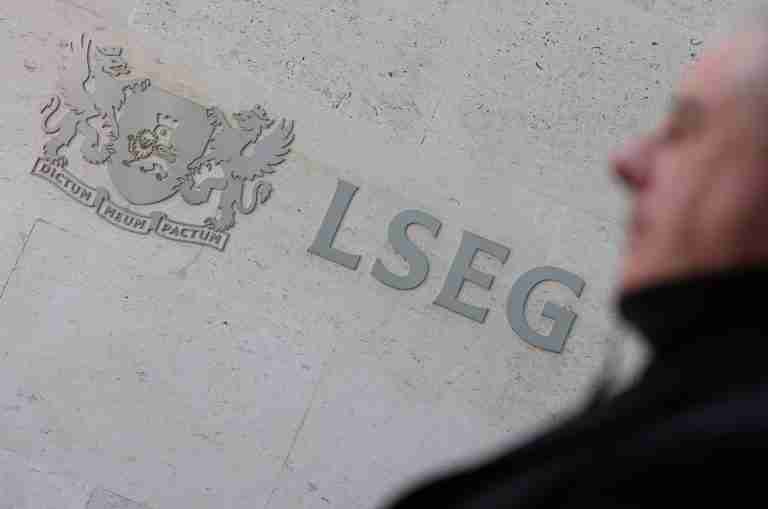
Signage is seen outside the LSEG (London Stock Exchange Group) headquarters in Paternoster Square, London, Britain, April 25, 2025. REUTERS/Toby Melville/File Photo
International News via Reuters:
The UK’s FTSE 100 touched a record high on Wednesday, helped by gains in energy stocks and insurer Beazley, while investors awaited the Bank of England’s monetary policy decision later this week.
The blue-chip FTSE 100 index was up 1.4% at 10,457.84 points at 1155 GMT, while the domestically focused mid-cap FTSE 250 was up 0.6%.
Energy stocks climbed 2%, tracking higher crude prices as geopolitical tensions simmered between the United States and Iran. [O/R]
Beazley climbed 8.7% to the top of the FTSE 100 as the British insurer agreed to the terms of a sweetened 8 billion pound ($10.97 billion) takeover proposal from Switzerland’s Zurich Insurance.
Meanwhile, European software names remained in focus following Tuesday’s selloff when updated artificial intelligence models raised fresh doubts about whether software firms can defend their business models.
Business information group RELX slid 2.6%, while exchange operator and data provider London Stock Exchange Group dipped 2.4%. The stocks suffered double-digit losses on Tuesday.
IT firm Softcat slid 6% to a one-year low, while HG Capital, which recently agreed to buy U.S. financial software maker OneStream for $6.4 billion, slumped another 7.4%. Ad firm WPP fell 3.2% to its lowest since 1998.
British interest rates are likely to fall further this year, but the BoE might be vague on Thursday about when or by how much it will cut borrowing costs, as it awaits a clearer picture on inflation. The BoE is expected to keep its benchmark borrowing costs unchanged at 3.75% on Thursday.
Activity in Britain’s services sector grew strongly in January and confidence rose, a survey showed on Wednesday, but firms also reported a jump in their prices, a potential concern for the BoE ahead of the policy meeting.
Reporting by Tharuniyaa Lakshmi in Bengaluru; Editing by Shinjini Ganguli
European data analytics, professional services and software stocks fell for a second day in volatile trade, after Anthropic’s new legal artificial intelligence model underscored the threat to businesses seen as most exposed to AI disruption
International News via Reuters:
European and U.S. software stocks struggled to find support on Wednesday as a sector-wide selloff spread to Asia, fuelled by mounting worries that advances in artificial intelligence could upend companies’ business models.
European data analytics, professional services and software stocks fell for a second day in volatile trade, mirroring losses in global peers, after Anthropic’s new legal artificial intelligence model underscored the threat to businesses seen as most exposed to AI disruption.
Britain’s RELX and the Netherlands’ Wolters Kluwer – major providers of analytics to the legal industry – dropped about 3% in morning trade before paring some losses, after plunging more than 14% and 12% respectively on Tuesday.
Shares of U.S. software and services firms were mixed in premarket trading after a near 13% slide over five straight sessions. Nasdaq-listed Thomson Reuters, the parent company of Reuters News, was flat in light volume after Tuesday’s record 16% slump on fears that AI could threaten its core legal division.
London Stock Exchange Group slid as much as 6.9%, extending Tuesday’s near 13% drop.
Indian IT exporters also fell sharply, while Japanese software and systems developers NEC, Nomura Research and Fujitsu sank between 8% and 11%, dragging the Nikkei benchmark index lower overnight.
The rout comes amid wider concern that a tech bubble could burst, posing financial stability risks.
JP Morgan analyst Toby Ogg said investors were focused on long-term growth questions that stretch far beyond traditional three-year forecasts.
“The sector isn’t just guilty until proven innocent, but is now being sentenced before trial,” he said.
“Our sense from investor discussions is that general appetite to step in remains generally low,” he added, citing risks including competition from AI-native firms and clients building their own solutions in-house.
ANTHROPIC THE SPARK BEHIND THE SELLOFF
One trigger for Tuesday’s selloff was Anthropic’s launch of plug-ins for its Claude Cowork agent on Friday, enabling automated tasks across legal, sales, marketing and data analysis.
Advertising stocks – viewed as among the most exposed in European media to AI – also stayed under pressure. France’s Publicis was last down 3.6% and Britain’s WPP lost 3%, both hitting new lows.
Shares in SAP, Europe’s largest software company, dropped more than 3%, a week after a disappointing cloud revenue forecast wiped around $40 billion off its market value.
With stellar gains in chipmaker Nvidia and so-called AI hyperscalers like Microsoft pushing U.S. stocks to record highs, regulators and policymakers – including the International Monetary Fund and the Bank of England – have warned of the risks of a potential bubble.
“All innovation means there is going to be disruption at some point, and we appear to be at a significant point in that journey for software and IT services companies,” said Ben Barringer, head of technology research at Quilter Cheviot.
“There is a lot of uncertainty around exactly what AI agents can do, and as such, investors are choosing to shun the software market altogether, leaving nowhere to hide.”
Salesforce, CrowdStrike, Adobe each dipped about 0.2% in U.S. premarket trading, while Intuit eased 0.6%. Atlassian Corp firmed 0.6%.
Reporting by Danilo Masoni. Additional reporting by Medha Singh and Siddarth S. Editing by Amanda Cooper, Dhara Ranasinghe and Mark Potter
Spain’s state meteorological agency AEMET forecast that some parts of the southern Sierra Grazalema may see rainfall equivalent to a full year of precipitation from the storm
International News via Reuters:
Spanish and Portuguese authorities braced on Wednesday for the impact of Storm Leo, suspending classes in some areas and warning against travel, just one week after deadly Storm Kristin wreaked havoc across the Iberian Peninsula.
Spain’s state meteorological agency AEMET forecast that some parts of the southern Sierra Grazalema may see rainfall equivalent to a full year of precipitation from the storm.
Authorities are concerned about the heightened risk of flooding as the ground remains saturated from the preceding storm and heavy rains last month.
Spain recorded 119.3 mm of rainfall in January, 85% above the 1992-2020 average, making it the second-wettest January of the 21st century, the Environment Ministry said.
The regional government in Spain’s southern Andalusia region urged residents to avoid non-essential travel, warning that public safety alerts could quickly escalate to the highest red-alert level as the storm evolves, regional leader Juanma Moreno said.
In-person classes were suspended across the region, apart from in Almeria province, while Spain’s Military Emergency Unit was on alert to provide a rapid response, including flood rescue, the stabilisation of landslide-prone areas and the monitoring of mining tailings ponds at risk of overflow.
Day centres for the elderly and disabled have been closed, and local governments in affected areas were advised to cancel outdoor sports activities, while about 3,000 people have been evacuated from areas most at risk of flooding.
High-risk regions include Grazalema, Campo de Gibraltar, Ronda and parts of Jaen, where residents received mobile alerts warning of the potential for heavy rainfall.
Emergency personnel, along with two aircraft and two helicopters, have been deployed to monitor flood-prone zones and provide real-time updates, Moreno said.
In Portugal, the national Civil Protection Service raised its preparedness to the highest level as its commander warned of a “very complex” meteorological situation ahead.
The Portuguese armed forces deployed up to 3,000 personnel and 42 inflatable boats with marine teams along flood-prone sections of the country’s major rivers as weather conditions were forecast to worsen throughout the week.
Reporting by Emma Pinedo and David Latona in Madrid, Sérgio Gonçalves in Lisbon; Editing by Sharon
In December 2024, the European Union opened formal proceedings against social media firm TikTok over its suspected failure to limit election interference in the Romanian presidential vote
International News via Reuters:
Social media firm TikTok is “extremely cooperative” with the European Commission’s ongoing investigation on potential interference in the 2024 Romanian elections, Commission spokesperson Thomas Regnier said on Wednesday.
“This also shows that when you want to engage with the Commission, we are very happy to engage with you. Tiktok is very cooperative. They have taken a number of measures,” Regnier told reporters.
In December 2024, the European Union opened formal proceedings against social media firm TikTok over its suspected failure to limit election interference in the Romanian presidential vote.
Reporting by Inti Landauro, Editing by Louise Heavens
Cereulide, which can cause nausea and vomiting, has been detected in ingredients from a factory in China supplying many infant formula makers, including Nestle, Danone and Lactalis
International News via Reuters:
Nestle widened an infant formula recall to include a batch of Guigoz after France lowered the maximum threshold for the cereulide toxin, contradicting analyst expectations that no further withdrawals would be needed from the Swiss group.
Cereulide, which can cause nausea and vomiting, has been detected in ingredients from a factory in China supplying many infant formula makers, including Nestle, Danone and Lactalis. The findings have triggered recalls in dozens of countries and raised concerns among parents.
“As methods for analyzing cereulide have evolved, we are voluntarily recalling a batch of Guigoz infant formula in addition to the batches already recalled,” Nestle said on its recall alert.
ANALYSTS HAD SAID FURTHER RECALLS WERE UNLIKELY
France reduced its safety limit for cereulide on Saturday, aiming to strengthen protections after recalls widened to include other companies such as Vitagermine. The new threshold followed a meeting with the EU’s food safety authority EFSA, which issued similar advice on Monday.
Analysts at Barclays and Jefferies had said on Monday they did not expect Nestle and Danone to face additional recalls as a result of the updated limit.
Nestle had already recalled some Guigoz batches, among other brands, in France in January and December.
French investigators are looking into whether there is a link between the death of two infants and recalled Guigoz infant formula products, local prosecutors said.
The French health ministry and the company said there was no evidence of such a connection at this stage. Results are expected in the coming days.
Reporting by Sybille de La Hamaide and Gus Trompiz; Editing by Benoit Van Overstraeten and Louise Heavens
Price growth in the 21 countries that share the euro slipped to its lowest level since September 2024, dropping to 1.7% in January, weighed down by a fall in energy prices
International News via Reuters:
Euro zone inflation dipped last month, data showed on Wednesday, entering a soft patch that most economists expect will last for at least a year and keep the European Central Bank on hold.
Price growth in the 21 countries that share the euro slipped to its lowest level since September 2024, dropping to 1.7% in January, weighed down by a fall in energy prices. The reading was in line with economists’ forecasts.
But a key measure of underlying inflation that strips out volatile items such as energy, food, alcohol and tobacco unexpected edged down to 2.2% from 2.3 in December, as prices in the services sector continued to ease.
Taken together, the readings were unlikely to trigger any immediate move by the ECB, which is expected to keep interest rates steady on Thursday and through the remainder of the year.
“With underlying inflation still a little too high for comfort and expectations that the euro zone economy will regain momentum later in the year, we believe the most likely outcome is that the ECB will keep rates unchanged for the foreseeable future,” Diego Iscaro, head of European economics at S&P Global Market Intelligence, said.
The euro zone’s central bank expects inflation to slightly undershoot its 2% target this year and next before heading back to it in 2028.
Inflation has been hovering around 2% for at least a year after a wave of price hikes fuelled by the economy’s recovery from the COVID-19 pandemic and Russia’s invasion of Ukraine in 2022, which pushed up fuel costs.
Economists are split over whether the ECB’s next move will be a cut or a hike, with some policymakers recently saying both moves are equally likely.
A recent appreciation of the euro against the dollar, partly a response to U.S. President Donald Trump’s unpredictable policymaking and worries about the Federal Reserve’s independence, has fuelled some market talk about a rate cut.
“Inflation under target and euro strength are something that may cause the ECB to think twice about staying on hold,” Melissa Davies, an economist at Redburn Atlantic, said.
Reporting by Francesco Canepa; Editing by Hugh Lawson
The world’s largest automaker is aiming to raise global output to about 11.3 million vehicles in 2028, roughly 10% above its 2026 plan
International News via Reuters:
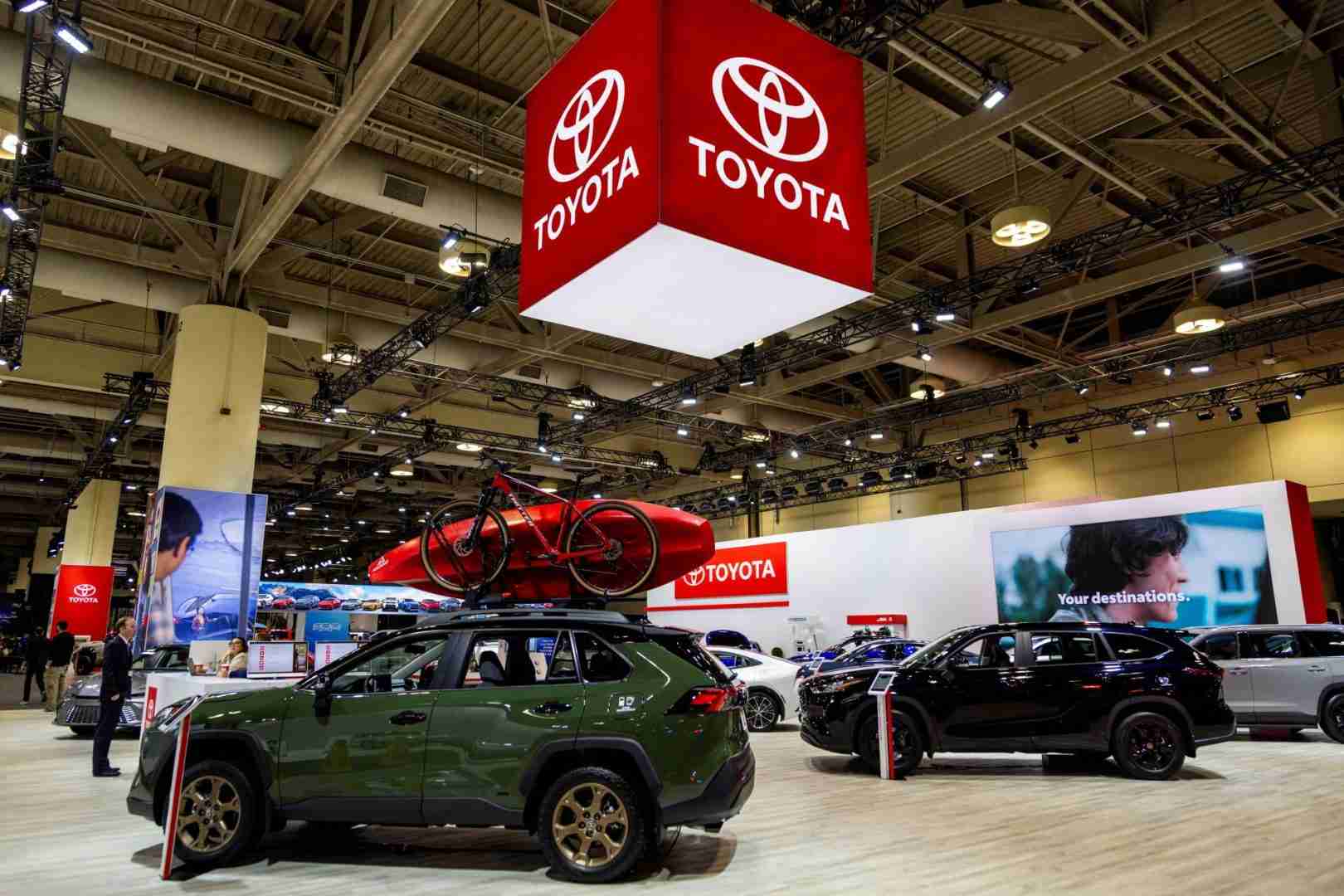
Toyota plans to boost production of hybrid and plug‑in hybrid vehicles to about 6.7 million cars by 2028, 30% higher than its 2026 target, the Nikkei business daily reported on Wednesday.
The world’s largest automaker is aiming to raise global output to about 11.3 million vehicles in 2028, roughly 10% above its 2026 plan, the paper said, adding that hybrids would account for about 60% of production, up from around 50% this year.
A Toyota statement said the company provides a rough estimate of future production prospects to suppliers and other partners every year as a reference for their planning, emphasising that these figures are a reference and not production or sales plans.
Reporting by Daniel LeussinkEditing by Louise Heavens and David Goodman
British interest rates are likely to fall further this year, but the BoE will probably sound vague this week about when or by how much it will cut borrowing costs as it awaits a clearer picture on inflation
International News via Reuters:
Sterling rose to a fresh five‑month high against the euro on Wednesday, though investors remained on hold ahead of the Bank of England’s policy meeting later this week.
British interest rates are likely to fall further this year, but the BoE will probably sound vague this week about when or by how much it will cut borrowing costs as it awaits a clearer picture on inflation.
The single currency hit its lowest since August 27 against the pound at 86.15 pence and was last down 0.09% at 86.21 pence.
The U.S. dollar edged lower against the euro as a delay in releasing key jobs data due to a partial government shutdown added to uncertainty over the Federal Reserve’s policy path.
The British currency was roughly unchanged at $1.3702.
Strategists at Barclays argued in a research note that the euro/sterling now is “fairly close to rate differential-consistent levels,” after the process of fiscal risk premium unwind for is over.
Post-budget economic data have registered a notable bounce, consistent with the improved fiscal outturn for December.
“The stronger pound reflects both a reduction in UK fiscal and political risks after the Budget was released, and building evidence of a pick-up in growth momentum in the UK as uncertainty has faded,” said Lee Hardman, senior currency economist at MUFG.
Activity in Britain’s services sector grew strongly in January and confidence rose, a survey showed on Wednesday, but firms also reported a jump in their prices.
“For the BoE, a pause by the Monetary Policy Committee at 3.75% is widely expected and the messaging is unlikely to matter much for the pound other than additional easing is to come,” said Paul Mackel, global head of forex research at HSBC.
“ECB President Lagarde will likely emphasise there is not a forex target but may hint at how the U.S. administration’s policies could create a stronger euro,” he added, after recalling that the euro’s strength is expected to take centre stage at this week’s policy meeting.
Traders priced in 35 bps of BoE rate cuts by year-end, implying one 25 bps move and a 40% chance of an additional cut. They also indicated European Central Bank policy rates stable through early 2027.
Political risks also linger in the UK in relation to Prime Minister Keir Starmer’s position, starting with the Gorton and Denton by-election on 26 February and culminating with the May local elections.
Opinion polls put Reform UK ahead of both Prime Minister Keir Starmer’s Labour Party and Kemi Badenoch’s Conservatives, the two parties that have dominated British politics for over a century, though a national election is not due until 2029.
reporting by Stefano Rebaudo; editing by Leroy Leo
The hidden handle design, which functions through a key fob or mobile phone or by manually pressing it, has drawn scrutiny in both the United States and China over potential safety risks
International News via Reuters:
China will ban ‘hidden’ car door handles from 2027, becoming the first country to phase out a design pioneered by Tesla and adopted by Chinese competitors including Xiaomi.
The hidden handle design, which functions through a key fob or mobile phone or by manually pressing it, has drawn scrutiny in both the United States and China over potential safety risks.
Last year, the U.S. auto safety agency opened a defect probe into Tesla Model 3 sedan’s emergency door release controls. Tesla, which did not comment on the investigation at the time, did not immediately respond to a request for comment on Tuesday.
China’s industry ministry said on Monday that under its new safety technical requirements, every car door should be equipped with both exterior and interior handles.
Mechanical release designs will be mandatory, with innovations such as electrical handles optional.
China’s new policy sets out rules for where handles must be located on the outside of a car and how they should function to ensure that they can be opened in the event of an accident. It also requires interior handles to be clearly visible.
New vehicle models must align their door handle design with the new regulation from January 1, 2027 while approved models will come under the rules by January 1, 2029, the ministry said.
Chinese state media reported in October that the driver of a Xiaomi SU7 Ultra sedan died in an accident after passers-by were unable to open the door to pull him out of the burning vehicle.
Xiaomi, which has not commented publicly on the incident, did not immediately respond to a request for comment on Tuesday.
Reporting by Qiaoyi Li, Zhang Yan and Brenda Goh; Editing by Alexander Smith
The drug, given as a monthly injection, showed sustained weight loss at 28 weeks, Pfizer said, adding that it is targeting 2028 for its first approval in the fast-growing weight-loss drug market
International News via Reuters:
Pfizer on Tuesday released trial data on a high-profile obesity drug from its recent $10 billion Metsera purchase that raises questions about its tolerability for patients, and shares of the U.S. drugmaker fell more than 3%.
The drug, given as a monthly injection, showed sustained weight loss at 28 weeks, Pfizer said, adding that it is targeting 2028 for its first approval in the fast-growing weight-loss drug market.
The company made the disclosure alongside reporting fourth-quarter earnings, which beat Wall Street estimates.
The latest data sets the stage for a year in which Pfizer said it plans to advance more than 20 clinical trials involving obesity treatments, an area that one day could help offset new competition for older drugs losing patent exclusivity.
“The foundation of our strategy in obesity and adjacent conditions is targeting breakthrough medicines in what could be a $150 billion market,” CEO Albert Bourla said.
Bourla, in an interview, said the company is not concerned about price competition in the market even as obesity drugmaker Novo Nordisk warned on Tuesday that its profit and sales could drop this year, due in part to lower prices, especially in the U.S.
Prices “are higher than what we were estimating when we decided to move into the Metsera acquisition,” Bourla said. “So, no, we are not worried.”
Pfizer shares were down 3.5% at $25.74.
SIDE EFFECTS LEAD TO DISCONTINUATIONS
In a mid-stage trial, the treatment, known as PF-3944, led to up to 12.3% weight loss in patients without diabetes, with no plateau observed at week 28, the company said, adding that it expects the trend to continue through the 64-week study.
Pfizer Chief Scientific Officer Chris Boshoff said the company is confident the drug “has the potential to deliver efficacy that is competitive with the standard of care.”
Daniel Barasa, portfolio manager at Gabelli Funds, called the drug’s reported weight loss “good, but not category-defining.”
If a monthly high dose can drive higher weight loss with a side effect profile that keeps patients on the medication, “Pfizer’s drug could offer a very compelling convenience trade-off versus weekly tirzepatide and semaglutide,” Barasa said, using the chemical names for Eli Lilly’s Zepbound and Novo’s Wegovy.
Of around 108 patients who received the drug in two separate arms of the trial, 10% dropped out due to adverse side effects.
Boshoff called the discontinuation rate similar to what you would expect for the GLP-1 class and noted that it did not increase when patients moved to a four-fold higher dose for the monthly shot.
But Gabelli’s Barasa said the reported dropouts raise the risk “that this climbs meaningfully by week 64, particularly at higher doses, and I don’t think physicians or payers will be enthusiastic if that plays out.”
Pfizer last year won a bidding war with Novo Nordisk for obesity drug developer Metsera, securing a foothold in the booming weight-loss drug market.
The company, which has warned of challenges over the next few years and does not expect to return to revenue growth until 2029, is banking on developing new blockbuster medicines, including obesity drugs acquired through recent deals, to help drive that recovery.
David Wagner, portfolio manager at Aptus Capital Advisors, was taking a cautious approach to Pfizer. “The big question is, will we see sizeable returns from their M&A spend, and will they make all the right development choices over this and next year to support the longer-term return to growth?”
UPBEAT QUARTERLY RESULTS
For the fourth quarter, the company saw sales rise to $17.56 billion, helped by sustained demand for the blood thinner Eliquis that Pfizer shares with Bristol Myers and growth of its newer RSV vaccine Abrysvo. Analysts were expecting $16.95 billion in sales, according to LSEG data.
Abrysvo fourth-quarter sales of $481 million more than doubled Wall Street estimates of $170 million.
On an adjusted basis, the company reported a profit of 66 cents per share, topping analysts’ estimates by 9 cents.
Pfizer reaffirmed its 2026 forecast for revenue of $59.5 to $62.5 billion and adjusted earnings of $2.80 to $3.00 per share and said it reflects the expected hit from drug pricing deals with the Trump administration.
Reporting by Mrinalika Roy in Bengaluru and Michael Erman in New Jersey, additional reporting by Sneha S K in Bengaluru; Editing by Bill Berkrot
To provide the best experiences, we use technologies like cookies to store and/or access device information. Consenting to these technologies will allow us to process data such as browsing behavior or unique IDs on this site. Not consenting or withdrawing consent, may adversely affect certain features and functions.
Functional
Always active
The technical storage or access is strictly necessary for the legitimate purpose of enabling the use of a specific service explicitly requested by the subscriber or user, or for the sole purpose of carrying out the transmission of a communication over an electronic communications network.
Preferences
The technical storage or access is necessary for the legitimate purpose of storing preferences that are not requested by the subscriber or user.
Statistics
The technical storage or access that is used exclusively for statistical purposes.The technical storage or access that is used exclusively for anonymous statistical purposes. Without a subpoena, voluntary compliance on the part of your Internet Service Provider, or additional records from a third party, information stored or retrieved for this purpose alone cannot usually be used to identify you.
Marketing
The technical storage or access is required to create user profiles to send advertising, or to track the user on a website or across several websites for similar marketing purposes.