Mexico is one of Cuba’s only remaining suppliers of oil and its shipments are a lifeline for the island
International News via Reuters:
Mexico’s President Claudia Sheinbaum said on Friday her country would seek diplomatic solutions and alternatives to help Cuba after the United States threatened tariffs on nations that supply the Caribbean nation with oil.
“We need to know the scope because we don’t want to put our country at risk in terms of tariffs,” Sheinbaum said in a morning press conference, adding that she had instructed her foreign minister to reach out to the U.S. State Department.
Mexico is one of Cuba’s only remaining suppliers of oil and its shipments are a lifeline for the island.
Sheinbaum said cutting off oil shipments could cause a serious humanitarian crisis in Cuba, affecting transportation and key infrastructure including hospitals and electricity generation.
“Applying tariffs on countries that supply oil to Cuba could trigger a far-reaching humanitarian crisis, directly affecting hospitals, food and other basic services for the Cuban people, a situation that must be avoided,” she said.
Sheinbaum did not say whether Mexico would cut shipments of oil or refined products to Cuba, which Sheinbaum said accounted for 1% of Mexico’s production, but emphasized the country is looking at alternatives to help the island.
U.S. President Donald Trump and Sheinbaum spoke on Thursday morning, hours before his administration announced the tariffs, but he did not mention the measures, she said.
Reporting by Sarah Morland and Adriana Barrera; Editing by Kylie Madry and Emily Green
Reiche is scheduled to travel to Saudi Arabia from February 1 to 3 to expand economic relations
International News via Reuters:
German industry bosses including the CEOs of Siemens Energy and Thyssenkrupp will join Economy Minister Katherina Reiche on an upcoming trip to Saudi Arabia, highlighting a push by Europe’s biggest economy to further diversify its energy supply.
Reiche is scheduled to travel to Saudi Arabia from February 1 to 3 to expand economic relations, a spokesperson for her ministry said, only days after she highlighted the need for new alliances in light of rising geopolitical tensions.
The trip will focus on energy, a critical issue for Germany — Saudi Arabia’s most important economic partner in the European Union — which has suffered from soaring costs after losing access to cheap gas from Russia.
Christian Bruch, CEO of power equipment maker Siemens Energy, and Miguel Lopez, who leads industrial conglomerate Thyssenkrupp, will be part of the business delegation travelling with Reiche, the sources said.
Uniper boss Michael Lewis, EnBW CEO Georg Stamatelopoulos and Egbert Laege, in charge of SEFE Group, will also take part, they added.
Thyssenkrupp, EnBW and Sefe confirmed the participation of their CEOs.
Siemens Energy and Uniper declined to comment.
The ministry spokesperson said a number of memorandums of understanding would be signed on the trip, “focusing on energy projects, innovation, deep technology, artificial intelligence, and especially in the start-up sector”.
Reporting by Christoph Steitz; Additional reporting by Andreas Rinke; Editing by Hugh Lawson
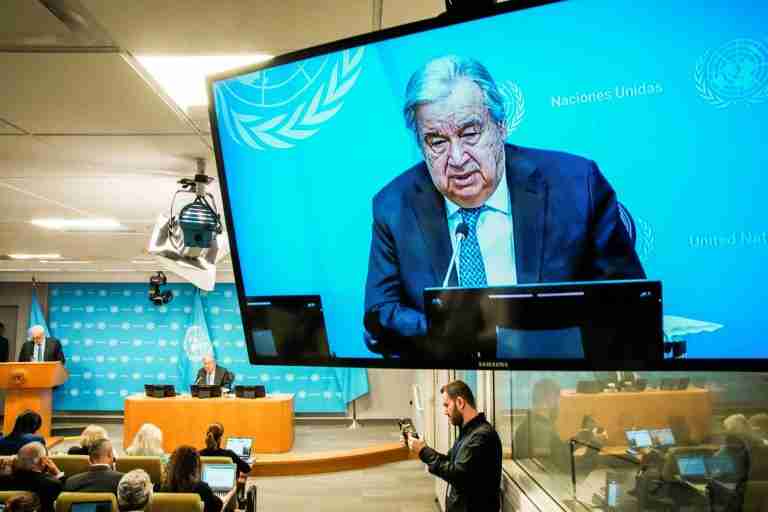
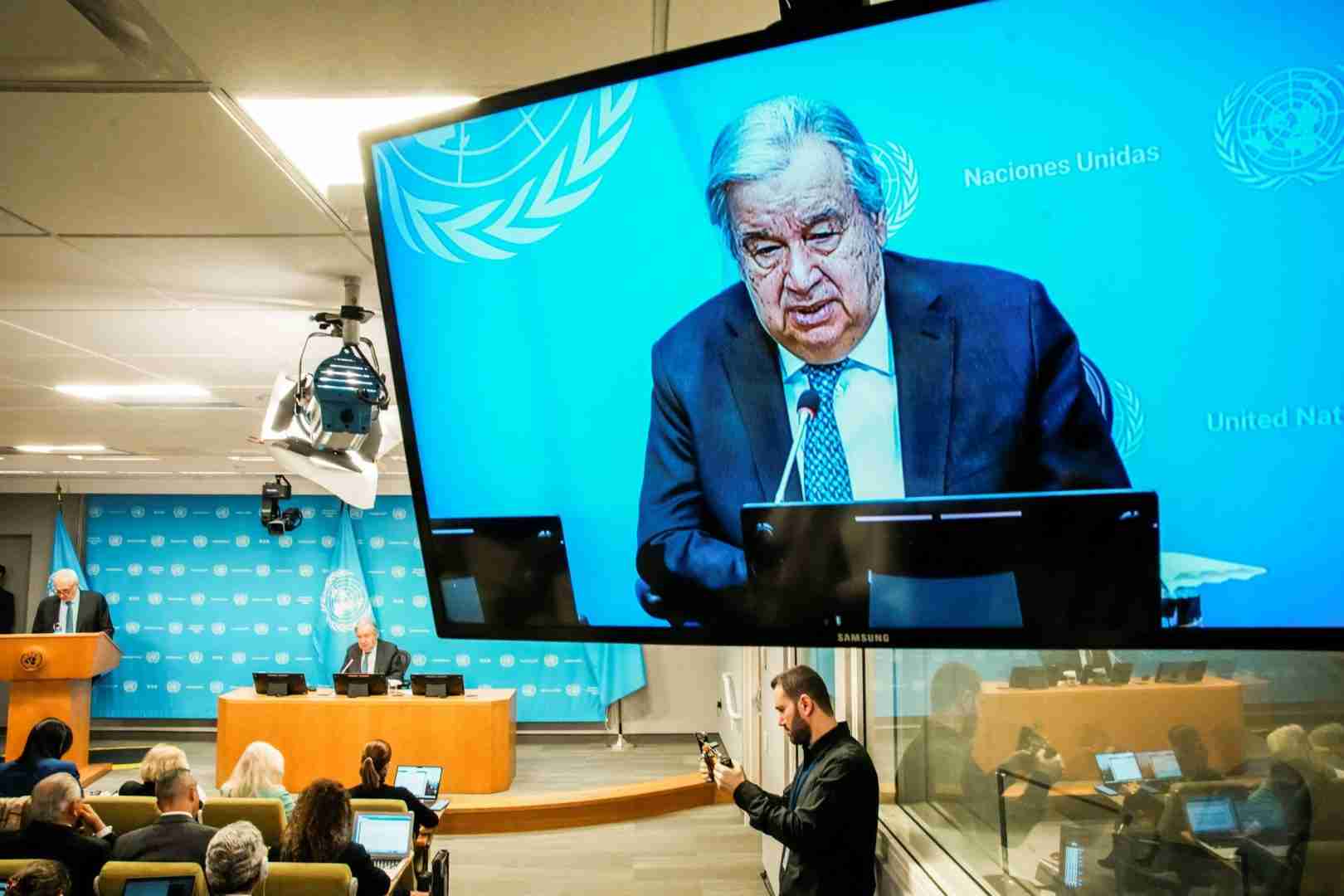
U.N. Secretary-General Antonio Guterres has repeatedly spoken about the organisation’s worsening liquidity crisis but this is his starkest warning yet
International News via Reuters:
The U.N. chief has told member states that the organisation is at risk of “imminent financial collapse”, citing unpaid fees and a budget rule that forces the global body to return unspent money, a letter seen by Reuters on Friday showed.
U.N. Secretary-General Antonio Guterres has repeatedly spoken about the organisation’s worsening liquidity crisis but this is his starkest warning yet, and it comes as its main contributor the United States is retreating from multilateralism on numerous fronts.
“The crisis is deepening, threatening programme delivery and risking financial collapse. And the situation will deteriorate further in the near future,” Guterres wrote in a letter to ambassadors dated January 28.
The U.S. has slashed voluntary funding to U.N. agencies and refused to make mandatory payments to its regular and peacekeeping budgets.
U.S. President Donald Trump has described the U.N. as having “great potential” but said it is not fulfilling that, and he has launched a Board of Peace which some fear could undermine the older international body.
Founded in 1945, the U.N. has 193 member states and works to maintain international peace and security, promote human rights, foster social and economic development, and coordinate humanitarian aid.
In his letter, Guterres said “decisions not to honour assessed contributions that finance a significant share of the approved regular budget have now been formally announced.”
He did not say which state or states he was referring to, and a U.N. spokesperson was not immediately available for comment.
‘KAFKAESQUE CYCLE’
Under U.N. rules, contributions depend on the size of the economy of each member state. The U.S. accounts for 22% of the core budget followed by China with 20%.
But by the end of 2025 there was a record $1.57 billion in outstanding dues, Guterres said, without naming them.
“Either all Member States honour their obligations to pay in full and on time – or Member States must fundamentally overhaul our financial rules to prevent an imminent financial collapse,” he said.
Guterres launched a reform task force last year, known as UN80, which seeks to cut costs and improve efficiency. To that end, states agreed to cut the 2026 budget by around 7% to $3.45 billion.
Still, Guterres warned in the letter that the organisation could run out of cash by July.
One of the problems is a rule now seen as antiquated whereby the global body has to credit back hundreds of millions of dollars in unspent dues to states each year.
“In other words, we are trapped in a Kafkaesque cycle expected to give back cash that does not exist,” said Guterres, referring to author Franz Kafka who wrote about oppressive bureaucratic processes.
Reporting by Emma Farge, Editing by Miranda Murray, Ludwig Burger and Hugh Lawson
Today, the Head of the Public Service, Cherie Whitter announced the appointments of two Director posts within the Government.
Mr. Richard Lau has been appointed to the role of Chief Information Officer and Ms. Melonie McDermott has been appointed to the post of Land Registrar.
Mr. Lau will work under the policy direction of the Permanent Secretary for the Ministry for the Cabinet Office & Digital Innovation. He will oversee the Information and Digital Technologies (IDT) office, implementing IT strategy, infrastructure modernization, and cybersecurity.
Mr. Lau is an accomplished technology executive who brings over 25 years of experience to the Government of Bermuda. His career spans information technology, cybersecurity, and the modernization of critical infrastructure, having held senior leadership roles at Ascendant Group and One Communications Ltd. Committed to the community, he is a member of the National Youth Triathlon coaching team, serves as a Director for the Bermuda Hospitals Charitable Foundation, and previously sat on the Bermuda E-commerce Advisory Board. Mr. Lau holds an MBA in Leadership and Sustainability and a Diploma in Company Direction from the Institute of Directors.
As Land Registrar, Melonie McDermott will work under the policy direction of the Permanent Secretary of the Ministry of Home Affairs.
She will be responsible for managing and overseeing all operations of the Land Title Registry Office, including adjudicating land title disputes and ensuring compliance with the Land Title Registration Act 2011. Ms. McDermott will assess complex legal decisions regarding land registration, title certification, and maintaining the accuracy of property record
Melonie McDermott has a decade of experience in Land Law, practice and procedure. She is a qualified Attorney-at-Law in both Jamaica and Bermuda.
She was previously employed at the National Land Agency, Jamaica where she served in the posts of Legal Officer 2, Legal Officer 3 and Supervisor of the Caveat Department. Ms. McDermott joined Bermuda’s Land Title and Registration Department on the 1st of December 2022 as the Land Title Legal Officer. As a goal oriented and determined person she is confident that she will make positive contribution to the Public Service of Bermuda. Ms. McDermott expressed her excitement at being able to serve in her new capacity as Land Registrar.
Ms. McDermott holds a BSc in Sociology with a minor in Psychology, a Bachelor of Laws (LLB), a Legal Education Certificate and an MSc in Surveying (Real Estate).
Bermuda’s Under-17 Women’s National team concluded their Group B qualifying campaign with a series of commanding performances that solidified their reputation as one of the region’s rising powers. Despite finishing as runners-up to Panama on goal difference, the Lady Gombey Warriors displayed a level of technical proficiency and offensive firepower that suggests a bright future for this young squad.
The statistics from their three-match run tell a story of dominance and efficiency. Bermuda recorded an impressive 36% goal conversion rate, finding the net 16 times from just 50 total shots. This clinical nature was underpinned by a sophisticated possession-based game, with the team completing 817 passes over the course of the tournament.
At the heart of this creative engine was Zelaye Showers, who acted as the primary distributor with a team-high 145 successful passes. Her ability to dictate the tempo from midfield allowed Bermuda’s attacking duo to thrive. Milan Gibbons-Thomas emerged as one of the tournament’s standout finishers, leading the Bermuda scoring charts with six goals, including a spectacular four-goal haul in the opening match against Suriname. She was expertly supported by Daley Outerbridge, who contributed four goals of her own, highlighted by a clinical hat-trick against Bonaire.
While the attack flourished, the defensive unit proved equally resilient under pressure. Goalkeeper Kyra Simmons was a pillar of strength between the posts, recording 15 crucial saves to keep Bermuda competitive in the high-stakes final showdown against Panama. The team’s physical commitment was evident in the 28 fouls conceded, though this aggression occasionally boiled over, with Daley Outerbridge and Riley Khan each picking up two yellow cards during the campaign.
Bermuda now waits to see if their unbeaten record and significant goal difference will be enough to secure one of the two coveted best runner-up spots for the final round. Regardless of the final outcome, this campaign has set a new benchmark for youth development on the island.
The Bermuda Football Association (BFA) has officially unveiled the 21-member squad set to represent the island at the upcoming Concacaf Men’s Under-17 World Cup Qualifiers in Honduras. The announcement marks the beginning of a vital campaign as the young Gombey Warriors eye a spot in the expanded FIFA U-17 World Cup, which has now shifted to an annual format to provide consistent competitive exposure for emerging talent.
Bermuda has been drawn into Group H, where they will face a challenging route to qualification against Guyana, Suriname, and host nation Honduras. Under the current tournament regulations, only the winner of each group will punch their ticket to the World Cup finals, scheduled to take place in Qatar this November.
Head Coach Aaron Denkins, who recently transitioned from the under-20 women’s setup to lead the under-17 men, believes the draw provides his side with a realistic path to success.
“This is the second of the yearly FIFA World Cups, and we are excited to participate again after hosting our group last year,” said Denkins. “We have a foundation of players with experience at this level, and several are continuing their football journeys with overseas clubs. We are looking forward to doing well and qualifying for Qatar”.
The squad features a mix of veteran stability and rising talent, including goalkeeper Nuri Latham, who signed for UK Championship side Preston North End last year, and forwards Jeon Wolfe and Na’im Zuill.
The team is scheduled to depart for a final training camp in Orlando, Florida, before traveling to Honduras for their opening fixtures.
February 6, 2026: vs Guyana
February 8, 2026: vs Suriname
February 11, 2026: vs Honduras
The Full 21-Man Roster
Goalkeepers: Nuri Latham, Curtis Jackson Jr, Ethan Adderley.
Defenders: Amir Weller, Milliun Hill, Kayuri Tucker, Joshua Smith.
Midfielders: Amir Brangman-Johnson, Deacon Wade, Mateus Amaral, Roman Wilkinson, Rylan DeSilva, Tyler Steede, Z’Ani Jennings, Shiia Davis.
Bermudian freshman Elijah Daley produced a sequence of impressive displays to help the University of Toronto Varsity Blues secure a commanding victory at the Quad Challenge Meet. Competing at the Varsity Pool on Friday, January 23, the nationally-ranked Blues faced off against the Calgary Dinos, Western Mustangs, and the Quebec All-Stars in a high-caliber short-course showdown.
The Varsity Blues dominated the team standings throughout the afternoon, finishing with a massive total of 830 points. The Calgary Dinos claimed the runner-up spot with 631 points, followed by the Quebec All-Stars with 335 and the Western Mustangs with 272.
Daley’s individual versatility was a central theme of the meet, headlined by a pair of clinical second-place finishes in the medley events. In the 100m Individual Medley, the Bermudian standout touched the wall in 55.50 seconds to secure silver, a feat he repeated in the 200m Individual Medley with a rapid time of 2:01.56. These performances follow a record-breaking streak for Daley, who has recently dismantled his own personal bests in both the butterfly and medley disciplines since joining the Toronto program.
In the high-stakes “Skins” Time Trials—a format designed to test recovery and explosive speed—Daley proved his worth among the region’s elite sprinters. He secured a fourth-place finish in the 50m Backstroke Skins with a time of 26.05 seconds and claimed sixth in the 50m Freestyle Skins after clocking 24.17 seconds.
Daley’s contributions extended to the relay events, where he played a pivotal role for the Toronto B squad. Swimming the second leg of the 3x50m Super Skins Relay, he helped propel his team to a second-place finish in 1:19.15. He later anchored the 2x50m Super Skins Relay, touching the wall in 54.75 seconds to secure third overall.
With the OUA Championships looming in February, Daley’s consistent form suggests he will be a primary medal contender as the Varsity Blues look to sweep the provincial titles. The freshman will now return to full training as the team enters its final preparations for the championship season.
Apax Partners, which has made a number of approaches earlier, proposed to buy Pinewood for 500 pence per share, representing a premium of nearly 30% to the stock’s closing price on Thursday
International News via Reuters:
Britain’s Pinewood Technologies surged as much as 28% on Friday after the automotive service provider said it was set to agree a 575.5 million pounds ($792.06 million) deal with Apax Partners if the private equity firm tables a formal offer.
Apax Partners, which has made a number of approaches earlier, proposed to buy Pinewood for 500 pence per share, representing a premium of nearly 30% to the stock’s closing price on Thursday.
The jump in Pinewood’s shares made the firm the top gainer across all London stocks on Friday.
Pinewood Technologies provides a cloud-based platform to help car dealerships and manufacturers manage everything from vehicle sales and customer relationships to repairs and accounting.
Apax has until February 26 to announce a firm intention to make an offer or walk away.
($1 = 0.7266 pounds)
Reporting by Nithyashree R B in Bengaluru; Editing by Sonia Cheema and Janane Venkatraman
Mangione, 27, previously pleaded not guilty to murder, weapons and stalking charges for allegedly gunning down the CEO of UnitedHealthcare in Midtown Manhattan in 2024
International News via Reuters:
A New York federal judge on Friday dismissed murder and weapons charges against alleged UnitedHealthcare CEO killer Luigi Mangione, a major blow to prosecutors that means Mangione no longer faces a possible death penalty if convicted.
Mangione, 27, previously pleaded not guilty to murder, weapons and stalking charges for allegedly gunning down the CEO of UnitedHealthcare in Midtown Manhattan in 2024. Public officials condemned the shocking killing, but Mangione became a folk hero of sorts to some Americans who decry steep healthcare costs and insurance practices.
U.S. District Judge Margaret M. Garnett in Manhattan said she dismissed the murder and weapons charges because they were legally incompatible with the two counts of stalking Mangione faces.
Garnett previously scheduled jury selection to begin in the case in September.
Mangione has separately pleaded not guilty to murder, weapons and forgery charges in Manhattan state court. No trial date has been set.
Reporting by Jack Queen and Ryan Patrick Jones; editing by Susan Heavey and Chizu Nomiyama
The Bermuda Football Association (BFA) has unveiled a blockbuster weekend schedule, headlined by a Friday night double-header at Bernard Park. In the Premier Division, third-placed PHC Zebras travel to face the North Village Rams at 9:00 pm in a clash of the titans. Both sides are in formidable form as they look to reel in league leaders Devonshire Colts.
The evening’s action begins at 7:00 pm with a First Division showdown between Wolves and pace-setters Robin Hood. Robin Hood recently reclaimed the top spot following a sensational ten-goal haul, while Wolves are desperate for an upset to pull away from the foot of the table.
Saturday features a high-stakes “six-pointer” at the bottom of the top flight, as the Boulevard Blazers take on X-Roads Warriors. While the venue remains unconfirmed, the mission is clear: survival. The Blazers are buoyed by a recent vital win, whereas X-Roads are searching for a way to halt their current slide.
The weekend reaches its crescendo on Sunday with a full slate of fixtures:
Wellington Oval (3:00 pm): Dudley Eve champions St. George’s Colts host the unbeaten league leaders Devonshire Colts.
White Hill Field (3:00 pm): Second-placed Dandy Town Hornets face Paget Lions, knowing any slip-up by the leaders could open the door to the summit.
Police Field (3:00 pm): Young Men’s Social Club entertain the Devonshire Cougars.
In the First Division, promotion favorites Somerset Trojans host Southampton Rangers at 12:30 pm, while Vasco tackle Somerset Eagles at Police Field.
Pierre Gramegna, managing director of the European Stability Mechanism, said the ESM could give credit lines for defence and would not demand stringent economic reform in return
International News via Reuters:
A European crisis fund with more than 430 billion euros ($514 billion) of firepower could lend money to countries for defence, the head of the European Stability Mechanism told Reuters, as the bloc scrambles to reinforce its military.
Pierre Gramegna, managing director of the European Stability Mechanism, said the ESM could give credit lines for defence and would not demand stringent economic reform in return, in part to dispel any stigma that might arise from asking the emergency euro zone fund for money.
“In these times of geopolitical turmoil, which have triggered higher expenditure, defence costs for all countries, we must use the full potential of the ESM,” said Gramenga.
He pointed to the use of credit lines for defence for countries in good financial health but whose budgets are stretched, in particular smaller euro zone states.
“We have instruments,” he said. “It is in the best interests of Europe … to use the full potential.”
“It is obvious that the relationship between Europe and the United States is becoming more and more bumpy.”
REPURPOSING DEBT CRISIS FUND
Any such financial support would be symbolically important, repurposing a fund set up at the height of the euro zone debt crisis to stave off the collapse of national economies, banks and shore up the currency.
U.S. President Donald Trump’s open hostility towards Europe is forcing its political leaders to scour for alternative means of defending the region against Russian aggression.
Gramegna’s remarks suggest a willingness to use the vast European reserve to reinforce euro zone countries, in particular smaller Baltic nations bordering Russia, although loans first need to be signed off by the euro zone nations backing the ESM.
Only countries in the euro zone could get the loans, excluding those who do not use the currency, such as Poland. The ESM makes no explicit mention of defence in its mission and any such shift would require the blessing of member states, including from militarily neutral countries like Austria, Cyprus, Malta or Ireland.
Europe’s attempts to boost its defences, four years after Russia’s full-scale invasion of Ukraine, have taken on greater urgency since Trump threatened trade tariffs on countries that rejected his claim on Greenland, a Danish territory.
Gramegna hinted at a potential role for the ESM, which was set up during the debt crisis to lend to countries such as Greece but has since become largely redundant.
“It is one of our instruments,” he said, referring to using so-called precautionary credit lines for defence. “It’s available. We need to rediscover the potential of that instrument.”
“You need to guarantee that this facility … has to be used for defence expenditure,” he said, adding that it would not come with draconian terms. “The whole goal here is to avoid that this type of tool is combined with restructuring of the economy.”
‘DEFENCE SUPPORT LINE’
His comments breathe fresh life into a “defence support line” earlier suggested by former Italian prime minister Enrico Letta to lend up to 2% of a country’s economic output at low interest rates for defence.
The proposal faces hurdles, however.
“When the euro area countries designed the ESM, they never intended it to be available for everyday use,” said Rebecca Christie of Brussels-based think tank Bruegel.
“Adding defence would be powerful. But Germany would need to make a complete about-face on how the fund can be used,” she said, referring to Europe’s largest economy.
Gramegna’s proposal mirrors an ESM crisis support scheme worth up to 240 billion euros set up during the COVID pandemic to help countries spend on healthcare. That ultimately remained unused.
The Baltic states of Lithuania, Estonia and Latvia could stand to benefit. They have almost quadrupled spending on defence since Russia invaded Ukraine to roughly 5% of their economic output, borrowing heavily to cover the bill.
Those countries, which border Russia and its close ally Belarus, have suffered an increasing number of sabotage attacks that law enforcement agencies blame on Russia.
They borrowed billions of euros from the EU’s oversubscribed SAFE loans scheme for defence projects, where the EU jointly borrows money on the market to lend it on at cost to EU governments for defence. ESM support would work similarly.
If set up like the pandemic support, the loans would have considerable weight across the EU. Estonia had a gross domestic product of roughly 40 billion euros in 2024 – 2% of that would be less than 1 billion euros.
Gramegna said countries could make “collective requests”, which would avoid any stigma attached to asking for assistance from the ESM. “The impetus has to come from the member countries,” he said.
Additional reporting by Andrius Sytas in Vilnius and Jan Strupczewski in Brussels; editing by Mark Heinrich
To provide the best experiences, we use technologies like cookies to store and/or access device information. Consenting to these technologies will allow us to process data such as browsing behavior or unique IDs on this site. Not consenting or withdrawing consent, may adversely affect certain features and functions.
Functional
Always active
The technical storage or access is strictly necessary for the legitimate purpose of enabling the use of a specific service explicitly requested by the subscriber or user, or for the sole purpose of carrying out the transmission of a communication over an electronic communications network.
Preferences
The technical storage or access is necessary for the legitimate purpose of storing preferences that are not requested by the subscriber or user.
Statistics
The technical storage or access that is used exclusively for statistical purposes.The technical storage or access that is used exclusively for anonymous statistical purposes. Without a subpoena, voluntary compliance on the part of your Internet Service Provider, or additional records from a third party, information stored or retrieved for this purpose alone cannot usually be used to identify you.
Marketing
The technical storage or access is required to create user profiles to send advertising, or to track the user on a website or across several websites for similar marketing purposes.