Leo, the first U.S. pope, said the weakness of international organizations in the face of global conflicts was “a particular cause for concern”
International News via Reuters:
Pope Leo decried the use of military force as a means of achieving diplomatic goals on Friday, delivering an unusually fiery annual foreign policy speech in which he also called for human rights to be protected in Venezuela.
Leo, the first U.S. pope, said the weakness of international organizations in the face of global conflicts was “a particular cause for concern”.
“A diplomacy that promotes dialogue and seeks consensus among all parties is being replaced by a diplomacy based on force,” Leo told some 184 ambassadors accredited to the Vatican.
“War is back in vogue and a zeal for war is spreading,” said Leo, who was elected pope in May.
‘RESPECT THE WILL’ OF VENEZUELANS, LEO SAYS
Referring to the capture by U.S. forces of Venezuelan President Nicolas Maduro on the orders of President Donald Trump last weekend, the pope called for world governments to “respect the will” of the Venezuelan people going forward.
Nations must “safeguard the human and civil rights” of Venezuelans, Leo added.
Leo’s comments were part of an address that is sometimes called the pope’s “state of the world” speech. It was the first given by Leo, who was elected following the death of Pope Francis.
Both the U.S. and Venezuelan ambassadors to the Holy See were among those present for the event.
Leo, formerly the U.S. Cardinal Robert Prevost, served as a missionary in Peru for decades before becoming pope. He has previously criticized some of Trump’s policies, in particular on immigration, but did not mention the U.S. president by name in Friday’s speech.
Leo had shown a more muted, diplomatic tone in the first eight months of his papacy compared to his predecessor Francis, who often grabbed headlines with off-the-cuff comments.
LEO USES A MORE FIERY TONE
But in Friday’s 43-minute address, Leo used a more fiery tone — firmly condemning the world’s ongoing conflicts, but also blasting the practices of abortion, euthanasia and surrogate births.
In unusually firm language for a pontiff, Leo also warned that freedom of expression is “rapidly shrinking” in Western countries.
“A new Orwellian-style language is developing which, in an attempt to be increasingly inclusive, ends up excluding those who do not conform to the ideologies that are fueling it,” he said.
The pope also criticized what he called “a subtle form of religious discrimination” suffered by Christians in Europe and across the Americas.
Reporting by Joshua McElweeEditing by Frances Kerry
Investors and analysts had the task of predicting which AI-imbued hardware has the potential to be a hit with consumers and become a multi-billion-dollar business
International News via Reuters:
Just four years after the launch of ChatGPT, the chatbot that brought artificial intelligence into the mainstream, and it seemed like almost every exhibitor at the CES show in Las Vegas this week was touting an AI-powered gadget.
The annual event draws the biggest companies from the global tech and auto industries who this year underscored the shift from AI software to “physical AI” with robotics, humanoids and autonomous driving technology.
And while big tech laid out the blueprint for what lives and homes could look like over the next couple of years, dozens of entrepreneurs and little-known companies vied to capture attention with AI-powered doodads for tasks as varied as cutting hair and offering emotional support.
Amid all the pizzazz, investors and analysts had the task of predicting which AI-imbued hardware has the potential to be a hit with consumers and become a multi-billion-dollar business.
“AI is really driving a whole innovation and demand cycle,” said Arm’s Chris Bergey, head of the chip tech firm’s unit that handles PCs, phones and other AI gadgets. Arm told Reuters exclusively that it has reorganized to create a physical AI unit to expand its presence in the robotics market.
Interest in humanoid robots has boomed as companies see human-form machines as the next frontier in AI and automation. At CES – once called the Consumer Electronics Show – robots from South Korea’s LG and others dealt games of poker, folded paper to create pinwheels and danced with attendees.
However the glacial pace at which humanoid robots performed tasks reflected challenges developers face such as processing power, battery life and dealing with situations beyond their programming. As such, experts do not expect a viable humanoid to be available anytime soon, at least not at an affordable price.
AI HARDWARE AND SOFTWARE WORKING TOGETHER
China’s Lenovo hosted a splashy event at the Las Vegas Sphere that featured Nvidia CEO Jensen Huang and rival chipmaker AMD boss Lisa Su. Lenovo, the world’s largest personal computer maker, unveiled its Qira AI voice assistant platform designed to work across devices and provide services from the likes of travel company Expedia.
Meta said it has enhanced its Ray-Ban Display and Neural Band products – both launched last year – with features such as live recording, and Alphabet’s Google launched its AI model Gemini for TVs and other home devices.
Then there were the more utilitarian devices given an AI makeover among gadgets that appeared to be more of a gimmick.
Among the more frivolous offerings were gadgets containing three-dimensional avatars which employed AI to say “sweet things” in different voices, and a pocket pet with a personality that its makers said uses AI to grow and change with its owner.
One company showed off an AI dry cleaning apparatus priced at $599 that it said could detect a garment’s material and clean it appropriately in three minutes. Another showcased a set of hair clippers that use AI to help cut people’s locks.
After viewing a batch of AI-enhanced lawnmowers, massage chairs, mattresses and other household items, Seaport Research analyst Jay Goldberg said many of those gadgets were previously referred to as “smart” devices and that companies may have adopted the AI moniker as a marketing tactic.
CHIPS UNDER THE HOOD
Most AI applications run on the cloud but will likely move to run on devices due to cost, which will require specialized functions built into each chip.
“Unless you’ve been living under a rock over 2025 you probably heard that AI is getting really expensive,” Perplexity AI CEO Aravind Srinivas said at an Intel launch event.
Intel PC chips business head Jim Johnson likewise told Reuters of companies’ enormous and growing data-crunching costs in the cloud.
The U.S. chipmaker launched its Panther Lake AI chip for laptops, the first product made using a next-generation manufacturing process called 18A. Compatriot AMD announced a set of processors designed for AI PCs.
AI can make PCs run more efficiently in terms of speed, battery life and security, for instance. Less clear is whether consumers will flock to purchase them.
“I think the general consumer is still not aware of what an AI PC really means or what it can do for them that they can’t do today,” CEO Ben Bajarin of tech consultancy Creative Strategies told Reuters. “Hopefully that will become more clear over time.”
Reporting by Max A. Cherney in Las Vegas; Editing by Sayantani Ghosh and Christopher Cushing
The far-left France Unbowed (LFI) party said it would file a no-confidence motion on Friday morning, while the far-right National Rally (RN) said it would also launch one against the European Commission chief in Brussels
International News via Reuters:
France’s far-right and far-left opposition parties will launch no-confidence motions against France’s weak minority government in response to the likely approval on Friday of the EU’s Mercosur trade deal.
The far-left France Unbowed (LFI) party said it would file a no-confidence motion on Friday morning, while the far-right National Rally (RN) said it would also launch one against the European Commission chief in Brussels.
The no-confidence motions underline the domestic political blowback French President Emmanuel Macron’s government faces over the trade deal with South American nations as it battles to pass an already-late 2026 budget through a truculent parliament.
It seems unlikely the RN and LFI will muster enough votes in parliament to oust the government, led by Prime Minister Sebastien Lecornu. Still, their threats underline the perilous political tightrope Macron’s administration continues to walk just over a year before the 2027 presidential election.
LECORNU SAYS MOTIONS WEAKEN FRANCE’S VOICE
Macron says France will vote against the Mercosur accord. However, the treaty only requires qualified majority support among EU member states for the deal to be signed by the European Commission and the South American bloc. The European Parliament would then need to ratify the accord.
In a post on X late on Thursday, RN party president Jordan Bardella said Macron’s pledge not to vote in favour of the deal was mere posturing amounting to “a betrayal of French farmers.”
In a separate X post, RN party chief Marine Le Pen called on Macron “to announce, if necessary, the suspension of France’s contribution to the European Union budget.”
LFI lower house chief Mathilde Panot said on X that France had been “humiliated” by Brussels and on the world stage.
“Lecornu and Macron must go,” she wrote.
Lecornu said the motions of no confidence were sending a negative signal abroad at a time France should be trying to display unity to convince other European nations and was delaying talks to agree on a budget.
“Tabling a motion of no-confidence in this context… is choosing to weaken France’s voice rather than show national unity in defence of our agriculture,” Lecornu posted on X.
DEAL LOOKS SET TO PASS
EU nations are expected on Friday to approve the signing of the bloc’s largest ever free trade accord with Mercosur.
Supporters, including Germany and Spain, argue it is a vital part of an EU push to unlock new markets to offset business lost from U.S. tariffs and to reduce reliance on China.
Opponents led by France, the European Union’s largest agricultural producer, say the agreement will jack up imports of cheap food products, undercutting domestic farmers.
French farmers staged a new protest on Friday against the deal. The Confederation Paysanne farmers’ lobby group had tractors driving slowly to block traffic on the main highway route around Paris on Friday, with one tractor carrying the slogan ‘Stop the EU-Mercosur Agreement!’
Reporting by Sybille de la Hamaide, Gabriel Stargardter, Charlotte Van Campenhout and Michel Rose; Editing by Richard Lough and Toby Chopra
General merchandise and clothing sales within Sainsbury’s fell 1.1% and sales were down 1% in the Argos business over the 16 weeks to January 3 year-on-year
International News via Reuters:
Sainsbury’s, Britain’s second-largest supermarket group, reported on Friday a fall in general merchandise and clothing sales for the Christmas quarter, taking the shine off a strong food performance and sending its shares sharply lower.
The group, which trails only Tesco by grocery market share, said general merchandise and clothing sales within Sainsbury’s fell 1.1% and sales were down 1% in the Argos business over the 16 weeks to January 3 year-on-year.
Grocery sales rose 5.4%, while group like-for-like sales increased 3.4%.
Sainsbury’s shares were down 5% by 1055 GMT, paring gains over the last year to 23%, on concern over continuing weak general merchandise market conditions and the lack of a profit upgrade.
CUSTOMERS PRIORITISE FESTIVE FOOD
About one quarter of the group’s sales are non-food.
“The conditions aren’t going to change this year – cautious customers in general merchandise,” CEO Simon Roberts told reporters.
Sainsbury’s said it still expected to deliver retail underlying operating profit of more than 1 billion pounds ($1.34 billion) for its year to March 2026, versus 1.04 billion pounds made in 2024/25.
Industry data published on Tuesday showed Sainsbury’s ended 2025 with a UK grocery market share of 16.3%, up 30 basis points on the year.
Sainsbury’s update, following one from Tesco on Thursday, confirmed that the two biggest supermarket groups are continuing to outperform the wider grocery market with their focus on value at a time of subdued consumer confidence, still high inflation and weakening employment.
Both have continued to benefit from the enduring trend of UK consumers eating more at home rather than dining out to save cash, and at Christmas, they both saw customers prioritise festive food over spending on non-food items.
Sainsbury’s said fresh food lines in its premium ‘Taste the Difference’ range soared 15% in the Christmas quarter.
MAINTAINING A COMPETITIVE EDGE
In April, Sainsbury’s set aside cash to maintain its competitive edge after a pledge of sustained price cuts from Asda, the number three player, which has been losing market share and is taking a hit to profit to re-set its business.
Sainsbury’s said it is winning share thanks to a strategy of matching discounter Aldi’s prices on hundreds of key items and providing better prices for members of its popular Nectar loyalty scheme, financed by an ongoing programme of cost cuts.
“Value is super important to customers, that is not going to change,” said Roberts.
($1 = 0.7448 pounds)
Reporting by James Davey; Editing by Sarah Young and Emelia Sithole-Matarise
The FAO Food Price Index, which tracks a basket of globally traded food commodities, averaged 124.3 points in December, down from 125.1 in November and 2.3% lower than a year earlier
International News via Reuters:
World food prices declined for a fourth consecutive month in December, mostly pressured by dairy, meat and vegetable oil prices, marking the lowest average since January 2025, the United Nations’ Food and Agriculture Organization said on Friday.
The FAO Food Price Index, which tracks a basket of globally traded food commodities, averaged 124.3 points in December, down from 125.1 in November and 2.3% lower than a year earlier.
For the full 2025 year, the index averaged 127.2 points, up 4.3% from 2024, as higher world prices for vegetable oils and dairy products outweighed declines in cereal and sugar quotations.
The dairy index declined by 4.4% in December, driven by a steep drop in butter prices following increased cream availability in Europe. However, for 2025 as a whole, dairy prices averaged 13.2% above 2024, reflecting strong import demand and limited exportable supplies earlier in the year.
Meat prices dipped 1.3% last month, led by falls in bovine and poultry categories, but the full-year index remained 5.1% above the previous year’s value, supported by strong global demand and uncertainty linked to animal diseases and geopolitical tensions, the FAO said.
Vegetable oil prices eased 0.2% in December to a six-month low, as weaker soy, rapeseed and sunflower oil quotations offset gains in palm oil. For the whole of 2025, the vegetable oil index averaged 17.1% higher than in 2024, reaching a three-year high amid tight global supplies.
The FAO Cereal Price Index rose 1.7% in December with wheat supported by renewed concerns over Black Sea export flows, and maize buoyed by strong ethanol production in both Brazil and the United States.
For the whole of 2025, the cereal index averaged 4.9% below its 2024 level, its third consecutive annual decline and the lowest annual average since 2020.
Sugar prices rose 2.4% in December after three consecutive monthly declines, mainly due to lower production in Brazil’s southern regions.
The sugar index reached a five-year low for 2025, down 17% from 2024, as global supplies remained plentiful.
Reporting by Sybille de La Hamaide; Editing by Toby Chopra, Kirsten Donovan
Glencore shares were up 10% and touched their highest since July 2024, while Rio fell 2.2%
International News via Reuters:
London stocks edged higher on Friday, rebounding after two sessions of losses, as Glencore provided a boost amid early talks of a merger with Rio Tinto, a move that could potentially create the world’s largest mining company.
Glencore shares were up 10% and touched their highest since July 2024, while Rio fell 2.2%.
The blue-chip FTSE 100 was up 0.4% by 1044 GMT and on track for a second straight weekly gain. The domestically focused mid-cap index added 0.2%, holding near its four-year peak and on pace for fourth straight weekly gain.
Energy stocks also supported gains as oil prices rose for a second day, up more than 1%, with BP and Shell rising about 2.2% each.
Separately, British lawmakers urged giving the Bank of England powers to collect private credit data if its stress test fails to reveal risks in the fast-growing market, with results from the exercise due in 2027.
Among other stocks, Anglo American rose 2.7%, a day after a filing from the European Commission showed that the miner’s deal with Canada’s Teck Resources is heading for antitrust clearance in Europe.
Sainsbury’s, Britain’s second-largest supermarket group, reported a rise in underlying sales for the key Christmas quarter, but shares fell 5.3% as weakness in general merchandise offset the gains.
Investors are also waiting for a crucial U.S. jobs report on Friday, which is expected to show a slowdown in job growth in December due to caution among businesses.
Reporting by Tharuniyaa Lakshmi in Bengaluru; Editing by Vijay Kishore
We’ve done a lot of reporting in recent weeks about Government’s plan to utilize modular homes, to ease the housing shortage. Two kinds of structures are envisaged … capsule-style homes for use as emergency shelters, and more substantial modular units for longer term accommodation. We went into the city to ask how people would feel about living in a modular home, and shared images provided by government of the types of homes under consideration – though the exact models have yet to be determined.
An aging workforce could lead to labour shortages… new guidelines to retain workers past age 65 is a ‘soft’ approach to the problem, Minister says
New guidelines for employers to retain staff who want to continue working past age 65 is a ‘soft’ approach to labour shortages stemming from our aging population.
This from Jason Hayward, Labour & Economy Minister.
Responding to our questions today, he says there are no plans to legislatively increase the private sector retirement age – at least not yet.
He says that some other jurisdictions have made it mandatory for employers to discuss options with retirement-age employees, to see if they can continue to work. However, Government doesn’t want to start with a hard policy approach, he adds, as it has long been the local workplace culture for people to reach retirement at 65.
Rather, Minister Hayward encourages employers to explore alternative approaches to their employment models concerning older workers.
The new policy guide, released yesterday, lists steps for employers to implement age-inclusive strategies to benefit from keeping experienced staff on board, address labour shortages, and potentially reduce pressure on the contributory pension fund.
He notes that Government was able to “successfully increase the retirement age for public service employees from the age of 65 to 68, but we haven’t seen the same measures put in place as it pertains to the private sector.”
“That will pose a problem to the labor supply in our workforce if we continue down that particular trend.”
The Minister explained, “Bermuda’s trade with non-residents resulted in a $532 million surplus for the second quarter of 2025, down $34 million from a year ago.
“Transactions related to trade in goods led to a contraction of the deficit on the goods account, decreasing by $16 million to $320 million. Decreased imports were associated mainly with finished equipment.
Minister Hayward added, “Services transactions realised a surplus of $190 million, narrowing by $113 million year-over-year. The decrease in the surplus balance reflected primarily a decrease in the export of services combining with an increase in imports. The surplus on Bermuda’s primary income account increased by $84 million to $723 million due mainly to compensation earned or paid to non-residents, and income from investments and payroll tax paid by non-resident companies to the Government.
The Minister continued, “Bermuda’s trade in financial assets and liabilities with the rest of the world resulted in a net international investment position of $5.1 billion at the end of the second quarter of 2025. This balance increased by $202 million over the first quarter of 2025. Two of the four institutional sectors recorded positive balances on their net international investment positions at the end of the second quarter. Specifically, financial corporations recorded a balance of $7.6 billion, and non-profit institutions recorded a balance of $98 million. In contrast, non-financial corporations recorded a deficit balance of $2.1 billion while the government sector recorded a deficit balance of $413 million.”
The 2025 Q2Balance of Payments & International Investment Position publication is available online at https://www.gov.bm/balance-payments. The public is advised to read the definitions and notes on the last three pages of the publication before reviewing the data.
About 1,000 demonstrators gathered on Thursday morning at a federal building where an immigration court is housed, chanting “shame” and “murder” at armed and masked federal officers
International News via Reuters:
Minneapolis was on edge on Thursday, a day after a U.S. immigration agent fatally shot a 37-year-old mother of three in an incident that drew immediate condemnation from city and state officials who blamed President Donald Trump’s immigration enforcement surge for sowing chaos in the city’s streets.
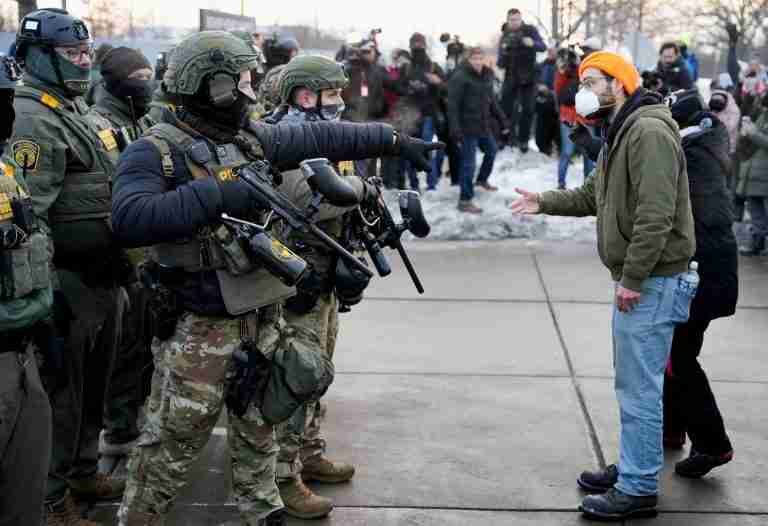
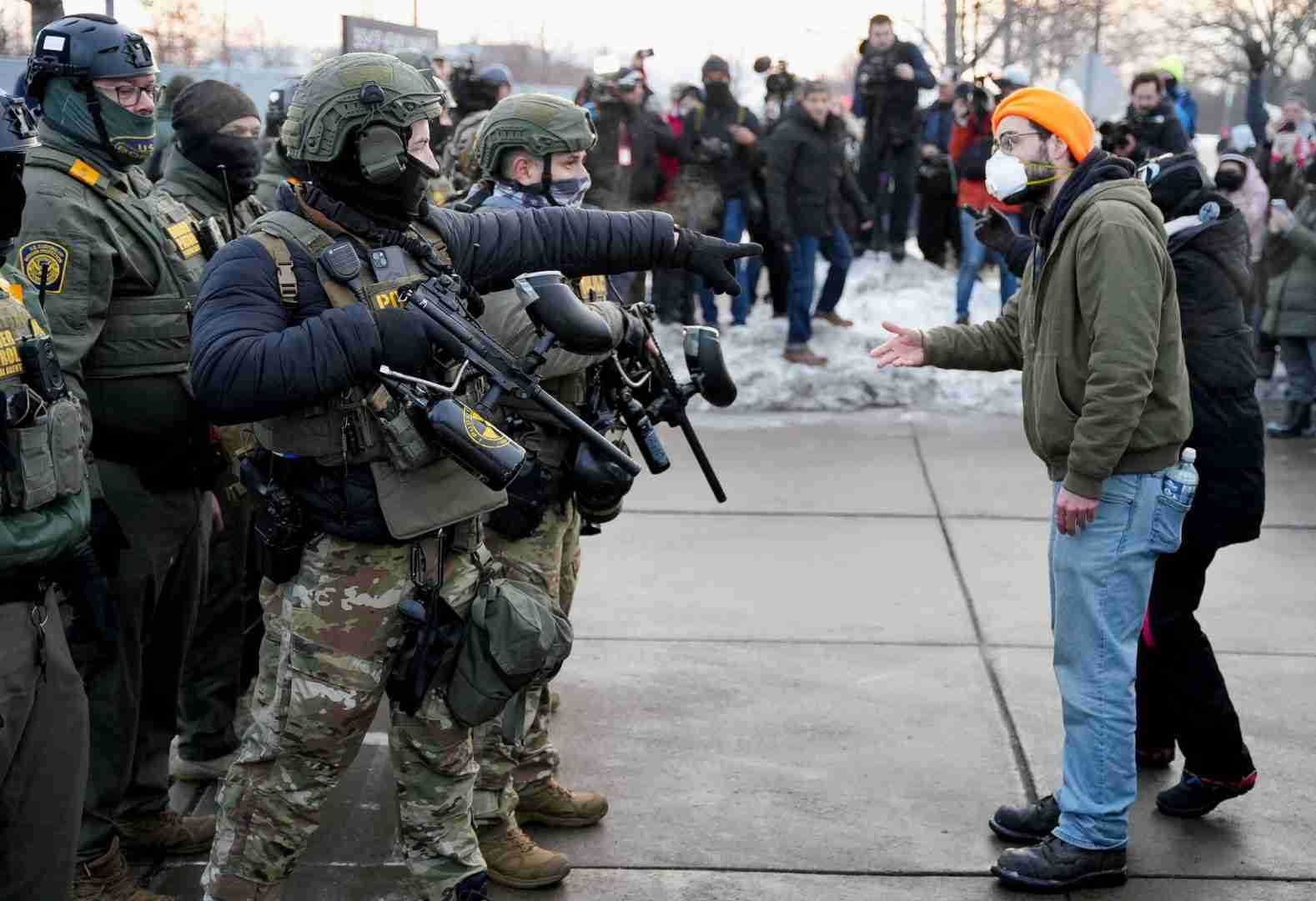
About 1,000 demonstrators gathered on Thursday morning at a federal building where an immigration court is housed, chanting “shame” and “murder” at armed and masked federal officers, some of whom used tear gas and pepper balls on protesters.
Minnesota and Trump administration officials offered starkly different accounts of the shooting, in which an unidentified Immigration and Customs Enforcement agent shot U.S. citizen Renee Nicole Good in a residential neighborhood.
The agent was among 2,000 federal officers that the Trump administration had announced it was deploying to the Minneapolis area in what the Department of Homeland Security described as the “largest DHS operation ever.”
DHS officials, including Homeland Secretary Kristi Noem, defended the shooting as self-defense and accused the woman of trying to ram agents in an act of “domestic terrorism.” Minneapolis Mayor Jacob Frey, a Democrat, called that assertion “bullshit” and “garbage” based on bystander videos taken of the incident that appeared to contradict the government’s account.
Videos showed two masked officers approaching Good’s car, which was stopped at a perpendicular angle on a Minneapolis street. As one officer ordered Good out of the car and grabbed at her door handle, the car briefly reversed and then began driving forward, turning to the right in an apparent attempt to leave the scene.
A third officer, positioned in front of her car on the left, drew his gun and fired three times while jumping back, with the last shots aimed through the driver’s window after the car’s bumper appeared to have cleared his body.
The video did not appear to show contact and the officer stayed on his feet, though Noem said he was taken to a hospital and released. Trump, a Republican, claimed on social media the woman “ran over the ICE Officer.”
The competing narratives highlighted the political polarization in the U.S., where Trump’s supporters enthusiastically endorse his version of events and opponents contend his assertions are often provably false.
Democratic Minnesota Governor Tim Walz, who urged the federal government to withdraw its officers, said he had put the state’s National Guard on alert. Minneapolis public schools were closed on Thursday and Friday as a precautionary measure.
With classes canceled, 17-year-old Addie Flewelling attended the Minneapolis protest on Thursday to condemn the shooting and show her opposition to the immigration crackdown, including a raid at her high school earlier this week.
“Students were chased off of their place of education,” she said. “This is not ok. I’m scared to go to school.”
SLAIN WOMAN HAD THREE CHILDREN
The Minneapolis City Council, which identified the dead woman as Good, said she was “out caring for her neighbors this morning and her life was taken today at the hands of the federal government.”
Good had a 15-year-old daughter and two sons aged 12 and 6, according to the Washington Post.
She graduated from Virginia’s Old Dominion University in 2020 with a degree in English, the school’s president, Brian Hemphill, confirmed in a statement.
“This is yet another clear example that fear and violence have sadly become commonplace in our nation,” Hemphill said. “May Renee’s life be a reminder of what unites us: freedom, love, and peace.”
While at ODU, she won an undergraduate poetry prize, according to a 2020 Facebook post by the school’s English department, which described her as hailing from Colorado Springs, Colorado.
“When she is not writing, reading, or talking about writing, she has movie marathons and makes messy art with her daughter and two sons,” the post said.
The Facebook post also said she co-hosted a podcast with her husband, comedian Tim Macklin. He died in 2023 at 36, according to the Minnesota Star Tribune.
Colorado Governor Jared Polis, a Democrat, called for an investigation into Good’s death, saying it was “deeply disturbing” and “tragic.”
Good’s mother told the Star Tribune that her daughter was “extremely compassionate,” and not the type of person to confront ICE agents.
“She’s taken care of people all her life,” her mother, Donna Ganger, told the newspaper. “She was loving, forgiving and affectionate.”
FBI, STATE OFFICIALS INVESTIGATE SHOOTING
The Minnesota operation, part of Trump’s nationwide crackdown on migrants, was also mounted in response to a politically charged investigation into fraud allegations against some Minnesota nonprofit groups in the Somali community.
At least 56 people have pleaded guilty since federal prosecutors under the previous Democratic administration of Joe Biden started investigating childcare and other social service programs in the Somali community.
The FBI and Minnesota state officials are both investigating the shooting.
The ICE officer could be immune to state prosecution if he was determined to be acting within the scope of his official federal duties, and any legal case would likely come down to whether he reasonably feared for his life, said Caren Morrison, a law professor at Georgia State College of Law.
She said cases involving vehicles tended to favor officers because a car could be considered a deadly weapon.
Minnesota law allows the use of deadly force by an officer only if an objectively reasonable officer would believe that doing so was necessary to protect the officer or others from immediate death or serious harm. Federal law has a similar standard.
Reporting by Renee Hickman and Maria Alejandra Cardona in Minneapolis; Additional reporting by Jonathan Allen, Helen Coster, Tom Hals and Kanishka Singh; Writing by Joseph Ax and Daniel Trotta; Editing by Paul Thomasch and Deepa Babington
President Donald Trump said on Wednesday that the United States would withdraw from dozens of international and U.N. entities, including the U.N. Framework Convention on Climate Change
International News via Reuters:
The Trump administration’s decision to withdraw the United States from the foundational U.N. climate treaty, which the U.S. Senate unanimously adopted more than 30 years ago, may be illegal, according to some legal experts who say that Congress would need to approve its exit.
President Donald Trump said on Wednesday that the United States would withdraw from dozens of international and U.N. entities, including the U.N. Framework Convention on Climate Change as well as the scientific Intergovernmental Panel on Climate Change, that “operate contrary to U.S. national interests” of focusing on oil, gas and mining development.
Trump, a vocal critic of renewable energy who has called climate change a “con job” and a hoax, went beyond his previous action of withdrawing the U.S. – the world’s biggest historical greenhouse gas emitter – from the Paris climate agreement, by removing the country from the underlying UNFCCC.
He also pulled the U.S. out of the key scientific climate change body called the Intergovernmental Panel on Climate Change and a host of other U.N. bodies focused on environment, health, arts and women’s rights.
SOME EXPERTS QUESTION PRESIDENT’S POWERS TO WITHDRAW
Some international law experts said the president’s unprecedented move on Wednesday raises major legal questions because case law has not been clear on whether a president can unilaterally withdraw the country from a treaty that has been ratified by a majority of the Senate.
“Because the U.S. entered the UNFCCC with advice and consent of the Senate in 1992, it’s our legal view that it also must be exited using the same process in reciprocation,” Jean Su, energy justice director at the Center for Biological Diversity told Reuters. “Letting this lawless move stand could shut the U.S. out of climate diplomacy forever.”
The CBD is currently evaluating whether to take the U.S. government to court on this, Su said.
White House officials were not immediately available to respond to Reuters questions on the legality of the move.
Quitting the UNFCCC would take effect a year after notification and would mean the U.S. would withdraw from all global climate negotiations including the central Paris climate agreement.
The U.S. already skipped the annual U.N. international climate summit last year in Belem, Brazil for the first time in three decades and Trump announced the withdrawal from the Paris pact a year ago. It is the only country to exit the UNFCCC.
The UNFCCC requires wealthy industrialized countries to take measures to cut their emissions, adopt policies to limit greenhouse gas emissions, publicly report their emissions, and provide funding to help poorer nations address climate change.
While the rules around ratifying a treaty are clear, the rules around withdrawing from a treaty are not spelled out in the U.S. Constitution, said Curtis Bradley, a professor at the University of Chicago Law School.
This has meant that some presidents have asserted the authority to withdraw the United States from treaties and international agreements without seeking Congressional approval. For example, Republican President Ronald Reagan withdrew the U.S. from UNESCO in 1983 over his concerns about that agency’s perceived politicization.
Bradley said Congress could enact legislation to prevent a president from unilaterally withdrawing from a treaty. Congress did pass a law in 2023 to stop a future administration from withdrawing from the NATO treaty.
“But that is not likely to happen for the UNFCCC,” he said, given the polarization around climate change policy in Congress.
HOW EASY IS IT TO GET BACK INTO A TREATY?
Legal experts are also split around how difficult it would be to rejoin the UNFCCC.
Some legal groups believe that if a future administration wants to get back in, it would need to go through a new process of getting the two-thirds support in the U.S. Senate required for treaty ratification.
Other experts argue that the U.S. can easily rejoin after 90 days, using the “advise and consent” that the Senate used to ratify the treaty unanimously in 1992 under Republican President George H.W. Bush.
In recent years, achieving a two-thirds majority in the highly polarized U.S. Congress has been near impossible, especially on divisive issues.
The U.S. has entered into more than 90% of international agreements through different mechanisms that rely on executive authority or pre-existing domestic laws.
Sue Biniaz, former deputy special envoy for climate change during the Biden administration, said she is in the camp of legal scholars who believe that rejoining the UNFCCC could be “seamless” because of the unanimous Senate approval it won in 1992.
“There are multiple future pathways for rejoining the key climate agreements,” she said.
Reporting by Valerie VolcoviciEditing by Frances Kerry
To provide the best experiences, we use technologies like cookies to store and/or access device information. Consenting to these technologies will allow us to process data such as browsing behavior or unique IDs on this site. Not consenting or withdrawing consent, may adversely affect certain features and functions.
Functional
Always active
The technical storage or access is strictly necessary for the legitimate purpose of enabling the use of a specific service explicitly requested by the subscriber or user, or for the sole purpose of carrying out the transmission of a communication over an electronic communications network.
Preferences
The technical storage or access is necessary for the legitimate purpose of storing preferences that are not requested by the subscriber or user.
Statistics
The technical storage or access that is used exclusively for statistical purposes.The technical storage or access that is used exclusively for anonymous statistical purposes. Without a subpoena, voluntary compliance on the part of your Internet Service Provider, or additional records from a third party, information stored or retrieved for this purpose alone cannot usually be used to identify you.
Marketing
The technical storage or access is required to create user profiles to send advertising, or to track the user on a website or across several websites for similar marketing purposes.