Switzerland freezes assets linked to Venezuela’s Maduro after US arrest

The measure, effective immediately and valid for four years, aims to prevent an outflow of potentially illicit assets and comes in addition to existing sanctions imposed on Venezuela since 2018, the statement said

International News via Reuters:
Switzerland has frozen any assets held in the country by Venezuela’s Nicolas Maduro and associates, the governing Federal Council said on Monday, following his arrest by U.S. forces in Caracas and transfer to the United States.
The measure, effective immediately and valid for four years, aims to prevent an outflow of potentially illicit assets and comes in addition to existing sanctions imposed on Venezuela since 2018, the statement said.
The asset freeze does not affect members of the current Venezuelan government, and Switzerland said it will seek to return any funds found to be illicitly acquired to benefit the Venezuelan people.
The Federal Council said the situation in Venezuela was volatile, with various outcomes possible in the coming days and weeks.
It said it was following the situation closely, and called for de-escalation and restraint, while also offering its good offices to find a peaceful solution.
“The Federal Council wants to ensure that any illicitly acquired assets cannot be transferred out of Switzerland in the current situation,” it said.
The asset freeze was a precautionary measure and applied to Maduro and his associates as foreign politically exposed persons, the government said.
No figures were given and the government did not immediately reply to a request for comment on what, if any assets, Maduro and his associates, held in Switzerland.
Reporting by Kirsti Knolle and John RevillAdditional reporting by Oliver HirtEditing by Miranda Murray and Dave Graham
Paris’ Louvre museum opens but some parts stay closed as staff resume strike

Staff had met earlier in the day to decide whether to resume a rolling strike, to protest against pay and working conditions

International News via Reuters:
The Louvre museum in Paris – hit by a jewel heist in October and by a workers’ dispute – opened on Monday after a three hours delay but some parts remained closed due to the strike.
Staff had met earlier in the day to decide whether to resume a rolling strike, to protest against pay and working conditions. The strike started last month but was called off on December 19 ahead of the Christmas holidays.
The Louvre is the world’s most visited museum but it has been left reeling by last October’s robbery, when four burglars made off with jewels worth $102 million. The jewels are still missing.
It has also been hit by recent infrastructure problems, including a water leak that damaged ancient books, which have highlighted the museum’s deteriorating state.
Unions have said that staff at the Louvre are overworked and mismanaged, and they are calling for more hiring, pay increases and better use of how the museum’s money is spent.
Reporting by Sarah Meyssonnier, Dominique Vidalon; Editing by Benoit Van Overstraeten/Sudip Kar-Gupta
EU sees opportunity for democratic transition in Venezuela, spokesperson says
She did not comment on how the EU would characterise the U.S. action, but said it “created an opportunity for a democratic transition, led by the Venezuelan people.”
International News via Reuters:
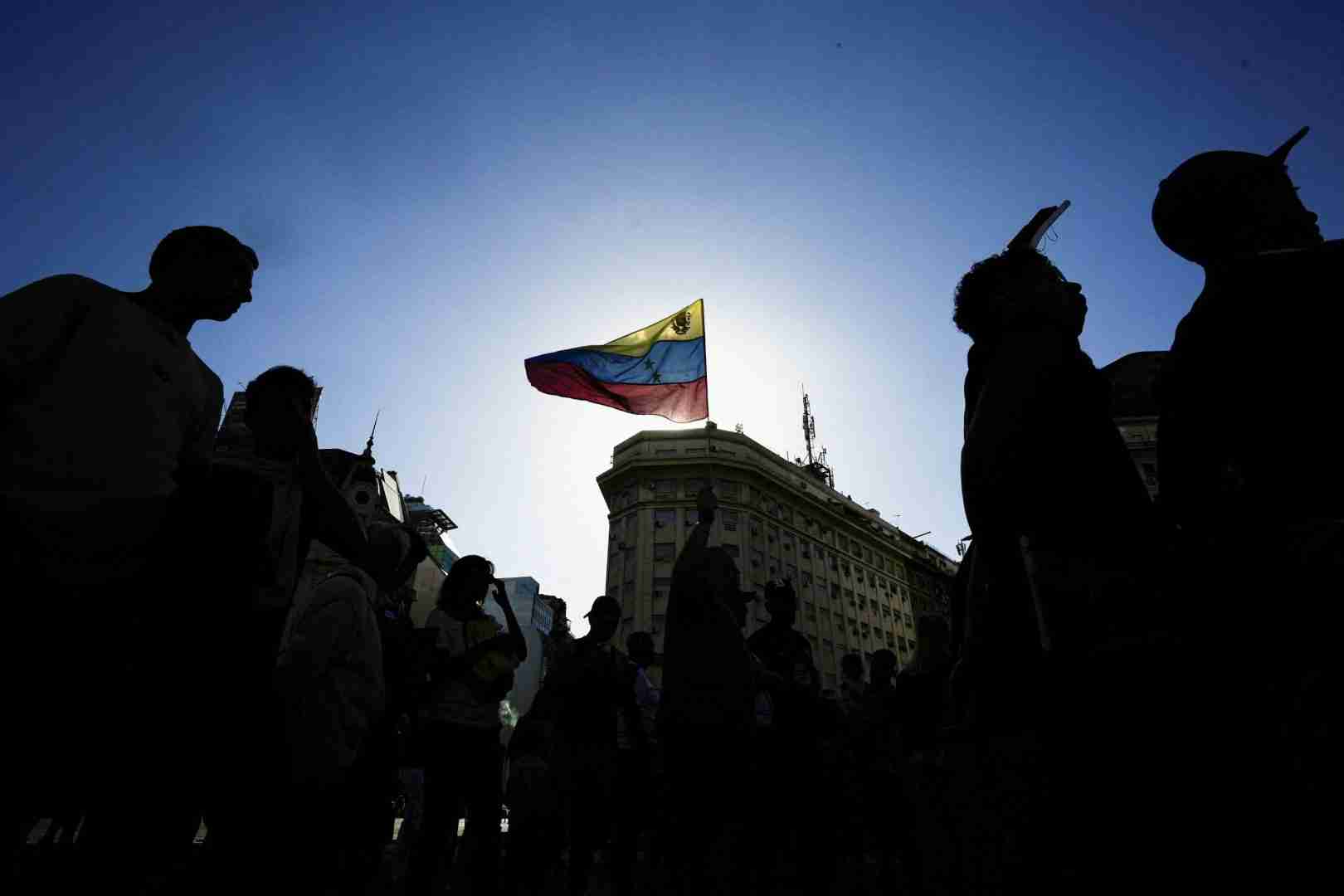
The capture of Venezuelan President Nicolas Maduro by the United States on Saturday creates an opportunity for a democratic transition in the country, a European Commission spokesperson said on Monday.
“It is too early to look into and assess all the implications in terms of legal assessment”, the spokesperson said.
She did not comment on how the EU would characterise the U.S. action, but said it “created an opportunity for a democratic transition, led by the Venezuelan people.”
“It’s worth recalling that Nicolas Maduro lacked the legitimacy of a democratically elected leader,” she added.
The spokesperson declined to comment on the question if the EU thinks U.S. President Donald Trump is interested in a democratic transition in Venezuela.
Reporting by Julia Payne, writing by Louise Breusch Rasmussen, editing by Bart Meijer
Derby President Dr Gina Tucker to Step Down

Leadership change to come after 2026 edition of the iconic race
The countdown is on for one of Bermuda’s most iconic road races. The 117th Bermuda Half Marathon Derby returns on Friday, May 22nd. Registration opened at 8 a.m. on New Year’s Day, and President of the Darby Committee, Dr Gina Tucker says eager participants wasted no time signing up for this year’s historic race.
Registration is online only at bermudamarathon.bm, where runners can also grab a limited number of ferry tickets to the start line. Number pickup is set for Wednesday, May 20th, at AIG.
And it’s the end of an era. After more than 20 years as President of the Bermuda Half Marathon Darby Committee, Dr Gina Tucker has announced that this year will be her last as President.
Maduro at troubled Brooklyn jail that once held Ghislaine Maxwell

Maduro and his wife Cilia Flores face drug trafficking charges in the United States after being captured in a dramatic overnight raid

International News via Reuters:
Days after being captured in a Caracas safe house, ousted Venezuelan President Nicolas Maduro finds himself in a far less hospitable environment: a Brooklyn jail where he likely will be confined to a cell 23 hours a day, conditions that Sean “Diddy” Combs and Ghislaine Maxwell had called inhumane.
Maduro and his wife Cilia Flores face drug trafficking charges in the United States after being captured in a dramatic overnight raid.
They were transported to a U.S. Navy ship, flown to the U.S. and taken Saturday night to the Metropolitan Detention Center, Brooklyn. Both the 63-year old Maduro and his 69-year old wife are due to appear in Manhattan federal court on Monday.
Founded in 1994, MDC Brooklyn holds roughly 1,300 men and women and is currently the only jail for detainees awaiting federal trials in New York City.
Past residents have included everyone from Maxwell and hip-hop mogul Combs to Juan Orlando Hernandez, the former president of Honduras who was convicted of drug trafficking charges before being pardoned in December by President Donald Trump. Luigi Mangione, who pleaded not guilty to killing a UnitedHealth Group executive, is currently housed there awaiting trial.
The jail has been plagued by what inmates and defense lawyers have said are inhumane and unsanitary conditions.
In 2019, some detainees at MDC Brooklyn were left in frigid cells after an electrical fire cut power and heat to the jail in the middle of winter.
In 2024, two men were murdered by fellow inmates using makeshift weapons, according to the Justice Department, prompting a crackdown on violence and contraband smuggling at the facility.
Maxwell, who was housed in MDC Brooklyn before her 2021 conviction for helping Epstein sexually abuse underage girls, complained of raw sewage and vermin feces in her cell.
The U.S. Bureau of Prisons, the division of the Justice Department that operates MDC Brooklyn, did not respond to a request for comment. But the agency said in a September 2025 report that the jail’s conditions have improved because of increased staffing and other reforms.
Mitchell Epner, a former federal prosecutor who now practices criminal defense, said all prisoners at MDC Brooklyn face some risk of violence from other inmates. That risk is higher with someone like Maduro who could be targeted by a gang or a prisoner wanting to build a reputation through a “lone-wolf attack,” Epner said.
MADURO LIKELY TO REMAIN SEPARATE FROM INMATES
Cameron Lindsay, a former MDC Brooklyn warden who has served as an expert witness, said the Bureau of Prisons will likely keep Maduro separated from other inmates and carefully vet the staff who interact with him.
“It’s conjecture on my part, but I would expect him to be put in a cell on a floor by himself,” Lindsay said. “This is obviously a super sensitive, high-security operation.”
Lindsay said Maduro will likely be locked down 23 hours a day, with meals delivered to his cell and one hour allotted for exercise in a small caged area. He likely will have access to a shower three times a week, Lindsay added.
The former warden said Maduro’s wife likely would receive the same treatment.
Combs, convicted in July on two counts of transportation to engage in prostitution, slept within two feet of other inmates in a dorm-style room during his time at MDC Brooklyn. The bathroom, with no door, was located in the same room.
At one point during Combs’s incarceration, guards stopped someone trying to cut him with a makeshift knife, his lawyers said.
There have been some signs of improving conditions at MDC Brooklyn in the last two years.
In 2024, Manhattan-based U.S. District Judge Jesse Furman declined to order a man charged with drug crimes detained pending trial at the MDC, calling the conditions there an “ongoing tragedy.”
But in hearing in a different case in May 2025, Furman said conditions had gotten “a lot better” since his 2024 ruling because of improved staffing.
In its September report, the Bureau of Prisons said “there has been a substantial decrease in violence” at MDC Brooklyn, and that the number of inmates dropped from about 1,600 to roughly 1,300.
The same month it issued those statistics, the Justice Department announced criminal charges against 25 people relating to violence and contraband smuggling at MDC Brooklyn.
In one case, a former correctional officer was accused of smuggling in vacuum‑sealed bags of marijuana and cigarettes under his Bureau of Prisons-issued protective vest.
In a different case, an alleged gang member was accused of hiding ceramic scalpels, which can be used as weapons, in a bag of Doritos while in a visiting room at MDC Brooklyn so that he could give them to inmates.
Reporting by Jan Wolfe; Editing by Noeleen Walder and Diane Craft
Snow cripples air, train and road traffic in the Netherlands

Amsterdam Schiphol airport, one of Europe’s busiest hubs, cancelled almost 500 flights on Monday morning and was closed to incoming traffic until 1200 GMT due to the snow, news agency ANP reported

International News via Reuters:
Snowfall disrupted air, train and road traffic in the Netherlands on Monday, as hundreds of flights were cancelled and trains around Amsterdam came to a standstill.
Amsterdam Schiphol airport, one of Europe’s busiest hubs, cancelled almost 500 flights on Monday morning and was closed to incoming traffic until 1200 GMT due to the snow, news agency ANP reported.
Planes headed for Amsterdam were diverted to other airports, ANP said. Schiphol could not immediately be reached for further comment.
The airport had already been forced to scrap hundreds of flights a day since Friday due to snow and icy temperatures.
The snow, which covered large parts of the Netherlands on Monday morning, also crippled traffic.
The Dutch railway company NS said no trains were operating in the region around Amsterdam and public transport was severely affected in many places across the country.
Ice and snow also caused many delays and accidents on the roads, even as authorities advised people to stay at home whenever possible.
Snowfall is expected to continue in the Netherlands throughout the week.
Reporting by Bart Meijer; Editing by Kirsten Donovan and Emelia Sithole-Matarise
UK consumer borrowing rises by most since November 2023

Consumer borrowing grew by a net 2.08 billion pounds ($2.79 billion) during the month, the most since November 2023 and more than any forecast in a Reuters poll of economists

International News via Reuters:
British consumer borrowing rose by the most in two years in November, Bank of England data showed on Monday, suggesting household demand remained solid ahead of finance minister Rachel Reeves’ budget.
Consumer borrowing grew by a net 2.08 billion pounds ($2.79 billion) during the month, the most since November 2023 and more than any forecast in a Reuters poll of economists.
The increase was above October’s 1.713 billion-pound rise, taking the annual rate of consumer credit growth to 8.1%, the fastest since the 12 months to May 2024.
“Today’s release adds to the evidence that speculation about tax rises ahead of November’s Budget didn’t influence households’ spending decisions too much,” Alex Kerr, UK economist at Capital Economics, said.
“This also suggests there isn’t much scope for a pick-up in consumer spending in 2026.”
Reeves announced 26 billion pounds in tax rises in her annual budget on November 26 but delayed the introduction of most of the increases.
The BoE said the number of mortgages approved by British lenders for house purchase fell to 64,530 in November from 65,010 in October. Economists polled by Reuters had forecast that there would be 64,400 mortgage approvals in November.
($1 = 0.7445 pounds)
Reporting by Suban AbdullaEditing by William Schomberg
Opinion: Putting Bermudians to work – why the Tax Credits Act matters

Senator Bell: “This legislation sends a clear message: Bermuda rewards those who invest in its people.”
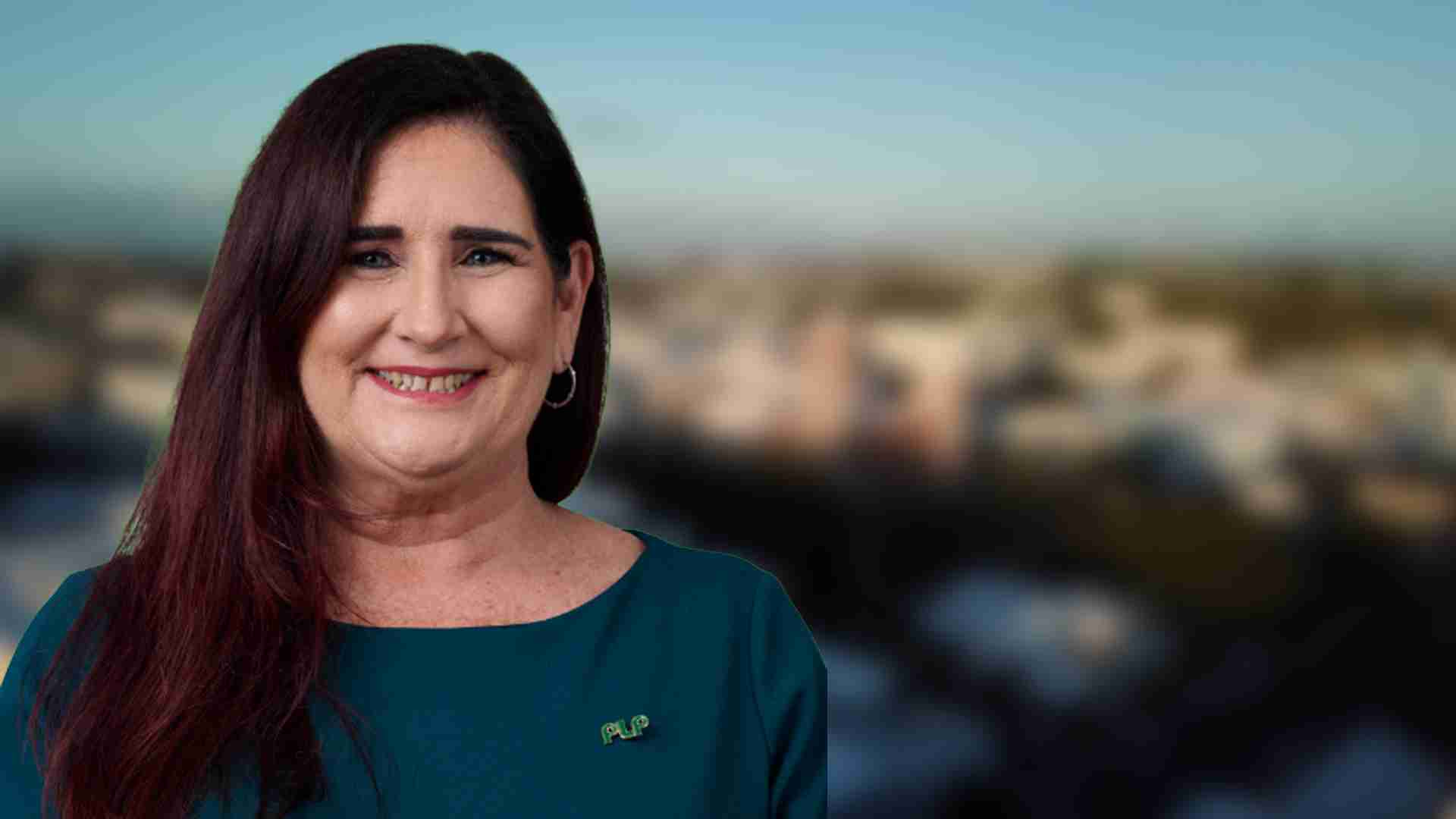
By Senator Lauren Hayward Bell, Junior Minister of Economy & Labour
Bermuda’s Tax Credits Act 2025 represents a clear statement of values. It is practical, forward-looking legislation that places Bermudian workers, Bermudian businesses and Bermudian communities at the centre of our economic strategy. As a Labour government, and as the Junior Minister responsible for Economy & Labour, it is important to be clear about what this Act does and why it matters to working families across our Island.
At its core, the Tax Credits Act is about growing Bermuda’s working population and strengthening economic participation. Central to this is the Substance-Based Tax Credit, which directly links tax relief to job creation, training and local spending. Companies that employ Bermudians, expand their local workforce, and invest in skills development receive greater benefit.
For Bermudian workers, this matters.
The job-based component of the credit places real value on headcount growth, long-term employment and training. Payroll tied to Bermudians attracts higher benefit levels, with additional uplift for training and development. This approach encourages employers not only to hire, but to build careers, skills and succession within Bermuda’s workforce.
The Act also strengthens Bermuda’s local business ecosystem. The expense-based component of the credit rewards companies that purchase goods and services from Bermudian suppliers, invest in local office space, procure equipment locally, and use professional services delivered on Island. This keeps money circulating locally, supports small and medium-sized businesses, and reinforces the economic multiplier effect that benefits workers and families.
Importantly, this legislation is not a giveaway. Credits are earned through real economic contribution – jobs, training and local spending. This protects public finances while ensuring that economic policy works for the people who live and work here.
The Tax Credits Act 2025 is part of a broader record of action by the Progressive Labour Party to support local labour. This Government has expanded workforce development and training opportunities, invested in scholarships to build local talent, supported summer internship programmes that give young Bermudians meaningful work experience, and strengthened pathways from education into employment. The Act reinforces these efforts by ensuring employers play their part in developing and sustaining our workforce.
As global economic rules change, Bermuda cannot stand still. But adaptation does not mean abandoning our values. The Tax Credits Act demonstrates that it is possible to remain
internationally compliant while advancing a labour-centred agenda; one that prioritises Bermudian employment, skills development and local economic participation.
This legislation sends a clear message: Bermuda rewards those who invest in its people. That principle has long guided the Progressive Labour Party, and it will continue to guide our approach to building a fairer, stronger economy for all Bermudians.
Stocks and bonds steady while oil dips as investors assess Venezuela upheaval

Oil prices see-sawed as an OPEC+ vote to keep output unchanged was offset by concern over market disruption from events in oil-producing Venezuela

International News via Reuters:
Stocks climbed and bond yields firmed while oil prices dipped on Monday as investors weighed up the potential repercussions of the U.S. capture of Venezuelan President Nicolas Maduro.
A STOXX benchmark of Europe’s biggest companies rose 0.5% while MSCI’s broadest index of Asia-Pacific shares outside Japan rose 1.3% to a record high and U.S. futures such as S&P 500 e-minis gained 0.2% ahead of a packed week of economic data releases.
After the dramatic events in Venezuela at the weekend, U.S. President Donald Trump said he was putting the South American nation under temporary American control and that he could order another strike if Venezuela does not cooperate with U.S. efforts to open up its oil industry and stop drug trafficking. He also threatened military action in Colombia and Mexico.
“The removal of Venezuelan President Nicolas Maduro by the U.S. is unlikely to have meaningful near-term economic consequences for the global economy,” said Neil Shearing at Capital Economics. “But its political and geopolitical ramifications will reverberate.”
Oil prices see-sawed as an OPEC+ vote to keep output unchanged was offset by concern over market disruption from events in oil-producing Venezuela. Brent crude futures were last down 0.8% at $60.26 a barrel.
Defence stocks led gains in Europe after the U.S. military strikes stoked fresh concerns about geopolitical risks.
An index of defence shares rose 2.7% and hit its highest in two months.
“Given the unexpected turn of events in Venezuela over the weekend, it remains to be seen whether the Trump administration has an appetite for more regime changes,” said Vasu Menon at OCBC in Singapore.
“The strategic calculations are unfolding against the backdrop of a mid-term election year, and developments are unpredictable. This uncertainty could keep oil prices supported. A more fraught geopolitical environment may buoy haven assets like precious metals.”
US MILITARY ACTION SPURS SAFE-HAVEN DEMAND
Gold prices rose on Monday, with spot prices up 2.33% at $4,430 an ounce, still short of last year’s record high of $4,549.71.
Safe-haven bonds also held steady, with the yield on the euro zone’s benchmark German 10-year Bund marginally lower at 2.893%, having risen 3 basis points last week. The yield on U.S. 10-year Treasury bonds held at 4.173%.
The U.S. dollar index, which measures the dollar strength against a basket of six currencies, was last up 0.13% at 98.685, extending recent gains into a sixth consecutive day.
Against the yen, the dollar was flat at 156.79 yen. Bank of Japan Governor Kazuo Ueda said on Monday that the central bank will continue to raise interest rates if economic and price developments move in line with its forecast after raising rates last month by 25 basis points to 0.75%.
Bitcoin was last up 1.2% at $92,327.40, while ether was up 0.4% at $3,154.62.
Reporting by Lawrence White and Gregor Stuart HunterEditing by David Goodman
Dollar gains as traders look past Venezuela to flurry of US data

Traders were also keeping a watchful eye on events in Venezuela, after the U.S. raid and capture of President Nicolas Maduro

International News via Reuters:
The dollar started the first full trading week of 2026 by climbing to multi-week highs against a range of currencies after a weak December, with the main focus on this week’s raft of key economic data.
Traders were also keeping a watchful eye on events in Venezuela, after the U.S. raid and capture of President Nicolas Maduro.
President Donald Trump told reporters on Sunday he could order another strike if Venezuela did not cooperate with U.S. efforts to open up its oil industry and stop drug trafficking. He also threatened military action in Colombia and Mexico.
With a fraught geopolitical backdrop, the dollar edged up, but analysts said it may be too soon to declare this to be a durable rally. The U.S. monthly employment report, due on Friday, will be key in shaping expectations for the outlook for monetary policy – an arguably weightier factor for the dollar.
MACRO TROUNCES GEOPOLITICS FOR NOW
The dollar index rose for a fifth day, up 0.25% at its highest since December 10, largely as a function of weakness in the euro, which fell 0.31% to $1.16845, its lowest since that same date. The dollar index lost 1.2% in December, its weakest performance since August.
“Whilst we see that geopolitical risk, I think we shouldn’t be stuck on it. Soon, we’ll come crashing back into the reality of macroeconomics, because there is a slew of U.S. data through the course of this week,” Jeremy Stretch, head of G10 FX Strategy at CIBC Markets, said.
“Often, the case is that the first move in terms of currency reaction to a big event is often the wrong one. And I’m not saying it’s the wrong move, but I think in a sense, this dollar rally could prove to be susceptible to a correction if we were to see signs of fragility in the employment data,” he said.
A recent run of resilient U.S. data has markets contemplating a potentially slower pace of interest rate cuts this year, he added.
The data rollout this week begins with ISM manufacturing figures on Monday and culminates with the monthly non-farm payrolls report on Friday.
“I dare say the FX complex is not much of a reflection of risks stemming from Venezuela, but more about what the U.S. data is going to tell us about the Fed’s policy path,” said Kyle Rodda, senior financial markets analyst at Capital.com.
Traders currently expect two U.S. rate cuts this year, according to LSEG calculations based on futures.
LOWER US RATES AHEAD
Investors are also awaiting Trump’s choice for the next Fed chair, with Jerome Powell’s term ending in May. Trump has said he would announce his pick this month, and has said Powell’s successor would be “someone who believes in lower interest rates, by a lot.”
Meanwhile, Bank of Japan Governor Kazuo Ueda said on Monday that the central bank would continue to raise rates if economic and price developments moved in line with its forecasts. It is a view he has reiterated several times in recent months, including after December’s as-expected decision to raise rates to a three-decade high.
The dollar was steady against the yen at 156.81 and up 0.34% against the Swiss franc at 0.795 francs, and up 0.2% against both the Australian and New Zealand dollars.
Additional reporting by Kevin Buckland in Tokyo; Editing by Sam Holmes, Himani Sarkar Editing by Alex Richardson
Opinion: Safeguarding our children in a digital world

Nonprofit Alliance of Bermuda Third Sector Spotlight: Family Centre

Images supplied
By Dr. Sandy De Silva, PsyD, Executive Director, Family Centre
This World Children’s Day, families across Bermuda – and around the world – are asking the same urgent question: How do we keep our children safe and healthy in a digital age?
The rise of social media and smartphones has changed childhood. While technology connects, entertains, and educates, it also carries risks that are impacting young people’s mental health. Psychologist Jonathan Haidt, in The Anxious Generation, describes this as the “great rewiring of childhood,” linking the rapid spread of smartphones and social media to sharp increases in anxiety, depression and loneliness among adolescents.
At Family Centre, we see this every day: unfiltered screen use contributing to anxiety, disrupted sleep, and social isolation. Parents, educators, and researchers are aligned on one truth: The way children engage with technology is profoundly shaping their overall wellbeing.
Globally, the numbers are alarming:
- The average teenager now spends 4+ hours a day on screens. This is in addition to their online schoolwork, and much of the screen time is unsupervised.

- Adolescents who spend more than three hours a day on social media are nearly twice as likely to report symptoms of anxiety and depression.
- The Cyberbullying Research Center in the US reports that 30% of the teens they surveyed said that they have been cyberbullied at some point in their lives.
We cannot ignore these realities. But we can take steps – together – to safeguard our children.
1. Recognise that change is needed
Surveys show that two-thirds of parents worry about the impact of social media on their child’s wellbeing, and teens themselves admit they often feel “addicted” to their phones. Families in Bermuda are already responding by delaying smartphone access, removing devices from bedrooms, and modelling healthier tech habits. Polls also reflect growing support for restricting social media access for children under 16, with countries like Australia leading the way. Change is not only needed – it is wanted!

2. Limit smartphones in schools
The evidence is clear: students perform better when phones are restricted in classrooms. The Organisation for Economic Co-operation and Development’s (OECD) 2025 report found that schools with stricter phone policies saw higher literacy and maths scores, and lower levels of bullying and distraction. At the same time, technology used in the right way can be a powerful tool for learning – particularly for students who learn differently. Assistive apps, digital resources, and adaptive learning platforms can help children access content, practise skills, and build confidence. The challenge is finding the right balance such as limiting unstructured phone use while embracing technology that genuinely supports learning. Parents should ask their children’s schools what their policies are and ensure schools and families are on the same page about rules and expectations.
3. Delay social media until children are developmentally ready
Research shows that critical thinking and perspective-taking skills strengthen significantly after age 14. Waiting until mid-adolescence before introducing social media reduces exposure to harmful content such as disinformation, body image pressures, and cyberbullying, all of which increase during adolescence due to the targeting of these messages to teens. Having these discussions are critical and could protect children during their most vulnerable years. But this can only be successful if parents and schools unite on this approach.
4. Foster real-world independence and connections
Today’s children are overprotected in the real world but underprotected online. However, research consistently shows that unstructured, real-world play improves resilience and wellbeing. Children who spend time outdoors and engage in independent activities are more likely to develop better social skills, lower stress, and greater confidence. Encouraging children to help with chores or volunteer in the community builds resilience that no screen can provide.
At Family Centre, our programmes focus on strengthening young people (and by extension, their families) by offering positive alternatives to screen time. We provide counselling services and therapeutic groups that build social skills, emotional resilience and encourage healthy relationships, and afterschool programmes that empower youth through sports, mentorship, mindfulness, and discovering their leadership potential. We see transformation every day when youth interact with others in positive and meaningful ways and families reconnect, resulting in positive mental health.
This World Children’s Day, let’s commit to practical but bold changes: delay access to social media, limit smartphone use at home and in schools, model healthy technology use habits, and create more opportunities for real-word connections.
Children deserve not just protection, but the chance to grow into confident, capable adults. It is by working together – families, schools, youth-serving organisations, and government – that we can safeguard Bermuda’s children and help them to thrive.