Bermuda’s 2026 Davis Cup path has been confirmed, but the national team will be trading the Caucasus Mountains for the Mediterranean coast following a late change of scenery.
The World Group II Play-off against Georgia, scheduled for February 6th-7th, 2026, has been relocated from its original host nation to the Herodotou Tennis Academy in Larnaca, Cyprus. The move comes after facility issues in Georgia forced a venue change, though the Georgians will remain the official hosts for the hard-court encounter.
National Tennis Director and Captain Ricky Mallory Jr. is currently overseeing a rigorous local training camp, with competition for the final squad places reaching a fever pitch.
The battle for a spot on the plane will be decided through a series of play-offs running throughout December. Mallory has until the 31 December deadline to submit his final four-man roster to the Selection Committee.
While the local hunt for places continues, Bermuda’s leading overseas lights are already ramping up their preparations:
Trey Mallory is currently undergoing intensive training in Florida.
Daniel Phillips remains in Louisiana, balancing university competition with national team duties.
The Bermuda Lawn Tennis Association (BLTA) is currently seeking corporate sponsorship to support the logistical demands of the trip.
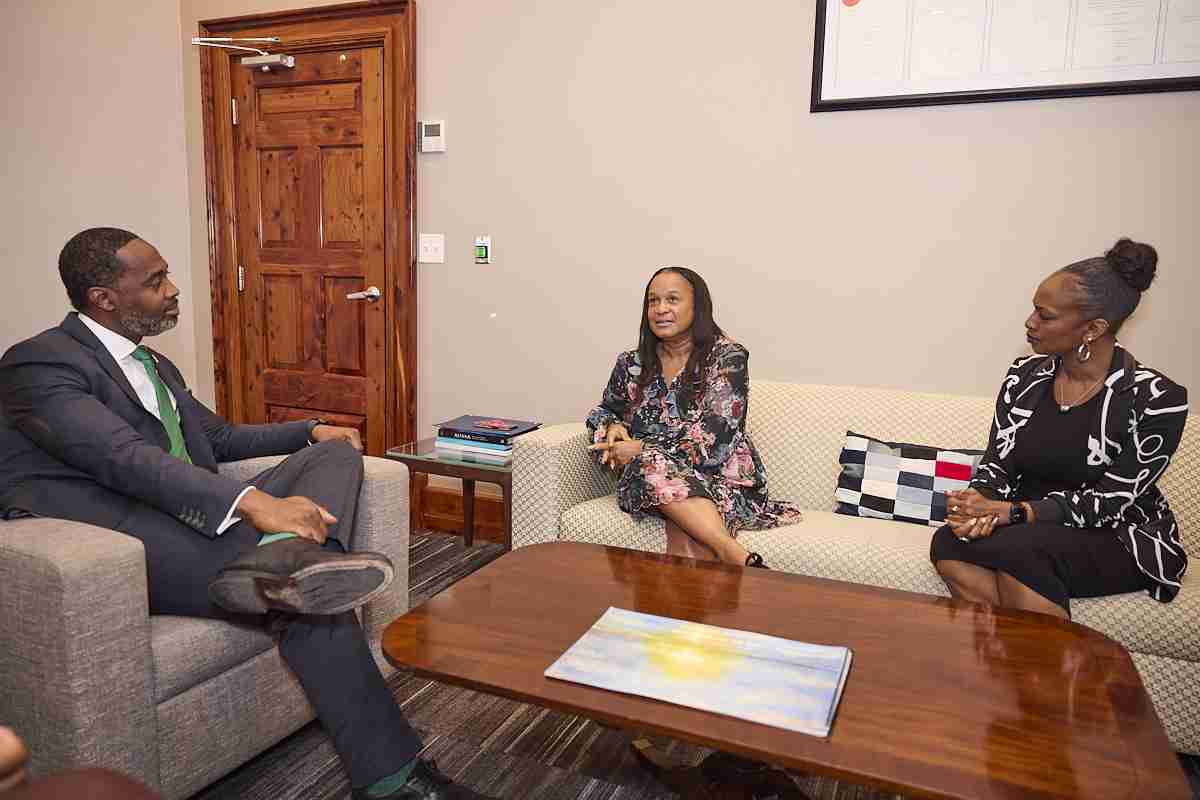
The Latimer House Principles, a Commonwealth framework, protect freedom of expression while affirming the need for order, restraint, and mutual respect
Why Parliamentary ethics matter: Statement by Senator Lauren Hayward Bell:
Democracy rarely collapses in a single moment. More often, it erodes gradually – when standards slip, when conduct overshadows purpose, and when public confidence begins to fray. In such moments, the most important question is not who is right or wrong, but whether our democratic institutions are strong enough to withstand disagreement without losing the trust of the people they serve.
This challenge is not unique to Bermuda. It was a central theme at the recent Commonwealth Parliamentary Association (CPA) Conference, where parliamentarians from 56 countries, representing nearly 30% of the world’s population, gathered to reflect on the state of democracy and the pressures facing legislatures globally.
The CPA exists precisely for moments like these.
Established in 1911, the CPA is one of the world’s oldest parliamentary organisations. Its role is not symbolic. It provides a clear framework for democratic conduct through instruments such as the CPA Recommended Benchmarks for Democratic Legislatures and the Latimer House Principles, which together emphasise accountability, ethical behaviour, respect for dissent, and the protection of institutional integrity.
At the heart of these standards is a simple truth: public trust is democracy’s currency. Without it, laws lose legitimacy, debate becomes performative, and institutions weaken.
Parliamentary ethics are sometimes dismissed as matters of decorum or personality. In reality, they are about institutional credibility. The CPA Benchmarks make clear that democratic legislatures must maintain standards of conduct that uphold public confidence, ensure transparency, and safeguard the dignity of the institution.
Unsubstantiated allegations, particularly when made in parliamentary spaces, carry consequences far beyond the moment in which they are uttered. When behaviour within parliamentary chambers becomes the focus of public attention, the cost is borne not by individuals alone, but by democracy itself. Cynicism deepens. Engagement declines. And trust, once lost, is difficult to restore.
Democracy is not unanimity. It depends on debate, challenge, and disagreement. But democratic maturity lies in recognising that dissent must operate within shared norms.
As Barbados Prime Minister Mia Amor Mottley reminded delegates at the CPA Conference, “In democracies, the decision and the dissent can live under the same roof.” That balance is essential. Dissent strengthens democracy when it is exercised with respect for rules, institutions, and the public interest.
The Latimer House Principles reinforce this balance by protecting freedom of expression while affirming the need for order, restraint, and mutual respect. Democratic strength is measured not by the absence of conflict, but by how disagreement is managed.
It is easy to uphold principles when politics is calm. The real test comes during moments of tension and scrutiny. That is precisely why standards exist; not as abstract ideals, but as practical guides when judgment matters most.
The CPA Benchmarks remind us that parliamentarians are not merely political actors; they are custodians of democratic institutions. Their conduct shapes public perceptions of fairness, legitimacy, and governance itself.
Bermuda has a proud parliamentary tradition and a strong democratic foundation. But strength should never breed complacency. Moments that test public confidence should be met not with defensiveness, but with reflection and recommitment.
Reaffirming ethical standards is not an admission of weakness. It is a declaration of responsibility—to democracy, to accountability, and to the people whom Parliament serves.
Democracy is not inherited automatically. It must be practised daily—through restraint, integrity, and respect for the institutions that give it life.
Public trust is fragile, but it is renewable when leaders choose standards over spectacle and principle over provocation. In the end, parliamentary ethics are not about protecting politicians. They are about protecting democracy itself.
Bermudian goalkeeper Nathan Trott will be the last line of defence as League One leaders Cardiff City host Premier League giants Chelsea in a high-stakes Carabao Cup quarter-final.
Cardiff City, rejuvenated under Brian Barry-Murphy, have become the story of the competition. After dumping out Burnley and Welsh rivals Wrexham, they now face their toughest test yet at a sold-out Cardiff City Stadium.
Trott has been a revelation since joining on loan from FC Copenhagen, becoming the first goalkeeper in Cardiff’s history to start his career with five consecutive clean sheets. He heads into tonight’s clash in formidable form, having recorded his eighth shut-out of the season just last week.
“Nathan has been monumental for us,” Barry-Murphy told his club’s website. “To beat a side like Chelsea, you need your keeper to have the game of his life. He’s shown he’s more than capable of that.”
Despite their status as heavy favourites, Chelsea boss Enzo Maresca has confirmed he will rotate his squad amidst a grueling December schedule.
Cole Palmer will sit out as part of his injury management.
Marc Cucurella misses the tie through suspension.
Moises Caicedo is expected to return to the starting XI to provide steel in midfield.
Chelsea have already tasted success in 2025, lifting the Conference League and the Club World Cup, but Maresca warned his side against complacency: “Cardiff are full of attacking quality and will be backed by a fantastic atmosphere. These are the most dangerous games.”
Premier pays tribute to public service awardee, Alana Wilson
The Government of Bermuda is pleased to recognise Alana Wilson, of the Department of Education, as the November recipient of the Public Service Excellence Award (PSEA).
Since assuming the role of Head of Victor Scott Preschool in September 2025, Mrs. Wilson has demonstrated consistent leadership in support of her team, students, and families. She routinely steps out of the office to assist in classrooms, provides supervision during busy periods to relieve teaching staff, and has implemented practical improvements that contribute to a more supportive and inclusive learning environment.
Among her recent initiatives, Mrs. Wilson introduced an early drop-off service in direct response to feedback from parents who were struggling with early morning work commitments. She personally arrives at the school before the official start time to ensure that families have access to this support.
She also contributes directly to student development by helping deliver emotional and social learning programmes that promote kindness, respect, and empathy among young learners. These efforts not only support children’s well-being but also foster a culture of care that positively impacts the wider school community.
Head of the Public Service, Cherie Whitter, shared, “Mrs. Wilson’s practical, people-first leadership reflects the service culture we are building across the Public Service. Her actions speak volumes about the impact of empathy and collaboration in leadership.”
Premier David Burt, JP, MP, added, “Mrs. Wilson embodies what it means to serve with compassion and purpose. By listening to the concerns of parents, supporting her teaching staff, she has made a positive impact on Victor Scott Preschool. In a setting where the needs are complex, her leadership stands out as an example of how public servants go above and beyond to better serve the people of Bermuda.”
And the Minister of Education, the Hon. Crystal Caesar, JP, noted, “We’re proud to recognise Mrs. Wilson for her service at Victor Scott Preschool. Her leadership supports not just learning outcomes, but stronger families and communities.”
Exploring the evolving landscape of Bermuda’s hospitality and tourism industry
In this episode of Think Pink, host Jasmine Patterson speaks with JP Martens – a seasoned hotelier and the driving force behind Grotto Bay Beach Resort and Spa. They discuss the evolution of Bermuda’s hospitality industry, the challenges faced, and the opportunities for growth. Mr. Martens shares insights on the importance of investing in tourism, the impact of renovations, and the importance of a happy workforce.
The attack on Sunday was Australia’s worst mass shooting in nearly 30 years, and is being investigated as an act of terrorism targeting the Jewish community
International News via Reuters:
Indian police said on Tuesday that the dead gunman in Australia’s Bondi beach shooting incident, Sajid Akram, was originally from the southern Indian city of Hyderabad but had limited contact with his family in India.
The attack on Sunday was Australia’s worst mass shooting in nearly 30 years, and is being investigated as an act of terrorism targeting the Jewish community.
The death toll stands at 16, including one of the gunmen, identified by police as 50-year old Sajid Akram, who was shot by police. The man’s 24-year-old son and alleged accomplice, identified by local media as Naveed Akram, was in critical condition in hospital after also being shot.
“The family members have expressed no knowledge of his radical mindset or activities, nor of the circumstances that led to his radicalisation,” Telangana state police said in a statement.
Hyderabad is the capital of Telangana state.
Australian police said both men had travelled to the Philippines last month, the father on an Indian passport and the son was on an Australian one.
The purpose of the trip is under investigation, officials said, adding it was not conclusive they were linked to any terrorist group or whether they received training in that country.
Telangana police said the factors that led to the radicalisation of the two gunmen “appear to have no connection with India or any local influence in Telangana”.
In its statement on Tuesday, Telangana police said Sajid Akram visited India on six occasions, mainly for family-related reasons, since he migrated to Australia in 1998.
There was no “adverse record” on him before he left India, the statement added.
Reporting by Rishika Sadam, writing by Tanvi Mehta; Editing by YP Rajesh
The proposal marks a major expansion of the Carbon Border Adjustment Mechanism
International News via Reuters:
The European Union plans to extend its carbon border levy to cover car parts, refrigerators and washing machines, draft documents seen by Reuters on Tuesday showed, in a bid to close loopholes that the bloc feared would allow foreign manufacturers to dodge climate costs.
The proposal marks a major expansion of the Carbon Border Adjustment Mechanism, which from January will start charging importers for the emissions embedded in steel, cement and other high-carbon products brought into the EU.
“The proposal will extend the scope of the Carbon Border Adjustment Mechanism to address the risk of carbon leakage for products further down the value chain of the steel and aluminium products currently in CBAM’s scope,” said the draft European Commission proposal, due for publication on Wednesday.
Construction products for bridges, power transformers and cables and farming machinery would also be covered by the levy, the draft plans showed.
The EU chose the new products based on their exposure to “carbon leakage”, or the risk that industries would relocate outside Europe to avoid the region’s strict climate policies.
EXPANSION AIMS TO STOP CLIMATE POLICY EVASION
The EU carbon border levy aims to shield Europe’s industries from cheaper, high-emission imports and push manufacturers worldwide toward cleaner production. The existing policy has prompted criticism from trading partners including China, India and South Africa, who say it unfairly penalises emerging economies’ industries.
A second draft Commission proposal, seen by Reuters, showed the EU plans to use 25% of the revenue collected by the carbon border levy to compensate European manufacturers over 2028-2029 for higher costs they face as a result of the carbon border fee on imports.
The EU expects the carbon border tariff to generate 2.1 billion euros ($2.47 billion) in revenue by 2030.
Industries would only be eligible for this support if they are investing in cleaning up the carbon footprint of their manufacturing, the draft said.
The proposal responds to demands from industries that the EU compensate European exporters to help them compete in foreign markets where rivals do not pay CO2 costs.
However, the draft proposal did not specify that the fund will target exporters. Some EU officials have expressed concern that a rebate or subsidy for exporters would flout WTO rules. The EU has said its CBAM is fully WTO-compliant.
A Commission spokesperson declined to comment on the draft, which could still change before it is published.
($1 = 0.8505 euros)
Reporting by Kate Abnett, Editing by Charlotte Van Campenhout and Louise Heavens
The S&P Global Purchasing Managers’ Index rose to 52.1 in its preliminary measure for December from 51.2 in November
International News via Reuters:
British businesses appear to be emerging from months of worry about tax increases in finance minister Rachel Reeves’ budget in late November, a closely watched survey of the private sector showed on Tuesday.
The S&P Global Purchasing Managers’ Index rose to 52.1 in its preliminary measure for December from 51.2 in November, above all forecasts in a Reuters poll of economists but still below its long-term average.
The improvement contrasted with a slowdown in a similar set of surveys for the euro zone.
The British PMI represented the first comprehensive gauge of the private sector since Reeves announced 26 billion pounds ($35 billion) in tax increases in her budget on November 26 but delayed the introduction of most of them and spared employers the kind of hit they took in her first budget last year.
“Firms seem reassured that the drag on demand will be less severe than feared, helped by most of the tightening being pushed down the line,” Jake Finney, senior economist at PwC, said. “The one caveat is that job losses remain widespread, and it is unclear whether hiring will pick up now.”
The value of the pound edged up against the dollar and the euro after the PMI was published. Government bond prices fell but there was no change to expectations among investors that the Bank of England will cut interest rates on Thursday.
SURVEY POINTS TO JUST 0.1% GDP GROWTH IN Q4
Chris Williamson, chief business economist at S&P Global Market Intelligence, said the survey implied economic growth of only 0.1% in the fourth quarter.
“It’s a big relief that business confidence has not slumped in a repeat of last year’s post-budget gloom,” Williamson said.
“However, the overall pace of output and demand growth remains lacklustre, and the expansion is still very dependent on technology and financial services activity, with many other parts of the economy struggling to grow or in decline.”
The PMI’s overall reading and one for the dominant services sector were both the highest in two months, while the measure of manufacturing was the strongest in 15 months.
New work grew at the fastest pace since October last year and the survey’s measure of expectations for the 12 months ahead rose to its second-highest level in more than a year albeit still below the long-term average.
New work from abroad rose after falling for 13 months and backlogs edged up for the first time in almost three years as suppliers struggled to respond to the pickup in demand.
BUSINESSES KEEP CUTTING STAFF, JOB MARKET WEAK
But staffing levels were cut again as employers responded to the higher costs of hiring which went up earlier in April due to a tax increase ordered by Reeves.
Earlier on Tuesday, official data showed the jobs market weakened with the jobless rate hitting its highest since 2021, payrolled employment falling and private-sector wage growth rising at the slowest pace in almost five years.
Inflation pressures increased in the PMI with the prices of inputs – including labour costs – accelerating for the second month in a row while prices charged by firms also went up after touching a five-year low in November.
($1 = 0.7460 pounds)
Writing by William Schomberg; Editing by Hugh Lawson
The militaries of the Southeast Asian neighbours are clashing at several locations on their 817-km (508 mile) land border, both have said, with no signs of abatement, despite international efforts to negotiate a ceasefire
International News via Reuters:
Thailand is working out how to repatriate up to 6,000 citizens unable to return home through a major border crossing in Cambodia closed as fighting along the contested border extended into a second week, authorities said on Tuesday.
The militaries of the Southeast Asian neighbours are clashing at several locations on their 817-km (508 mile) land border, both have said, with no signs of abatement, despite international efforts to negotiate a ceasefire.
Cambodia’s closure of its checkpoint in the city of Poipet has prevented the return of thousands of Thai workers gathered there amid fighting that has displaced more than half a million people and killed nearly 40 on both sides since last Monday.
Hun Sen, Cambodia’s influential former leader, has said the closure aimed to protect civilians from what he called indiscriminate firing by Thai forces in the area.
But checkpoints were open in areas free of fighting and air travel was unrestricted, he added.
In Bangkok on Tuesday, the foreign ministry said Thais in Poipet could seek help to arrange air travel home from the consulate in the city of Siem Reap, the gateway to the Angkor Wat temple complex.
It urged others still in Cambodia to contact officials if they needed to leave.
Efforts to end the fighting have included calls from U.S. President Donald Trump, who also brokered a halt to a five-day conflict in July by using trade negotiations as leverage.
“The army said there has been continuous fighting across the border line. The situation is still in flux,” said Surasant Kongsiri, a spokesman of the Thai defence ministry, with fighting reported in eight border provinces.
Cambodia’s forces would “continue to stand strong, brave and steadfast in their fight against the aggressor,” its defence ministry said.
There was no international pressure for a ceasefire, Thai Prime Minister Anutin Charnvirakul told journalists in response to a question.
“No one is pressuring us. Who is pressuring whom? I don’t know,” he said, but did not answer a query whether Trump was using the threat of tariff measures to pressure Thailand to stop the conflict.
Thailand is now preparing plans to cut off shipments of fuel into Cambodia, defence ministry spokesman Surasant said.
It is tasking maritime enforcement authorities with controlling Thai-registered vessels that might be delivering gasoline and even weapons to support Cambodia’s armed forces, as an issue of “primary concern” for the Thai public, he added.
The neighbours have long disputed sections of the frontier, but the scale and intensity of the latest clashes, stretching from forested inland areas near the Laos border to coastal provinces, are unprecedented in recent history.
Each side blames the other for starting the fighting.
Malaysia will host a special meeting of Southeast Asian foreign ministers next week as the regional bloc tries to re-establish the ceasefire.
Reporting by Panu Wongcha-um and Chayut Setboonsarng; Writing by John Mair; Editing by Clarence Fernandez
The UK’s blue-chip FTSE 100 fell 0.3% by 1022 GMT after closing 1% higher in the previous session, while the midcap FTSE 250 index was largely unchanged
International News via Reuters:
London’s FTSE 100 slipped on Tuesday, weighed by losses in energy and defence stocks, while investors assessed fresh jobs data that reinforced expectations for an interest rate cut by the Bank of England later in the week.
The UK’s blue-chip FTSE 100 fell 0.3% by 1022 GMT after closing 1% higher in the previous session, while the midcap FTSE 250 index was largely unchanged.
Energy stocks fell 1.1%, tracking a fall in oil prices as prospects for a Russia-Ukraine peace deal appeared to strengthen, raising expectations of a potential easing of sanctions.
The Aerospace and Defence index declined 1.8% following talks of a potential Ukraine peace deal. Britain’s biggest listed defence companies – Rolls-Royce, BAE Systems, and Babcock were down between 1.4% and 4.1%.
U.S. officials said on Monday Ukraine could receive security guarantees modelled on NATO’s Article 5 mutual defence pledge under a proposed peace deal with Russia.
On the flip side, precious metals and miners jumped 1.4%, while travel-focussed index added 0.9%. At least 17 sectors were trading in the green.
Meanwhile, Britain’s unemployment rate hit its highest since the start of 2021 and private sector pay growth was the weakest in nearly five years in the run-up to finance minister Rachel Reeves’ annual budget last month.
The weak jobs data added to expectations that the Bank of England will cut rates on Thursday to support a faltering economy.
Among individual stocks, IG Group rose 5.6% after the online trading platform said it expects to deliver revenue growth around the mid-point of its guided range in 2026.
Serica Energy rose 2.71% after the company said it had agreed to acquire a portfolio of Southern North Sea assets from Spirit Energy.
Across the Atlantic, investors stayed cautious ahead of a slate of U.S. data, including the jobs report, that may help gauge the trajectory for Federal Reserve policy next year.
Wall Street futures were trading lower.
Reporting by Tharuniyaa Lakshmi and Nikhil Sharma in Bengaluru; Editing by Leroy Leo
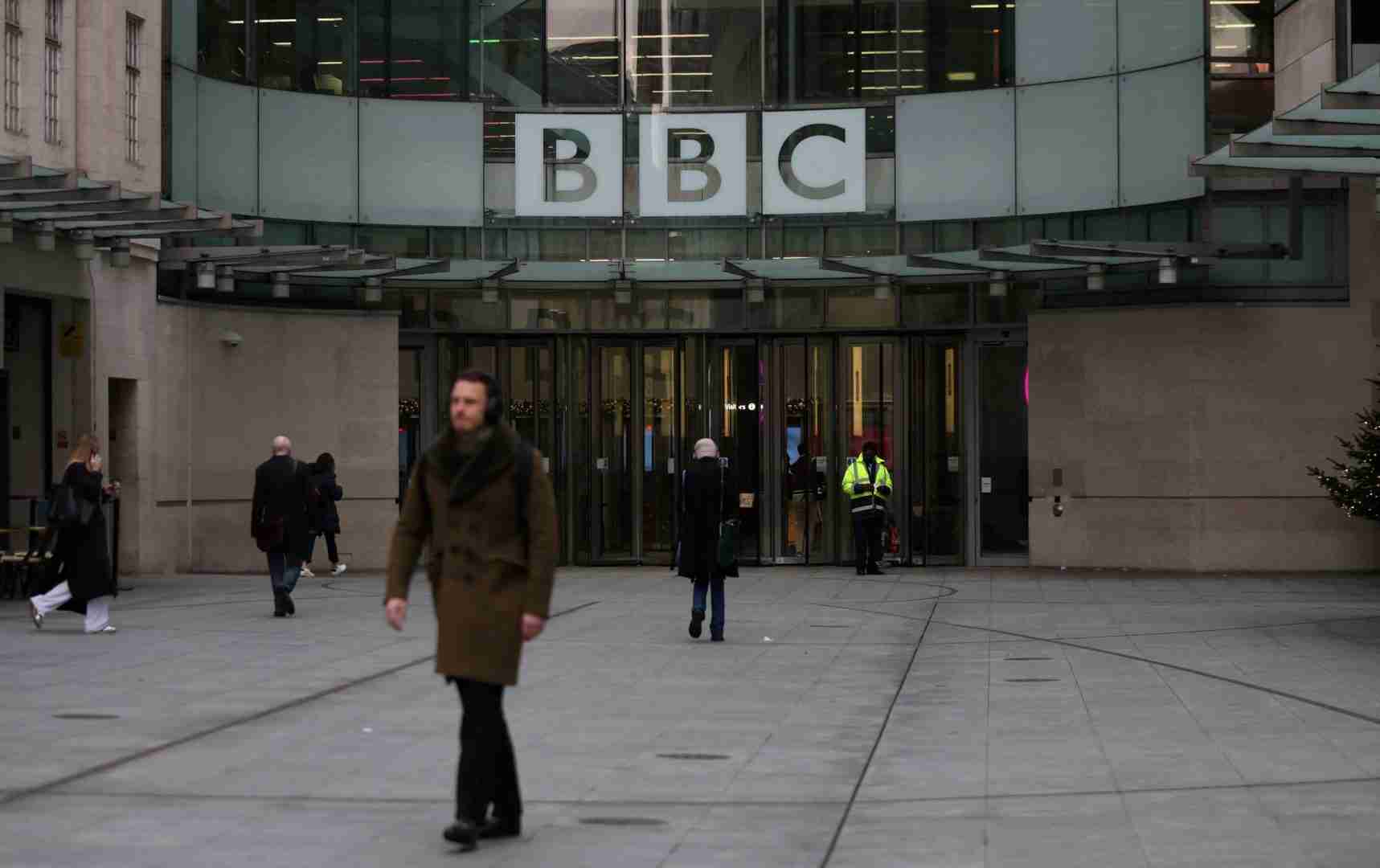
Britain’s British Broadcasting Corporation said on Tuesday it will fight a lawsuit filed by U.S. President Donald Trump over edited clips of a speech
International News via Reuters:
Britain’s British Broadcasting Corporation said on Tuesday it will fight a lawsuit filed by U.S. President Donald Trump over edited clips of a speech that made it appear he directed supporters to storm the U.S. Capitol on January 6, 2021.
“As we have made clear previously, we will be defending this case. We are not going to make further comment on ongoing legal proceedings,” a BBC spokesperson said.
Reporting by Sarah Young, writing by Sam Tabahriti; editing by William James
To provide the best experiences, we use technologies like cookies to store and/or access device information. Consenting to these technologies will allow us to process data such as browsing behavior or unique IDs on this site. Not consenting or withdrawing consent, may adversely affect certain features and functions.
Functional
Always active
The technical storage or access is strictly necessary for the legitimate purpose of enabling the use of a specific service explicitly requested by the subscriber or user, or for the sole purpose of carrying out the transmission of a communication over an electronic communications network.
Preferences
The technical storage or access is necessary for the legitimate purpose of storing preferences that are not requested by the subscriber or user.
Statistics
The technical storage or access that is used exclusively for statistical purposes.The technical storage or access that is used exclusively for anonymous statistical purposes. Without a subpoena, voluntary compliance on the part of your Internet Service Provider, or additional records from a third party, information stored or retrieved for this purpose alone cannot usually be used to identify you.
Marketing
The technical storage or access is required to create user profiles to send advertising, or to track the user on a website or across several websites for similar marketing purposes.