Shamsul Iskandar Mohd Akin, who resigned as Anwar’s senior political secretary this week, was held after being questioned by Malaysian Anti-Corruption Commission officers
International News via Reuters:
Malaysia’s anti-graft agency on Friday detained a former senior aide to Prime Minister Anwar Ibrahim for further investigation amid bribery allegations.
Shamsul Iskandar Mohd Akin, who resigned as Anwar’s senior political secretary this week, was held after being questioned by Malaysian Anti-Corruption Commission officers, Chief Commissioner Azam Baki said.
MACC will apply for a court order on Saturday to extend Shamsul Iskandar’s detention beyond 24 hours, Azam said in a statement.
It will also apply to keep businessman Albert Tei, who says he has accused Shamsul Iskandar of bribery and was also questioned on Friday, in custody.
“I have instructed my officers to complete the investigation within this week so that it can be submitted to the attorney-general’s chambers for a swift decision,” Azam said, without specifying the possible charges or offences.
Shamsul Iskandar, a senior member of Anwar’s People’s Justice Party, could not immediately be reached for comment. When resigning, he cited an attempt to attack him with allegations that could damage the government, and vowed to defend himself “against this attack”.
Tei’s lawyer Zaid Malek said he did not know what offence Tei was suspected of.
Reporting by Danial Azhar and Ashley Tang; Editing by Kevin Liffey
S&P said it saw a risk that the government might “back-track” some of its planned budget tightening measures as the next election, due in mid-2029 at the latest, approaches
International News via Reuters:
Britain’s fiscal position remains vulnerable despite finance minister Rachel Reeves’ tax-raising budget this week, S&P Global Ratings said on Friday.
“We consider the UK’s fiscal position as vulnerable and one of the key constraints on our sovereign rating,” the ratings agency said in a statement.
Britain has an “AA” sovereign credit rating, rated as stable by S&P – a notch below the top “AAA” rating.
S&P said it saw a risk that the government might “back-track” some of its planned budget tightening measures as the next election, due in mid-2029 at the latest, approaches.
While it said Reeves’ budget contained limited measures to help economic growth, the country’s budget deficit should continue to narrow.
S&P said Britain’s high income levels, its large diverse economy and independence of institutions would continue to support its credit rating.
Hat Yai, a city with a population of size similar to Britain’s Oxford, received 335 mm (13 inches) of rain that day, for its highest single-day tally in 300 years, resulting in catastrophic floods
International News via Reuters:
When Jantarakarn Kaewjan went to bed in Thailand’s southern city of Hat Yai last Friday, three days of heavy rains had only caused some waterlogging in the street outside her apartment building.
But a little past midnight, the rising waters reached her building, forcing her to move her motorcycle from the parking lot to a higher floor.
“By 9 a.m., the water was chest deep,” said the 40-year-old gas station worker. “It was all caused by rain.”
Hat Yai, a city with a population of size similar to Britain’s Oxford, received 335 mm (13 inches) of rain that day, for its highest single-day tally in 300 years, resulting in catastrophic floods.
At least 145 people have died in floods that have swept nine southern provinces, 110 of those in Songkhla, the province whose capital is Hat Yai, authorities said on Friday.
Jantarakarn and two other residents told Reuters they had not received clear warnings from local authorities as the incessant rains swelled water levels, echoing wider complaints of government ineptitude in tackling the crisis.
Prime Minister Anutin Charnvirakul’s government has removed Hat Yai’s district chief and transferred its police chief since the disaster.
Narongporn Na Phatthalung, mayor of Hat Yai, which has a population of 243,778, said he initially misread the flood situation.
“I sincerely apologise to the people of Hat Yai,” he told the Channel 3 television station. “I admit that I made mistakes in managing this situation.”
PLAINS COULD NOT ABSORB INFLOW
Hat Yai and nearby areas received 630 mm (25 inches) of rain over three days last week, with water rolling down surrounding hills to flood densely-populated low-lying plains unable to absorb the inflow.
“This relentless influx of water overwhelmed the city’s waterways and drainage systems,” Thailand’s Geo-Informatics and Space Technology Development Agency (GISTDA) said in a note, adding that the floods swelled quickly.
Now, receding waters have made a muddy mess of the city of low-rise buildings, lively street restaurants and shopping areas favoured by tourists from neighbouring Malaysia.
Lines of cars, parked in a bid to escape floodwaters, stood stalled on a wide street on Friday.
Bright blue drums spilled out of a warehouse in a commercial area, blocking a lane. Elsewhere, people cleared mud and debris from homes that had been inundated.
More than 16,000 people have been moved to 16 evacuation centres in the district of Hat Yai, authorities said, as the government approved funds of 4.75 billion baht ($148 million) to assist flood victims across the province.
SURVIVING ON RAINWATER
In previous years, announcements by local authorities warned people to evacuate ahead of possible floods, said 60-year-old Daeng, who gave only one name.
“But this time, nothing,” she said. “We didn’t know anything. We had to take care of ourselves.”
Floods ravaged her home, bringing down the second floor, swamping rooms and sweeping away the family’s television and even the water tank.
“We’ve lost everything,” she said.
The floods have damaged more than 33,000 homes in Hat Yai and its surroundings, along with five hospitals, 58 schools and over 700 km (435 miles) of roads, an initial GISTDA assessment showed.
Daeng and her family, though stranded in their home, had enough food to manage, but quickly ran out of water, said her relative Anusorn Niyomtham.
“By the third or fourth day, it wasn’t enough,” said Anusorn, 40. “We had to collect rainwater.” ($1=32.1500 baht)
Additional reporting by Orathai Sriring and Panarat Thepgumpanat; Writing by Devjyot Ghoshal; Editing by Clarence Fernandez
Reeves fought back on Thursday against criticism of the government’s spending plans
International News via Reuters:
Sterling was heading for its best weekly performance in over three months on Friday, in a sign of relief among investors after British finance minister Rachel Reeves revealed her long-awaited budget earlier this week.
Reeves fought back on Thursday against criticism of the government’s spending plans, which will fund extra welfare spending by raising the country’s tax burden to a post-World War Two high. The government said it planned to raise taxes by 26 billion pounds ($34 billion).
Britain’s currency was last down 0.2% at $1.3202. But it was up around 0.85% for the week so far, on track for its biggest weekly gain since early August.
“Sterling’s post-budget rise has the hallmarks of a relief rally rather than the start of a sustained trend,” George Vessey, lead FX and macro strategist at Convera, said in a note to clients.
“Sterling/dollar pushed above $1.32 as investors broadly welcomed the budget’s signal of a more disciplined borrowing path, but the muted overall market reaction suggested much of the fiscal package had already been discounted and sterling’s gains likely also reflected the unwinding of pre-event hedges.”
However, Vessey flagged that the pound’s yield support is set to diminish, capping its room to rally further in the short term as further Bank of England rate cuts loom.
The BoE kept interest rates unchanged in November in a tight 5-4 vote, but markets expect the central bank will resume its rate-cutting cycle when it convenes next month.
The pound has gained 5.56% since the start of the year against a broadly weak dollar.
The euro meanwhile was steady at around 87.58 pence, down from recent peaks.
Reporting by Ozan Ergenay in London; editing by Dhara Ranasinghe
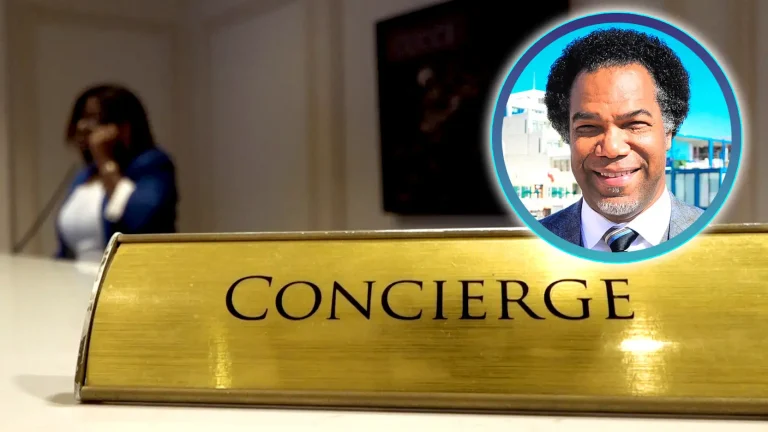
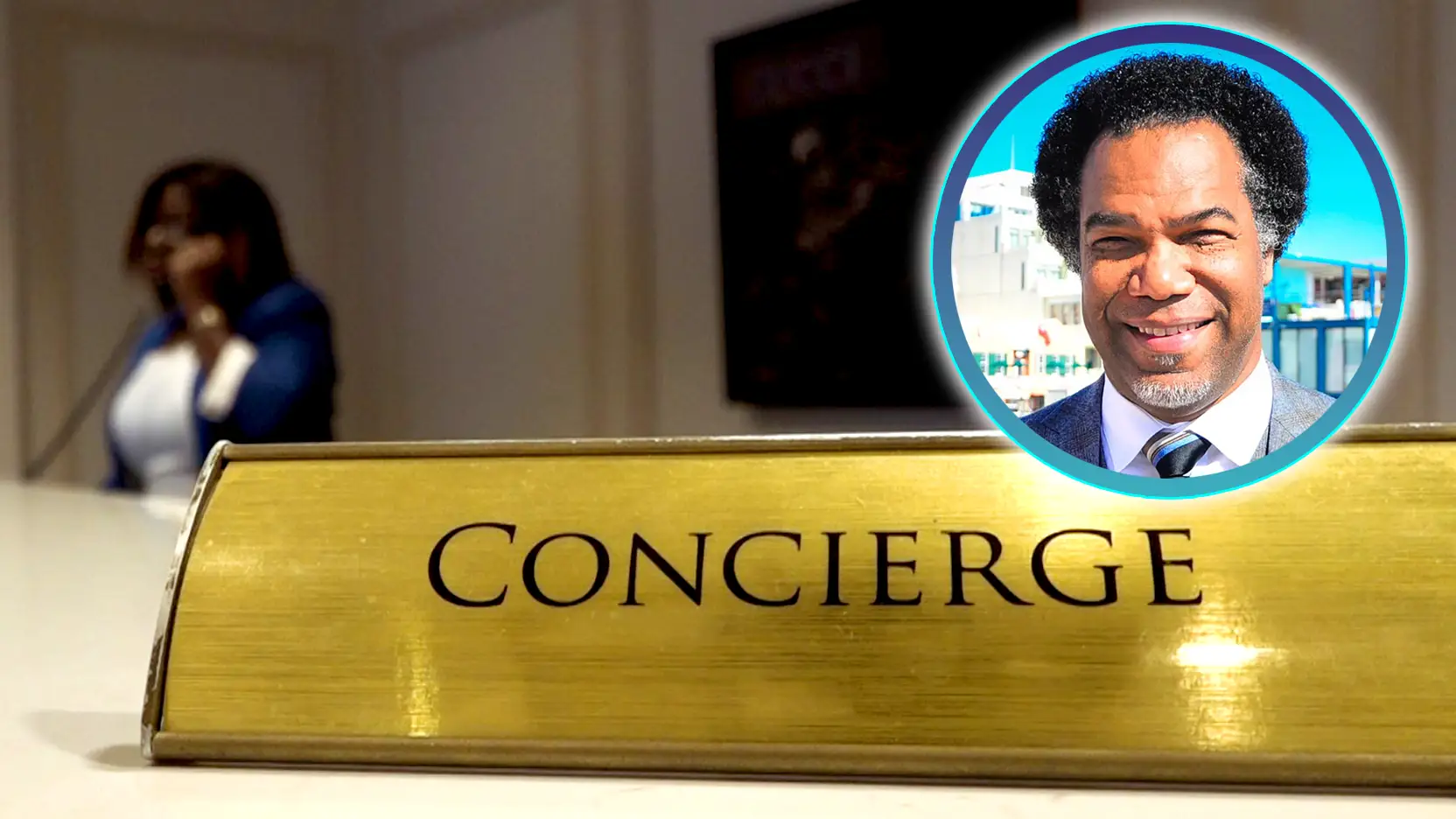
Chamber President Marico Thomas follows up on his Fairmont Southampton comments, and asks if we are truly responding to current employment trends
Marico Thomas questions if we are preparing for the Bermuda we used to be or the Bermuda we have become. *File photos
Statement by Mr. Marico Thomas, President of The Bermuda Chamber of Commerce
My statement about hospitality earlier this week caused a range of public reactions and also revealed something deeper… that there is confusion about what is actually happening in Bermuda’s labour market, and many reactions are based on older assumptions about how Bermuda used to work.
Comments have included: • “Bermudians are not going to be able to get a job in Bermuda.” • “Hundreds apply for government jobs, so how can we have a shortage?” • “There should be zero unemployment.” • “Why can’t Bermudians find jobs?” • “People left Bermuda for better lives elsewhere.” • “Bermuda yesterday is not Bermuda today, and tomorrow will be different still.”
These comments point to a larger truth: we cannot address today’s challenges if we are still thinking in yesterday’s terms. We may need a mindset reset because the world we are living in today doesn’t operate the way it used to.
There was a time in Bermuda when frontline hospitality roles were the foundation of prosperity: • A bartender could buy two homes, put three kids through college and retire with a taxi. • A housekeeper could afford a stable life raising a family with grandkids. • We all could reliably expect to be served by Bermudian wait staff who could tell us what was going on with people, places, events…, including all the community gossip!
But Bermuda has changed. The world has changed. And our expectations must change too.
• Hospitality is no longer the economic engine it once was. • International business now represents roughly half the economy. • AI is expanding globally and will change some roles, but will not replace the people shortage we are facing. • Young Bermudians are choosing different pathways, different hours, different environments. Many are training for different industries with different aspirations.
And perhaps the clearest indicator of long-term change is that the percentage of Bermudians in hospitality (hotels + restaurants) has declined from 70% in 2000 to just 56% in 2024. This is not a sudden shift. It has been unfolding for almost 25 years.
Government’s 2025 Employment Briefs provide additional context: • Jobs grew by 1.8% • 94% of that growth went to non-Bermudians • Bermudians gained only 18 total jobs • Wage gaps continue • Certain sectors depend heavily on guest workers
Some ask: “If hundreds apply for a government job, how can we have a worker shortage?” The answer: the jobs people apply for in government are not the same jobs that go unfilled in hospitality, healthcare, construction, or essential services. These are different job markets with different requirements, expectations, and realities. And it should be noted that “hundreds of applicants” can easily point to people wishing to change their job — not hundreds of unemployed persons applying. This distinction matters.
Let’s discuss Cause vs Effect. Our situation is not caused by one issue. It is the result of several intersecting forces: • Many Bermudians have moved off island • Some roles no longer provide the financial security they once did • The cost of living has changed career calculations • Long hours, night shifts, weekend work, and customer-facing pressure deter many • Some behaviour and reliability concerns create hiring challenges • Young Bermudians have different expectations about work and lifestyle • Global wages make certain professions more attractive abroad
There has also been years of societal shaping, grooming, and influencing of how we think, what we expect, and which types of work are seen as acceptable or “beneath us.”
Much of the world outside Bermuda has moved on socially, technologically, and economically. That has already impacted our lifestyles. It should also impact our expectations, and fundamentally how we think about our prosperity, equality, and humanity.
So What Now? The question we must all ask ourselves is this: “Are we still preparing for the Bermuda we used to be or, are we preparing for the Bermuda we have become?” Because success today will come from a different mix of industries, skills, and career paths than in the past. • Schools and training programmes must prepare people for realistic opportunities • Businesses must invest in standards, management, and professional development • Individuals must pursue long-term growth, not just short-term survival • Immigration and workforce systems must reflect new sectors and new needs
This is a shared responsibility. Employers must improve training, structure, and support. But workers, families, and communities also shape the behaviours and reliability that show up in the workplace.
Looking forward, for Bermuda to succeed, we need: • Clear and updated expectations • Systems aligned to today’s economy, not yesterday’s • Training and education that match actual opportunity • Honest conversation about behaviours, responsibilities, and standards • A shared understanding of what success looks like
This is not about blaming or finger pointing. It is about facing what is real and getting on the same page together.
Bermuda of yesterday is not Bermuda of today. And Bermuda of tomorrow will depend on the choices we all make right now. Choose to be open. Choose to think about it. Choose to be part of the solution.
Finally, the Chamber appreciates the Government’s acknowledgement of the issue and their ongoing work through the National Workforce Advisory Board and the Hospitality Sub-Committee. Their response shows that we are all working to address the same challenge. My goal here is to expand on what Government is doing, broadening the conversation so the public fully understands the scale, urgency, and interconnected nature of what Bermuda is facing. The work already underway is important and so is the wider national reality we must all prepare for.
Government unveils eco-friendly herbicide equipment
As government rolls out its islandwide road repaving programme, attention is also turning to another challenge on Bermuda’s roadways: uncontrolled vegetation.
From overgrown hedges narrowing lanes to invasive plants encroaching on sidewalks and drainage systems, roadside overgrowth has become a growing concern for motorists, pedestrians and maintenance crews alike.
In an effort to tackle the issue more efficiently – and more sustainably – the Government is investing in a new herbicide machine that promises to be both environmentally friendly and more effective than traditional methods.
Qian Dickinson sat down with Minister of Public Works and Environment, Jache Adams, to discuss how the new technology fits into the wider infrastructure plan.
Minister of Housing and Municipalites Zane DeSilva said its part of the government’s effort to tackle the island’s affordable housing shortfall
Housing Minister Zane DeSilva today announced phase 2 of the residential building program at Battery Road in St. David’s is off to a start with 12 new units expected to come online in summer 2026.
By the early hours of Friday, firefighters had mostly contained the blaze raging for more than 24 hours, ripping through the Wang Fuk Court housing complex in the northern district of Tai Po
International News via Reuters:
Hong Kong police arrested the bosses of a construction company on suspicion of manslaughter on Thursday over the city’s worst fire in nearly 80 years, which killed at least 83 people with scores more listed as missing.
By the early hours of Friday, firefighters had mostly contained the blaze raging for more than 24 hours, ripping through the Wang Fuk Court housing complex in the northern district of Tai Po. The estate had been undergoing renovations and was wrapped in bamboo scaffolding and green mesh.
Most of the victims were found in two high-rise blocks in the eight-tower complex, Deputy Director of Fire Services Derek Armstrong Chan said.
He said firefighters found residents who were alive in several of the buildings, but gave no further details. The South China Morning Post reported one survivor was found on the stairwell of one of the buildings.
Rescuers battled intense heat, thick smoke and collapsing scaffolding and debris as they fought to reach residents feared trapped on the upper floors of the complex.
“We expect the fire to be fully put out tonight,” Chan said. “We’ll continue to douse water to lower the temperatures,” he added.
A distraught woman carrying her daughter’s graduation photograph searched for her child outside a shelter, one of eight that authorities said are housing 900 residents.
“She and her father are still not out yet,” said the 52-year-old, who gave only her surname, Ng, as she sobbed. “They didn’t have water to save our building.”
Police arrested two directors and an engineering consultant of Prestige Construction, a firm contracted to perform maintenance on the buildings. Police said those arrested were under suspicion of manslaughter for using unsafe materials.
“We have reason to believe that the company’s responsible parties were grossly negligent, which led to this accident and caused the fire to spread uncontrollably, resulting in major casualties,” Police Superintendent Eileen Chung said. Prestige did not answer repeated calls for comment.
Police seized bidding documents, a list of employees, 14 computers and three mobile phones in a raid of the company’s office, the government added.
WORST FIRE SINCE 1948
The confirmed death toll rose to 83 as of midnight in Hong Kong on Thursday, Hong Kong’s emergency responders said. That made it Hong Kong’s deadliest fire since 1948, when 176 people were killed in a warehouse blaze.
The government said in the very early hours of Thursday that 279 people were listed as missing, but that figure has not been updated for 24 hours.
In a telegram to Hong Kong’s bishop, Cardinal Stephen Chow Sau-yan, Pope Leo sent “spiritual solidarity to all those suffering from the effects of this calamity, especially the injured and the families who grieve”.
Hong Kong’s leader, John Lee, said the government would set up a HK$300 million ($39 million) fund to help residents while companies including automakers Xiaomi, Xpeng and Geely as well as the charity foundation of Alibaba’s founder Jack Ma and Tencent announced donations.
On the second night after the blaze, dozens of evacuees set up mattresses in a nearby mall, with many saying official evacuation centres should be saved for those with greater need.
People – from elderly residents to schoolchildren – wrapped themselves in duvets and huddled in tents outside a McDonald’s restaurant and convenience shops as a steady stream of volunteers handed out snacks and toiletries.
The eight blocks of the tightly-packed complex of 2,000 apartments were home to more than 4,600 people in the financial hub, which is struggling to overcome chronic shortages of affordable housing.
Police also said they found foam material sealing windows on one unaffected building, installed in the year-long maintenance work.
The city’s development bureau has discussed gradually replacing bamboo scaffolding with metal scaffolding as a safety measure.
China’s President Xi Jinping urged an “all-out effort” to extinguish the fire and minimise casualties and losses, state broadcaster CCTV said.
The leadership of both the Hong Kong government and China’s Communist Party moved quickly to show they attached utmost importance to a tragedy seen as a potential test of Beijing’s grip on the semi-autonomous region.
Hong Kong’s sky-high property prices have long been a trigger for discontent and the tragedy could stoke resentment towards authorities despite efforts to tighten political and national security control.
“27TH FLOOR, ROOM 1: HE IS DEAD”
An online app showed reports of missing persons submitted through a linked Google document that detailed residents of individual towers and rooms.
It includes descriptions such as “Mother-in-law in her 70s, missing” or “one boy and one girl” or “Rooftop: 33-year-old male.”
One simply read: “27th floor, room 1: He is dead.”
Reuters could not independently verify the information on the app.
The fire has prompted comparisons to London’s Grenfell Tower inferno, which killed 72 people in 2017. That fire was blamed on firms fitting the exterior with flammable cladding, as well as failings by the government and the construction industry.
Hong Kong, one of the world’s most densely populated cities, is scattered with high-rise housing complexes. Tai Po, near the border with mainland China, is an established suburban district and home to about 300,000.
Occupied since 1983, the complex is under a government-subsidised home ownership scheme, according to property agency websites, a lifeline for the city’s middle-income families.
($1=HK$7.7779)
Reporting by Joyce Zhou, Tyrone Siu, Jessie Pang, Anne Marie Roantree, Clare Jim, Greg Torode, Farah Master and James Pomfret in Hong Kong; additional reporting by Karen Lema in Manila and Stanley Widianto in Jakarta; Writing by Lincoln Feast, Michael Perry, Saad Sayeed, Keith Weir, Charlie Devereux and Michele Kambas; Editing by Clarence Fernandez, Sharon Singleton, Peter Graff and Ed Osmond
Zoeller was a gallery favourite during his playing days due to his humour and relaxed approach to the game
International News via Reuters:
Fuzzy Zoeller, a two-time major champion who faced a backlash for a racist joke he made about Tiger Woods at the 1997 Masters, has died at the age of 74, the PGA Tour said on Thursday.
Zoeller, the last golfer to win the Masters at his first attempt after prevailing in a three-man playoff in 1979, was a gallery favourite during his playing days due to his humour and relaxed approach to the game. He went on to win a second major at the 1984 U.S. Open where he beat Greg Norman in a playoff at Winged Foot.
He finished his career with 10 PGA Tour wins and two titles on the PGA Tour Champions.
“Fuzzy was a true original whose talent and charisma left an indelible mark on the game of golf,” PGA Tour Commissioner Jay Monahan said in a statement. “Fuzzy combined competitive excellence with a sense of humor that endeared him to fans and fellow players alike. We celebrate his remarkable legacy and extend our deepest condolences to his family.”
It was at the 1997 Masters where Zoeller made his infamous remarks about Woods.
While Woods was on the course in the final round en route to a 12-stroke victory at Augusta National Golf Club for his first major title, Zoeller made racist remarks about what Woods might serve at the following year’s Champions Dinner.
Zoeller told reporters: “You know what you guys do when he gets in here? You pat him on the back and say congratulations and enjoy it and tell him not to serve fried chicken next year. Got it.”
The Champions Dinner, where the defending Masters champion chooses the menu, is traditionally held on Tuesday at Augusta National, two days before the opening round.
Zoeller was walking away from the assembled media scrum when he suddenly turned back and added: “Or collard greens, or whatever the hell they serve.”
The backlash at the remarks cost Zoeller financially in the form of several cancelled sponsorship deals, and personally in the form of damage to his reputation.
More than a week later, Woods released a conciliatory statement, in which he said he had “concluded that no personal animosity toward me was intended”, but that hardly meant the comment was forgotten. The damage had been done and Zoeller would be haunted by it for years.
It was at Winged Foot in 1984 where Zoeller, who was locked in a duel with Norman and thought the Australian had just birdied the final hole to pull ahead, famously grabbed a white towel from his golf bag and began waving it in mock surrender, a scene that became the quintessential moment of that year’s U.S. Open.
But Zoeller later realised Norman had made par and went on to card one of his own before going on to win by eight strokes in the 18-hole playoff.
“Very sad to hear that the highly respected and beloved Professional Golfer, Fuzzy Zoeller, has passed away,” U.S. President Donald Trump wrote in a Truth Social post.
“In 1979, Fuzzy won the Masters Tournament (Only 1 of 3 to win in his first appearance!) and, in 1984, he won the U.S. Open at Winged Foot Golf Club, and famously waved the white towel on the 18th Hole as he went on to beat Greg Norman in an 18 Hole playoff. A truly remarkable person and player, he will be missed!”
Reporting by Frank Pingue in TorontoEditing by Toby Davis
MPS confirmed it had been informed of allegations against its 70-year-old chief executive and of a search warrant and was cooperating with authorities
International News via Reuters:
Italy’s Monte dei Paschi di Siena (MPS) and its top two shareholders are facing an investigation in Milan in relation to the Tuscan bank’s takeover of Mediobanca, two judicial sources told Reuters on Thursday.
MPS, which has been led by Luigi Lovaglio since early 2022, confirmed it had been informed of allegations against its 70-year-old chief executive and of a search warrant and was cooperating with authorities.
“The bank is confident it can provide all the necessary information to clarify the correctness of its actions and expresses its full trust in the competent authorities, with whom it confirms its full cooperation,” MPS said in a statement.
The 16 billion euro ($19 billion) bid, which in September handed MPS control of Milanese investment bank Mediobanca, was championed by the government and is the biggest deal so far in a merger wave reshaping Italy’s financial landscape.
Milan prosecutors allege Italy’s market watchdog Consob, the European Central Bank and Italian insurance supervisor IVASS were not informed of concerted action involving MPS and its leading investors on the Mediobanca bid, the sources said.
They are investigating possible market rigging and obstruction of regulators, the two sources said, confirming a report in Italian newspaper Corriere della Sera.
Shares in MPS, which was bailed out by the state in 2017, closed down 4.6%.
The ECB declined to comment. Consob Chair Paolo Savona said the regulator had to look into the matter before commenting.
The biggest shareholders in MPS are Francesco Gaetano Caltagirone, a construction magnate, and Delfin, the holding company of Italy’s Del Vecchio family, which is led by EssilorLuxottica CEO Francesco Milleri, the right-hand man of late billionaire Leonardo Del Vecchio.
Caltagirone and Delfin were also the top investors in Mediobanca and played a key role in supporting the MPS bid.
They became shareholders in MPS in November 2024 when Italy’s Treasury sold 15% of the bank to a small group of domestic investors. They later increased their holdings, easing the takeover project.
UNDER INVESTIGATION SINCE JUNE
Lovaglio, Caltagirone and Milleri have all been under investigation since June, the sources told Reuters, but their names have only emerged after prosecutors began searches in connection with their investigation.
Delfin and Caltagirone’s group both said in separate statements they had each acted in compliance with relevant laws and market regulations. Delfin expressed confidence the investigation would prove the allegations were groundless.
Caltagirone said it would continue to collaborate with magistrates and that it had behaved transparently with all supervisory authorities.
The offices of MPS have been searched this week, said the sources, who asked not to be named.
The Milan prosecutors in charge of the case are Roberto Pellicano, Luca Gaglio and Giovanni Polizzi.
MPS announced its bid for Mediobanca in January after Italy’s Treasury completed its re-privatisation of the bailed-out bank, cutting its initial 68% stake to a near 12% holding which has now more than halved with the Mediobanca deal.
($1 = 0.8631 euros)
Reporting by Alvise Armellini, Gianluca Semeraro and Angelo Amante, editing by Alvise Armellini, Valentina Za, Gavin Jones, Deepa Babington, Rod Nickel
The change removed the last major hurdle for the Employment Rights Bill to pass into law
International News via Reuters:
Britain’s government watered down plans to strengthen workers’ protection against unfair dismissal on Thursday, saying employees would get the new rights six months after starting a job, not from their first day as originally planned.
The change – which followed talks with businesses that had warned that initial proposals would make hiring more difficult – removed the last major hurdle for the Employment Rights Bill to pass into law, the government said in an update.
The revised bill got a mixed reaction from unions. They welcomed the reduction from the current waiting time for dismissal rights of two years, and other new protections including day-one rights to sick pay and paternity leave from April 2026.
But major union Unite called the bill a “shell of its former self”.
“With fire and rehire and zero hours contracts not being banned, the Bill is already unrecognisable,” it said.
BILL A KEY PLEDGE
Business and Trade Secretary Peter Kyle told Sky News that the legislation was designed to “lead to more harmony and engagement in the workplace, increased productivity, never pitting one side against another.”
The bill, a key Labour manifesto pledge, also seeks to ban what the government calls exploitative zero-hours contracts and end fire-and-rehire practices.
Britain ranks among the top OECD countries for minimum wage relative to median earnings, but has offered fewer statutory benefits such as paid sick leave and parental leave than most advanced economies.
Britain’s economy has been largely stuck in a rut of slow growth since the 2007-08 financial crisis, something finance minister Rachel Reeves and Prime Minister Keir Starmer promised to end when the Labour Party returned to power after 14 years in 2024.
Kemi Badenoch, leader of the opposition Conservative Party, called the change a “humiliating u-turn” and said the bill still contained measures that would “damage businesses and be terrible for economic growth.”
The move comes a day after Reeves announced 26 billion pounds ($34.41 billion) of tax rises in her annual budget.
Six major business groups, including the Confederation of British Industry (CBI), the British Chambers of Commerce and Federation of Small Businesses, welcomed the amendment on Thursday, saying it “keeps a qualifying period that is simple, meaningful and understood within existing legislation”.
They urged continued dialogue on issues such as guaranteed hours contracts and seasonal work.
Helen Dickinson, chief executive of the British Retail Consortium, said the change was “an important, practical step.”
The government has framed the reforms as key to improving working conditions and avoiding the widespread industrial action that disrupted services over the past two years.
It said most changes will take effect no earlier than 2026 and pledged further consultation on secondary legislation.
It also committed to ensuring that the unfair dismissal qualifying period can only be varied by primary legislation and that the compensation cap will be lifted.
Mike Clancy, General Secretary of the Prospect union, said the bill “strengthens protection by lifting the cap on compensation payments” and makes the system simpler.
“This is a good deal for working people, negotiated by trade unions focused on securing deliverable upgrades to workers’ rights,” he said.
($1 = 0.7556 pounds)
Reporting by Sam Tabahriti and Alistair Smout; Editing by Kirsten Donovan and Andrew Heavens
To provide the best experiences, we use technologies like cookies to store and/or access device information. Consenting to these technologies will allow us to process data such as browsing behavior or unique IDs on this site. Not consenting or withdrawing consent, may adversely affect certain features and functions.
Functional
Always active
The technical storage or access is strictly necessary for the legitimate purpose of enabling the use of a specific service explicitly requested by the subscriber or user, or for the sole purpose of carrying out the transmission of a communication over an electronic communications network.
Preferences
The technical storage or access is necessary for the legitimate purpose of storing preferences that are not requested by the subscriber or user.
Statistics
The technical storage or access that is used exclusively for statistical purposes.The technical storage or access that is used exclusively for anonymous statistical purposes. Without a subpoena, voluntary compliance on the part of your Internet Service Provider, or additional records from a third party, information stored or retrieved for this purpose alone cannot usually be used to identify you.
Marketing
The technical storage or access is required to create user profiles to send advertising, or to track the user on a website or across several websites for similar marketing purposes.