Wednesday, November 11, 2026
Home Blog Page 656

Bitcoin slides below $90,000 as traders grow cautious

The risk-sensitive cryptocurrency has lost all this year’s gains and is now nearly 30% below a peak above $126,000 in October

International News via Reuters:

Bitcoin fell below $90,000 for the first time in seven months on Tuesday in the latest sign that investor appetite for risk is drying up across financial markets.

The risk-sensitive cryptocurrency has lost all this year’s gains and is now nearly 30% below a peak above $126,000 in October. It was down 0.5% at $91,338.47 during European trading hours, after slipping as low as $89,286.75.

About $1.2 trillion has been wiped off the total market value of all cryptocurrencies in the past six weeks, according to market tracker CoinGecko.

Market participants said that a combination of doubts around future U.S. interest rate cuts and the risk-averse mood in broader markets, which have wobbled after a long rally, was dragging down crypto.

‘CONFIDENCE CAN ERODE WITH REMARKABLE SPEED’

“The cascading selloff is amplified by listed companies and institutions exiting their positions after piling in during the rally, compounding contagion risks across the market,” said Joshua Chu, co-chair of the Hong Kong Web3 Association.

“When support thins and macro uncertainty rises, confidence can erode with remarkable speed.”

Speculators who had put money into crypto in the hopes of supportive U.S. regulation have started to pull back, causing steady outflows from ETFs and similar instruments in recent weeks, said Joseph Edwards at Enigma Securities.

“The sell pressure here isn’t extraordinary, but it’s coming at a relative weak point on the buy side … a lot of retail buyers were stung during the flash crash last month,” he said, referring to an October crash in which there were $19 billion in liquidations across leveraged positions.

Crypto stockpilers such as Strategy, miners such Riot Platforms and Mara Holdings, and exchange Coinbase have all slid with the souring mood.

There has been a boom in public crypto treasury companies this year, with small companies in unrelated sectors becoming crypto-proxies by announcing plans to buy and hold cryptocurrencies on their balance sheets.

But Standard Chartered has estimated that a drop below $90,000 for bitcoin could leave half of these companies’ bitcoin holdings “underwater” – a term which typically refers to holding assets worth less than what was paid for them.

Listed companies collectively hold 4% of all the bitcoin in circulation, and 3.1% of the ether, Standard Chartered said.

European equities markets opened lower on Monday, with traders worried about an overvalued tech sector.

Cryptocurrency ether has also been under pressure for months and has lost nearly 40% of its value from an August peak above $4,955.

“All in all sentiment is pretty low in crypto and has been since the leverage wipeout of October,” said Matthew Dibb, chief investment officer at Astronaut Capital. 

Writing and additional reporting by Tom Westbrook; Additional reporting by Elizabeth Howcroft; Editing by Amanda Cooper, David Goodman and Jan Harvey


COP30 presidency draws up early draft of deal text

The document, seen by Reuters, contained a line urging all parties to phase out inefficient fossil fuel subsidies

International News via Reuters:

Brazil’s COP30 presidency has drawn up a draft of a possible deal.

The document, seen by Reuters, contained a line urging all parties to phase out inefficient fossil fuel subsidies.

Another section set out a range of wording options, one of which called for a process to help countries overcome their dependency on fossil fuels.

Reporting by Lisandra Paraguassu, writing by William James

NGO accuses Nestle of higher added sugar in baby products sold in Africa

Public Eye found that the average serving analysed contained nearly six grams of added sugar, twice the amount detected in key Cerelac market India

International News via Reuters:

Swiss NGO Public Eye on Tuesday accused Nestle of double standards by alleging that the company sells infant cereal in Africa with higher sugar content than in more developed markets, claims that Nestle labelled as misleading and unfounded. 

Working with civil society organisations in Africa, Public Eye collected nearly 100 products from Nestle’s instant infant cereal Cerelac range and said it found after laboratory analysis that, unlike in European markets, more than 90% of the products contained high quantities of added sugar. 

Public Eye found that the average serving analysed contained nearly six grams of added sugar, twice the amount detected in key Cerelac market India. 

Reuters could not immediately verify the findings. Nestle said the levels of all types of added sugars in its infant cereals were well below those set by the international food standards body, Codex Alimentarius.

“It is misleading and scientifically inaccurate to refer to the sugars coming from the cereals and naturally present in fruits as refined sugars added to the products,” a Nestle spokesperson said.

“If we exclude sugars coming from ingredients like milk, cereals and fruit, our Cerelac infant cereals do not contain the levels of added refined sugars mentioned in the report.”

In April 2024, Public Eye reported that Nestle added sugar to its baby foods sold in low-income countries including India, but not in European markets, which led to an enquiry from the Indian food regulator. Tuesday’s report repeated that claim, focusing on Africa. 

In an open letter dated November 17, the International Babyfood Action Network (IBFAN) and 19 civil society organisations in 13 African countries as dispersed as Morocco, Nigeria and South Africa urged Nestle CEO Philipp Navratil to end what it called a double standard over added sugar in baby foods sold in Africa.

“We do not have double standards, our approach to nutrition is consistent across all countries,” Nestle said in a statement. “We treat all children equally, regardless of where they are.”

Nestle said it was accelerating the global rollout of no-added-sugars variants that are already present in 97% of the company’s markets.

“We aim to reach 100% by end of 2025,” Nestle said.

Reporting by Alexander Marrow; Editing by Aidan Lewis

Dollar hits fresh 9-1/2-month high versus yen, Japan fiscal policy, US data in focus

European shares fell on Tuesday alongside U.S. stock index futures amid concerns over stretched equity valuations, yet the greenback’s reaction in the forex market has so far remained muted

International News via Reuters:

The dollar touched a fresh 9-1/2-month high against the yen and edged up versus the euro on Tuesday, as investors worried about Japan’s fiscal stance and awaited U.S. data for signals on the Federal Reserve’s next move.

European shares fell on Tuesday alongside U.S. stock index futures amid concerns over stretched equity valuations, yet the greenback’s reaction in the forex market has so far remained muted.

The dollar index, a measure of the U.S. currency against major rivals, was last up 0.05% at 99.59, after snapping a four-day losing streak on Monday. 

The safe-haven Swiss franc was roughly unchanged against the dollar and the euro. 

The yen was last at 155.42, up 0.10%. Earlier in the session it hit 155.445, its lowest level since February 4.

While Bank of Japan Governor Kazuo Ueda has signalled the chance of raising interest rates as soon as next month, Prime Minister Sanae Takaichi has voiced displeasure over the idea and urged the BoJ to cooperate with government efforts to reflate the economy.

Barclays advised staying long on the U.S. dollar against the yen, saying Takaichi’s Abenomics-style policies are likely to keep pressure on the Japanese currency.

It lifted its target to 158.8, arguing that additional fiscal spending will swell Japan’s debt and raise the premium investors demand to hold yen.

Analysts also flagged a growing risk of foreign-exchange intervention, which could slow the dollar’s climb, though they noted that recent verbal warnings from authorities do not point to imminent action.

Japanese Finance Minister Satsuki Katayama on Tuesday expressed concern over recent foreign exchange movements. 

Japan must compile a stimulus of around 23 trillion yen, Goushi Kataoka, a private-sector member of a key government panel, told Reuters on Monday. That would far exceed the 17-trillion-yen package previously reported by the Nikkei newspaper, stoking fresh market anxiety over the supply of new government debt that bond markets would have to digest.

The yield curve for Japanese government bonds steepened further on concerns about the size of Takaichi’s stimulus package, with 20-year yields reaching a 26-year high.

Japan on Monday moved to ease an escalating dispute with China over Taiwan after Takaichi said a Chinese attack on the island could trigger a military response.

“That is so far enough to cast more doubts about the ability of the Bank of Japan to hike rates in December,” said Francesco Pesole, forex strategist at ING, after acknowledging that risks of escalation do not seem too high.

Investors awaited U.S. economic data after the longest government shutdown on record, with the September jobs report expected on Thursday.

“This data is backward looking but remains very relevant,” said Paul Mackel, global head of forex research at HSBC.

“It captures the period when the FOMC resumed its easing cycle and follows the time when Chair Powell sounded dovish at Jackson Hole about U.S. labour market conditions,” he argued.

Fed Governor Christopher Waller continued to build the case for further rate cuts amid a broad policy dispute at the U.S. central bank, while Fed Vice Chair Philip Jefferson said the U.S. central bank needs to “proceed slowly”. 

Money markets have in recent days priced the chance of a 25-bp rate cut next month at around 50%, according to CME Group FedWatch tool. Chances on Monday were 45% from around 60% last week.

The euro was down 0.05% at $1.1590. Concerns over France’s fiscal trajectory, which had weighed on the euro, eased after Prime Minister Sebastien Lecornu survived two no-confidence votes in parliament last month. The finance ministry said on Monday companies have pledged to invest 9.2 billion euros in France.

The Australian dollar was up 0.10% at $0.65 after minutes from the Reserve Bank of Australia’s November 3-4 policy meeting showed the central bank judged the current cash rate of 3.6% as being slightly restrictive, but said it was possible this was no longer the case, citing a jump in housing credit to investors.

Reporting by Stefano Rebaudo, additional reporting by Gregor Stuart Hunter; Editing by Shri Navaratnam, Alexandra Hudson

UN food agency warns of deepening hunger crisis as funding falls short

In its 2026 Global Outlook, the Rome-based WFP said 318 million people were expected to face crisis levels of hunger or worse next year, more than double the number in 2019

International News via Reuters:

The world is facing a deepening hunger crisis with resources falling far short of needs, the United Nations World Food Programme warned on Tuesday, citing sharp declines in humanitarian funding.

In its 2026 Global Outlook, the Rome-based WFP said 318 million people were expected to face crisis levels of hunger or worse next year, more than double the number in 2019. 

But shrinking humanitarian funding means the WFP only plans to assist about 110 million of the most vulnerable people in 2026, at a cost of $13 billion, the agency said. Current forecasts suggest it may receive only about half that amount.

“The world is grappling with simultaneous famines, in Gaza and parts of Sudan. This is completely unacceptable in the 21st century,” WFP Executive Director Cindy McCain said in a statement.

“Hunger is becoming more entrenched. We know early, effective solutions save lives, but we desperately need more support.”

FOREIGN AID CUTS

The WFP’s biggest donor, the United States, has slashed its foreign aid under President Donald Trump, and other major nations have also made or announced cuts in assistance.

The WFP said last month that it expected to receive 40% less funding year-on-year for 2025, resulting in a projected budget of $6.4 billion, down from $10 billion in 2024.

Conflict, extreme weather and economic instability are expected to drive severe food insecurity, WFP said. In 2025, its famine prevention efforts pulled communities back from the brink of starvation, but the overall crisis shows no sign of easing.

In Afghanistan, where food programmes have been scaled back substantially this year, around nine out of 10 people including women and children arriving on foot at nutrition centres are being turned away, WFP Director Jean-Martin Bauer told a Geneva press briefing when asked about the impact of less funding.

He said that leaving so many without access to support might contribute to conflict or migration.

“There could be impacts at the regional level for countries that have nothing to do with this problem, but who are exposed to the consequences of out-of-control hunger in a country nearby.”

The agency said it would deliver emergency food and nutrition aid, help communities build resilience to food shocks, and provide technical support to strengthen national systems, while leveraging technology to improve efficiency. WFP urged governments and donors to invest in proven solutions to curb hunger and move closer to the goal of zero hunger.

Reporting by Crispian Balmer in Rome and Emma Farge in Geneva;Editing by Alison Williams

UK targets touts with ban on ticket resale for profit

Shares in U.S. company StubHub, the owner of resale site Viagogo, fell 14% on Monday after it was reported the government would go ahead with a ban

International News via Reuters:

Britain will ban the resale of tickets for music concerts, shows and sporting events at inflated prices, tackling the scourge of ticket touts who use technology to snap up tickets for popular events, the government said on Tuesday.

Housing minister Steve Reed said the practice of “ticket touting” – people buying tickets to sell them on at multiples of their face value – was hugely damaging for individuals who had to pay “through the nose” to attend.

Shares in U.S. company StubHub, the owner of resale site Viagogo, fell 14% on Monday after it was reported the government would go ahead with a ban.

BOTS SNAP UP TICKETS

“We are committed to ending the scandal of ticket touts,” Reed told BBC News on Tuesday, adding that its plans would be set out by ministers in the coming days.

Tickets for tours by artists like Taylor Swift, Oasis and Radiohead are offered on resale sites for hugely inflated prices minutes after they sell out. Touts use “bots” to beat online queues for tickets.

Radiohead’s upcoming tour in London is one of the highest priced on resale sites. Standing tickets for its show on Friday, originally priced at 85 pounds ($112), were on Viagogo from 682 pounds on Tuesday.

The group joined Coldplay, Dua Lipa and others in signing an open letter, published by consumer group Which?, calling on the government to fulfill its promise to take on the touts.

Viagogo said processes to verify tickets would be a more effective way to stop illegal bot activity.

“Evidence shows price caps have repeatedly failed fans. In countries like Ireland and Australia, fraud rates are nearly four times higher than in the UK as price caps push consumers towards unregulated sites,” a Viagogo spokesperson said.

“Opening the market to greater competition also helps drive prices down, benefiting fans.”

The government had been considering setting a cap of up to 30% above face value for the resale of tickets.

However, the Guardian said the resale of tickets above face value would be banned. The newspaper also said there would be a cap on the fees that resale platforms could charge.

Separately on Tuesday, Britain’s Competition and Markets Authority said it had opened investigations into the pricing practices of a number of online platforms, including StubHub, which is separate from the U.S.-listed company, and Viagogo.

($1 = 0.7609 pounds)

Reporting by Paul Sandle; editing by Sarah Young and Jan Harvey

Ministry urges collective action to protect children

On World Day for Prevention and Healing, officials stress shared responsibility across families, communities and institutions

Government press release:

The Ministry of Youth, Social Development and Seniors joins the international community on November 18, in solemn recognition of the World Day for the Prevention of and Healing from Child Sexual Exploitation, Abuse and Violence. This observance serves as a powerful reminder of our collective responsibility to protect every child’s right to safety, dignity and a childhood free from harm.

Safeguarding children is a responsibility shared across families, communities, institutions, and the entire island of Bermuda. On this occasion, the Ministry wishes to highlight the urgent need to protect childhood, online and off. As children grow up in a world where digital life increasingly intertwines with everyday experience, their safety must be ensured across all environments, including their homes, schools, communities, and online platforms.

The Ministry reiterates that child sexual exploitation and abuse in any form is unacceptable. We continue to strengthen legislative frameworks, expand child-centred services, and enhance inter-agency coordination to prevent harm, support survivors, and bring perpetrators to justice. Key initiatives include improved reporting mechanisms, expanded access to therapeutic and psychosocial support, and strengthened digital safety education for families and young people.

We acknowledge the bravery of survivors who have spoken out, and we honour those who continue to heal. Their experiences guide our work and reinforce the importance of building systems that listen, protect and respond with compassion and accountability.

On this day, the Ministry calls on everyone to play their part. Parents and carers are urged to maintain open communication with children, monitor online interactions, and remain attentive to their children’s safety in the presence of both adults and other children. They are encouraged to seek help whenever they have concerns. Community leaders, educators and service providers are encouraged to remain vigilant and to champion safe spaces for children to grow, learn and thrive.

Protecting children is a shared responsibility. By working together, we can ensure that every child enjoys a safe and nurturing childhood.

Hamilton Princess kicks off festive gift drive

Event invites the community to donate new unwrapped gifts for children ages 2–18

Press release:

Hamilton Princess & Beach Club will launch its Christmas Wish Breakfast Gift Drive on Tuesday, December 16th, to support children and families across Bermuda.

The hotel will accept new unwrapped gifts such as toys, clothing, shoes, gift cards and other thoughtful presents for children aged two to eighteen, in partnership with three local charities: the Gina Spence Program, The Family Centre, and Big Brothers Big Sisters of Bermuda. Representatives from each charitable organization will join us at the event to receive the donations.

“We invite you to join us at The Princess for our inaugural Christmas Wish Breakfast Gift Drive. Each person who brings a gift will enjoy a complimentary buffet breakfast, prepared by the hotel’s fantastic culinary elves. The holiday season is a time for giving, and we are honoured to partner with these organizations who support Bermuda’s families throughout the year,” said Tim Morrison, General Manager of Hamilton Princess & Beach Club.

The early-morning event promises a festive atmosphere of Christmas tunes and other entertainment which will help set a cheerful tone for the season of giving. More details to come.

Tim Morrison added, “We look forward to welcoming everyone for a joyous and meaningful morning, and we extend a heartfelt thanks in advance to all who can help grant a child’s “Christmas wish.”

Event Details: Christmas Wish Breakfast Gift Drive

  • Date: Tuesday, December 16th, 2025
  • Location: Harbourview Ballroom, Hamilton Princess & Beach Club
  • Time: 7am to 10am
  • Contact: Keisha Webb, email Keisha.Webb@Fairmont.com or call 298-5725

Wind, sunshine and drama on final day at Port Royal

0

How Bermuda Broadcasting raised the curtain on Day Four of the Butterfield Bermuda Championship

LIVE: 3rd Anti-Violence Town Hall, Southampton

The Government of Bermuda holds its third Town Hall meeting addressing gun and gang violence at Dalton E. Tucker Primary School, Southampton, Monday 17th November 2025, 6pm-8pm.

Hosted by Governor Andrew Murdoch, Minister of National Security Michael Weeks, and Commissioner of Police Darrin Simons.

COP30 delegates dig into toughest issues as climate talks enter final week

Countries are now digging into some of the toughest issues – many of which have been left off the formal agenda to ensure the talks keep moving even if one issue gets hung up

International News via Reuters:

Government ministers from around the world were preparing for a final few fraught days of talks at the U.N. climate summit as they bid to secure a deal that demonstrates global resolve amid increasing assertiveness from developing nations.

The job will not be easy. Countries are now digging into some of the toughest issues – many of which have been left off the formal agenda to ensure the talks keep moving even if one issue gets hung up.

“The time for performative diplomacy has now passed. Now is the time to roll up our sleeves, come together and get the job done,” U.N. climate chief Simon Stiell told delegations in a speech opening the second week of the conference.

Brazilian President Luiz Inácio Lula da Silva is expected to arrive on Wednesday to help rally consensus among parties at the summit in the Amazon city of Belem ahead of Friday’s final scheduled session.

DEVELOPING NATIONS FLEX MORE MUSCLE

Asked if there was any one issue dominating the talks, COP30 President Andre Correa do Lago replied: “Everything, everything. It’s very complicated.”

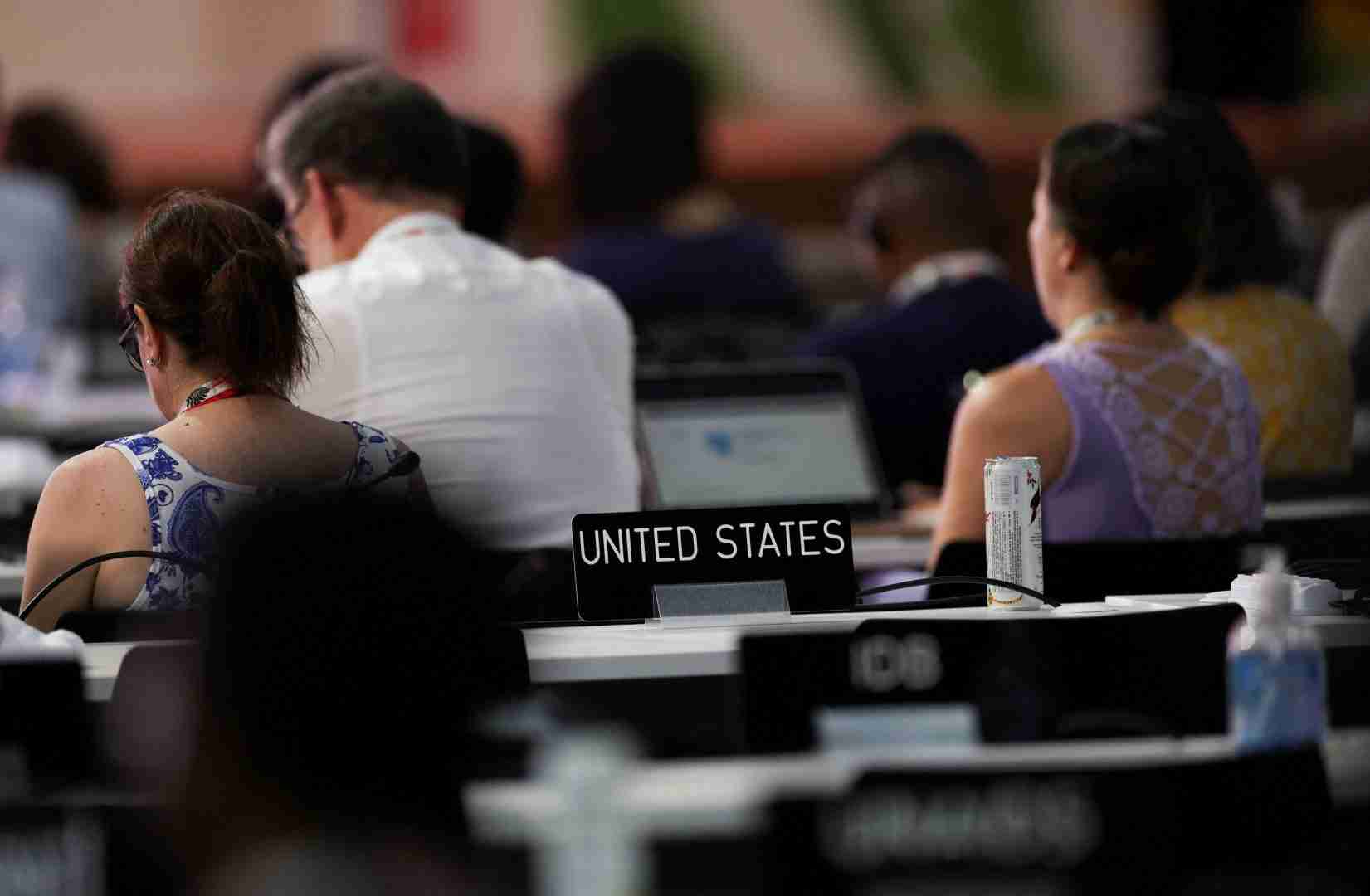
New dynamics in climate diplomacy have seen China, India and other developing nations flex more muscle this year, while the European Union is hobbled by weakening support back home and the once-dominant United States has skipped out altogether.

Danish climate minister Lars Aagaard said the European Union was showing leadership but that it was still early in the negotiations.

“Today is Monday, so I think it’s a bit early to say who is active and who is leading in these negotiations. We can evaluate that when we come to the end,” he said.

Brazil’s top goal for COP30 is to deliver an agreement that reaffirms the 2015 Paris Agreement, which aimed to limit global warming, while acknowledging its shortcomings by laying out clear plans for future climate action.

MIND THE GAPS

Over the last week negotiators had a chance to air their differences on three key issues: climate finance, unilateral trade measures, and planned emissions cuts that do not go nearly far enough.

The Paris treaty’s central goal, to prevent warming beyond 1.5 degrees Celsius above pre-industrial levels, will be missed.

Current emissions trends have the world warming by at least 2.3 C, which Norway’s climate minister said parties agreed would need to be addressed.

“It is a must-have to be able to talk about how we close the gap going forward,” the minister, Andreas Bjelland Eriksen, told Reuters.

A bloc of developing countries is also seeking a payment schedule to ensure wealthy countries follow through on promises made at last year’s COP29 to annually deliver $300 billion in climate finance by 2035. The United States – absent from COP30 – has reneged on past commitments.

PROGRESS IN SOME, BUT NOT ALL, AREAS

Denmark, which produces the majority of its electricity from wind, announced a new binding target to slash its greenhouse gas emissions by at least 82% by 2035, compared with 1990 levels.

“We think this is the highest, most ambitious number of any country in the developed world,” Aagaard said.

Denmark’s target is substantially more ambitious than the EU’s overall commitment to a 66.25%-72.5% emissions cut by 2035.

South Korea, which operates the world’s seventh-largest fleet of coal-fired power stations, announced it would stop building new coal plants and phase out nearly two-thirds of existing ones by 2040. The rest would also be phased out, though the timeline was not specified.

However, the transition away from fossil fuels in developing countries remains a vexed issue.

Indonesia’s plan to retire 6.7 gigawatts of coal-fired power plant capacity by 2030 is at risk of failure due to stalled disbursal of funding from rich countries.

“If there is no one really willing to jump in to finance the coal phase-out, then we will have to think about whether phase-out is actually the best option,” Paul Butarbutar, head of the Indonesia Secretariat of the Just Energy Transition Partnership program, told Reuters.

Reporting by Lisandra Paraguassu, Valerie Volcovici, Katy Daigle, Simon Jessop, William James, Kate Abnett and Sudarshan Varadhan; Additional reporting by Eduardo Baptista in Beijing; Editing by Richard Valdmanis, Conor Humphries and Nia Williams