Several members of the Association of Southeast Asian Nations have begun rolling out measures to counter the economic impact
International News via Reuters:
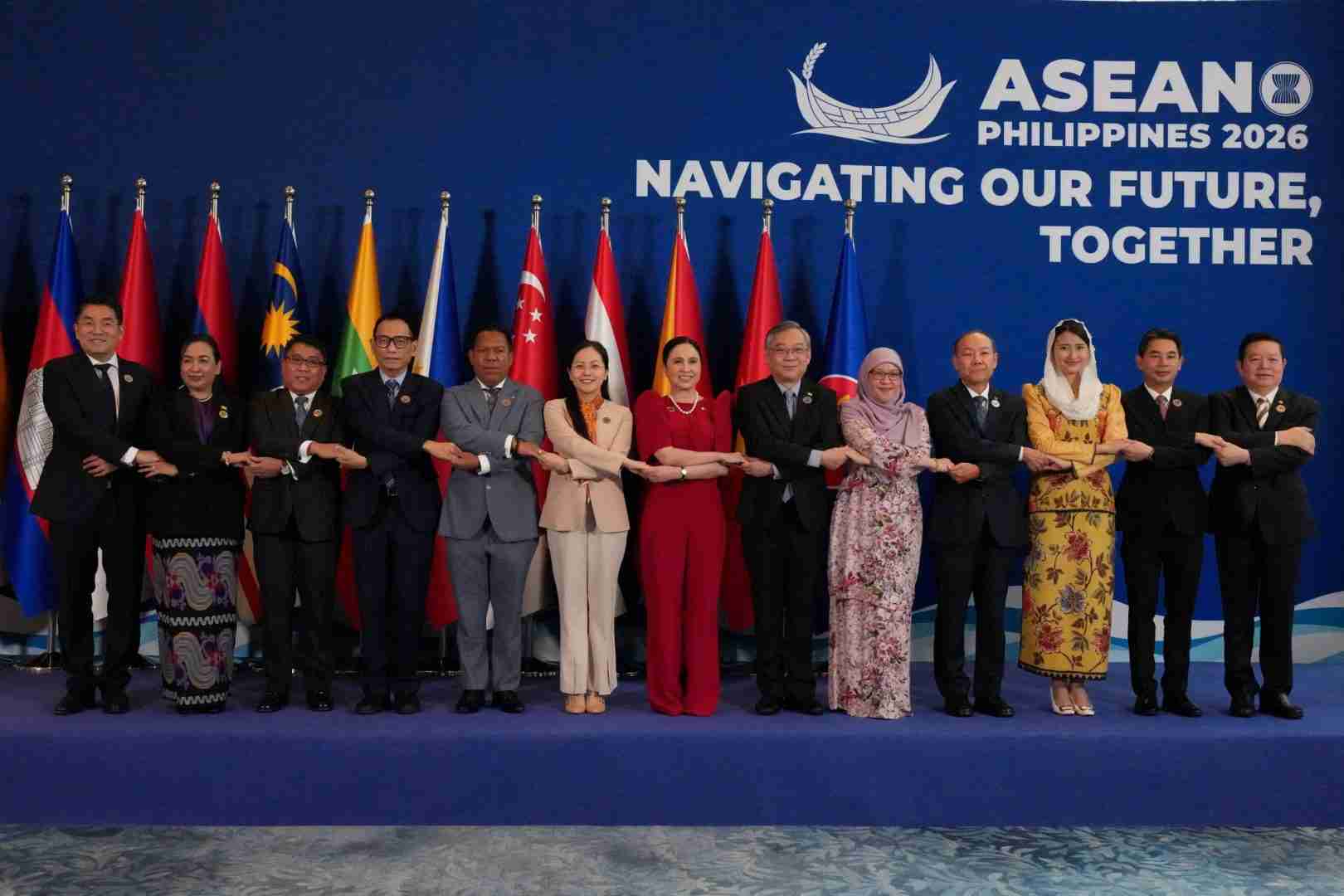
ASEAN foreign and economic ministers on Friday called for an immediate halt to the war in the Middle East, and said the effects of surging oil prices and disrupted trade are already hitting Southeast Asia’s economies.
Several members of the Association of Southeast Asian Nations have begun rolling out measures to counter the economic impact, with governments moving quickly to conserve energy, stabilise domestic markets and protect vulnerable sectors such as tourism.
“We expressed serious concern over the situation in the Middle East and its impacts in the region, and emphasised the importance of the immediate cessation of hostilities,” Philippine Foreign Affairs Secretary Ma. Theresa Lazaro told a press conference after a special meeting on the crisis, adding that ASEAN called on all parties to exercise the utmost self-restraint.
The Philippines, which is chairing ASEAN this year, convened the special meeting as concerns over the Iran conflict deepened. The ministers called for global energy supply chains to be kept open and to activate regional mechanisms to mitigate the economic fallout.
Crude oil is trading near $100 a barrel on worries about supplies, which have been heightened by the vow from Iran’s new supreme leader to keep the Strait of Hormuz, the route for a fifth of global oil supply, closed.
“The escalating conflict has generated broader economic repercussions beyond the region, particularly through heightened volatility in global energy markets and disruption of key maritime and supply chain routes,” the economic ministers of the 11-member bloc said in a statement after a separate meeting.
Lazaro said the Philippines, which is heavily dependent on imported fuel from the Middle East, was considering buying oil from Russia, but she did not elaborate.
The economic ministers warned that the region’s exposure to global oil and LNG supply routes made it especially vulnerable to further shocks, adding that reinforcing supply chain resilience, accelerating renewable energy transitions and deepening regional cooperation would be essential to preserving economic stability.
Reporting by Mikhail Flores, Nestor Corrales and Karen Lema; Editing by John Mair
Economy and Labour Minister says amendment extending protections to adoptive parents ensures parity with biological parents
Statement from the Minister of Economy and Labour, Jason Hayward:
The Ministry of Economy and Labour welcomes the passage of the Employment Amendment Act 2026, which extends parental leave protections to adoptive parents and legal guardians of children under the age of twenty-four months. This amendment represents an important and progressive step in Bermuda’s employment framework and reflects the evolving realities of modern families in our community.
The purpose of the legislation is straightforward: to ensure that parents who welcome a child into their home through adoption or legal guardianship are afforded protections similar to those already provided to biological parents under the Employment Act 2000. These parents assume the same responsibilities for the care, wellbeing and development of a child and therefore should have comparable opportunities to establish early bonds and provide stability during a critical stage of childhood development.
Concerns raised by the Opposition suggesting that the Act is discriminatory because adoptive mothers are entitled to thirteen weeks of leave while adoptive fathers receive five days, appear to misunderstand the intent and structure of the legislation. It is important to emphasise that the amendment does not create a new distinction, nor does it single out adoptive families for differential treatment. Rather, it mirrors the existing maternity and paternity leave framework that already applies to biological parents in Bermuda by extending the same statutory structure of parental leave to adoptive parents and legal guardians, ensuring legislative consistency. If the legislation were drafted differently for adoptive parents than for biological parents, it could introduce inequity within the employment framework.
The Act reflects a principle of legislative parity: adoptive parents and legal guardians should not be placed at a disadvantage when compared with biological parents in the workplace and vice versa. By aligning entitlements, the legislation ensures that families formed through adoption or guardianship receive the same standard protections that already exist in the Employment Act 2000.
It is also important to recognise the broader policy objective of this amendment. The first years of a child’s life are foundational for emotional, psychological, and social development. The availability of parental leave allows caregivers to provide stability and support the emotional and developmental needs of the child during this critical period, which ultimately benefits families, workplaces and the wider community.
The Employment Amendment Act 2026 therefore represents a balanced and practical step in the right direction. It strengthens Bermuda’s labour protections, promotes family wellbeing and ensures that the legislation reflects the diverse ways in which families are formed within our community. All children deserve the opportunity to form strong bonds with their caregivers and all parents who undertake that responsibility should have reasonable workplace protections to support them.
Constructive debate is a valued part of the legislative process and the Ministry of Economy and Labour welcomes continued dialogue on the evolution of parental leave policies in Bermuda. However, it is important to recognise that the Act, as drafted, extends existing rights fairly and consistently rather than creating discrimination.
The Ministry remains committed to ensuring that Bermuda’s labour laws continue to evolve in a way that is fair, practical, and responsive to the needs of our community. With that said, the Ministry will engage with and seek feedback from the Labour Advisory Council regarding a further, in-depth review of current leave benefits for biological and adoptive fathers/male legal guardians. This is a first step.
BYD’s Denza Z9GT model illustrates Chinese automakers’ competitive edge over legacy European manufacturers when it comes to electric car technology
International News via Reuters:
BYD said on Friday it will launch a premium electric vehicle in Europe next month that can charge in just minutes, far faster than anything on the market today, as it pursues rapid overseas expansion amid flagging sales in China.
Combined with a range of up to 800 km (497 miles) that is well above most available EV models, BYD’s Denza Z9GT model illustrates Chinese automakers’ competitive edge over legacy European manufacturers when it comes to electric car technology.
Using the “flash charging” capabilities of the latest battery technology it unveiled last week, BYD says the Denza Z9GT can charge from 10% to 70% in five minutes and from 20% to 97% in temperatures as low as minus 30 degrees Celsius in 12 minutes.
One of the challenges for mass EV adoption has been that fast-charging electric models need about 45 minutes to refuel, while the Denza Z9GT comes much closer to the time it takes to refuel a conventional combustion-engine model.
BYD will also start installing flash chargers across Europe — where its sales grew almost 270% last year — this summer, as there are no chargers on the market that can handle the 1,500kW it takes to charge the Denza Z9GT in minutes.
While BYD has gone from 420,000 car sales in 2020 to 4.6 million in 2025 to become the world’s No. 5 automaker by sales, it has been struggling for months in China, where in January and February it was overtaken by local rival Geely.
The end of China’s purchase tax exemption on EVs and plug-in hybrids has helped legacy carmakers like Volkswagen, which regained its top-selling position in China in January.
Reporting by Nick Carey; Editing by Alexander Smith
Former COE and Furniture Flair unveil rebrand focused on workplace and commercial interiors
COE and Furniture Flair have officially rebranded as Space, unveiling a fresh identity and a brand-new showroom located on the Ground Floor at 129 Front Street.
The transition to Space reflects the company’s expanded focus on commercial interiors, workplace environments, and large-scale project solutions across Bermuda’s corporate, hospitality, and institutional sectors.
With decades of combined experience, Space works with architects, designers and homeowners to plan, procure, coordinate, and install end-to-end interior design and architectural solutions. The new Front Street showroom has been designed to showcase modern workplace systems, collaborative furniture solutions, ergonomic seating, and adaptable design concepts tailored to today’s evolving business environments.
The new Space brand and showroom were recently introduced at a launch event curated by Dasfete, bringing together Bermuda’s architecture and design community alongside corporate clients and partners. To mark the launch, Space hosted representatives from global workplace solutions provider Teknion, one of its key supplier partners. The Teknion team also led a Continuing Education Unit (CEU) session for local architects and designers, centred on the power of storytelling. Space plans to continue hosting educational sessions connecting Bermuda’s architects and designers with global expertise and industry insights.
“Our rebrand to Space reflects the direction our business has already been moving in,” said Sara Lane Adderley, Sales Team Manager. “We work with some of Bermuda’s leading businesses to create functional, forward-thinking work environments. The new showroom allows us to better demonstrate the scale of what we offer, from single office upgrades to full commercial fit-outs, while continuing to deliver the service and expertise our clients rely on.”
Backed by a portfolio of international brand partners and suppliers, Space provides access to globally recognised manufacturers known for quality, innovation, and durability. Space offers both interior design and architectural solutions ranging from flooring, furniture and window treatments to acoustics, wall coverings and wall systems.
Ms. Adderley added, “The Space Front Street showroom has been designed as a working example of contemporary commercial environments, allowing our clients to explore product lines, material finishes, layout concepts, and design possibilities in person.”
For more information, visit space.bm or the Space showroom on the ground floor, 129 Front Street, Hamilton.
BEDC information session will highlight business planning tools and funding opportunities
The Bermuda Economic Development Corporation (BEDC) will host a free information session on Thursday, March 19, from 6:00 p.m. to 8:00 p.m. at the Devonshire Recreation Club, to introduce the second cohort of its Sports Club Business Planning Incubator.
The session is open to sports club executives and board members interested in learning how the Incubator is structured, what support BEDC provides to participating clubs, and how the program helps strengthen operations and create new revenue opportunities. Attendees will hear directly from graduates of the first cohort, clubs that collectively received $80,000 in grant funding to support their growth initiatives.
The Sports Club Incubator equips clubs with practical business strategies and tools to diversify income and build long-term sustainability. Club executives who join the full program will learn together on a weekly basis, develop a business plan for greater impact, and commit to new revenue strategies tailored to their organisation.
William Spriggs, Director of Economic & Cooperative Development at BEDC, spoke to the significance of the program entering its second year. “As we enter the second year of the Sports Club Business Planning Incubator, we are proud to build on the momentum of our first cohort. Sports clubs are more than venues for competition. They are community anchors, platforms for youth development, and critical parts of Bermuda’s social fabric.” He continued, “Helping them become more financially resilient is an investment in the island’s broader wellbeing, and we look forward to welcoming the next group of clubs into this program.” That view is shared by clubs that participated in the first cohort. Western Stars Sports Club, a graduate of the first Incubator cohort, spoke to the impact the program had on their organisation.
Kelly Smith of Western Stars Sports Club, had this to say about her club’s experience in the Incubator, “The support given to our sports club has been truly transformational. Through education and guidance, we were encouraged to think beyond day-to-day operations and develop a strong business mindset, one that values sustainability, leadership, and long-term impact. This shift has empowered our club to grow with clarity and confidence, while staying grounded in our purpose.”
The evening will also include professional headshots available between 6:00 p.m. and 7:00 p.m., food by B’s Soul Food, and one complimentary drink ticket per attendee.
The Sports Club Business Planning Incubator Information Session takes place on Thursday, March 19, 2026, from 6:00 p.m. to 8:00 p.m. at Devonshire Recreation Club. The event is free and open to all sports club executives and representatives. To register or obtain more information, visit www.bedc.bm or contact Chelsea Warren at cwarren@bedc.bm.
Fourth-quarter funding to support local film, literature and arts initiatives
The Government of Bermuda issued the following media release.
The Bermuda Arts Council (BAC), the main external funding body of the Department of Culture, is pleased to announce the fourth quarter recipients of its 2025 grants, highlighting the organisation’s continued dedication to supporting local artists and cultural institutions. The awardees reflect a diverse range of disciplines and stages of creative development, showcasing the depth of talent within Bermuda’s arts community. These grants aim to empower creatives in delivering meaningful projects that enhance the island’s cultural landscape.
Minister of Tourism & Transport, Culture & Sport, the Hon. Owen Darrell, JP, MP, said: “The Government of Bermuda remains committed to strengthening our creative sector and supporting the talented individuals who bring our culture to life. Through the Bermuda Arts Council’s grant programme, we continue to invest in projects that celebrate Bermudian stories, nurture innovation, and provide meaningful opportunities for artists to share their work with the community. These awardees represent the passion, creativity, and cultural pride that define Bermuda’s artistic landscape, and we are pleased to support their continued growth and impact.”
Chair of the Bermuda Arts Council, Shanna Hollis, shared: “I would like to thank Bermuda’s creative community for their patience and engagement as the Bermuda Arts Council continues refining our grant processes to ensure they are effective, transparent, and accessible. We are also grateful to the Department of Culture for increasing our annual budget from $117,000 to $167,000, a meaningful investment that reflects a strong commitment to supporting Bermuda’s creatives. We proudly celebrate our 2025 grant awardees and the impactful work they have brought to life this year, which enriches our island and strengthens our cultural identity.”
The following individuals and organisations have been selected for the following grant categories:
Stewardship and Production Grant: Awarded to Jordan Carey to produce the Loquat Winter Programming. Jordan desires to use this grant to maximize the use of “his retail shop, Loquat, as a venue for artists to showcase their visual arts (Gallery Style), workshops, and performances, which include three musical events (An Evening With Tree Frogs) and one Visual Arts Show.”
Onion Bulb: Presented to Ayana Beanfor her creation ofThe Zaraya B. Series. This grant will assist her with the creation of a children’s Book exploring the Bermudian concepts in a friendly way. “This particular project was created using digital tools, a computer, and a stylus, reflecting my ongoing curiosity and commitment to creative expression in all its forms.”
(Instagram: @zarayabseries)
Onion Bulb: Obtained by Alex Andre, who is “A Bermudian Writer/Director whose work is deeply shaped by the island’s culture and storytelling traditions.” This grant will go towards his production of a new project titled The Kazi: Village Rescue – Animated Short Film, “a short film of hope and courage.” This short film explores themes of bravery, geographical exploration, technology, and tribal life.
BAC Project Grant: Granted to Alyson Thompson,an establishedFilmmakerwho draws near to connecting history to today’s realities and focusing on community and identity. This grant will support Alyson’s dedication to creating “a feature-length documentary that examines decades of civil disturbances in Bermuda, the forces that shaped them, and the effects on our Island today.”
The Bermuda Arts Council remains committed to being a trusted resource for our community, ensuring that our culture, traditions, and stories continue to be shared and celebrated for generations to come.
To learn more about Bermuda Arts Council Grants, and the 2026 Grant application process please visit www.artscouncil.bm.
The price of oil – which has surged 40% since the onset of the war – remained just above $100 per barrel at its highest level since mid-2022
International News via Reuters:
European stocks fell on Friday as investors grappled with uncertainty over the duration of war in Iran, which has disrupted global energy supplies and spurred inflation fears that have upended the outlook for interest rates.
The price of oil – which has surged 40% since the onset of the war – remained just above $100 per barrel at its highest level since mid-2022. Prices moderated somewhat on Friday after the U.S. issued a 30-day license for countries to buy sanctioned Russian oil and petroleum products that were stranded at sea.
Europe’s STOXX 600 fell 0.6% in early trading, putting the index on track for a 6.1% fall in March so far – its biggest two-week decline in a year.
U.S. futures were subdued, with S&P 500 e-minis off 0.1% following steep declines on Thursday that saw the S&P 500 close 1.5% lower.
Meanwhile the U.S. dollar has become the safe-haven of choice during the tumult, putting most other currencies under pressure. The dollar was set for a second consecutive week of gains and is up 2.5% since the war broke out at the end of February.
Wolf von Rotberg, equity strategist at Bank J. Safra Sarasin in Zurich, said there was a sense of urgency in markets around the duration of the conflict.
“If we don’t make any progress and just have a status quo for a prolonged period…that would obviously mean that oil prices stay higher for longer, and we have a more pronounced impact on the economy and on inflation,” he said.
OIL PRICE DRIVING MARKET
Brent crude oil futures were last up 0.8% at $100.30 a barrel, while West Texas Intermediate crude was at $95.98 a barrel. Both had hovered around $60 at the start of 2026.
Traders are trying to predict how long the disruption to oil supplies will last, based on the latest news about the war.
“Headlines are coming at the market like water from a fire hose, which is impacting the price of oil, and consequently, financial markets,” said Mitch Reznick, group head of fixed income at Federated Hermes.
With Iran stepping up attacks across the Middle East as its new Supreme Leader Mojtaba Khamenei vowed to keep the Strait of Hormuz shipping lane closed, investors are bracing for a prolonged conflict and higher oil prices.
The spectre of rising inflation has led markets to rapidly reprice what they expect from central banks this year, with traders now anticipating just 20 basis points of easing from the Federal Reserve compared to 50 bps of cuts priced in last month.
Two-year Treasury yields, which typically move in step with Fed interest rate expectations, scaled a six-month high on Thursday.
“With the possibility of higher oil prices still elevated, investors should be prepared for continued volatility and potentially further downside in the near term,” said Vasu Menon, managing director of investment strategy at OCBC in Singapore.
SHIFTING RATES OUTLOOK
Jose Torres, senior economist at Interactive Brokers, said the impact of rising oil prices on corporate margins, inflation expectations, rate-cut prospects and yields is sparking volatility, leaving participants with few places to hide.
“Indeed, sinking optimism about Fed rate reductions amid strengthening cost pressures is weighing on traditional safe havens such as silver, gold, and government debt.”
The two-year note yield eased 2 bps to 3.74% after hitting its highest level since August 22 on Thursday. The yield has gained about 35 bps in the two weeks since the war started.
Investor focus will switch to a slate of policy meetings next week with the Fed, the Bank of Japan, the European Central Bank and the Bank of England all due to meet, with most expected to keep rates unchanged. The Reserve Bank of Australia is broadly expected to hike rates next week.
The yen hit its weakest level since July 2024 at 159.69 per U.S. dollar on Friday as Japan warned that it was ready to take action to protect against yen declines. It was last at 159.41. [FRX/]
Analysts said the bar for intervention is higher this time around as any intervention now could prove futile in the face of the relentless dollar buying.
In currencies, the euro fell 0.5% to $1.14575, on course for a weekly decline of nearly 1.4%. The dollar index was at 100.1, set for about a 1% weekly advance.
Gold was 0.2% higher at $5,088.4 per ounce on Friday but set for a 1% drop for the week. [GOL/]
Reporting by Ankur Banerjee in Singapore and Lucy Raitano in LondonEditing by Sam Holmes and Peter Graff
The BoE’s quarterly inflation attitudes survey showed the median expectation for inflation in five years’ time was 3.7% in February, the same as in November
International News via Reuters:
The British public’s expectations for inflation in the long term stayed stubbornly high last month even before the U.S.-Israeli war on Iran sent energy prices soaring, according to a Bank of England survey published on Friday.
The BoE’s quarterly inflation attitudes survey showed the median expectation for inflation in five years’ time was 3.7% in February, the same as in November.
That compares with 3.3% in February 2022, when Russia’s invasion of Ukraine sparked the last energy price shock.
While the public are poor predictors of inflation, the BoE monitors their expectations carefully for signs that price pressures are becoming permanently embedded in the mindset of the public.
With the Gulf serving as a global crossroads for commercial aviation, the Iran conflict underscores how quickly a problem in a single region can paralyse travel worldwide
International News via Reuters:
In the remote Western Australian town of Dardanup, accountant Natasha Earle and her family are feeling the financial pain of the U.S.-Israeli war with Iran.
Their “once-in-a-lifetime” five-week trip to Europe – booked last May on Emirates and taking them to London, Paris, Berlin, Vienna and Rome – has been upended by the conflict, and is costing roughly A$10,000 ($7,000) more as they reroute to avoid disruptions from drone and missile fire in the Middle East.
“We’ve spent tens of thousands of dollars on this holiday,” said Earle, who is due to fly at the end of this month amid the biggest disruption to global travel since the pandemic. “We should get at least half of that back from Emirates eventually.”
With the Gulf serving as a global crossroads for commercial aviation, the Iran conflict underscores how quickly a problem in a single region can paralyse travel worldwide, driving up prices, squeezing capacity and throwing holiday plans into disarray.
Drone and missile fire have regularly left aircraft circling near Dubai as the war enters its third week, heavily impacting Middle East tourism worth some $367 billion annually to the region.
Combined, Emirates, Qatar Airways and Etihad Airways normally fly more than half of all passengers between Europe and Australia, New Zealand and the nearby Pacific Islands, according to Cirium data.
The war has already led to the closure of much of the Middle East’s airspace due to the risk of missiles and drones, leading to tens of thousands of flight cancellations, reroutings and schedule changes worldwide, disrupting the lives of millions of people.
New Zealander Jacob Brown, 34, who lives in the Qatari capital of Doha, drove through the desert of neighbouring Saudi Arabia to Riyadh where he caught a plane to London after his Qatar Airways flight from Doha to New Zealand – where he was due to be best man at a wedding – was cancelled.
A journey that should have taken him less than 24 hours ended up taking several days due to closed airspace, additional flight chaos, delays and lost baggage.
“It was pretty nerve-wracking flying out of Riyadh just considering that that morning, there had been a few missile interceptions south of the capital,” he said.
Aditya Kushwaha, an Australian disability support worker living in Orange near Sydney, has booked a family holiday to London and Paris from April 13 to 29, with Emirates through Dubai. He is unsure if it will go ahead.
“We are very much in a dilemma of what to do,” Kushwaha said, estimating he might lose more than $10,000 if he cancels the trip and only be able to afford it again in a few years.
DREAM HOLIDAY TURNS TO NIGHTMARE
For Australian Kellee Smith, her “dream holiday” to Europe at the end of March – planned 12 months ago – with her husband and two children has also turned into a “nightmare” and left her roughly A$5,500 out of pocket.
“I’ve had many sleepless nights as I was stressed thinking I’m going to lose my dream holiday … and all the money we paid,” said Smith.
She is waiting for a refund from Emirates of more than A$4,000 after securing back-up flights with Cathay Pacific and Qantas to fly through Asia rather than the Middle East.
The war has narrowed an already-slim flight corridor for long-haul flights between Europe and Asia, complicating operations for global air carriers and sending ticket prices sky-high.
As the conflict rattles businesses worldwide and drives oil prices higher, concerns over jet fuel costs and supplies are also weighing on airlines, with many raising fuel surcharges and some, such as Air New Zealand, cutting flights.
The International Energy Agency has said the war is creating the biggest oil supply disruption in history, while some analysts have warned it could be only a matter of weeks before airlines run out of jet fuel. Vietnam said this week it could face aviation fuel shortages as soon as April due to the conflict.
‘TRAVEL VIRGINS’ STEER CLEAR OF MIDDLE EAST
In the British city of Bath, John Moore, 81, and his wife Pauline – who describe themselves as “travel virgins” – forked out “a couple of hundred pounds” to switch their flights to the Australian city of Brisbane from Qatar Airways to Qantas.
They will transit through Singapore instead of the Middle East.
“We decided we’d rather pay the extra to book via Singapore, which is no guarantee, but clearly it’s likely to be safer than the current route,” Moore told Reuters.
For others, the prospect of travel disruptions due to the war is not worth the risk.
Sumit Sharma, who lives in Sydney and works at Westpac Banking Corp., had planned to travel on Etihad Airways with his family to Dubai, but changed his plans after Etihad confirmed he was eligible for a refund.
“We changed the plan from the Middle East to Hong Kong,” Sharma said, adding that he was now flying with Cathay Pacific and looking forward to taking his son to Disneyland.
Shobana Gopal, a senior consultant with Alliance Insurance in Sydney, has switched her family’s travel plans to China instead of flying through Dubai to get to Austria.
“We’re going to three cities in China,” Gopal said.
Qantas said more passengers were choosing to travel to Europe via the U.S., other Asian cities and Johannesburg in South Africa, using its partner network.
Hong Kong’s Cathay Pacific, said this week the airline was seeing “drastic changes in terms of demand patterns due to the Middle East situation,” while budget carrier Ryanair highlighted a surge in bookings to European destinations as travellers avoided the Middle East.
Lufthansa said demand for routes through Europe had surged, with the German carrier flagging that 12-month forward bookings for direct flights to Asia were up 75% year-on-year.
“The large Middle Eastern airlines like Emirates and Etihad can’t fly the routes they should, and therefore the European and Asian airlines have to pick up that traffic,” aviation specialist Hans Joergen Elnaes said.
Reporting by Christine Chen, James Redmayne and Cordelia Hsu in Sydney; Joanna Plucinska in London, Kimberley Vinnell in New Zealand, Alessandro Parodi in Gdansk, Stine Jacobsen in Frankfurt; Additional reporting by Doyinsola Oladipo; Writing by Anne Marie Roantree; Editing by Kate Mayberry
The figures mean British gross domestic product has been essentially flat since June, ending January at the same level as six months earlier
International News via Reuters:
Britain’s economy stagnated unexpectedly in January and expanded only weakly in preceding months, underlining investor concerns about its vulnerability to the economic fallout from the war in Iran, official data showed on Friday.
The figures mean British gross domestic product has been essentially flat since June, ending January at the same level as six months earlier.
GDP was flat in January, the Office for National Statistics said, dashing the median prediction in a Reuters poll of economists for a 0.2% month-on-month increase.
In the three months to January it rose by 0.2%, against expectations for a 0.3% increase.
Sterling slipped against the U.S. dollar on the back of the figures, which showed no growth in the dominant services sector in January, against modest upticks in manufacturing and construction output.
Investors view Britain as more exposed than many other Western countries to an energy price shock due to its stretched public finances, tepid economy, and its heavy reliance on imported gas – prompting a severe drop in British government bond prices this month.
Despite the disappointing GDP data – which would usually spur expectations for Bank of England interest rate cuts – the opposite happened on Friday, with the market now pricing in a roughly 86% of an interest rate hike by the end of the year due to rising inflation risk.
“This is a worrying start to the quarter, given that the early-year improvement in business confidence is likely to be short-lived as global disruption linked to the Iran War hits the UK economy,” Fergus Jimenez-England, associate economist at NIESR, said.
OIL BACK AT $100
Brent futures for rose early on Friday to $100.56 a barrel, up 0.1% on the day and heading for about a 9% weekly increase.
“We expect the impact on growth in the first quarter to be limited, but if energy prices remain elevated for the rest of the year it could reduce GDP growth by around 0.2 percentage points in 2026,” added Jimenez-England.
Last month, the Bank of England said it expected the economy to grow 0.3% in the first quarter as a whole and 0.9% over 2026 as a whole – although that was before the conflict in Iran kicked off, prompting a surge in oil prices.
Earlier this week, finance minister Rachel Reeves said it was too soon to say how soaring energy prices would affect Britain’s economy.
Reporting by Andy Bruce and Suban Abdulla; editing by William James and Susan Fenton
The public should not be blindsided by healthcare industry deals that could affect them, says Health Council CEO Ricky Brathwaite
Any deal that could disturb the delicate balance of healthcare in Bermuda should face scrutiny.
This is the position of the Health Council CEO, Dr. Ricky Brathwaite. He says, “any decision that’s going to materially impact the quality of life, access to care to the public of services or products should should obtain a review.”
He suggests that industry-impacting moves, such as a recent Allshores deal to make Phoenix their designated provider for 46 medications, should have an outside eye on them.
“As a regulator in the system,” Dr. Brathwaite continues, “things like increases in premiums above a certain amount, the closure of or merging of companies in principle… things that can materially impact the health and well-being of the public should go through a review before it happens, versus kind of an after the fact notification to the regulator saying that, you know, ‘this is happening’…”
Dr. Brathwaite says the Health Council was aware of the RFP that Allshores had published which eventually led to the Phoenix deal.
However, he found out about the final deal at the same time as the public…
He said, “The specifics around 46 drugs, and who’s getting the agreement, and whether it’s going to be exclusive or limiting, those kind of things… we would have no sight of until they were released to the media. And I think that’s a problem.”
“I think part of the concern of the public is being blindsided by significant changes… But until a body or someone objective outside of the decision making process of the entities that are making decisions is able to opine on them, then it does create some disadvantages to the public.”
“And that’s something I think the Health Council is in a good position to do.”
Mr Brathwaite told us he understood the Allshores deal to be similar to CG Pharmacy, where CG insurees can get higher coverage for some medications than at other pharmacies.
However, the original online prescription list – which includes Ozempic, Eliquis, and Adderall – stated that certain prescriptions “must be filled exclusively through Phoenix”.
Immediately after Bermuda Broadcasting broke the story in February, the language was changed to say coverage at non-Phoenix pharmacies would be subject to “the terms of individual health plans”.
Health Minister Kim Wilson instructed the Bermuda Health Council to request that Allshores implement a 60-day deferral of the deal until the 1st of May, to allow for a comprehensive review.
The Formulary regulates the wholesale price of certain medicines, and Phase I requirements, such as regulated pricing for generic drugs, is already in place.
Phase II was originally scheduled for March 1st, but rapid changes to the pharmaceutical market, as well as feedback from pharmacies and wholesalers regarding Phase 1, prompted a pause.
Dr. Brathwaite will expand on the review of the Formulary in a subsequent report.
To provide the best experiences, we use technologies like cookies to store and/or access device information. Consenting to these technologies will allow us to process data such as browsing behavior or unique IDs on this site. Not consenting or withdrawing consent, may adversely affect certain features and functions.
Functional
Always active
The technical storage or access is strictly necessary for the legitimate purpose of enabling the use of a specific service explicitly requested by the subscriber or user, or for the sole purpose of carrying out the transmission of a communication over an electronic communications network.
Preferences
The technical storage or access is necessary for the legitimate purpose of storing preferences that are not requested by the subscriber or user.
Statistics
The technical storage or access that is used exclusively for statistical purposes.The technical storage or access that is used exclusively for anonymous statistical purposes. Without a subpoena, voluntary compliance on the part of your Internet Service Provider, or additional records from a third party, information stored or retrieved for this purpose alone cannot usually be used to identify you.
Marketing
The technical storage or access is required to create user profiles to send advertising, or to track the user on a website or across several websites for similar marketing purposes.