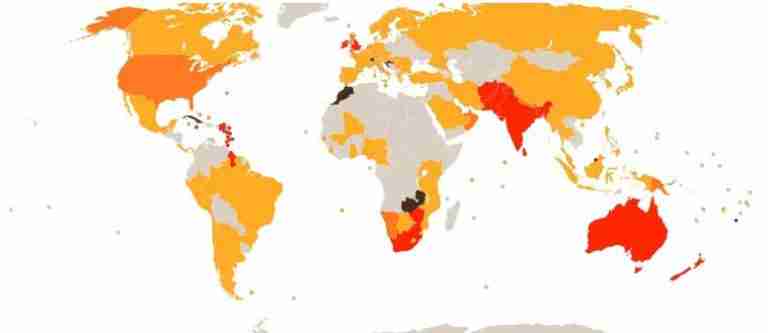
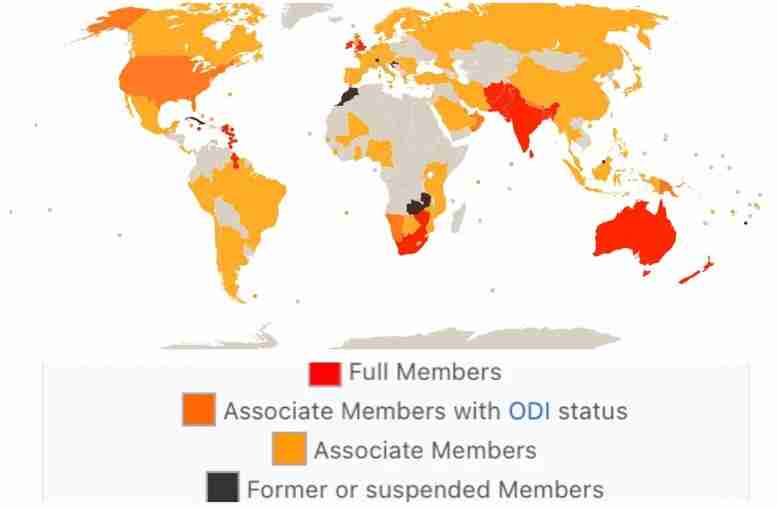
While global conversations focus on World Cups and franchise leagues, a vital financial engine operates behind the scenes: the ICC pathway hosting model. For Associate Members, hosting these tournaments is a crucial economic catalyst that strengthens domestic cricket.
The ICC’s qualification pathways require a dense calendar of regional events across diverse geographies. When an Associate Member hosts, the ICC provides a structured funding framework that offsets costs and injects capital directly into the local economy. For many boards, this is their most significant financial inflow outside annual grants.
ICC funding typically covers major operational expenses, including:
Venue preparation and match operations.
Team accommodation and travel.
Broadcast, digital coverage, and match officials.
This support removes financial risk, making hosting financially neutral or even positive. Beyond the tournament, the upgrades to pitches, outfields, and practice facilities remain as permanent assets, transforming local grounds into internationally viable venues. For Associate nations, these events ensure the sport’s foundations are built on world-class soil.
Bermuda’s netball landscape has been painted in shades of red and yellow this winter, as Phoenix and Tigers emerged as the dominant forces in the final standings for the 2025/26 season.
The Tigers remain the apex predators of the top flight, finishing a commanding ten points clear at the summit of the Premier Division. Their tactical execution left the chasing pack in the dust, with Storm Surge and Phoenix Heat trailing in second and third respectively.
However, the broader story of the season is the staggering dominance of the Phoenix franchise, which secured a “triple crown” of division titles. In the First Division, the Phoenix Flames delivered a masterclass in efficiency to rack up 40 points, holding off a tight battle for silver between Storm NexGen and Atlantic Aces.
The youth ranks proved equally fertile ground for the organization. Phoenix Fire ended the 16 & Under campaign as the island’s most prolific side, amassing 42 points—the highest total across all divisions. Meanwhile, the Phoenix Embers clinical run earned them the 13 & Under title, narrowly beating out a resilient challenge from the Storm club’s dual-threat Lightning and Thunder rosters.
The Somerset Trojans have officially reclaimed their status in Bermuda’s Premier Division, following a clinical “execution year” that has returned the historic West End club to the top tier with two games to spare.
Promotion was confirmed after the Bermuda Football Association (BFA) awarded the Trojans a 3-0 default victory over Vasco da Gama. The fixture had been shrouded in initial confusion, listed as canceled before the formal ruling of a forfeit by the visitors.
For head coach Jensen Rogers, the achievement marks the end of a two-season stint in the second tier, though he was quick to downplay the festivities. “We really have not had a time to celebrate it as we have two matches remaining,” Rogers told islandstats.com. “We have completed the first part of our goals; now we need to execute the rest of the mission.”
That mission now shifts toward the First Division title. The Trojans currently sit atop the standings, leading Robin Hood on goal difference with a vital game in hand. With a clash against Southampton Rangers looming and a potential title-deciding showdown against Robin Hood on March 22nd, the focus in Somerset remains firmly on the silverware.
The opening day of the Senior School Track and Field Championships at the Dame Flora Duffy South Field was defined by historic breakthroughs, as two long-standing middle-distance marks were swept aside under the afternoon sun.
Brooklyn Myers of BHS provided the first major headline in the Under-16 Girls’ 3,000 meters. Stopping the clock at 11:19.68, she shattered a 22-year-old record previously held by the stadium’s namesake, Dame Flora Duffy. The momentum held as Sanchez Smith of Saltus Grammar eclipsed a 16-year-old mark in the Under-16 Boys’ equivalent, finishing in 9:34.44.
In a tactical Over-16 Boys’ battle, Warwick Academy’s Gianluca Bortoli produced a late surge to take Gold in 9:13.50, while Saltus Grammar’s Jaada Grant dominated the Under-16 Girls’ field, winning by over a minute.
On the field, Saltus’s Chaz Edmead emerged as the day’s only double winner, securing Gold in both the High Jump and Triple Jump. Despite his efforts, The Berkeley Institute has established a formidable overall lead with 225 points, sitting comfortably ahead of Saltus Grammar on 163. Berkeley’s dominance is most pronounced in the Girls’ division, though the Boys’ title remains a tight contest, with Berkeley leading Saltus by a narrow 14-point margin heading into Friday’s finale.
Britain has been weighing tougher curbs on children’s access to social media, with the government considering barring under 16s from such platforms – mirroring a move by Australia
International News via Reuters:
Britain’s media and privacy regulators on Thursday demanded that major social media platforms do more to keep children off their services, warning that companies were failing to enforce their own minimum age rules.
Britain has been weighing tougher curbs on children’s access to social media, with the government considering barring under 16s from such platforms – mirroring a move by Australia.
Ofcom and the Information Commissioner’s Office said they had grown increasingly concerned about algorithmic feeds that expose children to harmful or addictive content.
“These online services are household names, but they’re failing to put children’s safety at the heart of their products,” Melanie Dawes, Ofcom’s chief executive, said.
“That must now change quickly, or Ofcom will act.”
USE ‘MODERN’ TECH, COMPANIES TOLD
In the latest implementation phase of Britain’s Online Safety Act, Ofcom told Facebook and Instagram – both owned by Meta – as well as Roblox, Snapchat, ByteDance’s TikTok and Alphabet’s YouTube to show by April 30 how they would tighten age checks, restrict strangers from contacting children, make feeds safer and stop testing new products on minors.
The ICO separately issued an open letter to the same platforms, calling on them to adopt “modern, viable” age-assurance tools to stop those under 13 accessing services not designed for them.
“There’s now modern technology at your fingertips, so there is no excuse,” Paul Arnold, ICO’s chief executive, said.
A Meta spokesperson said the company already uses AI-based age detection and age-estimation tools and places teens in accounts with built-in protections. The spokesperson added that age should be verified “centrally at the app store level” so families do not have to provide personal information multiple times.
A YouTube spokesperson said the platform also offered age-appropriate experiences and was “surprised to see Ofcom move away from a risk-based approach”, urging the regulator to focus on “high-risk services” that were failing to comply with the law.
A Roblox spokesperson said the company had launched more than 140 new safety features in the past year, including mandatory age checks for chat, designed to prevent adults from communicating with children.
“While no system is ever perfect, we continue to strengthen protections designed to keep players safe,” the spokesperson said.
Snapchat did not respond to a request for comment. TikTok declined to comment.
Ofcom can fine companies up to 10% of their qualifying global revenue, while the ICO can issue fines of up to 4% of a company’s global annual turnover.
The privacy watchdog last month fined Reddit nearly 14.5 million pounds for failing to introduce meaningful age checks and for processing children’s data unlawfully.
($1 = 0.7439 pounds)
Reporting by Sam TabahritiEditing by Paul Sandle, Tomasz Janowski and Louise Heavens
Poland says it has been the target of numerous cyberattacks since Russia’s full-scale invasion of Ukraine in 2022
International News via Reuters:
Poland has foiled a cyberattack on its nuclear research centre and is examining signs that Iran may be behind it, the government said on Thursday, cautioning the indicators might be a deliberate misdirection to hide the attackers’ true location.
Poland says it has been the target of numerous cyberattacks since Russia’s full-scale invasion of Ukraine in 2022. Moscow has repeatedly denied involvement.
Minister for Digital Affairs Krzysztof Gawkowski told private broadcaster TVN24+ that the attack on Poland’s National Centre for Nuclear Research had taken place “in the past few days”.
“The attack may not have been on a huge scale, but there was an attempt to break through the security that was stopped. Appropriate services are already working”, Gawkowski said, adding that the centre was safe.
“The first identifications of the entry vectors, i.e. those places from which (the centre) was attacked, are related to Iran,” he said. “When there is final information and the services will check it, we will verify it, but there are many indications that it took place on the territory of Iran.”
The Iranian embassy in Warsaw did not immediately reply to an emailed request for comment.
The centre conducts research into nuclear energy, subatomic physics and related fields. Poland has no nuclear weapons and is building its first nuclear power plant.
The U.S. and Israel unleashed coordinated airstrikes on Iran on February 28, killing its Supreme Leader, Ayatollah Ali Khamenei.
Tehran responded by hitting Israel and Gulf states hosting U.S. military installations, effectively halting oil and gas shipments through the Strait of Hormuz — a conduit for roughly a fifth of the world’s LNG and petroleum.
Reporting by Anna Wlodarczak-Semczuk; Editing by William Maclean
Government says the changes will boost take-home pay and support job-creating businesses
Government of Bermuda media release:
Workers across Bermuda will soon see more money in their pay as Parliament has approved legislation implementing the payroll tax reductions announced in the 2026/27 Budget.
The measures reduce payroll tax for employees while lowering employer payroll tax rates in several business categories, helping workers keep more of what they earn and supporting businesses that create jobs and drive economic activity.
Premier and Minister of Finance, the Hon David Burt, JP, MP, said the legislation reflects the Government’s commitment to ensuring Bermudians benefit directly from Bermuda’s economic progress.
“When our economy grows, Bermudian families should feel that progress in their wallets,” said Premier Burt. “These payroll tax reductions mean more take-home pay for workers.”
The changes reduce the employee payroll tax rate in the first two income bands, meaning every worker in Bermuda will pay less payroll tax and take home more of their earnings.
Employer payroll tax rates will also decrease across several categories, including large employers, medium-sized businesses, and key sectors such as hospitality and retail, helping to support job creation and economic growth.
The Premier noted that these reductions build on a series of payroll tax cuts delivered since 2017, which have significantly lowered the tax burden on working Bermudians.
The Premier said, “At a time when many families are facing pressure from the cost of living, this the largest payroll tax cut in history, will help ensure workers keep more of what they earn while the Government continues to manage Bermuda’s finances responsibly.”
The payroll tax reductions will take effect on April 1, 2026, ensuring workers and businesses begin seeing the benefits in the new fiscal year.
The Philippines is hosting the meetings as officials weigh impacts and responses to surging oil prices as well as disruptions to shipping, logistics, and trade flows across the region’s export-reliant economies
International News via Reuters:
The widening conflict in the Middle East is expected to dominate discussions at Friday’s ASEAN economic ministers’ retreat, with foreign ministers also holding a virtual meeting on the same day to tackle a deepening crisis that has upended global markets.
The Philippines, this year’s ASEAN chair, is hosting the meetings as officials weigh impacts and responses to surging oil prices as well as disruptions to shipping, logistics, and trade flows across the region’s export-reliant economies.
“The concern is a given,” Philippine trade undersecretary Allan Gepty told reporters, saying the region could not ignore the effects of the crisis on inflation and jobs.
Joint U.S. and Israeli strikes on Iran launched almost two weeks ago have so far killed around 2,000 people and have thrown global energy markets and transport into chaos.
The conflict has effectively shut the Strait of Hormuz, the chokepoint that funnels about a fifth of the world’s oil and LNG to Asia, sending crude surging to above $100 a barrel.
The crisis has forced ASEAN foreign ministers to call a special virtual meeting to assess the implications for Southeast Asia, where several economies rely heavily on crude and LNG shipments from the Gulf.
The Philippines sources much of its oil needs from the Middle East and Qatar’s LNG halt has also tightened supplies.
Several ASEAN countries have already taken concrete steps to cope with the impact of the Middle East crisis. The Philippines has shortened the government work week to conserve fuel, and its president has asked Congress for authority to suspend excise taxes on fuel to help stabilise costs.
Vietnam on Thursday cut its retail fuel prices overnight following the easing in global crude oil prices from earlier highs, but the government warned prices will remain volatile, with more supply disruptions anticipated.
Earlier this month, Thailand also halted energy exports to all countries other than Laos and Myanmar.
“It is important that our actions and responses to the ongoing conflicts must be synchronised,” Gepty said.
ASEAN foreign ministers have said that the escalation in conflict was “particularly regrettable,” and urged an immediate cessation of hostilities, calling on all sides to exercise maximum restraint, protect civilians, and resolve differences through dialogue in line with international law.
Reporting by Mikhail Flores and Karen Lema; Editing by Martin Petty and David Stanway
Oracle predicted on Tuesday that the AI boom would power its revenue for several quarters to come, sending its shares up 10% on Wednesday
International News via Reuters:
Oracle’s Mike Sicilia is the latest software CEO to wade in to the debate on whether artificial intelligence tools that heavily automate human tasks will mean the demise of his industry. His verdict was a resounding “no.”
“You’ve all heard … that new companies coding quickly using AI will spell the death of SaaS (software as a service),” he told analysts on a conference call on Tuesday. “I don’t agree with that at all. I do think that AI tools and their coding capabilities would be a threat if we weren’t adopting them, but we are, and very rapidly.”
Sicilia was responding to Wall Street concerns that new AI tools can now perform some of the tasks that traditional software companies’ products were built for, such as organizing customer information or guiding people through business processes.
Those worries led to a nearly $1 trillion rout in software stocks last month after heavyweight AI startup Anthropic introduced AI plugins for its Claude Cowork agent, a digital assistant that can automate such tasks. CEOs of software companies have since used their post-earnings conference calls to fight back.
Sicilia also laid out a case that Oracle was ahead of its smaller rival Salesforce, saying his company was using AI to actually build new products and automate full business processes, not just add AI features on top of existing tools.
Salesforce, for its part, has offered a different defense, with CEO Marc Benioff last month telling analysts that his company will outlast any so-called SaaS-pocalypse, a term for last month’s share rout that hit software-as-a-service companies.
Benioff brought in Salesforce customers who positioned Salesforce as a company that has transformed itself into an enterprise platform that builds, deploys and governs those AI agents, using the company’s mountains of proprietary customer and sales‑process data.
Even Jensen Huang, an AI pioneer and the CEO of chipmaker Nvidia, last month dismissed fears that AI would replace software and related tools, calling the idea “illogical.”
UNIQUE DATA IS THE BEST DEFENSE
Oracle predicted on Tuesday that the AI boom would power its revenue for several quarters to come, sending its shares up 10% on Wednesday. The company owns deep enterprise data across finance, supply chain and human resources, which is hard for AI to replicate.
Oracle offers cheaper, efficient cloud systems and a database that can run on any major cloud, said Rebecca Wettemann, CEO of technology research firm Valoir. “That flexibility gives customers choice – and that’s a powerful position to be in as the AI ecosystem evolves,” she said.
Nearly a dozen tech analysts and investors surveyed by Reuters said the owners of years of exclusive financial, legal, design, or technical data likely have the best defense.
“Proprietary data is the deepest moat by far,” said James St. Aubin, chief investment officer at Ocean Park Asset Management.
In the case of Salesforce, while startups are nibbling away at the company’s dominance in the customer-relationship software sector, its software remains deeply embedded in corporate systems, with its real-time data platform managing more than 50 trillion records. It is also trying to reinvent itself as an AI‑agent company through its Agentforce service – still a small business.
Some analysts said Salesforce is also hard to replace because businesses have spent years building their day‑to‑day operations around the company’s products and the cost of switching away is high.
But AI is beginning to erode that barrier, making it easier to generate code and build applications with far less human effort and expense.
While businesses experiment with isolated AI tools, Salesforce has built a comprehensive system that helps it stand out, said Madhav Thattai, executive vice president of Salesforce AI, adding that the company benefits from decades of enterprise experience.
Oracle did not return emails seeking comment.
NOT ALL IS DOOM AND GLOOM
But concerns about the demise of traditional software companies have lingered, and analysts said not all data is equal.
Employee data and payroll company Workday has plenty of data, but analysts said its core products run on HR and payroll data, which tend to follow uniform, industry‑standard formats. That means an AI company can more easily learn from or replicate tools built on that kind of data.
Workday brought back its founder, Aneel Bhusri, as CEO last month to lead the company “in the rapidly evolving AI era.” But the company’s shares have declined by more than a third this year, hitting more than a five-year low last month after a sluggish sales forecast. Bhusri said last month that Workday systems embed two decades of business processes that AI cannot replicate.
“AI, for all of its incredible capabilities, is probabilistic by nature,” he told analysts on the post-earnings conference call. “It reasons, predicts and recommends based on patterns and likelihoods. Maybe it will eventually become a state machine – a system that follows the same steps and gets the same result, every time – but it is not there today.”
Asked for a comment for this story, a Workday spokesperson referred Reuters to Bhusri’s comments on the call.
Some analysts believe the enterprise software industry will prove more resilient than valuations currently indicate, arguing that higher productivity brought by AI could spur hiring and growth.
“I would not write the obituary for some of these companies just yet because there is an opportunity for them to reinvent themselves with AI,” Ocean Park’s Aubin said.
Reporting by Aditya Soni in Bengaluru; Additional reporting by Stephen Nellis in San Francisco; Editing by Sayantani Ghosh and Matthew Lewis
China and North Korea are “friendly neighbours” and a cross-border passenger train service facilitates people-to-people exchanges, a foreign ministry spokesperson told reporters on Thursday
International News via Reuters:
The first passenger train service between the Chinese and North Korean capitals left Beijing Railway Station on Thursday, ending a six-year gap, as China moves to shore up cross-border infrastructure and rebuild ties with its neighbour.
Train K27 will arrive in the North Korean capital at 6:07 p.m. (0907 GMT) on Friday, after a journey of 24 hours and 41 minutes skirting north of the Bohai Sea with a stopover in the border city of Dandong, China’s railway authority said.
China and North Korea are “friendly neighbours” and a cross-border passenger train service facilitates people-to-people exchanges, a foreign ministry spokesperson told reporters on Thursday.
China also backs stronger communication between both sides to ease such exchanges, the spokesperson added.
The service was suspended when the COVID-19 pandemic broke out in 2020.
North Korea is largely closed to foreign tourism, with few exceptions, largely for Russian tour groups under restricted arrangements, say travel agencies organising trips to the country.
RESTRICTED TICKETS
The service linking the capitals will operate four days a week in both directions, running on Mondays, Wednesdays, Thursdays and Saturdays, China’s railway authority said in a notice.
Tickets, restricted to business visa holders, were sold out for Thursday’s trip, but those for March 18 were still available, a Beijing travel agency said.
The shorter Dandong-Pyongyang link will operate daily in both directions, with the first service leaving China’s northeastern city of Dandong at 10 a.m. on Thursday to arrive in Pyongyang at 6:07 p.m., the official news agency Xinhua said.
Cross-border flights were also halted during the pandemic.
North Korea’s state carrier Air Koryo resumed flights to China in 2023 and now offers services between the capitals twice weekly on Tuesdays and Saturdays, its website booking service showed.
Reporting by Colleen Howe, Florence Lo and Beijing newsroom; Editing by Stephen Coates and Clarence Fernandez
The FCA’s review found issues related to unclear fees, inadequate record-keeping, affordability assessments that overlooked living costs and steered consumers towards debt consolidation without clarification
International News via Reuters:
Britain’s Financial Conduct Authority (FCA) on Thursday called on second charge mortgage firms to improve consumer protections after a review found risks of financial harm to borrowers.
The FCA’s review found issues related to unclear fees, inadequate record-keeping, affordability assessments that overlooked living costs and steered consumers towards debt consolidation without clarification.
Reporting by Nithyashree R B in Bengaluru; Editing by Maju Samuel
Middle East Gulf countries have cut total oil production by at least 10 million bpd – a volume equal to almost 10% of world demand – as a result of the conflict, the agency said in its latest monthly oil market report
International News via Reuters:
The war in the Middle East is creating the biggest oil supply disruption in the history of the global market, the International Energy Agency said on Thursday, a day after the agency agreed to release a record volume of oil from strategic stockpiles.
Middle East Gulf countries have cut total oil production by at least 10 million bpd – a volume equal to almost 10% of world demand – as a result of the conflict, the agency said in its latest monthly oil market report. Without a rapid restart of shipping flows, these losses are set to increase, IEA said.
Reporting by Alex LawlerEditing by Tomasz Janowski
To provide the best experiences, we use technologies like cookies to store and/or access device information. Consenting to these technologies will allow us to process data such as browsing behavior or unique IDs on this site. Not consenting or withdrawing consent, may adversely affect certain features and functions.
Functional
Always active
The technical storage or access is strictly necessary for the legitimate purpose of enabling the use of a specific service explicitly requested by the subscriber or user, or for the sole purpose of carrying out the transmission of a communication over an electronic communications network.
Preferences
The technical storage or access is necessary for the legitimate purpose of storing preferences that are not requested by the subscriber or user.
Statistics
The technical storage or access that is used exclusively for statistical purposes.The technical storage or access that is used exclusively for anonymous statistical purposes. Without a subpoena, voluntary compliance on the part of your Internet Service Provider, or additional records from a third party, information stored or retrieved for this purpose alone cannot usually be used to identify you.
Marketing
The technical storage or access is required to create user profiles to send advertising, or to track the user on a website or across several websites for similar marketing purposes.