Monday, November 9, 2026
Home Blog Page 424

Iran fires back at bases and ships despite war’s most intensive strikes

Oil prices that shot up earlier this week have eased and stock markets have rebounded
International News via Reuters:

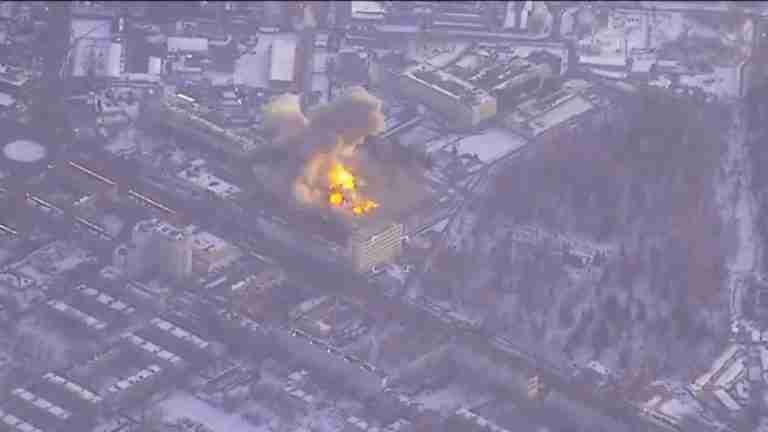
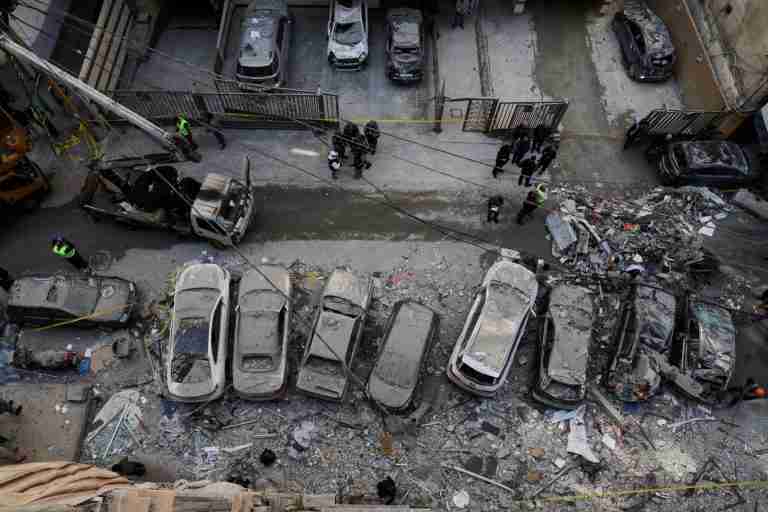
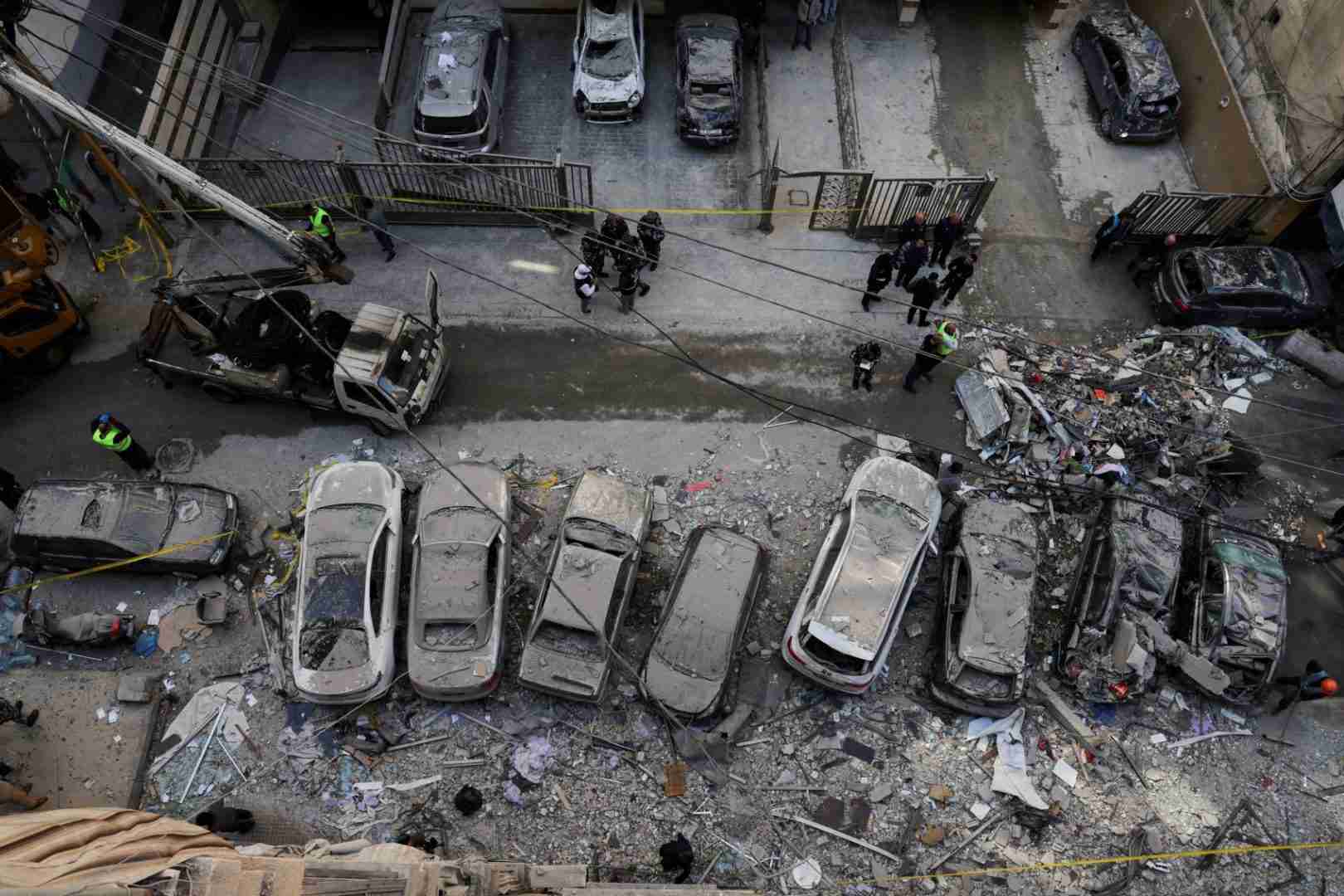
Iran fired at Israel and targets across the Middle East on Wednesday, while at least three ships were hit in the Gulf, demonstrating Tehran can still fight back and disrupt energy supplies despite the most intense U.S.-Israeli strikes yet.

Oil prices that shot up earlier this week have eased and stock markets have rebounded, with investors betting for now that U.S. President Donald Trump will find a quick way to end the war he began alongside Israel nearly two weeks ago.

But so far there has been no let-up on the ground, or any sign that ships can resume sailing through the Strait of Hormuz, where a fifth of the world’s oil has been blockaded behind a narrow channel along the Iranian coast in the worst disruption to energy supplies since the oil shocks of the 1970s.

The Pentagon described its attacks on Iran on Tuesday as the most intensive of the war so far. After offices of an Iranian bank were hit overnight, Iran said it would now attack U.S. and Israeli banking targets across the Middle East.

ISRAEL BELIEVES MOJTABA KHAMENEI INJURED

A source told Reuters that Israel believed Iran’s new supreme leader, Mojtaba Khamenei, had been injured early in the war, when airstrikes killed his father, mother, wife and a son.

Reuters was unable to confirm the younger Khamenei’s condition, but state television has used a term that means “wounded veteran” to describe him. He has not appeared in public or issued any direct message since being named the successor for his long-ruling father, Ayatollah Ali Khamenei.

The Iranian military said on Tuesday it had launched missiles at a U.S. base in northern Iraq, the U.S. naval headquarters for the Middle East in Bahrain, and at Be’er Ya’akov city in central Israel.

Explosions rang out in Bahrain, while in Dubai four people were injured by two drones that crashed near the airport, the world’s busiest for international travellers, now scaled back because of the war.

In Tehran itself, residents said they were growing accustomed to the nightly airstrikes that have sent hundreds of thousands of people fleeing to the countryside and contaminated the city with black rain from oil smoke.

“There were bombings last night but I did not get scared like before. Life goes on,” Farshid, 52, told Reuters by phone.

Three more merchant ships were struck in the Gulf by unknown projectiles, according to agencies that monitor maritime security, raising the number of ships reportedly hit since the war began to 14.

Crew were evacuated from a Thai-flagged bulk freighter, after an explosion caused a fire on board. A Japan-flagged container ship and a Marshall Islands-flagged bulk carrier also sustained damage.

IEA PROPOSES HUGE RELEASE OF OIL RESERVES

Oil prices, which shot up briefly to nearly $120 a barrel on Monday, have since settled below $90, suggesting investors are betting that Trump will be able to halt the war and reopen the strait before an oil supply shock causes an economic meltdown.

Sources said the International Energy Agency would recommend releasing as much as 400 million barrels from global strategic oil reserves to stabilise prices, by far a record. That would still amount to less than three weeks’ flow through the strait.

U.S. and Israeli officials say their strikes have severely damaged Iran’s missile and drone capabilities, as well as decapitating its leadership. Their stated aim is to end Iran’s ability to project force beyond its borders and destroy its nuclear programme, though they have also invited Iranians to rise up and topple the country’s clerical rulers.

But the longer the war goes on, the greater the risk to the global economy from an energy shock, and if the war ends with Iran’s system of clerical rule still in place Tehran is likely to declare victory.

While many Iranians want change and some openly celebrated the death of the supreme leader whose security forces killed thousands of anti-government protesters just weeks ago, there has been no sign of protest since the war began.

Iran’s police chief Ahmadreza Radan said on Wednesday anyone taking to the streets would be treated “as an enemy not a protestor. All our security forces have their fingers on the trigger.”

Iran has said it will not let ships through the strait until U.S.-Israeli attacks cease, and it will not negotiate. Trump has threatened to hit Iran “twenty times harder” if it blockades the strait, but U.S. officials have not revealed any military plan to unblock it by force.

The U.S. Central Command said 16 Iranian mine-laying vessels had been “eliminated” near the strait on Tuesday.

In Israel, explosions from air defences intercepting missiles punctuated the pre-dawn darkness as air raid sirens blared and Israelis scrambled to safe rooms and shelters.

Israeli launched a barrage on Beirut aimed at rooting out the Iran-backed group Hezbollah which has fired into Israel from Lebanon in solidarity with Tehran.

More than 1,300 Iranian civilians have been killed since the U.S. and Israeli air strikes began on February 28, according to Iran’s U.N. ambassador, Amir Saeid Iravani. Scores have also been killed in Israeli attacks on Lebanon.

Iranian strikes on Israel have killed at least 11 people and two Israeli soldiers have died in Lebanon. Washington says seven U.S. soldiers have been killed and around 140 have been wounded.

Reporting by Parisa Hafezi in Dubai, Alexander Cornwell in Tel Aviv and Reuters bureauxWriting by Peter Graff; Editing by Sharon Singleton
KLM cancels all flights to Dubai until March 28

KLM added that it remained available to repatriate stranded travellers, a process handled through the Dutch Ministry of Foreign Affairs

International News via Reuters:

Dutch airline KLM has canceled all flights to Dubai until March 28 due to the war in the Middle East, it said on Wednesday.

“Due to the ongoing geopolitical unrest in the Middle East, KLM has decided to cancel all flights to Dubai through March 28th”, KLM, the Dutch arm of Air France-KLM, said.

KLM added that it remained available to repatriate stranded travellers, a process handled through the Dutch Ministry of Foreign Affairs.

Reporting by Charlotte Van Campenhout. Editing by Mark Potter

UK’s Reeves says she will do what she can to soften energy price hit

“At this stage I think it would be unwise to speculate on what the impact on inflation, growth or interest rates would be,” Reeves told lawmakers

International News via Reuters:

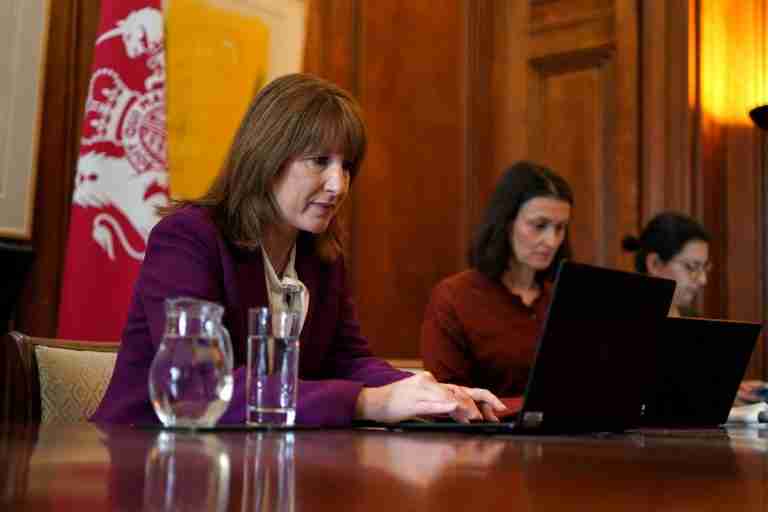
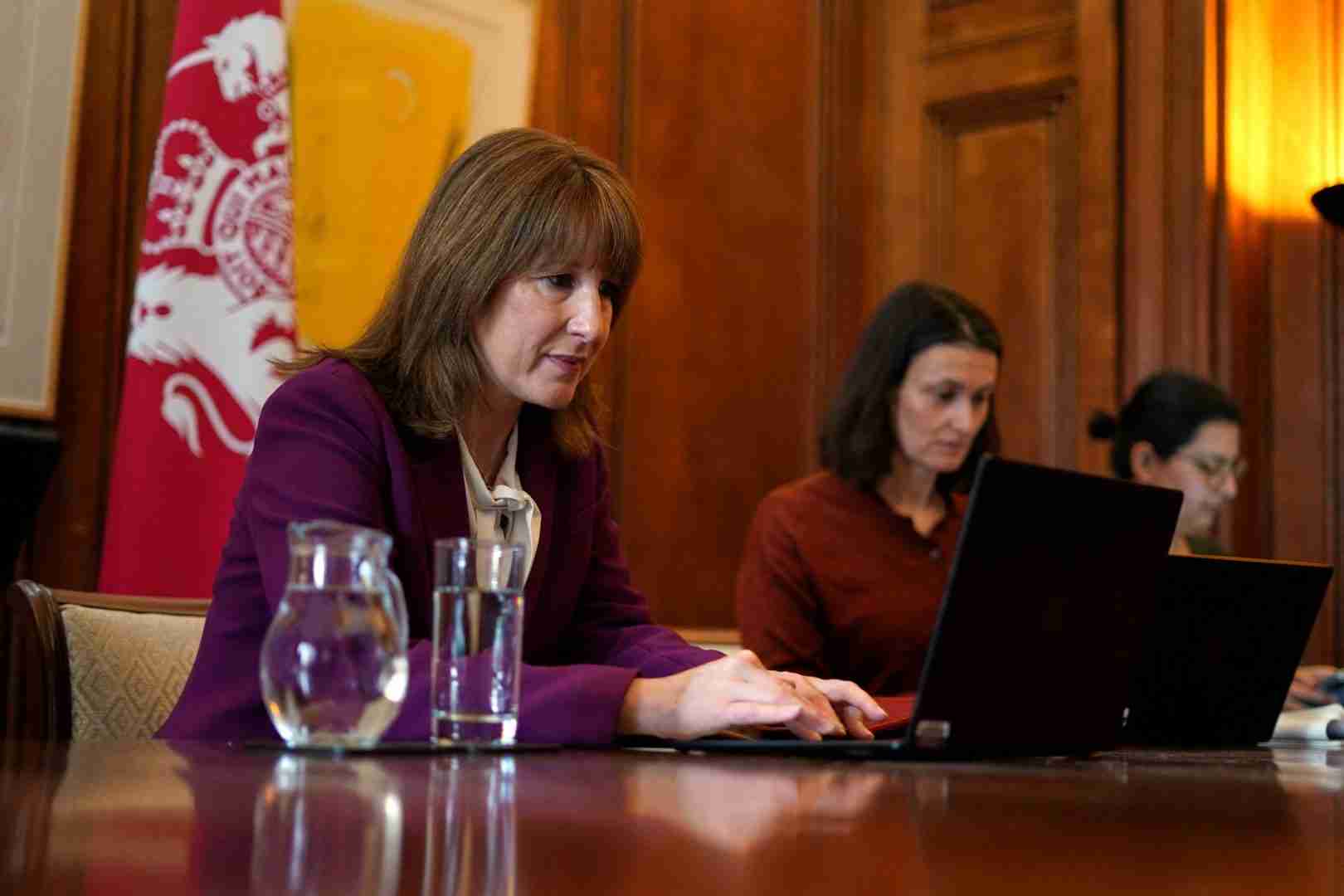
British finance minister Rachel Reeves said on Wednesday it was too soon to judge the impact of the conflict in the Middle East on the UK economy but she would do what is possible to soften the hit to consumers.

“At this stage I think it would be unwise to speculate on what the impact on inflation, growth or interest rates would be,” Reeves told lawmakers.

“But of course we are looking at a number of scenarios and monitoring very carefully this situation,” she said.

Reeves has previously said inflation is likely to rise as a result of the rise in global energy prices caused by the U.S.-Israeli war with Iran.

An official with Britain’s fiscal forecasters said on Tuesday the country’s inflation rate could end the year at around 3% rather than 2% as assumed by the Office for Budget Responsibility if energy prices stayed at current levels.

Asked whether Britain could fund big cost-of-living support measures, as it did in after Russia’s full-scale invasion of Ukraine in 2022, Reeves said the government would “always make sure that we do everything we can to protect consumers but also to ensure our national security as an economy.”

Prime Minister Keir Starmer has said he wants to speed up an increase in defence spending.

“We are in a stronger position than when I became chancellor to respond to shocks like these, and we are in a stronger position in many ways than when Russia illegally invaded Ukraine,” Reeves told parliament’s Treasury Committee.

She added that it was now more practical to offer targeted support to consumers than it was four years ago.

British government bonds have fallen sharply since the start of the conflict in the Middle East, in part due to concerns among investors about the risk of higher borrowing by the government to shield households and businesses from higher energy bills.

Reporting by David Milliken and Andy Bruce Writing by William Schomberg

Six die in Swiss bus blaze after reports that person set fire to themself

Police said the bus became engulfed in flames on Tuesday evening on a road in Kerzers, a town of about 5,000 inhabitants in the western canton of Fribourg

International News via Reuters:

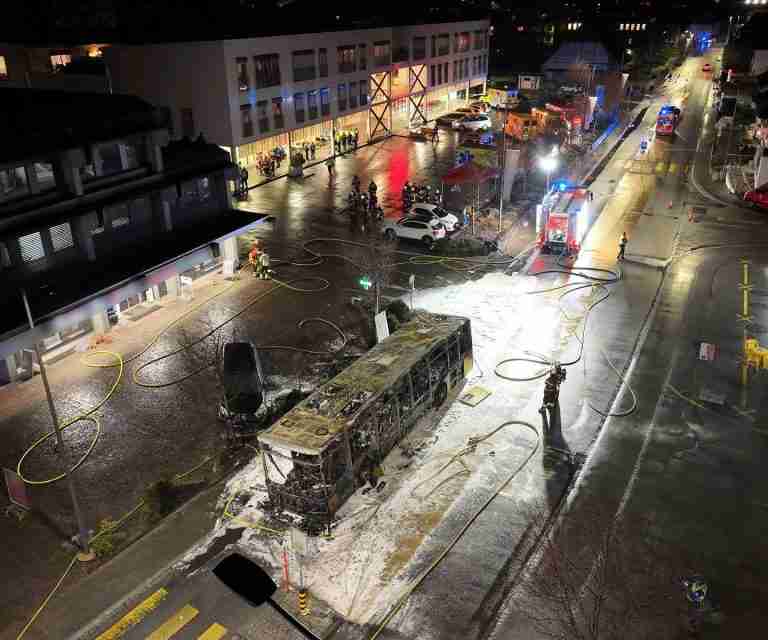
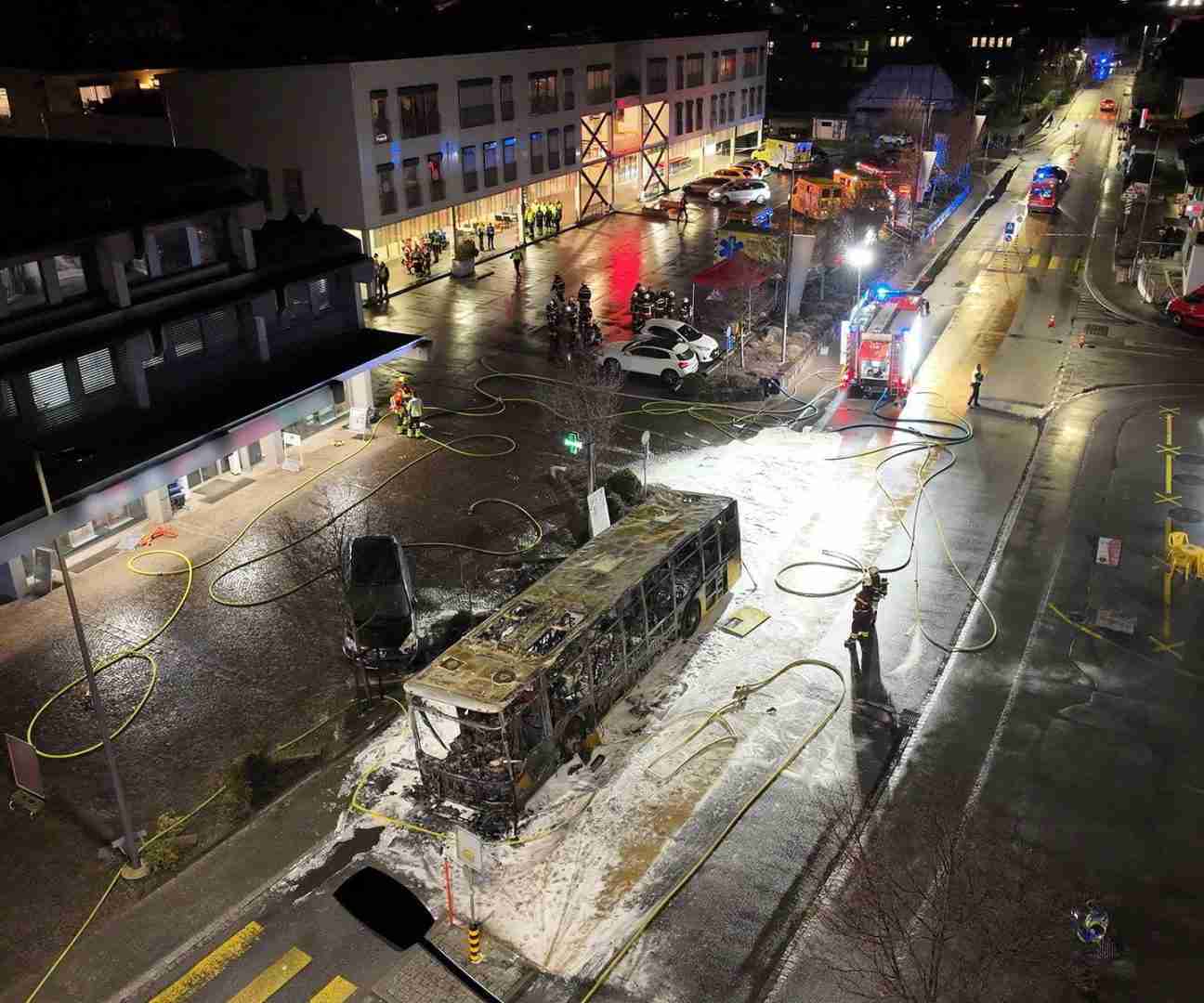
At least six people died and three were injured in a bus fire in Switzerland possibly caused by someone setting fire to themself.

Police said the bus became engulfed in flames on Tuesday evening on a road in Kerzers, a town of about 5,000 inhabitants in the western canton of Fribourg, about 20 km (12 miles) from the Swiss capital Bern.

“At this stage, we have elements suggesting a deliberate act by a person who was inside the bus,” said Frederic Papaux, a spokesperson for Fribourg police.

Investigators were looking into reports that a person had poured fuel on themselves, said Christa Bielmann, another local police spokesperson. It was too early to say whether the incident was terrorism-related, she told a press conference.

“We have no indication that suggests we might be dealing with a terrorist attack,” Romain Collaud, a local politician in Fribourg, told the Swiss-French broadcaster RTS. 

Three injured people were taken to hospital, police said. Two others caught in the blaze also received attention but did not need to be hospitalised.

Passengers had been seen escaping from the burning bus, panicked and injured, Papaux said. Video after the flames were extinguished showed the charred remains of the yellow vehicle.

Swiss media outlet 20 Minutes said it had seen a video taken at the scene in which an injured person said: “A man set himself on fire. He poured gasoline over himself and then lit himself.”

Mina Gendre was about to close up the shop she works in when she saw the bus, which had stopped unexpectedly across the road, had a small fire inside. 

Within half a minute or so, it burst into flames, she said.

“It was so shocking,” said Gendre. “I saw someone come running out of the bus on fire.”

With smoke billowing out of the bus, Gendre shut the door of the shop to protect it as bystanders helped put out the fire on the person with a jacket, she said.

SHOCKED TOWN 

Vanessa Liuzzi, 37, a local resident who left flowers at the scene, said the story doing the rounds was that someone had set fire to themselves. 

“That’s what people are saying. And that things have got to the point where there are attacks or attempts on people’s lives is obviously really sad. No one thought that it could happen here in Kerzers,” she said.

“I’m shocked, I’m sad, I’m in despair,” she said.

Margrit Schneider, an 82-year-old local resident, fought back tears at the scene. “I’ve been here 65 years, something like this has never happened here before,” she said.  

The identification of the six people who died could take several days, Collaud said, adding it was not known if the person suspected of starting the fire was among the victims. 

Nirosan Vickneswaran, 37, was waiting anxiously for news of his cousin who was on the bus when it went up in flames.

“We don’t know if he’s injured or worse,” he said.

Police had taken DNA samples from the family and indicated it might take up to 48 hours to find out, he said.

“All we know is that somebody set fire to themselves,” he added.

A memorial was being erected in the village square, Swiss newspaper Tribune de Geneve reported.

The head of the bus company Postauto, Stefan Regli, said it was a terrible tragedy and extended his condolences.

“All Postauto and Swiss Post employees, like myself, are shocked and deeply saddened,” Regli said in a statement.

Swiss President Guy Parmelin offered his condolences and said the incident was being investigated. 

“It shocks and saddens me that once again people have lost their lives in a serious fire in Switzerland,” he said in a statement on X, noting investigations were under way.

In January, Switzerland was rocked by a fire in a bar in the Swiss ski resort of Crans-Montana that killed 41 ​people and injured 115.

“The wounds from Crans-Montana are still fresh, fuelling strong reactions today,” Collaud said. “These are clearly events no one wants to experience, or relive. Yet they seem part of everyday life now, happening more frequently in Switzerland and worldwide, which is unfortunate,” he told RTS. 

Reporting by Dave Graham in Kerzers, Olivia Le Poidevin in Geneva; additional reporting by Cecile Mantovani; Editing by Alex Richardson and Andrew Cawthorne

Kremlin says Britain was involved in Ukraine’s missile strike on Russia

The Bryansk regional governor said Tuesday’s strike killed at least six civilians and injured 37 in what he called a “terrorist missile attack”, without saying what was hit

International News via Reuters:

The Kremlin on Wednesday accused British specialists of involvement in a deadly Ukrainian strike on the Russian city of Bryansk that used British Storm Shadow missiles and said it would take Britain’s role “into account”.

The Bryansk regional governor said Tuesday’s strike killed at least six civilians and injured 37 in what he called a “terrorist missile attack”, without saying what was hit. Ukraine said it had struck a key plant producing missile components. Moscow accused it of deliberately targeting civilians.

Asked by Reuters if there would be a military response to the use of British missiles against sovereign Russian territory, Kremlin spokesman Dmitry Peskov said Russia would take into account the British involvement.

“It is obvious that the launch of these missiles was impossible without British specialists,” Peskov told reporters. “We are aware of this, we know it well, and we naturally take it into account.”

“In order to prevent such barbaric actions by the Kyiv regime from continuing, the special military operation is being conducted,” he said, adding that one of the goals of the operation was to demilitarise Ukraine.

There was no immediate comment from London, though Russia has repeatedly said that Ukraine needs Western expertise and Western-supplied targeting data and satellite imagery to fire advanced missiles deep into Russia.

Ukrainian President Volodymyr Zelenskiy said that Kyiv had struck one of the most important military factories in Bryansk that produced electronics for Russian missiles.

Russian Foreign Ministry spokeswoman Maria Zakharova said the strike was premeditated and directed against civilians, and challenged the U.N. to assess what had occurred.

Reporting by Dmitry AntonovWriting by Maxim Rodionov; editing by Guy Faulconbridge and Philippa Fletcher

European shares fall as Mideast tensions keep investors on edge

The pan-European benchmark STOXX 600 fell 1% to 600 points by 0927 GMT with most major sectors in negative territory

International News via Reuters:

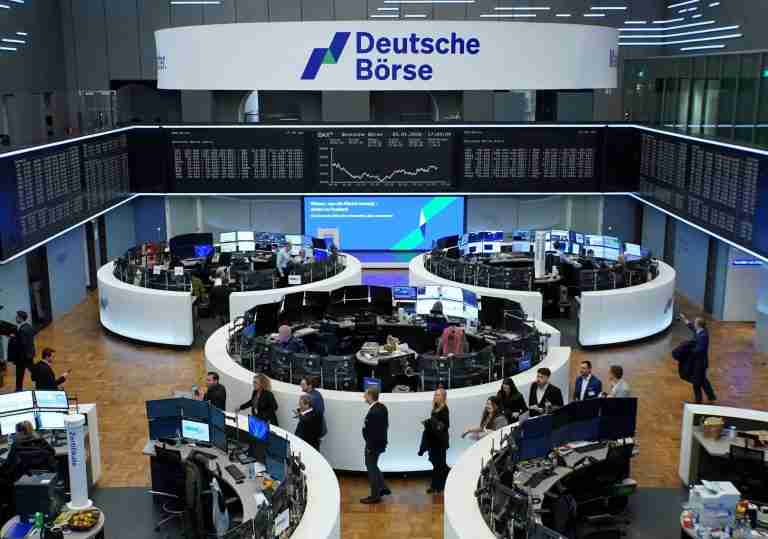
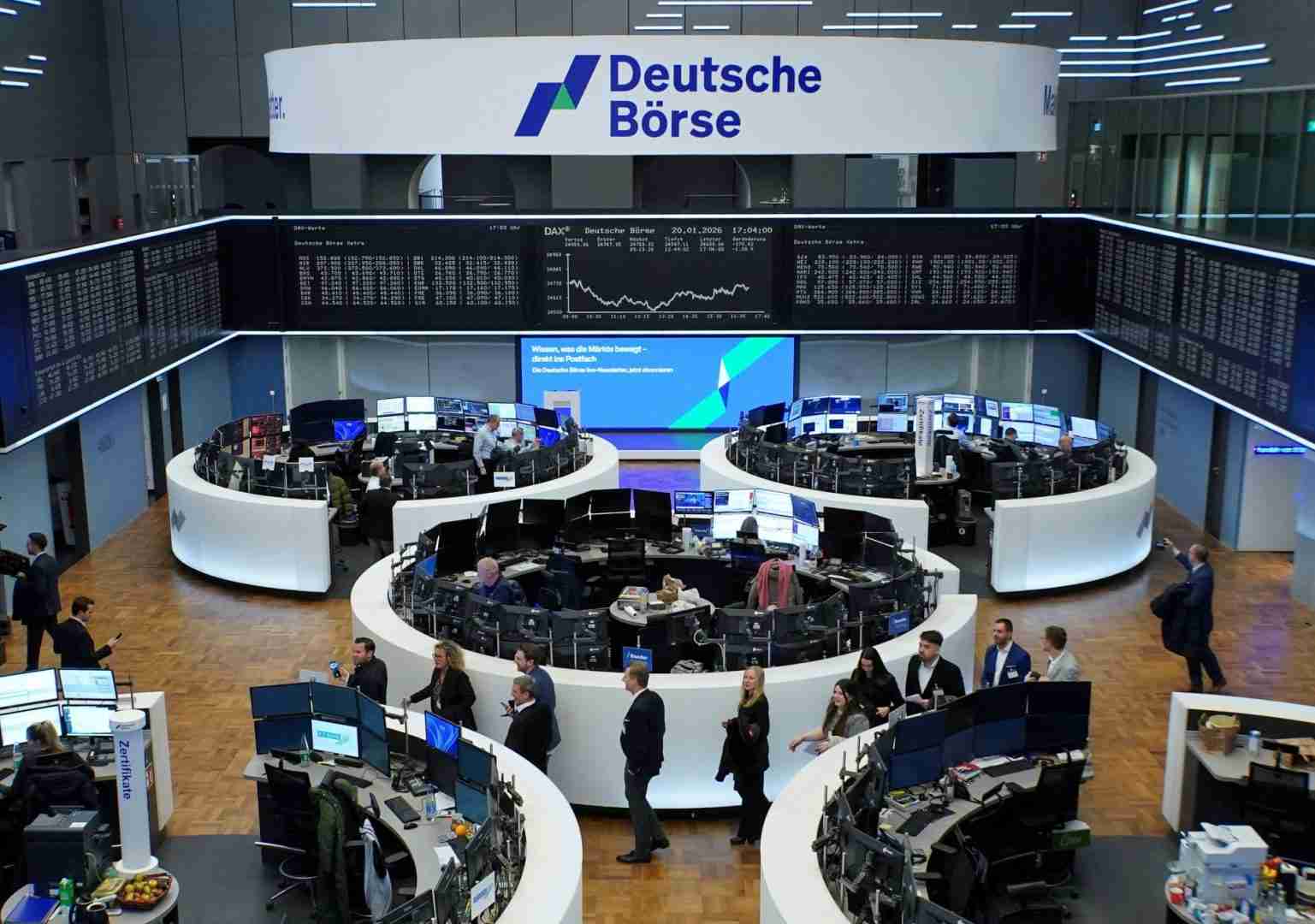
European shares declined on Wednesday as investors weighed the economic fallout from the 12-day Middle East war and digested a slate of mixed corporate updates.

The pan-European benchmark STOXX 600 fell 1% to 600 points by 0927 GMT with most major sectors in negative territory. 

Among regional indexes, Germany’s DAX fell the most, shedding 1.7%, weighed down by a nearly 5.9% drop in Rheinmetall after the defence firm’s 2025 sales growth outlook fell short of some analyst forecasts.

The decline also pulled the broader defense sector down 2.8%, while the industrial sector fell 2%.

The U.S. and Israel traded air strikes with Iran following heavy bombardments the previous day, contrasting with U.S. President Donald Trump’s comments that sparked hopes of a de-escalation and helped the STOXX 600 log its best day since April 2025 on Tuesday.

“There is a chance that the Iran war will not be done and dusted quickly,” said Ipek Ozkardeskaya, senior analyst at Swissquote Bank.

The war has disrupted key shipping routes through the Strait of Hormuz, which carries one-fifth of the global oil trade, lifting oil prices and raising the risk of a price shock and trimming more than 5% off the STOXX 600 from its late February record high.

European Central Bank policymakers are also contending with sluggish growth in the region, while renewed inflation fears have increased bets for an interest rate hike this year, as per LSEG data. This is a sharp contrast to a previous expectation of a slight cut before the conflict began.

The ECB will move quickly and decisively if more expensive fuel due to the Iran war feeds into durably higher eurozone inflation, policymaker Joachim Nagel told Reuters.

Beata Manthey, Citigroup’s European Equity strategist also flagged supply chain risks stemming from disrupted commodity flows.

“While some sectors’ hedging practices could offset the recent rise in commodity prices over the near term, margins could nevertheless prove hard to protect should input prices remain high for a sustained period,” Manthey said in a note.

Barclays warned the index could fall to about 550 points if oil prices stay near $100 a barrel.

Among other movers, Gerresheimer slumped 9.2% after the German medical equipment maker deferred the release of 2025 financial statements to June, citing probes into its business deals.

Legal & General shares declined 5% after the insurer missed annual profit expectations.

On the flip side, Balfour Beatty forecast a high-single-digit percentage rise in 2026 profit from operations, sending the construction group 7.3% higher.

On the macro front, the inflation in euro zone’s largest economy eased slightly in February to 2.0%. Attention now turns to U.S. inflation data due later in the day as well as comments from European Central Bank President Christine Lagarde, Vice President Luis de Guindos and board member Isabel Schnabel.

Reporting by Avinash P in Bengaluru; Editing by Rashmi Aich and Vijay Kishore

Serious Round Traffic Collision in Devonshire

Police Statement at 12.34am:

There has been a serious road traffic collision in the area of Devonshire Bay and South Road, Devonshire.

The roadway is currently blocked, with traffic diversions at Collector’s Hill and Brighton Hill.

Motorists are advised to approach these locations with caution and follow the instructions of officers assisting with traffic flow.

Hayward: PLP colleagues are confident in leadership bid

October will see the de facto election of Bermuda’s next Premier. Only one contender… for now

The PLP Leadership contest is so far a one-horse race – but it’s a long time until the party election in October.

Gary Foster Skelton spoke to Jason Hayward about his recent claim to the throne, so to speak.

However, Gary was unable to pry any plans out of another perceived potential contender – Curtis Dickinson…

WATCH the report above.

Airlines raise fares as Middle East conflict lifts fuel costs, disrupts flights

Jet fuel prices, which were around $85 to $90 per barrel before U.S.-Israeli strikes on Iran, have soared to between $150 and $200

International News via Reuters:

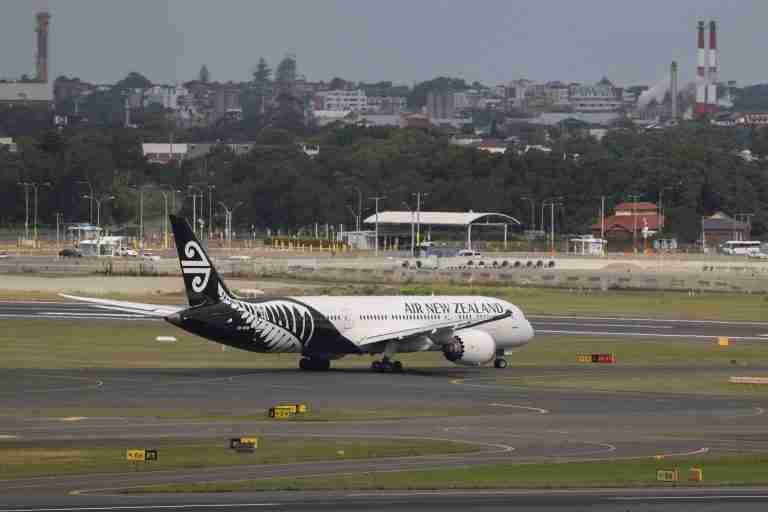
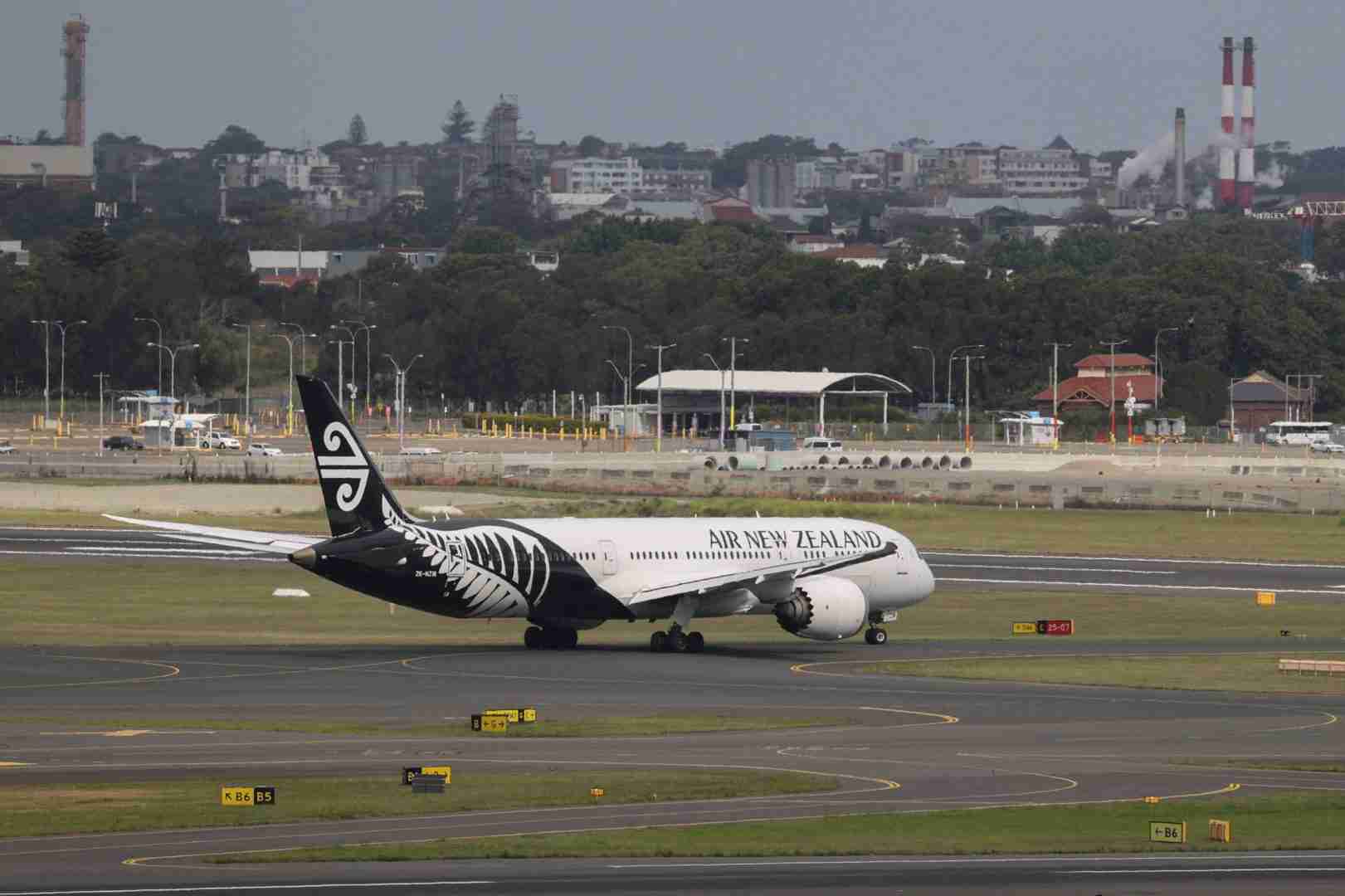
Australia’s Qantas Airways, Scandinavia’s SAS and Air New Zealand announced airfare hikes on Tuesday, blaming an abrupt spike in the cost of fuel caused by the Middle East conflict that is rattling global aviation.

Jet fuel prices, which were around $85 to $90 per barrel before U.S.-Israeli strikes on Iran, have soared to between $150 and $200, New Zealand’s flag carrier said as it suspended its financial outlook for 2026 due to uncertainty over the conflict.

The war has disrupted a key oil-export corridor, driving up airline costs, pushing fares higher on some routes and deepening concern about a broader hit to global travel.

“Increases of this magnitude make it necessary to react in order to maintain stable and reliable operations,” an SAS spokesperson said, adding it had implemented a “temporary price adjustment.”

The largest Scandinavian airline last year temporarily adjusted its fuel hedging policy due to uncertain market conditions and said that it had no fuel consumption hedged for the following 12 months.

Several Asian and European airlines, including Lufthansa and Ryanair, have oil hedging in place, securing a part of their fuel supplies at fixed prices.

Finnair, which had hedged over 80% of its first-quarter fuel purchases, warned that even the availability of fuel could be at risk if the conflict dragged on.

“A prolonged crisis could affect not only the price of fuel but also its availability, at least temporarily,” a Finnair spokesperson said, adding that this was not happening yet.

Kuwait, a major jet fuel exporter to north-west Europe, has faced output cuts.

AIRSPACE CHAOS IN THE MIDDLE EAST

Highlighting the airspace chaos in the Middle East, planes arriving in Dubai were briefly placed in a holding pattern on Tuesday due to a potential missile attack, flight tracking service Flightradar24 said on X. The planes eventually landed.

Airlines are already adjusting networks and prices in response. Qantas said it was exploring redeploying capacity to Europe as airlines and passengers seek to evade disruptions in the Middle East, while Cathay Pacific said it would add flights to London and Zurich in March as airspace closures and capacity constraints drive up fares on Asia-Europe routes.

Air New Zealand said it has raised fares across domestic, short‑haul and long‑haul routes, warning that further price or schedule changes may follow if jet‑fuel costs remain elevated. Hong Kong Airlines also announced it will increase fuel surcharges by up to 35.2% starting Thursday.

Air India​ said on ‌Tuesday it would begin a phased increase of fuel surcharges on its domestic and international routes, citing rising jet‑fuel prices.

Some European carriers said they saw no immediate need to raise prices. IAG, the owner of British Airways, said it was well hedged for the near term and had no plans to adjust fares. British Airways, however, said it had brought forward the end of its winter-season flights to Abu Dhabi because of the “continuing uncertainty.”

AIRLINE SHARES STABILISE AFTER SELLOFF

Some airline stocks rose as oil prices fell to around $90 a barrel on Tuesday from a high of $119 on Monday after U.S. President Donald Trump said on Monday the war could be over soon.

In Europe, airline shares were up between 4% and 7%. Shares of major U.S. carriers Delta Air Lines, United Airlines and American Airlines were down between 1% and 2% in afternoon trade.

Most major U.S. airlines no longer hedge their fuel costs, unlike European and Asian carriers that continue to maintain active hedging programs. Fuel is typically their second-largest expense after labor.

Without the protection of fuel hedges, airlines have little choice but to lean on higher fares to offset rising costs. Deutsche Bank’s latest data shows U.S. airfares climbing quickly, with both last-minute tickets and advance-purchase fares surging over the past week.

With passenger traffic continuing to outpace the growth in airline seat capacity, and some carriers forecasting record spring break demand, analysts say the backdrop should help the market absorb higher fares.

Rising fuel costs are also expected to push airlines to slow their growth plans, effectively boosting their pricing power. Still, it remains unclear whether these steps will be enough to fully protect profit margins.

Major U.S. carriers are widely expected to update their outlooks ahead of an industry conference next week, but some analysts have already trimmed their profit and capacity forecasts for the current quarter and the full year. Analysts at Melius, for example, have cut their net‑income estimates by 10%.

CONFLICTS SHRINKING AVAILABLE AIRSPACE

In addition to high fuel costs, tightening airspace also threatens to derail the global travel industry, as pilots reroute to avoid the Middle East conflict and capacity on popular routes fills up.

Emirates, Qatar Airways and Etihad typically jointly account for about one-third of the passenger traffic between Europe and Asia and fly more than half of all passengers from Europe to Australia, New Zealand and Pacific Islands, according to Cirium.

European airlines have already struggled with the shortage of available airspace created by the war in Ukraine, with many avoiding Russian airspace and flying longer international routes. Now, with even less available airspace, they say their business has become even more challenging.

($1 = 7.8236 Hong Kong dollars)

Reporting by Shivangi Lahiri, Shivansh Tiwary Sameer Manekar in Bengaluru, Rajesh Kumar Singh in Chicago, Julie Zhu in Hong Kong, Heekyong Yang and Hyun Joo Jin in Seoul, Stine Jacobsen in Copenhagen, Essi Lehto in Helsinki, Panarat Thepgumpanat in Bangkok, Sam Tabahriti and Khanh Vu in Hanoi; Writing by Anne Marie Roantree, Joanna Plucinska and Rajesh Kumar Singh; Editing by Jamie Freed, Tomasz Janowski and Nick Zieminski

Europe stocks mark biggest daily jump in months on Gulf de-escalation hopes

The pan-European STOXX 600 index ended 1.9% higher, after closing on Monday at its lowest level in more than two months

International News via Reuters:

European shares marked their biggest one-day jump since April last year on Tuesday as global markets bet that U.S. President Donald Trump would call off the U.S.-Israeli war on Iran soon, lifting investor sentiment and sparking a broad-based rally.

The pan-European STOXX 600 index ended 1.9% higher, after closing on Monday at its lowest level in more than two months.

Bank stocks, which have been among the worst hit as a result of recent investor concerns, recovered 3.6%, led by HSBC and Santander and giving the biggest boost to the STOXX 600.

Spain’s financial-heavy index outperformed major peers with a 3.1% rise, followed by the export-heavy DAX in Germany. Both logged their steepest one-day gain since April 2025.

Industrials gained 2.8%, while travel and leisure stocks jumped 2.5%, on prospects of flights and tourism returning to normal operations.

Although the U.S. and Israel pounded Iran with what the Pentagon and Iranians on the ground said were the most intense airstrikes of the war, investors were encouraged by Trump’s saying on Monday that the war was “very complete, pretty much”.

“For now, we believe the shock is likely to be short-lived. We see disruptions measured in weeks, rather than in months or days,” said analysts led by Jean Boivin at BlackRock Investment Institute.

“In Europe, we like the financial, pharma and infrastructure sectors,” they added.

Oil prices remained in the spotlight, as Iran said it would block shipments from the Gulf until the attacks cease. They swung widely, falling 11% to below $90 a barrel and energy shares reversed declines to close 0.3% higher.

The spike in oil prices since the U.S.-Israeli strikes on Iran has revived inflation fears globally, putting central banks in a tough spot. Europe, which is heavily dependent on energy imports, remains vulnerable when growth is already fragile.

Three European Central Bank policymakers said that it should take its time to reassess policy and stay on its present course for now. Investors are now pricing in at least one ECB rate hike by the end of the year, LSEG data shows.

“In the escalation scenario, the ECB could think to hike once in the short term,” said Michele Morganti, equity strategist and head of insurance at Generali Investments.

“The risks continue to be high, and Europe has much to lose from the energy … and growth point of view.”

Among notable individual stock price moves, Volkswagen climbed 2.6% as the German autos group forecast a margin recovery after a tough 2025.

Persimmon jumped 4.5% after the British housebuilder beat expectations for fiscal year 2025 revenue and adjusted pretax profit, while Rotork slumped 13% to the bottom of the STOXX 600 after it published annual results.

Reporting by Avinash P and Purvi Agarwal in Bengaluru; Editing by Mrigank Dhaniwala, Maju Samuel and Alexander Smith

Polish president’s rival bill heats up spat over EU defence scheme

Poland was the biggest beneficiary of the EU’s 150-billion-euro Security Action for Europe (SAFE) initiative

International News via Reuters:

Poland will be able to use profits from central bank gold and foreign exchange reserves instead of EU loans to boost military spending, according to a bill proposed by the president on Tuesday that drew a rebuke from Prime Minister Donald Tusk.

Poland was the biggest beneficiary of the EU’s 150-billion-euro Security Action for Europe (SAFE) initiative, but the nationalist opposition Law and Justice party (PiS) labelled it a German plot to meddle in Polish affairs that would saddle Warsaw with debt and limit its flexibility regarding arms purchases.

President Karol Nawrocki, an ally of PiS, has proposed a plan to use Polish funds instead of the European Union loans.

“The funds generated by the National Bank of Poland, resulting from the market valuation of Polish gold and currency reserves, are to be allocated directly to financing defence purposes through a newly established fund,” according to Nawrocki’s bill, which was submitted to parliament on Tuesday.

Parliament, where Tusk’s pro-European government has a majority, is unlikely to approve the bill, but the row highlights the deep divisions at the top of the Polish state.

Tusk says the cheap financing provided by SAFE is essential to Poland’s security in the face of what it views as a rising threat from Russia.

“This (presidential) bill has no money – it has a new body, a council, new bureaucracy, and dozens of unnecessary regulations,” Tusk told reporters.

Nawrocki has criticised the government’s own bill, which creates a mechanism by which the 43.7 billion euros ($50.86 billion) made available to Poland under ‘SAFE’ would be disbursed. He has not yet said whether he will veto it.

If Nawrocki does veto that bill, the government is preparing a “plan B” that would still allow Poland to access SAFE funds, Tusk said earlier on Tuesday, without elaborating.

Reporting by Alan Charlish, Pawel Florkiewicz, Marek StrzeleckiEditing by Gareth Jones