Monday, November 9, 2026
Home Blog Page 433

FTSE indexes set for worst week in nearly a year as Middle East tensions weigh

The blue-chip FTSE 100 dipped 0.1% by 1130 GMT, while the FTSE 250 was flat, but both the indexes were on course for their worst weekly showing since the April 2025 rout
International News via Reuters:

The UK’s main indexes were on track for their biggest weekly decline in almost a year on Friday, as the escalating war in the Middle East fuelled concerns about a resurgence in inflation driven by higher energy prices.

The blue-chip FTSE 100 dipped 0.1% by 1130 GMT, while the FTSE 250 was flat, but both the indexes were on course for their worst weekly showing since the April 2025 rout triggered by U.S. President Donald Trump’s “Liberation Day” tariffs.

Shares of oil majors Shell and BP rose nearly 2%, tracking crude prices as the conflict kept shipping and energy exports through the vital Strait of Hormuz blocked. [O/R]

Qatar’s energy minister expects all Gulf energy producers to shut down exports within weeks. In an interview with the Financial Times, he said the move could drive oil to $150 a barrel.

Soaring energy prices have prompted traders to sharply pull back bets of interest rate cuts this year, with money market futures pricing in just 15% odds of a 25-basis-point rate cut from the Bank of England this month, compared with 80% before the conflict began.

Halifax data showed British house prices rose in February at the fastest annual pace since October, up 1.3% year‑on‑year and beating economists’ forecasts. But the lender warned that geopolitical uncertainty and renewed inflation pressures could slow the pace of any interest‑rate cuts, tempering the outlook for the sector.

Among other movers, Flutter Entertainment inched up 1.1% after activist investor Parvus Asset Management doubled its stake in the FanDuel-owner.

IMI rose 2% after the specialist engineering firm forecast mid-single-digit organic revenue growth for 2026, citing resilient demand in its automation segment, and announced a 500-million-pound share buyback programme.

Reporting by Tharuniyaa Lakshmi in Bengaluru; Editing by Maju Samuel

30 transitional care beds to be located at MWI

Two floors at the Mid-Atlantic Wellness Institute have been identified to be used for additional beds needed to release acute care beds at King Edward Memorial VII Hospital, according to the Health Minister

Rooms will be converted into long term hospital beds .. at the Mid-Atlantic Wellness Institute to help ease pressures at the hospital’s Acute Care Wing and end so-called ‘bed blocking.’


According to Health Minister Kim Wilson, additional funding will be used to re-develop a 30 bed transitional care unit at M.W.I. out of the Ministry’s $305.2 million dollar budget this fiscal year.

She stated today during at budget briefing that hospital beds are increasingly being occupied by those who are medically fit to be discharged however, cannot transition back into the community due to limited care options.

China expresses ‘grave concern’ over EU’s proposed Industrial Accelerator Act

A ministry spokesperson said China will closely monitor the legislation process of the act and assess its impact and China and Beijing will resolutely defend Chinese firms’ legitimate rights and interests

International News via Reuters:

China commerce ministry on Friday expressed “grave concern” over the EU’s proposed Industrial Accelerator Act (IAA) which imposes restrictions on foreign investment in batteries, EVs, solar PV and critical raw materials, according to a statement.

A ministry spokesperson said China will closely monitor the legislation process of the act and assess its impact and China and Beijing will resolutely defend Chinese firms’ legitimate rights and interests.

The intensely debated IAA, unveiled Wednesday, will set low-carbon and ‘Made in EU’ requirements for public procurement of, or subsidies for, making aluminium, cement and steel, and technologies including wind turbines, electrolysers or electric vehicles.

The Chinese spokesperson said the bloc’s use of industrial development and green transition goals to justify new barriers amounts to protectionism that will backfire, undermine global trade rules and fair competition, and disrupt supply‑chain stability.

Reporting by Shi Bu and Ryan Woo; Editing by Toby Chopra

Iceland plans August 29 referendum on EU negotiations

Reykjavik in 2013 abandoned EU membership talks after four years of negotiations

International News via Reuters:

Iceland should hold a referendum on August 29 on resuming talks to join the European Union, the Nordic country’s government said on Friday, fast-tracking a pledge to hold the vote no later than 2027 at a time of geopolitical unrest.

Reykjavik in 2013 abandoned EU membership talks after four years of negotiations, but a rise in the cost of living and the war in Ukraine in recent years rekindled the island nation’s interest in joining the bloc, polls have shown.

Repeated threats by U.S. President Donald Trump to annex Greenland, located between Iceland and the United States, also made the question of EU membership more pressing for the North Atlantic country, home to almost 400,000 people.

Foreign Minister Katrin Gunnarsdottir told a press conference the government’s decision on the proposal was unanimous, public broadcaster RUV reported.

The outcome of the membership negotiations with the EU will be subject to a second referendum on whether to join the bloc.

Reporting by Louise Rasmussen and Anna Ringstrom, editing by Terje Solsvik

Germany’s Merz faces first state election test

There will be four more state elections this year

International News via Reuters:

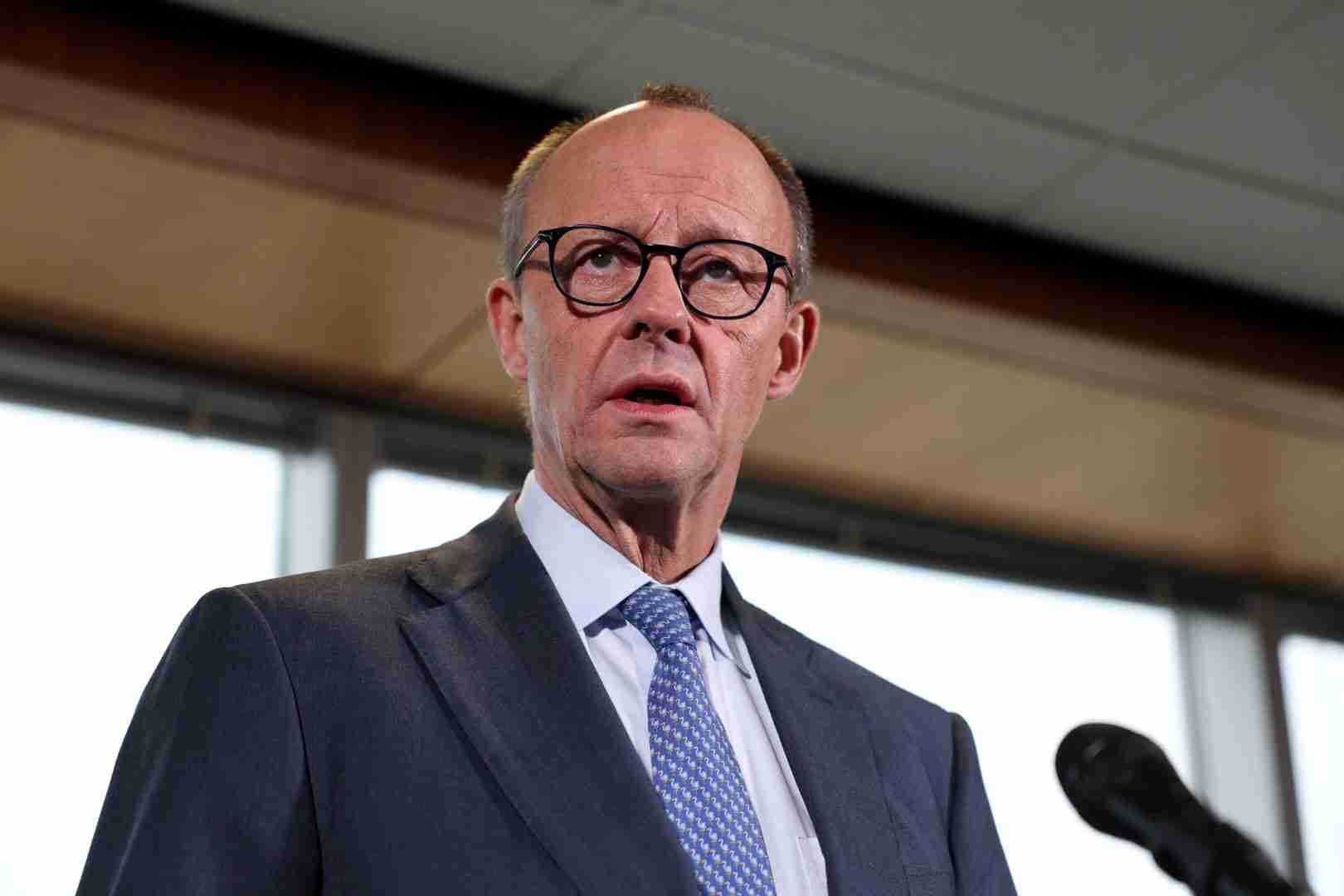
German Chancellor Friedrich Merz faces his first electoral test since taking office last May on Sunday, when voters go to the polls in the south-western state of Baden-Wuerttemberg, offering his party a chance to reclaim dominance.

There will be four more state elections this year.

Baden-Wuerttemberg, home to Mercedes-Benz and a historic centre of Germany’s car industry, was for years a stronghold of Merz’s conservatives. But for the past decade, his Christian Democrats (CDU) have been the junior partner in a Greens-led coalition there.

Opinion polls suggest the partnership will continue, although it is unclear whether the CDU’s candidate – 37-year-old newcomer Manuel Hagel – or the more experienced Cem Ozdemir from the Greens will come out on top to replace the popular Green premier, Winfried Kretschmann.

With the latest poll for the broadcaster ZDF putting the two neck-and-neck on 28% support, a victory for the Greens could stir internal party discontent with Merz, whose own ratings have hit record lows.

Still, moderate former agriculture minister Ozdemir  would be unlikely to cause serious problems for the government in the Bundesrat, the upper house of parliament that represents the states.

FAR-RIGHT AFD MAINTAINS STRONG SUPPORT

Aside from the choice of premier, there will be close attention to the far-right Alternative for Germany (AfD), which has been polling at around 20%, maintaining the strong gains it has made across Germany in recent years.

Merz has ruled out any cooperation with the AfD, whose support in Baden-Wuerttemberg – one of Germany’s most prosperous regions – has been boosted by a crisis in the country’s car industry.

Also underlining the ongoing transformation in German politics is the possibility that the far-left Left Party will pass the threshold to enter state parliament, and the shrivelling in support for the centre-left Social Democrats to single figures in recent polls.

Overshadowing the election is the uncertainty caused by the U.S.-led conflict with Iran, which has already jacked up fuel prices and could stoke deeper economic problems if the war continues, although there is little sign of any direct impact on the vote.

“Voters are smart, they know that in Baden-Wuerttemberg, it’s about state political issues,” said Manfred Guellner, head of the polling group Forsa.

The Baden-Wuerttemberg election will be followed by a vote in the neighbouring state of Rhineland-Palatinate on March 22, then by ballots in Saxony-Anhalt, Berlin and Mecklenburg-Vorpommern in September.

Reporting by James Mackenzie, editing by Andrei Khalip

EU halts visa-free travel for Georgian officials

Once among the most democratic and pro-Western of the successor states to emerge from the Soviet Union, Georgia has turned increasingly authoritarian since the outbreak of the war in Ukraine

International News via Reuters:

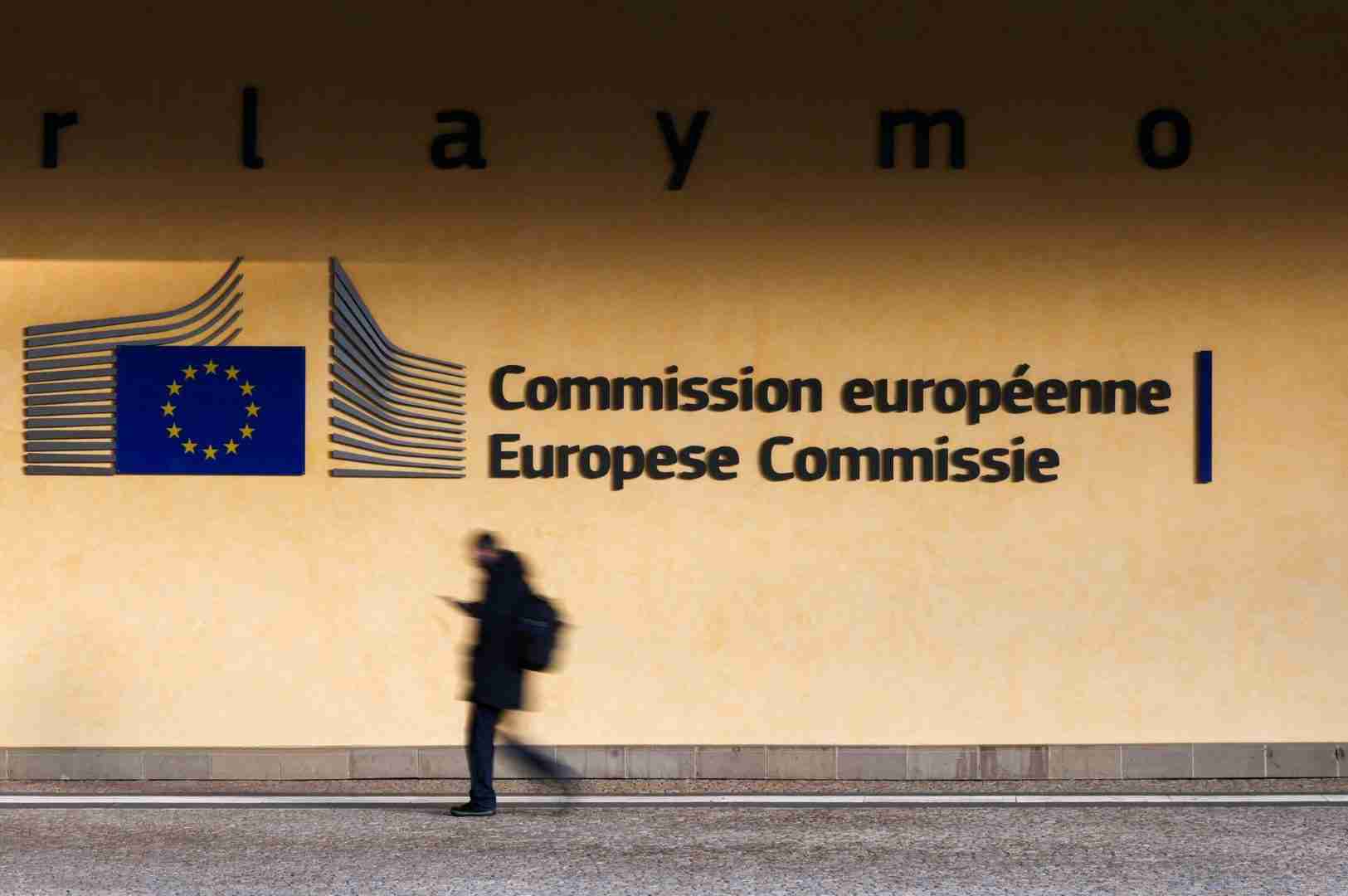
The European Commission said on Friday it was suspending visa-free travel for holders of Georgian diplomatic, service and official passports in response to what it called a deliberate and persisting violation of the commitments taken under its visa-free regime.

“Representatives of Georgian authorities have to use their diplomatic or service passport when travelling to the EU for official and diplomatic purposes. Not doing so may result in the issuance of an entry ban,” the Commission said in a statement.

Once among the most democratic and pro-Western of the successor states to emerge from the Soviet Union, Georgia has turned increasingly authoritarian since the outbreak of the war in Ukraine and has deepened economic ties with neighbouring Russia.

Reporting by Gianluca Lo Nostro; Editing by Makini Brice

UK house prices rise but inflation fears cloud outlook

Halifax said house prices were 1.3% higher in the 12 months to February than a year earlier, above the 0.9% forecast in a Reuters poll of economists and up from 1.1% growth in January

International News via Reuters:

British house prices rose in February at the fastest pace since October, data showed on Friday, but lenders raised their mortgage rates over concerns the Middle East conflict could lead to higher inflation and halt a run of cuts to borrowing costs.

Halifax said house prices were 1.3% higher in the 12 months to February than a year earlier, above the 0.9% forecast in a Reuters poll of economists and up from 1.1% growth in January.

Prices rose 0.3% month-on-month in February, in line with the poll forecast but below January’s 0.8% increase.

An indicator for future borrowing costs for homebuyers has risen this week.

The average two-year fixed residential mortgage rate climbed to 4.84%, according to data provider Moneyfacts, which said rates had been gradually falling as an interest rate cut by the Bank of England had been priced in for March until the end of last week.

Swap rates, a key measure lenders use to determine the cost of mortgage borrowing, have also soared. Two-year swaps jumped as much as 0.42 percentage points over the course of this week.

GEOPOLITICAL RISKS CLOUD RATE OUTLOOK

Amanda Bryden, Halifax’s head of mortgages, said geopolitical uncertainty could influence the outlook for inflation and the wider economy.

Britain’s inflation rate fell to a one-year low at the start of the year, and the BoE expects it to drop near its 2% target in April.

Matt Swannell, chief economic adviser to the EY ITEM Club, said interest rates could stay higher for longer if the escalation in the Middle East conflict persisted, potentially affecting the housing market.

“The sharp rise in oil and, particularly, gas prices has caused financial markets to reassess the speed and extent to which the (BoE’s) Monetary Policy Committee will likely lower interest rates,” Swannell said.

Adam French, head of consumer finance at Moneyfacts, said some lenders started to raise mortgage rates this week.

The BoE is expected to keep interest rates at 3.75% this month after holding them in February.

Financial markets were on Friday no longer fully pricing in an interest rate cut by the BoE during 2026, down from expectations of two quarter-point cuts at the end of last week before the conflict began.

The BoE said on Thursday that the number of mortgages approved by British lenders for house purchases fell unexpectedlyin January to the lowest in two years.

MARKET GATHERS PACE BUT CHALLENGES REMAIN

February’s figures suggested some momentum in the housing market after a softer end to 2025, but affordability remained stretched and supply constrained, Halifax said.

Prime Minister Keir Starmer’s government wants to speed up construction of new homes, but a shortage of properties for sale is likely to keep upward pressure on prices.

Data from rival lender Nationwide, published on Monday, showed prices rose by 0.3% in February, taking annual house price inflation to 1.0%.

Separate figures from S&P Global on Thursday showed Britain’s construction sector extended its longest run of decline, with the PMI pointing to a sharp downturn in housebuilding.

Reporting by Suban Abdulla; Editing by Kate Holton, Catarina Demony, Nivedita Bhattacharjee and Alex Richardson

Colombians to elect new Congress, chose three presidential candidates

Voters will choose from over 3,000 candidates to fill 102 Senate seats and 182 House seats, in a vote analysts predict will be divided among dozens of parties

International News via Reuters:

Colombians head to the polls on Sunday to elect a new Congress and choose three of the presidential candidates who will contest elections this May, a vote that will shape the next president’s ability to push through legislation and fulfill their agenda.

Voters will choose from over 3,000 candidates to fill 102 Senate seats and 182 House seats, in a vote analysts predict will be divided among dozens of parties, likely forcing the next president to form a coalition government. 

Some 41.2 million eligible voters will also be able to participate in consultations through which the right, center and left-wing parties will select their presidential candidates.

However, the candidates leading the polls, leftist Ivan Cepeda, an ally of current President Gustavo Petro, and right-wing Abelardo De La Espriella, will not participate in Sunday’s consultations but will be on the ballot for the May 31 presidential election.

Sergio Guzman, the director of consultancy firm Colombia Risk Analysis, said that with a Congress split among several political parties, “any government will see its legislative proposals diluted” and have difficulty getting them approved.

Morgan Stanley also expects Colombia’s fragmented party system to persist in Sunday’s legislative vote, meaning centrist and traditional parties will likely remain crucial to forming congressional alliances.

JPMorgan said Colombian assets currently price little extra election risk, suggesting the legislative vote alone is unlikely to move markets unless it clearly signals a shift in policy.

A divided result would likely keep markets steady. Stronger opposition momentum could support the peso and narrow sovereign spreads, while gains for the left could weigh modestly on local assets and keep fiscal concerns in focus.

For Guzman, the consultations to choose candidates will allow the right, the left, and the center parties to measure their strength in the lead-up to the presidential elections.

Petro has repeatedly questioned the software that will be used for the vote count in the elections, calling it unreliable and vulnerable to fraud, and has raised doubts about the way in which the physical tally sheets from the polling stations, called E-14, are filled out manually.

“The transparency of the Colombian electoral process is complete and absolutely guaranteed. There are absolute guarantees with the software and the E-14 forms,” ​National Registrar Hernan Penagos recently said.

The registrar denied the possibility the software used to tally the votes could be altered, and reiterated the main guarantee would be the 860,000 jurors at the 125,000 polling stations set up throughout the country, in addition to more than three million party witnesses.

Some 246,000 members of the military forces and the national police have been placed on high alert to prevent attacks by illegal armed groups seeking to disrupt the election or pressure voters to cast their ballots for certain candidates, Defense Minister Pedro Sanchez said this week.

Leftist guerrillas throughout the country often carry out attacks during elections, a common occurrence of the six-decade internal armed conflict that has left more than 450,000 dead in Colombia.

Report by Luis Jaime Acosta in Bogotá, additional report by Rodrigo Campos in New York, editing by Chris Reese

Sterling pulls back as Iran war sees investors flock to safe havens

Sterling was last down 0.15% against the dollar to $1.3335 on the day, and set for a weekly decline of around 1.1%

International News via Reuters:

The British pound slipped for a second straight session on Friday as the widening Iran conflict dominated market sentiment and pushed investors towards safe-haven assets.

Sterling was last down 0.15% against the dollar to $1.3335 on the day, and set for a weekly decline of around 1.1%. Against the euro, the pound was broadly steady at around 86.83 pence, with the euro also trading lower against the dollar which has strengthened amid the Middle East crisis. 

Hopes for a de-escalation faded this week as attacks persisted and the conflict broadened, raising uncertainty about how long the crisis could last.

Rising oil prices have fuelled inflation worries, particularly for energy-importing countries such as the UK, and have prompted a shift in interest rate expectations.

The Bank of England, due to announce its latest interest rate decision later this month, is now no longer expected to cut policy then. Markets have pared back chances of a March cut to just 15%, down from roughly 75% a week ago, according to LSEG data. 

Traders were last pricing in an around 65% chance of a rate cut by the end of the year, after still expecting two cuts from the Bank of England this year at the end of February. 

“Given the uncertainty from what’s happening in the Middle East, it makes more sense for the Bank of England to kind of just keep rates on hold and assess how the situation in the Middle East plays out before cutting,” Hardman said.

Rate-cut expectations being pushed back could support the pound, he added.

“But in terms of the bigger picture, obviously the energy price shock is a bigger negative for the pound, really and I think that would outweigh any support for the pound from the Bank of England holding back on cutting rates this month,” he said. 

The yield on British government bonds picked up again Friday, with interest-rate expectation sensitive 2-year gilt yields last trading roughly 9 basis points higher at 3.894% after hitting their highest level since mid-October earlier in the day.

Reporting by Sophie Kiderlin, Editing by Louise Heavens

Traffic diverted after paget rollover

Woman extracted and taken to King Edward VII Memorial Hospital as police ask witnesses to call 211

Shortly after 1:00 a.m. on Friday, 6th March 2026, police officers on mobile patrol came across an overturned vehicle on South Road near the junction with St. Paul’s Lane in Paget.

Details surrounding the circumstances remain unclear at this time. However, it is believed the female driver had to be extracted from the overturned vehicle.

EMTs attended the scene and the woman was transported to King Edward Memorial Hospital for treatment. The extent of her injuries is unknown at this time.

Traffic is currently being diverted onto Middle Road while police process the scene.

Witnesses are encouraged to contact police on 211 at the earliest opportunity.

Gov’t plans 10% vehicle licence fee cut

Legislation to reduce licensing costs for motorists will be tabled in the House of Assembly tomorrow

Government media release:

Tomorrow in the House of Assembly, the Government will table legislation to reduce vehicle licence fees by a further 10 percent, providing additional relief to motorists across Bermuda.

When this measure is passed, annual licence fees will have been reduced by 10 percent on top of the 10 percent reduction already delivered since 2018, continuing our record of providing relief where possible. In practical terms, this means that in 2026, families will be paying between $57 (Class A) and $318 (Class H) less per year to licence their vehicles.

For many Bermudians, a car is not a luxury. It is how parents get their children to and from school, how workers commute to their jobs early in the morning or late at night, and how families manage the everyday responsibilities of life on our island. Reducing these fees is a practical way to help ease the cost pressures that many households continue to face.

This measure builds on the work outlined in the recent Budget, including the largest payroll tax cut for workers in Bermuda’s history, saving Bermudians up to $840 a year. This reflects the Government’s commitment to ensuring that economic progress translates into real relief for Bermudian families.

Some have suggested that relief should only be provided to a limited group of people. Our view is different. Every Bermudian who pays vehicle licence fees deserves to benefit when Government can reduce costs. Families across Bermuda are feeling the effects of rising global prices, and broad-based relief ensures that working people in every parish feel the difference.

Importantly, this reduction is being delivered while the Government continues to manage the country’s finances responsibly, strengthen Bermuda’s economic position, and steadily reduce the national debt.

This legislation reflects a simple principle: when the country is doing better, Bermudians should benefit too.

We look forward to presenting the Bill to Parliament tomorrow and continuing the work of building a fairer Bermuda where progress is shared by everyone.