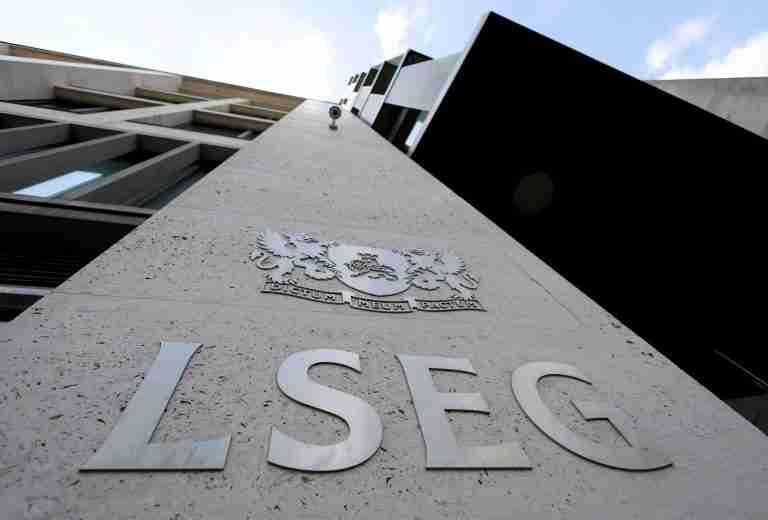
Under the deal, LSEG will provide a high-performance, low-latency system for ASX 24, which offers trading in Australian and New Zealand equity, commodity and interest rate derivatives, including futures and options
International News via Reuters:
The London Stock Exchange Group said on Wednesday that it would help upgrade Australian exchange operator ASX’s derivatives market trading platform as part of a partnership deal.
Under the deal, LSEG will provide a high-performance, low-latency system for ASX 24, which offers trading in Australian and New Zealand equity, commodity and interest rate derivatives, including futures and options.
The upgrade would enable the Australian exchange operator to expand ASX 24’s product offerings and respond to increasing sophistication in global derivatives trading, LSEG said.
ASX’s ageing settlement systems have been blamed for several trading outages, and the bourse operator has drawn criticism from the Australian Securities and Investments Commission and the Reserve Bank of Australia.
A new clearing system will run on more advanced technology, replacing the three-decade-old Clearing House Electronic Subregister System (CHESS).
“With the CHESS failure still casting a long shadow and regulatory scrutiny ongoing, confidence won’t be restored by announcements alone,” said Marc Jocum, senior product and investment strategist at Global X ETFs.
“With a target go-live of first half of 2028, the market will be monitoring every milestone across the 2026 and 2027 design, testing and migration timeline closely.”
Reuters is a news provider for LSEG’s Workspace terminal and other products.
Reporting by Roshan Thomas and Prerna Bedi in Bengaluru; Editing by Anil D’Silva
The school in Minab was hit on Saturday, the first day of U.S. and Israeli attacks on Iran
International News via Reuters:
A United Nations panel of experts said on Wednesday it was “deeply disturbed” by the deaths of children, after the bombing of the Shajareh Tayyebeh girls’ school in southern Iran, which it said killed more than 160 children, citing reports.
The school in Minab was hit on Saturday, the first day of U.S. and Israeli attacks on Iran.
U.S. Secretary of State Marco Rubio said on Monday that the country’s forces “would not deliberately target a school”.
Israel has said it is investigating the incident.
“The Committee is alarmed by reports of strikes on civilian infrastructure, including schools and hospitals, which have injured and traumatised children, and claimed many young lives,” the U.N. Committee on the Rights of the Child said in a statement.
Children must be protected from war, the committee added.
The U.N. Committee on the Rights of the Child is a body of 18 independent experts that monitors implementation of the Convention on the Rights of the Child, which protects children’s rights to education and safeguards them from violence.
On Tuesday, the U.N. human rights office urged what it called “the forces behind a deadly attack on a girls’ school in Iran” to investigate and share insights into the incident, without saying who it believed was responsible.
Iran’s ambassador to the United Nations in Geneva, Ali Bahreini, had raised the issue with U.N. human rights chief Volker Turk in a March 1 letter, calling the attack “unjustifiable” and “criminal”.
Reporting by Olivia Le Poidevin, additional reporting by Emma Farge, editing by Kirsti Knolle and Nivedita Bhattacharjee
With investors focused on the U.S.-Israeli war against Iran and the resulting surge in global energy prices, UK markets offered little reaction to finance minister Rachel Reeves’ budget update on Tuesday
International News via Reuters:
The pound rose for the first time this week on Wednesday, as traders took advantage of a retreat in the dollar, although nerves remained on edge amid uncertainty over the longer-term economic impact of the unfolding conflict in the Middle East.
With investors focused on the U.S.-Israeli war against Iran and the resulting surge in global energy prices, UK markets offered little reaction to finance minister Rachel Reeves’ budget update on Tuesday.
Sterling rose 0.33% to $1.34, lifting off Tuesday’s two-month low of $1.3255. It was steady against the euro, which traded at 86.97 pence.
The steep rise in oil and natural gas prices since the end of last week has prompted investors to sell those currencies whose economies are more dependent on energy imports, leaving the likes of the euro, pound and yen under pressure, and offering some support to the likes of the Norwegian crown.
“The dollar has been king during this crisis. However, it is pulling back slightly today, and G10 currencies are clawing back some recent losses. This is likely to be temporary, especially if the oil price remains to the upside,” XTB research director Kathleen Brooks said.
At 3%, UK inflation is still the highest among the world’s wealthiest nations and risks rising again, given the outsized rise in oil and gas, and the potential for higher costs of imported goods, given that shipping and insurance rates worldwide have also spiked.
RATE CUT EXPECTATIONS RECEDE
Money markets show traders are placing just a 30% chance on a rate cut this month from the Bank of England, down from a near certainty just last week and a mere 25% chance of a second rate cut by the end of this year. At the end of February, traders were broadly expecting two BoE cuts by December.
Reeves acknowledged the scale of the economic risks facing Britain, which is heavily exposed to the inflationary impact of an energy cost surge triggered by war against Iran.
Britain’s independent budget forecasters cut their economic growth projection for this year to 1.1% from a previous estimate of 1.4%. Growth was revised up slightly for both of the next two years to 1.6%, but that represented a pace barely half the average before the global financial crisis of 2007-08.
Furthermore, the Office for Budget Responsibility’s forecasts were made before the recent turmoil in the Middle East which, the OBR warned, “could have very significant impacts on the global and UK economies”.
Reporting by Amanda Cooper; Editing by Gareth Jones
What began as a single trip to Ghana nearly 20 years ago has grown into a movement bridging two continents. From expanding a once-struggling school and orphanage to launching a powerful new initiative called Sound of Praise, Janita Burke’s mission continues to expand — fueled by the generosity of Bermudians at home. Julie Matthews-Borchardt has the story.
Bermuda’s Women’s Senior National team suffered a difficult night at the Flora Duffy South Field Stadium as a ruthless Costa Rica side secured a dominant 8-0 victory in their Concacaf Women’s Championship qualifier.
The gulf in rankings was evident from the opening whistle. Costa Rica, currently ranked third in the region, wasted no time in asserting their authority on the National Sports Center turf. The visitors silenced the home crowd after just five minutes when Fabiola Villalobos found the opening goal, and the lead was doubled only three minutes later as Sheika Scott began her productive evening by finding the back of the net.
Bermuda struggled to contain the fluid movement of the Costa Rican attack. By the 16th minute, the scoreline read 3-0 following a strike from Priscila Chinchilla. The home side’s fortunes worsened on the half-hour mark when an unfortunate own goal extended the deficit, before Katherine Alvarado added a fifth in the 39th minute to effectively end the contest before the interval.
To their credit, Bermuda showed resilience in the second half, bolstered by the introductions of Jahni Simmons and Madison Mobray at the break. They managed to stem the tide for a significant period, but the relentless pressure from the visitors eventually told again. Stephannie Blanco made it six in the 70th minute, followed shortly by Scott claiming her second of the night from the penalty spot.
The scoring was rounded off in the 87th minute when Chinchilla mirrored Scott’s feat, netting her second and Costa Rica’s eighth. While the statistics painted a picture of dominance—with Costa Rica enjoying nearly 69 percent of possession—Bermuda did manage seven shots on target, testing the visiting defense despite the scoreline. However, the clinical nature of the Costa Rican front line proved the difference, as they converted eight of their ten shots on target to take all three points back to San José.
It was a tough opening 45 minutes for the Lady Gombey Warriors in their CONCACAF qualifier against Costa Rica under the lights of the Flora Duffy Stadium.
Las Ticas, ranked eleven places higher, asserted their dominance from the opening whistle and wasted no time getting on the scoreboard, finding the net in the fifth minute.
By the 15-minute mark, Bermuda were trailing three-nil, with Costa Rica’s pace and precision in the final third proving relentless. The visitors continued to press, capitalizing on space and maintaining control of possession.
An unfortunate own goal by Jaden Masters compounded Bermuda’s difficulties before Costa Rica added a fifth, sending the teams into the break with the score at five-nil.
Bermuda will need a composed and determined response in the second half against a clinical Costa Rican side. More to follow…
A tall ship that offers a unique learning experience is currently docked on Front Street.
We spoke with David Green, Program Director with Class Afloat, along with Bermudian student Indira Coleman, who is currently on board the Alexander Von Humboldt II. Set to depart tomorrow at 6, the vessel offers students a rare opportunity to expand their education beyond the classroom.
They told Kendal Trott what a typical day at sea looks like … from balancing academic studies to standing watch, maintaining the ship, and gaining real-world experience within the maritime industry.
We also spoke with Tamara Sukdeo, the mother of Bermudian student Indira Coleman. She shared what it’s like having her daughter take part in a learning voyage at sea.
She says the once-in-a-lifetime experience Indira is gaining — is shaping her independence, confidence, and global perspective.
In December, the EU shifted to a 90% cut in CO₂ emissions for all new cars from 2035 from an earlier 100% – dropping a full ban on combustion‑engine vehicles
International News via Reuters:
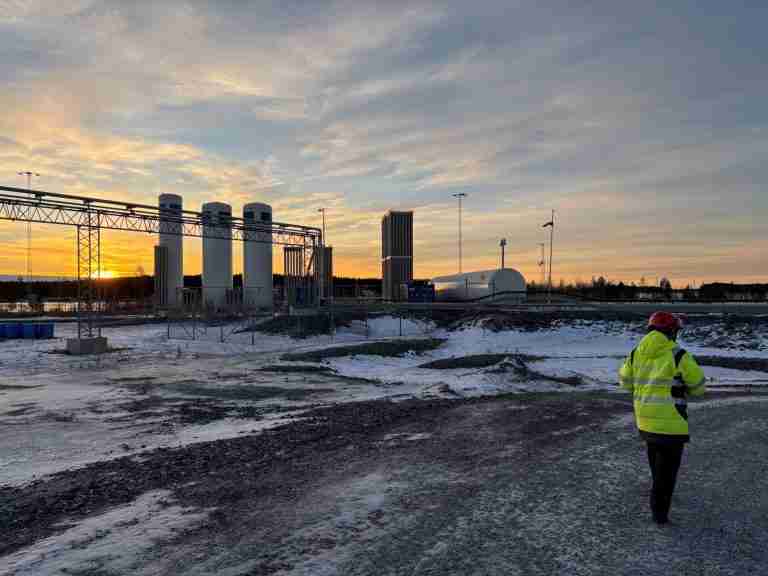
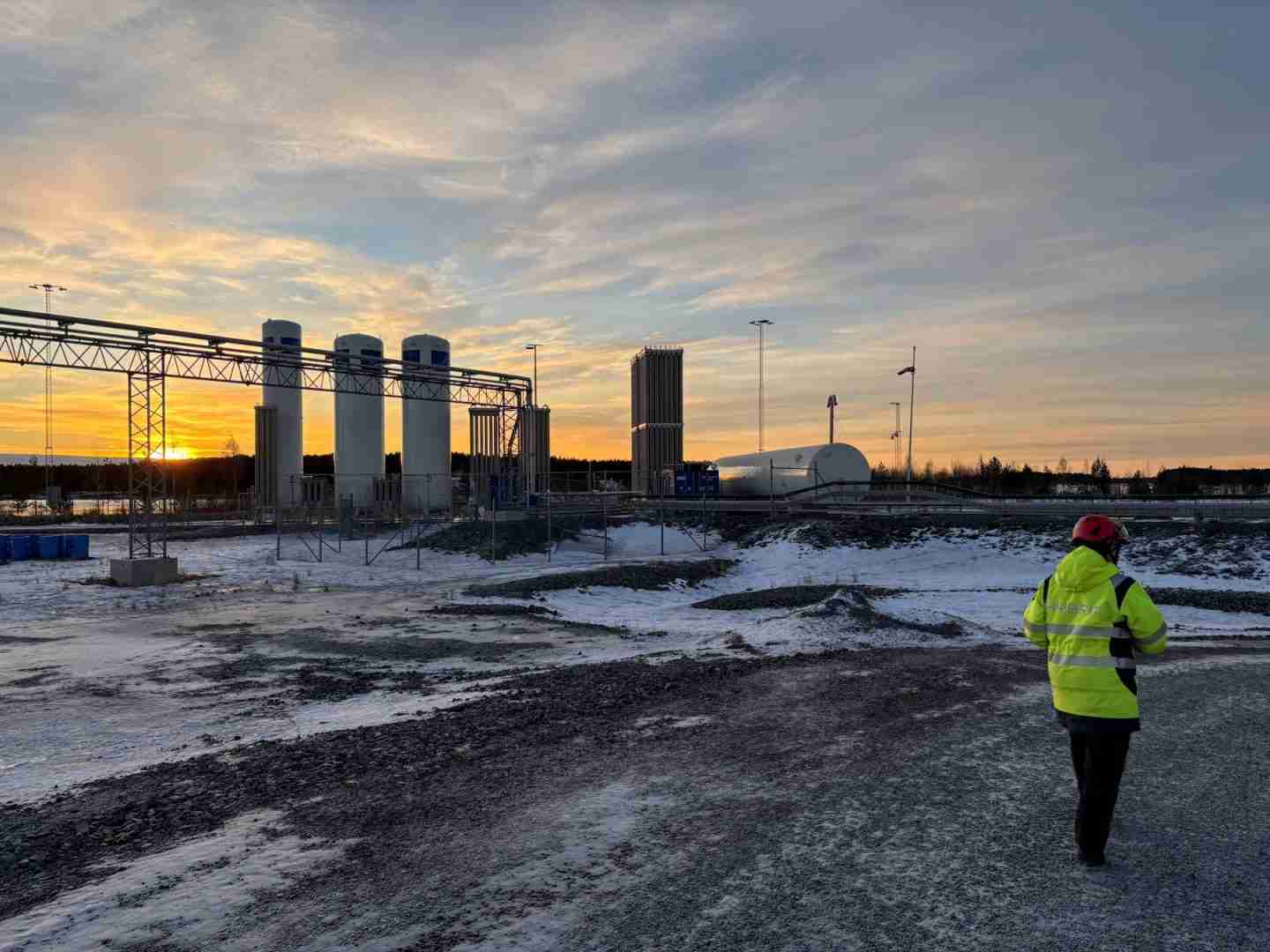
Buying expensive steel made with a nascent technology fuelled by green hydrogen that barely exists yet?
That is the prospect facing Europe’s automakers, already under pressure from intensifying Chinese competition, under European Union plans aimed at bolstering the bloc’s steel industry and still hitting its environmental targets.
In December, the EU shifted to a 90% cut in CO₂ emissions for all new cars from 2035 from an earlier 100% – dropping a full ban on combustion‑engine vehicles, which the industry had opposed due to the slow uptake of electric cars.
EU WANTS TO BOOST EUROPEAN STEEL SECTOR
Under the new proposal, tied to the EU’s Industrial Accelerator Act due to be presented on March 4, automakers, which account for a fifth of Europe’s steel demand, must compensate the remaining 10% through low‑carbon steel and alternative fuels.
The catch? European “green steel” projects have increasingly been delayed, paused or cancelled, as green hydrogen made with the use of renewable energy is proving expensive and not yet available at scale.
When available, such steel is expected to cost about a third more than the conventional product, according to pure-play green steel hopeful Stegra.
Confronted with such economics, steelmakers including ArcelorMittal and Salzgitter are pivoting to scrap‑based output. Others, most notably Thyssenkrupp, are renegotiating subsidy terms with Brussels.
Data from the Leadership Group for Industry Transition – an initiative gathering governments and global companies – showed planned annual green steel capacity reaching around 28 million tons by 2050. Reuters calculations, however, show that only a third of that capacity is under construction. Around 18 million tons of planned capacity would be in Europe.
“We don’t really have hydrogen available – at least not in the scale needed,” ArcelorMittal CFO Genuino Christino told Reuters last month.
Germany’s auto lobby has criticised the EU’s plan.
“This means that our industry is once again dependent on developments over which it has no influence,” VDA president Hildegard Mueller said in December.
Nearly a dozen executives and experts across the automotive and steel industries told Reuters they expected Brussels to introduce policies to create a new market for low-emission steel and encourage demand. Most expect only limited detail in the initial proposal, with key elements delayed.
“There’s confusion amongst a lot of people after the Commission’s proposal, trying to understand … what’s realistic, what the market would actually look like,” said Chris Heron, secretary general of E‑Mobility Europe.
DEFINITION ‘WILD WEST’
Another challenge is the absence of an agreed definition of green, or low‑carbon, steel. One steel executive described today’s market as a “wild west”. Reuters has found companies use varying terms, metrics and thresholds to market their lower‑emission products.
Switching from coal‑based blast furnaces to hydrogen‑based direct reduced iron (DRI) systems and electric arc furnaces (EAF) involves investments of billions of euros.
Many steelmakers are instead pivoting to a more cautious, step‑by‑step strategy, centred on the electric arc furnaces, which can initially run on scrap before switching to hydrogen-based DRI.
Scrap‑fed EAFs emit far less carbon than blast furnaces, but many industry players say they cannot be the long‑term solution because high‑quality scrap is limited.
Automakers are adjusting, too.
Volvo Car, which had aimed to start using hydrogen‑based steel from 2027 from SSAB, has agreed to begin using scrap‑based fossil‑free steel, later shifting to hydrogen‑based supply once production is in place.
“We believe that there will be a demand,” said Christian Levin, CEO of Traton’s Scania. “(But) we are not commercially offering it yet and we are not yet buying it because it is not yet available.”
Reporting by Marie Mannes, Greta Rosen Fondahn and Nick Carey; Writing by Christoph Steitz and Marie Mannes additional reporting by Javi West LarranagaEditing by Tomasz Janowski
Yeary’s departure is a major shakeup for the struggling U.S. chipmaker’s board, roughly a year after CEO Lip-Bu Tan took the job as boss
International News via Reuters:
Intel said on Tuesday that board chair Frank Yeary plans to retire following the company’s annual meeting in May and will be replaced by Craig Barratt.
Yeary’s departure is a major shakeup for the struggling U.S. chipmaker’s board, roughly a year after CEO Lip-Bu Tan took the job as boss. Last year, three board members announced their retirement several weeks after Tan was appointed CEO. Since he took over, Tan has implemented a plan to turn around the company.
Yeary served on the board since 2009 and presided over four CEO transitions during his tenure and has dealt with the decline of its manufacturing and the rise of Taiwanese rival Taiwan Semiconductor Manufacturing Co.
Barratt joined the Intel board in 2025 and has experience working at Qualcomm, and at Alphabet’s Google.
Reporting by Max A. Cherney and Stephen Nellis in San Francisco; Editing by Matthew Lewis
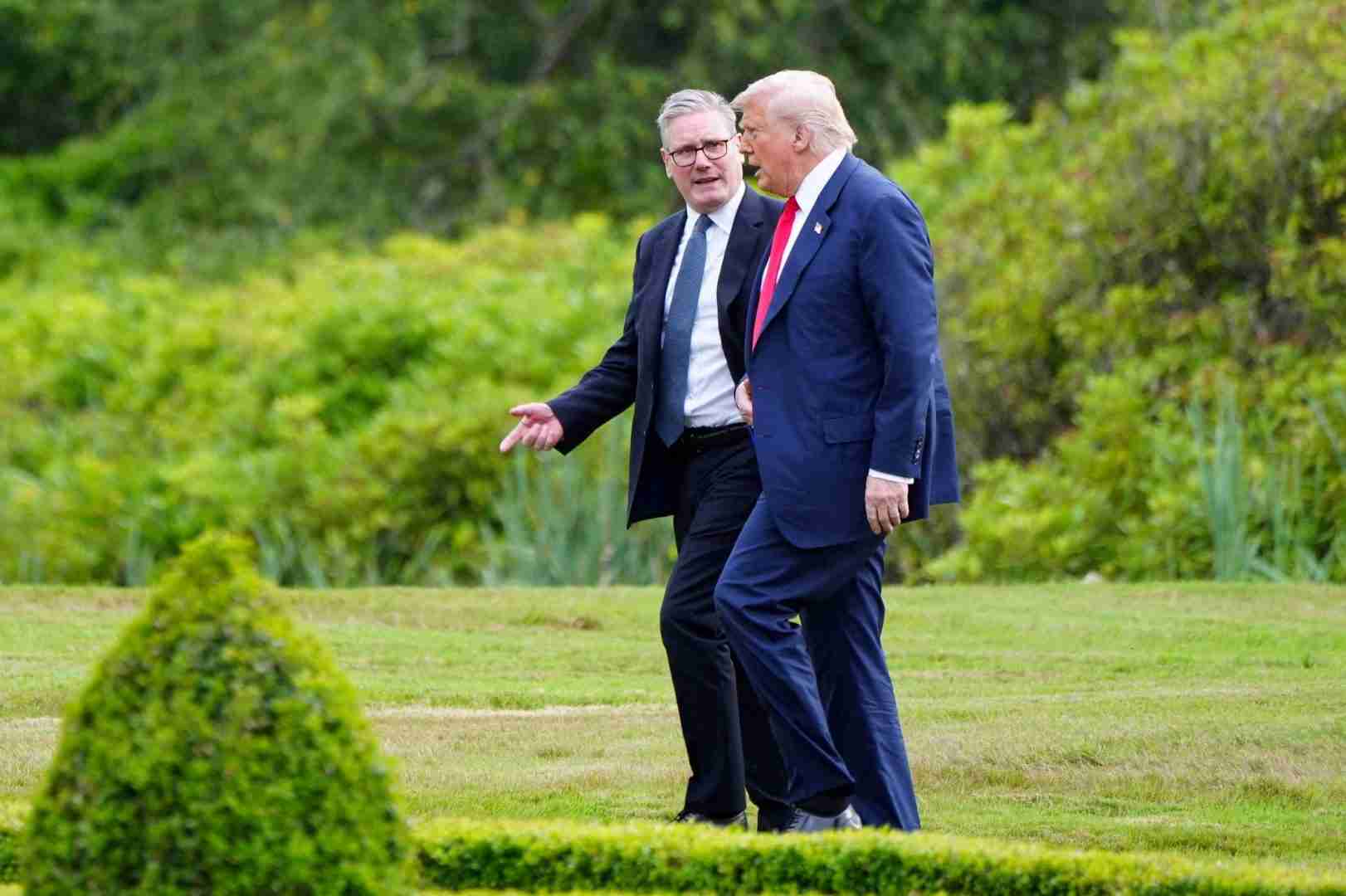
The Oval Office comments were Trump’s third broadside against Starmer this week as Washington’s campaign of air strikes against Iran stoked concerns among some U.S. partners
International News via Reuters:
President Donald Trump castigated one of the United States’ closest allies on Tuesday, comparing Prime Minister Keir Starmer unfavorably to Winston Churchill over Britain’s limited support for U.S. strikes on Iran.
“This is not Winston Churchill that we’re dealing with,” Trump said at the White House, referencing Starmer’s legendary World War Two predecessor.
The Oval Office comments were Trump’s third broadside against Starmer this week as Washington’s campaign of air strikes against Iran stoked concerns among some U.S. partners who see the war as reckless and a violation of international law.
Trump and his aides have long scolded European allies over their immigration policies, lower-than-pledged military spending and hostility to far-right movements. And Trump’s often tepid support for Ukraine and his threats to seize Danish territory have raised fears in Europe about the stability of a transatlantic alliance facing growing threats from Russia.
TRUMP’S COMPLAINT OVER IRAN STRIKES
Starmer has said Britain did not take part in the U.S.-Israeli assault on Tehran because any British military action must have a “viable, thought-through plan” and he did not believe in “regime change from the skies.”
But he has since allowed the U.S. to use UK bases to launch what he called limited and defensive strikes to weaken Tehran’s capabilities, after Iran hit U.S. allies in the region with drones and missiles. On Monday, a British base in Cyprus was hit by a drone that Cypriot officials said was likely launched by Iran-backed Lebanese group Hezbollah.
During a White House meeting with German Chancellor Friedrich Merz, Trump vented frustration that the U.S. had not been able to land its military jets at Britain’s strategically important air base, Diego Garcia.
“I’m not happy with the UK,” Trump said, unprompted, during a portion of the meeting that was open to the press. “It’s taken three, four days for us to work out where we can land. It would have been much more convenient landing there as opposed to flying many extra hours. So we are very surprised.”
Trump had told the Telegraph on Monday that Starmer had appeared to be “worried about the legality” of the strikes on Iran.
Starmer has been criticized from all sides at home for the decision, with opponents on the left calling for him to condemn the military action. On the right, opposition leaders Kemi Badenoch and Nigel Farage attacked Starmer for failing to back Britain’s key security and intelligence ally.
A ‘SPECIAL RELATIONSHIP’ NO MORE?
Despite Trump’s fraught relations with Europe overall, the Republican U.S. president and the center-left Labour leader had until recently maintained upbeat personal ties.
Britain has for decades prided itself on its relationship with the U.S., aided by leaders such as Churchill, Margaret Thatcher and Tony Blair cultivating strong relationships with their counterparts, Franklin D. Roosevelt, Ronald Reagan and George W. Bush.
The two countries’ “special relationship” spans intelligence sharing and military coordination.
“It’s very sad to see that the relationship is obviously not what it was,” Trump told the Sun newspaper in an interview published on Tuesday. He added that he never thought he would see Britain become a reluctant partner, and instead heaped praise on France and Germany.
Britain, France and Germany all released a joint statement in response to the Iranian attacks on Saturday, saying they were in close contact with the U.S., Israel and partners in the region, and were calling for a resumption of negotiations.
The Trump administration blessed a deal by the UK government to cede sovereignty of the Chagos Archipelago, which includes Diego Garcia, last year. But Trump abruptly changed course in January, calling the decision to give the Indian Ocean islands to Mauritius an act of “total weakness” and “great stupidity.”
On Tuesday, Trump revisited that issue, saying that “the UK has been very, very uncooperative with that stupid island that they have, that they gave away.” The deal allows Britain to retain control of the Diego Garcia base under a 99-year lease.
LESSONS OF IRAQ
Starmer, a former lawyer, has defended his response, telling parliament on Monday he had to judge what was in Britain’s national interest. “That is what I have done, and I stand by it,” he said.
Polling published by YouGov on Tuesday showed that people in Britain were opposed to the U.S. strikes on Iran, 49% to 28%.
Senior minister Darren Jones said Britain had learned lessons from its involvement in the 2003 Iraq war, when it joined U.S. action to remove Saddam Hussein, which was justified on false claims that the country had weapons of mass destruction.
“One of the lessons of Iraq was that it’s better to be involved in these situations when you are aligned with international partners, and as I say, with a clear legal basis in the plan,” he said.
Reporting by Nandita Bose and Trevor Hunnicutt in Washington, and Kate Holton in London; Additional reporting by Sarah Young; Editing by Aidan Lewi, Don Durfee and Andrea Ricci
The award-winning artist, whose real name is Justin Clarke-Samuel, pleaded guilty in December to causing the death of 20-year-old Yubin Tamang in north London last year
International News via Reuters:
British rapper Ghetts was jailed for 12 years on Tuesday for killing a Nepali student in a hit-and-run while driving dangerously and over the drink-drive limit.
The award-winning artist, whose real name is Justin Clarke-Samuel, pleaded guilty in December to causing the death of 20-year-old Yubin Tamang in north London last year.
Clarke-Samuel, 41, also admitted an additional charge of driving his BMW M5 dangerously before the fatal incident.
Ghetts was nominated for the 2024 Mercury Prize for his fourth studio album “On Purpose, with Purpose” and won best male act at Britain’s MOBO Awards in 2021. The rapper has also collaborated with high-profile artists, including Ed Sheeran.
Clarke-Samuel sat in the dock at London’s Old Bailey as prosecutor Philip McGhee said he had been drinking before driving home dangerously, running red lights and driving on the wrong side of the road.
He was driving at nearly 70 miles per hour (112.7 km per hour) when he hit Tamang, causing catastrophic injuries and severe damage to the windscreen, but Clarke-Samuel did not stop and drove eight miles home, McGhee added.
Tamang’s mother Sharmila Tamang tearfully read a statement to the court through a translator, which said: “My son had come to this place to study. But because of someone else’s fault, he was killed at such a young age.”
Clarke-Samuel’s lawyer Benjamin Aina said Clarke-Samuel had believed he was being followed, having previously been robbed at gunpoint, and was remorseful for his actions.
Aina read out a letter written by Clarke-Samuel, which read: “I am fully aware that there are no number of apologies that I can say which will stop the pain that the family and friends of Mr Tamang must feel.
“This young man and his family are in my thoughts daily. I cannot express the enormous feeling of guilt and shame I feel for the suffering I have caused.”
Reporting by Sam Tobin; editing by Sarah Young, William James and Sharon Singleton
To provide the best experiences, we use technologies like cookies to store and/or access device information. Consenting to these technologies will allow us to process data such as browsing behavior or unique IDs on this site. Not consenting or withdrawing consent, may adversely affect certain features and functions.
Functional
Always active
The technical storage or access is strictly necessary for the legitimate purpose of enabling the use of a specific service explicitly requested by the subscriber or user, or for the sole purpose of carrying out the transmission of a communication over an electronic communications network.
Preferences
The technical storage or access is necessary for the legitimate purpose of storing preferences that are not requested by the subscriber or user.
Statistics
The technical storage or access that is used exclusively for statistical purposes.The technical storage or access that is used exclusively for anonymous statistical purposes. Without a subpoena, voluntary compliance on the part of your Internet Service Provider, or additional records from a third party, information stored or retrieved for this purpose alone cannot usually be used to identify you.
Marketing
The technical storage or access is required to create user profiles to send advertising, or to track the user on a website or across several websites for similar marketing purposes.