The container shipping group last month announced a gradual return of some services to the Suez route, seen as a key step towards ending two years of global trade disruption caused by attacks on ships in the Red Sea
International News via Reuters:
Denmark’s Maersk said on Friday it will temporarily reroute some of its sailings around the Cape of Good Hope, and thus away from the Suez Canal, after experiencing unforeseen constraints in the Red Sea region.
The container shipping group last month announced a gradual return of some services to the Suez route, seen as a key step towards ending two years of global trade disruption caused by attacks on ships in the Red Sea by Yemeni Houthi rebels.
But Maersk on Friday said it was experiencing unforeseen constraints arising from the wider operating environment in the Red Sea region.
“After conversations with our security partners, it is clear that these constraints are making it challenging to avoid delays in regard to passage through the area,” Maersk said in a statement.
The company did not elaborate on what had caused the constraints.
Maersk declined to provide further comment.
Reporting by Louise Rasmussen, editing by Terje Solsvik and Louise Heavens
Minister says many gained employment as strategy continues to expand
More than 320 young Bermudians took part in Youth Employment Strategy programmes last year through the Department of Workforce Development.
This according to Economy and Labour Minister Jason Hayward, who said the initiative remains a central part of Government’s effort to build what he called a “resilient, future-ready workforce.”
The programme saw 72 high school students secure summer internships, while 100 university students were placed in summer employment.
In addition, 182 young people completed structured job-readiness workshops focused on resume writing, mock interviews and professional communication – with 67 per cent obtaining employment within three months of completing the programme.
Seven participants were placed in hospitality roles, three of whom secured full-time employment.
The strategy also included targeted support for at-risk youth in collaboration with the Gang Violence Reduction Team, providing individualised employment planning and trauma-informed coaching.
Minister Hayward added: “One participant secured employment, while another is progressing toward certification in the HVAC sector.
“These targeted interventions reflect the Strategy’s commitment to inclusive access and wraparound support for vulnerable youth.”
Overall, Minister Hayward described 2025’s outcomes as “tangible and results-driven,” adding that the strategy will continue evolving to meet the needs of both young Bermudians and the industries that power the economy.
Britain imposed sanctions on Tuesday on Imedi and another Georgian channel, PosTV, accusing them of promoting false narratives about the war in Ukraine
International News via Reuters:
A major pro-government television channel in Georgia, sanctioned by Britain for spreading “Russian disinformation”, defended its editorial policy on Friday against what it called an attack on free speech amid souring relations between Tbilisi and the West.
“Censoring the Georgian audience is simply unthinkable, and no revision or change of editorial policy is planned,” Irakli Chikhladze, deputy director of the Imedi broadcaster, told Reuters.
“We are doing objective journalism and no sanctions or labels will apply,” he said.
Britain imposed sanctions on Tuesday on Imedi and another Georgian channel, PosTV, accusing them of promoting false narratives about the war in Ukraine. It singled out Imedi for portraying the Ukrainian government as illegitimate, or a puppet of the West.
The move drew condemnation from Georgia’s ruling party, and Tbilisi raised its concerns with the British ambassador, who was summoned to the foreign ministry on Thursday.
Once seen as one of the more democratic and pro-Western former Soviet states, Georgia has grown more authoritarian since the war in Ukraine began and has expanded economic ties with Russia. Relations with Western governments have slumped.
Chikhladze rejected claims that Imedi is pro-Russian in an interview with Reuters at the channel’s Tbilisi offices. The founder of PosTV also condemned the sanctions.
Imedi has broad reach, with around 30% of Georgians tuning in regularly, according to Natia Songulashvili, head of its information service.
The broadcaster was until recently owned by Irakli Rukhadze, a Georgian-born U.S. citizen based in Britain, who sold his shares this month to an entity called Prime Media Global.
Chikhladze did not address how Imedi will operate under the sanctions, which freeze any assets or properties it holds in Britain and bar its owners from running other UK-based companies.
Reporting by Reuters. Writing by Lucy Papachristou. Editing by Mark Potter
Madrid wants to impose a ban on under-16s accessing social media and criminal liability for platform executives who fail to remove illegal or hateful content
International News via Reuters:
A Spanish women’s rights activist who suffered online abuse, including AI-generated fake nude images, said the government’s pledge to regulate social media does not go far enough, calling for anonymous accounts to be made traceable to end impunity for digital violence.
As Europe’s push to rein in U.S.-based tech giants is shifting from fines and takedown notices to stiffer measures, Madrid wants to impose a ban on under-16s accessing social media and criminal liability for platform executives who fail to remove illegal or hateful content.
France, Greece and Poland are weighing similar measures after Australia became the first country to block social media for children under 16 in December.
Carla Galeote, a 25-year-old lawyer and prominent online feminist commentator, told Reuters governments were reacting only now because digital violence had become impossible to ignore, although the problem predated AI.
“Social media isn’t new – and the violence is brutal, systematic, 24/7,” Galeote said. “What hit me hardest wasn’t the deepfake, it was going to the police and being told it wasn’t even a crime.”
She dismissed plans to ban children from social media as “paternalistic”, arguing all users, regardless of age, need protection from digital abuse.
Spain’s proposed law has sparked backlash from tech company executives, who accuse Prime Minister Pedro Sanchez of threatening free speech. Galeote, however, believes regulation and freedom of expression can coexist.
“It’s impossible to think that a man on the street could shout that they’ll rape you and nothing happens, but that’s what we’re seeing online,” she said.
Instead of imposing easily absorbable fines, Galeote advocated barring platforms from major markets, like the European Union, for repeated violations.
While defending pseudonymous online use, Galeote emphasized the need for traceable identities behind all accounts.
“Call yourself ‘PeppaPig88’ if you want – fine. But there has to be a real identity behind that account,” she said.
Reporting by David Latona; Editing by Aislinn Laing and Andrei Khalip
Shares of Barclays fell 4.2% and Jefferies dropped 10% after reports that they and other lenders face potential losses tied to the collapse of mortgage lender MFS
International News via Reuters:
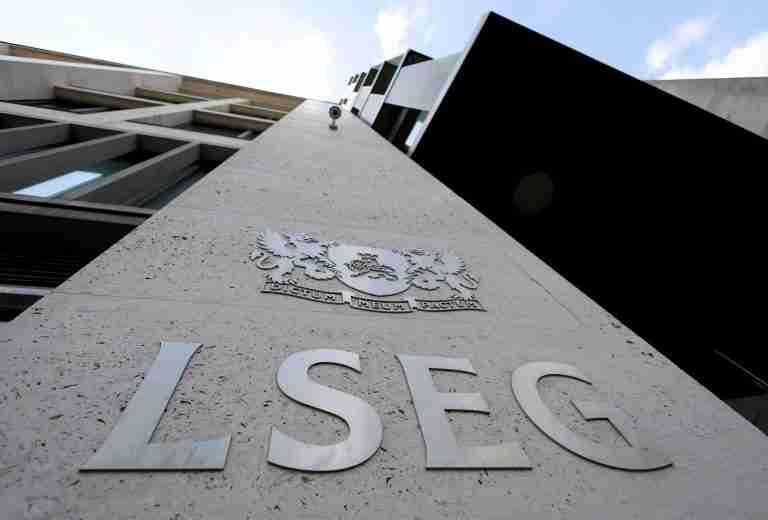
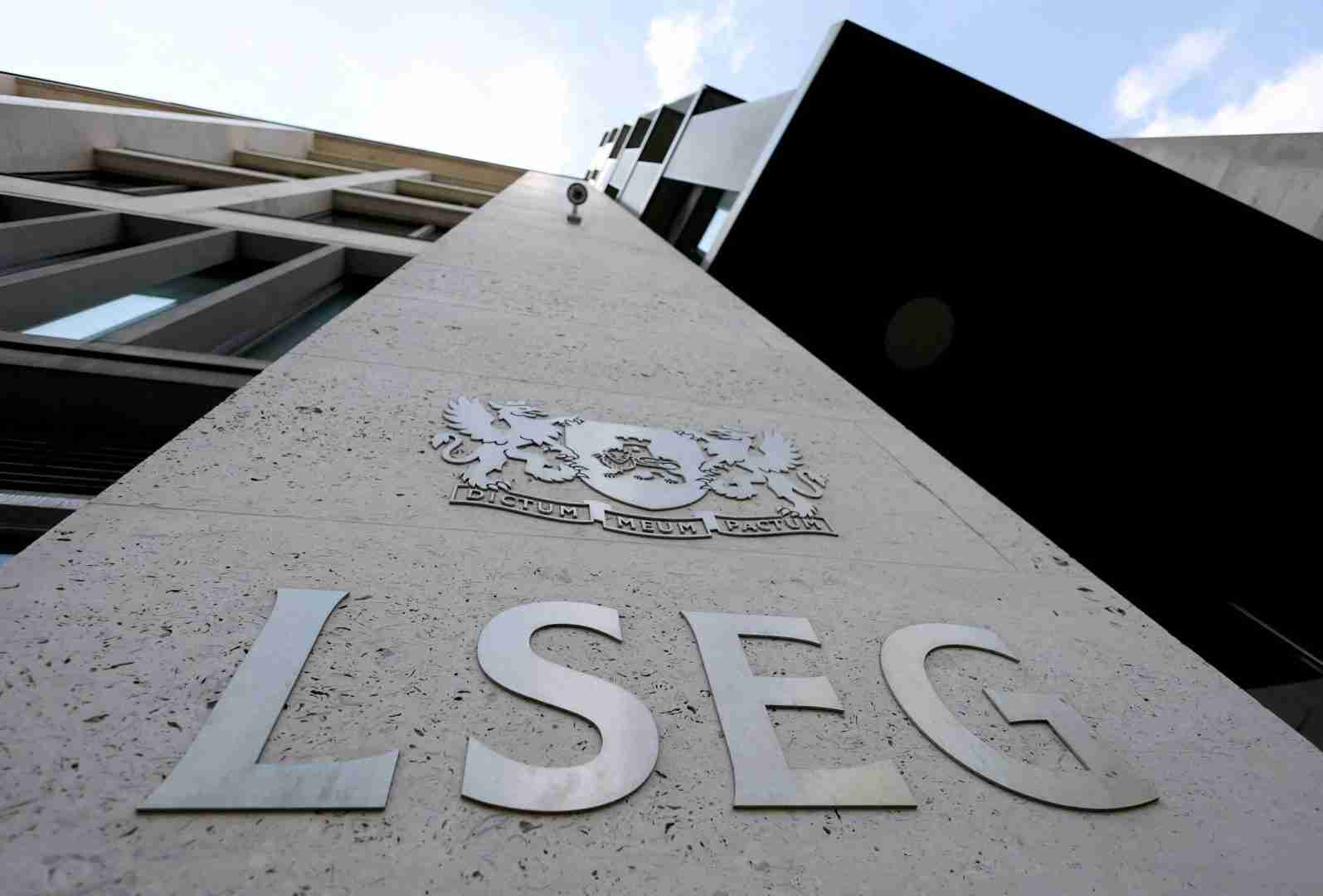
London’s FTSE 100 climbed to a record high on Friday, boosted by heavyweight miners and defensive stocks while Barclays slumped on concerns over its exposure to collapsed UK lender Market Financial Solutions.
Shares of Barclays fell 4.2% and Jefferies dropped 10% after reports that they and other lenders face potential losses tied to the collapse of mortgage lender MFS, which has been placed into administration following allegations of financial irregularities.
The blue‑chip FTSE 100 rose 0.6% to 10,910.55 points, notching a record close for the third straight day, while the mid‑cap FTSE 250 closed up 0.2%.
The FTSE 100 index advanced 6.7% in February, its eighth monthly climb in a row and its longest monthly winning streak since 2012–2013. The index outperformed U.S. and European benchmarks this month as optimism around a potential Bank of England rate cut in March lifted sentiment.
At times, however, gains have been tempered by worries that emerging AI tools could disrupt established business models, as well as trade-related uncertainties from U.S. President Donald Trump’s fresh tariffs earlier this month.
Precious‑metal miners and industrial‑metal miners rose as demand for gold and copper increased, with investors flocking to safe‑haven assets amid uncertainty over U.S. tariff policies and heightened tensions between the United States and Iran.
Mining stocks have been among the biggest contributors to the FTSE 100’s gains over the past year, supported by soaring metals pricing. [GOL/] [MET/L]
Shares in drugmaker AstraZeneca and food group Unilever firmed 2.9% and 2%, respectively.
Among others, shares of IAG dropped 7.5% after the airlines owner failed to provide profit guidance for this year and expressed concerns about potentially higher fuel prices.
Hays slumped 10% to the bottom of the mid-cap index after the recruiter announced the departure of CEO Dirk Hahn and slashed its dividend by 84%.
On the political front, Prime Minister Keir Starmer’s Labour Party suffered a defeat to the Green Party in a Manchester ward it had dominated for nearly a century, underscoring the fragmentation of Britain’s traditional two‑party system.
Reporting by Tharuniyaa Lakshmi in Bengaluru; Editing by Leroy Leo and Emelia Sithole-Matarise
Minister says shipment is pending but offers no firm production date
File image.
Months after a reported shipment delay, Government’s new $5.2 million asphalt plant remains in the United States.
Responding to questions in the House of Assembly today from OBA MP Linda Smith, Public Works and Environment Minister Jache Adams said the plant is currently located in Chattanooga, Tennessee, and is expected to be shipped to Bermuda “shortly” … but he could not commit to a date for when it will become operational once here.
“While we are hopeful that the plant will be operational at some point this year, I cannot provide a precise production date at this time,” said Minister Adams. “Shipping timelines, installation, logistics and commissioning requirements must first be completed and once those processes are finalised, the House will be updated accordingly.”
It was reported back in November that the shipment of the new asphalt plant had been delayed by approximately three months to allow an independent assessment to be completed regarding the potential relocation of the Government Quarry’s operations. That delay would have placed the expected arrival in the first quarter of this year.
MP Smith, who is also Shadow Minister of Public Works & Environment, further asked what increase in road paving output the Ministry expects once the new plant comes online.
Minister Adams said initial production will mirror current levels, with the capacity to increase output over time.
“Once operational, we intend to begin production at approximately 100 tonnes of asphalt per day, which is roughly what we’re doing currently with the capacity to triple that output over time, as efficiencies are realised.”
“The key improvement in the first 12 months will be greater consistency and increased output. You see, the existing plant is prone to breakdowns which disrupt paving schedules. The new plant will significantly reduce downtime and allow us to accelerate resurfacing in a sustained way. This means more reliable paving schedules, faster rehabilitation of major corridors, and smoother, more durable roads for the public.”
Barclays, Santander, Wells Fargo, Jefferies and Apollo Global Management-owned Atlas SP Partners are among the lenders to MFS, which had borrowed more than 2 billion pounds ($2.69 billion)
International News via Reuters:
Barclays and Jefferies shares fell sharply on Friday after media reports they and other banks face potential losses related to the collapse of UK mortgage provider Market Financial Solutions Ltd, amid wider concerns about lending standards and the fast-growing market for private credit.
London-based MFS specialised in complex property-backed loans. It had applied for administration, a form of UK insolvency protection, after it ran into difficulties, according to previous media reports and court documents seen by Reuters. Creditors who successfully applied to have the company put into administration on Wednesday cited financial irregularities and mismanagement in court documents.
Barclays, Santander, Wells Fargo, Jefferies and Apollo Global Management-owned Atlas SP Partners are among the lenders to MFS, which had borrowed more than 2 billion pounds ($2.69 billion), Bloomberg reported on Thursday.
Creditors warned there may be a shortfall of 930 million pounds in collateral backing their loans, Bloomberg reported on Friday.
The banks declined to comment.
Atlas SP Partners, the structured credit arm of Apollo Global Management, said it has roughly 400 million pounds of exposure to the mortgage provider, or about 1% of its balance sheet. Atlas is one of the senior creditors to MFS, alongside other bank lenders.
“Following a breach of contractual terms by Market Financial Solutions, Atlas proactively put two warehouses into default last week and is pursuing all legal avenues to maximize recoveries,” a spokesperson for Atlas said in a statement to Reuters.
Shares of Apollo and other asset managers were down on Friday on broader investor concerns around stress in the private credit industry.
Investors are on the alert for any sign of deteriorating lending standards and cracks appearing in credit markets, with some of those fears centred on a boom in private credit, in which specialist funds lend directly to companies.
The collapse last year of U.S. auto parts supplier First Brands and subprime auto lender Tricolor heightened those concerns, although traditional banks were among the most exposed.
Shares in Jefferies fell nearly 8% in early U.S. trading, adding to Thursday’s 3.5% decline, as reports of the New York-based bank’s exposure to MFS rattled investors.
Jefferies disclosed last year that its Leucadia Asset Management division, through its credit fund Point Bonita, held about $715 million in receivables linked to First Brands, although it later said its exposure was limited.
Barclays shares were down 5% by 1500 GMT, underperforming the broader FTSE 100 index, which rose 0.5%. Santander shares dropped 3%.
‘REAL AND SERIOUS CONCERNS’
MFS, based in London’s Mayfair, described itself as a specialist provider of buy-to-let mortgage lending and bridging finance, with net assets of 15.9 million pounds and 149 employees as of December 31, 2024, according to its most recently filed accounts.
The company, founded by CEO Paresh Raja, said it had a loan book of 2.4 billion pounds at the end of 2024, the accounts show.
MFS did not respond to a request for comment.
MFS creditors Amber Bridging Limited and Zircon Bridging Limited had separately filed for an administration order against MFS, court documents dated February 24 and reviewed by Reuters show, citing “real and serious concerns about the mismanagement of the company” and entities in its wider MFS Group.
Amber Bridging and Zircon Bridging, cited as creditors of MFS in the court documents, said there were irregularities in payments due to their accounts and applied for independent administrators to be appointed.
The Times reported Barclays has a 600 million pound ($809.70 million) exposure to MFS. Bloomberg said Barclays was among the banks that arranged the loans for MFS.
Analysts from Citi said that the figure may warrant some caution, given banks typically sell on some or all of their exposure when arranging such loans.
“Arranging a loan is very different to retaining that risk on B/S (balance sheet),” Citi said.
“Also not clear if/how much could already be provisioned against (if anything).”
($1 = 0.7428 pounds)
Reporting by Samuel Indyk, Lawrence White and Sam Tobin; Additional reporting by Jesus Aguado, Lananh Nguyen and Saeed Azhar, Writing by Tommy Reggiori Wilkes; Editing by Amanda Cooper, Jane Merriman and Lisa Shumaker
In the video an official from the national police can be seen and heard reading a release order, before a technician removes an ankle monitor from Superlano
International News via Reuters:
Venezuelan politician Freddy Superlano, a leader of the opposition Voluntad Popular party, on Friday had a house arrest order lifted, a video posted on his Instagram account showed, as part of a limited amnesty bill passed this month in the South American country.
In the video an official from the national police can be seen and heard reading a release order, before a technician removes an ankle monitor from Superlano.
Superlano was released from prison on February 8 and placed under house arrest. His arrest after the 2024 presidential elections was captured on a video showing him being pushed into the back of an unmarked car surrounded by armed security agents.
The tram, one of the newest models in operation in Milan, came off the tracks in Vittorio Veneto street, close to the city’s Central Station, crashing into the window of a shop
International News via Reuters:
Two people were killed and around 40 injured when a tram derailed in central Milan on Friday, a spokesperson for local firefighters said.
The tram, one of the newest models in operation in Milan, came off the tracks in Vittorio Veneto street, close to the city’s Central Station, crashing into the window of a shop.
Local emergency services said 13 ambulances were on the scene.
Civil protection teams set up a tent to assist the injured, according to a Reuters eyewitness.
The Milan transport company, ATM, said in a statement it was “deeply shocked”, expressed its sympathy to those affected and said it was working with authorities to try to understand the cause.
Reporting by Elvira Pollina and Daniele Mascolo; editing by Gianluca Semeraro, Kevin Liffey and Gavin Jones
Last year, finance minister Rachel Reeves criticised regulators for being “a boot on the neck of businesses”
International News via Reuters:
Britain’s government on Friday appointed a former regulator and current Barclays executive, Katharine Braddick, as the Bank of England’s next deputy governor for prudential regulation to try to boost sluggish economic growth.
Last year, finance minister Rachel Reeves criticised regulators for being “a boot on the neck of businesses”, raising concerns at the Bank of England, whose governor, Andrew Bailey, has said the lessons of the 2008 global financial crisis risk being forgotten.
Braddick worked at Britain’s Financial Services Authority and the Bank of England as a bank regulator before joining the finance ministry and then moving to Barclays in 2022, where she is group head of strategic policy.
EXPERIENCED, PRO-BUSINESS LEADER, SAYS REEVES
“Katharine Braddick is an accomplished pro-business leader with the experience to keep our financial system safe while backing the investment and lending that drives growth,” Reeves said in a statement.
She added that Braddick “understands the City and regulation, and will help ensure the UK remains one of the best places in the world to do business”.
Braddick will take up the post on July 1 from Sam Woods, and will serve a five-year term.
Her appointment was welcomed by the City of London Corporation, the municipal body for London’s financial district, which typically champions the sector’s interests.
“At a time of significant regulatory reform and global competition, it’s crucial we have someone with her depth of knowledge and expertise in the role,” the Corporation’s policy chairman, Chris Hayward, said.
The BoE said that to manage any perceived conflict of interest, Braddick would immediately stop work for Barclays and that the bank would pay Braddick the deferred portion of her bonus straightaway.
Braddick would be barred from being “involved in any supervisory or enforcement decisions in relation to Barclays” for the first six months of her job, David Roberts, the chair of the BoE’s supervisory board, said in a letter to the chair of parliament’s Treasury Committee.
Due to Barclays’ central role in Britain’s financial system, it was not practical for Braddick to be recused for any longer, he added.
In 2017, the committee was critical of newly appointed deputy governor Charlotte Hogg for failing to be transparent about her brother’s work on Barclays’ strategy team, ultimately convincing her to step down.
Reporting by David Milliken and William James; editing by Barbara Lewis
In its Reply to the Budget, the Opposition says the PLP Government’s failure to make meaningful progress has squeezed Bermudians’ wallets and disturbed their peace of mind
Temporary Band-Aids for short-term political wins.
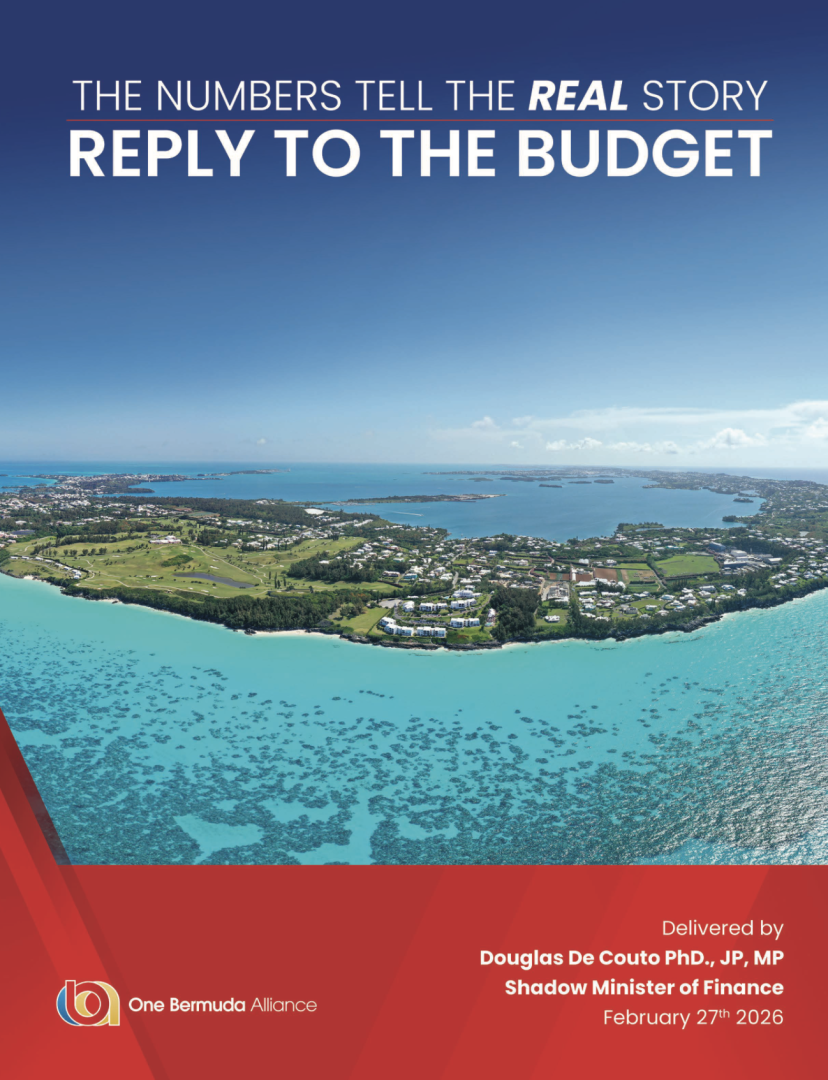
This is how the Opposition today framed Government’s financial plans, in its formal Reply to the Budget. (SCROLL down for full reply, HIGHLIGHTS above)
The One Bermuda Alliance has warned that Bermuda’s improving revenue outlook masks deeper economic weaknesses.
Shadow Finance Minister Dr. Douglas De Couto said the introduction of Corporate Income Tax (CIT) has significantly boosted government projections, with $753 million expected in the next fiscal year — roughly one-third of total revenue. However, he cautioned that the island has become heavily dependent on a small group of international insurance companies, leaving public finances vulnerable to global market shifts.
Without the windfall provided by the Corporate Income Tax, the PLP Government’s performance would have driven Bermuda into a “massive fiscal crisis, once again,” the OBA argues.
Dr. De Couto claims that under the PLP Government, the economy shrank and then flatlined: “It gives me no pleasure to say that since the last Budget, very little progress has been made. “After years of financial strain under the PLP Government, years marked by rising debt, mounting pressures on families, and declining trust, the introduction of the Corporate Income Tax allows Bermuda to course-correct, to stabilize Bermuda’s financial foundations, and support Bermudians in need.
“The CIT presents the chance to stimulate real growth in our economy, and to finally create new opportunities for Bermudians to enjoy the quality of life they desire and deserve.”
Opportunity, however, does not equal execution, the OBA argues.
The success of the PLP Government’s Budget must be measured by results delivered for our people, not just abstract numbers: “For many Bermudians, their struggles have not eased, despite the years of headlines and promises. Payroll tax reductions, electricity relief, and other measures provide temporary relief but do not create a sustainable economy.
“… Most Bermudians have heard very little of what the Premier has referred to as ‘quiet but meaningful progress’. Whatever progress that may be, it is too little, too late. Bermudians need real change, and real progress.”
Dr. De Couto said an OBA government would target support where it is most needed, protect our revenue base, create growth and opportunities, and build long-term stability – “instead of chasing short-term political applause”.
Fleshing out his criticism of the PLP’s handling of the economy, Dr. De Couto said GDP remained flat until Covid in 2019, and has barely recovered since.
“Local GDP has grown only 4.1% since 2017, an average of 0.6% per year. Payroll tax reductions, electricity relief, and other measures provide temporary relief but do not create a sustainable economy.
“In contrast, International Business has grown 30% over the same period, or 3.8% per year – over six and a half times as much.”
On the issue of jobs, the Opposition points to a decline in Bermudian employment and continued population shrinkage, warning that fewer workers mean higher per-person costs for healthcare and pensions.
The Shadow Finance Minister cited the latest Employment Briefs data, which showed that through the end of 2024:
There are 208 fewer jobs than in 2017;
There are 1,436 fewer jobs for Bermudians and their spouses than in 2017, a decline of 5.6%;
And, while jobs in International Business have grown by 1,040 since 2017, there has been a loss of 1,248 non-IB jobs.
“What does that mean for Bermudians who aren’t on the IB train? Fewer opportunities, fewer pathways, and a diminishing role in their own economy … The One Bermuda Alliance applauds and welcomes IB’s success, but Bermuda cannot be sustained by one sector alone.”
Given Bermuda’s “over-reliance” on International Business, Dr. De Couto argues, we must diversify where we can, including regrowing tourism.
He cited data that “raises serious concerns”.
In 2025:
Total vacation and business visitors remain 17% below 2019 levels and 11% below 2024;
Total air arrivals remain 30% below 2019 and 3.4% below 2024;
Airline load factors, or the number of seats filled is only at 68% of 535,400 total seats, versus 75% of 580,000 seats in 2019.
Bermuda “used to have more planes with more passengers,” Dr. De Couto said, adding: “Under this PLP Government, tourism has flatlined with far lower numbers than before Covid.
“We are hopeful that the Fairmont Southampton will eventually re-open, and look forward to the new Loren at Elbow Beach. But these projects are largely driven by investors already in Bermuda, some of whom came here under the OBA.
“What is the PLP doing to bring new investors to our shores? In over eight years, this PLP Government has failed to bring any new hotel investors to our shores.
This is not diversification. This is stagnation.”
While acknowledging lower inflation in recent months, Dr. De Couto said cumulative price increases since 2018 have outpaced wage growth for many workers, eroding purchasing power. Bermuda also remains ranked among the world’s most expensive places to live.
Harking back to the economy’s reliance on International Business. Dr. De Couto said: “The Government must no longer sit by as spectators to the IB economy, content to skim the cream off the top, while the rest of the economy stagnates.”
The OBA is proposing strict fiscal guardrails for managing CIT revenue, including legislating a stability fund, capping spending growth, and prioritizing debt reduction.
Budgets are about more than numbers, Dr. De Couto says. “They are about whether families can build a life here, whether seniors can age with dignity. Whether young Bermudians see real opportunity, or more empty promises.
“It’s time for transparency. It’s time for responsibility, and it’s time for this PLP Government to be accountable to all Bermudians.”P Government to be accountable to all Bermudians.”
To provide the best experiences, we use technologies like cookies to store and/or access device information. Consenting to these technologies will allow us to process data such as browsing behavior or unique IDs on this site. Not consenting or withdrawing consent, may adversely affect certain features and functions.
Functional
Always active
The technical storage or access is strictly necessary for the legitimate purpose of enabling the use of a specific service explicitly requested by the subscriber or user, or for the sole purpose of carrying out the transmission of a communication over an electronic communications network.
Preferences
The technical storage or access is necessary for the legitimate purpose of storing preferences that are not requested by the subscriber or user.
Statistics
The technical storage or access that is used exclusively for statistical purposes.The technical storage or access that is used exclusively for anonymous statistical purposes. Without a subpoena, voluntary compliance on the part of your Internet Service Provider, or additional records from a third party, information stored or retrieved for this purpose alone cannot usually be used to identify you.
Marketing
The technical storage or access is required to create user profiles to send advertising, or to track the user on a website or across several websites for similar marketing purposes.