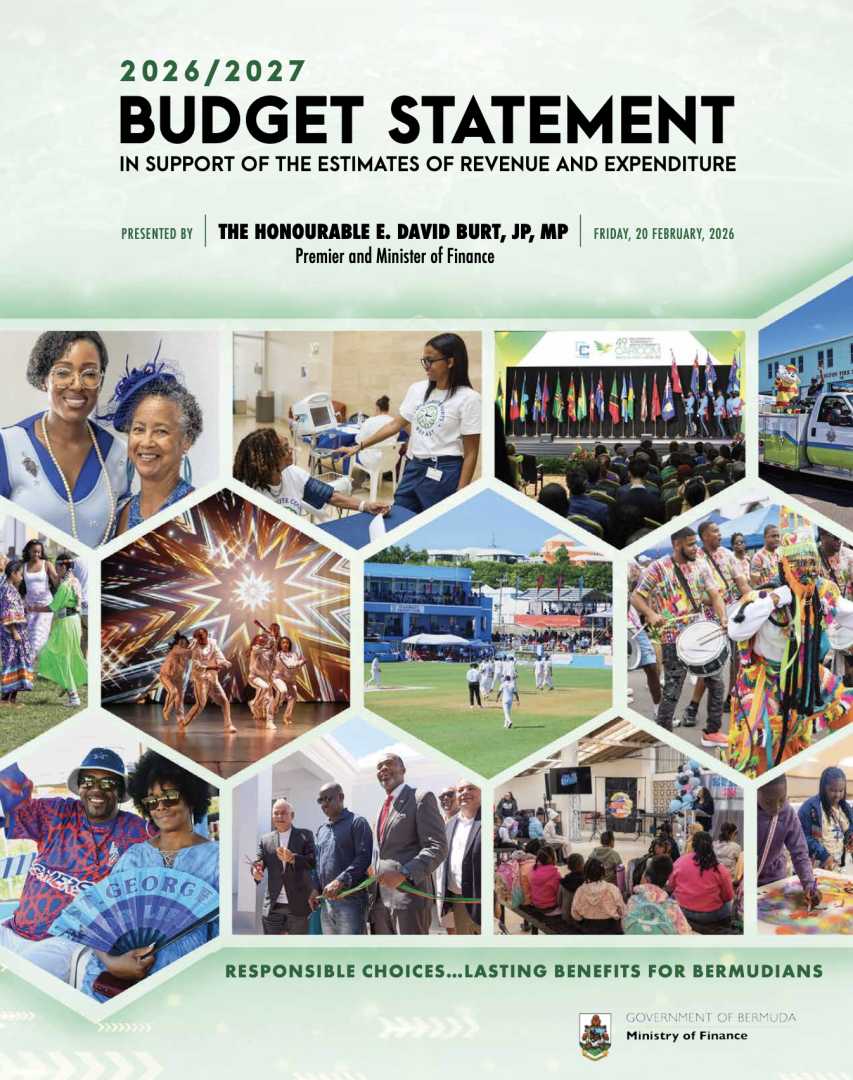
The Government of Bermuda has tabled its 2026/27 Budget Statement, outlining record revenues, major debt repayment, payroll tax cuts, and expanded investment in healthcare and housing.
Key Highlights:
Record Revenue: Total revenue is projected at $2.03 billion, the first time government revenue has exceeded $2 billion, driven largely by $753.2 million in Corporate Income Tax (CIT) receipts.
Major Debt Reduction: The Government intends to fully repay $605 million in debt maturing in January 2027, reducing gross debt from $3.29 billion to $2.69 billion.
Historic Surplus: A projected $472.7 million budget surplus for 2026/27.
Payroll Tax Cuts: Employer payroll tax rates reduced across multiple categories, while employee tax bands are adjusted to deliver a net tax cut for all workers.
Healthcare Investment: $87 million allocated to healthcare support, including funding for Bermuda Hospitals Board and Universal Health Coverage rollout.
Affordable Housing Focus: Expansion of modern building methods, unlocking derelict properties, and strengthening Bermuda Housing Corporation delivery capacity.
Cost of Living Relief: Further reductions in fuel duty for electricity generation, duty cuts on essential goods, and a 10% reduction in private car licensing fees.
The Budget theme, “Responsible Choices…Lasting Benefits for Bermudians,” reflects a focus on fiscal discipline, targeted relief, and long-term investment in national capacity.
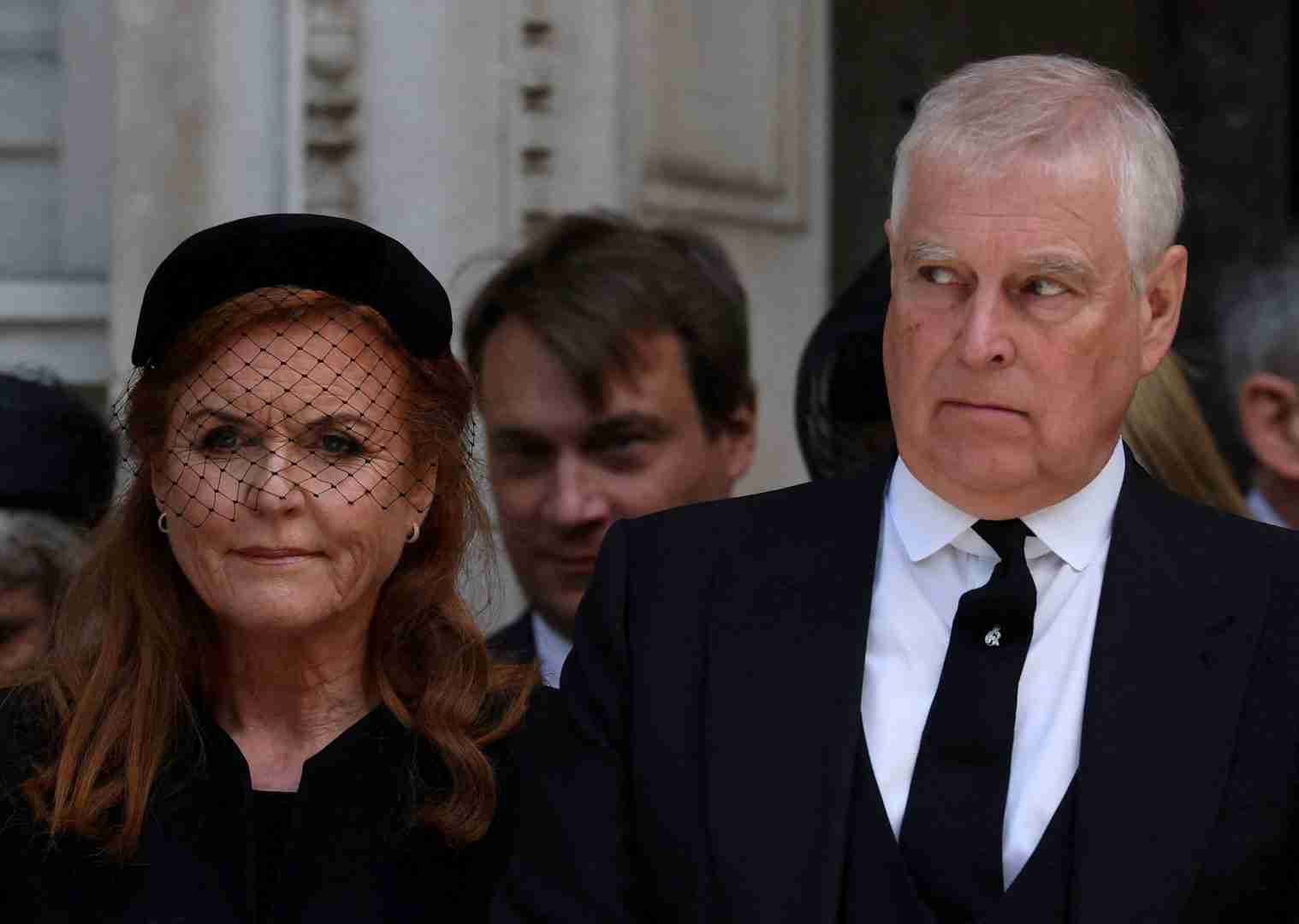
Ferguson, popularly known as “Fergie”, married Prince Andrew in a glittering ceremony at Westminster Abbey in 1986
International News via Reuters:
With the downfall of Andrew Mountbatten-Windsor near complete, the former prince no longer has Sarah Ferguson by his side. For decades his ex-wife was his rock, but now her own ties to Jeffrey Epstein have destroyed her reputation too.
Ferguson, popularly known as “Fergie”, married Prince Andrew in a glittering ceremony at Westminster Abbey in 1986. They went on to have two daughters, Princesses Beatrice and Eugenie.
The pair split in 1992, divorced four years later, but remained close and were still sharing the same 30-room mansion until last year.
But revelations about their relationship with convicted U.S. sex offender Epstein, including in the January release of more than 3 million pages of documents by the U.S. government, have left both of them exposed and isolated with no hope of public rehabilitation.
According to the files, Ferguson appeared to have taken her daughters, then aged 20 and 19, to visit Epstein in the U.S. the week after he was released from prison in 2009 for soliciting and procuring a minor for prostitution.
‘THE BROTHER I ALWAYS WISHED FOR’
Mountbatten-Windsor, the younger brother of King Charles, was arrested on Thursday by police investigating whether he committed a crime by leaking government documents to Epstein when he was a trade envoy.
He has not been charged with any offence, and was pictured looking haggard and haunted as he was driven away from a police station after being held all day. Mountbatten-Windsor denies wrongdoing and has said he regrets his friendship with Epstein.
Ferguson, meanwhile, has not been seen in public for months.
Emails show she had a close relationship with Epstein, sometimes seeking emotional support, and sometimes financial.
Epstein was the “brother I have always wished for”, while she also told him “I am at your service. Just marry me”, and suggested she could work organising his homes, according to emails from “Sarah”.
Several charities had already cut their links with her in September, after a previous tranche of files showed she kept up her friendship with him despite his conviction.
A spokesperson for her did not immediately respond to a request for comment on Friday.
MAKING HER OWN ARRANGEMENTS
Ferguson had still been living at Andrew’s Windsor home, Royal Lodge, until October last year, when the steady drip of Epstein revelations forced Charles to strip his brother of the title of prince and order him to move out.
A royal source said at the time that Ferguson would be making her own arrangements.
Hello! magazine reported she had spent time in the United Arab Emirates, and other reports said she could be with her daughters.
Both have apartments in London and spend time at their second homes – one in the Cotswolds area of southern England and the other in Portugal.
They both have jobs and support charitable causes.
“If I was to advise this to them, I would say keep the lowest of profiles, get on with your day job,” a former senior royal aide told Reuters.
ROYAL OUTCAST
Prior to the latest revelations, Ferguson was slowly working to turn around her outsider status in the wider family.
Months after her separation from Andrew in 1992, a tabloid newspaper published photos of her, topless, having her toes sucked by her American financial advisor John Bryan.
That incident followed media reports about her spending habits. At the time of the couple’s separation, the late Queen Elizabeth stated that it was up to Ferguson to pay her own debts.
In the years since, she wrote books, including a children’s series called “Budgie the Little Helicopter” and an autobiography, and earned significant sums as a spokesperson for Weight Watchers.
But another scandal followed in 2010 when she was exposed by a tabloid for offering access to her former husband for 500,000 pounds. She apologised for a “serious lapse in judgement”.
In 2011, she also described her involvement with Epstein as a “gigantic error of judgement on my behalf”, in an interview with the London Evening Standard.
But in private, the relationship continued, with her even denying to Epstein she said “paedophilia” in the interview, according to the released documents.
“As you know, I did not, absolutely not, say the ‘P word’ about you but understand it was reported that I did,” she told him, according to the emails.
“I know you feel hellaciously let down by me. You have always been a steadfast, generous and supreme friend to me and my family.”
Her spokesperson said last September she had made the comment to avoid being sued by Epstein.
Reporting by Sarah Young and Paul Sandle; Editing by Alex Richardson
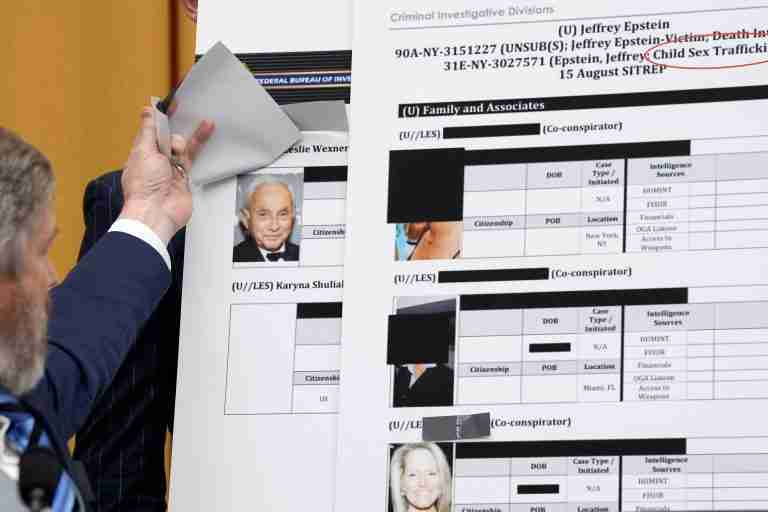
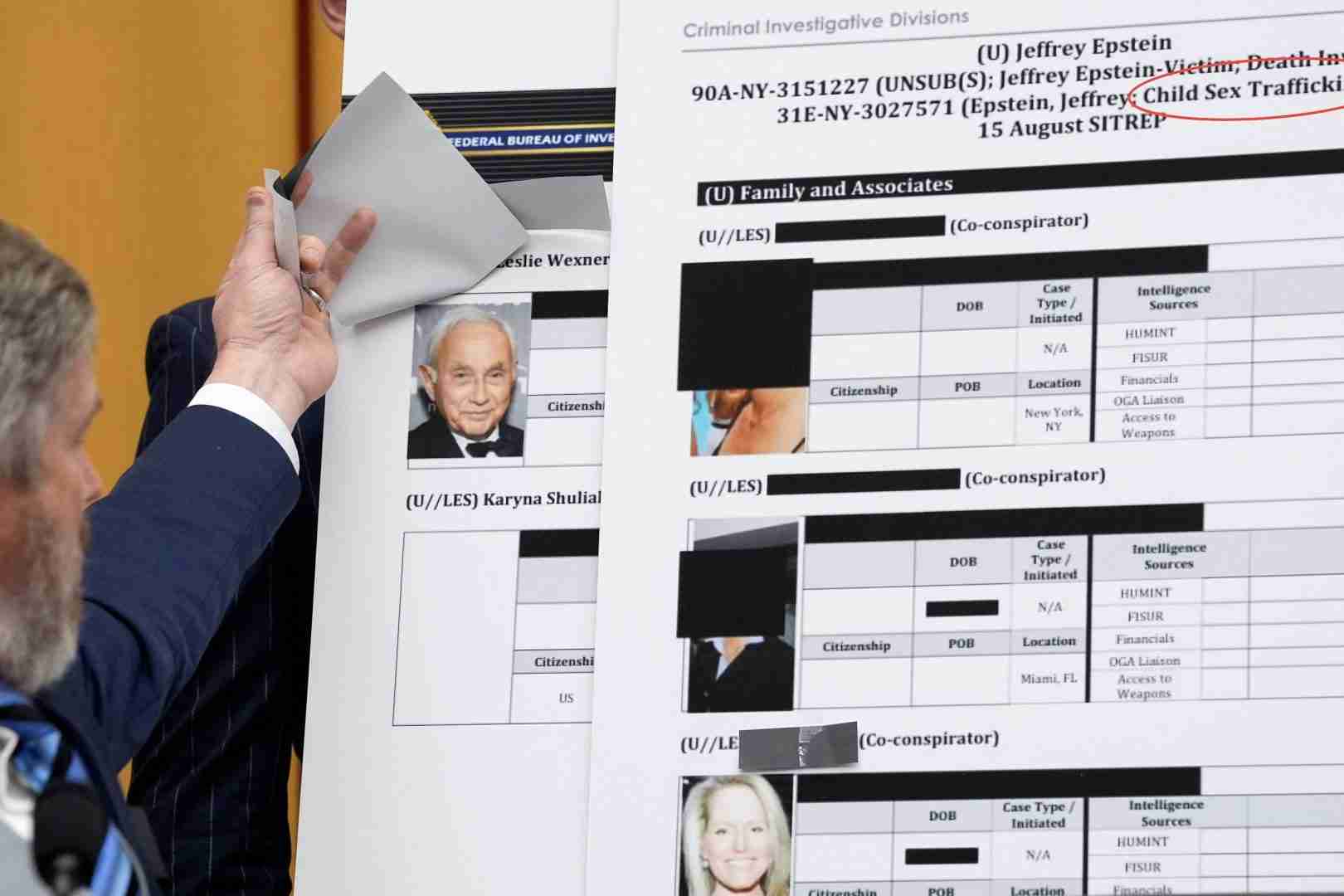
Wexner, 88, said he cut all ties to Epstein nearly 20 years ago and he has not been accused of criminal wrongdoing
International News via Reuters:
Billionaire Leslie Wexner said on Wednesday he once visited the island of late financier and convicted sex offender Jeffrey Epstein but denied having knowledge of his criminal activity.
Wexner, 88, said he cut all ties to Epstein nearly 20 years ago. He has not been accused of criminal wrongdoing.
The U.S. Justice Department’s recent release of millions of internal documents related to Epstein has shed light on his ties to many prominent people – both before and after he pleaded guilty in 2008 to prostitution charges, including soliciting an underage girl. His 2019 death in a Manhattan jail cell was ruled a suicide.
“And, let me be crystal clear: I never witnessed nor had any knowledge of Epstein’s criminal activity. I was never a participant nor co-conspirator in any of Epstein’s illegal activities,” Wexner said in a written testimony to U.S. lawmakers.
He was questioned for six hours behind closed doors by congressional investigators on Wednesday.
Wexner, a former CEO and founder of Victoria’s Secret-owner L Brands, hired Epstein as his personal money manager starting in the 1980s. He has accused Epstein of using his money to buy properties and goods and says he severed ties around 2007, after Epstein was first criminally charged.
“To my enormous embarrassment and regret I, like many others, was duped by a world-class con man. I cannot undo that part of my personal history even as I regret ever having met him,” he added.
U.S. Representative Robert Garcia, the top-ranking Democrat on the House of Representatives oversight panel, said “there was no single person that was more involved in providing Jeffrey Epstein with the financial support to commit his crimes than Les Wexner.”
Wexner said he visited Epstein’s island once, shortly after Epstein had purchased it, and stopped there for a “few hours” one morning with his wife and children while on a cruise on their boat.
Wexner said Epstein stole “vast sums” of money from his family. “Once I learned of his abusive conduct and theft from my family, I never spoke with Epstein again,” he added.
Reporting by Kanishka Singh in Washington; Editing by Don Durfee and Shri Navaratnam
In April last year, Trump announced “reciprocal” tariffs on goods imported from most U.S. trading partners, including Britain, invoking the International Emergency Economic Powers Act, or IEEPA
International News via Reuters:
Britain expects its privileged trading position with the United States to continue after the U.S. Supreme Court struck down President Donald Trump’s sweeping tariffs, the government said on Friday.
In April last year, Trump announced “reciprocal” tariffs on goods imported from most U.S. trading partners, including Britain, invoking the International Emergency Economic Powers Act, or IEEPA. On Friday, the Supreme Court said Trump’s use of IEEPA exceeded his authority.
The baseline tariff that Britain faced under the reciprocal tariffs was 10%.
However, Friday’s ruling will not impact most bilateral trade under Britain’s separate tariff deal with Washington, which largely involves specific sectoral duties under different U.S. powers.
“The UK enjoys the lowest reciprocal tariffs globally, and under any scenario we expect our privileged trading position with the US to continue”, a British government spokesperson said in a statement.
“We will work with the (U.S.) Administration to understand how the ruling will affect tariffs for the UK and the rest of the world.”
The spokesperson said the government would support British businesses when further details are announced.
William Bain, head of trade at the British Chambers of Commerce (BCC), said the ruling did “little to clear the murky waters for business.”
It was also unclear how U.S. businesses could reclaim import levies paid and whether British businesses would be entitled to a share of any rebate, Bain said.
“For the UK, the priority remains bringing tariffs down wherever possible,” he said, citing an agreement to bring down steel tariffs under the U.S.-UK tariff deal which has yet to be implemented.
“Any competitive advantage that we can secure is likely to help boost our exports to the single country, globally, we do most trade with.”
Reporting by Alistair Smout and Muvija MEditing by William Schomberg
The justices, in a 6-3 ruling authored by conservative Chief Justice John Roberts, upheld a lower court’s decision that Trump’s use of this 1977 law exceeded his authority
International News via Reuters:
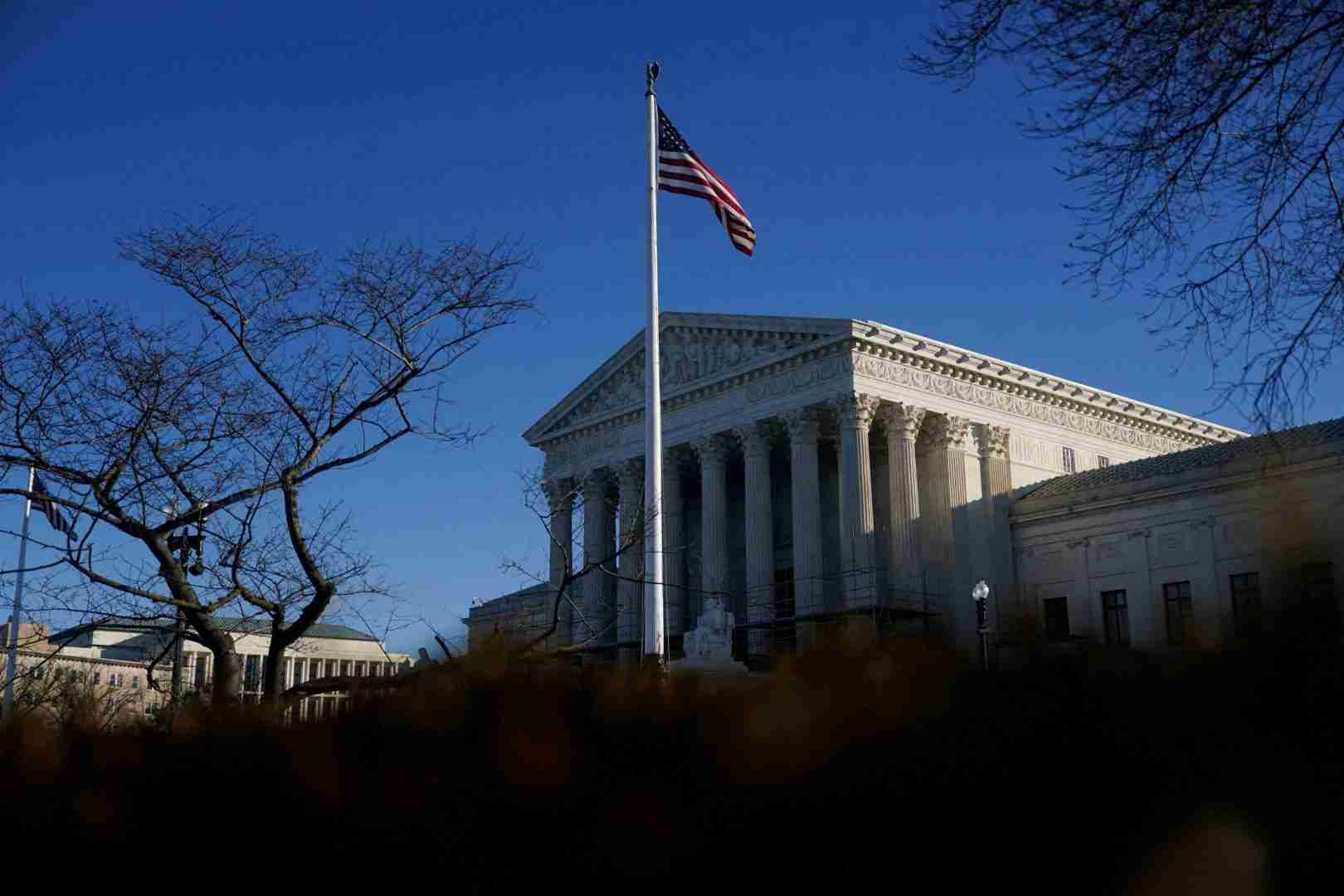
The U.S. Supreme Court struck down Donald Trump’s sweeping tariffs that he pursued under a law meant for use in national emergencies, handing a stinging defeat to the Republican president in a landmark opinion on Friday with major implications for the global economy.
The justices, in a 6-3 ruling authored by conservative Chief Justice John Roberts, upheld a lower court’s decision that Trump’s use of this 1977 law exceeded his authority. The justices ruled that the law at issue – the International Emergency Economic Powers Act, or IEEPA – did not grant Trump the power he claimed to impose tariffs.
“Our task today is to decide only whether the power to “regulate … importation,” as granted to the president in IEEPA, embraces the power to impose tariffs. It does not,” Roberts wrote in the ruling, quoting the statute’s text that Trump claimed had justified his sweeping tariffs.
Trump has leveraged tariffs – taxes on imported goods – as a key economic and foreign policy tool. They have been central to a global trade war that Trump initiated after he began his second term as president, one that has alienated trading partners, affected financial markets and caused global economic uncertainty.
Roberts, citing a prior Supreme Court ruling, wrote that “the president must ‘point to clear congressional authorization’ to justify his extraordinary assertion of the power to impose tariffs,” adding: “He cannot.”
Democrats and various industry groups hailed the ruling. Many business groups expressed concern that the decision will lead to months of additional uncertainty as the administration pursues new tariffs through other legal authorities. The ruling did not address the issue of the government refunding tariffs that were struck down.
The ruling sent U.S. stock indexes, long buffeted by Trump’s unpredictable moves on tariffs, up by the most in more than two weeks and weakened the dollar. Treasury yields edged higher.
A ‘DISGRACE’
Trump was addressing a gathering of state governors at the White House when he was handed a note from an aide informing him of the Supreme Court decision, according to two sources familiar with the event. Trump appeared visibly frustrated and told the audience that the ruling was a “disgrace” and that he had to do something about the courts, the sources said, speaking on condition of anonymity.
At an event in Georgia on Thursday on the eve of the ruling, Trump said, “Without tariffs … everybody would be bankrupt. Everybody. The whole country would be bankrupt. … And the language is clear that I have the right to do it as president. I have the right to put tariffs on for national security purposes.”
The White House had no immediate comment on the ruling.
Justice Brett Kavanaugh, writing a dissent joined by fellow conservatives Clarence Thomas and Samuel Alito, wrote that the ruling did not necessarily foreclose Trump “from imposing most if not all of these same sorts of tariffs under other statutory authorities,” adding that “the court’s decision is not likely to greatly restrict presidential tariff authority going forward.”
Part of the Supreme Court’s majority also declared that such an interpretation would intrude on the powers of Congress and violate a legal principle called the “major questions” doctrine.
The conservative doctrine requires actions by the government’s executive branch of “vast economic and political significance” to be clearly authorized by Congress. The court used the doctrine to stymie some of Democratic former President Joe Biden’s key executive actions.
Roberts said that endorsing the administration’s views would impermissibly expand presidential authority over tariff policy.
“It would replace the longstanding executive-legislative collaboration over trade policy with unchecked presidential policymaking,” Roberts wrote.
It was “telling” that “no President has invoked the statute to impose any tariffs – let alone tariffs of this magnitude and scope,” Roberts added.
The Supreme Court reached its conclusion in a legal challenge by businesses affected by the tariffs and 12 U.S. states, most of them Democratic-governed, against Trump’s unprecedented use of this law to unilaterally impose the import taxes.
Joining Roberts in the majority were conservative Justices Neil Gorsuch and Amy Coney Barrett, both of whom Trump appointed during his first term in office, along with the three liberal justices, Sonia Sotomayor, Elena Kagan and Ketanji Brown Jackson.
The liberal justices did not join the part of the opinion invoking the major questions doctrine.
The Supreme Court, which has a 6-3 conservative majority, previously had backed Trump in a series of other decisions issued on an emergency basis since he returned to the presidency in January 2025 after his policies were impeded by lower courts.
Trump’s tariffs were forecast to generate over the next decade trillions of dollars in revenue for the United States, which possesses the world’s largest economy.
Trump’s administration has not provided tariffs collection data since December 14. But Penn-Wharton Budget Model economists estimated on Friday that the amount collected in Trump’s tariffs based on IEEPA stood at more than $175 billion.
“The Court says nothing today about whether, and if so how, the Government should go about returning the billions of dollars that it has collected from importers,” Kavanaugh, who also was appointed by Trump during his first term as president, said in his dissent. “But that process is likely to be a ‘mess,’ as was acknowledged at oral argument.”
A spokesperson for U.S. Customs and Border Protection declined immediate comment on the Supreme Court ruling or on next steps. It was not immediately clear when IEEPA tariffs assessments and collections at ports of entry would halt, or how any refund process might work.
POWERS OF CONGRESS
The U.S. Constitution grants Congress, not the president, the authority to issue taxes and tariffs. But Trump instead turned to a statutory authority by invoking IEEPA to impose the tariffs on nearly every U.S. trading partner without the approval of Congress. Trump has imposed some additional tariffs under other laws that are not at issue in this case. Based on government data from October to mid-December, those represent about a third of the revenue from Trump-imposed tariffs.
IEEPA lets a president regulate commerce in a national emergency. Trump became the first president to use IEEPA to impose tariffs, one of the many ways he has aggressively pushed the boundaries of executive authority since he returned to office in areas as varied as his crackdown on immigration, the firing of federal agency officials, domestic military deployments and military operations overseas.
Kavanaugh in his dissent said that IEEPA’s text, as well as history and prior Supreme Court rulings supported the Trump administration’s position.
“The tariffs at issue here may or may not be wise policy,” Kavanaugh added. “But as a matter of text, history, and precedent, they are clearly lawful,” Kavanaugh wrote.
Trump described the tariffs as vital for U.S. economic security, predicting that the country would be defenseless and ruined without them. Trump in November told reporters that without his tariffs “the rest of the world would laugh at us because they’ve used tariffs against us for years and took advantage of us.” Trump said the United States was abused by other countries including China, the second-largest economy.
Candace Laing, president and CEO of the Canadian Chamber of Commerce, said the decision was a legal ruling, not a reset of U.S. trade policy.
“Canada should prepare for new, blunter mechanisms to be used to reassert trade pressure, potentially with broader and more disruptive effects,” Laing said in a statement.
After the Supreme Court heard arguments in the case in November, Trump said he would consider alternatives if it ruled against him on tariffs, telling reporters that “we’ll have to develop a ‘game two’ plan.”
Treasury Secretary Scott Bessent and other administration officials said the United States would invoke other legal justifications to retain as many of Trump’s tariffs as possible. Among others, these include a statutory provision that permits tariffs on imported goods that threaten U.S. national security and another that allows retaliatory actions including tariffs against trading partners that the Office of the U.S. Trade Representative determines have used unfair trade practices against American exporters.
None of these alternatives offered the flexibility and blunt-force dynamics that IEEPA provided Trump, and may not be able to replicate the full scope of his tariffs in a timely fashion.
Senate Democratic Leader Chuck Schumer called the decision a “victory for the wallets of every American consumer,” adding: Trump’s illegal tariff tax just collapsed. He tried to govern by decree and stuck families with the bill. Enough chaos. End the trade war.”
Democratic Senator Elizabeth Warren said the ruling left many questions unanswered.
“The Court has struck down these destructive tariffs, but there is no legal mechanism for consumers and many small businesses to recoup the money they have already paid. Instead, giant corporations with their armies of lawyers and lobbyists can sue for tariff refunds, then just pocket the money for themselves,” Warren said.
INCREASED LEVERAGE
Trump’s ability to impose tariffs instantaneously on any trading partner’s goods under the aegis of some form of declared national emergency raised his leverage over other countries. It brought world leaders scrambling to Washington to secure trade deals that often included pledges of billions of dollars in investments or other offers of enhanced market access for U.S. companies.
But Trump’s use of tariffs as a cudgel in U.S. foreign policy has succeeded in antagonizing numerous countries, including those long considered among the closest U.S. allies.
IEEPA historically had been used for imposing sanctions on enemies or freezing their assets, not to impose tariffs. The law does not specifically mention the word tariffs. Trump’s Justice Department had argued that IEEPA allows tariffs by authorizing the president to “regulate” imports to address emergencies.
The Congressional Budget Office has estimated that if all current tariffs stay in place, including the IEEPA-based duties, they would generate about $300 billion annually over the next decade.
On April 2 on a date Trump labeled “Liberation Day,” the president announced what he called “reciprocal” tariffs on goods imported from most U.S. trading partners, invoking IEEPA to address what he called a national emergency related to U.S. trade deficits, though the United States already had run trade deficits for decades.
In February and March of 2025, Trump invoked IEEPA to impose tariffs on China, Canada and Mexico, citing the trafficking of the often-abused painkiller fentanyl and illicit drugs into the United States as a national emergency.
EXTRACTING CONCESSIONS
Trump has wielded his tariffs to extract concessions and renegotiate trade deals, and as a weapon to punish countries that draw his ire on non-trade political matters. These have ranged from Brazil’s prosecution of former president Jair Bolsonaro, India’s purchases of Russian oil that help fund Russia’s war in Ukraine, and an anti-tariffs ad by Canada’s Ontario province.
IEEPA was passed by Congress and signed by Democratic President Jimmy Carter. In passing the measure, Congress placed additional limits on the president’s authority compared to a predecessor law.
The cases on tariffs before the justices involved three lawsuits.
The Washington-based U.S. Court of Appeals for the Federal Circuit sided with five small businesses that import goods in one challenge, and the states of Arizona, Colorado, Connecticut, Delaware, Illinois, Maine, Minnesota, Nevada, New Mexico, New York, Oregon and Vermont in another.
Reporting by Andrew Chung; Additional reporting by David Lawder and David Shepardson; Editing by Will Dunham
Bermudian squash standout Taylor Carrick faced a challenging opening to his campaign at the $9,000 Men’s Guilfoyle PSA Toronto Classic 2026. Competing at the prestigious Toronto Cricket Skating & Curling Club in Canada, Carrick was drawn against local favorite Elliott Hunt in a First Round encounter that tested the endurance of both players.
The match began with Hunt asserting his authority on home soil, taking a clinical opening game 11-5. However, Carrick showed his trademark resilience in the second, finding his rhythm and executing precise winners to take the set 11-8 and level the match at one game apiece.
The momentum shifted back to the Canadian in a one-sided third frame, which Hunt claimed 11-2 to put himself within one set of victory. The fourth set proved to be a grueling 48-minute battle as Carrick fought to force a decider. Despite a spirited performance from the Bermudian, Hunt managed to maintain his composure during the critical points, eventually closing out the set 11-8 to secure a 3-1 match victory.
While the result marks an early exit for Carrick, the intensity of the contest serves as a testament to the rising level of competition on the PSA circuit.
Today’s Budget also knocks a big hole in national debt and reveals the windfall from Corporate Income tax will be bigger than expected
Tax breaks for all working Bermudians, a health care boost for pensioners and a big hole knocked in national debt.
Some of the key pledges and announcements made in today’s Budget Statement by Premier and Finance Minister David Burt.
Capital spending on housing will increase by 43 per cent and all Bermuda residents will be entitled to benefits under Universal Health Coverage by October this year.
Government will repay $605 million in debt by January 2027 – reducing gross debt to $2.69 billion.
Starting out by providing global context, Premier Burt said economies across the world are projected to slow over the next year, underscoring the need for stable fiscal management in the light of U.S. trade policies and other uncertainties.
Bermuda’s GDP is expected to hover between 2.5% to 3% thanks to solid international business growth and recovery in the tourism sector. In total, there were 5,112 people employed in the sector with 72 new jobs added.
Meanwhile, the unemployment rate in Bermuda has dropped among Bermudians from 3.3% to 1.3%, driven by job growth in the international business and hospitality sectors.
Total government revenues of $1.27 billion have created a $29 million surplus.
Going forward, total revenues are expected to top $2.03 billion this fiscal year.
There will be no new tax increases for workers or businesses and government believes this will fuel spending in the local economy.
Premier Burt said: “For many years, Bermudians have seen economic growth and strong performance in international business but have reasonably asked how that success translates into relief in their own daily lives. That is a fair question, and one that this Budget begins to answer in a more direct way.
“The revenue generated from the Corporate Income Tax allows this Government to focus on two priorities that Bermudians have consistently raised with us: providing meaningful relief from rising costs and strengthening investment in the services and infrastructure that the country relies on.”
Premier Burt says the CIT will deliver almost $100 million more to Bermuda this fiscal year than originally expected.
For the upcoming year, it’s $150 million above first estimates.
Premier Burt said CIT receipts for 2025-2026 are $279-million, and then projected to be 753-million for the 2026-2027 year.
He also promised fiscal discipline when it comes to allocating new CIT revenues:
“This is the first Budget prepared fully in the era of Corporate Income Tax. Naturally, there were those from His Majesty’s Loyal Opposition who predicted that this Government would neglect the debt and by extension, neglect our people.
“They were wrong. Additional revenue does not remove the need for discipline. If anything, it increases the obligation to show value, results, and follow-through.
“Our approach has been guided by a few practical rules: We have avoided automatic, across-the-board increases in recurring spending. New revenue should not create permanent obligations that cannot be sustained if conditions change.”
As for tax reductions across the board, Premier Burt said all employers will have reduced payroll tax rates: In IB from 10.25% to 9.75%; large businesses with remuneration over $1 million from 10% to 9%, and all medium sized businesses by 0.5%. Payroll tax for hotels and restaurants will be reduced from 5% to 4% and for retailers it will be lowered from 6% to 5%, effective April 1. Nursing and rest homes will also have employer payroll tax reduced.
Here’s the breakdown for employees’ payroll tax relief:
Band 1 (Earnings up to $48,000): Reduced from 0.50% to 0.25%.
Band 2 (Earnings $48,001 – $96,000): Reduced from 9.25% to 7.75%.
Band 3 (Earnings $96,001 – $200,000): The marginal rate for this portion of income will move from 10.00% to 10.75%.
Bands 4 & 5 will remain the same.
We’ll have more Budget coverage, including other key spending priorities and the Opposition’s response, as the day unfolds.
We are now just eleven days away from a landmark event for Bermudian football as the Women’s National Team prepares to host Costa Rica at the Flora Duffy South Field Stadium. Concacaf has confirmed the schedule for this crucial W Qualifiers window, representing a pivotal moment in the road to the 2026 Concacaf W Championship.
The stakes in Group C are incredibly high, with Bermuda currently locked in a three-way tie for the top spot alongside Guatemala and Costa Rica. While Bermuda has played two matches—including a resounding 4–0 victory over the Cayman Islands—their upcoming opponents have only competed once, narrowly defeating Grenada 2–1 on the road.
Head coach Naquita Robinson is brimming with optimism, stating that her squad is in an “excellent head space” ahead of the March 3rd showdown. To counter a formidable Costa Rican side, the coaching staff has been fine-tuning tactical adjustments to strengthen both offensive and defensive transitions. Robinson, having analyzed extensive video footage of the visitors, emphasized that the result will depend on the “energy and fight” her players deliver on match day.
In a strategic shift, Bermuda will embark on a week-long training camp starting next Monday. Robinson believes this extended period of preparation is essential for tactical cohesion and physical peak. For the national program, facing such elite opposition is viewed as a vital catalyst for long-term growth and professional development.
First-year sensation Elijah Daley produced a historic performance representing the University of Toronto on the opening day of the 2026 Ontario University Championships. Competing inside the Athletic Centre Varsity Pool, the young swimmer signaled his arrival on the collegiate stage by taking down a record that had stood for nearly a decade.
The day began with Daley navigating the Men’s 100 SC Meter Breaststroke preliminaries. He secured a place in the A Final by finishing eighth, clocking a then-personal best time of 1:02.15. However, it was in the evening session where the freshman truly found another gear.
In a high-quality A Final, Daley touched the wall in fifth place with an improved time of 1:01.26. That mark was more than just a personal milestone; it officially broke the long-standing record of 1:01.56 previously held by Julian Fletcher. Fletcher’s time had remained untouched since December 5, 2016, when it was set during the 13th FINA World Swimming Championships in Windsor, Ontario.
Daley’s record-breaking swim highlights the immediate impact he has made within the Varsity Blues program. As the championships continue, his performance has set a high bar for both himself and his teammates as they pursue further honors in the pool.
Solara Unplugged is a live music fundraiser created to support Bermudian artists while raising funds for The Lumina Festival and its financial literacy initiatives. The event will take place at the Marée Lounge at The Loren at Pink Beach this Saturday, bringing together music, community, and purpose. We spoke with Zach Wilson, Founder and CEO of The Lumina Festival, who shared the vision behind Solara Unplugged and how the event supports artists while helping advance the goals of the Lumina Festival.
We also spoke with Andre Roberts of The Loren at Pink Beach and Eugene Dean of Spanish Town Entertainment. They shared more about their roles in bringing Solara Unplugged to life and what attendees can expect from the live music fundraiser.
Conor White has etched his name into the history books, becoming the first Bermudian to compete at a major international track cycling championship. Lining up at the Pan American Track Championships in Santiago, Chile, White delivered a performance for the ages on the very first day of competition.
Standing atop the podium, White claimed the Gold Medal in the Men’s Scratch race, fending off elite competition to secure a landmark victory for the island. He outpaced American Grant Koontz, who took silver, and Akil Campbell of Trinidad and Tobago, who rounded out the podium with bronze.
The men’s scratch race is a grueling “first-past-the-post” endurance event, held in the high-speed environment of an indoor velodrome. Typically covering 15km—or 60 laps on a standard 250m track—it is a mass-start contest where all riders begin simultaneously. The straightforward nature of the race, where the first across the finish line wins, makes it an ultimate test of raw speed, tactical awareness, and pure endurance.
White’s historic debut not only marks a personal milestone but signals a significant breakthrough for Bermudian cycling on the global stage. As the championships continue in Santiago, all eyes will be on whether this golden start can inspire further success for the island’s pioneer on the track.
To provide the best experiences, we use technologies like cookies to store and/or access device information. Consenting to these technologies will allow us to process data such as browsing behavior or unique IDs on this site. Not consenting or withdrawing consent, may adversely affect certain features and functions.
Functional
Always active
The technical storage or access is strictly necessary for the legitimate purpose of enabling the use of a specific service explicitly requested by the subscriber or user, or for the sole purpose of carrying out the transmission of a communication over an electronic communications network.
Preferences
The technical storage or access is necessary for the legitimate purpose of storing preferences that are not requested by the subscriber or user.
Statistics
The technical storage or access that is used exclusively for statistical purposes.The technical storage or access that is used exclusively for anonymous statistical purposes. Without a subpoena, voluntary compliance on the part of your Internet Service Provider, or additional records from a third party, information stored or retrieved for this purpose alone cannot usually be used to identify you.
Marketing
The technical storage or access is required to create user profiles to send advertising, or to track the user on a website or across several websites for similar marketing purposes.