

OBA: What gets sacrificed for a balanced Budget?
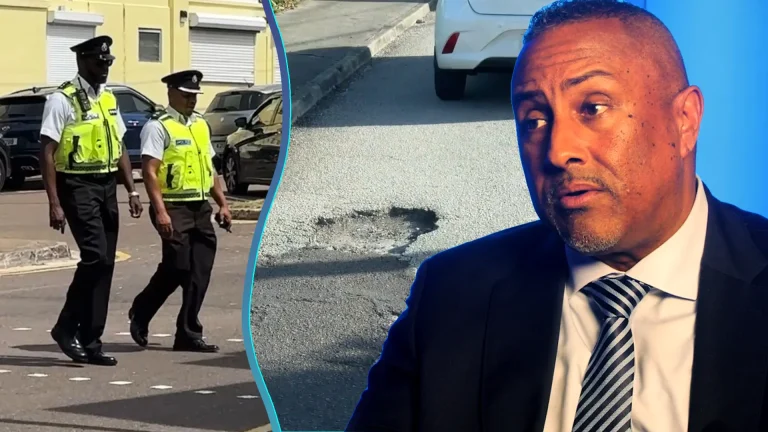
Ahead of his first Budget as Opposition Leader, Ben Smith says the PLP must be clear on its priorities, and questions if a lack of Gov’t funding led to the poor state of roads and low police numbers
Warner Bros rejects revised Paramount bid, but remains open to a final offer

Paramount informally broached an even higher per-share price of $31, Warner Bros said, apparently enticing the board to the table
International News via Reuters:
Warner Bros Discovery on Tuesday rejected Paramount Skydance’s latest $30-a-share hostile bid, but gave the rival Hollywood studio seven days to submit a “best and final” offer to top an existing agreement to sell its businesses including HBO Max and “Harry Potter” franchise to Netflix.
Paramount informally broached an even higher per-share price of $31, Warner Bros said, apparently enticing the board to the table. But its response to Paramount indicates Warner Bros prefers its deal with Netflix, and the odds of a switch are long.
Warner Bros Discovery’s shares were up 3.4% at $28.93, while Paramount rose nearly 5%. Netflix shares were largely flat in afternoon trading.
Paramount has until February 23 to make a new offer, which Netflix is allowed to match under the terms of the merger agreement, Warner Bros said.
“Our Board has not determined that your proposal is reasonably likely to result in a transaction that is superior to the Netflix merger,” Warner Bros Chairman Samuel DiPiazza Jr. and CEO David Zaslav said in a letter sent to the Paramount board on Tuesday.
“We continue to recommend and remain fully committed to our transaction with Netflix.”
The two media giants have been vying for control of Warner Bros, its flagship film and TV studios and deep content library, in a contest that highlights the high stakes of a rapidly shifting entertainment landscape.
Paramount later on Tuesday acknowledged the seven-day offer, even as it called Warner Bros’ board actions “unusual.”
The CBS-parent said it would continue to advance the tender offer, oppose the “inferior” Netflix merger and still plans to nominate directors for the upcoming Warner Bros annual meeting.
A successful deal will give the suitor ownership of Warner Bros’ extensive film and television library, which includes classics ranging from “Casablanca” and “Citizen Kane” to wildly popular favorites like “Friends” and “Batman.”
Warner Bros said in its letter it expects a bid above $31 per share, more so because a Paramount financial adviser had orally informed if Warner Bros reopens deal talks, Paramount would agree to this price, which is not its best offer.
“Time is running out for Paramount with this saga wrangling on, for way too long, which is in no one’s interest,” PP Foresight analyst Paolo Pescatore said. “For now the ball is in Paramount’s court.”
Paramount’s current offer for the whole company comes to $108.4 billion, while Netflix is offering $27.75 a share, or $82.7 billion, just for its studio and streaming businesses.
SHAREHOLDER VOTE ON NETFLIX DEAL SET FOR MARCH 20
Warner Bros, which has rejected Paramount’s offers to buy the entire company, is moving forward with a vote on Netflix’s bid on March 20.
The merger, if approved, would take place after Warner Bros spins off its Discovery Global cable operations, which include CNN, TLC, Food Network and HGTV, into a separate, publicly traded company.
Discovery Global could fetch between $1.33 per share and $6.86 a share, according to Warner Bros estimates.
Warner Bros’ decision to engage with Paramount marks a shift for the studio.
Paramount has said the board “never meaningfully engaged” with them on six different offers that executives made in the 12 weeks before Warner Bros announced the merger agreement with Netflix on December 5. A hostile bid that Paramount launched days later was rejected later that month.
ACTIVIST PRESSURE INTENSIFIES
Paramount’s revised offer, which included a personal guarantee on $40 billion in equity from Oracle founder Larry Ellison, father to Paramount CEO David Ellison, was turned down in early January.
The move to open talks with a rival bidder also comes as Warner Bros faces mounting pressure from activist investor Ancora Holdings, which has built a stake in the company and plans to oppose the Netflix transaction.
Paramount is also pressing to add directors to Warner Bros’ board, eyeing Pentwater Capital Management CEO Matt Halbower as a potential nominee, Halbower said last week. Pentwater, which owns about 50 million shares of Warner Bros, has backed Paramount’s bid.
“Every substantive complaint that the Warner Bros board had with Paramount’s previous offer has been addressed,” Halbower said in an interview last week.
To start talks with Paramount, Warner Bros’ board secured a special waiver from Netflix. Under their agreement, Warner Bros can engage with a rival bidder only if the board believes the offer could be superior, triggering a legal loophole that allows limited negotiations despite restrictions on talks.
Netflix issued a statement saying the deal has reached a milestone, with Warner Bros shareholders set to vote next month on the merger.
“While we are confident that our transaction provides superior value and certainty, we recognize the ongoing distraction for WBD stockholders and the broader entertainment industry caused by PSKY’s antics,” Netflix said.
FINANCING CONCERNS CLOUD PARAMOUNT’S PROPOSAL
Last week, Paramount made a new attempt to win over Warner Bros shareholders by enhancing its previous bid without raising its offer of $30 per share.
Instead, Paramount has offered WBD’s shareholders extra cash for each quarter the deal fails to close after this year and agreed to cover the $2.8 billion breakup fee the HBO owner would owe Netflix if it walked away.
Warner Bros said the amended merger agreement with Paramount still falls short of what its board would consider a superior proposal.
The Paramount offer still leaves key issues unresolved, including who would cover a potential $1.5 billion junior lien financing fee, what happens if debt financing falls through, and whether equity funding, backed by lead sponsor Larry Ellison, is fully certain, the Warner board wrote.
The letter said while Paramount has argued financing concerns are “not serious” given the “personal wealth of your lead equity sponsor and the credibility of your lending banks,” the draft agreements require that if debt financing becomes unavailable, additional equity must be funded to ensure the transaction can still close.
Ancora, which has a stake worth nearly $200 million, said last week Warner Bros’ board did not adequately engage in talks with Paramount Skydance over a rival offer for the whole company, including cable assets such as CNN and TNT.
The deal is also expected to face tough regulatory scrutiny on concerns over price increases for consumers and potential harm for creatives.
Paramount and Netflix have said they were engaging with competition authorities across the world, including the U.S. Department of Justice.
Reporting by Milana Vinn and Dawn Kopecki in New York and Dawn Chmielewski in Los Angeles; Additional reporting by Harshita Mary Varghese in Bengaluru; Editing by Kim Coghill, Arun Koyyur and Alan Barona
French police arrest hard-left members over killing of far-right activist

Quentin Deranque, 23, died on Saturday after he was beaten to death by hard-left activists outside a conference in Lyon given by Rima Hassan, a far-left member of the European Parliament

International News via Reuters:
Four people, including an aide to a French hard-left lawmaker, have been arrested on suspicion of involvement in the killing of a far-right activist that has jolted the country’s political class, a police source said on Tuesday.
Quentin Deranque, 23, died on Saturday after he was beaten to death by hard-left activists outside a conference in Lyon given by Rima Hassan, a far-left member of the European Parliament. Videos of the deadly fight were widely shared on social media.
France Unbowed (LFI) lawmaker Raphael Arnault confirmed on Tuesday that his parliamentary assistant was among those detained, adding that the aide had “stopped all parliamentary work”
“It is now up to the investigation to determine responsibility”, he said in a statement on social media platform X.
The aide and three other people have been arrested, said the police source, who spoke on condition of anonymity.
Although conflicts between the hard left and far right are common in France, Deranque’s killing has laid bare some of the broader political tensions in a country reeling from nearly two years of institutional crises.
It has also hardened views towards the extreme-left France Unbowed (LFI) party, while allowing the far right to portray itself as a victim of political violence
Speaking on social media, LFI leader Jean-Luc Mélenchon called for calm. “Let’s not fuel the incitement to take the law into one’s own hands,” he said.
On Monday, Lyon prosecutor Thierry Dran said a murder probe had been opened into Deranque’s killing, which has led to widespread condemnation of the LFI.
Jordan Bardella, party president of the far-right National Rally, said Mélenchon had “opened the doors of the National Assembly to presumed murderers.”
After Deranque’s killing, French President Emmanuel Macron also appealed for calm.
Reporting by Sophie Louet and Gabriel Stargardter in Paris, Charlotte Van Campenhout in Amsterdam, Editing by Jonathan Oatis
Peru ousts President Jeri because of China-linked secret meetings
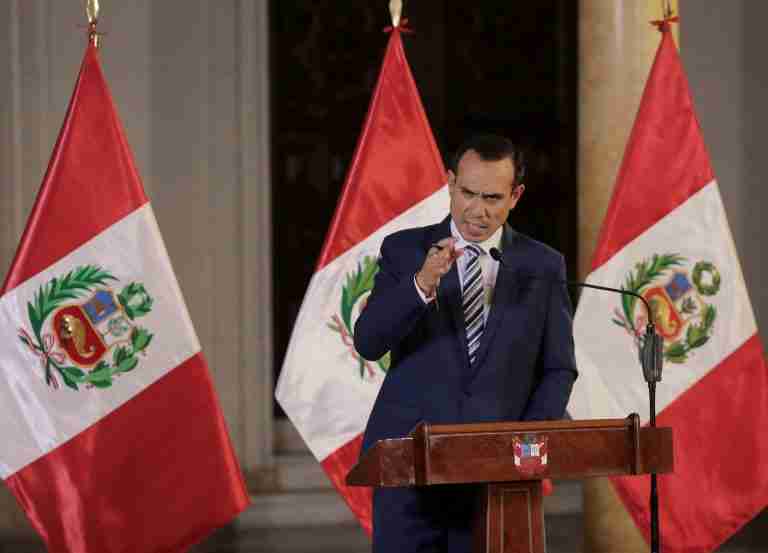
There were 75 lawmakers who voted in favor of removing Jeri, while 24 voted against and three abstained
International News via Reuters:
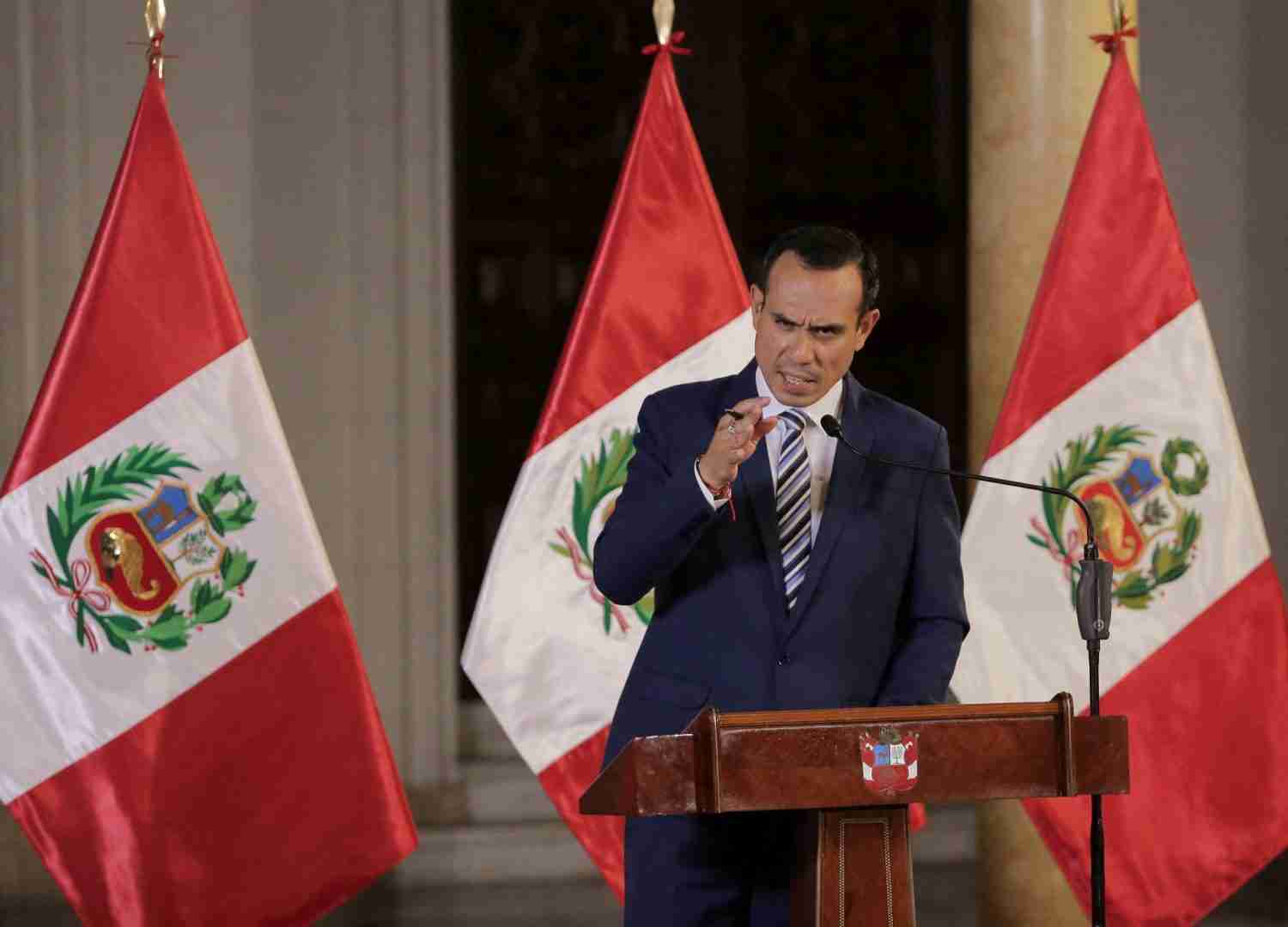
Peru’s Congress ousted President Jose Jeri on Tuesday after just four months in office following a scandal over undisclosed meetings with a Chinese businessman, continuing the country’s revolving door of leaders.
There were 75 lawmakers who voted in favor of removing Jeri, while 24 voted against and three abstained.
Legislators will now elect a new head of Congress who will also assume Peru’s presidency, becoming the Andean nation’s eighth president in as many years. Jeri is Peru’s third consecutive president to be removed from office.
Ruth Luque, one of the lawmakers who backed the censure measures, said she wanted to replace Jeri with a leader who would put public interest and security first, ahead of a new president coming into office. Elections are due to take place on April 12.
“We ask to end this agony so we can truly create the transition citizens are hoping for,” she said. “Not a transition with hidden interests, influence-peddling, secret meetings and hooded figures. We don’t want that sort of transition.”
The scandal that was dubbed “Chifagate” – after a local name for Chinese restaurants – began last month when Jeri was filmed arriving at a restaurant late at night wearing a hood to meet with Chinese businessman Zhihua Yang, who owns stores and a concession for an energy project. The meeting was not publicly disclosed.
Jeri became president in October after Peru’s unpopular Congress voted unanimously to remove his predecessor Dina Boluarte, as the right-wing parties that had backed her dropped their support amid corruption scandals and growing anger over rising crime.
Boluarte had no vice president and Jeri, who was the head of Congress at the time, was next in the line of succession.
This interim status was used to remove him from the presidency on Tuesday. Unlike impeachment, which requires a supermajority of 87 in the 130-member legislature, Congress voted to censure Jeri, which strips him of his title as head of Congress with a simple majority.
Jeri has said he would respect the outcome of the vote.
VOTING ON NEW PRESIDENT ON WEDNESDAY
While the current head of Congress, Fernando Rospigliosi, would be constitutionally next in the line of succession, he has declined to assume the presidency. As such, legislators will have to elect a new head of Congress who will then automatically assume the presidency.
Rospigliosi said parties have until 6 p.m. local time to present their candidates and the legislature would vote on a new president on Wednesday.
This would be similar to Francisco Sagasti’s ascent to the presidency in 2020 after he was chosen by Congress amid a sharp political crisis and protests following former President Manuel Merino’s five-day presidency.
The field for the April election is crowded, with dozens of candidates expected to participate. According to a recent Ipsos poll, large portions of the electorate are undecided about who to vote for.
Reporting by Sarah Morland and Alexander Villegas, Editing by Rosalba O’Brien
‘Fix the potholes!’

Street survey reveals strong consensus on where government’s spending priorities should lie on Budget Day this Friday
Friday is Budget Day, when the government sets out its spending plans for the year ahead.
Islanders will be on the look-out for any tax changes, commitments on national debt – and whether funding will increase for police, roadworks and seniors.
So what should Government’s financial priorities be?
Kendal Trott went into Hamilton to find out.
Bank ‘risk transfer’ boom needs close monitoring, Basel Committee warns

These “synthetic risk transfers” (SRTs) involve a bank selling all or part of the credit risk of a group of assets to investors such as hedge or pension funds

International News via Reuters:
Banks are increasingly turning to bespoke deals with private investment funds to shed credit risk, but the market needs close monitoring as it spawns new vulnerabilities for the global financial system, the world’s forum for banking regulators said.
These “synthetic risk transfers” (SRTs) involve a bank selling all or part of the credit risk of a group of assets to investors such as hedge or pension funds. They allow banks to free up capital while maintaining their client relationships.
SRTs are not new, but they have proven particularly popular in the European Union, with new transactions more than tripling between 2016 and 2024 after EU regulatory changes provided some synthetic securitisations preferential prudential treatment, the Basel Committee on Banking Supervision said in a report on Tuesday.
U.S. volumes have also jumped following regulatory clarity in 2023 on how the deals are treated under bank capital requirements, added the committee, which is made up of banking regulators and central bankers from the G20 economies and other countries.
Among European banks, Britain’s Barclays, Austria’s BAWAG and Greece’s Alpha are the heaviest users of SRTs relative to the size of their corporate loan books – with the average listed lender using them to cover about 12% of those loans, the report said.
WORRY OVER ‘SHADOW BANKING’ TIES
The committee said SRTs help banks boost lending that is subject to lower capital requirements but warned that heavy reliance on them left lenders exposed to the health of non-financial intermediaries buying the risk. If those investors falter, this could affect the flow of credit.
“A contraction in credit caused by a protracted freeze in SRT markets could exacerbate an economic downturn and increase stress in the non-financial sector, possibly triggering an adverse deleveraging feedback loop,” the committee wrote in the report.
Regulators globally are concerned about the growth of non-bank intermediaries involved in what is often referred to as ‘shadow banking’, because of a lack of transparency and the possibility of new risks that could endanger broader financial stability.
The committee’s report also highlighted risks over growing links between banks and non-banks – because banks often finance the very investors buying the credit risk – as well as opaque individual deals and weakening underwriting standards.
While some of these risks are being monitored and addressed, the committee said closer supervision was needed as further growth of the SRT market could multiply the risks.
Reporting by Tommy Reggiori Wilkes, additional reporting by Valentina Za in Milan; Editing by Emelia Sithole-Matarise



Civil rights leader Rev. Jesse Jackson remembered as global champion for justice
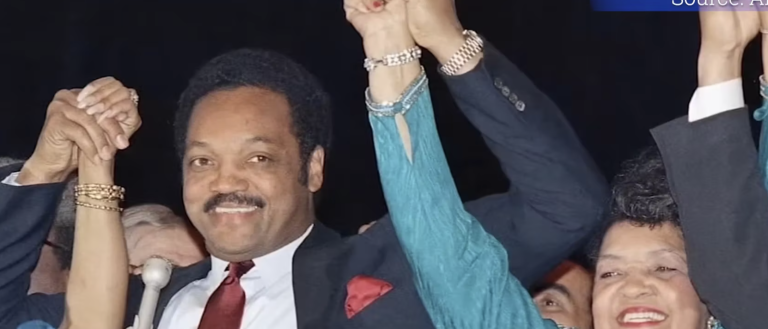
St. Paul AME Pastor Reverend Nicholas Tweed reflects
The world is remembering civil rights leader Reverend Jesse Jackson tonight. The long-time activist and founder of the Rainbow PUSH Coalition spent decades fighting for equality, justice and economic empowerment, becoming a global voice for peace and civil rights.
Here in Bermuda, Reverend Nicholas Tweed, Pastor of St. Paul AME Church, is reflecting on that legacy. Reverend Tweed, who met Jackson, says his passing is a powerful reminder of the responsibility leaders still carry today – to advocate for fairness, unity and equal opportunity for all.
Qian Dickinson spoke with Reverend Tweed about Jackson’s life, his personal memories, and why the work of justice and peace remains unfinished.
‘A modern transportation system is essential to economic growth’

Transport Minister meets with recently appointed members of the Public Service Vehicle Licensing Board

The Minister of Tourism & Transport, Culture & Sport, the Hon. Owen Darrell, JP, MP, met with the recently appointed members of the Public Service Vehicle Licensing Board (PSVLB) to outline the Government’s coordinated, multi-phase modernisation strategy aimed at improving the sustainability, efficiency, and digital experience of Bermuda’s transportation network for both residents and visitors.
Minister Darrell emphasised the Public Service Vehicle Licensing Board’s role in enforcing existing legislation and upholding fairness and equity, particularly in its handling of complaints, applications, and violations.
The Minister Darrell stated, “Modernisation is about utilising technology and making sure transportation is accessible and user-friendly. This approach is intended to improve the overall experience for individuals with broad needs and preferences. A modern transportation system is essential to economic growth. By forming a supportive environment for the public service vehicle industry, we project increased economic activity, job creation, and improved visitor experiences.”
As part of the transportation modernisation program, key initiatives include:
* The introduction of Digital Fare Media through the Shorelink App.
* The digitisation of Transport Control Department (TCD) applications and processes;
* The integration of electric buses into the Department of Public Transportation (DPT) fleet.
* The addition of two new high-performance, 550‑passenger ferries to replace ageing vessels; and
* Positioning ridesharing as one component of a modern, integrated transportation system.
To support the ridesharing initiative, the Government is amending the Motor Car Act 1951 to introduce app-based, for-hire vehicles. Under this system, available taxis will continue to receive priority for ride requests before private vehicles are dispatched, ensuring a balanced approach while protecting the local taxi industry, and addressing service gaps to support more consistent transportation access across Bermuda.

Oil prices slide 2% to two-week low on talk of progress in US-Iran talks

Brent futures fell $1.41, or 2.1%, to $67.24 a barrel at 11:50 a.m. EST (1650 GMT), while U.S. West Texas Intermediate (WTI) crude fell 65 cents, or 1.0%, to $62.24 in volatile trading

International News via Reuters:
Oil prices fell about 2% to a two-week low on Tuesday on hopes tensions between the United States and Iran were easing after Iran’s foreign minister said the countries had reached an understanding on the main “guiding principles” of their nuclear talks.
Brent futures fell $1.41, or 2.1%, to $67.24 a barrel at 11:50 a.m. EST (1650 GMT), while U.S. West Texas Intermediate (WTI) crude fell 65 cents, or 1.0%, to $62.24 in volatile trading, putting both crude benchmarks on track for their lowest close since February 2. Earlier in the session WTI prices rose more than $1.
Iran and the United States reached an understanding on the main “guiding principles” in a second round of indirect talks in Geneva over their nuclear dispute on Tuesday, but that does not mean a deal is imminent, Iranian Foreign Minister Abbas Araqchi said.
The talks took place amid a U.S. military buildup in the Middle East. Iran’s supreme leader said on Tuesday that any U.S. attempt to depose his government would fail.
Oil prices are likely to stay volatile, with sharp two-way swings driven by diplomatic signals rather than pure demand-supply fundamentals, said Sugandha Sachdeva, founder of SS WealthStreet, a New Delhi-based research firm.
Investors are closely watching U.S.-Iran relations as any escalation or conflict could lead to Iran closing the Strait of Hormuz. About a fifth of the oil consumed globally passes through the Strait of Hormuz between Oman and Iran, making any disruptions in the area a major risk to global oil supplies.
Iran and fellow Organization of the Petroleum Exporting Countries (OPEC) members Saudi Arabia, United Arab Emirates, Kuwait and Iraq export most of their crude via the Strait, mainly to Asia.
In 2025, Iran was the third-biggest crude producer in OPEC behind Saudi Arabia and Iraq, according to U.S. Energy Information Administration data.
Another factor weighing on prices was the gradual increase in oil production at Kazakhstan’s giant Tengiz oil field after an outage in January, Russian news agency Interfax reported.
RUSSIA AND UKRAINE
Also in Geneva on Tuesday, Ukrainian and Russian officials were set to meet for a new round of U.S.-brokered peace talks, which the Kremlin said would likely focus on territory – the main sticking point.
Any peace resolution could see a lifting of sanctions on Russia, bringing Russian oil back to the mainstream market. In 2025, Russia was the third-biggest crude producer in the world behind the United States and Saudi Arabia, according to data from the U.S. EIA.
Ukraine, meanwhile, continued its attacks on Russian energy infrastructure. The Ukrainian military said on Tuesday it struck the Ilsky refinery, while a drone attack was also reported at the port of Taman.
Reporting by Scott DiSavino and Siddharth Cavale in New York, Robert Harvey in London, Mohi Narayan in New Delhi and Anushree Mukherjee in Bengaluru; additional reporting by Stephanie Kelly; Editing by Thomas Derpinghaus, Will Dunham, David Holmes, Chizu Nomiyama and Andrei Khalip
Qualcomm says UK lawsuit over smartphone chip royalties will be withdrawn

The British consumers’ association which goes by the name of Which? had brought the case on behalf of around 29 million people who bought iPhones or Samsung devices since 2015
International News via Reuters:
Chipmaker Qualcomm said on Tuesday a London lawsuit alleging it had abused its dominant position to force Apple and Samsung to pay inflated royalties will be withdrawn.
The British consumers’ association which goes by the name of Which? had brought the case on behalf of around 29 million people who bought iPhones or Samsung devices since 2015, seeking 480 million pounds ($652.03 million) in compensation.
Which? had argued at a trial last year that Qualcomm made Apple and Samsung pay inflated royalties even if its chips were not used in a device under a worldwide so-called no licence, no chips policy, which inflated the cost of devices.
Qualcomm, however, said the lawsuit mischaracterised its long-standing requirement for manufacturers to obtain a licence for its standard essential patents before buying chipsets.
The Competition Appeal Tribunal had yet to give a ruling following last year’s trial.
Which? said in a statement on Tuesday that it would apply to withdraw the case, having reached an agreement under which Qualcomm will make no payment to the claimant class.
It said it had concluded the tribunal would find Qualcomm did not coerce Apple or Samsung to sign any patent licences or chipset agreements, or agree to any licensing terms.
Which? also said the tribunal would find Qualcomm’s practices “did not infringe competition laws, did not result in inflated royalties, and did not lead to an increase in prices consumers paid for their mobile phones”.
A Qualcomm spokesperson said: “This recognition by the class representative, following a trial on the merits, reaffirms what the courts in the United States have repeatedly held: Qualcomm’s licensing practices are lawful and do not harm competition.”
Apple and Samsung did not immediately reply to a request for comment.
A similar consumer lawsuit against Qualcomm in California, which challenged the company’s patent licensing and exclusive-dealing chip agreements with Apple and other manufacturers, was dismissed in 2023.
($1 = 0.7362 pounds)
Reporting by Sam Tobin; Editing by Catarina Demony and Emelia Sithole-Matarise
