Britain’s transport minister Heidi Alexander approved the opening of a second runway in September
International News via Reuters:
A legal challenge to Britain’s plan to expand Gatwick Airport, the country’s second largest, began on Tuesday, as campaigners sought to block the project on climate change grounds.
Britain’s transport minister Heidi Alexander approved the opening of a second runway in September, hoping that converting a back-up runway into one that is fully operational will allow thousands of extra flights and drive economic growth.
But campaign group Communities Against Gatwick Noise Emissions, or CAGNE, said officials who approved the expansion of the airport, situated 30 miles (48 km) south of London, had failed to properly assess its impact on Britain’s climate change goals.
The government has said the increasing use of sustainable aviation fuel means airport enlargements are not incompatible with its net-zero targets. It has therefore backed a new runway at Heathrow, the country’s biggest hub, and at Gatwick.
Airports have struggled to expand in the densely populated southeast England in recent decades, encountering opposition from communities worried about noise and pollution. An earlier plan to build a new runway at Heathrow was scrapped in 2010.
The plan at Gatwick involves moving the backup runway by 12 metres (39 feet) to meet safety standards for both runways to operate and allow for millions of new passengers by the 2030s, boosting trade and tourism and creating 14,000 jobs.
CAGNE says that the harm the expansion will cause to local communities will far outweigh the economic benefits.
A judgment is expected at a later date. Gatwick is 50.01% owned by France’s VINCI Airports.
Reporting by Sarah Young; editing by Barbara Lewis
Trump’s initiative raises questions about the role of the United Nations and a source close to Macron said the French president intended to decline the invitation to join
International News via Reuters:
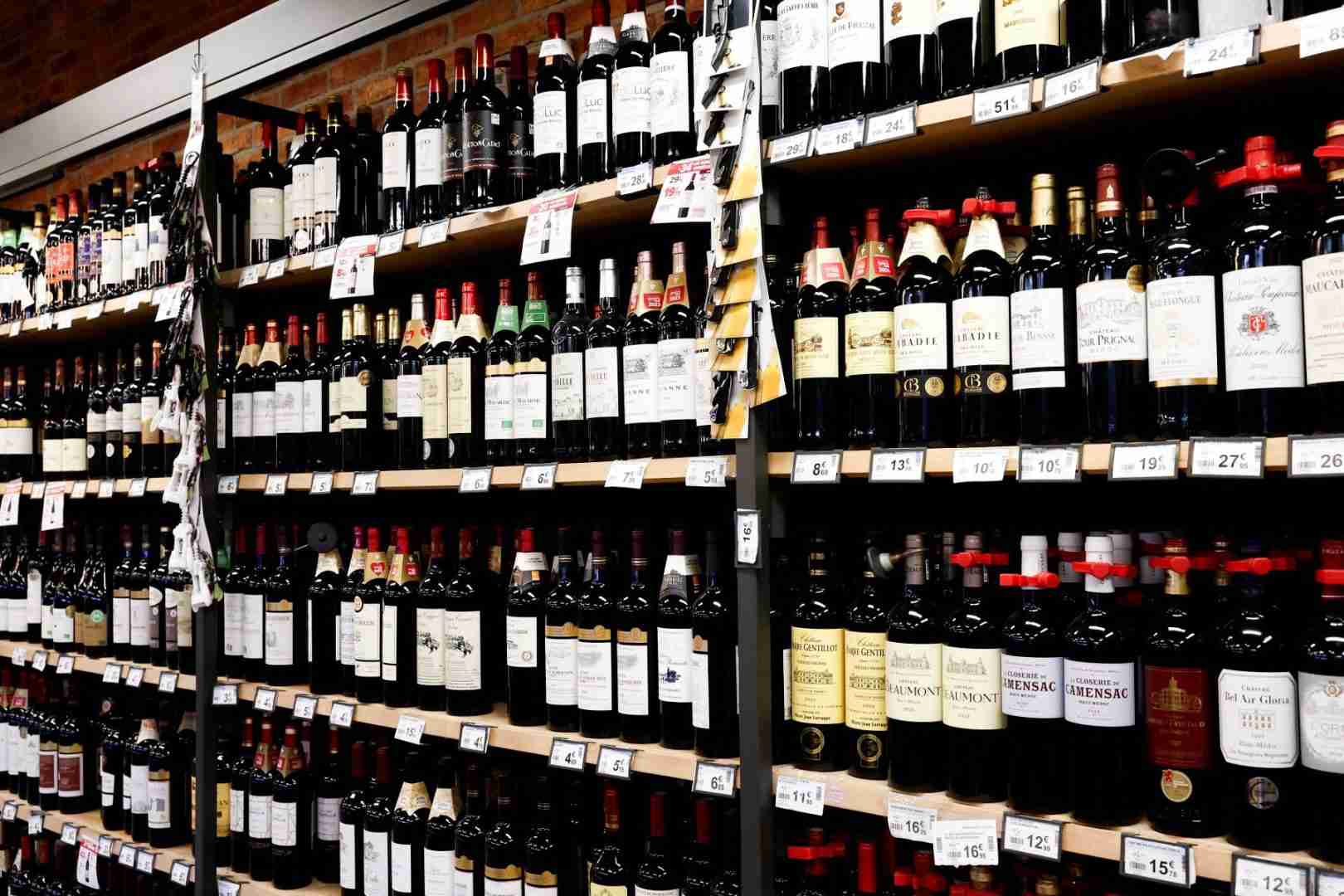
U.S. President Donald Trump threatened to hit French wines and champagnes with 200% tariffs in an apparent effort to cajole French President Emmanuel Macron into joining his Board of Peace initiative aimed at resolving global conflicts.
Trump’s initiative, which would start by addressing Gaza and then expand to deal with other conflicts, raises questions about the role of the United Nations and a source close to Macron said the French president intended to decline the invitation to join.
When asked about Macron’s stance, Trump said, “Did he say that? Well, nobody wants him because he will be out of office very soon.”
“I’ll put a 200% tariff on his wines and champagnes, and he’ll join, but he doesn’t have to join,” Trump said.
WINE TARIFF THREAT PART OF BROADER SALVO AGAINST EU
Macron is due in Davos for the day on Tuesday before a scheduled return to Paris in the evening. Elysee aides have said there are no plans to extend his stay to Wednesday, when Trump arrives in the Swiss mountain resort town.
In another shot at the French leader, Trump published a private message from Macron in which he said he did not understand Trump’s actions over Greenland. France holds an election to replace Macron in 2027.
Wines and spirits exported to the United States from the European Union currently face a 15% tariff – a rate the French have been lobbying hard to reduce to zero since Trump and European Commission President Ursula von der Leyen agreed a U.S.-EU trade deal in Scotland last summer.
The United States is the largest market for French wine and spirits, with shipments at 3.8 billion euros in 2024.
“The fact that we’re getting more threats is going to make the industry harder to invest in, it’s going to make it harder for companies to make decisions for their own investments,” said Laurence Whyatt, head of European beverages research at Barclays.
“They will have to be more reserved, keep a bit of cash back, not invest, because they need to be able to weather the storms as and when they come.”
Shares in luxury conglomerate LVMH, which owns major champagne producers including Moet & Chandon, were down 2% in early trading.
“These declarations by the President of the United States must be taken seriously but with composure,” Gabriel Picard, chairman of the French wine and spirits export lobby FEVS, said in a statement.
The issue must be handled at the European level, in a united and coordinated way, the association said.
France’s wine and spirits industry suffered a 20%-25% hit to its U.S. business in the second half of last year after previous tariff measures, Picard had told Reuters on Monday, before the latest threat.
A Macron aide said the Elysee took note of Trump’s remarks and stressed that tariff threats to influence a third party’s foreign policy were unacceptable.
TRUMP’S THREATS ARE “BRUTAL”, FARM MINISTER SAYS
Europeans are weighing their own 93 billion euro tariff riposte and even the use of the bloc’s “Anti-Coercion Instrument” to retaliate against a separate threat of tariff hikes against a group of European states over Greenland.
“It’s brutal, it’s designed to break us, it’s a tool for blackmail. All of this is outrageous,” French Farm Minister Annie Genevard told news channel TF1.
“We have the tools; Europeans must take responsibility. We cannot allow such an escalation.”
Trump has threatened a 200% tariff on wine and other alcoholic beverages imported from the EU before, including last year in March as transatlantic trade tensions escalated.
Governments have reacted cautiously to Trump’s Board of Peace invitation, a plan that diplomats said could harm the work of the United Nations.
A draft charter sent to about 60 countries by the U.S. administration calls for members to contribute $1 billion in cash if they want their membership to last more than three years, according to the document seen by Reuters.
Reporting by Nandita Bose and Bo Erickson in Washington; Additional reporting by Sybille de La Hamaide, Michel Rose and Helen Reid in Paris; Editing by Jacqueline Wong, Neil Fullick, Richard Lough and Alison Williams
China’s plans to build a new embassy on the site of the two-century-old Royal Mint Court near the Tower of London have stalled for three years
International News via Reuters:
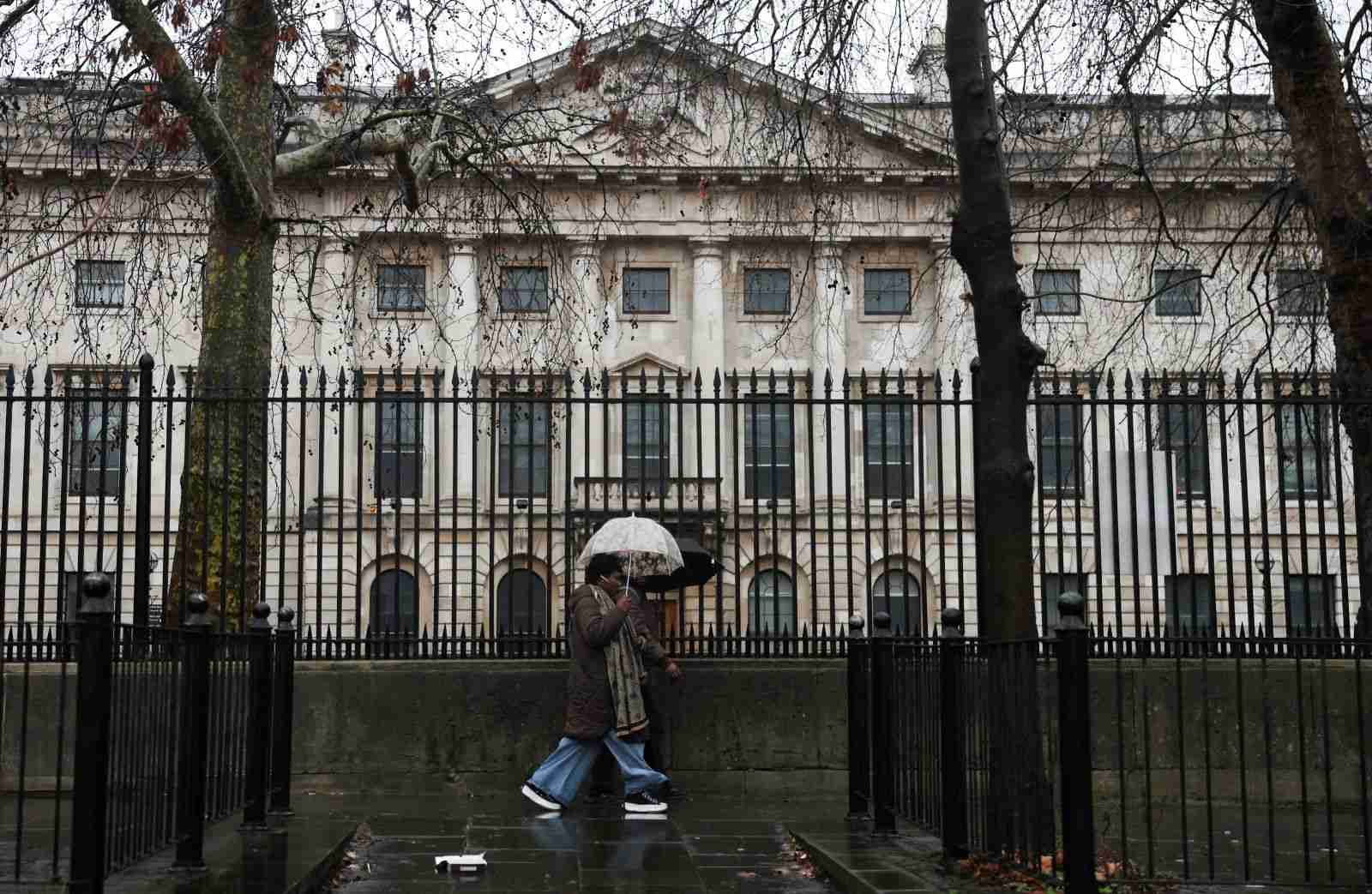
Britain’s government gave approval on Tuesday for China to build its largest embassy in Europe in London, hoping to improve ties with Beijing despite British and U.S. politicians’ warnings that it could be used as a base for spying.
China’s plans to build a new embassy on the site of the two-century-old Royal Mint Court near the Tower of London have stalled for three years over opposition from local residents, lawmakers and Hong Kong pro-democracy campaigners in Britain.
The decision was announced before an expected visit to China by Prime Minister Keir Starmer this month, the first by a British leader since 2018. Some British and Chinese officials said the trip was dependent on the embassy being approved.
The government said after the decision that intelligence agencies were involved throughout the approval process and devised a range of protective security measures.
“National security is our first duty,” a government spokesperson said in a statement.
EMBASSY APPROVAL HIGHLIGHTS UK’S CHINA DILEMMA
The Chinese government purchased Royal Mint Court in 2018 but its requests for planning permission to build a new embassy on the site were rejected by the local council in 2022. Chinese President Xi Jinping asked Starmer last year to intervene.
The government took control of the planning decision last year and an inquiry was held last February to hear arguments about whether the embassy should be approved.
Some politicians in Britain and the United States have said China should be barred from building on the site near London’s historic financial district because it might enable Beijing to eavesdrop on fibre-optic cables that are used by finance firms and travel underneath the area.
The opposition Conservative Party called the decision “a disgraceful act of cowardice”.
The Chinese embassy in London did not immediately respond to a request for comment.
British security officials had warned that allowing China to build a much larger embassy would mean more Chinese spies in Britain as well as more diplomats, an assertion dismissed by the Chinese embassy in London.
The head of Britain’s MI5 domestic spy agency said in October his spy agency had more than a century of experience dealing with foreign embassies, suggesting any security risks could be managed.
But MI5 has also warned of a threat posed by attempts by China to recruit and cultivate people with access to the British government.
The agency issued a warning to lawmakers in November about Beijing trying to interfere in British politics, and the collapse of a trial of two British men charged with spying on members of parliament for China led to criticism the government was prioritising better relations over national security.
The government has approved the new embassy – after years of diplomatic pressure from China – as Starmer tries to reset relations with Beijing, which is one of his foreign policy priorities.
Britain has in the past decade moved from saying it wanted to be China’s biggest supporter in Europe to being one of its fiercest critics, and is now trying to improve relations again. Starmer said last month closer business ties were in the national interest.
DIPLOMATIC TENSIONS
Some local residents who oppose China building a large embassy in the area are considering whether to ask for a judicial review against the decision.
The new embassy would be one of the largest diplomatic outposts in the world with a footprint of about 55,000 square metres (600,000 square feet), according to the planning application.
That is almost 10 times the size of China’s current embassy in central London and considerably bigger than its embassy in the United States.
Before Tuesday’s decision, China had blocked plans by Britain to expand its embassy in Beijing, officials involved in the talks said.
The approval was subject to a number of technical conditions including construction methods, access and environmental impact.
Chinese officials say that when Beijing purchased the site for 255 million pounds ($343 million), it received assurances from the then Conservative government that it could build its embassy.
Royal Mint Court was from the early 19th century until 1967 the site of the Royal Mint, where coins are produced.
U.S. President Donald Trump has threatened to impose tariffs from February 1 on imports from the UK, Denmark, Norway, Finland, France, Germany and the Netherlands unless they agree to U.S. ownership of Greenland
International News via Reuters:
The pound headed for its largest two-day rise since December on Tuesday, rallying as investors ditched the dollar in the face of mounting trade tensions between the United States and Europe over Greenland.
U.S. President Donald Trump has threatened to impose tariffs from February 1 on imports from the UK, Denmark, Norway, Finland, France, Germany and the Netherlands unless they agree to U.S. ownership of Greenland, a Danish autonomous territory.
Investors have responded by selling U.S. assets, including the dollar, and largely buying European currencies and gold.
Sterling has gained 0.8% in the last two days to trade around $1.348, although it has lost out against a resurgent euro, the major beneficiary of the push out of the dollar, which was last up 0.4% on Tuesday, the most since early November, to trade at 87.03 pence.
UK labour market data earlier in the day painted on the surface a fairly bleak picture for the employment market, with the jobless rate holding around five-year highs in November and the number of workers on payrolls dropping by the most since November 2020.
But there were some bright spots in the report to suggest that the worst of the downturn may have passed, analysts said.
George Buckley, chief UK and euro area economist at Nomura, said the report also showed redundancies fell, while vacancies and the unemployment rate stabilised, along with the inactivity rate falling. Wage growth, a key metric for the Bank of England, also slowed to what he called “inflation-target consistent rates”.
“This provides a helpful backdrop for the bank to cut rates again – we expect a final move to 3.50% in April, with markets pricing in the risk of earlier/more cuts,” he said.
Markets are currently pricing one rate cut from the BoE by mid-year, with a roughly 60% chance of a second by December.
Reporting by Amanda Cooper; Editing by Emelia Sithole-Matarise
The British royal and six other claimants accuse the Mail’s publisher Associated Newspapers of unlawful behaviour violating their privacy from 1993 until 2011 and beyond
International News via Reuters:
Prince Harry, Elton John and other public figures were victims of systematic phone hacking and other unlawful acts by Britain’s powerful Daily Mail, their lawyer said on Monday as the trial of their high-profile privacy case against the publisher began.
The British royal and six other claimants accuse the Mail’s publisher Associated Newspapers of unlawful behaviour violating their privacy from 1993 until 2011 and beyond, in a civil case with high stakes for the claimants and media alike.
Harry, 41, who arrived smiling and waving, said in a witness statement quoted by lawyers that it was “disturbing to feel that my every move, thought or feeling was being tracked and monitored just for the Mail to make money out of it”.
Associated, however, calls the allegations “preposterous smears”, saying their journalists had legitimate sources for information, including celebrities’ “leaky” social circles.
The publisher also alleges the litigation is part of a coordinated conspiracy by a wealthy group driven by personal animosity towards the media.
The nine-week trial will not just put reputations on the line, in a case with legal costs running to tens of millions of pounds, but could open up a new front in long-running litigation over the practices of the British press.
HARRY’S MISSION AGAINST PRESS
Harry, singer John and the other claimants – John’s husband David Furnish, actors Liz Hurley and Sadie Frost, anti-racism campaigner Doreen Lawrence and former lawmaker Simon Hughes – will argue investigators routinely obtained material unlawfully.
Harry, Hurley, Frost and Hughes attended the trial’s first day on Monday, with John, Furnish and Lawrence following online.
Their lawyer David Sherborne said there was “clear, systematic and sustained use of unlawful information gathering”, including hacking voicemail messages, bugging landlines and obtaining private information by deception, known as “blagging”.
Harry, who has long blamed the press for the death of his mother in a Paris car crash in 1997 as her vehicle sped away from paparazzi, was quoted by his lawyers as saying the practices drove him “paranoid beyond belief”.
Examples cited included finding out precise travel plans of Harry’s former girlfriend Chelsy Davy and a report about “private and intimate conversations” between Harry and his elder brother Prince William about images of their dead mother.
Associated’s titles had not previously been embroiled in the phone hacking scandal, which has long dogged the British press, until this case was filed in 2022.
Current and former senior editors and journalists are among those allegedly involved in wrongdoing while at Associated, including Victoria Newton, the current editor of Rupert Murdoch’s tabloid the Sun.
Associated’s lawyers say articles written by Newton, who is not giving evidence, were “legitimately sourced”. News UK, a subsidiary of Murdoch’s News Corp, did not respond to a request for comment.
Given Associated’s long-standing denials, most notably by former Daily Mail editor Paul Dacre at a public inquiry a decade ago, any adverse findings would be a “catastrophe” for the publisher, Sherborne said.
But Associated says it had legitimate means of obtaining information, including through press officers or publicists and from the social circles of claimants including Harry and John regularly leaked to the press.
The publisher also says evidence from former private detectives is untrustworthy and some evidence was obtained “through financial inducements and threats”.
For Harry, the trial is the final instalment of his legal war on the British tabloids, having said it was his mission to clear up the press and hold those in senior positions to account.
He has already successfully sued Mirror Group Newspapers (MGN) for damages, while he won an apology and admission of some wrongdoing by Murdoch’s British newspaper arm which settled ahead of a trial a year ago.
The prince became the first British royal to appear in a witness box in 130 years in 2023 during the MGN trial. He is expected to give evidence against Associated on Thursday.
Reporting by Michael Holden; Editing by David Holmes, Andrew Cawthorne, William Maclean
The iconic Bailey’s Bay Ice Cream Parlour has new owners.
Long known for its creative selection of flavours, the popular ice cream spot in Hamilton Parish is continuing its traditions while introducing fresh ideas for the future.
New owner Dannielle Aguilar shares the story behind the transition, highlights new additions and flavours, and discusses what customers can look forward to as Bailey’s Bay Ice Cream Parlour moves into a new phase. Kendal Trott has the scoop.This has been posted.It is posted.I posted it.ReplyForward
An onchain economy uses digital assets for everyday financial transactions
Premier Burt with Jeremy Allaire – Co-Founder, CEO, and Chairman, Circle, Brian Armstrong – Co-Founder and CEO, Coinbase
Davos, Switzerland: Today at the World Economic Forum Annual Meeting, the Government of Bermuda announced their plans to transform Bermuda into the world’s first fully onchain national economy with support from Circle and Coinbase.
Circle and Coinbase intend to provide their digital asset infrastructure and enterprise tools to the Government of Bermuda, local banks, insurers, small and medium-sized businesses, and consumers. The companies also plan to support nationwide digital finance education and technical onboarding.
An onchain economy means using digital assets as an everyday financial infrastructure. For a country like Bermuda, a highly entrepreneurial economy with thousands of local businesses, traditional payment rails are expensive and restrictive. Being classified alongside Caribbean and other island jurisdictions, onshore payment processors, and local fiat banking rails drive up fees and squeeze already-thin merchant margins. Digital finance provides an opportunity for a new model.
With USDC, merchants can accept fast, low-cost, dollar-denominated payments. There are now multiple live examples in the Bermudian market, demonstrating how onchain digital payments allow individuals to transact locally, support economic activity, and meet compliance obligations in a modern, efficient way.
The announcement builds on Bermuda’s leadership in digital asset regulation. In 2018, Bermuda became one of the first jurisdictions to introduce a comprehensive digital asset framework through the Digital Asset Business Act. Circle and Coinbase were among the first global firms licensed under the regime and have expanded alongside the island’s growing digital finance ecosystem.
The continued partnership follows a major milestone at the Bermuda Digital Finance Forum 2025, where the three partners executed an airdrop of USDC, distributing 100 USDC to every attendee for use with newly onboarded local merchants. Since then, additional Bermudian businesses have begun accepting digital payments and local financial institutions have expanded their use of stablecoins and tokenized finance.
The Bermuda Digital Finance Forum 2026, taking place May 11–14, will expand these efforts through broader business participation, greater consumer stimulus, and deeper engagement across the financial services sector.
Bermuda’s approach is anchored in what The Hon. E. David Burt, JP, MP, Premier of Bermuda, describes as a collaborative model between government, regulator, and industry designed to enable responsible innovation at scale.
“Bermuda has always believed that responsible innovation is best achieved through partnership between government, regulators, and industry,” said Premier Burt. “With the support of Circle and Coinbase, two of the world’s most trusted digital finance companies, we are accelerating our vision to enable digital finance at the national level. This initiative is about creating opportunity, lowering costs, and ensuring Bermudians benefit from the future of finance.”
The transition to an onchain economy is expected, over time, to deliver tangible benefits for residents and businesses. Benefits include lower transaction costs and providing greater access to global finance through modern digital wallets, and infrastructure that keeps economic value circulating locally.
“Bermuda has been a global pioneer in digital asset regulation and continues to demonstrate what responsible blockchain innovation looks like at a national scale,” said Circle Co-Founder, Chairman, and CEO, Jeremy Allaire. “We are proud to deepen our engagement as Bermuda empowers people and businesses with USDC and onchain infrastructure.”
“Coinbase has long believed that open financial systems can drive economic freedom,” said Coinbase CEO Brian Armstrong. “Bermuda’s leadership shows what is possible when clear rules are paired with strong public-private collaboration. We are excited to support Bermuda’s transition toward an onchain economy that empowers local businesses, consumers, and institutions.”
Government agencies will begin piloting stablecoin-based payments, financial institutions integrating tokenization tools, and residents participating in nationwide digital literacy programs, laying the foundation for a more inclusive, competitive, and resilient national economy.
Fresh appeal for witnesses; motorcyclist remains in hospital
Full police statement:
The Bermuda Police Service (BPS) is renewing the appeal for witnesses to a collision involving a police vehicle and a motorcycle that occurred around 12:30pm Thursday, 15th January 2026, at the junction of Dundonald Street and Court Street, in the City of Hamilton.
At last check, the injured male motorcyclist remained hospitalised.
There were no other injuries reported.
As part of this investigation, CCTV footage has been reviewed.
Any witnesses are now encouraged to contact Inspector Derrick Golding, by calling 717-2351, or e-mailing dgolding@bps.bm, at the earliest opportunity.
Alternatively, any relevant information regarding this collision can be submitted via the BPS online community reporting portal, https://portal.police.bm.
Government hits back at Michael’s Fahy’s comments on CARICOM, as islands to our south face a squeeze on U.S. visas
by the Minister of Home Affairs, the Hon. Alexa Lightbourne, JP, MP
Administrative visa processing changes do not diminish the standing, dignity, or value of countries. Language suggesting that such changes “downgrade” countries and their citizens is neither diplomatically appropriate nor reflective of the mutual respect that should characterize regional discourse.
Any future relationship with CARICOM would be carefully structured to preserve Bermuda’s fundamental characteristics.
Our British Overseas Territory (OT) status, constitution and legal system, robust financial services regulatory framework, tax structure, and established bilateral relationships would remain.
The suggestion that regional cooperation would compromise these foundational elements misunderstands how Bermuda would approach any such arrangement.
This Government and our Ministry remain committed to thorough public consultation and transparent decision-making regarding CARICOM.
This includes assessment of economic implications, stakeholder engagement, and ensuring Bermudians have access to accurate, complete information about what any regional relationship would and would not entail.
The Government’s first commitment is to protecting Bermuda’s economic interests and international reputation.
Regional cooperation represents an opportunity, not a risk. Bermuda’s prosperity has always depended on strategic engagement with the wider world, not isolation from it.
The Ministry of Home Affairs will continue to approach this matter with the careful consideration it deserves, grounded in evidence rather than speculation, and focused on Bermuda’s long-term strategic interests.
The city’s biggest fire in over a decade started late on Saturday at Gul Plaza, which houses 1,200 shops in a multi-storey complex spread across an area larger than a football field
International News via Reuters:
Pakistani firefighters began pulling bodies from the smouldering remains of a sprawling Karachi shopping mall on Monday where more than 60 people were still missing after a massive fire that killed at least 21.
The city’s biggest fire in over a decade started late on Saturday at Gul Plaza, which houses 1,200 shops in a multi-storey complex spread across an area larger than a football field. The blaze in Karachi’s historic centre raged for more than 24 hours before it was mostly extinguished.
Videos showed flames ripping through the building as firefighters laboured through the night to put out the blaze. On Monday, they began cooling the structure and clearing twisted metal and debris strewn across the street, along with fallen air-conditioning units and shop signboards.
Most of the building had crumbled by Monday afternoon; cranes demolished the remaining structure amid fears it might collapse.
Qasir Khan said his wife, daughter-in-law and her mother had gone to the mall on Saturday evening and were among those still missing.
“The bodies will come out in pieces from here. No one will be able to recognise them,” Khan said, blaming the rescue effort for not being swift enough. “They could have saved a lot of people.”
Hundreds of people surrounded the building as rescue teams searched for survivors, including shopowners whose life’s work was reduced to ash overnight.
“We’ve been left high and dry, reduced to zero; 20 years of hard work, all gone,” said shopkeeper Yasmeen Bano.
ANGER OVER THE FIRE
Rescue workers were bringing human remains out in sacks before sending them for DNA testing. They stopped regularly to drink water after enduring intense heat from the debris.
Mohammed Ameen, who was running operations at the site for the Edhi emergency services non-profit, said 21 people had died in the fire, including a child.
Murad Ali Shah, chief minister of the southern province of Sindh that includes Karachi, told reporters that 65 people were still missing while 22 others who were injured by the flames had been discharged from hospital.
“In this time of grief and hardship, we stand with the affected families and the Sindh government,” Prime Minister Shehbaz Sharif said in a statement.
Anger was bubbling when Karachi Mayor Murtaza Wahab visited the site on Sunday night, with people chanting anti-government slogans and protesting over the response time from the fire department, local media reported.
Kosar Bano said six of her family had gone to the mall to shop for a wedding. The last time she heard from them, they said they would be home in 15 minutes.
“The only hope we have is how many hands we will find, how many fingers we will find, and how many legs we will find. That’s it,” she said.
THICK SMOKE FILLED THE BUILDING
According to rescue services, authorities received the first emergency call at 10:38 p.m. (1738 GMT) on Saturday, reporting that ground-floor shops were on fire. By the time firefighters arrived, the flames had already spread to the upper floors, engulfing much of the building.
Images of the mall’s interior revealed the charred remains of stores and a bright orange glow as flames continued to rise throughout the building.
Firefighters said Gul Plaza’s lack of ventilation caused thick smoke to fill the building and slowed efforts to reach people trapped inside.
“I’m admitting that there are faults. I can’t say whose fault this is. An inquiry will be conducted and heads will roll,” Shah said.
Provincial police chief Javed Alam Odho earlier said the fire was caused by an electrical fault, but Shah said the reason was still unknown.
The blaze is Karachi’s biggest since an industrial site went up in flames in 2012, killing more than 260 people. A court ruled in 2020 that the disaster involved arson.
Reporting by Ariba Shahid and Mohammed Waseem; Writing by Tanvi Mehta and Saad Sayeed; Editing by Raju Gopalakrishnan, Kate Mayberry, Mark Potter and Ros Russell
After leading the bank since 2022 through a restructuring that culminated in last year’s takeover of bigger rival Mediobanca, Lovaglio, 70, is seeking a new mandate from the MPS board in April
International News via Reuters:
Italy’s Treasury is in favour of reappointing Luigi Lovaglio as chief executive of Monte dei Paschi di Siena (MPS), two sources familiar with the matter said on Monday, at a critical juncture for the bailed-out Tuscan lender.
After leading the bank since 2022 through a restructuring that culminated in last year’s takeover of bigger rival Mediobanca, Lovaglio, 70, is seeking a new mandate from the MPS board in April.
His reappointment faces hurdles. The board is still debating whom to put forward as a CEO candidate, amid shareholder disagreements and a judicial probe is in progress into the Mediobanca deal.
Asking not to be named due the sensitivity of the matter, the sources said the Treasury had so far supported Lovaglio’s strategy for the bank and wanted MPS to continue along its current path.
GOVERNMENT STANCE ON LOVAGLIO KEY DESPITE SMALL STAKE
Italy’s Treasury, which has a residual 4.9% stake in MPS, would not back any slates of board nominees with an alternative CEO candidate, the sources said, adding Rome would be in favour of naming some new directors.
With the country’s financial sector still in flux, the government’s stance carries weight beyond the actual size of its shareholding.
In reprivatising MPS after a 2017 bailout, Italy has brought onboard as key investors Delfin, the holding company of the Del Vecchio family, and construction tycoon Francesco Gaetano Caltagirone.
Delfin on Friday threw its weight behind Lovaglio, saying it backed the bank’s management. Caltagirone, however, has not expressed his support for the CEO and sources say he has doubts about whether Lovaglio would be the best choice going forward.
Caltagirone on Friday denied any direct clash with Lovaglio, attributing the uncertainty over the CEO’s future to an internal board debate.
By acquiring Mediobanca, the main shareholder in Italy’s largest insurer Generali alongside Delfin and Caltagirone, MPS has positioned itself at the centre of the country’s financial system.
Decisions over the bank’s leadership are seen as critical in shaping the sector’s future.
Reuters reported in November that Rome was still banking on a long‑standing plan to combine MPS with rival Banco BPM.
Bankers expect further consolidation in Italy’s financial sector following a raft of merger deals last year, with Generali seen as a central pivot in any reshaping of the market.
The insurer in December ditched an asset management deal with France’s BPCE after sharp criticism from Italy’s government and top shareholders Caltagirone and Delfin.
Lovaglio, who has described the Mediobanca merger as an innovative combination of two markedly different lenders, is working on a strategy for the group which must be presented to the European Central Bank within six months of the deal.
Reporting by Giuseppe Fonte in Rome and Valentina Za in Milan, editing by Gavin Jones
To provide the best experiences, we use technologies like cookies to store and/or access device information. Consenting to these technologies will allow us to process data such as browsing behavior or unique IDs on this site. Not consenting or withdrawing consent, may adversely affect certain features and functions.
Functional
Always active
The technical storage or access is strictly necessary for the legitimate purpose of enabling the use of a specific service explicitly requested by the subscriber or user, or for the sole purpose of carrying out the transmission of a communication over an electronic communications network.
Preferences
The technical storage or access is necessary for the legitimate purpose of storing preferences that are not requested by the subscriber or user.
Statistics
The technical storage or access that is used exclusively for statistical purposes.The technical storage or access that is used exclusively for anonymous statistical purposes. Without a subpoena, voluntary compliance on the part of your Internet Service Provider, or additional records from a third party, information stored or retrieved for this purpose alone cannot usually be used to identify you.
Marketing
The technical storage or access is required to create user profiles to send advertising, or to track the user on a website or across several websites for similar marketing purposes.