The public consultation period will officially close this Friday, January 16
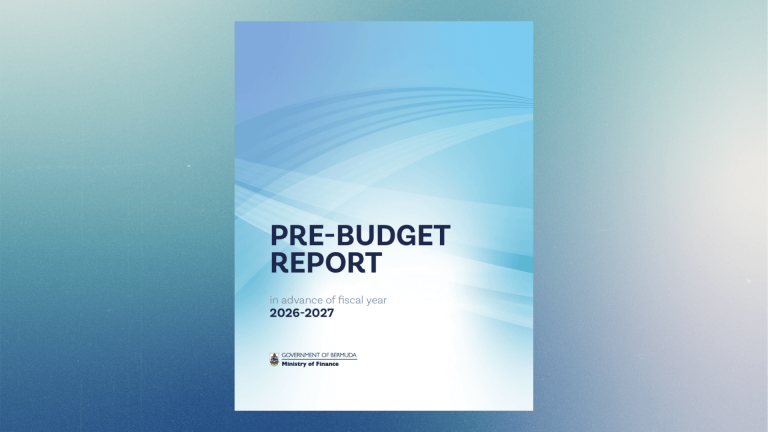
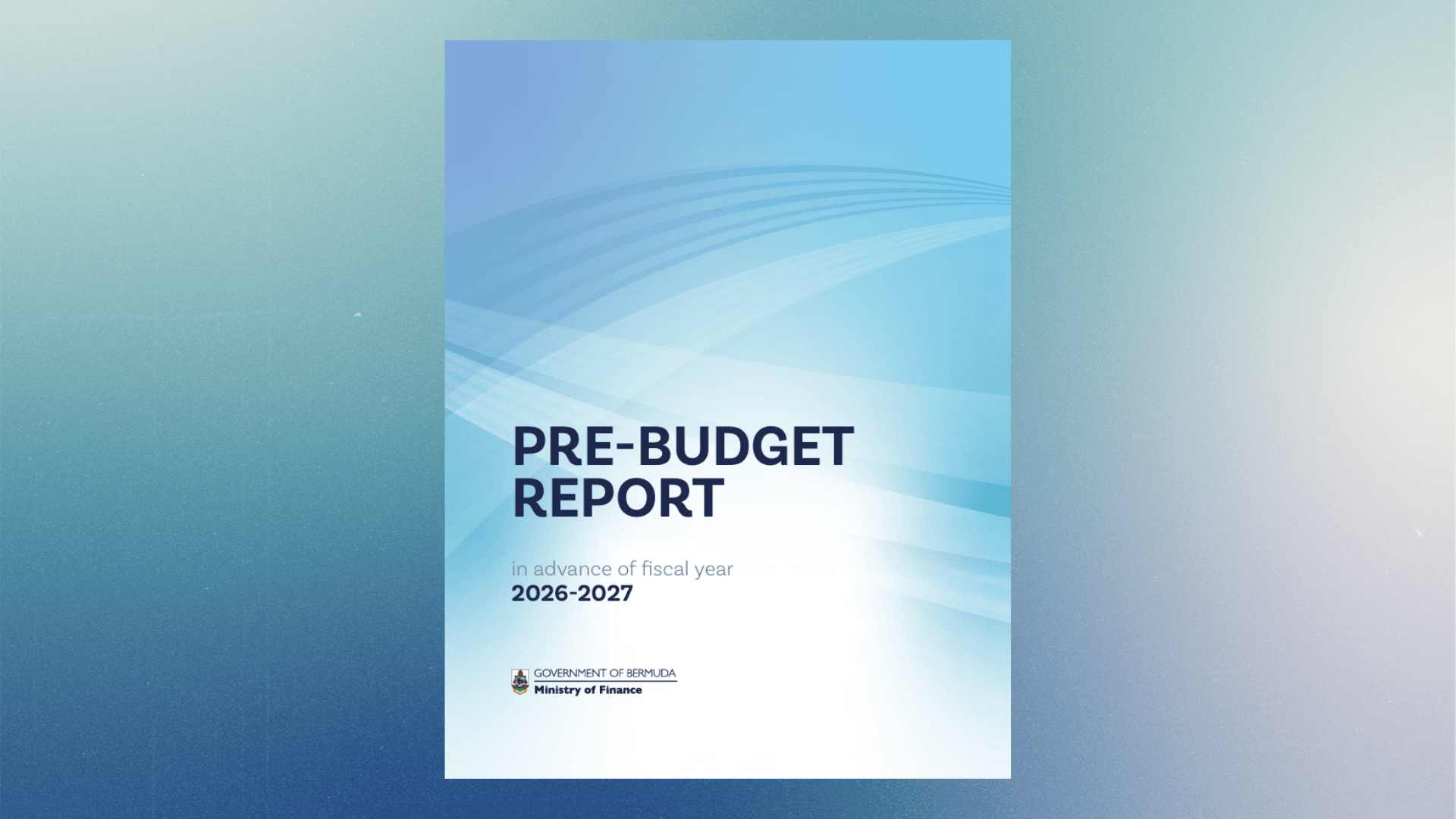
The Ministry of Finance is reminding the public, businesses, and all stakeholders to provide feedback on the 2026/27 Pre-Budget Report. The public consultation period will officially close this Friday, January 16, 2026, at 5:00 PM. Submissions can be made directly via forum.gov.bm or email openbudget@gov.bm.
The Pre-Budget Report outlines the Government’s proposed fiscal strategy ahead of the upcoming Budget Statement on February 20, 2026. Key focuses include the responsible management of new Corporate Income Tax revenues to reduce public debt, provide cost-of-living relief, and invest in essential social services.
“Consultation is vital, and the input we’ve received so far has been invaluable,” said Premier and Minister of Finance, David Burt. “Community engagement is essential to shaping the final Budget, and the voices of the public and our stakeholders guide the decisions we make, ensuring that the progress we deliver reflects the real needs of the people of Bermuda.
“I encourage everyone to read the report, ask questions, and send feedback and suggestions either online at forum.gov.bm or email openbudget@gov.bm before January 16, 2026.”
The full 2026/27 Pre-Budget Report can be viewed online at the official Government of Bermuda website at www.gov.bm/pre-budget-report.
The Ministry of Finance thanks all participants for their contributions to this vital process.
Shares of the carrier, however, fell nearly 5% in premarket trading as the forecast was largely below estimates
International News via Reuters:
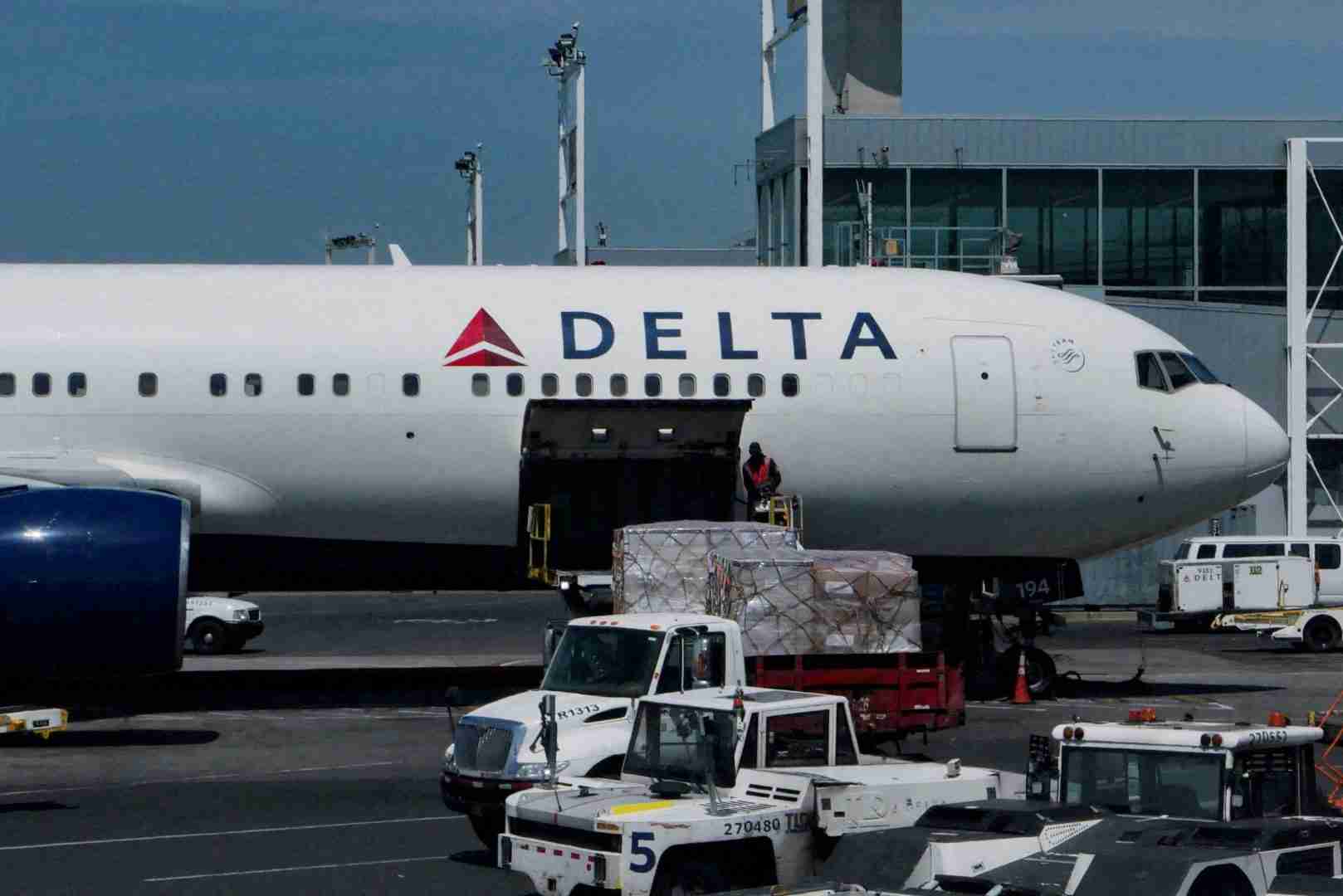
Delta Air Lines forecast about 20% earnings growth in 2026 on Tuesday, citing strong consumer and corporate demand and rising sales of premium travel, and said it has agreed to buy 30 Boeing 787-10 planes to strengthen its long-haul fleet.
Shares of the carrier, however, fell nearly 5% in premarket trading as the forecast was largely below estimates.
The airline has been benefiting from resilient demand among higher-income travelers, even as lower-income consumers face pressure from inflation and weaker spending power.
That divergence was evident in the December quarter, when overall passenger revenue rose just 1%, masking a widening gap within the cabin. Main-cabin ticket revenue fell 7% from a year earlier, while revenue from premium products increased 9%.
Delta CEO Ed Bastian said virtually all of the airline’s planned seat growth is in premium products, with little expansion in the main cabin. New aircraft entering the fleet are configured with heavier premium seating, reinforcing the airline’s long-term strategy.
Bastian described the outlook as “upbeat,” pointing to record booking trends at the start of the year, but said the airline is maintaining a range for its forecast due to ongoing geopolitical and policy-related uncertainty.
The Atlanta-based carrier expects full-year 2026 adjusted earnings per share of $6.50 to $7.50 and free cash flow of $3 billion to $4 billion. For the March quarter, Delta forecast revenue growth of 5% to 7% and adjusted earnings of $0.50 to $0.90 per share. Analysts surveyed by LSEG expect earnings of $7.25 a share for the year and $0.72 for the quarter. INTERNATIONAL RECOVERY UNEVEN International demand remains solid overall, Bastian said, though markets such as Canada and China have yet to fully recover, with capacity to China still well below pre-pandemic levels. He said the upcoming World Cup soccer tournament could help unlock inbound travel, potentially easing a logjam in international demand.
The airline ended 2025 with the highest level of premium and diversified revenue in its history, with nearly 60% of total revenue coming from premium cabins, loyalty programs and other non-ticket sources, including its long-standing partnership with American Express.
“The strength in the consumer sector is at the higher end of the curve,” Bastian told reporters, adding that Delta’s core customers continue to prioritize travel and higher-quality experiences. The imbalance in consumer spending is also reshaping the broader U.S. airline industry. Low-cost and ultra-low-cost carriers, which rely heavily on price-sensitive travelers, have struggled with weak profitability and excess capacity, prompting consolidation and retrenchment. Allegiant has announced plans to acquire Sun Country Airlines, while Spirit Airlines has entered a second bankruptcy. “The lower-end consumer is struggling,” Bastian said. “We fortunately do not live there.” BOEING ORDER DIVERSIFIES LONG-HAUL FLEET Delta’s fourth-quarter adjusted earnings of $1.55 a share narrowly beat analysts’ expectations, though results were weighed down by the longest U.S. federal government shutdown on record, which disrupted tens of thousands of flights and cut about $200 million from quarterly profit.
Earlier in 2025, airlines were also hit by a sharp drop in demand following sweeping U.S. tariffs, which dented consumer confidence. Delta’s 2026 outlook assumes those disruptions will not be repeated. As part of its long-term fleet strategy, Delta will buy 30 Boeing 787-10 widebody aircraft, with options for an additional 30, with deliveries beginning in 2031. The 787-10 will be a new aircraft type for Delta. Bastian said the aircraft was selected for its operating efficiency and flexibility on mid-range international routes, particularly across the Atlantic and to South America, where ultra-long-range capability is not required. Compared with larger widebodies such as the Airbus A350, the 787-10 is cheaper to operate on many missions, he said. Over the past 15 years, Delta has leaned toward Airbus, building a fleet centered on the A220 and A320-family narrowbodies alongside its flagship A330 and A350 widebodies.
Bastian said the Boeing order reflects a deliberate effort to diversify suppliers, reducing reliance on a single manufacturer as the airline expands internationally. “It’s pretty tough to operate…being reliant on only a single-source provider,” he said.
Reporting by Rajesh Kumar Singh; Editing by Jamie Freed
Louvot will replace Bruno Even, who has been with the company since 2018 and decided to leave for personal reasons
International News via Reuters:
European aerospace group Airbus said on Tuesday it had appointed Matthieu Louvot as new chief executive officer for its helicopters business starting in April.
Louvot will replace Bruno Even, who has been with the company since 2018 and decided to leave for personal reasons, Airbus said in a statement.
Reporting by Gianluca Lo Nostro in Gdansk; Editing by Milla Nissi-Prussak
The failed attack aimed to disrupt the communication between renewable installations and the power distribution operators, Milosz Motyka told reporters
International News via Reuters:
Poland’s power system faced its largest cyberattack in years in the last week of December that also followed a different pattern, the country’s energy minister said on Tuesday.
The failed attack aimed to disrupt the communication between renewable installations and the power distribution operators, Milosz Motyka told reporters, adding in the past large power units or transmission networks have been targeted.
“The command of the cyberspace forces has diagnosed in the last days of the year the strongest attack on the energy infrastructure in years,” Motyka said.
Poland’s critical infrastructure has been subject to a growing number of cyberattacks by Russia since the war in Ukraine began in February 2022.
Russia’s military intelligence trebled its resources for such action against Poland last year, the country’s digital affairs minister told Reuters.
Motyka declined to provide details on who was responsible for the attack or the recommendations made by the administration following the incident.
Of the 170,000 cyber incidents that were identified in the first three quarters of 2025, a significant portion was attributed to Russian actors.
Reporting by Marek Strzelecki; Editing by Sharon Singleton
The move comes as several battery projects in Europe have been cancelled or delayed over the past two years amid spiralling costs and slowing demand for electric cars
International News via Reuters:
Sweden’s Volvo Cars has halted operations at its battery startup Novo Energy, which had already been sharply scaled back, as its search for a partner drags on, Novo Energy said on Tuesday.
The move comes as several battery projects in Europe have been cancelled or delayed over the past two years amid spiralling costs and slowing demand for electric cars.
The Novo factory has been in limbo for more than a year as Volvo Cars seeks a new technology partner following the collapse of Swedish battery maker Northvolt, which co-founded Novo Energy with Volvo in 2021.
Novo chair Alexander Petrofski, who also heads Volvo Cars’ small car programmes, told Reuters that talks with multiple battery makers remained active and the pause was driven by cost pressures rather than the progress of discussions.
“Carrying those costs and carrying that entire operation, we don’t look upon as viable currently,” he said.
The pause means that all remaining 75 jobs at Novo are being cut, after the workforce was halved in May last year.
Amid China’s dominance in battery production, industry players have urged the European Union to step up support for battery manufacturing investment.
Brussels recently announced a new automotive package which included some incentives for local battery production.
Petrofski said additional EU support would be vital to revive the project.
“Our technology partners, the ones we are talking to, that’s one of the questions they ask us – what are the prerequisites for getting financial support within the EU for establishing production? So it’s really, really important,” he said, adding that credit guarantees were essential for financing.
Elsewhere in Sweden, U.S. startup Lyten is trying to resurrect Northvolt’s battery factory in the city of Skelleftea after buying the operations last year.
Swedish truckmaker Volvo Group’s planned battery factory in Mariestad has also faced heavy delays.
Reporting by Marie Mannes and Anna Ringstrom. Editing by Terje Solsvik and Mark Potter
Sterling was last flat on the dollar at $1.3471 having gained 0.47% on Monday as the U.S. currency took a hit from investor concerns about the independence of the Federal Reserve
International News via Reuters:
The pound held onto its gains from the previous day against both the dollar and the euro on Tuesday, with the currency having been a somewhat surprising beneficiary of global geopolitical turmoil.
Sterling was last flat on the dollar at $1.3471 having gained 0.47% on Monday as the U.S. currency took a hit from investor concerns about the independence of the Federal Reserve.
The pound was last at 86.62 pence to the euro, again steady on the day, after the euro had dropped 0.23% on Monday.
There is little in the way of economic data this week that could affect the pound. Gross domestic product data is due on Thursday, but investors are largely waiting until next week’s jobs and inflation data, which could shape expectations for Bank of England monetary policy.
Market pricing reflects expectations of one and likely two rate cuts in the first half of this year, though a quick slowing of inflation could see more monetary easing.
Until the data is released, the pound’s moves against major peers are largely shaped by events elsewhere, most notably the United States.
“It’s less to do with UK fundamentals — which we still think are weak — it’s rather that events elsewhere are providing a distraction from Britain’s problems,” said Nick Rees, head of macro analysis at Monex Europe.
As well as worries about the independence of the Federal Reserve, investors are also digesting a vast amount of political and geopolitical news from around the world.
But while that seemed to boost the pound against the euro on Monday, Nomura analysts, who recommend traders buy the euro against the pound, say they think recent developments should support their argument.
“Our long EUR/GBP trade is positive exposed to developments that weigh on investor sentiment regarding US assets,” they wrote in a Monday note.
“The scope for a shift in investment allocations or even a slowing of inflows into the U.S. – whether due to geopolitical risks (over Greenland for example) or concerns about Fed independence – would have positive repercussions for (the euro).”
Reporting by Alun John; Editing by Emelia Sithole-Matarise
Made by stripping back the branches from dried walnut or hazelnut trees, the “chichilaki”, as the trees are known, are designed to look like the beard of the fourth-century Saint Basil
International News via Reuters:
Outside a wooden cabin in central Georgia, local villager Natia Gedenidze places an ornamental tree no more than one metre (3.28 ft) tall in the packed snow, and with the swift strike of a match, sets it ablaze.
“This is the Georgian Christmas tree with which we celebrated the New Year,” she said.
“Now that the New Year celebrations are over, we burn and throw away everything old and we greet the New Year with new hopes and new love.”
Made by stripping back the branches from dried walnut or hazelnut trees, the “chichilaki”, as the trees are known, are designed to look like the beard of the fourth-century Saint Basil, who was known for caring for the poor and destitute.
Popular in western Georgia but found throughout the country, chichilaki are traditionally put on display in homes on Georgian Orthodox Christmas, on January 7, and are ceremonially burned on Epiphany, which falls on January 19, to symbolise the shaking off of the previous year’s woes.
Another villager, Mariam Gulordava, sitting in her workshop surrounded by dozens of chichilaki, runs her knife down the length of the tree with an expert hand, adding satisfying new bunches of curlicues to the bushy white beard at the tree’s base.
“Hazelnuts… are a symbol of prosperity and well-being,” she said, adding that after the old chichilaki is burned, a new one is brought into the home and kept there for the whole year.
At local plant shop Gardenia, owner Zura Shevardnadze hawks chichilaki in the hopes of keeping the traditions of his ancestors alive. When he was a child, a chichilaki always stood in his parents’ home in wintertime.
“All Georgians believe, especially in western Georgia, that without chichilaki, the real New Year will not come,” Shevarnadze said.
Reporting by David Chkhikvishvili and Irakli Gedenidze; Writing by Lucy PapachristouEditing by Gareth Jones
he blue-chip FTSE 100 was flat at 10,140.78 points as of 1006 GMT, following a record close in the prior session
International News via Reuters:
The UK’s FTSE 100 was largely unchanged on Tuesday as investors digested a slew of corporate updates ahead of U.S. inflation data, while energy stocks advanced on supply concerns linked to Iran and Venezuela.
The blue-chip FTSE 100 was flat at 10,140.78 points as of 1006 GMT, following a record close in the prior session. The domestically focused mid-cap index was down 0.22%.
The markets were awaiting a key U.S. inflation report that could shape global rate expectations and risk sentiment. Economists expect consumer prices to have picked up in December after a previous muted reading caused by distortions from the government shutdown.
The FTSE 350 Oil & Gas index rose 1%, with BP and Shell gaining about 1% each. Oil prices increased on concerns over lower exports from Iran and Venezuela.
Media, beverages and real estate stocks also advanced as investors leaned into income and rate-sensitive sectors ahead of the inflation data.
Precious metals and mining index, however, fell 1.5%, after climbing around 6% in the previous session.
Investors were also awaiting remarks from Bank of England Governor Andrew Bailey, expected as soon as Tuesday, for potential signals on the monetary policy outlook.
UK inflation expectations fell to 3.6% in December, but Citi said the drop may not fully ease BoE policymakers’ concerns about inflation staying above the 2% target.
Shares of Raspberry Pi were down 6% after the single-board computer maker said its 2026 outlook was clouded by volatility in the supply and price of memory.
Whitbread was up 4.8%, leading individual gains on the FTSE 100 index, after the hotel operator said it expects a lower-than-anticipated hit from business rate hikes announced in the UK’s autumn budget.
Reporting by Tharuniyaa Lakshmi in Bengaluru; Editing by Shilpi Majumdar
Music lovers are invited to celebrate a milestone moment this Valentine’s Day with Shine’s 70th, a black-tie birthday celebration honouring musician Gene Steede.
It will take place on Saturday, February 14th at the Hamilton Princess & Beach Club and organizers promise an elegant night of music, dining, and entertainment.
Today, we spoke with Shine Hayward, who shared why this celebration is so meaningful, what makes the event unique, and what guests can expect as friends, family, and supporters of Gene Steede come together.
Brent crude futures lost 28 cents, or 0.44%, to $63.06 a barrel by 1402 GMT while U.S. West Texas Intermediate crude was at $58.78 a barrel, down 34 cents, or 0.58%
International News via Reuters:
Oil prices fell slightly on Monday after Iran said it had total control following the biggest anti-government demonstrations in years, easing some concerns over supply, while investors also weighed efforts to resume oil exports from Venezuela.
Brent crude futures lost 28 cents, or 0.44%, to $63.06 a barrel by 1402 GMT while U.S. West Texas Intermediate crude was at $58.78 a barrel, down 34 cents, or 0.58%.
“Lower European equity markets and lack of additional supply disruptions is moderately weighing on oil prices, following a strong rally at the end of last week,” said UBS analyst Giovanni Staunovo.
Both benchmarks rose more than 3% last week in their biggest such rise since October, as OPEC producer Iran’s clerical establishment stepped up its crackdown on the biggest demonstrations since 2022.
TRUMP WARNS OF INTERVENTION IN TEHRAN
The situation in Iran is “under total control” after widespread demonstrations over the weekend, Foreign Minister Abbas Araqchi said on Monday in remarks translated to English.
U.S. President Donald Trump had warned of possible military intervention in the event of a violent crackdown on the Iranian protests.
Trump is expected to meet senior advisers on Tuesday to discuss options for Iran, a U.S. official told Reuters.
VENEZUELA SET TO RESUME OIL EXPORTS SOON
Venezuela is expected to resume oil exports soon following the ouster of President Nicolas Maduro, as Trump said last week the government in Caracas is set to turn over as much as 50 million barrels of sanctioned oil to the United States.
That has set off a race among oil companies to find tankers and prepare operations to ship the crude safely from vessels and dilapidated Venezuelan ports, four sources familiar with the operations said.
In a White House meeting on Friday, Trafigura said its first vessel should load in the next week.
Investors are also watching the risk of disruptions in supply from Russia, amid Ukraine’s attacks targeting its energy facilities and the prospects of tougher U.S. sanctions on Russian energy.
Oil prices are likely to drift lower this year as a wave of supply creates a market surplus, although geopolitical risks tied to Russia, Venezuela and Iran will continue to drive volatility, Goldman Sachs said in a note on Sunday.
The investment bank maintained its 2026 average price forecasts of $56/$52 per barrel for Brent/WTI, and expects Brent/WTI prices to bottom at $54/50 in the last quarter as OECD inventories build up.
Reporting by Stephanie Kelly and Enes Tunagur in London and Florence Tan and Siyi Liu in Singapore; Editing by Bernadette Baum and Sharon Singleton
Trump has said the United States must own Greenland, an autonomous part of the Kingdom of Denmark, to prevent Russia or China occupying the strategically located and minerals-rich Arctic territory
International News via Reuters:
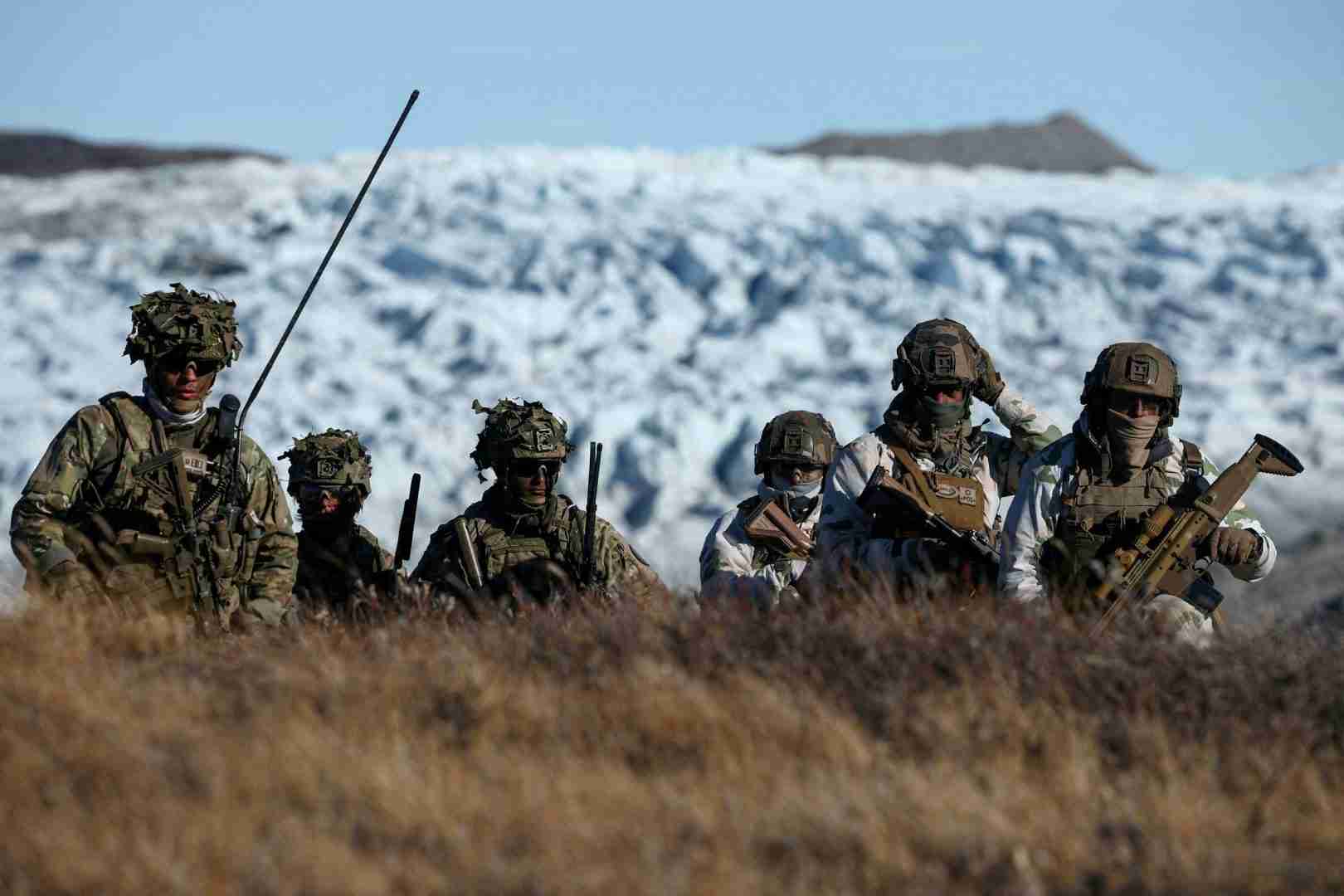
The European Union can help provide security for Greenland, should Denmark request it, the European Commissioner for Defence and Space said on Monday, warning that a U.S. military takeover of Greenland would be the end of NATO.
Trump has said the United States must own Greenland, an autonomous part of the Kingdom of Denmark, to prevent Russia or China occupying the strategically located and minerals-rich Arctic territory. He says a U.S. military presence there is not
enough.
Denmark and the U.S., both NATO members, are scheduled to meet this week to discuss Greenland. Greenland and Denmark have said that Greenland is not for sale, but Trump has not ruled out taking it by force.
“I agree with the Danish prime minister that it will be the end of NATO, but also among people it will be also very, very negative,” Commissioner Andrius Kubilius told Reuters at a security conference in Sweden.
KUBILIUS ASKS WHO WOULD RECOGNISE ANY OCCUPATION
He said it would have a “very deep negative impact among the people and on our transatlantic relations”.
Trump said “I’m the one who SAVED NATO!!!” on Truth Social on Monday, without giving further details or context.
Kubilius said he did not think a U.S. military invasion was coming but that the European Union Treaty article 42.7 obliged member states to come to Denmark’s assistance if it was faced with military aggression.
“It will depend on very much on Denmark, how they will react, what will be their position, but definitely there is such an obligation of member states to come for mutual assistance if another member state is facing military aggression,” he said.
Kubilius questioned the rationale of occupying Greenland by force and warned that it would have impacts on all aspects of the relations between Europe and the United States.
“Who will recognise that occupation and what impacts on all the relationship in between of the United States and Europe, including, for example, trade, where also Americans can face quite painful negative consequences,” he said.
Kubilius said the EU could provide more security for Greenland, if Denmark requested it, including troops and military infrastructure such as warships and anti-drone capabilities.
“That’s for military people to say what Greenland or the Arctic defence needs. Everything is possible,” he said.
MILITARY CAPABILITIES
Kubilius also said Europe needed to build up its military capabilities, regardless of whether they could rely on U.S. help – but that any U.S. withdrawal from NATO would be very tough.
“It will be a very big challenge to be ready to defend Europe, being independent, being without the United States,” he said.
“The question would be how we can use in that case NATO structures, how they can be, you know, become a basis for European pillar of NATO. But NATO such as it is now definitely will not exist anymore.”
Trump said last week the U.S. would always support NATO and that Russia and China only feared the alliance as long as the United States was a member.
Many NATO countries have substantially increased military spending in recent years, following Russia’s 2022 invasion of Ukraine and demands by Trump for European allies to invest more in their own defence.
Reporting by Johan Ahlander; Editing by Toby Chopra and Alison Williams
To provide the best experiences, we use technologies like cookies to store and/or access device information. Consenting to these technologies will allow us to process data such as browsing behavior or unique IDs on this site. Not consenting or withdrawing consent, may adversely affect certain features and functions.
Functional
Always active
The technical storage or access is strictly necessary for the legitimate purpose of enabling the use of a specific service explicitly requested by the subscriber or user, or for the sole purpose of carrying out the transmission of a communication over an electronic communications network.
Preferences
The technical storage or access is necessary for the legitimate purpose of storing preferences that are not requested by the subscriber or user.
Statistics
The technical storage or access that is used exclusively for statistical purposes.The technical storage or access that is used exclusively for anonymous statistical purposes. Without a subpoena, voluntary compliance on the part of your Internet Service Provider, or additional records from a third party, information stored or retrieved for this purpose alone cannot usually be used to identify you.
Marketing
The technical storage or access is required to create user profiles to send advertising, or to track the user on a website or across several websites for similar marketing purposes.