Tyler Christopher extended his perfect professional record, earning a convincing points win over Jensen Irving on the “Jingle Brawls” bill at the Holiday Inn, Birmingham Airport, England.
The southpaw improved his professional record to 11 straight wins (11-0) after dominating the four-round super-welterweight bout. The referee awarded a 40-37 verdict in favour of Christopher.
Christopher’s accuracy was on full display. He cut Irving in the second round and then bloodied his nose in the third with a series of accurate jabs.
Christopher now looks to move into bigger and more lucrative fights in 2026, aiming to step up and face opponents with winning records.
American Kirsten Kasper made a stunning transition from short-course racing to win the IRONMAN 70.3 La Quinta in her very first attempt at the distance, while Bermuda’s Erica Hawley delivered an impressive top-ten finish in her 70.3 debut.
Kasper, with zero prior experience on a time-trial bike, stunned the elite field to win on her first outing, proving a commanding presence and sealing the victory decisively during the run leg. The women’s race may have been impacted before the start, as an overnight incident saw a golf cart roll into the transition area, resulting in damage to some professional bikes.
Olympian Erica Hawley, also competing in her first 70.3 Ironman, delivered an excellent performance to secure a top-ten placement in the Women’s Elite race. Hawley finished with an overall time of 4 hours, 17 minutes, and 32 seconds, placing her 8th in the Women’s Elite race out of 26 competitors.
Hawley’s strong splits included the 1.2-mile swim in 26:02, the 56.3-mile bike in 2:21:26, and the 13-mile run in 1:24:59. Her performance also saw her finish as the 8th female out of 576 female competitors overall. Hawley’s successful debut marks a key step into long-course triathlon, securing a result among the world’s best athletes.
Average household could see bill drop by more than $20 a month
Bermuda’s electricity bills are set to ease in the New Year, with BELCO confirming that base electricity rates will decrease for all customers on meters read on or after January 1, 2026, following approval from the Regulatory Authority of Bermuda.
While the Fuel Adjustment Rate (FAR) will remain unchanged at 13.799 cents per kilowatt hour for the first quarter of 2026, the reduction in the base rate means overall bills will go down, BELCO said today. A detailed breakdown of the new tariffs is available on the company’s website.
Using sample residential households, BELCO outlined what the changes could look like on monthly bills after the prompt-pay discount is applied:
A low-usage household consuming around 200 kilowatt hours per billing cycle is expected to see a reduction of about $5.74 per month.
An average household using approximately 650 kilowatt hours per cycle could see a decrease of around $20.80 per month.
A high-usage household consuming roughly 1,500 kilowatt hours per cycle may see bills fall by about $68.54 per month.
BELCO President Wayne Caines said the lower rates are the result of a sustained effort to cut costs and improve efficiency across the utility.
“Over the past year, we have undertaken a comprehensive review of our operations at BELCO to identify opportunities for greater efficiency and cost savings that benefit our customers,” Mr Caines said. “These efforts have enabled us to achieve operational improvements that are being passed on to our customers through lower base electricity rates which will be seen on your bills in January. BELCO remains committed to continually assessing its operations and associated costs, while ensuring that we reliably meet the energy demands of our customers.”
Customers who want to better understand how their bill is calculated, or who are looking for tips on energy efficiency and ways to further reduce their monthly costs, can visit BELCO’s website at www.belco.bm.
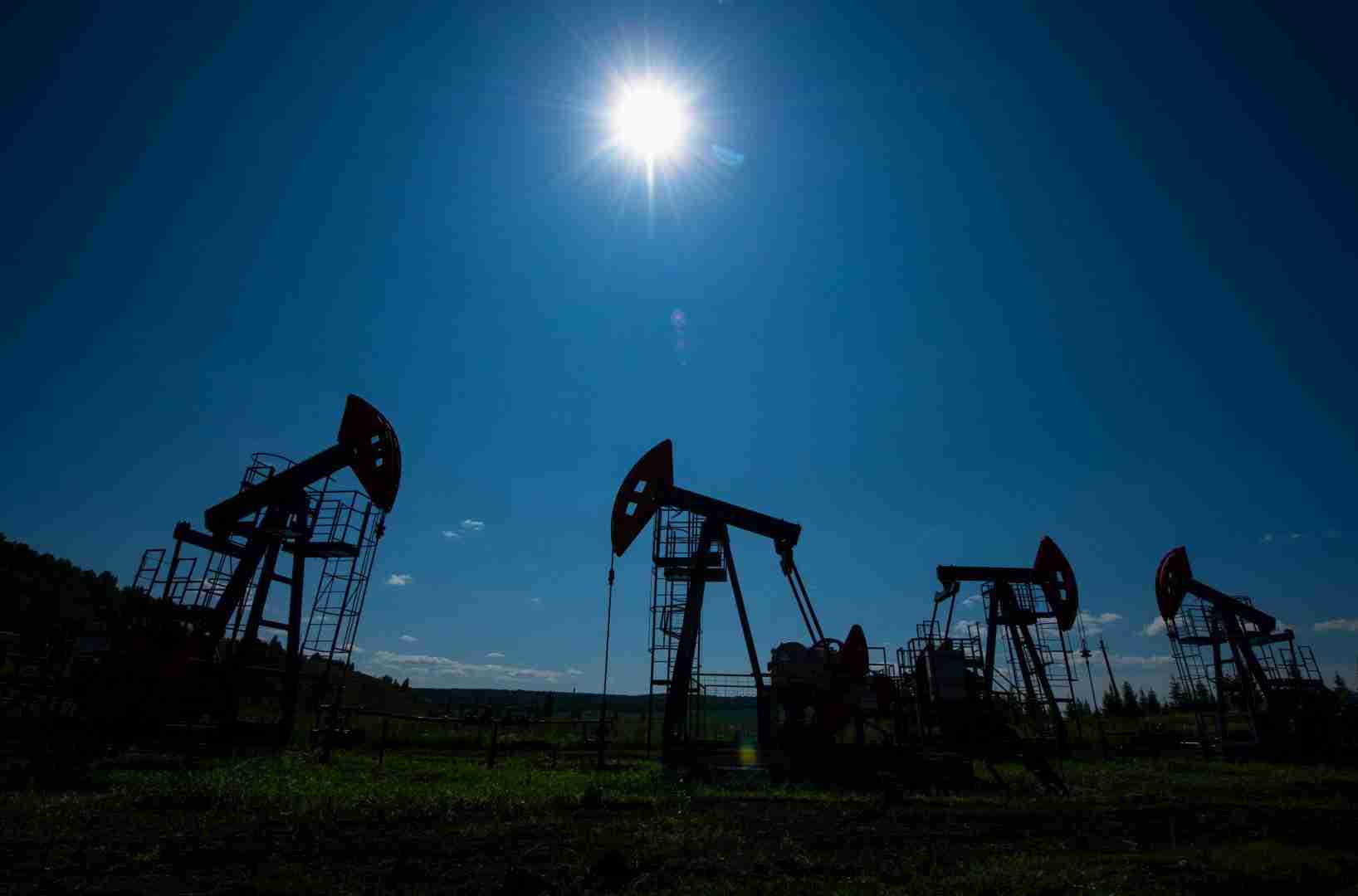
Brent crude futures fell by 57 cents, or 0.9%, to $63.18 a barrel by 1053 GMT, while U.S. West Texas Intermediate crude was at $59.48, down 60 cents, or 1%
International News via Reuters:
Oil prices declined on Monday as investors monitored ongoing talks to end the war in Ukraine ahead of an expected U.S. Federal Reserve interest rate cut this week.
Brent crude futures fell by 57 cents, or 0.9%, to $63.18 a barrel by 1053 GMT, while U.S. West Texas Intermediate crude was at $59.48, down 60 cents, or 1%.
Both contracts closed Friday’s trading session at their highest levels since November 18.
“If there’s any kind of agreement reached in the near future on Ukraine, then Russian oil exports should increase and put downward pressure on oil prices,” said Tamas Varga, oil market analyst at PVM.
Markets are, meanwhile, pricing in an 84% chance of a quarter-point cut at the Fed meeting on Tuesday and Wednesday, LSEG data showed. However, board member comments indicate the meeting is likely to be one of the most divisive in years, intensifying investor focus on the bank’s policy direction and internal dynamics.
SLOW PROGRESS ON UKRAINE
In Europe, progress on Ukraine peace talks remains slow, with disputes over security guarantees for Kyiv and the status of Russian-occupied territory still unresolved. U.S. and Russian officials also have differing views on the peace proposal tabled by the administration of U.S. President Donald Trump.
Ukrainian President Volodymyr Zelenskiy is set to meet with European leaders in London on Monday.
“The various potential outcomes from Trump’s latest push to end the war could release a swing in oil supply of more than 2 million barrels per day,” ANZ analysts said in a client note.
Commonwealth Bank of Australia analyst Vivek Dhar said a ceasefire is the main downside risk to the outlook for oil prices while sustained damage to Russia’s oil infrastructure is a significant upside risk.
“We think oversupply concerns will eventually be realised, especially as Russian oil and refined product flows eventually circumvent existing sanctions, prompting futures to gradually track towards $60/bbl through 2026,” Dhar said in a client note.
NEW CURBS ON RUSSIAN EXPORTS?
In the meantime, Group of Seven countries and the European Union are in talks to replace a price cap on Russian oil exports with a full maritime services ban, people familiar with the matter told Reuters, which would likely further curb supply from the world’s second-largest oil producer.
The U.S. has also ramped up pressure on Venezuela – part of the Organization of the Petroleum Exporting Countries – including strikes against boats it said were attempting to smuggle illegal drugs and talk of military action to overthrow President Nicolas Maduro.
Elsewhere, Chinese independent refiners have stepped up purchases of sanctioned Iranian oil from onshore storage tanks using newly issued import quotas, trade sources and analysts said, easing a supply glut.
Reporting by Anna Hirtenstein in London. Additional reporting by Florence Tan in Singapore and Mohi Narayan in New Delhi; Editing by Jamie Freed, Christopher Cushing, Ros Russell and Joe Bavier
Users will have the choice between consenting to share all their data and seeing fully personalised advertising, and opting to share less personal data for an experience with more limited personalised advertising
International News via Reuters:
Meta has committed to give Facebook and Instagram users in the European Union a choice when it comes to personalised ads, in line with the EU’s Digital Markets Act, the European Commission said on Monday.
“Meta will give users the effective choice between consenting to share all their data and seeing fully personalised advertising, and opting to share less personal data for an experience with more limited personalised advertising,” the commission said in a statement.
Reporting by Louise Breusch Rasmussen, editing by Bart Meijer
France’s President Emmanuel Macron and Germany’s Chancellor Friedrich Merz voiced their support for Zelenskiy as concerns grow that the U.S. could force Kyiv to accept terms that favour Russia
International News via Reuters:
President Volodymyr Zelenskiy is set to meet with British, French and German leaders in London on Monday, rallying allies for support as the United States increases pressure on Kyiv to agree to a proposed peace deal with Russia.
France’s President Emmanuel Macron and Germany’s Chancellor Friedrich Merz, who are travelling to London for the meeting, voiced their support for Zelenskiy as concerns grow that the U.S. could force Kyiv to accept terms that favour Russia.
“We are starting a new diplomatic week right now – there will be consultations with European leaders,” Zelenskiy told Ukrainians in a video address on Sunday evening, recorded as he was travelling in a train.
“First and foremost, security issues, support for our resilience, and support packages for our defence. First and foremost, air defence and long-term funding for Ukraine. Of course, we will discuss a shared vision and common positions in the negotiations.”
Ukraine is going through one of the most difficult stages in the nearly four-year war. Russian troops are slowly grinding forward in the east, and Ukrainian cities and towns are plunged into darkness for hours due to intensified Russian strikes on the energy grid and other infrastructure.
Washington proposed a ceasefire plan last month that endorsed many of Russia’s wartime demands. Kyiv’s European allies have since backed Ukraine in seeking to improve the terms.
U.S. President Donald Trump’s envoy Steve Witkoff and son-in-law Jared Kushner brought a revised plan to Moscow last week, then held several days of further talks with Ukrainian officials in Miami, which ended on Saturday with no breakthrough.
Zelenskiy called the discussions constructive but not easy.
Trump said on Sunday he was “disappointed” with Zelenskiy, who Trump said hadn’t read the latest proposed peace deal backed by the U.S.
Zelenskiy’s top negotiator Rustem Umerov said he would brief Zelenskiy about his team’s dialogue with U.S. officials and receive all documents related to the peace plan.
“The primary task of the Ukrainian team was to obtain from the American side full information about their conversation in Moscow and all drafts of current proposals to discuss them in detail with Ukraine’s President,” Umerov said.
U.S. officials said they are in the final stage of reaching an agreement. But there has so far been little sign that either Ukraine or Russia is willing to sign the framework deal drawn up by Trump’s negotiating team.
Reporting by Olena Harmash in Kyiv and Anna Pruchnicka in GdanskEditing by Peter Graff
Cholera is a severe and potentially fatal diarrhoeal disease that spreads quickly when sewage and drinking water are not adequately treated
International News via Reuters:
The Democratic Republic of the Congo is battling its worst cholera outbreak in 25 years which has killed almost 2,000 people since January, the U.N. children’s agency said on Monday.
In one case, a quarter of the children in a Kinshasa orphanage – 16 out of 62 – died days after the disease swept through, UNICEF added.
“Congolese children should not be so gravely affected by what is a wholly preventable disease,” UNICEF spokesperson John Agbor said.
Cholera is a severe and potentially fatal diarrhoeal disease that spreads quickly when sewage and drinking water are not adequately treated.
African health authorities last month raised the alarm over a surge in the disease in Angola, Burundi and other parts of the continent, with an overall 30% increase on cases recorded last year.
In Congo, conflict and a lack of access to clean water were exacerbating the crisis, and more funding was needed for sanitation, hygiene and health services, UNICEF said.
Since January, authorities have recorded 64,427 cases and 1,888 deaths, including 14,818 infections and 340 deaths among children, UNICEF said. Seventeen of the country’s 26 provinces are currently impacted, the agency added.
Only 43% of people in Congo have access to at least basic water services, the lowest rate in Africa, and just 15% use basic sanitation, according to the statement.
The government has a cholera elimination plan with a proposed budget of $192 million, but that remains severely underfunded, UNICEF said.
UNICEF is appealing for about $6 million in 2026 to sustain its rapid response work. “Without additional funds and coordinated action, many more lives could be lost,” Agbor said.
Reporting by Sonia Rolley; Writing by Ayen Deng Bior; Editing by Andrew Heavens
The deal follows a consolidation trend in Britain’s North Sea, after Shell and Equinor’s merger and Ithaca Energy’s purchase of Eni’s assets in the ageing basin
International News via Reuters:
TotalEnergies said on Monday it would merge its oil and gas assets in the British North Sea with a partnership between Spain’s Repsol and HitecVision.
The deal follows a consolidation trend in Britain’s North Sea, after Shell and Equinor’s merger and Ithaca Energy’s purchase of Eni’s assets in the ageing basin where mergers can bring relief from one of the highest tax burdens.
Total will own a 47.5% stake in the partnership, now called NEO NEXT and which will be renamed NEO NEXT+, while Repsol will have 23.625% in th
e venture and HitecVision will hold the remaining 28.875%.
NEO NEXT+ would have production of more than 250,000 barrels of oil equivalent a day in 2026, the statement said, bigger than Shell and Equinor’s Adura venture.
The new unit will include the oil and gas fields Elgin/Franklin, Penguins, Mariner, Shearwater, Culzean, Alwyn North and Dunbar.
The British government imposed a windfall tax in the wake of a 2022 surge in energy prices, which will run until 2030 and be replaced by a new tax mechanism that kicks in amid high oil and gas prices. Companies can offset some of their UK tax burden – standing at a cumulative 78% – against previous losses, an incentive for mergers to maximise this benefit.
“While companies will be pushing for greater operating efficiencies and reduced costs, one of the key losers here is (British tax revenue and customs), with the combined entities likely to pay less tax to the UK government than they would do separately,” analysts at RBC said.
The deal is expected to be finalised during the first half of 2026, subject to regulatory conditions, the companies said.
The tie-up comes nine months after the merger between Repsol and NEO Energy.
Reporting by Mireia Merino, Forrest Crellin, Alban Kacher and Shadia Nasralla; editing by Inti Landauro and Susan Fenton
The budget of the Global Polio Eradication Initiative is expected to take a 30% cut in 2026 and has a funding gap of $1.7 billion up to 2029
International News via Reuters:
Global leaders pledged $1.9 billion to advance polio eradication on Monday, accelerating efforts to protect 370 million children from polio each year amid significant funding cuts.
The budget of the Global Polio Eradication Initiative, a partnership that includes the World Health Organization and the Gates Foundation, is expected to take a 30% cut in 2026 and has a funding gap of $1.7 billion up to 2029.
The shortfall is largely due to a global pullback from foreign aid, led by the U.S., which is withdrawing from the WHO, although its future funding for polio is not yet final. Other wealthy donor governments like Germany and the UK have also made cuts.
The GPEI partners, in response, plan to focus more on surveillance and vaccination in areas with a high risk of polio transmission.
“The new support pledged in Abu Dhabi will be instrumental in helping the GPEI reach all children in the final endemic countries and stop variant polio outbreaks around the world.” said Tedros Ghebreyesus, Director-General of the World Health Organization.
The pledging event, hosted by Mohamed bin Zayed Foundation for Humanity at Abu Dhabi Finance Week, will reduce the remaining resource gap for GPEI’s 2022 to 2029 strategy to $440 million.
Pledges were made from a diverse group of donors and countries, including $1.2 billion from the Gates Foundation and $450 million from Rotary International.
Reporting by Christy Santhosh in Bengaluru; Editing by Arun Koyyur
At least one Thai soldier had been killed and eight were wounded in the fresh clashes that intensified around 5:00 a.m. local time (2200 GMT)
An injured soldier is transferred to a hospital following a clash between Thai and Cambodian troops over a disputed border area in Sisaket Province, Thailand, December 7, 2025. Royal Thai Army/Handout via REUTERS
International News via Reuters:
Thailand said it launched airstrikes into Cambodia on Monday as fighting broke out in multiple areas along their disputed border, after both countries accused the other of breaching a ceasefire brokered by U.S. President Donald Trump.
At least one Thai soldier had been killed and eight were wounded in the fresh clashes that intensified around 5:00 a.m. local time (2200 GMT), a Thai army spokesperson said, adding that air support was called in to hit Cambodian military targets.
Thailand’s Air Force said that Cambodia mobilised heavy weaponry, repositioned combat units and prepared support elements that could escalate military operations.
“These developments prompted the use of air power to deter and reduce Cambodia’s military capabilities,” it said in a statement.
Cambodia’s defence ministry said in a statement that the Thai military had launched dawn attacks on its forces at two locations, following days of provocative actions, and added that Cambodian troops had not responded.
Cambodia’s influential former longtime leader Hun Sen, father of current premier Hun Manet, said Thailand’s military was “aggressors” seeking to provoke a retaliatory response and urged Cambodian forces to exercise restraint.
“The red line for responding has already been set,” Hun Sen said on Facebook, without elaborating. “I urge commanders at all levels to educate all officers and soldiers accordingly.”
Three Cambodian civilians have been seriously injured in the fighting so far, according to a senior provincial official. Cambodia’s defence ministry said its forces had not retaliated.
A simmering border dispute between the countries erupted into a five-day conflict in July, before a ceasefire deal brokered by Malaysian Prime Minister Anwar Ibrahim and Trump, who also witnessed the signing of an expanded peace agreement between the two countries in Kuala Lumpur in October.
‘EXPLOSIONS…BOOM BOOM’
Anwar, chair of the Association of Southeast Asian Nations bloc, urged both sides to exercise maximum restraint and maintain open channels of communication.
“The renewed fighting risks unravelling the careful work that has gone into stabilising relations between the two neighbours,” Anwar said in a post on X.
Southeast Asian countries have rarely engaged in military clashes among themselves in recent decades, with the use of cross-border air strikes even rarer.
Phichet Pholkoet, a resident of Thailand’s Ban Kruat district which adjoins Cambodia, said he has heard gunfire since early Monday morning.
“It startled me. The explosions were very clear. Boom boom!” he said via telephone. “I could hear everything clearly. Some are heavy artillery, some are small arms.”
In Thailand, more than 385,000 civilians across four border districts were being evacuated, with more than 35,000 already housed in temporary shelters, the Thai military said.
Across the border in Cambodia, opposition politician Meach Sovannara said civilians were also moving away from the fighting along the frontier.
“I heard the artillery shelling,” he told Reuters in an audio message from Samroang town, the capital of Oddar Meanchey Province, which abuts Thailand.
More than 1,100 families in Oddar Meanchey had been evacuated, authorities there said.
At least 48 people were killed and an estimated 300,000 temporarily displaced during the July clashes, with the neighbours exchanging rockets and heavy artillery fire for five days.
LANDMINES AMONG CATALYSTS
Thailand and Cambodia have for more than a century contested sovereignty at undemarcated points along their 817-km (508-mile) land border, first mapped in 1907 by France when it ruled Cambodia as a colony.
The long-standing dispute has occasionally exploded into skirmishes, such as a weeklong artillery exchange in 2011, despite attempts to peacefully resolve overlapping claims.
Tensions began rising in May this year, following the killing of a Cambodian soldier during a brief exchange of gunfire, and steadily escalated into diplomatic spats and armed clashes.
Although Anwar and Trump were able to halt the fighting within days and then cemented a ceasefire agreement at a regional summit in October. Thailand said it was halting the implementation of the truce with Cambodia last month, following a landmine blast that maimed one of its soldiers.
Thailand has repeatedly accused Cambodia of planting fresh landmines along parts of their disputed border, which have seriously injured at least seven Thai soldiers since July.
Phnom Penh denies the charge.
Some of the mines found along the frontier were likely newly laid, Reuters reported in October, based on expert analysis of material shared by Thailand’s military.
Reporting by Reuters Staff; Writing by Devjyot Ghoshal and Martin Petty; Editing by John Mair and Michael Perry
Besides the Fed decision on Wednesday, the central banks of Australia, Brazil, Canada and Switzerland also hold rate-setting meetings, although none of these are expected to make any changes to monetary policy
International News via Reuters:
The dollar eased on Monday, ahead of a week packed with central bank meetings and headlined by the U.S. Federal Reserve, where an interest rate cut is all but priced in, although a highly divided committee makes for a wild card.
Besides the Fed decision on Wednesday, the central banks of Australia, Brazil, Canada and Switzerland also hold rate-setting meetings, although none of these are expected to make any changes to monetary policy.
Analysts expect the Fed to make a “hawkish cut”, where the language of the statement, median forecasts and Chair Jerome Powell’s press conference point to a higher bar on further rate reduction.
That could support the dollar if it pushes investors to dial back expectations for two or three rate cuts next year, though messaging could be complicated by policymakers’ division as several have already all but indicated their voting intentions.
HIGH RISK OF DISSENT
“We expect to see some dissents, potentially from both hawkish and dovish members,” said BNY’s head of markets macro strategy Bob Savage in a note to clients.
The Federal Open Market Committee has not had three or more dissents at a meeting since 2019, and that has happened just nine times since 1990.
Even though the U.S. currency has drifted lower for the past three weeks, dollar bulls have recovered some of their bottle. Weekly positioning data shows speculators hold their largest long position – one that assumes the value of the dollar will rise – since before President Donald Trump’s “Liberation Day” tariff bombshell that sent the currency tumbling.
The labour market is softening, but overall growth is holding up, the stimulus from the “One Big Beautiful Bill” should start to filter through and inflation is still well above the central bank’s target rate of 2%.
“These factors could discourage additional rate cuts if they spill over into stronger labour market conditions,” MUFG currency strategist Lee Hardman said.
EURO LIFTED BY RISE IN YIELDS
Beyond U.S. monetary policy, the euro edged up 0.1% to $1.1652, lifted by higher euro zone bond yields. German 30-year yields hit their highest since 2011 in early trading.
Unlike the Fed, the ECB is not expected to cut rates again in the coming year. Influential policymaker Isabel Schnabel on Monday said the central bank’s next move could even be a hike.
The Australian dollar briefly touched a high of $0.6649, the highest since mid-September, to last trade down 0.1% on the day at $0.6635.
The Reserve Bank of Australia meets on Tuesday after a run of hot data on inflation, economic growth and household spending. Futures imply the next move will be up and possibly as soon as May, leaving the focus on the post-meeting statement and media conference.
“We expect the RBA to be on an extended hold, with the cash rate to remain at its current level of 3.60%,” said analysts at ANZ in a note last week, revising previous expectations for a cut.
CANADA EXPECTED TO HOLD
The Bank of Canada is also widely expected to leave its interest rate on hold on Wednesday and a hike is fully priced by December 2026. The currency was steady at C$1.3819 on Monday, having hit 10-week highs on Friday following strong jobs data.
The yen, which has stabilised in this past week, having weakened sharply in November, was mostly steady at 155.44 per dollar, while sterling held around $1.3325 and the Swiss franc was a touch stronger at 0.804 francs.
Additional reporting by Tom Westbrook in SingaporeEditing by Christopher Cushing, Stephen Coates, Peter Graff
To provide the best experiences, we use technologies like cookies to store and/or access device information. Consenting to these technologies will allow us to process data such as browsing behavior or unique IDs on this site. Not consenting or withdrawing consent, may adversely affect certain features and functions.
Functional
Always active
The technical storage or access is strictly necessary for the legitimate purpose of enabling the use of a specific service explicitly requested by the subscriber or user, or for the sole purpose of carrying out the transmission of a communication over an electronic communications network.
Preferences
The technical storage or access is necessary for the legitimate purpose of storing preferences that are not requested by the subscriber or user.
Statistics
The technical storage or access that is used exclusively for statistical purposes.The technical storage or access that is used exclusively for anonymous statistical purposes. Without a subpoena, voluntary compliance on the part of your Internet Service Provider, or additional records from a third party, information stored or retrieved for this purpose alone cannot usually be used to identify you.
Marketing
The technical storage or access is required to create user profiles to send advertising, or to track the user on a website or across several websites for similar marketing purposes.