Earlier in January, the European Commission said it planned to propose suspending duty-free sugar imports to ease pressure on European producers facing falling prices and rising competition
International News via Reuters:
The European Commission plans to suspend some duty-free sugar imports for at least a year to steady prices in the bloc, Bloomberg News reported on Friday, citing Agriculture Commissioner Christophe Hansen.
The paperwork for the suspension is being prepared, Hansen told Bloomberg in an interview on Friday. “In the next few weeks, it will be on the table,” he said.
Reuters could not immediately verify the report.
“Currently there are 700,000 tons coming in. I think this will stabilize the market and the prices of European sugar”, Hansen told Bloomberg, adding the suspension will be at least for one year.
Earlier in January, the European Commission said it planned to propose suspending duty-free sugar imports to ease pressure on European producers facing falling prices and rising competition, but did not say when any suspension would begin.
The move now comes amid pressure from local producers grappling with lower prices.
Reporting by Heera Hari in Bengaluru, Editing by Louise Heavens
Yesterday, the Bermuda Institute opened its annual Science Fair to the public, showcasing a wide range of innovative and advanced student projects. The event highlights the creativity and research of students from across grade levels, Kendal Trott reports.
Swiss logistics group Kuehne+Nagel said on Friday that global carriers are prioritizing shipments of healthcare and perishables like food into the Middle East
International News via Reuters:
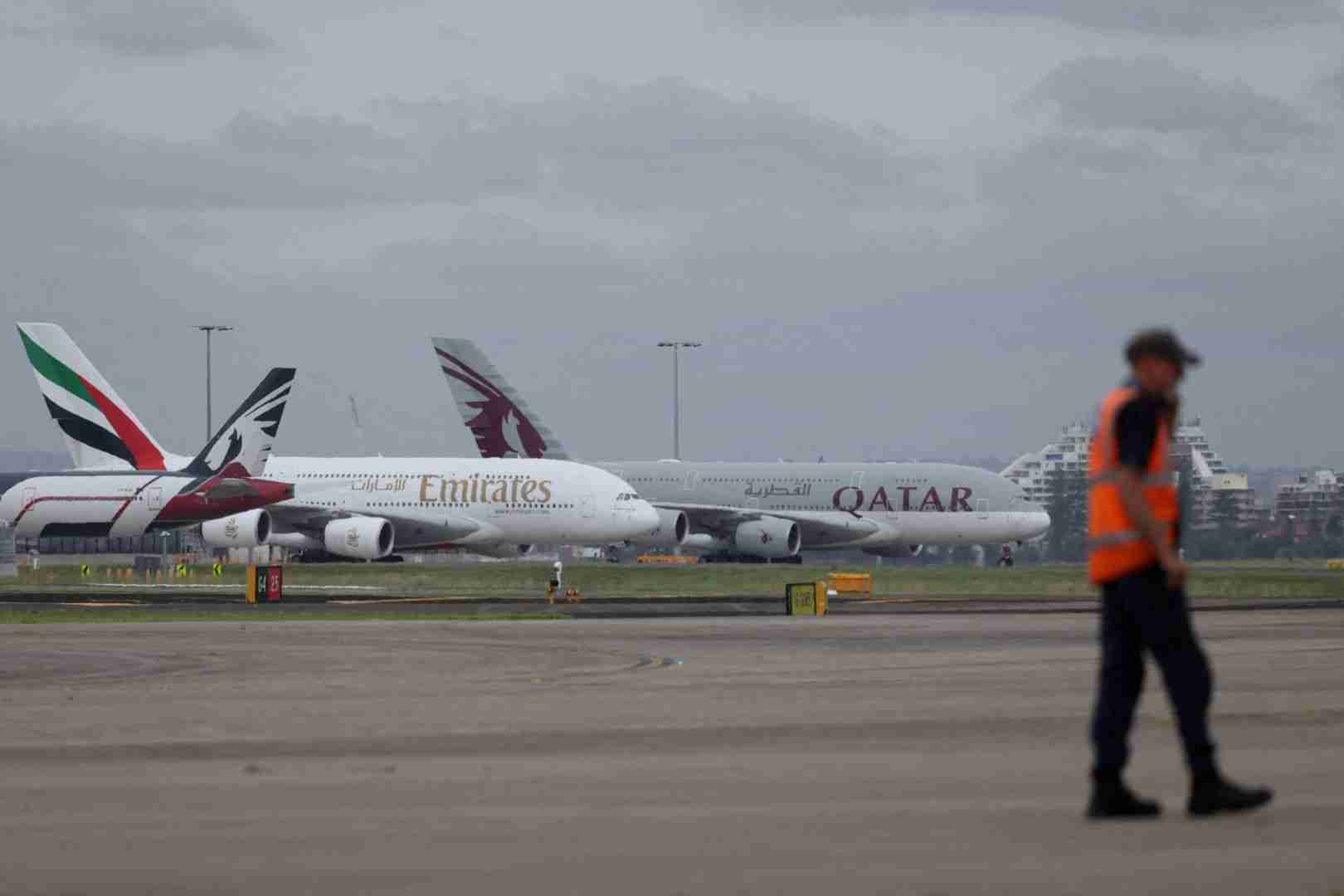
Air freight rates have risen by as much as 70% on some routes since the start of the U.S.-Israeli war on Iran, data shows, as the conflict limits flights, blocks some ocean shipments and pushes up jet fuel costs.
Rates on routes between South Asia and Europe have been the most affected by Middle Eastern airspace closures and security issues, industry experts said, after the conflict stranded more than 100 container ships in the area around the critical Strait of Hormuz oil export corridor.
Swiss logistics group Kuehne+Nagel said on Friday that global carriers are prioritizing shipments of healthcare and perishables like food into the Middle East.
Some inexpensive generic medicines and pharmaceutical ingredients from India are shipped on container ships through the strait for eventual export to Europe, Africa and some Arab countries, said pharmaceutical supply chain expert Prashant Yadav.
“The main shift I’ve heard about involves companies moving generic medicines from ocean freight to air cargo,” said Yadav, a senior fellow at the Council on Foreign Relations.
The shift to air cargo is significant because air freight handles about one-third of global trade by value, making rate spikes a potential inflationary pressure on goods ranging from fresh food to pharmaceuticals and electronics.
“Customers are shifting freight from ocean to air, however it is extremely expensive – typically 5x to 10x higher – and those costs are climbing as capacity tightens,” said Steve Blough, chief supply chain strategist at logistics software firm Infios. “More often, shippers are moving a limited quantity by air to bridge a gap.”
JET FUEL PRICE DOUBLES
The jet fuel price has doubled since the start of the conflict, and Danish container shipping giant Maersk said this week its own air cargo service is now applying fuel surcharges and war risk levies. On Friday, Maersk widened surcharges on some ocean cargo from the region. That came as analysts said they expect oil prices to remain elevated in the near term before stabilizing later in the year.
The airspace closures have also cut cargo capacity in freighters and passenger planes as airlines take longer routes to avoid the conflict zone, further pressuring rates.
Dubai and Doha are normally among the world’s busiest air cargo hubs, but operations at those airports have been severely limited by the Middle Eastern conflict.
Niall van de Wouw, chief air freight officer at transportation pricing platform Xeneta, attributed higher air cargo rates to a “dramatic reduction” in capacity at key Middle East transshipment hubs more than higher fuel prices.
Ronald Lam, the CEO of Hong Kong’s Cathay Pacific Airways, said many of its freighter flights to Europe normally stop in Dubai to refuel and pick up more cargo.
“But because of the situation in Dubai, we’re now skipping that stopover and we are flying direct from Hong Kong to Europe with some payload restriction, because we couldn’t uplift fuel in between,” he said on an earnings call on Wednesday.
According to an air freight index from freight booking and payments platform Freightos, off-contract spot rates from South Asia to Europe have soared 70% to $4.37 per kg from $2.57 per kg just before the war began. South Asia-North America rates are up 58% to $6.41 per kg, and Europe-Middle East rates have risen 55% to $2.79 per kg. A significant share of air cargo exports from South Asia usually travels through Gulf hubs and some have had to reroute through East Asia, said Judah Levine, Freightos’ head of research.
“That being said, we have seen the price increases on many of these lanes slow, level off or even decline slightly in the last couple days,” he said.
“These trends may reflect Asian and European carriers adding capacity to these long-haul lanes to make up for the missing Gulf capacity, and they may also reflect some of the Gulf carriers – most importantly Emirates – having restarted operations and increasing the number of flights that are now leaving and arriving at these important Gulf hubs.”
Reporting by Allison Lampert in Montreal and Lisa Baertlein in Los Angeles; Additional reporting by Julie Zhu in Hong Kong; Editing by Jamie Freed and Andrea Ricci
No images have been released of Khamenei since an Israeli strike at the start of the war that killed much of his family, including his father and wife
International News via Reuters:
Iran’s new Supreme Leader Mojtaba Khamenei is wounded and likely disfigured, U.S. Defense Secretary Pete Hegseth said on Friday, questioning Khamenei’s ability to govern after nearly two weeks of U.S. and Israeli attacks on Iran.
No images have been released of Khamenei since an Israeli strike at the start of the war that killed much of his family, including his father and wife.
His first comments came in a statement read out by a television presenter on Thursday. In the statement, he vowed to keep the Strait of Hormuz shut and called on neighboring countries to close U.S. bases on their territory or risk Iran targeting them.
“We know the new so-called not so supreme leader is wounded and likely disfigured. He put out a statement yesterday. A weak one, actually, but there was no voice and there was no video. It was a written statement,” Hegseth told a briefing.
“Iran has plenty of cameras and plenty of voice recorders. Why a written statement? I think you know why. His father – dead. He’s scared, he’s injured, he’s on the run and he lacks legitimacy.”
An Iranian official told Reuters on Wednesday that the newly appointed supreme leader was lightly injured but was continuing to operate, after state television described him as war-wounded.
Hegseth was joined by General Dan Caine, the chairman of the Joint Chiefs of Staff, at a briefing in which they emphasized U.S. military strikes to knock out Iran’s missile and drone capabilities and its navy.
‘NO QUARTER’
During the briefing, Hegseth said that the United States would show no mercy in the war.
“We will keep pressing, keep pushing, keep advancing. No quarter, no mercy for our enemy,” Hegseth said.
“No quarter” is the refusal to spare the life of someone who has expressed their intention to surrender – something prohibited by law.
“International humanitarian law prohibits the use of this procedure, that is, ordering that there shall be no survivors, threatening the adversary therewith, or conducting hostilities on this basis,” according to the International Committee of the Red Cross (ICRC).
Hegseth has moved to reshape the top ranks of the military justice system, replacing the judge advocates general for the Army, Navy and Air Force.
The United States has carried out strikes against more than 6,000 targets in Iran over the past 14 days. Almost two weeks of U.S.-Israeli bombings have killed around 2,000 people in Iran.
A U.S. official, speaking on the condition of anonymity, said the Pentagon was sending an additional warship, along with the Marines on board, to the Middle East. The Pentagon has previously said additional troops would be heading to the region.
But despite the U.S. attacks on Iran, more Iranian drones were reported flying into Kuwait, Iraq, the UAE, Bahrain and Oman.
Additionally, six U.S. service members were killed on Friday when a U.S. military refueling aircraft crashed in western Iraq, in an incident the U.S. said involved another aircraft but was not the result of hostile or friendly fire.
Since the U.S. and Israel started carrying out strikes against Iran on February 28, 11 U.S. troops have been killed.
Reporting by Idrees Ali, Phil Stewart and Susan Heavey; Editing by Daphne Psaledakis, David Ljunggren, Chizu Nomiyama and Nick Zieminski
Bolsonaro, 70, was taken to the hospital early on Friday with a high fever, chills and a drop in oxygen saturation, the note said, adding that he is being treated with antibiotics
International News via Reuters:
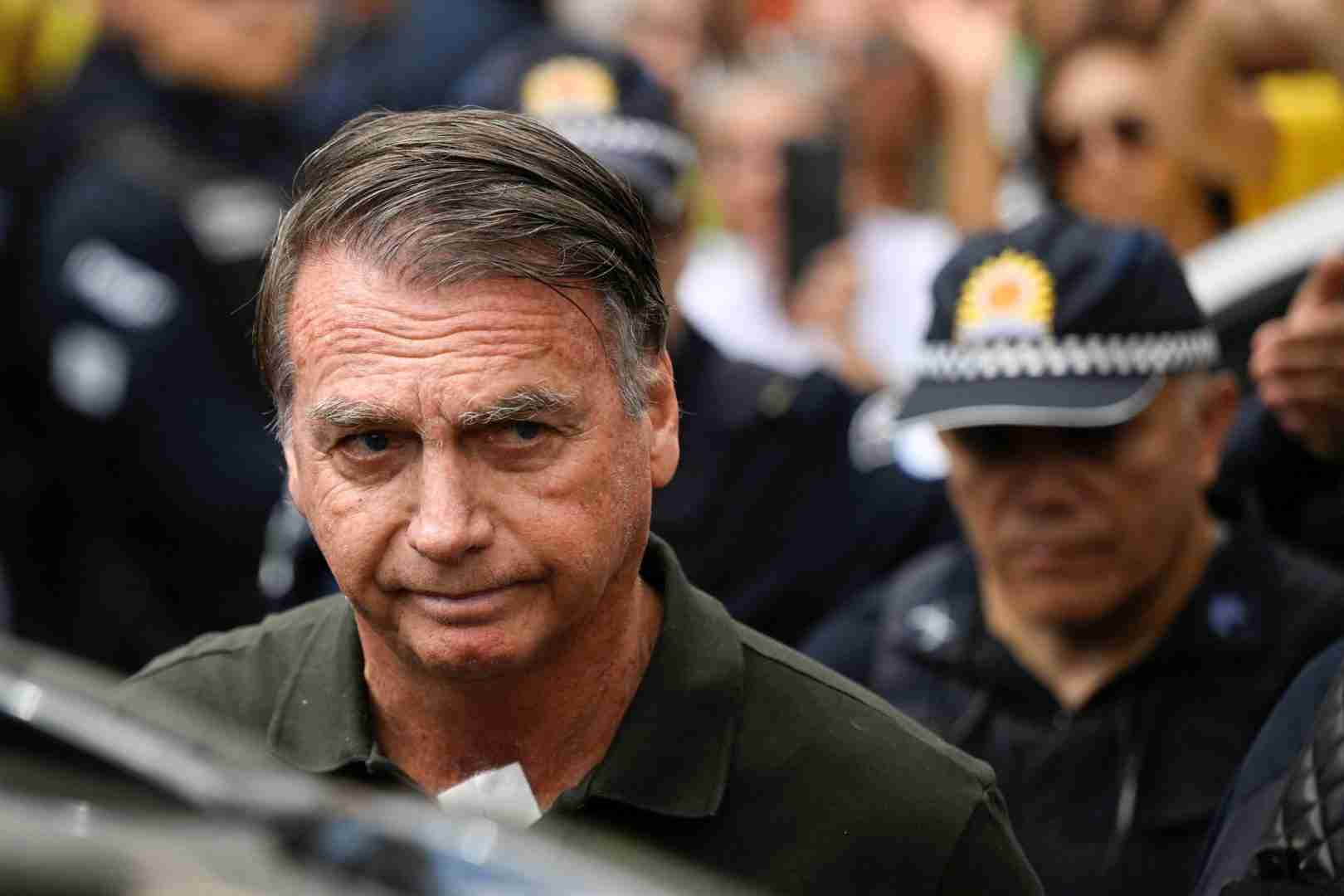
Brazil’s imprisoned former President Jair Bolsonaro was hospitalized in an intensive care unit on Friday after being diagnosed with bronchopneumonia, according to a medical note from the DF Star hospital.
Bolsonaro, 70, was taken to the hospital early on Friday with a high fever, chills and a drop in oxygen saturation, the note said, adding that he is being treated with antibiotics.
The former president’s condition is serious and he is expected to remain in hospital for at least the next few days, one of the doctors treating him, Brasil Caiado, told reporters in Brasilia.
Surgery has been ruled out for now, Caiado said.
The former president, who governed from 2019 to 2022, has a history of hospitalizations and surgeries related to a stabbing during a 2018 campaign event.
He had been hospitalized in January for a series of exams after falling and hitting his head. In December, he underwent medical procedures to treat a hernia and persistent hiccups.
Bolsonaro is serving a 27-year sentence for plotting a coup after losing the 2022 presidential election to current President Luiz Inacio Lula da Silva.
Reporting by Gabriel Araujo and Isabel Teles; Editing by Toby Chopra, Rod Nickel
Recently released public school test results only cover one academic year. Responding to our questions, the Opposition Leader says we need to know what has come before…
He also agrees with a Bermuda Broadcasting question regarding the need to compare the latest results with historical figures.
Government released Cambridge IGCSE grades from June 2025, showing that most students failed to achieve a grade from A-C.
Cambridge Checkpoint results in Primary and Middle Schools are also behind the international average. However, Premier David Burt asserts that such a comparison is misleading, as Bermuda uses the Checkpoints as a system-wide diagnostic test, whereas some other jurisdictions pick and choose who takes the tests.
Nevertheless, the OBA’s Ben Smith reiterates the need for an independent Education Authority to remove politics from education, and provide transparency about students’ progress.
He even insinuates that the Premier is shifting the blame, following his comments in the House that parents must carry some of the responsibility for their children’s success in school.
WATCH the interview above…*
*For transparency, Bermuda Broadcasting first asked Government for historical Cambridge results at the beginning of February, a month before the Ministry of Education put out their press release on the 2025 results.
We have repeated our request since, but so far we have not received confirmation whether or not the results will be made available.
Trade talks with U.S. suppliers part of Affordable Bermuda plan to address cost of living
The Government says tackling the cost of living will take time but steps are being taken to help reduce the burden on residents.
Home Affairs Minister Alexa Lightbourne updated Parliament today on the progress of the Affordable Bermuda Agenda, including efforts to bring more international food suppliers into the local market.
The ministry has partnered with the U.S. Consulate General to connect Bermudian businesses with American suppliers.
More than 60 U.S. companies recently took part in a virtual trade event exploring opportunities to supply the island.
Minister Lightbourne said: “The response from the United States businesses participating in the virtual trade event was notably positive and constructive. The Ministry believes that change is possible and affordability can be a reality.”
Minister Lightbourne continued: “The Ministry accepts its role in project management and facilitating new relationships in aide of our mandate. We affirm the road to systematically address cost in Bermuda will not happen overnight, but we are resourceful, and we hold an unwavering focus to deliver.”
Representatives from the U.S. Department of Agriculture were also in Bermuda this week meeting with local businesses and import regulators.
Minister Lightbourne said, as a result of the meeting, they committed to future engagements to remove barriers for suppliers and invitations to upcoming trade events were offered to Bermuda’s market participants free of charge.
She added: “We are modernising our import processes, seeking to strengthen local competition, and removing the barriers that have kept potential new suppliers away. In short, Mr. Speaker, we took the concerns raised by the public and the private sector identified the challenges, and this Government built a bridge.”
“We are affirmed in our direction and no longer accept narratives that tell us that our size makes us powerless and unable to evolve.”
Ben Smith uses his first Premier’s Questions as Opposition Leader to challenge Premier David Burt on gaming and education
Inertia on casinos and problems in education were the opening salvos from Ben Smith during the first Premier’s Questions since he became Opposition Leader.
Premier David Burt welcomed the new Opposition Leader, but it was not long before he was accusing his counterpart of failing to listen.
Mr Smith tackled Gaming first…
The Royal Gazette reported that, as of 2024, the Bermuda Gaming Commission had cost the public more than $16-million.
Ben Smith moved on to criticise the Government’s handling of public education, referencing recently released test results.
The Premier countered that it is not an apples to apples comparison.
He also affirmed his confidence in public education, citing that his children benefit from it, and said that parents must carry some of the responsibility for schooling…
British finance minister Rachel Reeves said on Wednesday she would consider action to shield households from surging energy costs due to the conflict in the Middle East, but that it was premature at this stage
International News via Reuters:
Britain’s domestic energy price cap is forecast to rise by about 11% in July, analysts at Cornwall Insight said on Friday, increasing their forecast due to the ongoing impact of the Iran war on wholesale energy prices.
British finance minister Rachel Reeves said on Wednesday she would consider action to shield households from surging energy costs due to the conflict in the Middle East, but that it was premature at this stage.
Wholesale gas prices have risen more than 60% over the past two weeks. Those prices are the largest single factor contributing to British energy regulator Ofgem’s domestic price cap, which is set quarterly using a formula that also reflects suppliers’ network costs and environmental and social levies.
Disruptions to shipping in the Middle East and a halt to liquefied natural gas exports from Qatar, one of the world’s largest gas exporters, has led to a surge in international gas prices which is showing no signs of abating.
Cornwall Insight forecasts Ofgem’s price cap will rise in July to 1,827 pounds ($2,422) a year for typical use, from 1,641 pounds in April.
Last week they had forecast a rise of 10% in the cap.
Ofgem is expected to publish the next price cap level by May 27.
($1 = 0.7545 pounds)
Reporting by Susanna Twidale. Editing by Paul Simao and Mark Potter
This gained momentum after earlier attacks by Israel and the U.S. on Iran in June last year, said Patrik Spiller, head of wealth management at consultancy Deloitte Switzerland
International News via Reuters:
Wealthy individuals are looking to shift assets from the Gulf region to Switzerland as a result of the escalating conflict in the Middle East following the U.S.-Israeli strikes on Iran, bankers and financial advisers say.
More than a dozen bankers and financial advisers, collectively representing assets worth more than $1 trillion, were broadly optimistic in interviews with Reuters that Switzerland would attract more money from the Middle East, particularly after Iranian attacks on Gulf states.
Although Switzerland, long considered by investors as a safe haven, has faced growing competition from financial hubs in the Middle East and Asia, cash positions booked in the country by private individuals and non-banks from the United Arab Emirates have risen around 40% over the last three years.
This gained momentum after earlier attacks by Israel and the U.S. on Iran in June last year, said Patrik Spiller, head of wealth management at consultancy Deloitte Switzerland.
“Due to recent events, we expect that assets from the Middle East will increasingly be booked in Switzerland. We’re hearing from banks, family offices, and other high-net-worth individuals that discussions are currently underway,” Spiller said.
The Swiss Bankers Association said it could not comment specifically on asset flows from the Middle East since the recent strikes on Iran, but noted Switzerland had long set out its store as an attractive place for wealthy investors.
“It’s now to our advantage that we can score points with Swissness, namely secure conditions, political stability, and the rule of law. I believe this is particularly valued in times like these,” said SBA chief economist Martin Hess.
After the U.S.-Israeli strikes on Iran, the Swiss franc hit its highest level against the euro in a decade.
‘SWISSNESS WORKS’
Although it would likely take weeks or months for inflows to register, Switzerland could eventually see “several dozen billion” dollars coming in from the region, Spiller said.
“But that will depend a great deal on how the war develops, and how long it lasts,” he added, noting cash usually came first followed later by assets such as stocks or bonds.
UBS, Switzerland’s biggest wealth and asset manager, declined to comment, as did Julius Baer, which has the third-largest total of assets under management (AuM).
Swiss private bank Pictet, which ranks second largest by AuM, said in a statement it is seeing inquiries from customers, but the increase could not be described as significant.
“We reported a record high in AuM at the end of the year, despite the weak U.S. dollar, and the positive trend has continued since the beginning of the year. Swissness works,” Pictet added.
Till Budelmann, chief investment officer at Bergos, a Zurich-based private bank with about 8 billion Swiss francs ($10 billion) in AuM, said the war with Iran had brought Switzerland back into focus, including among European investors.
Budelmann said one European investor who had been thinking about setting up an account requested an immediate appointment to set the process in motion after hostilities began.
While it was too early to quantify possible inflows, Budelmann told Reuters he sensed the conflict had “given a boost to Switzerland as a safe haven”.
($1 = 0.7877 Swiss francs)
Reporting by Oliver Hirt and Ariane Luthi; Additional reporting by Dave Graham; Editing by Alexander Smith
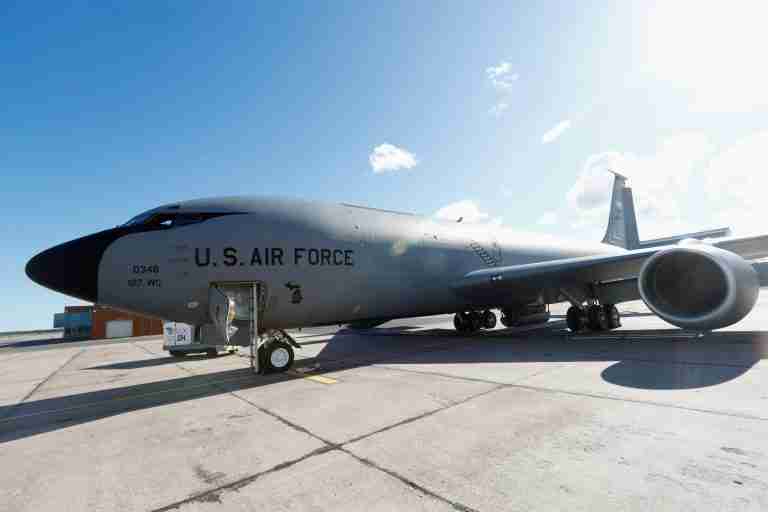
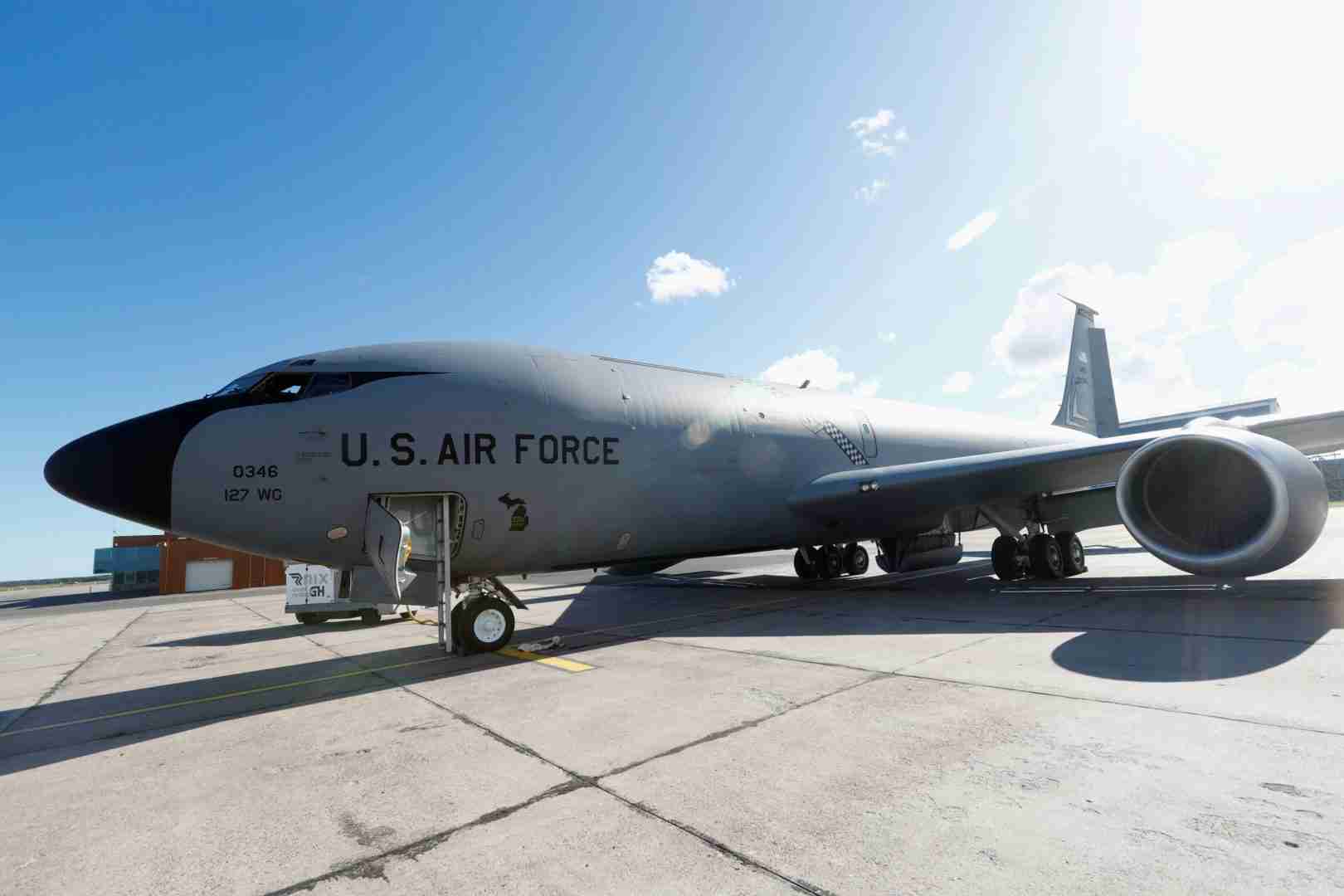
A U.S. military refueling aircraft crashed in western Iraq on Thursday, in an incident the military said involved another aircraft but was not the result of hostile or friendly fire
International News via Reuters:
All six crew members aboard a U.S. military refueling aircraft that crashed in western Iraq are confirmed to have been killed, the U.S. military said on Friday.
A U.S. military refueling aircraft crashed in western Iraq on Thursday, in an incident the military said involved another aircraft but was not the result of hostile or friendly fire.
The deaths add to the seven U.S. service members who have already been killed as part of U.S. operations against Iran which began on February 28.
“The circumstances of the incident are under investigation. However, the loss of the aircraft was not due to hostile fire or friendly fire,” a statement from U.S. Central Command said.
A U.S. official told Reuters that the second aircraft involved in the crash, which landed safely, was also a military refueling aircraft known as the KC-135.
The United States has deployed a large number of aircraft into the Middle East to take part in operations against Iran and the incident highlights the risk of not just operations, but of refueling aircraft in the air.
The KC-135, built by Boeing in the 1950s and early 1960s, has served as the backbone of the U.S. military’s air refueling fleet and is critical to allowing aircraft to carry out missions without having to land.
The Islamic Resistance in Iraq, an umbrella group of Iran-backed armed factions, claimed responsibility for downing the U.S. military refueling aircraft.
Reuters reported on Tuesday that as many as 150 U.S. troops have been wounded in the U.S.-Israeli war on Iran. News of the crash comes the same day two U.S. sailors were injured after the USS Gerald Ford suffered a non-combat-related fire on board.
The first seven U.S. troops were killed when a drone slammed into a U.S. military facility in Port Shuaiba, Kuwait.
President Donald Trump and other senior officials have warned the Iran conflict will result in more U.S. military deaths as Tehran retaliates against U.S. and Israeli strikes.
Reporting by Idrees Ali; Editing by Toby Chopra and Chizu Nomiyama
To provide the best experiences, we use technologies like cookies to store and/or access device information. Consenting to these technologies will allow us to process data such as browsing behavior or unique IDs on this site. Not consenting or withdrawing consent, may adversely affect certain features and functions.
Functional
Always active
The technical storage or access is strictly necessary for the legitimate purpose of enabling the use of a specific service explicitly requested by the subscriber or user, or for the sole purpose of carrying out the transmission of a communication over an electronic communications network.
Preferences
The technical storage or access is necessary for the legitimate purpose of storing preferences that are not requested by the subscriber or user.
Statistics
The technical storage or access that is used exclusively for statistical purposes.The technical storage or access that is used exclusively for anonymous statistical purposes. Without a subpoena, voluntary compliance on the part of your Internet Service Provider, or additional records from a third party, information stored or retrieved for this purpose alone cannot usually be used to identify you.
Marketing
The technical storage or access is required to create user profiles to send advertising, or to track the user on a website or across several websites for similar marketing purposes.