Energy prices have lurched onto Europe’s political agenda this year, as industries warn they cannot compete with companies in the United States and China, where bills are lower
International News via Reuters:
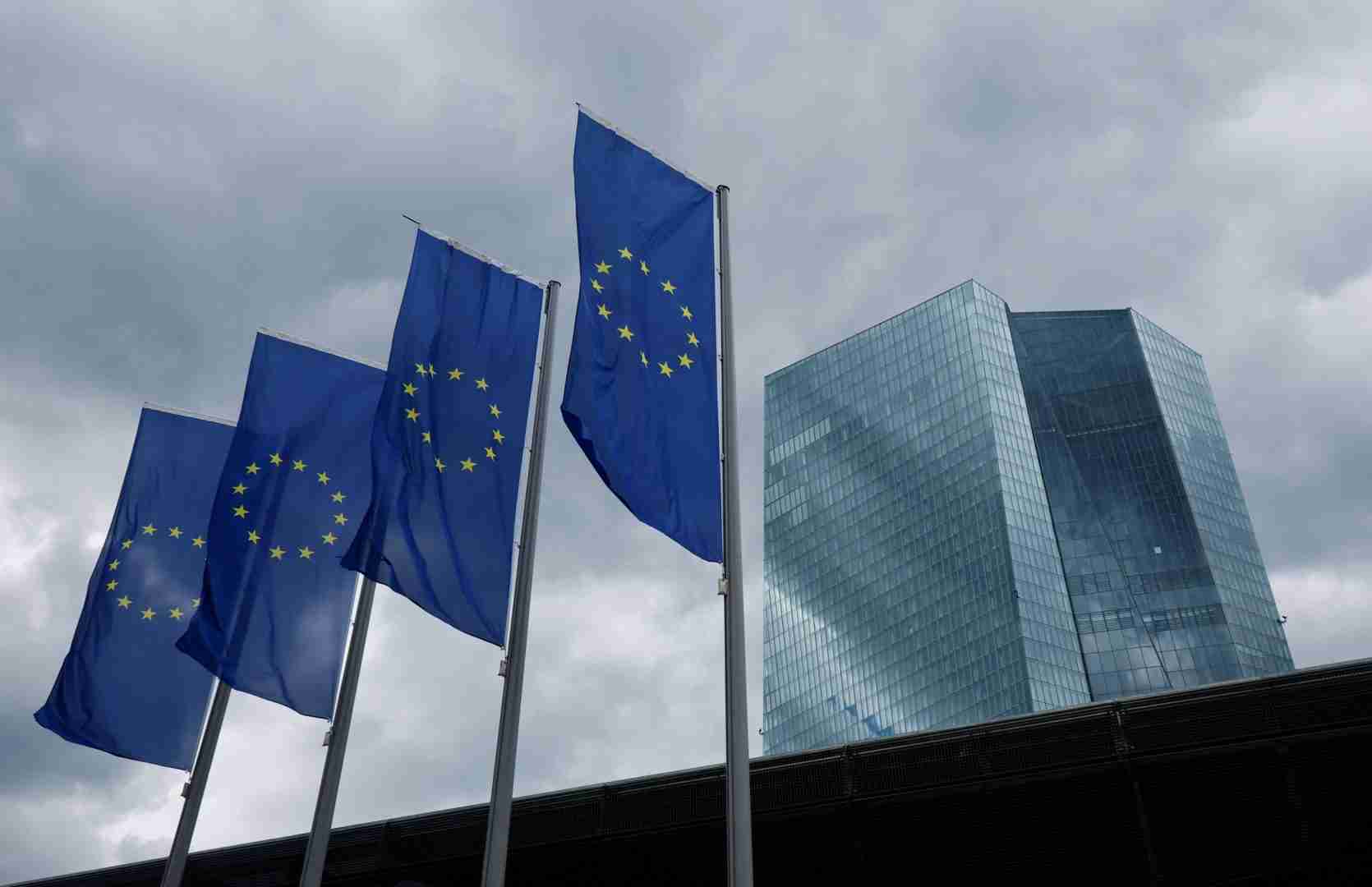
Governments of seven EU countries, including the Netherlands and Sweden, warned the bloc’s executive on Thursday against interfering with the system that sets Europe’s energy prices, as officials in Brussels scramble to find ways to bring down bills.
Energy prices have lurched onto Europe’s political agenda this year, as industries warn they cannot compete with companies in the United States and China, where bills are lower. Soaring global oil and gas prices due to the Iran conflict have increased pressure on the European Commission to step in.
President Ursula von der Leyen has pledged to assess whether the EU’s current price-setting system should be revised, and the Commission is drawing up options to attempt to curb energy prices. But analysts and officials say there is no quick fix.
In a letter to Energy Commissioner Dan Jorgensen, seen by Reuters, seven EU governments warned that changing the system which underpins Europe’s energy market would lead to a less efficient mechanism and ultimately increase bills.
“Intervening in the electricity market design and changing price formation mechanisms would also increase market and regulatory uncertainty, which is harmful for investments and European competitiveness,” the letter said.
Dated March 5, the letter was also signed by the energy ministers of Denmark, Finland, Latvia, Luxembourg and Portugal.
GAS PLANTS SET POWER PRICES
The EU’s electricity system is designed so that the last power plant needed to meet total demand sets the power price. Often, that is a gas plant – so gas price spikes can send electricity prices soaring, even when much of the power is being produced from cheaper renewable sources.
The seven countries said “the EU dependency on expensive, imported gas” is the root cause of high prices, and not the power market design.
The signatories urged Brussels to instead expand cheaper renewable energy sources faster to limit the price-setting role of gas in the power mix, and increase measures that encourage consumers to use energy when prices are low.
The letter sets up a clash with governments including Italy, which has announced national plans to remove carbon costs from gas power plants’ bills – an intervention that would upend the price-setting system.
The signatory countries are largely wealthier EU members, and include Sweden and Finland, who have the lowest power prices in the EU. Both produce more than 90% of their electricity from low-carbon sources – a stark difference from others including Poland, which gets most of its electricity from CO2-emitting coal.
Reporting by Kate Abnett, editing by Andrei Khalip
EBRD President Odile Renaud-Basso told Reuters in an interview in Istanbul that the conflict “can reduce risk capital” for the region
International News via Reuters:
The widening U.S.-Iran war is a risk to economic growth, the president of the European Bank for Reconstruction and Development told Reuters on Thursday, but said the fallout depends on how long the conflict lasts.
EBRD President Odile Renaud-Basso told Reuters in an interview in Istanbul that the conflict “can reduce risk capital” for the region – but that apart from Lebanon, the fallout thus far was contained.
“For the time being, it’s limited,” she said, adding that “the risk is on the downside.”
Last week, the EBRD pegged growth for the 41 countries it covers at 3.6% for this year and 3.7% in 2027, boosted by spending on big infrastructure projects in Europe, but offset by U.S. tariff and trade uncertainty.
The war has effectively closed the Strait of Hormuz, a key shipping artery, sending crude prices up some 12% – and sounding an alarm for many of the energy-importing countries in which the EBRD works.
Renaud-Basso said that the length of the closure of the Strait of Hormuz and the duration of oil and gas price spikes were key, but that high global gas stocks could help cushion the blow.
The exception, however, is Lebanon, which she said is “very much at the core” of current turbulence. Lebanese group Hezbollah launched rockets and drones into neighbouring Israel on Monday, prompting ongoing full-blown hostilities with Israel.
“There we can expect quite a significant impact on the economic situation and broadly,” she said.
In Ukraine, Renaud-Basso said international funding for the year is unlikely to change despite the new conflict.
But more broadly, she said an extended spike in global energy prices could also drive inflation higher – making it tricky for central banks to cut interest rates.
“This is a new challenge in terms of monetary policy. I think that we need to be careful,” Renaud-Basso said.
Reporting by Jonathan Spicer in Istanbul, writing by Libby George; Editing by Amanda Cooper and Nivedita Bhattacharjee
Bermudian freshman Denver Tucker experienced both the thrill and the heartbreak of championship racing at the Sun Conference Indoor Track and Field Championships in Gainesville, Florida.
Representing St. Thomas University, Tucker signaled his intent during the preliminary heats of the Men’s 60 Meters. The sprinter produced a blistering, career-best performance, stopping the clock at 6.89 seconds. The time secured him a spot in the final as the fourth-fastest qualifier and established him as a genuine medal contender.
However, the final proved to be a difficult affair. After a promising start, Tucker was forced to pull up with an apparent injury, ultimately crossing the line in seventh place. Despite the individual frustration, his sub-6.9 second performance remains a significant milestone in his debut collegiate season.
There was better news for Tucker’s teammates, as the St. Thomas Bobcats delivered a dominant collective display to secure their first-ever Sun Conference indoor title. Ending a five-year period of Southeastern University dominance, the Bobcats finished with a massive 315 points—winning by a remarkable 153-point margin. Under the guidance of head coach Joey Scott, the team’s historic victory provided a triumphant backdrop to a weekend of high drama on the track.
Excitement is reaching fever pitch as the National Sports Center North Field prepares to host the island’s premier showcase of youth football talent this Friday.
In a joint initiative between the Bermuda School Sports Federation and the Department of Youth and Sport, the 2026 All-Star matches will bring together the most outstanding players from across the school system. The event has long served as a vital stepping stone for Bermuda’s emerging stars, offering a platform for primary, middle, and senior school students to demonstrate their skills in a high-stakes environment.
The action kicks off at 2:00 PM with the Primary School Girls’ match, followed by the Middle School Girls at 3:30 PM. These opening fixtures have traditionally been closely contested affairs, highlighting the rapid growth of the women’s game at the grassroots level.
As the sun sets over the North Field, the boys take center stage. The Primary School Boys’ encounter is scheduled for 5:00 PM, leading into the night’s headline event: the Senior School Boys’ match at 7:00 PM. This final fixture often features players who are already making waves in the domestic Premier Division and knocking on the door of national team selection.
With a legacy of producing some of Bermuda’s finest international representatives, tomorrow’s matches are expected to draw a significant crowd of families and scouts. Organizers are encouraging the public to come out in force to support the dedication of these young athletes in this annual celebration of school sports.
The 2026 Gnosis Bermuda National Squash Championships reached a grueling peak at the Bermuda Squash Club, as several divisions were decided by punishing five-set encounters.
The Men’s B Division delivered the night’s most sustained drama. Craig Deuchrass showed immense resilience to overcome Rocco Adderley in a 3-2 thriller, eventually edging a nervous final-set tiebreak 12-10. He was joined in the next round by Benjamin Sherratt, who outlasted Philip Barnes in another see-saw battle, clinching his deciding set 11-9.
Stamina proved the deciding factor in the Men’s C Division as Kevin Gillespie fought back from 2-1 down to defeat Kleyon-Paul White. Gillespie dominated the final two games, conceding only seven points to seal the comeback.
The veterans were not to be outdone, as Nick Leach survived a stern test in the Over-40s. Trailing 2-1 against Derek Wheeler, Leach utilized his experience to force a decider before pulling away for an 11-5 victory in the fifth. With several top seeds now safely through, the stage is set for a high-intensity weekend of semi-final action in Devonshire.
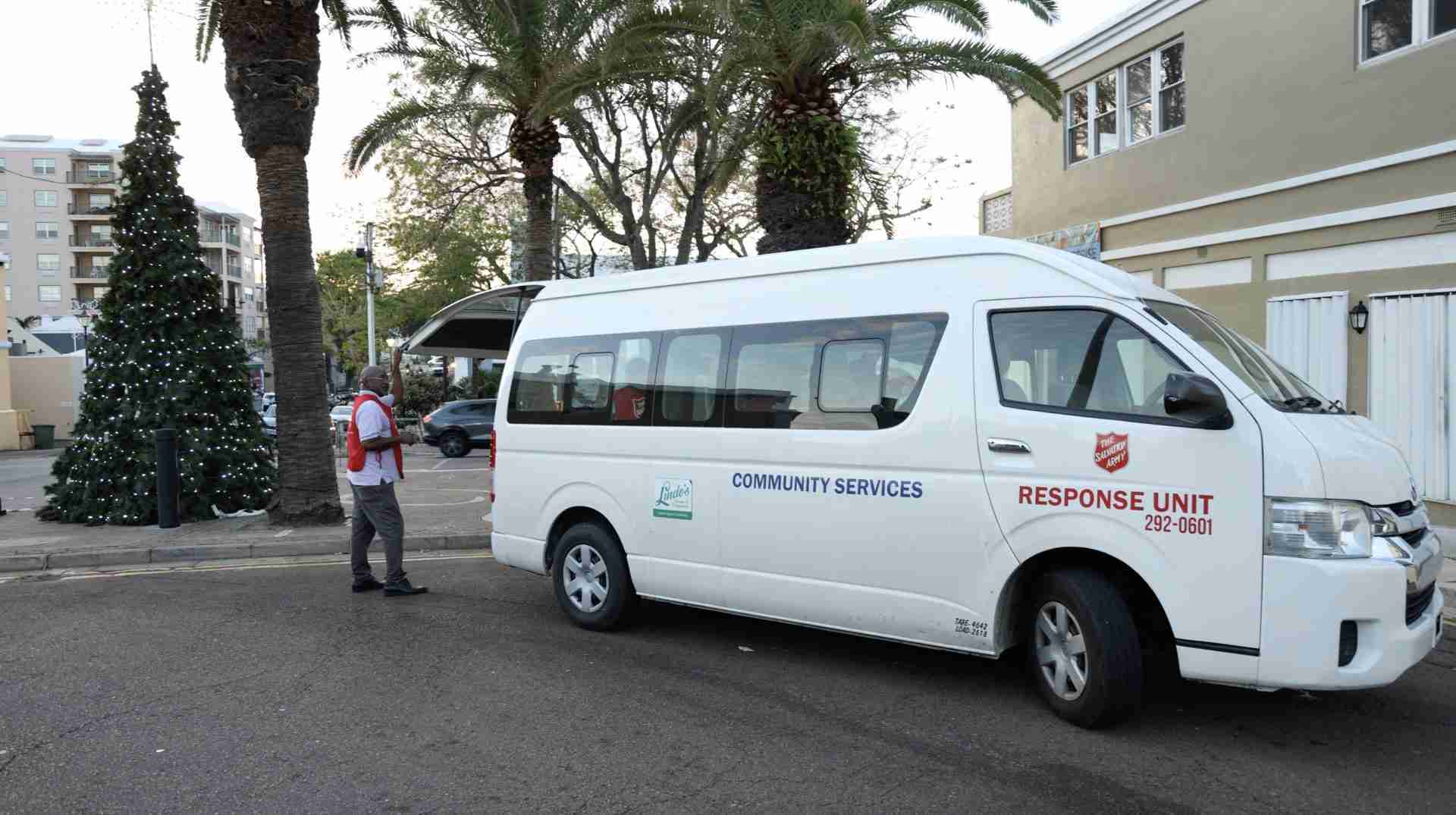
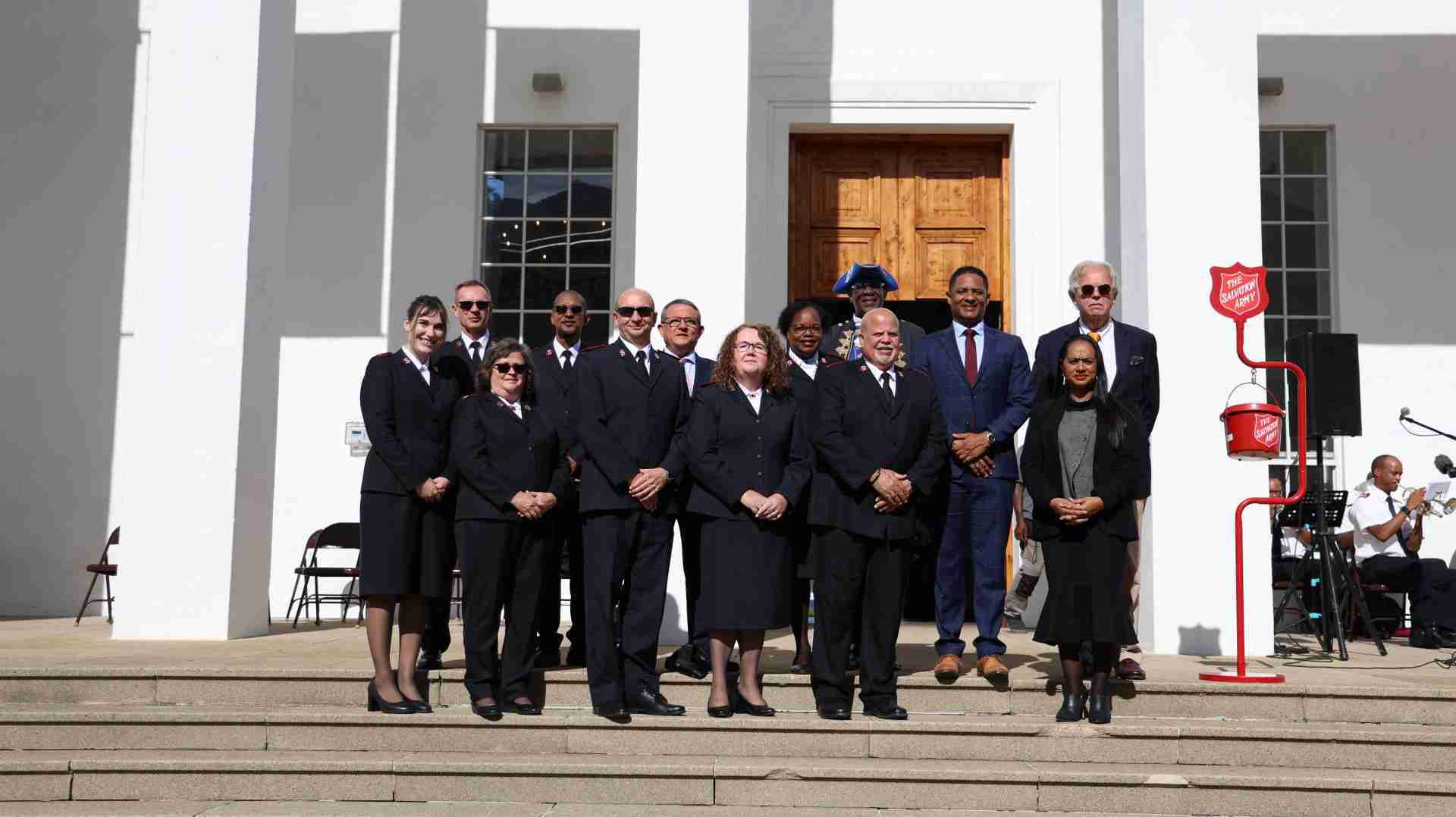
Bermuda is closing in on a major community milestone, with $807,000 raised toward The Salvation Army’s $1 million funding goal for 2026 — leaving the organization $193,000 shy of the amount needed to sustain critical services in the year ahead.
The total raised to date reflects a strong island-wide commitment to supporting individuals and families facing hardship, particularly as cost-of-living pressures continue to impact households across Bermuda.
Every dollar raised remains in Bermuda to support a broad network of programs throughout 2026, including food assistance, shelter, housing support, substance abuse recovery, job training, and educational initiatives — services that play a vital role in strengthening the social fabric of the island.
“This moment speaks to the extraordinary compassion that defines Bermuda,” said Captain Dennis Maybury, Public Relations Officer for The Salvation Army Bermuda. “Community support at this level strengthens our ability to remain a steady presence for those who rely on us — delivering immediate assistance while helping people move toward stability and independence.”
This past year’s seasonal giving contributed meaningfully to the overall total. The 2025 Kettle Campaign generated $63,571.30, surpassing its target, while the Christmas Letter Appeal, Digital Campaign, and Giving Tuesday brought in an additional $263,532 in support of year-round services.
The impact of this generosity has already been felt across Bermuda. During the holiday season alone, 737 food hampers were distributed and 426 children received toys, with thousands more benefiting from Salvation Army programs throughout the year.
The Salvation Army also recognized the dedication of volunteers, community groups, corporate partners, local businesses, kettle locations, local schools and media partners — including the Inter-Island Communications Family for once again supporting the ‘Fill the Truck’ initiative.
As the organization moves closer to its funding target, leaders emphasize that community support remains essential to meeting evolving needs across the island. The Salvation Army remains committed to serving Bermuda year-round with dignity, practical care, and hope.
To learn more or help close the remaining gap toward the 2026 funding goal, visit: www.salvationarmy.bm/donate
“We continue to be inspired by the willingness of Bermuda to step forward when it matters most,” Maybury added. “Each contribution helps ensure that no one has to navigate difficult circumstances alone.”
The figure means an estimated 2% of Bermuda’s population is experiencing homelessness
HOME, the registered charity working to end homelessness in Bermuda, has released its 2025 Annual Report, outlining significant achievements in helping a widening demographic of people access stable, independent living over the past year—but also highlighting the urgent need for more affordable housing.
HOME’s annual tracking of data from numerous agencies indicates there were 1,331 people experiencing homelessness at the end of 2025—an increase of 230 individuals from a year earlier. Put into context, the figure means an estimated two percent of Bermuda’s population is experiencing homelessness.
“Our team of young professionals continues to demonstrate a deep commitment to ending homelessness, and in 2025 this was reflected most clearly through the growth of new partnerships with dedicated private property owners,” said HOME CEO Denise Carey. ““Our community is beginning to show what evidence from other jurisdictions has repeatedly proven: real, lasting progress happens when we work together. To create sustainable change, we must collaborate with government, the nonprofit sector, donors, and engaged private community members. Together, we can build the solutions needed to end homelessness for good.”
“Our mission has always been about more than providing shelter. It is about restoring dignity, hope and opportunity,” noted Arthur Wightman, HOME’s Founder and Non-Executive Chair: “This year, we have witnessed countless stories of perseverance and mutual support among our clients. From small acts of kindness to moments of profound personal growth, every achievement is a celebration of their courage in the face of adversity.”
Among its achievements during 2025, HOME:
• Sustainably ended homelessness for 32 people
• Prevented 48 new cases of homelessness
• Helped 25 people find jobs
• Took on 355 new clients and provided intensive case management to 45
• Provided accommodation to 19 rough sleepers during winter months
• Partnered with 147 landlords to house those who had experienced homelessness
• Employed 16 Bermudians and provided contract work to a further 29
• Developed relationships with 42 new strategic donors
• Worked with more than 450 volunteers who generously supported our mission
Notably, HOME continued to operate a Housing-First programme from its Black Circle, Pembroke property, providing shelter, care, and triage for five cohorts of single men through 2025, each group comprising eight individuals. The year brought the total number of cohorts assisted by HOME to 17 since the program’s 2022 launch. The charity also operated HOME for Families, providing shelter and support for six housing-insecure women and dependent children, ensuring mothers secured employment and developed financial independence, while receiving life skills support and a nurturing, safe environment for families.
HOME launched its Renting Ready initiative in 2025, preparing and training participants to become more responsible tenants and landlords. The organisation also led the first “Ending Homelessness Together” forum to mark World Homeless Day last October 10, including panel discussions, and presentations by Minister of Youth, Social Development & Seniors Tinée Furbert and Supreme Court Puisne Judge Juan Wolffe.
And HOME continued to drive the Plan to End Homelessness toward implementation, working closely with the government and numerous social services throughout the community. A national roadmap for turning strategic goals into tasks and timelines, the plan details resources, budgets, risks, and roles to ensure alignment across government and non-government agencies.
Yet HOME’s annual report notes the number of people experiencing different levels of homelessness continues to rise—a trend the organisation has tracked since launch in 2021, when its first survey registered 555 individuals as Bermuda’s homeless population. That figure rose to 650 in 2022, 811 in 2023, 1,101 in 2024, and 1,331 by the end of last year. Bermuda’s housing-shortage and cost-of-living crises are combining to exacerbate the increase, HOME noted.
Data includes only those individuals for whom there has been direct or confirmed contact through a partner agency on the island, not statistical projections. Net new cases of homelessness in 2025 of 230 individuals is attributed to a combination of new cases, as well as previously “hidden homeless” being found, and cases of recidivism minus cases where an individual’s homelessness ended.
“While so much has been accomplished,” said Carey, “the lack of safe, secure social or affordable housing is the most critical issue facing our collective mission to end homelessness.”
Personal testimonials from HOME clients feature in the 2025 report. “HOME has been a huge part of my stability,” said one. “From financial assistance application support and guidance on accessing food donors, to help registering with the Bermuda Housing Corporation, HOME gave me support. Sometimes all a person needs is a helping hand.” Added another: “Today, I am thriving in independent housing and working full-time, and I could not have done it without HOME’s support.”
“The Board of Directors is deeply gratified by the exceptional work our team,” said Wightman. “The results are noteworthy—the impact on human life and the system as a whole are inspiring and significant in equal measure. Huge thanks must extend to all our community partners and the donor community for their shared commitment to ending homelessness in Bermuda. We remain optimistic about ending homelessness in Bermuda—though we also recognize there is so much more work to be done. We invite the greater Bermuda community to join us in this endeavour.”
To learn more about HOME, or to donate, visit the website, www.home.bm
Pedro Machado addressed concerns stretching from Middle East tensions to the recent wobble in private markets, while warning that a boom in complex securitisation deals merits closer scrutiny
International News via Reuters:
Euro zone banks face only a limited direct impact from the war in Iran, but the larger danger lies in how a weakened economy might feed back into lenders’ balance sheets, a senior European Central Bank supervisor told Reuters.
In a wide-ranging interview, Pedro Machado addressed concerns stretching from Middle East tensions to the recent wobble in private markets, while warning that a boom in complex securitisation deals merits closer scrutiny.
The threat of a broader conflict in the Middle East has sharpened fears of another inflation burst and renewed pressure on growth in the euro zone, which depends on Gulf suppliers for some of its gas and on Suez Canal routes for Asian goods.
Machado, one of the ECB’s top bank watchdogs, said euro zone banks’ direct exposure to Iran and Israel was small relative to their ability to absorb losses at 0.7% of core capital for assets, such as loans, and 0.6% for liabilities like bank bonds.
“Even if you include neighbouring countries, the exposures are pretty contained, representing slightly less than 1% of supervised entities’ total assets,” he said in an interview.
Large euro zone banks have assets worth 27.8 trillion euros ($32.32 trillion), according to the latest ECB data, meaning 1% of that would be worth 278 billion euros.
Machado did not quantify the exposure for individual banks, consistent with the ECB’s communication policy.
The more consequential risk, he added, lies in any renewed surge in energy prices feeding into inflation and, ultimately, a slowdown that would squeeze borrowers.
“In the long term if we have energy prices heating up, we might have an inflation spike with recessionary potential impacts in terms of economic activity,” Machado said. “And this translates into a potential impact on unemployment, which is a variable that is quite important for banks.”
SHADOW BANKS IN FOCUS
Machado downplayed the relevance for European lenders of the recent turbulence in U.S. private credit – most recently at Blackstone’s flagship fund – saying he had not seen “any particular evidence” of spillover.
But he said the ECB was sharpening its focus on synthetic securitisations, in which banks shift portfolio risks to outside investors using derivatives or guarantees. Supervisors want to ensure the risk does not boomerang back into the banking system through indirect financing channels.
“We intend to collect individual information on those transactions to then try to have a much more aggregate view on those, both in terms of volume but also in terms of potential exposure through the back door,” he said.
Synthetic risk-transfer deals have been booming, rising 85% in the first half of 2025 from a year earlier, helped by changes in regulation.
Governments have scrambled to arrange flights out of the Middle East for tens of thousands of citizens stranded by the intensifying U.S. and Israeli conflict
International News via Reuters:
Airline shares rebounded on Thursday, as more flights took off from the Middle East, giving carriers some reprieve after U.S.-Israeli strikes on Iran wiped billions of dollars off their market value earlier in the week.
Governments have scrambled to arrange flights out of the Middle East for tens of thousands of citizens stranded by the intensifying U.S. and Israeli conflict that closed most of the region’s airspace due to the risk of missiles hitting planes.
Shares in Hong Kong’s Cathay Pacific Airways closed up 2.2%, Qantas Airways rose 1% and Korean Air Lines jumped 5.6%. Japan Airlines closed down 1%, paring the week’s losses.
Major Chinese carriers such as Air China,, China Eastern Airlines, and China Southern Airlines, fell between 1% and 4% in both Hong Kong and Shanghai as they stabilised.
“Asian airlines are highly sensitive to Iran’s situation due to exposure through routes and energy in both revenue and costs. Any news on shortening the duration of the war can easily turn sentiment,” said Gary Ng, a senior economist at Natixis.
Ticket prices soared on popular routes such as Australia to Europe after the closure of Dubai, the world’s busiest international airport, which normally handles more than 1,000 flights a day.
Emirates and Etihad Airways are now operating a limited number of services from Dubai and Abu Dhabi through the United Arab Emirates’ safe air corridors.
Qatar Airways said it would run limited relief flights from Thursday for stranded passengers departing from Muscat in Oman to six European destinations including London, Berlin and Rome as well as from Riyadh to Frankfurt.
These would be the airline’s first flights since Saturday, when its Doha hub was shut after the strikes on Iran, according to flight-tracking service Flightradar24.
By Thursday morning, Emirates flights had left Dubai for destinations such as Sydney, Hong Kong, Paris, Amsterdam, Toronto and Mumbai, data from the tracking service showed, though the vast majority of services remained cancelled.
The number of take-offs and landings at Dubai airport totalled 161 on Wednesday, Flightradar24 said, nearly double those of the previous day.
A U.S. government charter flight was bringing Americans home from the Middle East, with additional flights being arranged from other regional locations, the U.S. State Department said.
Since February 28, more than 17,500 Americans have returned to the United States from the Middle East.
Canada said it was working to repatriate stranded citizens on commercial flights and contracting charter flights.
In addition to upending travel, the escalating Middle East conflict has also reduced the world’s air cargo capacity by more than a fifth and driven up freight rates.
ASIAN AIRLINE SHARES REBOUND
Jet fuel prices have soared globally since the strikes on Iran, hitting an all-time high in Singapore on concerns of supply disruption, S&P Global Platts said on Thursday.
Nevertheless, many Asian airline shares rebounded from double-digit percentage drops in the past few days amid concerns over how long the conflict might last and the impact of surging oil prices.
“For now, I consider this rebound to be primarily short-term in nature, and its sustainability will still depend on the ongoing situation in the Iranian conflict,” said Kenny Ng, a securities strategist at China Everbright Securities International.
In a sign of possible relief, operatives from Iran’s Ministry of Intelligence signalled openness to the U.S. Central Intelligence Agency (CIA) to talks on ending the war, the New York Times said, citing officials briefed on the matter.
The restrictions on airspace forced airlines to reroute flights, load extra fuel or make additional refuelling stops to guard against sudden diversions or longer flights on safer routes.
Marooned tourists and some expatriates have also tried to find their own way out of the Middle East through Saudi Arabia or Oman, where the airspace remains open.
Reporting by Julie Zhu and Joyce Zhou in Hong Kong; Additional reporting by Li Gu in Shanghai; Writing by Anne Marie Roantree; Editing by Jamie Freed and Clarence Fernandez
Brent crude advanced $2.44, or 3%, to $83.84 per barrel by 0722 GMT, a fifth session of gains. U.S. West Texas Intermediate crude rose $2.44, or 3.27%, to $77.10
International News via Reuters:
Oil prices surged more than 3% on Thursday, extending a rally as the escalating U.S.-Israeli war with Iran raised fears of prolonged disruptions to vital Middle East oil and gas supplies.
Brent crude advanced $2.44, or 3%, to $83.84 per barrel by 0722 GMT, a fifth session of gains. U.S. West Texas Intermediate crude rose $2.44, or 3.27%, to $77.10.
Crude oil markets remained on edge as they face ongoing risks to supply following the attacks in the Middle East, with concerns centred on trade flows through the Strait of Hormuz, ANZ analysts said in a note on Thursday.
Iran launched a wave of missiles at Israel early on Thursday, sending millions of residents into bomb shelters as the conflict entered its sixth day and just hours after moves to halt the U.S. attacks were blocked in Washington.
On Wednesday, a U.S. submarine sank an Iranian warship off Sri Lanka, killing at least 80 people, and NATO air defences destroyed an Iranian ballistic missile fired towards Turkey.
Iranian forces have struck oil tankers in or near the Strait of Hormuz. Explosions were reported near a tanker off Kuwait, according to the United Kingdom Maritime Trade Operations.
The escalation came as the powerful son of Iran’s slain supreme leader emerged as a frontrunner to succeed him, suggesting Tehran was not about to buckle to pressure five days after the United States and Israel launched a military campaign that has killed hundreds and convulsed global markets.
Iraq, the second-largest crude producer in the Organization of the Petroleum Exporting Countries, has cut output by nearly 1.5 million barrels a day for lack of storage and an export route, officials told Reuters.
Qatar, the biggest liquefied natural gas producer in the Gulf, declared force majeure on gas exports on Wednesday, with sources saying a return to normal production volumes may take at least a month.
Two oil traders said they held bullish expectations for oil prices as a quick resolution to this war seemed unlikely.
At least 200 ships, including oil and liquefied natural gas tankers as well as cargo ships, remained at anchor in open waters off the coast of major Gulf producers including Iraq, Saudi Arabia and Qatar, according to Reuters estimates based on ship-tracking data from the MarineTraffic platform.
Hundreds of other vessels remained outside Hormuz unable to reach ports, shipping data showed. The waterway is a key artery for around a fifth of the world’s oil and LNG supply.
China’s government has asked companies to suspend signing new contracts to export refined fuel and to try to cancel shipments already committed, industry and trade sources said on Thursday.
Reporting by Katya Golubkova in Tokyo and Siyi Liu in Singapore; Editing by Clarence Fernandez, Jacqueine Wong and Tom Hogue
In an interview with radio broadcaster RTL 102.5, Meloni also reiterated Italy was in favour of freezing the ETS carbon-permit scheme to soften energy bills across the European Union
International News via Reuters:
Italy is ready to hike taxes on companies that take undue benefits from the rise in gas prices triggered by the Middle East crisis, Prime Minister Giorgia Meloni said on Thursday.
In an interview with radio broadcaster RTL 102.5, Meloni also reiterated Italy was in favour of freezing the ETS carbon-permit scheme to soften energy bills across the European Union.
“We will do everything we can to stop speculation. I am ready to react, if necessary, even by raising taxes on companies that may speculate on prices through energy bills,” Meloni said.
Her remarks come just a few days after Italy increased its IRAP corporate tax on energy firms to help fund an aid package for families and businesses, in a move that would yield state coffers around 1 billion euros ($1.16 billion) through 2028.
EU leaders are assessing ways to curb volatility in the EU carbon market, as part of a revision of the market planned for later this year.
Meloni said the ETS scheme should be reviewed to avoid affecting companies producing energy from renewable sources.
The Emissions Trading System (ETS), which is the EU’s most important climate-change policy, forces power plants and industries to buy CO2 permits when they pollute – and caps the number of permits in the market – to curtail emissions over time.
“We have always called for the cost of ETS to be separated from the pricing of renewable energies such as hydroelectric and solar power, in order to lower energy costs,” Meloni said.
Italy, however, triggered widespread criticism last month for adopting a reimbursement scheme benefitting thermoelectric producers, with green energy advocates saying the move would favour fossil-fuel-based producers.
($1 = 0.8617 euros)
Reporting by Claudia Cristoferi and Giuseppe Fonte, Editing by Alexandra Hudson
The aero parts supplier to Boeing and Airbus in February disclosed that it had received five proposals, of which two bidders, Advent and Tinicum-Blackstone, were known
International News via Reuters:
British aerospace supplier Senior said on Thursday Arcline Investment Management has made a preliminary all-cash offer for the company, as talks with other potential buyers continue.
The aero parts supplier to Boeing and Airbus in February disclosed that it had received five proposals, of which two bidders, Advent and Tinicum-Blackstone, were known.
Senior and the bidders have not yet disclosed the value of the bids. The company had a market value of about 1.26 billion pounds ($1.68 billion), as of Wednesday’s close.
Bloomberg News first reported on the private equity firm’s interest on Wednesday, a day after a consortium including Tinicum and Blackstone announced their interest to acquire Senior.
($1 = 0.7502 pounds)
Reporting by Prerna Bedi and Yamini Kalia in Bengaluru; Editing by Sumana Nandy and Subhranshu Sahu
To provide the best experiences, we use technologies like cookies to store and/or access device information. Consenting to these technologies will allow us to process data such as browsing behavior or unique IDs on this site. Not consenting or withdrawing consent, may adversely affect certain features and functions.
Functional
Always active
The technical storage or access is strictly necessary for the legitimate purpose of enabling the use of a specific service explicitly requested by the subscriber or user, or for the sole purpose of carrying out the transmission of a communication over an electronic communications network.
Preferences
The technical storage or access is necessary for the legitimate purpose of storing preferences that are not requested by the subscriber or user.
Statistics
The technical storage or access that is used exclusively for statistical purposes.The technical storage or access that is used exclusively for anonymous statistical purposes. Without a subpoena, voluntary compliance on the part of your Internet Service Provider, or additional records from a third party, information stored or retrieved for this purpose alone cannot usually be used to identify you.
Marketing
The technical storage or access is required to create user profiles to send advertising, or to track the user on a website or across several websites for similar marketing purposes.