A longstanding agreement with the United States allows Washington to use the base without prior authorisation during peacetime, but required Portugal to give approval once hostilities began
International News via Reuters:
Portuguese Prime Minister Luis Montenegro defended his decision to let the United States use the Lajes airbase on Portugal’s Azores Islands during the Iran bombing campaign, a position at odds with that of neighbour Spain which refused such requests.
A longstanding agreement with the United States allows Washington to use the base without prior authorisation during peacetime, but required Portugal to give approval once hostilities began.
Montenegro told parliament on Wednesday that U.S. use of the base was in compliance both with Portuguese law and agreements with the United States. Authorisation was granted for defensive purposes, based on necessity and against military targets, following international law, he said.
“Portugal objectively has a close relationship with our ally, the United States,” Montenegro told lawmakers.
“Iran repeatedly violated international norms with its nuclear ambitions and long-range missile capabilities,” he said, describing Tehran as a state sponsor of international terrorism.
Portugal’s stance starkly contrasted with that of Spain, which angered President Donald Trump by refusing permission to use its bases. Montenegro did not directly address the difference in policy between the neighbours but noted that Portugal was a founding member of the NATO alliance in 1949, whereas Spain joined only in 1982.
He said the government believed diplomacy must be the priority, but since the start of the conflict, Iran had attacked other countries that had not previously engaged in any hostilities.
The government will also implement an “extraordinary and temporary” reduction of the tax on petroleum and energy products to offset any fuel price increase above 0.10 euros ($0.12) of this week’s price due to the conflict, he added.
($1 = 0.8595 euros)
Reporting by Sergio Goncalves; Writing by Paolo Laudani; Editing by Charlie Devereux, David Latona and Peter Graff
Perched between China and India, the country of 30 million people has been plagued for decades by political instability, crippling a largely agrarian economy and worsening unemployment
International News via Reuters:
Nearly six months after a wave of unprecedented youth-led protests and the deaths of 77 people forced Nepal’s then prime minister to quit, people began voting on Thursday in a general election that will choose a new parliament in the Himalayan nation.
Perched between China and India, the country of 30 million people has been plagued for decades by political instability, crippling a largely agrarian economy and worsening unemployment – structural issues compounded by rampant corruption.
The long-festering malaise erupted into street demonstrations last September, triggered by a social media ban, that brought thousands on the streets, leading to clashes and fatalities that forced the resignation of Prime Minister K.P. Sharma Oli.
On Thursday, voters flocked to schools, temples and ancient courtyards that have been converted into polling booths across the country, with some braving the morning chill in the capital Kathmandu to vote early.
Voting started at 7 a.m. local time (0115 GMT) and will close at 5 p.m., with counting scheduled to start soon after, according to the country’s election commission.
Officials said more than 300,000 security personnel, including the military, had been deployed to ensure peaceful voting in the more than 23,000 pooling booths across the country.
Oli, who leads the moderate Communist Party of Nepal (Unified Marxist-Leninist, UML), is once again in the fray, along with more than 3,400 other candidates from 65 parties.
They include the country’s oldest party, the Nepali Congress led by 49-year-old Gagan Thapa, and the Nepali Communist Party (NCP) comprising former Maoist insurgents who joined mainstream politics.
Together with UML, these parties have dominated Nepali politics for the last three decades, although the country has seen 32 government changes in the past 35 years.
But the frontrunner for these polls is the three-year-old Rastriya Swatantra Party (RSP), which has fielded the charismatic rapper-turned-politician Balendra Shah as its prime ministerial candidate.
The 35-year-old former mayor of Nepal’s capital Kathmandu is drawing large crowds, connecting with legions of young voters clamouring for change on the ground and online, even as he takes on Oli, 74, on his home turf in the Jhapa constituency along the Indian border.
JOBS, CORRUPTION, MAIN ISSUES
In Jhapa, Menuka Chauhan,70, standing in line for more than 40 minutes at a polling booth, said she was worried about her son who was working in Qatar as a security guard, as tensions in the Middle East escalated.
“I can’t sleep at night. I worry all the time. My son tells me bombs keep dropping there. I wish there were employment opportunities here,” she said.
Promises of jobs, reining in corruption and improving governance – all demands raised during the September protests – have dominated much of the election campaign.
“The election is critical to address the aspirations of the youths expressed during the Gen Z protests,” said political analyst Puranjan Acharya.
“If the newly elected leaders are seen as unfit to do so, there is a risk of further trouble.”
Some 19 million voters are eligible to cast their ballot for 275 members of parliament through a mixed electoral system – 165 seats in direct first-past-the-post elections and 110 through proportional representation.
Early trends are likely to emerge by Friday but complete results could take a week or more as counting of proportional representation votes would take time, election commission officials said.
“Voting is not just about sending someone to victory,” Interim Prime Minister Sushila Karki, who took over after Oli, said in a public broadcast this week.
“It’s a decision you make about your future and that of your children.”
Reporting by Gopal Sharma and Sahana Bajracharya , Writing by Devjyot Ghoshal and Shilpa Jamkhandikar; Editing by Raju Gopalakrishnan
South Korea’s chip industry, which supplies around two-thirds of global memory chips, is also concerned that a prolonged conflict in Iran will lead to higher energy costs and prices
International News via Reuters:
The U.S.-Israel war with Iran could disrupt supplies of key semiconductor manufacturing materials, a South Korean ruling party lawmaker said on Thursday, as the conflict in the Middle East entered its sixth day.
South Korea’s chip industry, which supplies around two-thirds of global memory chips, is also concerned that a prolonged conflict in Iran will lead to higher energy costs and prices, Kim Young-bae said after meeting with executives from companies such as Samsung Electronics and trade groups.
“Officials raised a possibility that semiconductor production could be disrupted if some of these key materials cannot be sourced from the Middle East,” he said at a briefing with reporters, giving helium as one example.
Helium is essential for heat management during semiconductor production and it has no viable alternatives currently. It is only produced in a handful of countries, with Qatar among the leading players in the industry.
The warnings come as chipmakers grapple with severe supply bottlenecks due to surging chip demand from AI data centre operators that has tightened supplies to many other industries, including smartphones, laptops and automobiles.
South Korean chipmaker SK Hynix said in a statement it has “long secured diverse supply chains and sufficient inventory” of helium, “therefore there is almost no chance that the company will be affected.”
Samsung declined to comment.
Taiwan’s TSMC said in a statement that it did not anticipate any significant impact currently, and will continue monitoring the situation closely.
Contract chipmaker GlobalFoundries said it is “in direct contact with suppliers, customers and partners in the region”, and “mitigation plans” are in place.
South Korea’s industry ministry said the country relies heavily on the Middle East for 14 other items in chip supply chains, including bromine and chip inspection equipment, but that many of them can be sourced domestically or from other markets.
IMPACT ON DATA CENTRES
South Korea’s chip industry also warned the crisis could deal a setback to plans by big tech firms to build AI data centres in the Middle East in the longer term, thus weighing on chip demand, said Kim, the ruling party lawmaker.
Amazon said on Monday some of its data centres in the United Arab Emirates and Bahrain were damaged by drone strikes, sparking questions around Big Tech’s pace of expansion in the region.
U.S. tech giants like Microsoft and Nvidia have been positioning the UAE as a regional hub for artificial intelligence computing needed to power services such as ChatGPT.
Iran launched a wave of missiles at Israel early on Thursday in retaliation for U.S. and Israeli strikes that killed Supreme Leader Ayatollah Ali Khamenei on Saturday.
Reporting by Heejin Kim, Hyunjoo Jin and Joyce Lee; Additional reporting by Heekyong Yang and Jun Yuan Yong; Editing by Ed Davies, Christian Schmollinger, Miyoung Kim and Kevin Buckland
Evidence of firearm discharge discovered; investigation underway.
Around 10:40pm on 4 March 2026, police received several reports of what were believed to be gunshots in the Mary Victoria Road / Alexandra Road area of Devonshire.
Armed officers were quickly dispatched to the location to conduct inquiries, and evidence suggesting that a firearm had been discharged was discovered.
A short time later, police also received reports that a male had attended King Edward Memorial Hospital with injuries consistent with a gunshot wound. The seriousness of the male’s injuries is not known at this time.
Police have since cordoned off the area, and an investigation is now underway.
Anyone with information that may assist this investigation is urged to contact police by calling 211 as soon as possible.
Residents are invited to gather at City Hall to remember loved ones, observe a moment of silence, and support counselling and outreach
This Friday, March 6, 2026, Bermuda will pause together as The Gina Spence Program (Registered Charity #856) hosts Bermuda’s 2nd Annual Grief & Loss Awareness Day (BGLAD) from 12:00 PM to 1:30 PM on the Front Steps of City Hall, Hamilton.
Now in its second year, BGLAD is a national observance dedicated to honoring loss, acknowledging grief in all its forms, and reminding our community that healing is supported and possible. The day brings together individuals, families, professionals, leaders, and community partners in a shared moment of compassion, reflection, and care.
The 2026 observance places a focused lens on road fatalities, recognizing the profound impact of sudden loss in a close-knit island community, while still holding space for the more than 40 types of grief and loss people experience across a lifetime.
Minister of Tourism & Transport, Culture & Sport The Hon. Owen Darrell, JP MP, emphasized the importance of the observance and the community’s role in supporting those experiencing grief. “This Friday, March 6 is not just another day. It is a time for us to stop and acknowledge the deep emotional pain that many people in Bermuda are feeling, particularly those who have lost loved ones suddenly through road accidents. No one should have to face grief alone.”
Community partners and first responders who witness the impact of road tragedies firsthand are also supporting the initiative. Chief EMT Officer Walter Brangman of the Bermuda Hospitals Board noted that emergency responders see the human impact of road accidents every day. “Our EMTs respond to road traffic accidents daily, and increasingly the injuries are serious and sometimes fatal. Our hearts go out to the families and loved ones of these victims every time it happens.”
Similarly, Chief Inspector Derricka Burns of the Bermuda Police Service shared that road fatalities leave lasting impacts on families and communities. “Behind every statistic is a name, a face, and a family. Every road fatality represents a life cut short. We encourage the community to honor those we have lost not only with remembrance, but with action — by making responsible choices on our roads.”
The public is warmly invited to attend and participate by:
Wearing orange in visible support of grief awareness
Bringing a chair for comfort during the community gathering
Making a donation in memory or honor of a loved one, contributing to accessible grief and loss services across Bermuda
The observance will include community reflection, live testimonials, local performances, a national moment of silence observed across major radio platforms, and a facilitated therapeutic solidarity activity led by trained professionals.
Corporate companies, local businesses, community groups, and individuals who wish to make a donation or learn more about supporting Bermuda’s Grief & Loss Awareness Day are encouraged to contact 296-0016 or email info@gspcharity.com.
All funds raised support The Gina Spence Program’s grief and loss services, including subsidized counselling, education, and outreach for individuals and families impacted by sudden and traumatic loss.
Bermuda’s Grief & Loss Awareness Day is more than an event it is a collective pause. A moment to remember, to stand together, and to affirm that grief deserves care, understanding, and community support.
This Friday, Bermuda wears orange. Bermuda remembers. Bermuda stands together.
System-wide data show high overall certification while underscoring the need to raise A*–C attainment and strengthen literacy and numeracy
(SCROLL down for PDF of results)
The Department of Education has released the 2025 Cambridge International Education (CIE) Checkpoint and IGCSE results for the Bermuda Public School System (BPSS). These assessments provide important insight into student performance as the Ministry continues its work to strengthen teaching and learning across the system. Checkpoint assessments serve as diagnostic tools that help identify specific learning gaps, while IGCSEs are internationally recognised qualification examinations. Only the Checkpoint assessments are designed for diagnostic purposes.
The BPSS serves every child, regardless of learning needs or starting point; it is a comprehensive, not a selective system. As a result, system performance reflects the full range of student outcomes across Bermuda’s public schools. The system-wide summary report for the 2025 Checkpoint diagnostic assessments and the IGCSE qualification results is available at www.moed.bm under the “Public Documents and Reports” tab.
The Ministry does not publish individual school-level CIE and IGCSE results in isolation because cohort sizes in Bermuda are small, and publication of raw results without appropriate statistical context can lead to misleading comparisons and unintended identification of individual students. As previously mentioned, checkpoint assessments are diagnostic in nature and are not designed for school ranking or league table publication.
At this time, there are no plans to publish annual league-table style comparisons of individual schools. However, the Ministry continues to review its reporting framework to ensure that it balances transparency, student privacy, and responsible interpretation of data. System-wide data and A*–C attainment data are published to ensure public accountability.
Within the Cambridge framework, grades A* through G are all internationally recognised passing grades, with a “G” confirming that a student has met the threshold for a certified qualification. The Department remains committed to transparent reporting by publishing both the percentage of students who meet the A*–G passing thresholds and the percentage who meet competitive international benchmarks (A*–C). While the Checkpoint and IGCSE (A*–C) results are available on the Ministry’s website, the current Budget Book reports performance measures aligned to the full range of internationally recognised passing grades (A*–G).
The Ministry does not consider the Budget Book performance measures to be disingenuous. They reflect internationally recognised passing thresholds. However, the Ministry acknowledges that international competitiveness is more commonly benchmarked at A*–C, and for that reason, A–C performance data is also publicly available. Both measures provide important, but different, insights into system performance.
While overall A*–G pass rates exceed 90 per cent, A*–C attainment rates demonstrate that there remains work to be done to align more closely with international averages. The Ministry recognises this gap and is addressing it directly through instructional reform and targeted academic supports.
The results indicate that, when compared to international averages, there is room for improvement and the continued need to strengthen literacy and numeracy, enhance instructional quality, and stabilise school operations—areas that remain central to the Ministry’s ongoing education transformation efforts.
It should be noted that Bermuda’s performance relative to international averages is influenced by several factors, including the non-selective nature of the public school system, small cohort sizes, which can create statistical volatility, and the academic disruption experienced globally during and following the COVID-19 pandemic. Additionally, the system is emerging from a prolonged period of leadership turnover and structural reform, which has impacted the consistency of instructional delivery.
The 2025 results reinforce the importance of the system-wide improvements that are currently underway. The Ministry and Department remain focused on:
Long-term stability and strengthening classroom-level capacity. This includes ensuring leadership stability across schools, with all primary and middle schools now led by substantively appointed principals.
Sustained instructional focus on literacy and numeracy, ongoing intentional professional development for teachers and implementation and monitoring of accountability measures.
Multi-Tiered System of Support (MTSS) process is being strengthened to ensure that students receive targeted, holistic support when they need it.
Each school is implementing a data-driven School Improvement Plan aligned to system priorities.
Since the introduction of strengthened leadership development, including SMART goal-setting training for school leaders, all schools now operate under measurable School Improvement Plans with defined literacy and numeracy targets. Leadership stability has improved with reduced acting appointments and improved continuity in instructional oversight. These measures are foundational and are expected to support academic outcomes.
The 2025 results demonstrate that, although overall certification rates are being sustained, greater progress is required to improve A*–C attainment and align diagnostic performance more closely with international benchmarks. The Ministry remains committed to transparent reporting, strengthened instruction, stable leadership, and structural changes designed to focus on measurable student achievement. Education transformation extends beyond facilities; infrastructure adjustments are intended to support coherent instructional delivery and improved learning conditions. Student outcomes remain the central measure of success, and all structural and operational improvements are being advanced with that objective in view.
Below is a look at the legality of the U.S. attacks, which critics say exceed the president’s authority and fails to comply with international law
International News via Reuters:
The U.S. military has joined Israel and attacked more than 1,000 targets in Iran and killed many of its top officials, including Supreme Leader Ayatollah Ali Khamenei. On Wednesday, a U.S. submarine sunk an Iranian navy vessel near Sri Lanka.
Below is a look at the legality of the U.S. attacks, which critics say exceed the president’s authority and fails to comply with international law.
WHAT HAS TRUMP SAID?
President Donald Trump has provided varying objectives and justifications. He has said he felt Iran was going to strike first and the attack was meant to eliminate imminent threats to the United States, its military bases overseas and allies, although he did not provide details and some claims were not backed by U.S. intelligence reports. Trump also said Iran could obtain a nuclear weapon within one month but he did not provide evidence and this contradicted his claims in June that the U.S. military had “obliterated” Iran’s nuclear program.
PRESIDENTIAL POWER TO USE THE MILITARY
The attacks on Iran are pushing the boundaries of Trump’s constitutional authority, according to legal experts.
Under the U.S. Constitution, the president commands the armed forces and directs foreign relations but only Congress has the power to declare war.
Presidents of both parties have conducted military strikes without congressional approval when it was in the national interest but less intense in duration and scope than what would be considered a war — a limit that Trump may be testing.
Trump and Defense Secretary Pete Hegseth have both described the action as a war and Hegseth called it “the most lethal, most complex and most-precision aerial operation in history.” Trump said it could last five weeks or more and cautioned that there will be more U.S. casualties.
Congress has provided authorization for large military operations, such as President George W. Bush’s invasions of Afghanistan in 2001 and Iraq in 2003.
WAR POWERS RESOLUTION
The War Powers Resolution (WPR) of 1973 acts as a check on presidential power.
Under the WPR, the president can only involve the military in an armed conflict when Congress has declared war or provided specific authority or in response to an attack on U.S. territory or its military. It requires the president to report regularly to Congress, which the administration started to do on Monday.
The WPR also requires unauthorized military actions to be terminated within 60 days unless the deadline is extended.
It provides a procedure for Congress to withdraw the military from a conflict and members of both parties have said they plan to put such legislation to a vote this week.
It’s highly unlikely such a vote would garner a two-thirds majority needed to override a Trump veto but some lawmakers said it would put members on the record in an election year. Legal experts said popular opposition might be the main check on Trump’s ability to continue the attacks.
WHAT DOES INTERNATIONAL LAW SAY?
Legal experts said many countries will consider the attacks unjustified under the United Nations Charter, which states that member states must refrain from using force or the threat of force against other states. There are exceptions when force is authorized by the U.N. Security Council or used in self-defense in response to armed attack, neither of which applies.
There is also the concept of pre-emptive self-defense, which would arguably allow the United States to attack Iran if it had proof of an imminent, overwhelming attack.
The United States has a veto at the U.N. Security Council, shielding Washington.
Legal experts said violating international law still carries a cost and both the United Kingdom and Spain have limited the use of their bases in the attacks, citing the lack of justification for the conflict.
WAS THE SUBMARINE ATTACK NEAR SRI LANKA LEGAL?
Wednesday’s submarine attack appeared to comply with the law of war, according to legal experts. The attack occurred in international waters and the target was a military ship which was not disabled. However, it could be argued that if Washington is attacking Iran to eliminate an imminent threat, a warship far from Iran would not be justified target unless it could be connected to those threats.
WAS THE KILLING OF KHAMENEI LEGAL?
Legal experts said it is not clear cut.
Israel is reported to have carried out the actual strike that killed Khamenei, while the U.S. offered intelligence and operational support.
Republican President Ronald Reagan in 19intens81 signed Executive Order 12333 which prohibited anyone working for the U.S. government or acting on its behalf from engaging in assassination. It also barred participation in assassination by the U.S. intelligence community.
However, the killing of a leader which might qualify as assassination in peacetime could be a legitimate act of war during an armed conflict, legal experts said.
In Khamenei’s case, legality would partly depend on whether the U.S. was at war when he was killed and whether he was considered a military leader.
Reporting by Tom Hals in Wilmington, Delaware;Editing by Noeleen Walder and Alistair Bell
Hundreds of other vessels remained outside Hormuz unable to reach ports, shipping data showed
International News via Reuters:
The U.S.–Iran war widened on Wednesday after a U.S. strike hit an Iranian warship off Sri Lanka, deepening a crisis that has paralysed shipping through the Strait of Hormuz for a fifth day and choked off vital Middle East oil and gas flows.
The U.S. submarine strike on the Iranian vessel came as U.S. President Donald Trump pledged to provide insurance and navy escorts to ships exporting oil and gas from the Middle East in a bid to contain soaring energy prices.
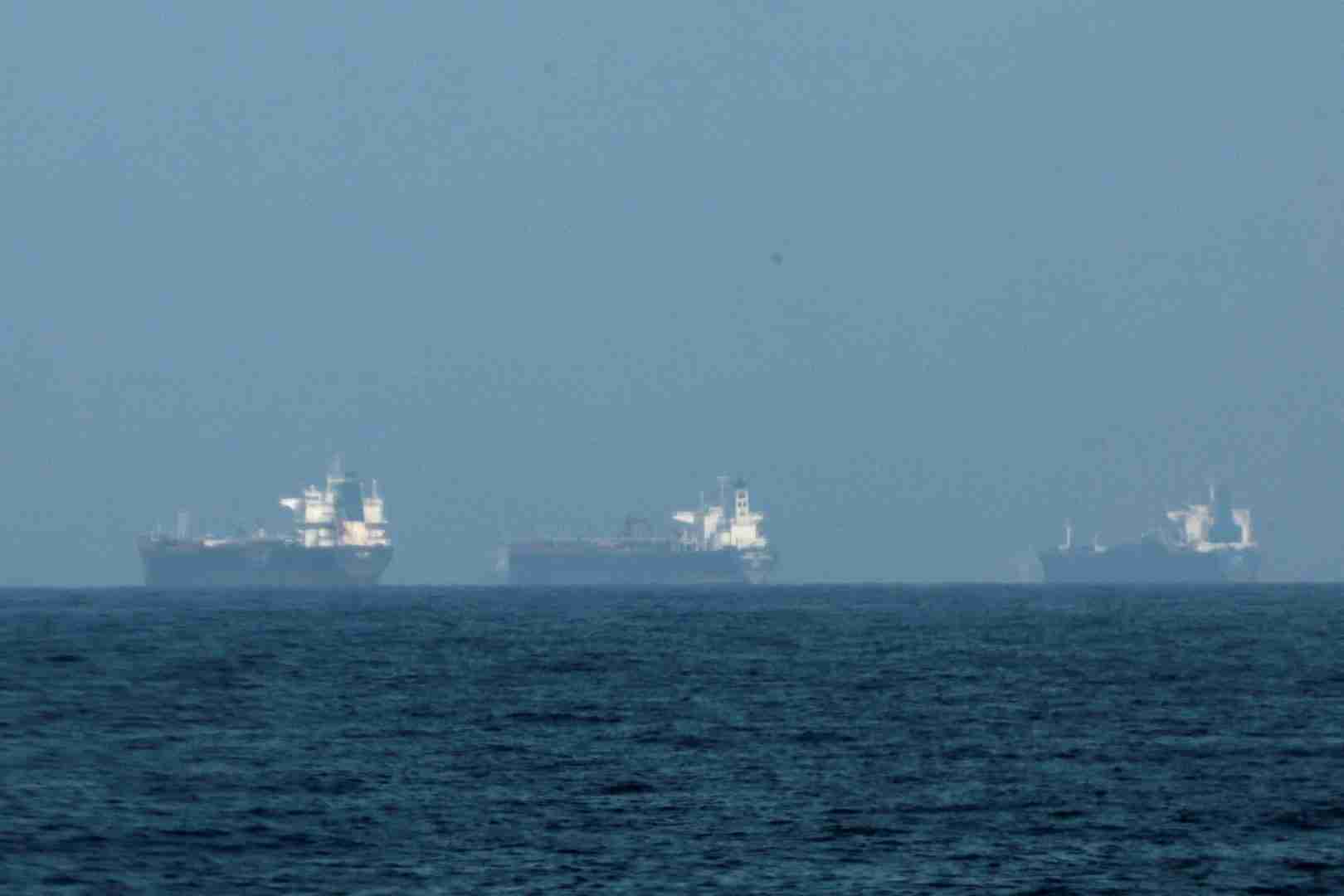
At least 200 ships, including oil and liquefied natural gas tankers as well as cargo ships, remained at anchor in open waters off the coast of major Gulf producers including Iraq, Saudi Arabia and Qatar, according to Reuters estimates based on ship-tracking data from the MarineTraffic platform.
Hundreds of other vessels remained outside Hormuz unable to reach ports, shipping data showed. The waterway is a key artery for around a fifth of the world’s oil and LNG supply.
At least eight vessels have suffered have been hit in the area since the Iran conflict began on Saturday. On Wednesday, the Maltese-flagged container ship Safeen Prestige was damaged by a projectile as it sailed toward the northern end of the Strait of Hormuz, prompting the crew to abandon ship, British navy agency UKMTO said.
Marshall Islands crude oil tanker Libra Trader and Panama-flagged bulker Gold Oak also sustained minor damage some 7-10 nautical miles off the United Arab Emirates port of Fujairah early on Wednesday, UKMTO said later.
The Libra Trader experienced a loud blast and debris from an unknown projectile, while the Gold Oak was struck by a projectile, though neither vessel sustained major damage or crew injuries, the agency added.
Qatar will fully shut down gas liquefaction on Wednesday and won’t return to normal production and exports for at least a month, two sources familiar with the matter told Reuters. Gas giant QatarEnergy declared force majeure on shipments of LNG after attacks on its production facilities.
Iraq cut its oil production as the country ran out of storage, unable to load it on tankers. Saudi Arabia, the UAE and Kuwait were also struggling to load oil but it was not yet clear if they cut output.
RARE TANKER TRANSIT AMID SHIPPING FREEZE
Despite the gridlock, a rare voyage took place on Tuesday when the Suezmax tanker Pola sailed through the Strait of Hormuz to the UAE to load crude, according to industry sources and LSEG ship-tracking data.
The Pola had switched off its AIS transponder late on March 2 as it approached the Strait and reappeared the next day off Abu Dhabi.
Trump on Tuesday said he had instructed the U.S. International Development Finance Corporation to provide political-risk insurance and financial guarantees for maritime trade in the Gulf.
“No matter what, the United States will ensure the free flow of energy to the world,” he wrote in a social media post.
Commercial war risk insurance costs have soared at least five-fold in recent days.
“Rates have increased from levels that owners and charterers will be used to,” said Angus Blayney with insurance broker Gallagher.
“The cost will vary depending on the vessel type, cargo and routing, however marine insurers are very much continuing to provide cover.”
Oil prices dipped on Wednesday, but were up 12% since the war started on Saturday, as U.S.-Israeli strikes on Iran disrupted Middle East supplies.
On Wednesday, Goldman Sachs raised its forecast for Brent crude oil in the second quarter by $10 to $76 per barrel. It also raised its prediction for WTI by $9 to $71 per barrel.
The bank said it sees longer-than-expected disruption to exports of oil and gas through the Strait of Hormuz and damage to oil production facilities as risks. It also assumes that low oil flows through Hormuz will lead to large declines in OECD inventories and Middle East production in March.
“Providing protection for all tankers operating in areas currently threatened by Iran is unrealistic as this would require a very high number of warships and other military assets,” said Jakob Larsen, chief safety and security officer with shipping association BIMCO.
ASIA SCRAMBLES FOR REPLACEMENT BARRELS
Some Asian refiners and petrochemicals companies face output cuts because they are unable to get prompt replacement cargoes from their suppliers in the Gulf due to the shipping standstill.
India’s Mangalore Refinery and Petrochemicals and Petronet LNG both issued force majeure notices due to the disruptions.
Asia sources 60% of its oil from the Middle East, leaving the region vulnerable to the disruptions. Refiners in Indonesia and Japan are sourcing more oil from the U.S. to replace the shortfall. India will consider buying more from Russia, sources at two companies have said.
Saudi Aramco’s largest domestic refinery and key crude export terminal Ras Tanura was struck on Wednesday, four sources said.
Reporting by Jonathan Saul; Additional reporting by Renee Maltezou; Writing by Anna Hirtenstein; Editing by Louise Heavens, Aidan Lewis
Goal is to ensure that personnel are equipped with internationally recognised horticultural knowledge and practical techniques
The Ministry of Public Works and Environment is highlighting its continued investment in professional development after nine members of the Department of Parks took part in an internationally recognised horticulture training programme recently held in Bermuda.
The specialised instruction was delivered by visiting trainers from the Royal Botanic Garden Edinburgh (RBGE), who were on the island to conduct an eight-day Certified Practical Horticulture course.
L-R: RBGE Trainer Lucy Baines, CPH* Recipient Gerritt (Jimmy) Harvey, RBGE Trainer Daniel Batie & Senior Superintendent W. Omari Dill.
This initiative represents the second time such training has been hosted locally with public-private partnerships.
The Certified Practical Horticulture course was a partnership involving the Department of Parks, the Bermuda Botanical Society, and the Royal Botanic Garden Edinburgh.
Funding for the programme was awarded through Darwin Plus Local, a competitive UK Government grant scheme that supports environmental projects as well as fellowships in the UK Overseas Territories and Crown Dependencies.
Horticultural training demonstrates compliance with Target 9 of the Botanical Gardens Conservation International’s Accreditation Standard and plays a foundational role in the renewal of our Botanical Gardens.
The Minister of Public Works and Environment, the Hon Jaché Adams, JP, MP, said, “This training reflects a deliberate effort to ensure that Bermuda’s parks personnel are equipped with current, internationally recognised horticultural knowledge and practical techniques.
“The work carried out by our parks teams directly affects the quality, safety, and appearance of our public spaces, and that work must be supported by strong technical training.”
L-R: RBGE Trainer Lucy Baines, CPH Recipient Jermaine Wilson, RBGE Trainer Daniel Batie & Senior Superintendent W. Omari Dill.
The Minister added, “Opportunities such as this strengthen local expertise, support sustainability, and help ensure that our parks and green spaces continue to meet the highest standards for the public.”
The programme combined classroom instruction with practical field application and was designed to strengthen plant care, nursery management, landscape maintenance, and problem-solving skills relevant to Bermuda’s climate and growing conditions.
L-R: RBGE Trainer Lucy Baines, Course Credit Recipient Gary Robinson, RBGE Trainer Daniel Batie & Senior Superintendent W. Omari Dill.
The Ministry noted that initiatives of this kind form part of a broader strategy to build professional capacity across its departments and reinforce Bermuda’s reputation for maintaining attractive, healthy, and well-managed public landscapes.
A rise would be unwelcome news for Prime Minister Keir Starmer’s Labour government, which is under pressure to meet a pledge to curb household energy costs
International News via Reuters:
Britain’s domestic energy price cap is forecast to rise by about 10% in July in response to a surge in wholesale prices tied to the war in Iran, analysts at Cornwall Insight said on Wednesday.
A rise would be unwelcome news for Prime Minister Keir Starmer’s Labour government, which is under pressure to meet a pledge to curb household energy costs.
It would also wipe out the savings made from the decision to scrap a policy that forces energy suppliers to pay for measures like insulation and new heating systems for low-income households and move some levies onto general taxation.
Wholesale energy prices are the largest single factor contributing to British energy regulator Ofgem’s domestic price cap, which is set on a quarterly basis using a formula that also reflects suppliers’ network costs and environmental and social levies.
Disruptions to shipping in the Middle East and a halt to liquefied natural gas exports from Qatar, one of the world’s largest gas exporters, has led to a surge in international gas prices. Gas prices in Britain are currently more than 70% higher than last week.
“This latest forecast puts the role of wholesale markets firmly back in the spotlight and illustrates how exposed UK households remain to international market movements,” said Craig Lowrey, principal consultant at Cornwall Insight.
Cornwall Insight forecasts Ofgem’s price cap will rise in July to 1,801 pounds ($2,409) a year for typical use, from 1,641 pounds in April.
A spokesperson for Britain’s Department for Energy Security and Net Zero said using short-term price fluctuations to predict coming prices was not reliable and the only way to protect consumers from price spikes is to curb fossil fuel use.
Ofgem is expected to publish the next price cap level by May 27, and Lowrey said the forecast could change before then if wholesale prices fall or rise further.
($1 = 0.7476 pounds)
Reporting by Susanna Twidale. Editing by Paul Simao and Mark Potter
A lower-priced laptop marks one of Apple’s most aggressive entry points into the PC market in years
International News via Reuters:
Apple on Wednesday unveiled the MacBook Neo, a lower-priced addition to its laptop lineup starting at $599, as it looks to broaden its reach in a price-sensitive PC market while rivals face tighter supply of memory chips.
A lower-priced laptop marks one of Apple’s most aggressive entry points into the PC market in years. The new MacBook will be powered by the A18 Pro chip, the same processor that debuted in the company’s iPhone 16 Pro models in 2024.
At $599, it is far cheaper in both nominal and inflation-adjusted terms than Apple’s previous non-Pro, non-Air MacBook, which debuted in May 2006 at $1,099 – roughly $1,750 in today’s dollars.
Customers can pre-order the device starting Wednesday, with deliveries and in-store availability beginning March 11, Apple said.
“The real question is not whether Apple can sell a MacBook at this price (because it will be one of the most sold Macs ever if they can deliver), but how it balances cost, performance and brand positioning while maintaining the premium experience that defines the Mac,” said Francisco Jeronimo, vice president of client devices at IDC.
The new MacBook is not Apple’s first foray into the price point. The company made a special $699 MacBook Air for Walmart using its M1 chip, which originally debuted in 2020, after retiring other models with that chip.
The new MacBook aims squarely at users of Google-powered Chromebooks and lower-end Windows devices, where Microsoft’s own efforts to shift to more battery-life-friendly chips made with technology from Arm have failed to ignite a sales boom.
Its foray into the mid-range PC segment could help Apple broaden its reach among students and first-time buyers.
In the midst of a global memory chip crunch, the new MacBook also comes with only 8 gigabytes of unified memory, half of the 16 gigabytes in the M4-based MacBook and less than the 12 gigabytes in the iPhone 17 Pro.
Global PC and smartphone markets remain highly price sensitive after several quarters of uneven demand, and hardware makers continue to navigate fluctuating component costs, particularly for memory chips.
Apple this week launched its $599 iPhone 17e with higher base storage and refreshed its MacBook Air and Pro lineup with new M5 chips and standard configurations with larger memory, as it looks to defend market share in competitive smartphone and softening PC markets, which are strained by rising memory costs.
Reporting by Akash Sriram, Aditya Soni in Bengaluru and Stephen Nellis in San Francisco; Editing by Anil D’Silva
To provide the best experiences, we use technologies like cookies to store and/or access device information. Consenting to these technologies will allow us to process data such as browsing behavior or unique IDs on this site. Not consenting or withdrawing consent, may adversely affect certain features and functions.
Functional
Always active
The technical storage or access is strictly necessary for the legitimate purpose of enabling the use of a specific service explicitly requested by the subscriber or user, or for the sole purpose of carrying out the transmission of a communication over an electronic communications network.
Preferences
The technical storage or access is necessary for the legitimate purpose of storing preferences that are not requested by the subscriber or user.
Statistics
The technical storage or access that is used exclusively for statistical purposes.The technical storage or access that is used exclusively for anonymous statistical purposes. Without a subpoena, voluntary compliance on the part of your Internet Service Provider, or additional records from a third party, information stored or retrieved for this purpose alone cannot usually be used to identify you.
Marketing
The technical storage or access is required to create user profiles to send advertising, or to track the user on a website or across several websites for similar marketing purposes.