Tuesday, November 10, 2026
Home Blog Page 721

Developing nations rack up $3.9 billion in net debt payments to China a year, study finds

China, the world’s largest bilateral creditor, has historically played a key role in financing infrastructure projects across the Global South

International News via Reuters:

Developing nations are now paying more to service debt owed to China than they receive in new loans, a shift that risks deepening economic strain and slowing climate investment, a report released on Friday by Boston University’s Global Development Policy Center found.

The study, titled Reviving Chinese Development Finance in the Global South, revealed that net debt transfers—calculated as new loan disbursements minus principal and interest repayments—turned negative in 2022 and 2023, with developing nations repaying $3.9 billion more annually than they borrowed.

China, the world’s largest bilateral creditor, has historically played a key role in financing infrastructure projects across the Global South, committing over $472 billion through its policy banks—the China Development Bank and Export-Import Bank—between 2008 and 2024.

These funds supported more than 900 projects worth $316 billion in transport, energy, information technology, and water infrastructure, which “significantly contributed to public asset building, economic growth and poverty alleviation in the Global South,” authors Rebecca Ray, Kevin Gallagher, Zheng Zhai, Marina Zucker-Marques, and Yan Liang wrote in the study.

A revival by Beijing to overseas development finance could avoid derailing growth and climate investment across poorer nations.

“Countries across the Global South are in urgent need of a stepwise increase in financing to invest in low-carbon, socially inclusive and resilient economic growth,” the authors said.

The paper proposed five steps which would be mutually beneficial for China and the Global South: refinancing loans in distress, issuing RMB-denominated bonds, expanding green lending, supporting cooperative foreign investment and boosting South–South trade.

“Restarting growth-enhancing development finance in the Global South will help spur demand for Chinese exports,” they said.

Some of this is already happening. In June, China said it was making progress on removing all tariffs on the African states with which it has diplomatic ties.

Afreximbank launched its debut yuan denominated panda bond in April. In South Africa, the China-Africa Development Fund is preparing to bid for independent energy transition projects in Africa’s most industrialized economy.

And in Kenya, Finance Minister John Mbadi said this week that three Chinese railway construction loans have been converted from dollars to yuan to save on interest costs.

Reporting by Colleen Goko, Editing by Nick Zieminski

White House says substantial US government job cuts have begun

Job cuts were underway at the Treasury Department and the U.S. health agency, spokespeople said, but the total extent of the layoffs was not immediately clear

International News via Reuters:

The White House said on Friday that it had begun substantial layoffs across the U.S. government, as President Donald Trump followed through on a threat to cut the federal workforce during the government shutdown.

Job cuts were underway at the Treasury Department and the U.S. health agency, spokespeople said, but the total extent of the layoffs was not immediately clear. Roughly 300,000 federal civilian workers will leave their jobs this year due to a downsizing campaign initiated earlier this year by Trump. 

“The RIFs have begun,” White House budget director Russell Vought wrote on social media, referring to so-called reductions in force. A spokesperson for the budget office characterized the cuts as “substantial,” without offering further details.

Trump has repeatedly threatened to fire federal workers during the shutdown standoff, in its 10th day on Friday, and has suggested his administration will aim primarily at “Democrat agencies.” 

He has ordered the freezing of at least $28 billion in infrastructure funds for New York, California and Illinois – all home to sizable populations of Democratic voters and critics of the administration.

Trump’s Republicans hold majorities in both chambers of Congress, but need at least seven Democratic votes to pass a funding bill in the Senate, where Democrats are holding out for an extension of health-insurance subsidies.

HHS AND TREASURY

Employees across multiple divisions of the Department of Health and Human Services have received layoff notices, communications director Andrew Nixon said. The 78,000 workers at the sprawling agency manage major health insurance programs, monitor disease outbreaks, fund medical research, and perform a wide range of other health-related duties.

Roughly 41% of the agency’s staff have been ordered not to report to work during the shutdown, while others have been ordered to continue working without pay.

Nixon said the layoffs were targeted at those who had been furloughed but did not provide further details. 

“HHS continues to close wasteful and duplicative entities, including those that are at odds with the Trump administration’s Make America Healthy Again agenda,” he said.

Layoffs have also begun at the Treasury Department, according to a spokesperson who spoke on condition of anonymity.

A labor union official, Thomas Huddleston of the American Federation of Government Employees, said in a court filing he had been told the Treasury Department was preparing 1,300 layoff notices. It was not clear whether those layoffs would hit the tax-collecting Internal Revenue Service, where 46% of the agency’s 78,000 employees were furloughed on Wednesday.

Other government agencies did not immediately respond to requests for comment.

Labor unions representing federal workers have sued to stop the layoffs, saying they would be illegal during a shutdown.

A federal judge is due to hear the case on October 16.

The government is required by law to give workers 60 days’ notice ahead of any layoffs, though that can be shortened to 30 days. 

Reporting by Ahmed Aboulenein, Courtney Rozen, Nathan Layne, Daniel Wiessner, Katharine Jackson and Susan Heavey; writing by Andy Sullivan; Editing by Scott Malone and Alistair Bell

Italy ready to defend ‘golden powers’ against EU moves, economy minister says

Italy is among the EU countries that have made extensive use of golden power legislation to protect interests in sectors such as banking, defence and telecommunications

International News via Reuters:

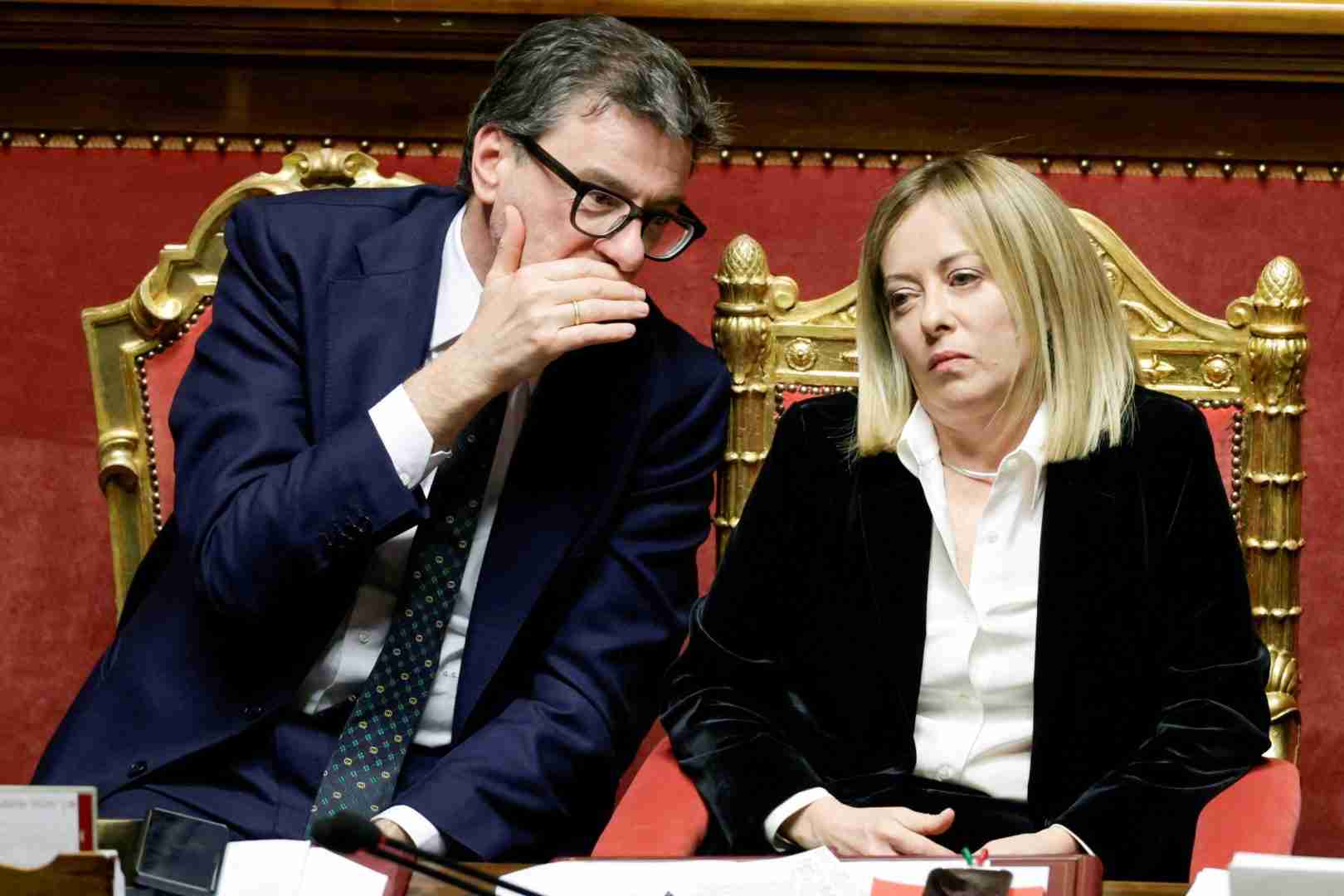
The Italian government will defend its golden powers aimed at shielding strategic assets, its economy minister said on Friday, as Brussels prepares to challenge the legislation.

Italy is among the EU countries that have made extensive use of golden power legislation to protect interests in sectors such as banking, defence and telecommunications.

Minister Giancarlo Giorgetti told reporters in Luxembourg national security was not for European institutions to judge.

“National security is the exclusive responsibility of the national government, and we intend to defend it in some way,” he said at the end of a meeting among European finance ministers.

Reuters reported on Thursday the European Commission was set to act against Rome as part of a push against EU countries hampering bank consolidation in Europe, citing sources close to the matter.

Brussels will launch two separate legal proceedings under single market and merger rules respectively, the sources said.

The EU executive, which had already warned Italy that it could be breaching EU rules by vetting bank mergers through golden powers, declined to comment on the Reuters story but said it had received Italy’s replies in both cases.

“The Commission is currently assessing Italy’s response and will consider next steps,” a Commission spokesperson said.

The EU move was prompted by Italy’s intervention in a proposed bank merger involving the country’s second-biggest lender UniCredit, which withdrew its offer for smaller rival Banco BPM on July 22, blaming government interference.

Among several conditions for the deal to proceed, Italy had told UniCredit to halt activities in Russia by early 2026 in order to prevent savings collected by Banco BPM from funding Moscow’s war against Ukraine. Rome kept this decree in place despite the collapse of the deal.

The EU will order Italy to withdraw the decree that set terms for UniCredit’s failed bid, the sources said, while challenging the overall golden power legislation through a separate infringment procedure.

“When the EU’s remarks arrive, we will evaluate them. I am simply saying that the government is applying an effective law. If you want to change the law, it is up to parliament to do so,” Giorgetti said when asked about the Reuters report.

The EU Commission plans to send two letters to Italy by mid-November to launch its move, the sources added.

If the EU rules that the conditions imposed on UniCredit are unlawful, the bank will be able to assess whether to seek damages from Italy.

Giorgetti, however, signalled the government was ready to challenge the proceedings in an EU court.

Reporting by Giuseppe Fonte; Editing by Elaine Hardcastle, Louise Heavens and Gavin Jones

RedBird Capital formally requests approval for acquisition of UK’s Telegraph

If approved, RedBird would take sole control of the broadsheet under a deal that values it at 500 million pounds

International News via Reuters:

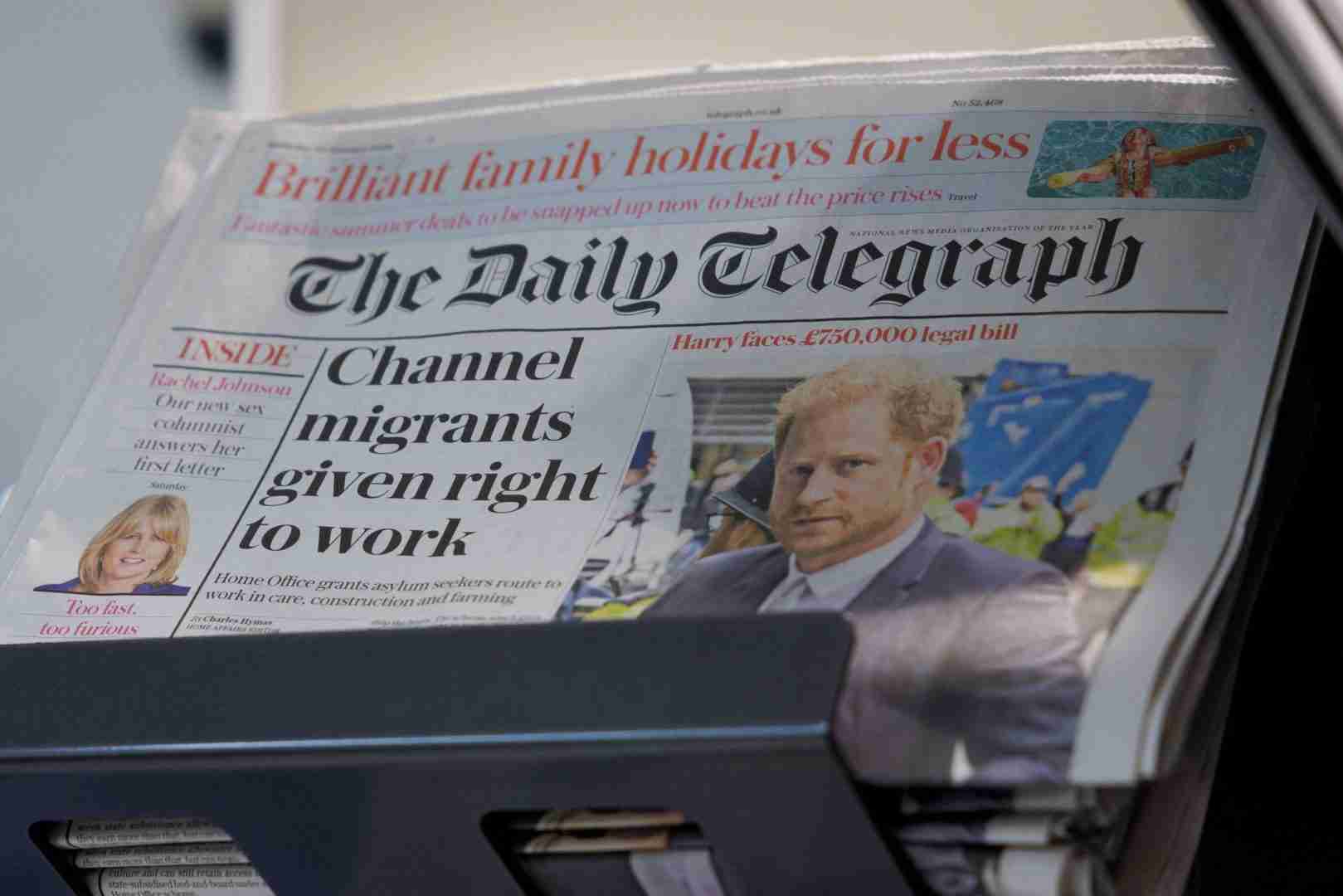
RedBird Capital Partners on Friday formally requested approval from the British government to proceed with its proposed acquisition of The Telegraph, according to an internal memo seen by Reuters and confirmed by the U.S.-based investment firm.

If approved, RedBird would take sole control of the broadsheet under a deal that values it at 500 million pounds ($667.50 million), with Abu Dhabi-backed IMI participating as a minority investor. IMI’s stake will be capped at 15%, in line with UK legislation on foreign state-backed stakes.

Ownership of the Telegraph, a conservative-leaning newspaper, has been in flux since IMI initially acquired the newspaper and The Spectator magazine in 2023. The deal was later disrupted when the then government moved to ban foreign state investment in British newspapers, forcing a sale.

“This is an important step forward in the process as we look to end the uncertainty at the Telegraph,” RedBird said in its internal statement.

“Our conviction in the potential of the Telegraph has never wavered, despite the tremendous challenges all journalism endeavours face in the wake of artificial intelligence, social media news consumption and the ongoing technological disintermediation that threatens all intellectual property based businesses.”

The Department of Culture, Media and Sport confirmed it had received RedBird’s request but did not comment any further.

A Public Interest Intervention Notice was issued in January 2024 when RedBird Capital and IMI initially sought joint control. The current government’s decision to allow foreign state-owned investors to own up to 15% of UK newspaper publishers helped unlock the revised deal.

The move followed an outcry among some politicians over the independence of the media and whether foreign states would be able to buy political influence.

RedBird, founded in 2014, manages about $12 billion in assets globally. Its investments include AC Milan, Skydance Media and a pending merger with Paramount Global.

($1 = 0.7491 pounds)

Reporting by Sam Tabahriti and Amy-Jo Crowley; Editing by Kirsten Donovan

Madagascar prime minister condemns excessive use of force during protests

Protesters have blocked roads with rocks and in some cases hurled stones at security forces who have responded with rounds of teargas

International News via Reuters:

Madagascar’s newly appointed prime minister, General Ruphin Fortunat Zafisambo, condemned on Friday what he said was “excessive use of force” by both security personnel and protesters, after three weeks of anti-government demonstrations around the island nation.

Protesters have blocked roads with rocks and in some cases hurled stones at security forces who have responded with rounds of teargas. One woman whose husband was shot dead on September 25 when he went to close his shop, told Reuters this week that his death had been “entirely preventable”.

The demonstrations were initially sparked by water and electricity shortages but later expanded to include calls for President Andry Rajoelina to step down, apologise to the nation and dissolve the senate and election commission.

The United Nations says at least 22 people were killed and more than 100 injured in the initial days of the protests – figures the government has rejected. Rajoelina put the number of those killed at 12 and said they were mostly looters.

On Friday, hundreds of protesters took to the streets in the capital Antananarivo again calling for Rajoelina to go.

“We firmly condemn all excesses, and we totally condemn the excessive use of force among Malagasy people. Malagasy values, our sense of solidarity and brotherhood, must prevail, whether within the military or among the protesters,” Zafisambo told reporters when asked to respond to criticism of the use of force by security forces.

Also on Friday, the United Nations Office on Human Rights urged security forces to refrain from using unnecessary force against demonstrators.

“We’re receiving troubling reports of continued violence against protesters by the gendarmerie, particularly in #Antananarivo,” it said on its X account.

Rajoelina appointed Zafisambo and a new defence and security minister after dissolving the previous government last week. 

On Wednesday, he told a meeting in his office he was ready to resign if he failed to fix Madagascar’s power problems within a year.

The unrest comes at a vulnerable time for Madagascar’s export-reliant economy. While the country is best known for producing most of the world’s vanilla, other exports including nickel, cobalt, textiles and shrimp are also vital to foreign earnings and employment.

Protesters’ call for a nationwide strike on Thursday went largely unheeded.

One business executive who did not wish to be named told Reuters the disruptions from the protest and an ensuing curfew had exacerbated the already dire economic situation in the country.

Writing by George Obulutsa; Editing by Ammu Kannampilly

France’s Macron holds crunch talks with party chiefs as deadline to name a PM nears

Macron, 47, is searching for his sixth prime minister in under two years and will need to find a figure whose appeal spans the centre-right to centre-left

International News via Reuters:

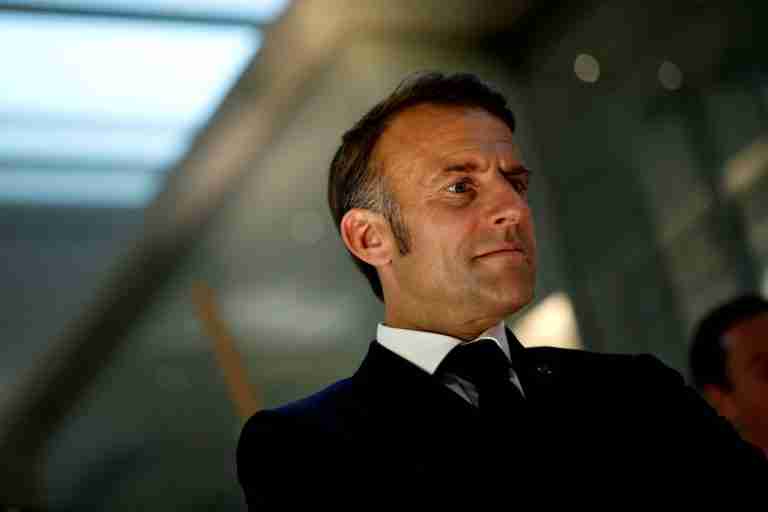
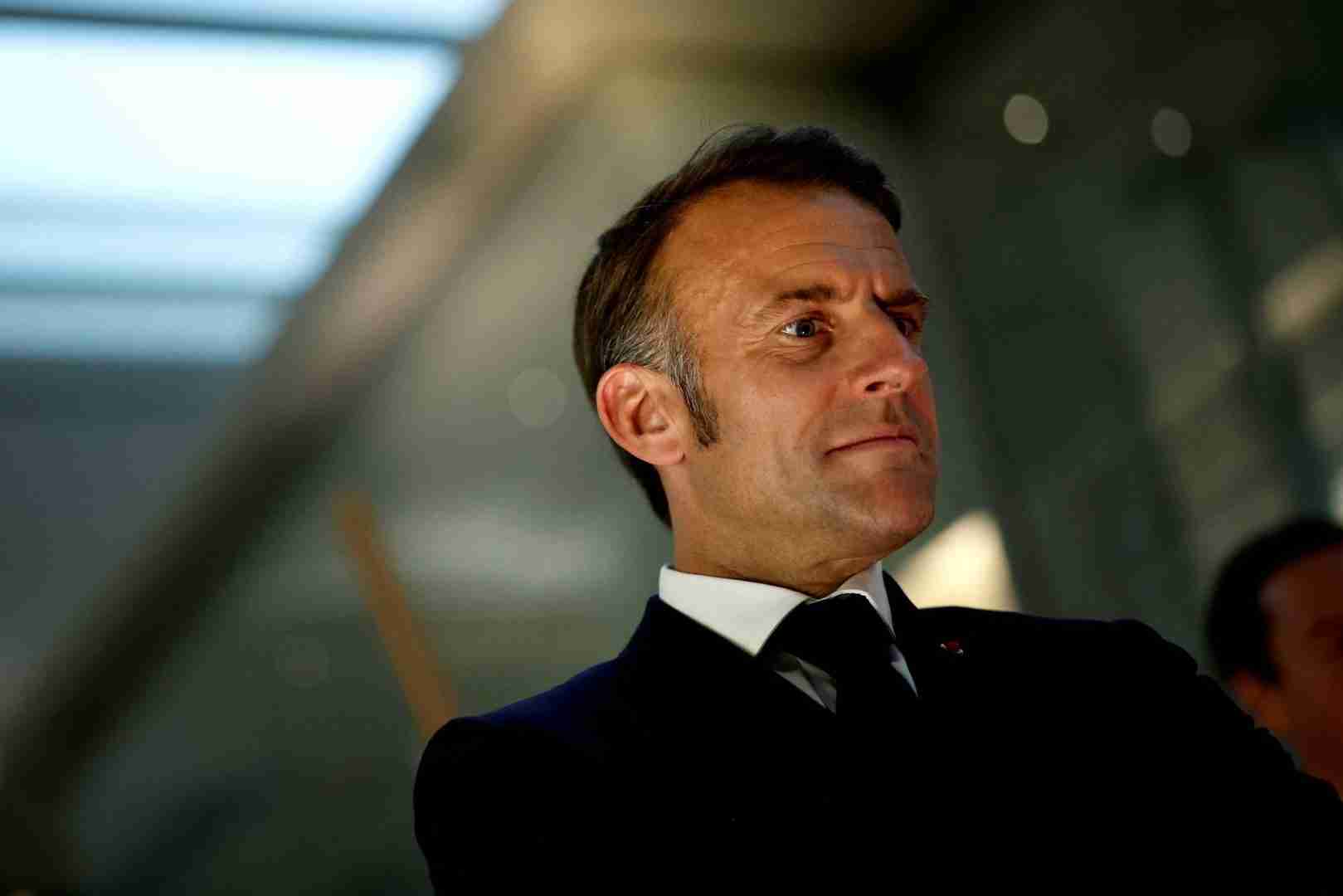
President Emmanuel Macron welcomed mainstream political leaders to a crunch meeting at the Elysee ahead of a self-imposed late-Friday deadline to name a new prime minister, as the country’s central bank chief warned political turmoil was sapping growth.

Macron, 47, is searching for his sixth prime minister in under two years and will need to find a figure whose appeal spans the centre-right to centre-left in order to steer the budget for 2026 through a fragmented and fractious parliament.

Ahead of the meeting, the president’s Elysee office said the gathering needed to be a “moment of collective responsibility,” which political pundits quickly interpreted as a signal he could call snap parliamentary elections if no consensus candidate was found.

Party leaders from the left, right and centre arrived at the Elysee, but the far-right National Rally (RN) and hard-left France Unbowed (LFI) – two of the largest political parties in the National Assembly – were excluded.

It was unclear how long Friday’s talks would last. Macron’s 48-hour deadline to name a new premier is due to expire later on Friday night.

WHO MIGHT MACRON APPOINT AS PRIME MINISTER?

The daily Le Parisien newspaper reported that Macron intended to reappoint Sebastien Lecornu, who resigned as prime minister on Monday after just 27 days in the post, and that the president did not rule out a snap vote if other party leaders reject the proposal. Lecornu was not due to attend the meeting at the Elysee, which did not respond to a request for comment.

Other names that have been floated in political circles include veteran centrist Jean-Louis Borloo, the head of the public auditor Pierre Moscovici, and Nicolas Revel, a technocrat who leads the Paris hospitals administration.

Reappointing Lecornu would risk alienating the political leaders whose backing Macron needs to form a broad-based government that can get a budget over the line. 

COMPLEX BUDGET TALKS

Wrangling over a budget that can both rein in the country’s deficit while meeting the conflicting demands of both the left and conservatives has been going on for weeks, with Socialist demands for a repeal of a 2023 pensions reform and for heavier taxation of the rich proving big stumbling blocks.

“People tell me: ‘He’s going to test the Lecornu 2 hypothesis on you.’ If that’s the case, I wish him good luck,” Green party chief Marine Tondelier told TF1 television.

Gabriel Attal, a former Macron prime minister and head of the president’s Renaissance party, cautioned against naming the next premier without wider support.

“I fear that trying the same method … of naming a prime minister before there has been a compromise will produce the same effects,” Attal told France 2 television.

SNAP ELECTION WOULD POSE RISKS FOR MAINSTREAM PARTIES

France’s mainstream parties are keen to avoid a snap election. Opinion polls forecast the RN would be the main beneficiary and that another hung parliament would be the most likely result. 

The crisis is the deepest that France, the euro zone’s second-largest economy, has seen for decades. The turmoil was precipitated in part by the president’s failed gamble on a snap election last year that further weakened his minority in parliament.

The central bank chief, Francois Villeroy de Galhau, forecast the political uncertainty would cost the economy 0.2 percentage points of gross domestic product. Business sentiment was suffering but the economy was broadly fine, he said.

“Uncertainty is … the number one enemy of growth,” Villeroy told RTL radio.

Villeroy said it would be preferable if the deficit did not exceed 4.8% of GDP in 2026. The deficit is forecast to hit 5.4% this year, nearly double the European Union’s cap. 

Macron’s second-to-last prime minister, Francois Bayrou, was ousted by the National Assembly over his plans for 44 billion euros in savings to bring the deficit down to 4.6%.

Rating agencies issued a fresh round of warnings about France’s sovereign credit score this week after Lecornu said on Monday his government was resigning, just 14 hours after he had announced his cabinet line-up.

Reporting by Dominique Vidalon and Benjamin MalletWriting by Richard LoughEditing by Alison Williams, Frances Kerry and Toby Chopra

Hayward secures crucial first win in championships

Bermudian bounces back at the World Boccia Americas Regional Championships in Colombia

Omar Hayward has picked up his first victory at the World Boccia Americas Regional Championships, boosting his chances of progressing in the BC1 Male Division after a difficult start to the tournament.

The Bermudian secured a comprehensive win in his third match, defeating Kevin Barillas Murga of El Salvador by a comfortable 7-1 margin.

The result is a vital lift for Hayward, who had previously suffered back-to-back defeats against tough opposition in his first two outings.

With the victory, Hayward now sits 3rd in his division as the pool competition nears its climax. He will need to carry the momentum from this dominant performance into his remaining matches to secure one of the coveted spots in the elimination rounds of the championships. The individual competition continues over the coming days.

Paris department store workers protest over Shein deal and mismanagement

BHV owner Société des Grands Magasins (SGM) has faced a wave of criticism in France

International News via Reuters:

Workers staged a demonstration at Parisian department store BHV on Friday to protest against management and its deal with Shein granting the fast-fashion retailer a permanent space on the seventh floor.

BHV owner Société des Grands Magasins (SGM) has faced a wave of criticism in France, including from the mayor of Paris, since last week’s announcement of the partnership with Shein, which ships cheap clothes straight from factories in China to shoppers in more than 160 countries.

Dozens of workers gathered, waving labour union flags, outside the department store at 3:30 p.m. local time (1330 GMT) where union representatives and city hall officials made speeches.

Late payments to brands at the department store, which has struggled for years, had already led to shortages of products, hurting sales and leaving workers concerned for their jobs, according to a union statement read out at the protest.

UNIONS OPPOSE DEAL, SGM SAYS IT WILL ATTRACT YOUNG SHOPPERS

The announced departure of several French brands from BHV following the Shein deal is now compounding those concerns, the union members said.

“Our customers have already left because they can’t find what they want, but they’re also concerned and don’t approve of Shein’s arrival,” Florine Biais, a BHV worker and union representative, told Reuters at the protest.

Asked about the late payments, SGM said the issue was caused by a shift to new payment systems since it acquired BHV in November 2023 and would be resolved within a few weeks.

SGM has said the Shein store would attract younger shoppers and was part of its plan to modernise BHV.

“We are convinced this partnership is beneficial for the group and its employees,” SGM said in an emailed statement on Friday.

Shein spokesperson Quentin Ruffat said the planned store would help increase the number of visitors to BHV and benefit other retailers.

Shein, founded in China in 2012, has grown rapidly to become the world’s biggest fast-fashion retailer. It has been criticised by politicians, regulators and other retailers around the world over working conditions at its factories, high carbon emissions, and a lack of public information about its management and finances.

Hit by fines of 191 million euros ($221 million) in total from French and Italian regulators since July, the company is trying to tighten its internal controls to better comply with rules and improve its reputation with consumers.

($1 = 0.8636 euros)

Reporting by Helen Reid and Dominique Patton; Editing by Kirsten Donovan and Joe Bavier

Major banks explore issuing stablecoin pegged to G7 currencies

The project, which is in its early stages, will explore creating assets on public blockchains which are pegged 1:1 to real-world currencies – known as stablecoins

International News via Reuters:

A group of banks including Bank of America , Citi, Deutsche Bank, Goldman Sachs and UBS will work together to explore creating blockchain-based assets pegged to G7 currencies, the banks said on Friday.

The project, which is in its early stages, will explore creating assets on public blockchains which are pegged 1:1 to real-world currencies – known as stablecoins.

Various banks and other financial institutions have announced plans to look at launching stablecoins, as soaring crypto prices and U.S. President Donald Trump’s support for the sector has sparked a revival of interest in the idea of using blockchain in the mainstream financial system.

The market for stablecoins, however, is dominated by the El Salvador-based Tether, which accounts for $179 billion of the $310 billion worth of stablecoins in circulation, according to CoinGecko.

“The objective of the initiative is to explore whether a new industry-wide offering could bring the benefits of digital assets and enhance competition across the market, while ensuring full compliance with regulatory requirements and best practice risk management,” the statement said.

The banks involved are Santander, Bank of America, Barclays, BNP Paribas, Citi, Deutsche Bank, Goldman Sachs, MUFG Bank Ltd MTFGTU.UL>, TD Bank Group and UBS.

France’s Societe Generale, which was not included in the list, became the first major bank to issue a dollar-backed stablecoin through its digital asset subsidiary earlier this year. The token has not been widely adopted, with just $30.6 million in circulation.

A separate consortium of nine European banks including heavyweights ING and UniCredit, said last month they were forming a new company to launch a euro-denominated stablecoin.

Reporting by Elizabeth Howcroft; Editing by Tommy Reggiori Wilkes

Public invited to attend Regiment’s Presentation of Colours

The once-in-a-generation occasion promises to be a “great spectacle”

Image supplied.

The Royal Bermuda Regiment issued the following media release.

Residents of all ages are encouraged to turn out for a spectacular once-in-a-generation parade when the Royal Bermuda Regiment receives new Colours next week.

Her Royal Highness the Duchess of Gloucester – the RBR’s Colonel-in-Chief – will present the battalion with its Colours during a ceremony on Saturday, October 18 at the Keep, where the National Museum of Bermuda is situated in Dockyard.

The visit marks ten years since Her Royal Highness last came to Bermuda and forms part of the Regiment’s 60th anniversary celebrations.

The term Colours comes from the decorated flags and banners traditionally used as rallying points for soldiers in battle. They have played a part throughout history as powerful emblems of pride, duty and unity.

Lieutenant-Colonel Duncan Simons, the RBR’s Commanding Officer, explains: “Regimental Colours have historically been carried into battle and helped to identify the location of a regiment on the battlefield.

“Obviously today that is not the case, they are primarily ceremonial. More significantly for the Royal Bermuda Regiment, they represent our lineage, our history and our traditions.

“Our regiment is an amalgamation of our two predecessor regiments – the Bermuda Volunteer Rifle Corps, which was formed in 1894, and the Bermuda Militia Artillery, which was formed in 1895. Those regiments both served in each of the World Wars and many soldiers paid the ultimate sacrifice, so our regiment and our Colours, particularly, carry the traditions of those predecessor regiments and our proud history of the past 60 years.”

Colours were originally presented to the Regiment in 1965 by Her Royal Highness Princess Margaret, the battalion’s first Colonel-in-Chief, who returned in 1990 to present another set for the Regiment’s 25th anniversary.

HRH the Duchess of Gloucester presented the existing Colours in 2010 and the set she will present this year will be the RBR’s first to bear the King’s Crown.

Colours are carried on parade by junior officers known as ensigns and are protected by two Colour Sergeants and a Warrant Officer. When uncased, the Colours are saluted by all ranks, demonstrating deep respect.

A parade for a Presentation of Colours is the most complex undertaken by the Regiment and soldiers have been rehearsing for weeks to ensure that the standard and precision of their marching meets the significance of the occasion.

The ceremony will include music from the RBR Band and Corps of Drums as well as a 21-gun salute.

Lt Col Simons says: “As Commanding Officer, it’s a great honour to be the CO during a Presentation of Colours. It is a once-in-a-generation occasion and something that draws attention to the Regiment.

“It is all about carrying forward our history and traditions into the future.

“The event will be a great spectacle, and I would encourage people from across the island to show up on the day.”

A limited amount of seating will be available for attendees who are asked to be in place by 10.30am, with the parade beginning at 11am.