
Speaking in the Bahamas at the start of a Caribbean tour, Charles said it was “only right” to acknowledge “the great suffering and injustices of the past in these islands and beyond”
International News via Reuters:
King Charles on Tuesday acknowledged the injustices of slavery, saying Commonwealth leaders would discuss the issue at their summit next week, against the backdrop of increasingly vocal demands from the Caribbean that Britain pays reparations for its role in the slave trade.
Speaking in the Bahamas at the start of a Caribbean tour, Charles said it was “only right” to acknowledge “the great suffering and injustices of the past in these islands and beyond”.
His remarks come before the Commonwealth Heads of Government Meeting in Antigua and Barbuda next week, where Caribbean leaders are expected to press demands for reparations for slavery and colonialism.
Charles added that some of what was “best” in Bahamian culture today — “the most joyful, the most hopeful, the most bright” — was “born out of darkness”.
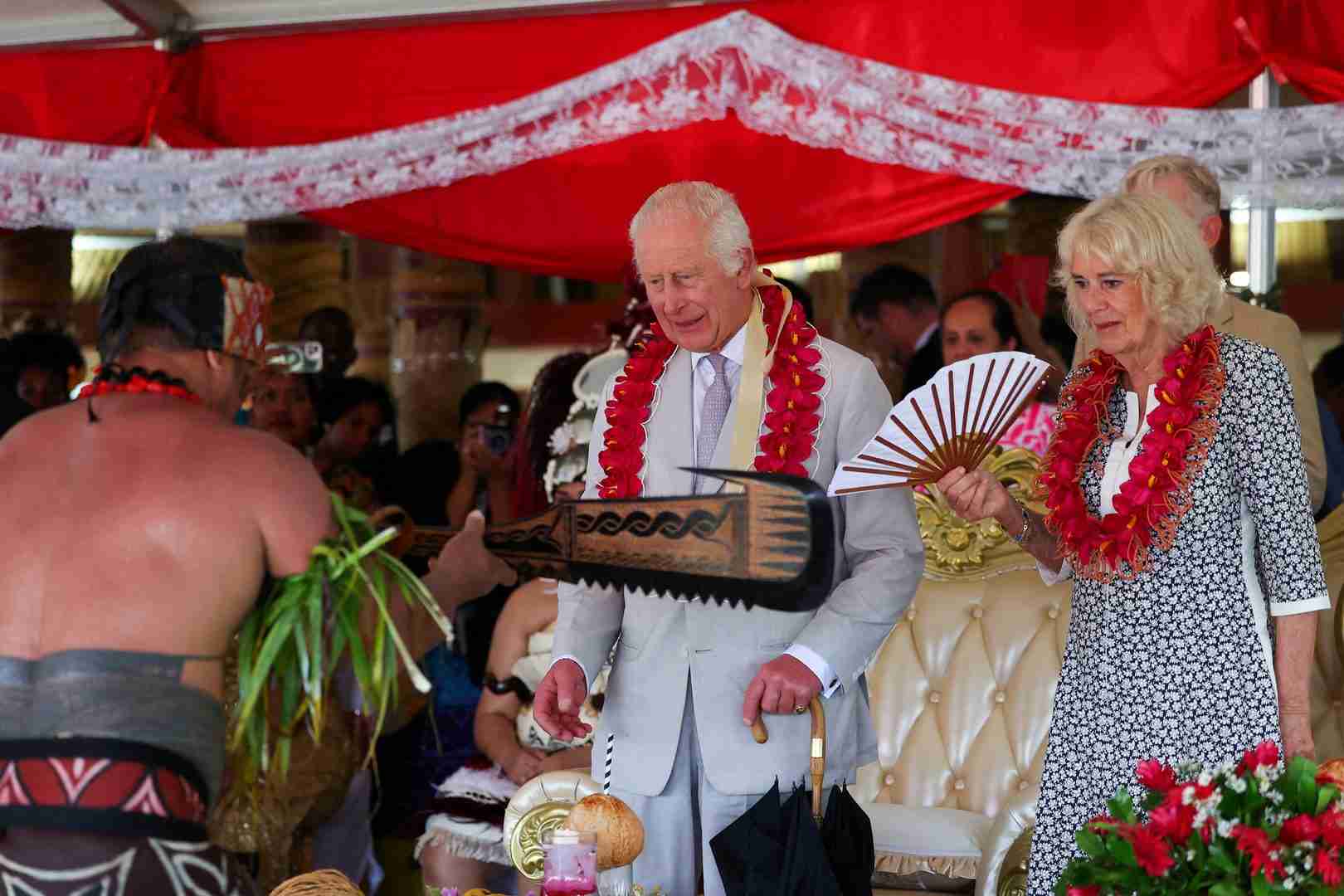
Charles and Queen Camilla are visiting the Bahamas and Guyana before travelling to Antigua and Barbuda for the biennial summit of the 56-nation Commonwealth, most of whose members are former British colonies.
The issue of reparations has gathered momentum across the Caribbean in recent years. Last month, CARICOM, the regional bloc, said it wanted the matter on the agenda at the summit.
“The Caribbean has consistently asserted that reparations is fundamentally about justice,” CARICOM Secretary-General Carla Barnett said last month.
Buckingham Palace has indicated that the king would address the issue during the tour, but not offer a formal apology, in line with British government policy, which also rules out financial reparations.
A palace spokesperson said the visit would focus mainly on “modern partnerships and opportunities for the future” in the region, but added that for Charles it was also part of “a lifelong” effort to engage with and educate about “the most shameful aspects of our past”.
Campaigners and some Caribbean leaders have called on Britain to go further, including through an apology, reparations in the form of financial compensation and the return of cultural artefacts.
From the 15th to the 19th century, at least 12.5 million Africans were abducted and sold into slavery by European traders, with Britain transporting an estimated 3.2 million people across the Atlantic, making it one of the biggest slave-trading nations.
Reporting by Michael Holden in London and Isabel Infantes in Nassau; Editing by Xevi Fontdegloria and Jonathan Spicer

